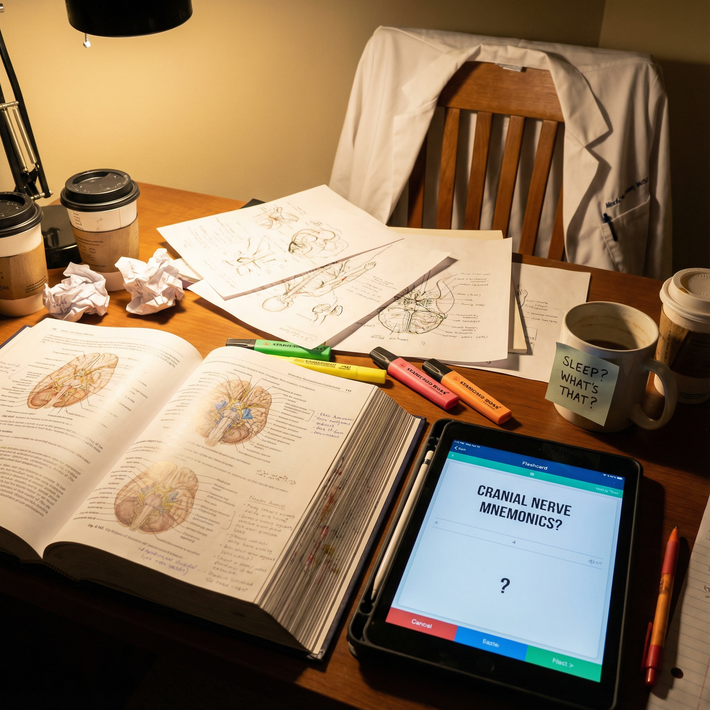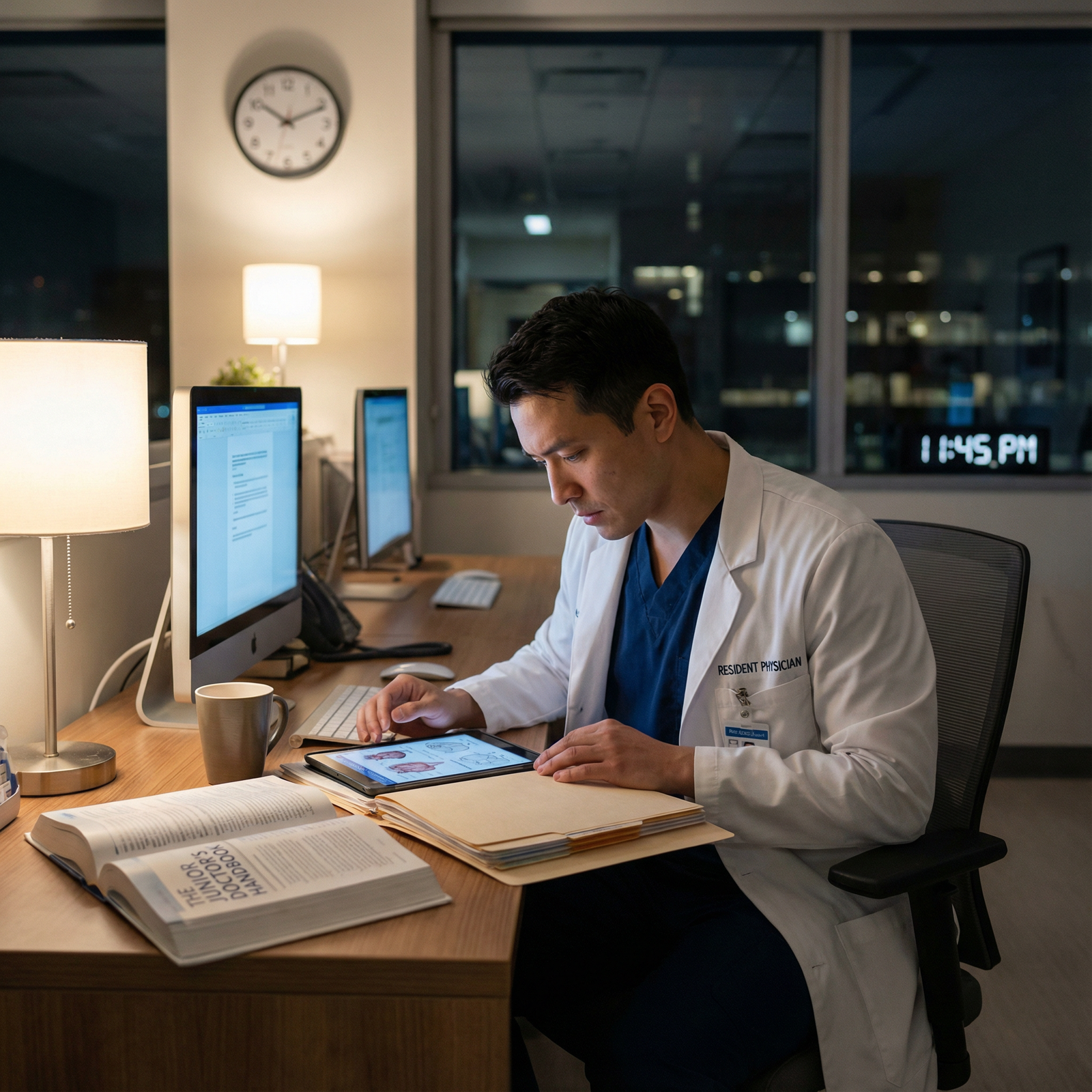
It’s week 3 of your internal medicine rotation. You wake up at 4:45 a.m. with chills, a splitting headache, and that bone-deep fatigue that’s not “I stayed up too late” tired. You check your temp: 101.8°F. You’re supposed to preround on 5 patients and present to an attending who already thinks students are “too soft these days.”
Your brain starts doing that awful calculus:
“If I push through, I’ll look dedicated.”
“If I call out, they’ll think I’m unreliable.”
“Can I just mask up and power through?”
“Am I going to fail this rotation?”
Here’s the reality: you’re sick during a core rotation and you need time off, but you also need to not blow up your evaluation, violate policy, or endanger patients. This is fixable if you handle it like an adult, not like a panicked third-year.
Let’s walk through exactly what to do.
Step 1: Decide if you actually need to stay home
You need a decision rule, not vibes.
Most schools and hospitals will expect you to stay home if you have any of the following:
- Fever (100.4°F / 38°C or higher)
- Vomiting or significant diarrhea
- New significant respiratory symptoms (bad cough, shortness of breath, flu-like symptoms)
- Conjunctivitis with discharge (pink eye)
- Anything your infection-prevention email blasts keep warning about (COVID-like symptoms, known exposure, etc.)
On the other side, you usually can still show up (with precautions) for:
- Mild headache that improves with meds
- Slight sore throat, no fever, otherwise functional
- Mild nasal congestion, no lower respiratory symptoms, no fever
- Chronic issues you already manage (e.g., migraines, IBS) unless acutely worse
Test yourself honestly:
Can you safely drive? Can you stand for a couple of hours? Can you think clearly enough to write notes and not screw up a med list? If the answer is no, you’re not safe for patient care.
If you have a fever, vomiting, or real respiratory symptoms: stop negotiating with yourself. You should not be on the floor spreading that around.
Step 2: Know the policy before you’re sick (but if you’re already sick, get the essentials fast)
If you’re reading this while actively sick, skim this section and then actually follow it.
Every med school has some version of:
- “You’re allowed X days off per 4/6/8-week clerkship”
- “More than X days = remediation/extension”
- “Call this person if you’re sick”
Your job is to:
Check your clerkship syllabus or handbook. Look for:
- “Attendance policy”
- “Illness and excused absences”
- “Make-up requirements”
Find out:
- Who you notify (clerkship coordinator, site director, chief resident, or all of the above)
- How to notify (email vs call vs paging)
- How many days you can miss before the rotation needs to be extended
Do not assume “it’ll be fine.” I’ve seen students fail a rotation for ghosting a single call day because they thought, “I’ll just tell them tomorrow.”
Step 3: How to call out without burning bridges
You’re sick. It’s 4:45–5:30 a.m. You do not have time to craft a novel. You do need to be clear, professional, and early.
General rule:
- Notify your school contact (clerkship coordinator or director)
- Notify your clinical team (resident or chief, depending on the site)
Do NOT just text another student and hope they “pass it along.”
Here’s a template email you can send to the clerkship coordinator/director:
Subject: Illness – Absence from [Rotation] on [Date]
Dear [Dr./Ms./Mr. Last Name],
I am scheduled on the [service name, site] today. I developed [fever of 101.8°F with cough and fatigue] this morning and do not feel safe participating in patient care. I will not be able to come in today.
I will follow any instructions regarding medical evaluation, documentation, and make-up requirements.
Best regards,
[Your Name]
MS3, [Your School]
And then a shorter, more direct message (text/pager) to your resident or chief:
“Hi Dr. [Name], this is [Your Name], the MS3 on [service]. I developed a fever and significant [cough/ GI symptoms] this morning and won’t be able to come in today. I’ve notified the clerkship office. I’m sorry for the short notice.”
That’s it. Don’t overshare, don’t dramatize, don’t send photos of your thermometer. Clear, respectful, and early beats everything.
If it’s a night shift or weekend, and you’re not sure whom to contact, do this:
- Email the clerkship coordinator and director
- Text/page the senior resident on your team
- If your site has a “student coordinator” or site director, copy them
You want at least one person on the academic side and one person on the clinical side to know.
Step 4: When you need urgent care or testing
If you’re potentially contagious or really unwell, the next step is not Netflix. It’s figuring out what kind of evaluation you need.
Common scenarios:
Suspected COVID/flu/RSV
Many hospitals have protocols for employees and students. You might:- Call employee health / student health hotline
- Get a same-day PCR or rapid antigen test
- Receive formal clearance criteria (e.g., “24 hours fever-free without meds + improving symptoms + 5 days since onset”)
GI illness
If you’re having significant vomiting or diarrhea, you shouldn’t be on the wards. But you might need:- Hydration guidance
- Return-to-work guidance (often 24 hours symptom-free, sometimes stool testing if severe/outbreak)
Non-infectious but functionally disabling (e.g., severe migraine, acute back injury)
- You may need urgent care or your own doctor
- Sometimes you’ll be asked for a note if you miss more than 1–2 days
Document whatever care you receive. Screenshot your test results, save after-visit summaries. You may need them if your absence turns into multiple days or if the school wants proof.
Step 5: Communicate about multiple days off and possible extension
One sick day is usually easy. Three or four days, especially on a 4-week rotation, is not. That’s when you need to tighten up your communication with the clerkship leadership.
Typical thresholds:
| Clerkship Length | Common Allowed Days Off | Often Triggers Extension |
|---|---|---|
| 4 weeks | 2 days | ≥ 3 days |
| 6 weeks | 3 days | ≥ 4–5 days |
| 8 weeks | 4 days | ≥ 5–6 days |
These are ballpark; your school may be stricter or more flexible.
If you’re out for more than one day, send a short update to the clerkship coordinator/director:
“I was out on [date] and [date] with documented [illness]. I’m improving and expect to return on [anticipated date]. Please let me know if this will require make-up time or extension.”
If your illness is ongoing and there’s any chance you’ll miss a week or more, stop thinking “maybe it will magically be okay.” Ask directly:
“Given that I’ve now missed [X] days on this 4-week rotation, should I plan for an extension or remediated time? I’d like to understand the plan early.”
The earlier you have this conversation, the less drama later. Clerkship directors hate surprises. They’re much more sympathetic to the student who loops them in on day 2–3 than the one who resurfaces after 10 days with, “So… what now?”
Step 6: Protect your evaluation and relationships
Students get very fixated on the number of days missed and forget something more important: how you handle it is half the grade.
Faculty and residents generally get that people get sick. What they remember long-term:
- Did you disappear or did you communicate?
- When you came back, did you engage and work hard?
- Did you own the impact, or act like nothing happened?
When you return:
Acknowledge your absence briefly and professionally.
Something like: “Thank you for covering while I was out last week. I’m doing much better and appreciate your flexibility.”Don’t overapologize.
You don’t need an apology tour every day for the rest of the block. One acknowledgment is enough. Then show up and do the work.Signal that you’re committed to making the most of the remaining time.
“I know I missed a few days and want to be sure I see and do as much as I can the rest of the rotation. Is there anything specific you’d recommend I focus on?”
If someone makes a snide comment (“Must’ve been nice to have a few days off”), do not get defensive. A simple: “I wish I’d felt well enough to be here, but I’m glad to be back now” shuts it down without escalating.
Step 7: Handle exams, OSCEs, and required sessions
Some days are more “expensive” to miss than others:
- Shelf exam / NBME day
- OSCE / clinical skills exam
- Mandatory orientation or wrap-up sessions
- Required small groups / simulation days
If you’re sick on one of these, do not just no-show.
You email the clerkship coordinator and director as soon as you know you cannot safely attend:
“I’m scheduled for the [internal medicine shelf exam] today at [time]. I woke up with [104°F fever and vomiting] and do not feel safe traveling to campus or sitting for a 2.5-hour exam. I’m requesting to reschedule the exam and will provide documentation from [student health/urgent care]. Please let me know the process and any impact on my grade or timeline.”
Do not drag yourself in half-conscious, bomb the exam, and then ask for mercy. It’s much harder to argue for leniency after a terrible performance than to ask before you take it.
For OSCEs/sim days, same idea. These often can be rescheduled, but variety of hassle. You still handle it directly and early.
Step 8: What if someone gives you a hard time?
It happens. You’ll run into:
- The attending who implies you should “tough it out”
- The resident who jokes you’re “calling in sick like an intern”
- The coordinator who makes it sound like you’re trying to game the system
Here’s the blunt truth: patient safety and infection control beat someone’s macho expectations. Every time.
Lines you can use:
If pressured to come in while febrile/contagious:
“I’m concerned about exposing patients and staff while I have [fever and cough]. The clerkship policy and hospital guidelines recommend staying home when febrile. I’ve already informed the clerkship office and will follow their instructions.”
If someone implies it will tank your grade:
“I understand attendance is important. I’ve been in close contact with the clerkship office and will complete any required make-up time. While I’m here, I’ll do my best to fully engage.”
If it feels like harassment or you’re being treated unfairly, you escalate—calmly:
- Document specific comments (who, what, when).
- Reach out to: clerkship director, student affairs dean, or ombudsperson.
- Keep your message factual, not emotional: “On [date], Dr. X stated […], which made me feel pressured to work while febrile.”
You’re not obligated to accept unsafe conditions just to keep one evaluator happy.
Step 9: Chronic illness or pregnancy – when this isn’t a one-off
Different situation: you’re not just acutely sick. You have Crohn’s and flares, or severe asthma, or you’re pregnant and dealing with complications. One random sick day policy doesn’t cover this.
If you’re in this bucket, you need structure:
Register with disability/student support services if appropriate.
Do this before the rotation if you can. They can formally arrange:- Modified hours or call expectations
- Ability to step away for bathroom breaks, glucose checks, pumping, etc.
- Flexibility for more frequent but short absences
Have a pre-rotation conversation.
With student affairs and/or the clerkship director:- “I have [chronic condition] that is usually well controlled, but I may occasionally need to leave early or miss a day for flare management. I want to plan ahead so I can still meet all the core objectives.”
Get specifics in writing.
Not a 4-page legal document, just email confirmation:- “As discussed, I will be allowed to [X] and will make up any missed days as needed to complete the rotation.”
I’ve seen students try to “tough it out” through repeated flares or pregnancy complications, then collapse in week 5 and need big schedule changes at the worst possible time. Planning early is not weakness; it’s the only way to finish on time without torching your health.
Step 10: How to actually recover instead of half-working from bed
Once you’ve called out, your job is not to “do Epic from home” or “prechart and send to the resident.” You are not remote staff. You’re sick.
Use the time to fully recover:
- Sleep. Real sleep, not doomscrolling.
- Hydrate and eat whatever you can tolerate.
- If you’re up to it later in the day, you can do light studying, but that’s optional on day 1–2 of real illness.
The only “work” that matters that day:
- Answer any emails from the clerkship office.
- Schedule student health/urgent care if needed.
- Let your team know your intended return date if you get clarity that day.
You do not impress anyone by “still finishing your notes from this morning” while febrile at home. If anything, you look like you don’t understand boundaries.
Step 11: Coming back strong without overcorrecting
When you’re actually ready to return—fever-free, symptoms improving, cleared per policy—plan your re-entry.
On your first day back:
- Arrive a bit early. You’ve missed context; give yourself time.
- Quietly catch up: “Anything big change with our patients while I was out?”
- Ask to re-engage in procedures or presentations quickly. Show you’re not trying to coast.
What you don’t need to do:
- Work unsafe hours to “make it up.” Your schedule is set by the rotation/post-call rules, not by guilt.
- Overshare your medical story. “I was really sick with [flu/COVID]” is plenty. Your colonoscopy details are not for the team room.
If your clerkship director offered specific make-up activities (extra call, sim sessions, reading assignments), knock those out cleanly and on time. That’s how you turn, “Student missed some days,” into, “Student handled a tough situation professionally and followed through.”
Quick reality check: what’s actually at stake
Let me be blunt.
You will not fail a core rotation because you had:
- One day out with a fever and cough
- Two days out with food poisoning
- A rescheduled shelf due to legitimate illness
You are at risk of failing or extending if you:
- Disappear without notifying anyone
- Lie about why you were out and get caught
- Miss a big chunk of the rotation and refuse reasonable make-up time
- Perform so poorly when you are there that your evals are already borderline
Most clerkship directors are not monsters. They’re juggling service coverage, accreditation rules, and fairness to you and your classmates. If you treat them like humans and communicate like a professional, they will generally work with you.
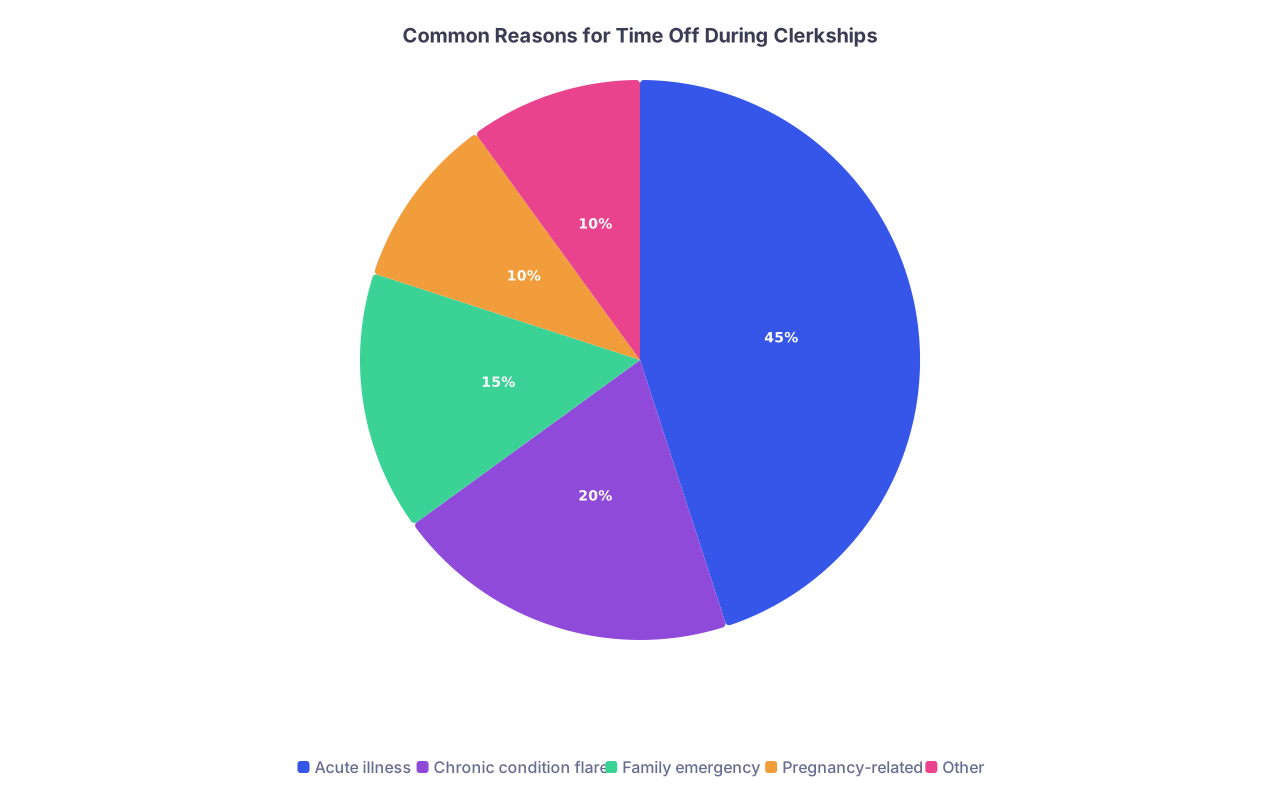
| Category | Value |
|---|---|
| Acute illness | 45 |
| Chronic condition flare | 20 |
| Family emergency | 15 |
| Pregnancy-related | 10 |
| Other | 10 |

| Step | Description |
|---|---|
| Step 1 | Wake up sick |
| Step 2 | Check school/rotation policy |
| Step 3 | Consider going in with precautions |
| Step 4 | Notify clerkship & team early |
| Step 5 | Seek testing/medical care if needed |
| Step 6 | Discuss make-up/extension with director |
| Step 7 | Rest and recover |
| Step 8 | Return when cleared and functional |
| Step 9 | Fever, vomiting, or cant function? |
| Step 10 | Multiple days out? |

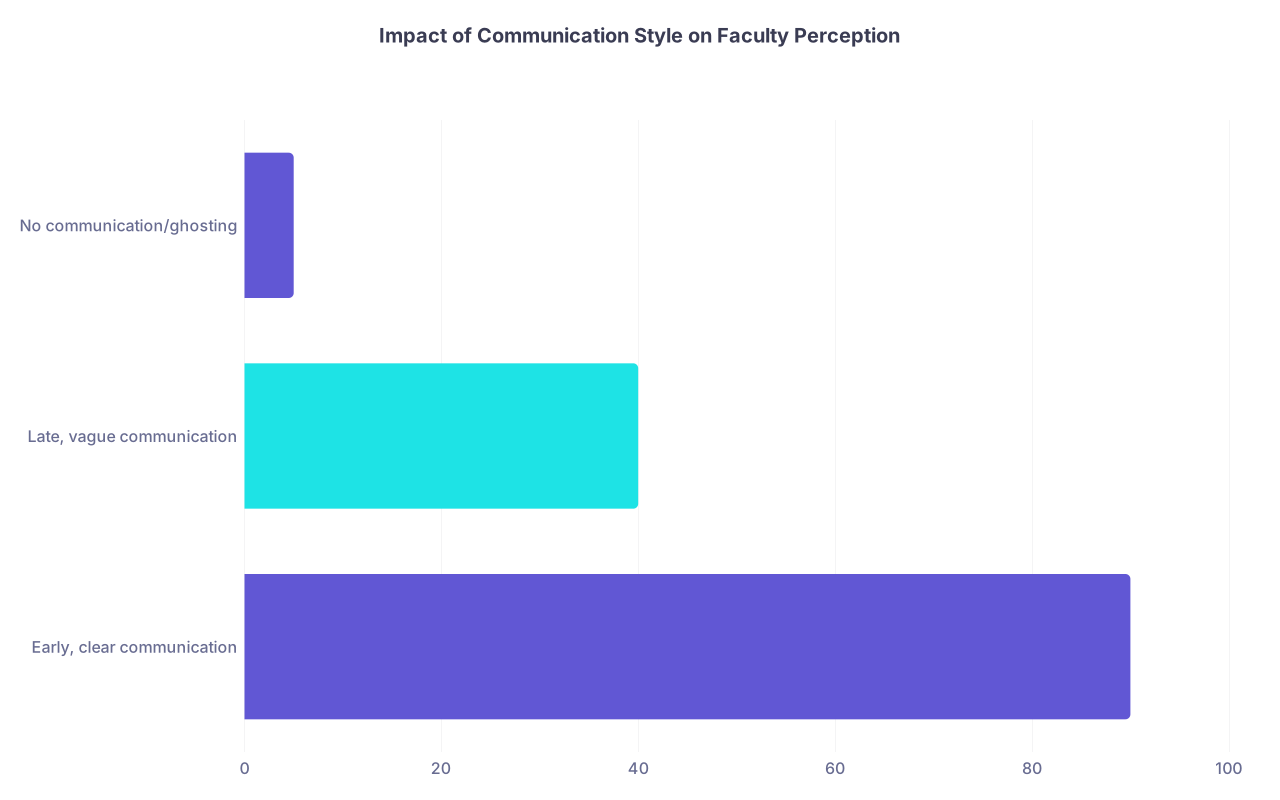
| Category | Value |
|---|---|
| Early, clear communication | 90 |
| Late, vague communication | 40 |
| No communication/ghosting | 5 |

Bottom line: what to remember
If you’re sick during a core rotation:
- Use adult criteria. Fever, vomiting, or real respiratory symptoms = stay home, notify early, and don’t negotiate with yourself.
- Communicate like a professional. Notify the clerkship office and your team, be brief and clear, and keep them updated if it becomes multi-day.
- Protect both your health and your eval. Fully recover, then return engaged, ask how to make up what you missed, and let your professionalism—before, during, and after—speak louder than the absence itself.