
You are on your surgery rotation. It is 5:25 a.m. You are in the pre-op holding area with a half-awake patient, an anesthesia resident, and a scrub nurse who is very much done with students asking where the consent form lives.
Your senior turns to you: “You did the pre-op H&P, right? Read it out.”
You open the EMR note template and your brain stalls. What actually matters? How much detail? How do you phrase it so anesthesia, surgery, and the chart are all satisfied—and you do not sound like you just copied yesterday’s medicine note?
Let me walk you through this like I would a new subintern. Line by line. Section by section. What a “perfect” pre-op H&P for a surgery rotation actually looks like—and what people really listen for.
1. Global Principles Before You Type a Single Word
Before the structure, you need the rules. A pre-op H&P is not an internal medicine opus. It is a risk assessment and “go / no-go” document for an anesthetic and an operation.
Your pre-op H&P should:
Answer three questions quickly:
- Who is this patient?
- What are we doing, and why now?
- Is it safe to proceed (and under what conditions)?
Be tuned to surgery and anesthesia:
- Hemodynamics, airway, bleeding risk, infection risk, and organ function.
- Chronology of the surgical problem. Not a problem list novella.
Be reproducible:
- Same structure every time so your senior can anticipate where things are.
- Clean, skimmable paragraphs. Short, focused phrases.
Here is the skeleton we will walk through:
- Header / Identifiers
- Chief Complaint
- History of Present Illness (HPI) – surgical style
- Past Medical History (PMH) / Surgical History (PSH)
- Medications and Allergies
- Social History
- Family History
- Review of Systems (targeted)
- Physical Exam (with specific surgical + airway focus)
- Labs / Imaging / Studies
- Assessment (1–2 sentences, max)
- Plan – explicit pre-op checklist items
We will go piece by piece. I will show you the line, then how to write it well.
2. Header / Identifiers: The 5-Second Orientation
First lines set the frame. You want the attending to know: age, key comorbidity, procedure, urgency.
Bad:
“Mr. J is a 57-year-old male here for surgery.”
Better:
“57-year-old man with insulin-dependent type 2 diabetes and CAD s/p DES (2018) presenting for elective laparoscopic sigmoid colectomy for recurrent diverticulitis.”
One line. You front-load relevant comorbidities and the actual operation.
You can format the header like this:
Preoperative H&P – General Surgery
Name: John Smith MRN: 123456
Date: [today’s date]
Attending Surgeon: Dr. X
Planned Procedure: Laparoscopic sigmoid colectomy ± possible open
Anesthesia Type: General endotracheal anesthesia (planned)
That “± possible open” is not just academic—attendings like seeing that you understand contingency. It also implicitly covers consent for conversion.
3. Chief Complaint: Short and Surgical
Keep it brutally concise. Reason for surgery, not the entire history.
Examples:
- “Chief Complaint: Recurrent sigmoid diverticulitis for elective resection.”
- “Chief Complaint: Symptomatic cholelithiasis for laparoscopic cholecystectomy.”
- “Chief Complaint: Right-sided colon mass for oncologic resection.”
No one needs: “I have had abdominal pain for six months.” That belongs in the HPI.
4. HPI: How to Sound Like You Belong on Surgery
Most medical students write HPIs like a medicine note: wandering, systems-based, and time-wasting. A surgical pre-op HPI is:
- Chronologic.
- Focused on the path that led to this operation.
- Explicit about severity, prior treatments, and why surgery now.
Structure I recommend:
- Onset and evolution of the surgical problem.
- Previous workup and treatments.
- Current status today (including red flags that are absent).
- Relevant comorbid context if it directly impacts surgery/anesthesia.
Example for a colectomy:
“Mr. Smith is a 57-year-old man with a history of insulin-dependent type 2 diabetes and CAD (DES to LAD 2018) who presents for elective laparoscopic sigmoid colectomy for recurrent uncomplicated diverticulitis.
He has had 4 documented episodes of sigmoid diverticulitis over the past 3 years, each confirmed on CT and treated with outpatient antibiotics. His most recent episode was 2 months ago, with LLQ pain and low-grade fevers; CT at that time showed sigmoid diverticulosis with segmental wall thickening and inflammation, without abscess or perforation. He was evaluated in general surgery clinic, where elective resection was recommended given recurrent episodes affecting quality of life and concern for progression.
Today, he reports baseline mild LLQ discomfort (2/10), no fevers, no nausea/vomiting, no changes in bowel habits, and no rectal bleeding. He completed full bowel prep as instructed yesterday and is NPO since midnight. Last dose of glargine 20 units was taken last night; he did not take short-acting insulin this morning. No chest pain, dyspnea, orthopnea, or exertional limitations. He denies recent infections or hospitalizations.”
That is what “surgical” sounds like. Notice:
- Every detail has intra-op or peri-op relevance.
- You explicitly negate red flags: chest pain, dyspnea, infection.
- You tie in NPO status and essential med timing (insulin, anticoagulants, etc.).
For acute cases (e.g., appendectomy), you sharpen/change focus:
- Time of onset of pain.
- Migration, associated symptoms.
- Vitals and labs from ED.
- Imaging findings.
- Why we are going to the OR now, not tomorrow.
Example:
“18-year-old woman with no significant past medical history presenting with 24 hours of periumbilical pain migrating to the RLQ, associated with anorexia and nausea, without vomiting or diarrhea. In the ED, T 38.2°C, HR 104, BP 112/68. WBC 14.8 with left shift. CT abdomen/pelvis with IV contrast demonstrates an enlarged, hyperenhancing appendix with periappendiceal fat stranding, no abscess or free air. Given clinical and radiographic findings concerning for acute uncomplicated appendicitis, she is presenting for urgent laparoscopic appendectomy. She received IV ceftriaxone and metronidazole in the ED. Currently, pain 6/10 RLQ, no urinary symptoms, no vaginal bleeding or discharge. NPO 6 hours, last PO intake yesterday evening.”
That is the level of detail you want. Not more.
5. Past Medical and Surgical History: Filtered for Risk
Do not vomit the EMR problem list. Think: does this change anesthetic or surgical risk?
You can format it as:
PMH:
- Type 2 diabetes mellitus, insulin-dependent, A1c 7.8% (2 months ago)
- Coronary artery disease s/p DES to LAD (2018), no angina since, functional capacity ≥4 METs (climbs 2 flights without symptoms)
- Hypertension, well controlled
- Hyperlipidemia
PSH:
- PCI with DES (2018)
- Laparoscopic appendectomy (childhood, no complications)
What matters:
- Cardiac history: CAD, CHF, arrhythmias, valvular disease.
- Pulmonary: COPD, asthma, OSA (with CPAP? adherent or not?).
- Endocrine: diabetes, thyroid disease, adrenal.
- Renal/hepatic failure.
- Prior anesthesia complications (PONV, difficult intubation, malignant hyperthermia, pseudocholinesterase deficiency).
- Coagulopathies, VTE history.
- Immunosuppression (steroids, chemo, transplant).
If prior anesthesia issues exist, call them out clearly:
“History of severe PONV after laparoscopic cholecystectomy (required overnight admission for intractable vomiting). No history of difficult intubation.”
Anesthesia actually reads that line.
6. Medications and Allergies: Where Students Quietly Sink The Case
This is where you can seriously help or seriously screw up. You must know:
- What they take.
- Whether it was taken today.
- What must be continued vs held around surgery.
Format:
Medications:
- Aspirin 81 mg daily – last dose 5 days ago (held per pre-op instructions).
- Clopidogrel 75 mg daily – last dose 7 days ago (held per cardiology and surgery).
- Metoprolol succinate 50 mg daily – took yesterday evening, held this morning.
- Lisinopril 20 mg daily – last dose 2 days ago (held pre-op).
- Insulin glargine 20 units qHS – took last night.
- Insulin lispro sliding scale with meals – not taken today (NPO).
- Atorvastatin 40 mg qHS – took last night.
Then connect the dots in your plan, but the raw data belongs here.
Allergies:
- NKDA
or - “Penicillin – anaphylaxis (throat swelling, hypotension as a child).”
- “Codeine – nausea only (not a true allergy).”
If you are not crystal clear on reaction type, you look sloppy. Ask specifically: rash? throat swelling? hypotension? GI upset?
7. Social History: Filtered for Airway, Wound, and Coags
Anesthesia cares about airway + pulmonary; surgery cares about wound healing and infections; everyone cares about coagulopathy and withdrawal risks.
Keep it lean:
- Tobacco: pack-years, quit date or current.
- Alcohol: quantity and frequency. Binge vs daily.
- Recreational drugs: especially cocaine (vasospasm), meth, opioids (tolerance), marijuana (airway reactivity, anesthetic needs).
Example:
“Lives with spouse, independent in ADLs, works as accountant.
Tobacco: 20 pack-year history, quit 5 years ago.
Alcohol: 1–2 beers on weekends, no history of withdrawal or heavy use.
Illicit drugs: Denies.
No history of IV drug use.”
For a heavy drinker:
“Alcohol: ~6–8 beers daily for 10+ years, last drink 24 hours ago, no prior withdrawal seizures or hospitalizations.”
This triggers you to think about CIWA, thiamine, peri-op benzo coverage. Your team will appreciate that.
8. Family History: Only What Changes Risk
You can skip “mother: HTN, father: DM” unless directly relevant.
You must ask about:
- Malignant hyperthermia.
- Sudden cardiac death / arrhythmias at young age.
- Bleeding or clotting disorders.
Example:
“Family history negative for malignant hyperthermia, bleeding or clotting disorders, or premature cardiac death. Other family history noncontributory.”
Eight seconds to ask, but actually matters.
9. Review of Systems: Short, Targeted, and To the Point
You are not writing a 12-system ROS for a Joint Commission audit. Focus: cardiac, pulmonary, constitutional, relevant organ system of the operation.
The main game: explicitly deny red flags that would delay or cancel the case.
For an abdominal surgery:
“ROS:
Constitutional: No fevers, chills, unintentional weight loss.
Cardiovascular: No chest pain, palpitations, orthopnea, PND, or presyncope.
Pulmonary: No cough, wheezing, or dyspnea at rest or with usual exertion.
GI: As per HPI; no hematemesis, melena, or hematochezia.
GU: No dysuria or hematuria.
Neurologic: No focal weakness, recent stroke, or TIA symptoms.”
If they do have symptoms (e.g., exertional dyspnea), you do not hide it. Document it and be prepared to discuss functional capacity.
10. Physical Exam: What Surgeons and Anesthesiologists Actually Listen For
This is the section that will be read out loud to the attending or anesthesia. Make it structured and audible.
Baseline format:
“General: Alert, oriented, in no acute distress. Appears stated age.
Vital Signs: [list actual values with time].
HEENT / Airway:
- Mallampati class II.
- Thyromental distance >3 fingerbreadths.
- Good mouth opening, full neck range of motion.
- No loose or removable teeth per patient.
Cardiovascular: Regular rate and rhythm, no murmurs, rubs, or gallops. No peripheral edema.
Pulmonary: Clear to auscultation bilaterally, normal work of breathing on room air.
Abdomen: Soft, nondistended, mild LLQ tenderness without rebound or guarding. No palpable masses or organomegaly. Well-healed RLQ laparoscopic scar.
Extremities: Warm, well perfused. No clubbing, cyanosis, or edema.
Neuro: Grossly intact; moves all extremities spontaneously, no focal deficits.”
You do not need a full neuro exam unless relevant. But you must check:
- Airway carefully.
- Cardiac and lungs honestly.
- Abdomen for surgical site and any peritonitis.
- Edema if CHF / renal.
For airway, use your institution’s standard descriptors (Mallampati, neck mobility, mouth opening). Actually look. Do not just write “Mallampati II” that you copy from last note.
11. Labs, Imaging, and Objective Data: Do Not Bury the Lede
This section is where a lot of students either overdo or underdo.
What matters:
- CBC (Hgb, WBC, Plt).
- BMP (Cr, K, Na, HCO3, Glucose).
- Coags (INR, PT/PTT) if on anticoagulation, liver disease, or major surgery.
- Type and screen / crossmatch status.
- Cardiac studies: EKG, echo, stress test (if done and relevant).
- Key imaging relevant to the operation (CT, US, MRI).
Format it like this:
“Labs (today 05:10):
- CBC: WBC 7.8, Hgb 13.2, Hct 39%, Plt 250.
- BMP: Na 138, K 4.2, Cl 102, HCO3 24, BUN 15, Cr 0.9, Glu 142.
- LFTs: WNL.
- Coags: INR 1.0, PT 12.1, PTT 30.
- Type and Screen: Completed, O+.”
Imaging:
“Imaging:
- CT A/P with contrast (2 months ago): Recurrent sigmoid diverticulitis with segmental wall thickening, no abscess, fistula, or perforation.
- No interval imaging since.”
Cardiac:
“Cardiac:
- EKG (today): Normal sinus rhythm, rate 72, no ischemic changes.
- Echocardiogram (2022): LVEF 55–60%, no significant valvular disease.
- No stress test within past 2 years; patient reports stable exercise tolerance (≥4 METs).”
If Cr is 2.3, or K is 5.9, or Hgb is 7.5, you better not just casually list it. That will drive your Plan section.
Here is a quick comparison table for what is “check before OR” vs “nice to know” on most rotations:
| Data Type | Typically Required Pre-Op |
|---|---|
| CBC (Hgb, Plt) | Yes for most major cases |
| BMP (Cr, K, Na) | Yes for most inpatient / higher-risk cases |
| Coags (INR, PTT) | Yes if on AC / liver dz / big case |
| Type & Screen / Cross | Yes for cases with bleeding risk |
| EKG | Yes if age/comorbidities justify |
| Echo / Stress Test | Only if indicated by symptoms/history |
This varies by institution and anesthesia department, but the pattern holds.
12. Assessment: One Strong Sentence
Your assessment is not a literature review. It is a tight synthesis that answers: who, what, why now, and are they an acceptable risk.
Example:
“57-year-old man with insulin-dependent T2DM and stable CAD s/p DES (2018) presenting for elective laparoscopic sigmoid colectomy for recurrent uncomplicated diverticulitis, currently hemodynamically stable with adequate functional capacity and no active cardiopulmonary symptoms, appropriate candidate for general anesthesia and planned procedure.”
Notice the phrase “appropriate candidate for general anesthesia and planned procedure.” That is the thesis. You are saying: yes, we can proceed, barring surprises.
If you believe there is a concern, you name it:
“… however, given poorly controlled CHF (NYHA III, EF 25%), he is high-risk and requires explicit discussion with anesthesia and attending regarding perioperative management and potential need for post-op ICU monitoring.”
You are a student, so you do not “clear” them, but you can and should demonstrate risk awareness.
13. Plan: The Surgical Pre-Op Checklist in Sentence Form
This is where you separate yourself from the average student. Do not just write “Proceed to OR.” That is lazy.
You want a concise, checklist-style plan that hits:
- Proceed vs hold.
- Antibiotics.
- DVT prophylaxis.
- Meds to continue/hold.
- Fluids / glucose control / special monitoring.
- Post-op disposition if expected (PACU vs ICU).
- Consent and site marking.
Example for our colectomy:
“Plan:
– Proceed to OR today for elective laparoscopic sigmoid colectomy with Dr. X under general endotracheal anesthesia.
– Pre-op antibiotics: Cefazolin + metronidazole within 60 minutes of incision (or per institutional colorectal pathway).
– DVT prophylaxis: SCDs on in pre-op; subcutaneous heparin 5000 units pre-op already ordered.
– Medications: Continue beta-blocker; ACE inhibitor held. Aspirin and clopidogrel appropriately held per cardiology/surgery; no bridging indicated. Monitor peri-op glucose, use insulin sliding scale protocol.
– Type and screen completed; 2 units PRBC on hold.
– NPO status appropriate; IV fluids: start LR at maintenance rate in pre-op.
– Confirmed consent in chart for laparoscopic sigmoid colectomy with possible open; surgical site marked by attending.
– Anticipate PACU recovery, then admission to surgical floor for post-op monitoring and pain control.”
You can tailor wording to your institution, but every line should answer a real pre-op question.
For an emergency (appendectomy):
“Plan:
– Proceed to OR urgently for laparoscopic appendectomy under general anesthesia.
– Continue NPO, maintain IV fluids.
– Pre-op antibiotics: Ceftriaxone + metronidazole already given in ED; repeat dose per OR timing if >8 hours.
– DVT prophylaxis: SCDs in OR; chemoprophylaxis post-op given young age and low baseline risk.
– No anticoagulants or antiplatelets to manage.
– Consent obtained and in chart; surgical site not applicable (intraabdominal).
– Anticipate PACU, then same-day discharge vs overnight observation depending on intra-op findings.”
14. A Visual Walkthrough: Pre-Op H&P Flow
Here is how the process from seeing the patient to having a finished note typically runs:

| Step | Description |
|---|---|
| Step 1 | Review OR schedule |
| Step 2 | Read chart & prior notes |
| Step 3 | See patient & obtain history |
| Step 4 | Focused physical exam & airway assessment |
| Step 5 | Verify meds, allergies, NPO, consent |
| Step 6 | Check labs, imaging, EKG |
| Step 7 | Draft structured pre-op H&P note |
| Step 8 | Review with resident/attending |
| Step 9 | Finalize note before anesthesia eval |
If you follow that order, you will rarely get caught by “Wait, is there a type and screen?” or “When was their last dose of Eliquis?”
15. Example: Putting It All Together (Abbreviated Full Note)
Let me give you a condensed “perfect” note for you to model off. You can adapt the wording, but mimic the structure.
Preoperative History and Physical – General Surgery
Name: John Smith MRN: 123456
Date: 07/10/2026
Attending Surgeon: Dr. X
Planned Procedure: Laparoscopic sigmoid colectomy ± possible open
Planned Anesthesia: General endotracheal anesthesia
Chief Complaint:
Recurrent sigmoid diverticulitis for elective resection.
History of Present Illness:
Mr. Smith is a 57-year-old man with insulin-dependent type 2 diabetes and CAD s/p DES to LAD (2018) presenting for elective laparoscopic sigmoid colectomy for recurrent uncomplicated diverticulitis.
He has had 4 documented episodes of CT-confirmed sigmoid diverticulitis in the past 3 years, each managed with outpatient oral antibiotics. His most recent episode was 2 months ago with LLQ abdominal pain and low-grade fevers; CT abdomen/pelvis at that time showed sigmoid diverticulosis with focal wall thickening and pericolic inflammation without abscess, fistula, or perforation. Following recovery, he was evaluated in general surgery clinic and elective resection was recommended due to recurrent episodes affecting quality of life and risk of future complications.
Today he reports baseline mild LLQ discomfort (2/10) without fevers, chills, nausea, vomiting, or bowel habit changes. No hematochezia or melena. He completed bowel prep as instructed yesterday and has been NPO since midnight. He took his usual glargine 20 units last night and has not taken any short-acting insulin or oral medications this morning. He denies chest pain, palpitations, dyspnea at rest or with usual exertion (can climb 2 flights of stairs without symptoms), orthopnea, PND, or lower extremity edema. No recent infections or hospitalizations.
Past Medical History:
- Type 2 diabetes mellitus, insulin-dependent, A1c 7.8% (2 months ago)
- Coronary artery disease s/p DES to LAD (2018); no angina since, functional capacity ≥4 METs
- Hypertension, controlled
- Hyperlipidemia
Past Surgical History:
- PCI with DES to LAD (2018)
- Laparoscopic appendectomy in childhood (no complications reported)
No history of anesthesia-related complications, malignant hyperthermia, or difficult intubation.
Medications:
- Aspirin 81 mg daily – last dose 5 days ago (held per cardiology/surgery)
- Clopidogrel 75 mg daily – last dose 7 days ago (held per cardiology/surgery)
- Metoprolol succinate 50 mg daily – took last night, held this morning
- Lisinopril 20 mg daily – held for past 2 days per pre-op instructions
- Atorvastatin 40 mg nightly – took last night
- Insulin glargine 20 units qHS – took last night
- Insulin lispro sliding scale with meals – not taken today (NPO)
Allergies:
- NKDA
Social History:
Lives with spouse, independent in all ADLs, works as an accountant.
Tobacco: 20 pack-year history, quit 5 years ago.
Alcohol: 1–2 beers on weekends, no history of heavy use or withdrawal.
Illicit drugs: Denies any current or prior use.
Family History:
No family history of malignant hyperthermia, bleeding disorders, clotting disorders, or premature cardiac death. Other family history noncontributory.
Review of Systems:
Constitutional: No fevers, chills, or unintended weight loss.
Cardiovascular: No chest pain, palpitations, orthopnea, PND, or presyncope.
Pulmonary: No cough, wheezing, or dyspnea at rest or with usual exertion.
GI: As per HPI; no hematemesis, melena, or hematochezia.
GU: No dysuria or hematuria.
Neuro: No focal weakness, numbness, or recent stroke/TIA symptoms.
Physical Examination:
Vital Signs (pre-op holding, 05:20): T 36.8°C, HR 76, BP 132/78, RR 16, SpO₂ 98% on room air.
General: Alert, oriented x3, in no acute distress, appears stated age.
HEENT / Airway: Normocephalic, atraumatic. Mallampati class II. Thyromental distance >3 fingerbreadths. Adequate mouth opening. Full neck range of motion. No loose or removable teeth per patient.
Cardiovascular: Regular rate and rhythm, normal S1/S2, no murmurs, rubs, or gallops. No JVD. No peripheral edema.
Pulmonary: Clear to auscultation bilaterally, no wheezes, rales, or rhonchi. Normal work of breathing on room air.
Abdomen: Soft, nondistended. Mild LLQ tenderness to deep palpation without rebound or guarding. No palpable masses or organomegaly. Bowel sounds present. Well-healed RLQ laparoscopic scar.
Extremities: Warm, well perfused, no clubbing, cyanosis, or edema. Distal pulses 2+ bilaterally.
Neuro: Grossly intact. Moves all extremities spontaneously, no focal deficits, normal speech.
Labs (today, 05:10):
- CBC: WBC 7.8, Hgb 13.2, Hct 39%, Plt 250
- BMP: Na 138, K 4.2, Cl 102, HCO₃ 24, BUN 15, Cr 0.9, Glu 142
- LFTs: AST 22, ALT 25, ALP 80, Tbili 0.8
- Coags: INR 1.0, PT 12.1, PTT 30
- Type and Screen: Completed, O+, 2 units PRBC on hold
Imaging / Cardiac Studies:
- CT abdomen/pelvis with contrast (2 months ago): Recurrent sigmoid diverticulitis with segmental wall thickening and pericolic fat stranding; no abscess, fistula, or free air.
- EKG (today): Normal sinus rhythm, rate 72, no ST-T changes.
- Echocardiogram (2022): LVEF 55–60%, no significant valvular disease, normal RV function.
Assessment:
57-year-old man with insulin-dependent T2DM and stable CAD s/p DES (2018) presenting for elective laparoscopic sigmoid colectomy for recurrent uncomplicated diverticulitis, currently hemodynamically stable with good functional status and no active cardiopulmonary symptoms, appropriate candidate for general anesthesia and the planned procedure.
Plan:
– Proceed to OR today for elective laparoscopic sigmoid colectomy ± possible open with Dr. X under general endotracheal anesthesia.
– NPO status appropriate; continue IV lactated Ringer’s at maintenance rate.
– Pre-op antibiotics: Cefazolin + metronidazole prior to incision per colorectal protocol.
– DVT prophylaxis: SCDs in pre-op and intra-op; subcutaneous heparin 5000 units pre-op ordered.
– Medications: Continue beta-blocker perioperatively; ACE inhibitor held. Antiplatelet therapy (ASA, clopidogrel) appropriately held per cardiology/surgery; no bridging anticoagulation indicated. Monitor peri-op blood glucose with point-of-care checks; manage with insulin per protocol.
– Type and screen confirmed; 2 units PRBC available if needed.
– Consent for laparoscopic sigmoid colectomy with possible open conversion verified in chart; patient’s questions answered. Surgical site marking completed by attending.
– Anticipate PACU recovery, then admission to the surgical floor for post-op monitoring, early ambulation, DVT prophylaxis, and multimodal pain control.
That is what an attending can hear at 6:00 a.m. and simply reply: “Good. Let’s go.”
16. Two Quick Visuals: Where Your Pre-Op H&P Actually Matters
First: which parts of your note different team members actually care about.
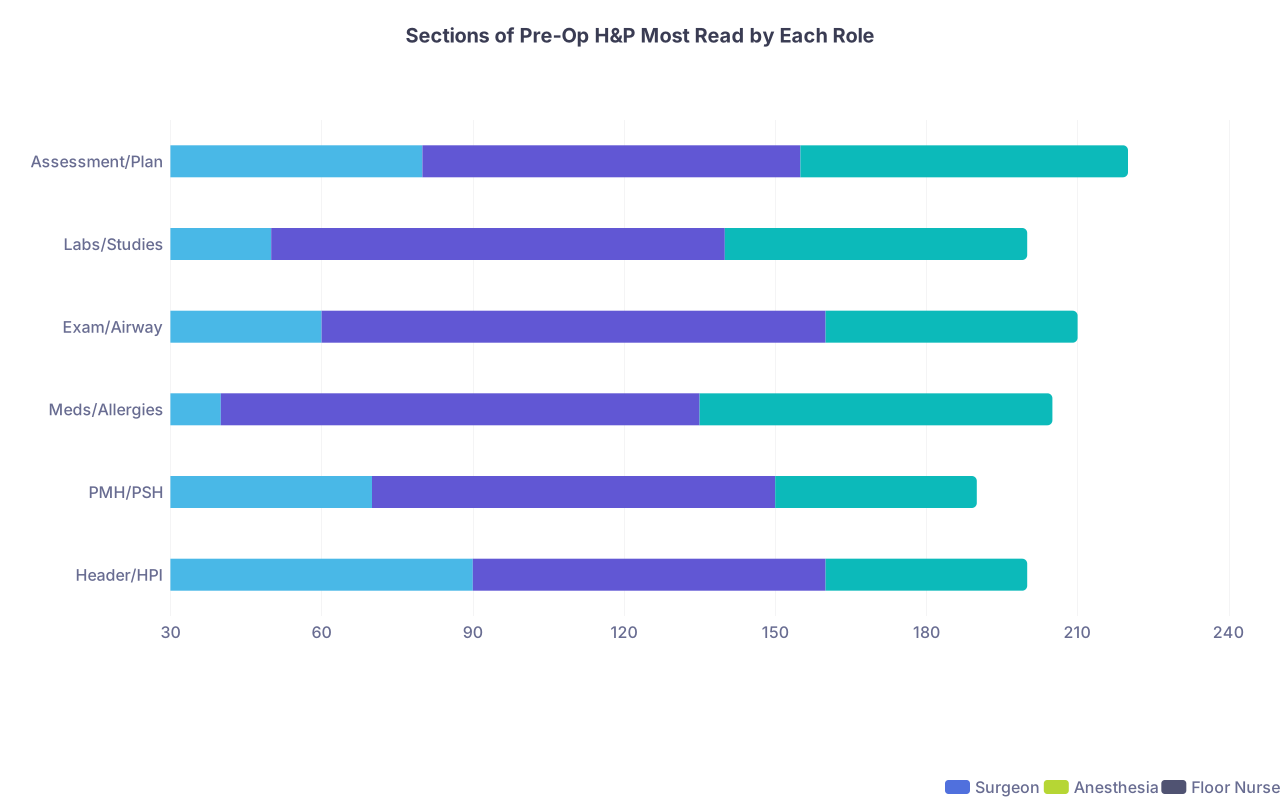
| Category | Surgeon | Anesthesia | Floor Nurse |
|---|---|---|---|
| Header/HPI | 90 | 70 | 40 |
| PMH/PSH | 70 | 80 | 40 |
| Meds/Allergies | 40 | 95 | 70 |
| Exam/Airway | 60 | 100 | 50 |
| Labs/Studies | 50 | 90 | 60 |
| Assessment/Plan | 80 | 75 | 65 |
Second: how much of your pre-op thought process should be “medical” versus “logistical” versus “surgical”.
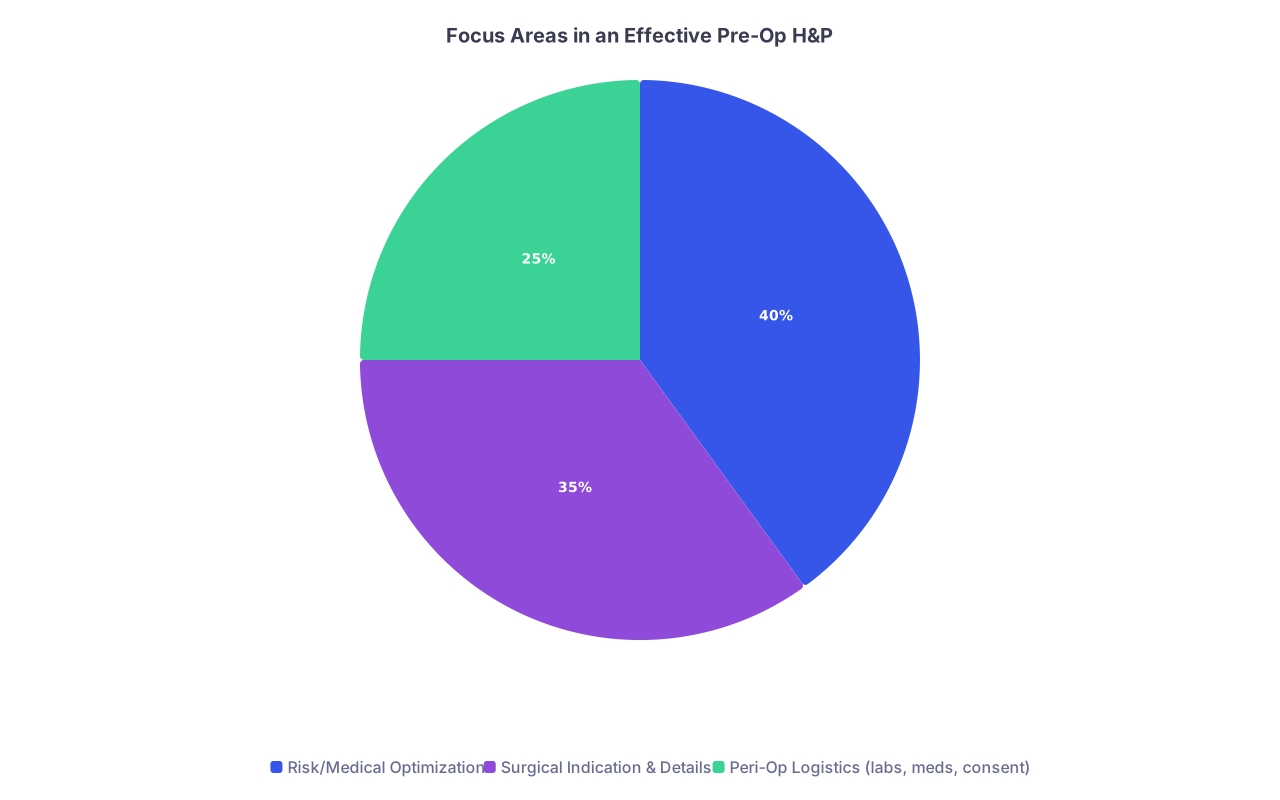
| Category | Value |
|---|---|
| Risk/Medical Optimization | 40 |
| Surgical Indication & Details | 35 |
| Peri-Op Logistics (labs, meds, consent) | 25 |
If your note is 90% about the disease history and 10% about risk and logistics, you are doing it wrong for a surgery rotation.
17. Final Details That Make You Look Like You Know What You Are Doing
A few small but high-yield habits:
- Explicitly document “NPO since [time]” and last PO intake, especially if there was a violation.
- Always ask: “Any loose teeth, dentures, or partials?” and “Ever had trouble with anesthesia before?” and write the answers.
- Check for and mention devices: pacemaker, AICD, dialysis access, ostomies, chronic Foley.
- If a patient is on anticoagulation (warfarin, DOACs, heparin, LMWH), spell out last dose and bridging plan in your Plan.
- For diabetics, know last A1c and typical blood sugars; in your plan, show you know to avoid hypoglycemia while NPO.
- If something is abnormal (Cr up, K high, fever, weird EKG), do not ignore it. State the issue and what is being done—recheck, consult, delay, or proceed with caution.
Key Takeaways
- A strong pre-op H&P on surgery is not about length. It is about clarity: surgical indication, risk profile, and peri-op logistics in a tight, predictable structure.
- The three sections that separate good from mediocre: medications/allergies (with last doses), focused airway and cardiopulmonary exam, and a concrete, checklist-style Plan.
- If your note answers “who is this, what are we doing, why now, and can we safely proceed?” in under two minutes of speaking, you are doing it right.