
Most residency applicants waste their quality improvement work by burying it in a single vague bullet point. That is a mistake.
You are leaving interview invitations on the table if your QI projects read like generic fluff: “Participated in quality improvement project to enhance patient safety.” That tells me nothing. As a program reviewer, I skim right past it.
Let me show you how to present QI on your residency CV so it looks like what it actually is: concrete, outcomes‑oriented, and highly relevant to how you will function as a resident.
Why Quality Improvement Projects Matter More Than You Think
Programs are not impressed that you “did research.” They are impressed when you show you can:
- Find a problem
- Measure it
- Intervene logically
- Track whether you actually fixed anything
- Work in a team without being a chaos generator
That is literally what a well‑done QI project demonstrates.
For many specialties, especially IM, EM, Pediatrics, Anesthesiology, and any field in an academic or large system program, QI is not a nice‑to‑have. It is the culture.
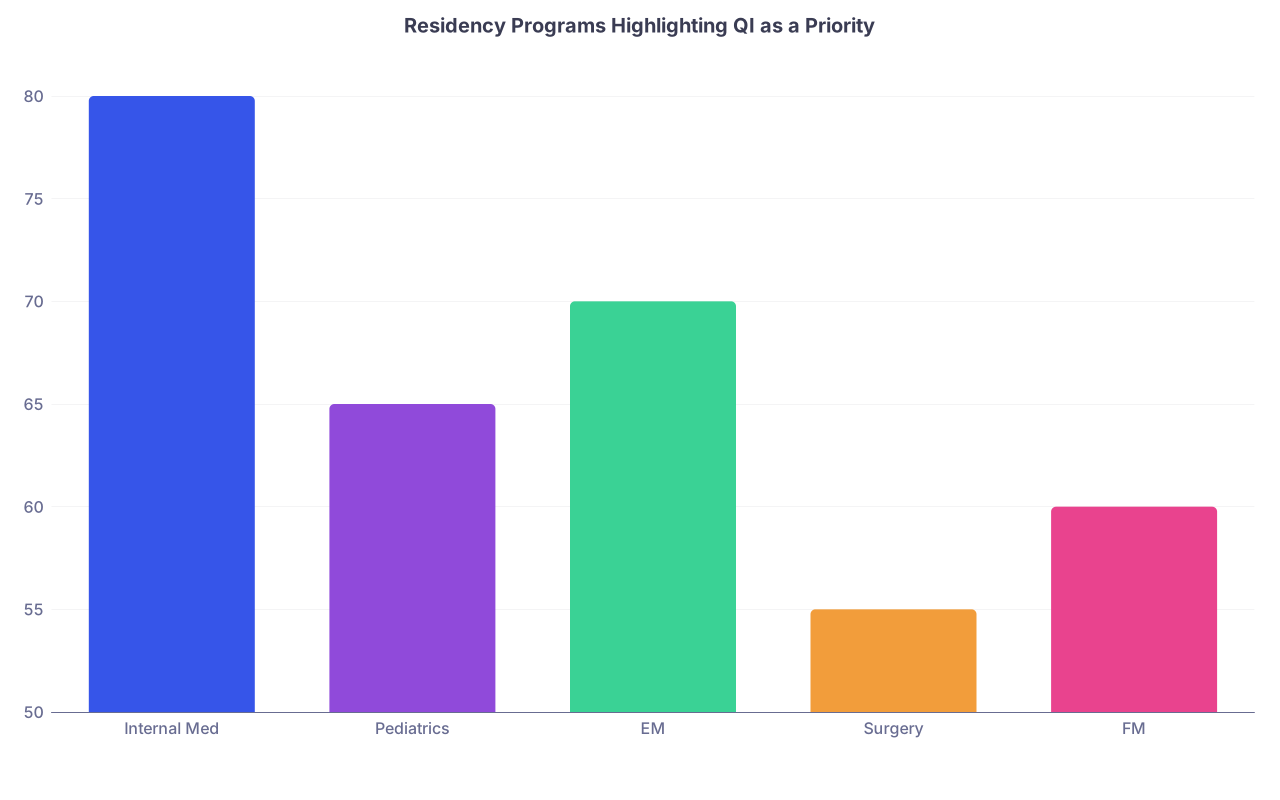
| Category | Value |
|---|---|
| Internal Med | 80 |
| Pediatrics | 65 |
| EM | 70 |
| Surgery | 55 |
| FM | 60 |
I have reviewed CVs where a student buried an excellent sepsis bundle compliance project as “Hospital project on sepsis.” Meanwhile, someone else inflated a 2‑hour checklist review into “Hospital wide QI initiative.” Guess which one I trust less.
You want to land in the first group: real work, clearly presented, scaled appropriately.
Where QI Belongs on a Residency CV
First decision: where do you actually put this stuff?
The right location depends on how serious the project was and what you did.

Category choice: QI vs Research vs Leadership
Here is the basic sorting rule:
| Project Type / Role | Best Section Label |
|---|---|
| Formal PDSA cycles, metrics, outcomes | Quality Improvement / QI |
| QI with IRB, abstracts, manuscripts | Research AND Quality Improvement |
| Serving on QI committee, safety council | Leadership / Committees |
| Quick chart audit with minor changes | Clinical / Educational Projects |
If your CV has room, I strongly prefer a dedicated section:
Quality Improvement and Patient Safety
Under that, list your substantial QI entries. Then, if some of those led to posters or talks, cross‑reference under “Presentations / Publications” with standard citation format.
If your school CV template does not have a QI section, you can:
- Rename “Research Experience” to “Research and Quality Improvement”
- Or add a new section: “Quality Improvement Projects”
I have seen plenty of ERAS CVs that do this cleanly. Programs are used to it.
The Core Structure of a Strong QI Entry
Most QI descriptions fail because they are structured like this:
“Participated in a QI project to improve discharge summaries.”
That tells me you existed near a project, nothing more.
You want every substantial QI entry to hit these elements:
- Context (where / when / setting)
- Your role (leader vs team member vs analyst, etc.)
- The problem (baseline metric or issue)
- The intervention (what you actually did)
- The outcome (with numbers if you have them)
Think of it as a compressed PDSA write‑up, translated into CV language.
Example structure
Format it like a typical CV entry:
- Title of project (concise, active)
- Institution, Role, Dates
- 2–3 bullets, each doing real work
For instance:
Reducing unnecessary telemetry use on a general medicine ward
University Hospital – Quality Improvement Team Member | Jul 2023 – Mar 2024
• Collected and analyzed pre‑intervention data on 210 general medicine admissions; identified 38% of telemetry orders as not meeting guideline criteria.
• Co‑developed and piloted an admission order set nudge and resident education mini‑curriculum.
• Contributed to re‑measurement phase showing reduction of non‑indicated telemetry orders from 38% to 19% over 4 months.
That is concrete. It shows initiative, data skills, and follow through.
Crafting Your Project Title: Stop Using Boring Labels
If your title reads like “Hospital QI Project” or “Patient Safety Initiative,” you have already lost points.
Your title should say what you did and to what. Think: verb + target + context.
Better patterns:
- “Improving post‑operative pain reassessment documentation in orthopedic surgery patients”
- “Reducing door‑to‑antibiotic time in suspected sepsis in the ED”
- “Standardizing insulin sliding scale orders on a medicine teaching service”
Avoid hype words unless absolutely justified: “Transforming,” “Revolutionizing,” “Hospital‑Wide” are red flags.

| Step | Description |
|---|---|
| Step 1 | Describe actual change |
| Step 2 | Add population or unit |
| Step 3 | Use Improving, Reducing, Standardizing |
| Step 4 | Remove buzzwords |
| Step 5 | Specific target? |
| Step 6 | Action verb clear? |
Writing Bullets That Sound Like a Resident, Not an Observer
I am going to be blunt. Most QI bullets scream “I watched other people do things.”
Your job is to prove that you:
- Touched data
- Helped design or execute the intervention
- Closed the loop with measurement or dissemination
Let me break this down specifically.
Bullet 1: Scope and data
First bullet usually answers: What was the baseline problem and how big was it?
Bad:
“Looked at patient falls on the medicine floor.”
Strong:
“Reviewed 12 months of incident reports and EHR data on inpatient falls (n=67) on a 36‑bed general medicine floor to identify modifiable risk factors.”
Notice: numbers, time frame, type of data, location. That is what program directors like to see. It implies you understand basic QI rigor.
Bullet 2: Your concrete contributions
Second bullet: what you actually did to change things.
Weak:
“Participated in planning and implementation of checklist.”
Better:
“Co‑created and implemented a standardized bedside fall‑risk checklist incorporated into nursing admission documentation; led 3 nursing in‑service sessions to roll out the tool.”
Now you sound like someone who takes ownership.
Bullet 3: Outcomes and sustainability
Third bullet: outcomes and whether the project survived past your short attention span.
Mediocre:
“Project improved patient safety.”
Stronger:
“Post‑implementation audit over 6 months showed a decrease in falls from 4.2 to 2.1 per 1,000 patient days; checklist completion compliance exceeded 90% in final cycle and was adopted as unit standard.”
If you do not have numbers, say what you set up to measure or how it changed process, not vague “improved care.”
Handling Projects That Are Incomplete or Early‑Phase
Many students panic because their project did not finish before ERAS. That is normal. QI cycles are longer than your rotations.
Here is how to present them without looking inflated.
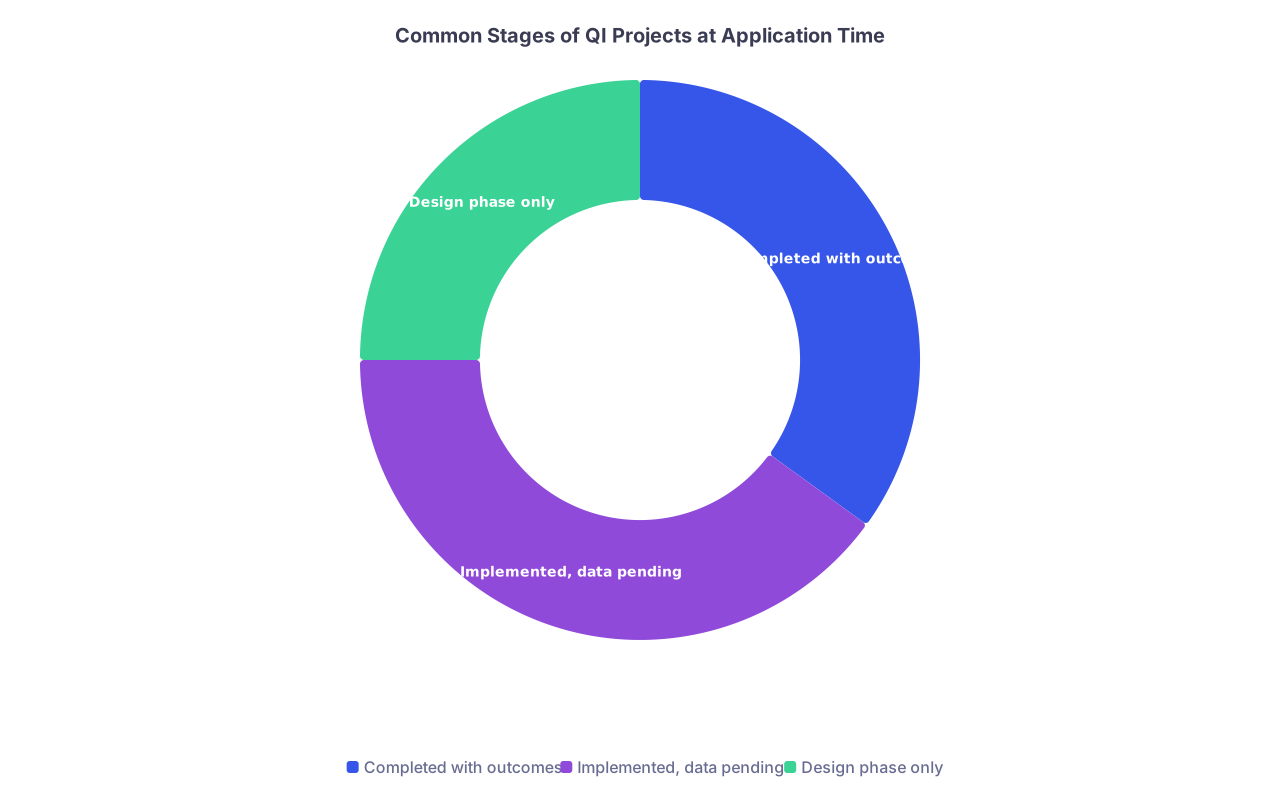
| Category | Value |
|---|---|
| Completed with outcomes | 35 |
| Implemented, data pending | 40 |
| Design phase only | 25 |
If design and planning only
Be honest about stage, emphasize your design and groundwork.
• Designed a multi‑phase QI project to standardize anticoagulation bridging practices; completed literature review, stakeholder interviews, and baseline data collection plan prior to institutional review.
Do not claim outcomes that do not exist. Do not pretend you “improved” anything yet.
If implementation started but data pending
Focus on process and anticipated measurement.
• Co‑developed and launched a standardized ED triage sepsis screen; created run chart templates and data collection protocol for 6‑month post‑implementation analysis (in progress).
You can add “anticipated completion: Month Year” if it is close.
If you left and project continued without you
You can mention handoff and sustained process.
• Led initial design and first PDSA cycle of a medication reconciliation improvement project; developed toolkit and handoff report used by subsequent teams who completed later cycles.
Programs understand that students move on. They care more about whether you did real work in your phase.
Distinguishing QI From Traditional Research on Your CV
This trips up a lot of people. They either shove QI into “Research” or try to make research sound like QI.
The simplest separation:
- Research: Hypothesis‑driven, usually IRB‑regulated, often generalizable, aims at publication.
- QI: System‑ or process‑focused, often exempt from IRB, aims at local improvement, uses PDSA or similar cycles.

If you did both—QI project that turned into a poster or manuscript—treat it as two related things:
- Under “Quality Improvement” or “Research and Quality Improvement”: the project, role, and outcomes.
- Under “Presentations / Publications”: the abstract, poster, or paper, with proper citation.
For example:
Quality Improvement Section
Increasing influenza vaccination rates in a resident clinic through standing orders
County Medical Center – QI Project Lead | Aug 2022 – Feb 2023
• Analyzed vaccination rates over prior 2 seasons (n=3,200 visits) and identified missed opportunities in MA workflow.
• Led implementation of MA‑driven standing orders and EHR best practice alerts for eligible adults.
• Achieved increase in seasonal vaccination rate from 41% to 63% in 1 year; project selected for institutional QI day oral presentation.
Presentations Section
Smith A, Lee J, Patel R. Increasing influenza vaccination rates in a resident clinic through standing orders. Department of Medicine Quality Improvement Day, County Medical Center, City, State. Oral presentation. March 2023.
Stop trying to make QI sound like randomized controlled trials. Let QI be QI. Program directors actually like it.
Tailoring QI Presentation to Specialty and Program Type
Not every specialty cares about QI in the same way. But every specialty cares about not getting sued, not wasting money, and not harming patients. That is QI.
| Specialty | QI Emphasis on CV | What Impresses Them Most |
|---|---|---|
| Internal Med | Very high | Readmissions, sepsis, chronic disease management |
| Emergency Med | High | Throughput, sepsis, stroke/STEMI times |
| Surgery | Moderate–High | Post‑op complications, SSI, pathways |
| Pediatrics | High | Vaccination, asthma, safety, growth metrics |
| Psychiatry | Moderate | Access, readmissions, safety, med reconciliation |
Internal Medicine / Hospital‑based fields
IM, EM, ICU types love:
- Sepsis bundle compliance
- Readmission reduction
- Telemetry reduction
- Standardized order sets
- Handoffs, discharge summaries
Use language they use: “LOS,” “30‑day readmission,” “CLABSI,” “CAUTI,” “mortality index.”
Example bullet that hits the right notes:
• Participated in a resident‑led project to reduce unnecessary urinary catheter days on a general medicine teaching service, contributing to catheter utilization reduction from 0.24 to 0.15 per patient day and a corresponding decline in CAUTI rate.
Surgical specialties
Surgeons care about efficiency and complications.
Emphasize:
- Post‑op pain control
- Surgical site infections
- OR flow and turnover
- ERAS pathways
Example:
• Co‑developed an ERAS‑aligned post‑op order set for colorectal surgery patients, contributing to reduction in median LOS from 6 to 4 days in pilot cohort (n=32).
Primary care / Family medicine / Pediatrics
These programs value population‑level QI:
- Vaccination rates
- Preventive screenings
- Chronic disease metrics (A1c, BP)
- Access and continuity
Use primary care metrics: HEDIS measures, panel management, registry data.
Formatting and Placement on ERAS vs School CV
ERAS gives you limited space in the Experiences section. You need to be efficient without sounding generic.

| Step | Description |
|---|---|
| Step 1 | QI Project |
| Step 2 | List as own ERAS entry |
| Step 3 | Include as bullet under that role |
| Step 4 | Consider omitting or one-line mention |
| Step 5 | Substantial time and role? |
| Step 6 | Part of larger role? |
On ERAS
If a QI project took >2–3 months and you had a real role, it deserves its own Experience entry:
- Experience Type: Research or Work/Volunteer (either is fine; I favor Research or “Other” labeled clearly in title)
- Organization: Hospital / Clinic name
- Experience Name: Start with “Quality Improvement – [project title]”
- Description: Same logic—problem, your role, intervention, outcome. 700 characters, so be tight.
Example ERAS description (roughly character‑scaled):
Designed and implemented a QI project to reduce inappropriate telemetry use on a 36‑bed medicine floor. Reviewed 12 months of baseline data (n=210 admissions) and found 38% of telemetry orders did not meet guideline criteria. Co‑developed revised order set and resident education sessions. Post‑intervention audit showed reduction in non‑indicated telemetry orders to 19% over 4 months. Presented findings at department QI conference.
If the QI work was folded into a job (e.g., research assistant, clinic coordinator), you can include it as one of that position’s bullets instead of a separate entry.
On a school CV (PDF you upload)
You have more freedom. I recommend:
- A dedicated “Quality Improvement and Patient Safety Projects” section.
- Listing projects in reverse chronological order.
- Using the structured format we covered (Title / Institution / Role / Dates / 2–3 bullets).
Make sure formatting is consistent with your Research and Work sections. Sloppy formatting makes reviewers suspicious that you are sloppy in other ways too.
Common Mistakes That Make QI Look Weak
Let me be very clear about what makes me roll my eyes when I read QI entries.
No numbers anywhere.
If you claim to have done QI and there is not a single count, percentage, or time frame, it looks like busywork.Inflated scope.
“Hospital‑wide initiative” that was really one pilot on one ward with 12 patients. Programs notice.Buzzword salad.
“Leveraged multidisciplinary synergies to enhance holistic patient‑centered care.” This is empty.Passive role disguised as leadership.
“Participated in planning” = probably watched on Zoom. Be honest. If you just attended meetings, that is not a project; at best it is exposure.Mixing QI buzzwords without understanding.
Throwing “PDSA,” “Lean,” and “Six Sigma” into one bullet does not make you sound smart; it makes you sound like you copied a slide.Listing trivial tasks as standalone QI.
“Reviewed 10 charts to see if pain scores were documented.” That is an assignment, not a project.
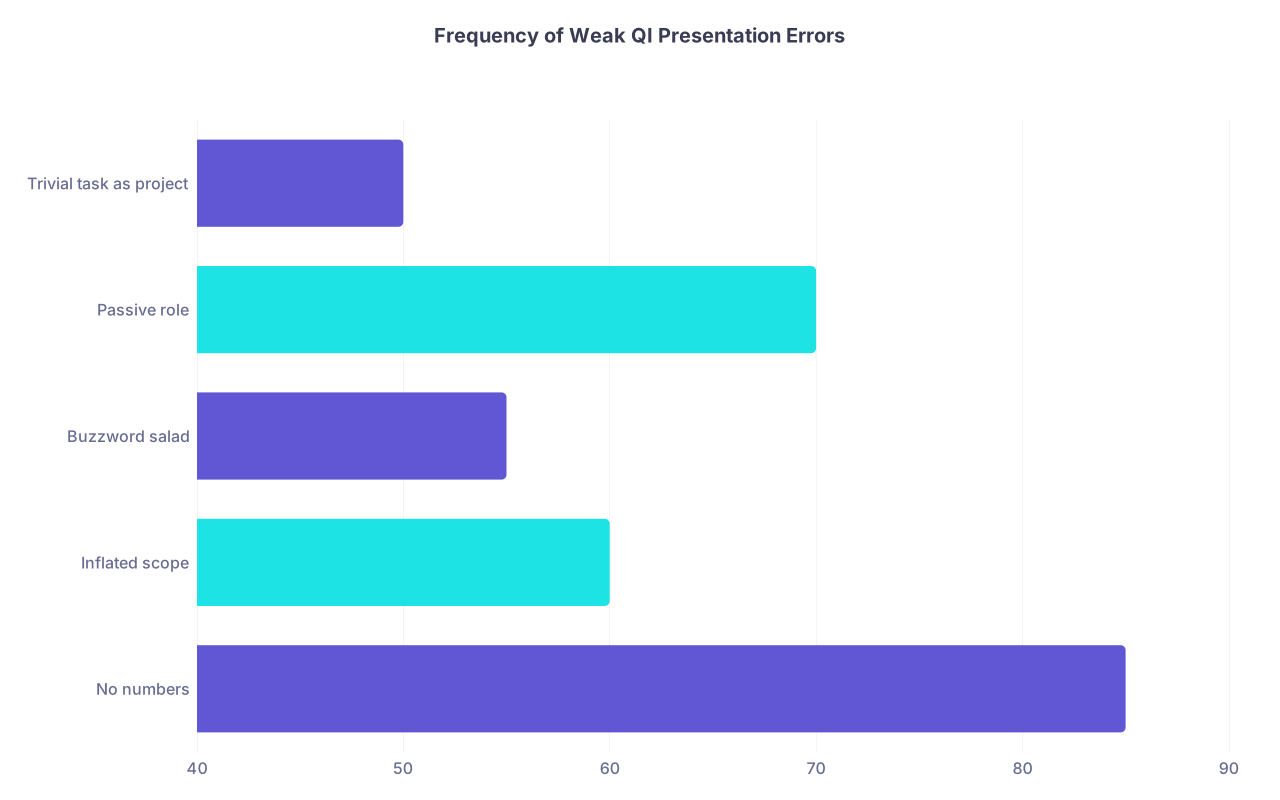
| Category | Value |
|---|---|
| No numbers | 85 |
| Inflated scope | 60 |
| Buzzword salad | 55 |
| Passive role | 70 |
| Trivial task as project | 50 |
If you recognize yourself in some of these, good. Fix it now while you can still edit your CV.
How to Talk About QI Projects in Interviews
If you list a QI project on your CV, you must assume it will be an interview question. Especially at places that care about systems and safety.
You need a 60–90 second narrative ready, loosely following:
- The problem you tackled
- What the baseline looked like (with 1–2 data points)
- The intervention and your specific role
- What happened (or what you set up to happen)
- One thing you learned about systems or teams
Do not recite the whole PDSA. Hit the highlights.
Example:
“On my medicine clerkship we noticed telemetry was being ordered reflexively. We reviewed 12 months of admissions and saw about a third of telemetry orders did not meet criteria. I joined a QI team that redesigned the admission order set and did short teaching sessions for interns. After implementation we cut non‑indicated telemetry to about 20 percent. The interesting part for me was realizing the EHR default and culture around ‘better safe than sorry’ mattered more than individual knowledge. It made me appreciate how much residents can impact systems when they are intentional.”
That answer tells a program director you understand systems thinking, not just “we made a poster.”

If You Have No Real QI Projects Yet
You might be reading this late in the game. Applications are coming and you realize your “QI experience” is a 1‑hour online module on CLABSI prevention.
Here is what you can do that is not fake and still helps:
Look back at your rotations. Did you actually participate in:
- A discharge summary improvement effort?
- A handoff standardization?
- An EPIC order set revision?
If yes, ask the resident or attending if you can briefly summarize that as a team QI project and have them vet your description.
Do not make up a project. If it was essentially an educational assignment, you can say:
“Completed chart review and case analyses as part of a resident‑led CLABSI prevention QI effort” – and leave it at that. One bullet, not its own major entry.If you are still early (M3, early M4), seek out a resident QI project and ask to do something more than data entry: design a survey, help with an educational session, build a simple run chart. Make that your “real” QI experience for next cycle.
Programs do not require multiple QI projects. One solid, honestly presented effort beats three inflated non‑projects every time.
Key Takeaways
- Treat QI projects as serious evidence of how you think and work, not as generic “research.”
- Every strong QI entry should show the problem, your role, the intervention, and concrete outcomes or metrics.
- Be honest about scope and stage; avoid fluff, buzzwords, and inflated language. Clear, specific, outcome‑oriented descriptions are what impress program directors.