
You are post-anatomy, neck-deep in second year. First big systems block with real path starts next week. Your group chat is split into factions:
- One person swears: “If it’s not in Robbins, it’s not real path.”
- Another says: “Pathoma is all you need for Step.”
- A third lives inside Sketchy and barely reads anything.
You do not have time to marry all three. You need a backbone. One primary pathology resource that structures how you learn disease – and then you layer everything else around it.
Let me break this down specifically: what Pathoma, Robbins, and Sketchy actually do; where they shine; where they fall flat; how different types of students should combine them; and what I’ve seen actually work for exams (school + Step).
1. What Each Resource Really Is (Not the Marketing Version)
First, definitions in the way they actually get used, not how companies sell them.
Pathoma
Pathoma is precision-cut, exam-focused pathology. Think: surgical strike, not carpet bombing.
What it really is:
- A slim textbook (“Fundamentals of Pathology”) + recorded video lectures
- Organized by General Pathology, then Systemic Pathology
- High-yield disease mechanisms, classic buzzwords, and key histo features
How students actually use it:
- During second year blocks as the “spine” of path
- During dedicated Step 1 prep as quick systems review
- As a rescue resource when Robbins-problem kids get lost in detail
Its signature: Sattar walking you through why each lesion happens, what the key lab findings are, and what you absolutely must not miss on boards. Minimal fluff. Surprisingly good reasoning.
Robbins
Let’s separate the two “Robbins” flavors, because people confuse them constantly.
- Big Robbins – Pathologic Basis of Disease (the doorstop)
- Baby Robbins – Basic Pathology (condensed, still hefty)
What Robbins really is:
- The gold-standard pathology reference text
- Most faculty grew up on it, so your lecture slides secretly come from it
- Heavy on mechanisms, pathogenesis, morphology, and clinicopathologic correlations
How students actually use it:
- As a reference when something from Pathoma/lectures is unclear
- To write insanely detailed notes during first pass of MS2 (high neuroticism move, sometimes useful, often overkill)
- As a required text that mostly gathers dust while students use PDFs + search
Robbins is not a primary Step 1 resource for most students. It is a content depth monster. If you try to “do Robbins” cover to cover for Step prep, you will drown.
Sketchy (Path)
Sketchy Path builds animated, story-based visual mnemonics for pathology concepts. Not to be confused with Sketchy Micro/Pharm, which are legendary in their own right.
What Sketchy Path really is:
- Shortish videos with busy scenes where each object encodes a path fact
- Heavy strength in micro, immunology, oncology, and common systemic diseases
- Very good for long-term recall of lists, triads, and fact clusters
How students actually use it:
- To lock down details that Pathoma repeatedly mentions but that do not stick
- Parallel with systems blocks: watch Sketchy for diseases you keep forgetting
- Stronger for micro + pharm; path section is helpful but not as “mandatory”
Sketchy is not designed to be your only pathology teaching tool. It is a reinforcement tool. It layers memory onto a conceptual base that should come from somewhere like Pathoma, lectures, or a decent text.
2. Big Picture: What You Need From a “Pathology Backbone”
Boards and shelf exams do not care what resource you used. They care that you can:
- Recognize classic disease patterns from a small amount of clinical data.
- Understand mechanisms enough to reason through unfamiliar variants.
- Differentiate five similar things that all cause “hemolytic anemia” or “interstitial lung disease.”
- Recall key buzzwords and classic associations quickly under time pressure.
Your backbone resource must:
- Give you a coherent framework: why diseases happen, how they progress.
- Be connected to questions: UWorld, NBME style thinking.
- Be sustainable in time: you can finish it multiple times, not once in a panic.
So the real question is not “Which is best?” It is: “Which should be the skeleton, and which should be the muscles and skin?”
3. Pathoma vs Robbins vs Sketchy: Direct Comparison
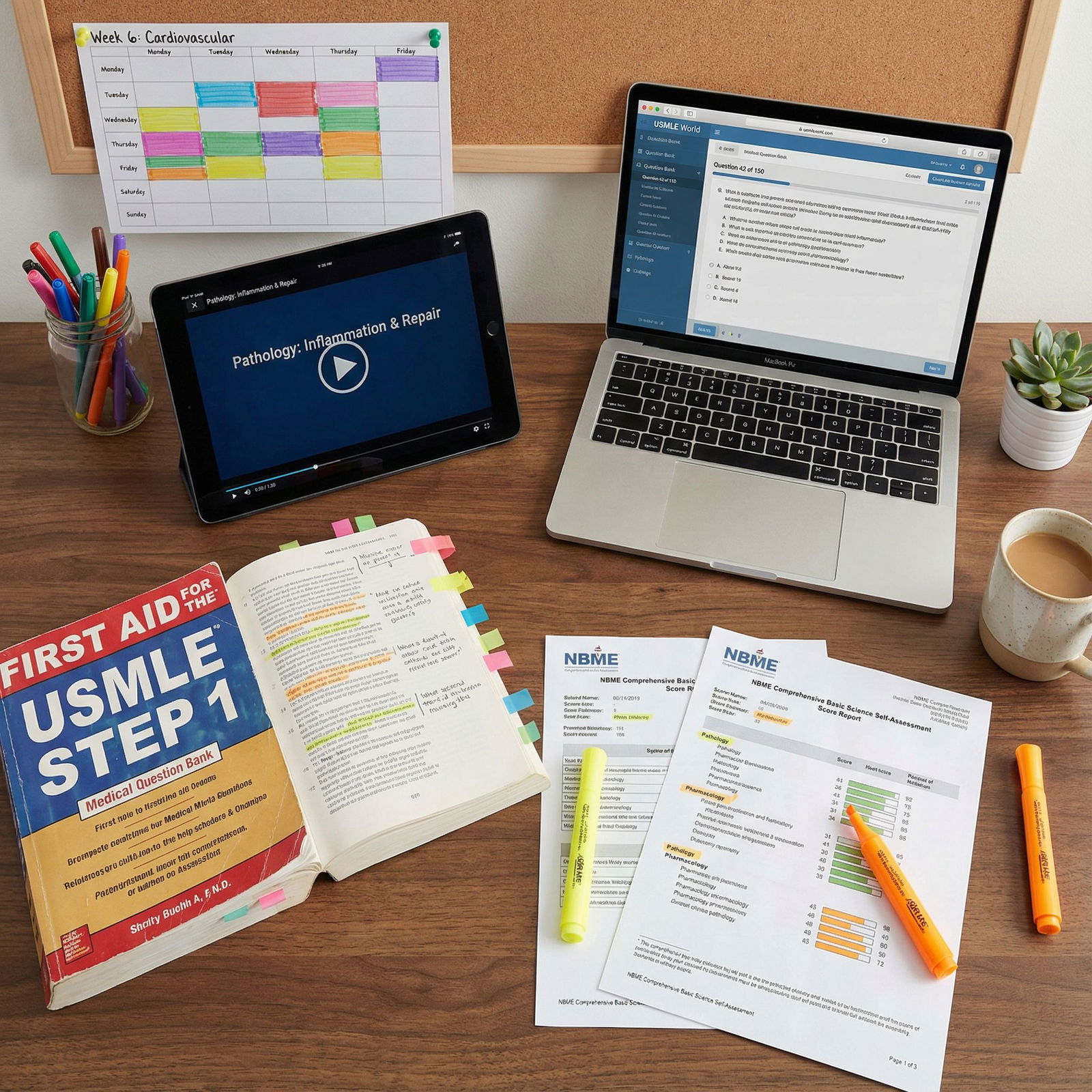
Let me line them up on the things that actually matter to you.
| Feature | Pathoma | Robbins (Big/Basic) | Sketchy Path |
|---|---|---|---|
| Depth of content | Moderate | Very high | Low–moderate |
| Conceptual clarity | High | High (but dense) | Moderate |
| Time requirement | Low–moderate | Very high | Moderate |
| Best for | Framework + boards | In-depth understanding | Memory & retention |
| Primary backbone? | Yes (for most) | Yes (select students) | No |
Conceptual Understanding
- Pathoma: Explains mechanisms in clean, exam-focused language. Great at “here is how we get from chronic inflammation to carcinoma” type reasoning. If you feel lost in lectures, Pathoma often rescues you.
- Robbins: Explains mechanisms in full. You get the molecular pathways, the exceptions, the weird mouse models. Great if you actually like path. Terrible if you are 3 weeks behind.
- Sketchy: Conceptual base is thinner. It assumes you roughly know what the disease does, then helps you link features via images. Does not deeply teach “why,” more the “what” and “how to recall it fast.”
Exam Alignment (Step 1/2, NBME subject exams)
Pathoma: Very aligned. Sattar essentially lives in Step 1 land. He repeats the same high-yield patterns that keep showing up in UWorld. It is not perfect coverage, but in actual practice, it is “enough” plus questions.
Robbins: Indirectly aligned. Because Robbins is the source for a lot of question writers’ understanding, but it is not curated. Tons of low-yield. For questions, you want to read stems and explanations, not 4 pages per disease.
Sketchy: Very useful for micro and pharm, moderately good for path. Path section is hit-or-miss depending on the topic. Sometimes the scenes feel forced. When they hit, though, those facts stick for years.
Time Cost
Let’s be very blunt.
- Full Pass of Pathoma during MS2: Reasonable.
- Full Pass of Big Robbins during MS2: Almost no one actually does it, even if they plan to.
- Full Sketchy Path: More realistic than Robbins, but still a serious time investment, especially if you pause to decode every symbol.
You have finite time. This matters more than people admit.
4. Matching Resource to Student Type
Here is where things get practical. Different brains, different options.
Profile 1: The Average-Strong Step-Oriented Student
You are aiming for a solid Step 2 score (or historically Step 1), competitive but not necessarily derm or neurosurg obsessed from day one. You want efficiency.
Your backbone should be: Pathoma.
Why:
- It gives you a complete, board-ready framework for general + systems path.
- It is finishable during the year and again during dedicated.
- It meshes nicely with UWorld and NBME style questions.
How to structure it:
- During each block: Watch the relevant Pathoma chapters as you go. Example: In your renal block, do all kidney chapters in Pathoma within the first 1–2 weeks.
- Take brief, structured notes (or annotate First Aid/Boards & Beyond notes if you use them).
- During dedicated: One more fast pass of all of Pathoma, integrated with systems review.
What Robbins does for you here:
- Occasional spot reference. You read Pathoma on lupus nephritis and still feel hazy? Open Robbins, search “lupus nephritis,” read 2–3 pages, close the book. Do not let yourself read entire chapters “just because.”
Where Sketchy fits:
- Strong add-on if you are visual and you find you forget small lists: vasculitides, nephritic vs nephrotic syndrome players, oncogene/tumor suppressor associations.
- Absolutely core for micro + pharm, which will indirectly help your path understanding anyway.
Profile 2: The Detail-Oriented, Path-Interested Student (Maybe Future Pathologist)
You like mechanisms. You secretly enjoy long explanations. You care about understanding disease beyond what NBME asks.
Your backbone can be: Robbins Basic Pathology + Pathoma.
Notice that. Not Robbins alone.
Why:
- Robbins gives you depth and nuance.
- Pathoma gives you prioritization and speed.
How to structure:
- Use Robbins (Basic, not necessarily Big) as your primary reading for each block, but in targeted chunks, not linearly.
- Before each major block, watch the relevant general path chapters in Pathoma to create a scaffold.
- When lectures or Robbins go very deep, ask yourself: “Would I ever see this in a question?” and mark true high-yield vs nice-to-know.
Pitfall I have seen:
- These students often end up behind because they try to read everything. The solution is ruthless skimming and using headings/figures to anchor, not reading every paragraph slowly.
Sketchy here:
- Use it selectively. If you notice memory problems with certain high-yield topics (e.g., leukemias/lymphomas, vasculitides), pick those Sketchy videos only.
Profile 3: The Visual/Story Learner Who Hates Text
You can read, obviously, but you do not retain from bulk text. You remember stories, images, colors, weird details.
Your backbone still should not be Sketchy Path alone. That is a common mistake.
Instead: Pathoma as conceptual base, Sketchy as the main retention engine.
Structure:
- Watch Pathoma once for each system to understand the storyline.
- Immediately reinforce with related Sketchy videos. Pause the video, test yourself by recalling what each symbol means, then resume.
- Use Anki (either premade decks like AnKing or your own) that leverage those visual mnemonics.
Robbins for this group:
- Almost irrelevant for day-to-day. Use only when something is seriously confusing or you want histology images beyond what Pathoma/Sketchy show.
5. How to Combine Them During MS2 and Dedicated
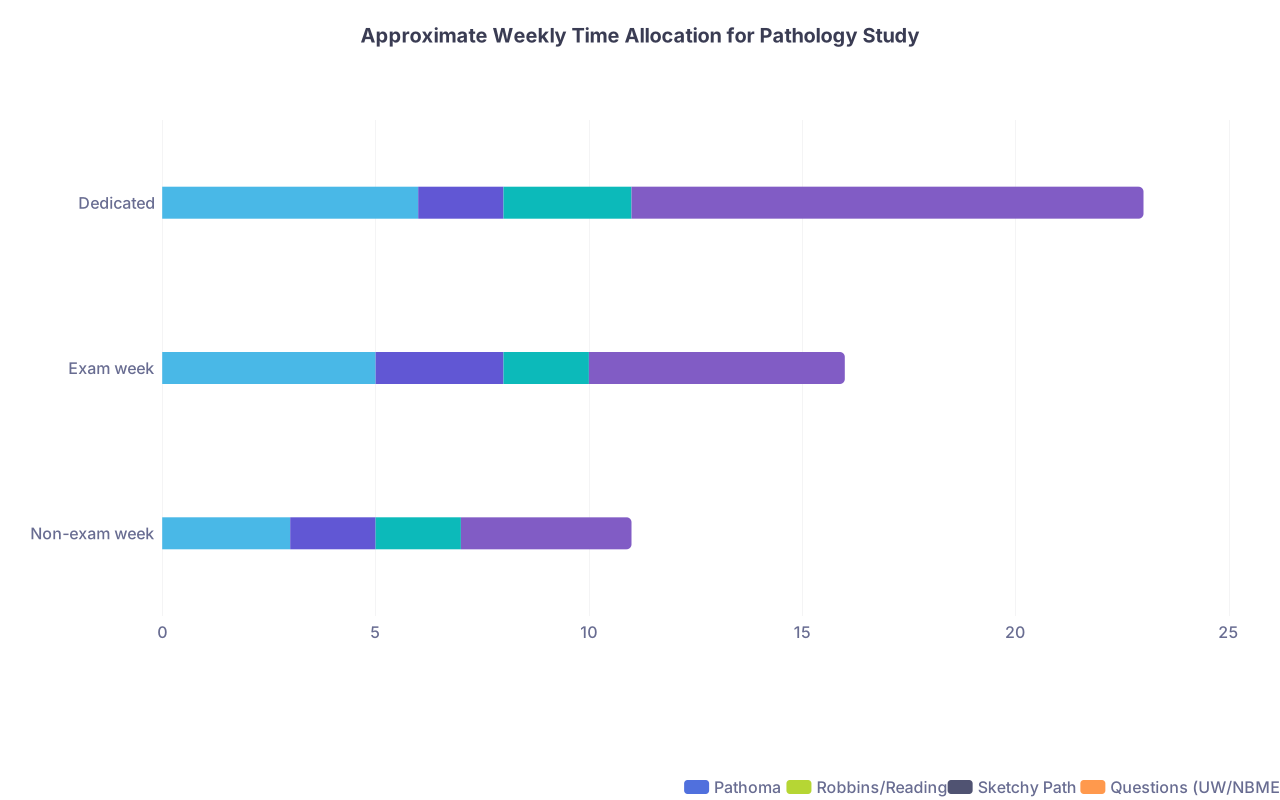
| Category | Pathoma | Robbins/Reading | Sketchy Path | Questions (UW/NBME) |
|---|---|---|---|---|
| Non-exam week | 3 | 2 | 2 | 4 |
| Exam week | 5 | 3 | 2 | 6 |
| Dedicated | 6 | 2 | 3 | 12 |
Let’s talk schedule, because intentions without a plan are how people end up with 100h of unwatched videos in May.
During Systems Blocks (Non-exam Weeks)
Baseline reasonable structure (per week):
- 2–3 hours Pathoma for the current system
- 1–2 hours Robbins (or detailed notes/lectures) as needed
- 2–3 hours Sketchy Path/Micro/Pharm, depending on the block
- 4–6 hours of questions (UWorld for the system, school question bank, etc.)
Key principle:
- Every concept you learn in Pathoma must be seen in question form soon. Questions drive depth. Pathoma by itself will not give you the pattern recognition you need.
Exam Weeks / Block Exam Prep
Pathoma: Re-watch or review speed 1.5–2x for that system. Focus on your weak spots.
Robbins: Use for things your professors emphasized that Pathoma barely mentions. School exams love Robbins-ish details, especially in more academic schools.
Sketchy: Target your weakest fact clusters. If your last quiz showed you keep confusing RPGN types or vasculitides, watch those.
Dedicated Step Prep
I have seen many iterations. The pattern that works most often:
- One full rapid pass of Pathoma in the first 7–10 days of dedicated.
- Concurrent daily UWorld blocks (mixed or systems, depending on your strategy).
- Sketchy reserved mainly for micro/pharm and selected high-yield path topics you still forget.
- Robbins basically retired, except for high-anxiety deep dives if something in explanations does not make sense.
Do not try to “finish Robbins” during dedicated. That is fantasy.
6. Strengths and Weaknesses by System
Because not all systems are equal across resources.
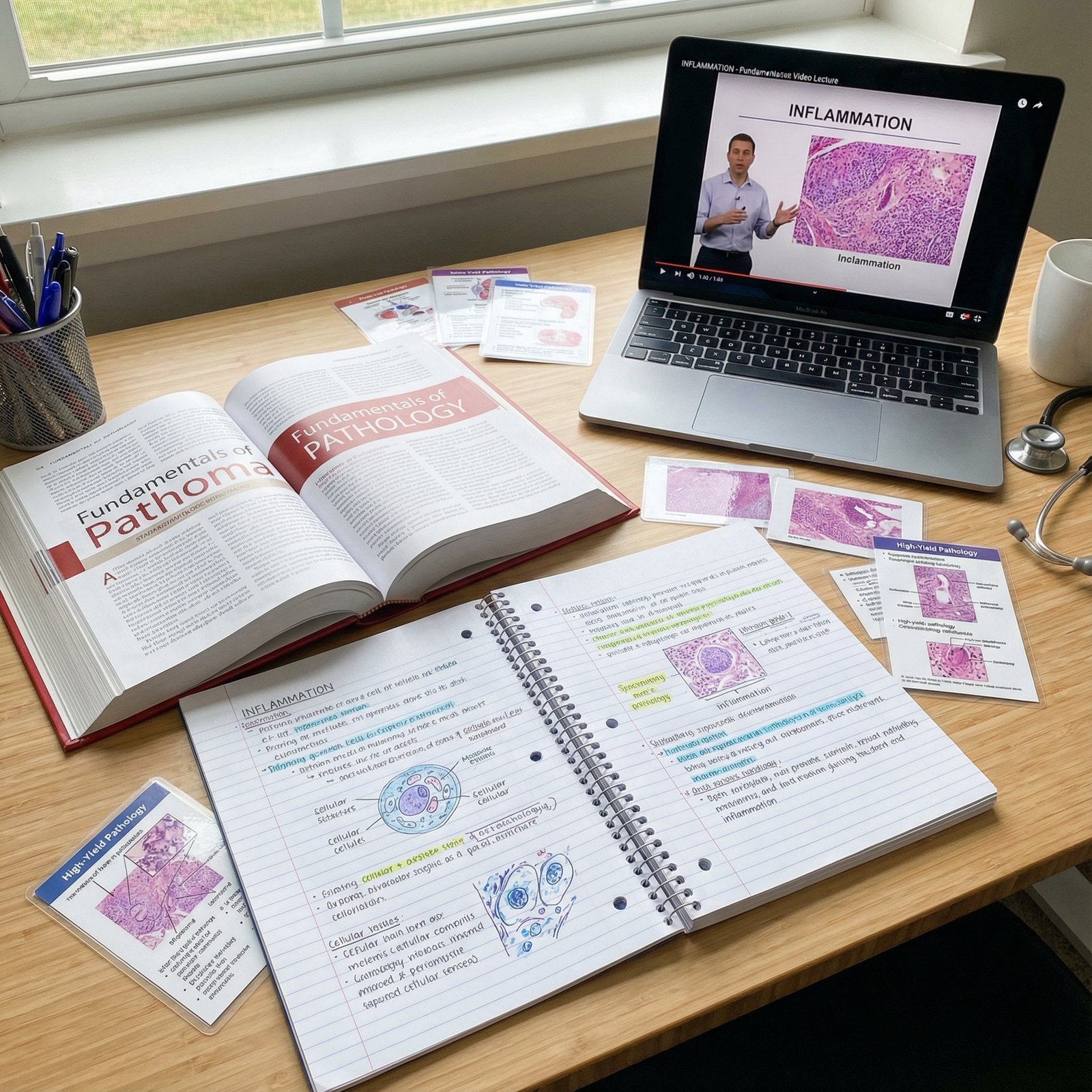
Here is where each resource particularly shines or stumbles.
General Pathology (cell injury, inflammation, neoplasia, hemodynamics)
- Pathoma: Outstanding. If you understand Sattar’s general path sections well, you will see those mechanisms again and again in systems.
- Robbins: Even better for depth, but more than most need. Great if you want the nitty-gritty of necrosis types, specific growth factor pathways, etc.
- Sketchy: Limited, not my first recommendation for this core section.
Recommendation: Pathoma as primary, Robbins for curiosity or confusion.
Hematology / Oncology
- Pathoma: Very strong conceptually. His explanation of leukemias, lymphomas, myeloproliferative disorders is one of the best structured frameworks out there for exams.
- Robbins: Good but can get very dense; can help if you want to understand odd variants.
- Sketchy: Helpful for remembering specific leukemia/lymphoma features and treatment associations.
Ideal mix: Pathoma first, then high-yield Sketchy for certain heme-onc diseases.
Cardio / Pulm / Renal
- Pathoma: Strong, but can feel a bit quick on very clinically heavy diseases. You will supplement a lot from questions and maybe Boards & Beyond or your lectures.
- Robbins: Excellent for detail on things like glomerulonephritis types, interstitial lung diseases, vascular pathologies. Lots of content, must be skimmed wisely.
- Sketchy: Decent for certain concepts (e.g., some vasculitides, atherosclerosis-ish topics), but not enough to stand alone.
Use Pathoma as scaffold, Robbins pages for tricky things (like the crescents and immune complex distributions you keep mixing up), Sketchy only if a visual is needed.
GI / Liver / Pancreas
- Pathoma: Very good. Approach to chronic hepatitis, cirrhosis, colon polyps, and carcinoma risk is exam gold.
- Robbins: Great for depth on things like inflammatory bowel disease histology vs infectious colitis, etc.
- Sketchy: Variable. Some scenes work, some feel forced.
You can get through GI path solidly with Pathoma + questions alone.
Renal (specifically glomerular diseases)
Worth isolating this because many students suffer here.
- Pathoma: Provides a workable conceptual framework, but the fine distinctions between each glomerulopathy may not fully stick from this alone.
- Robbins: Fantastic but dense. Very image-heavy and mechanism-rich.
- Sketchy: Surprisingly useful for some glomerulopathies; visualizing immune complexes, podocyte injury, etc.
Strategy: Do Pathoma → a focused Robbins read for glomerular diseases only → selective Sketchy to lock in features.
Neuro / Endocrine / Repro
- Pathoma: Does a good job capturing classic board diseases (pituitary tumors, thyroid disorders, demyelinating diseases, neoplasms, etc.).
- Robbins: Excellent, especially for CNS tumors and endocrine neoplasia nuance.
- Sketchy: Mixed bag; some endocrine scenes are helpful.
Again: Pathoma + UWorld covers most of your needs; Robbins is bonus depth.
7. Common Mistakes Students Make With These Resources
I have seen the same errors repeat every year.

| Step | Description |
|---|---|
| Step 1 | Start MS2 Path |
| Step 2 | Add questions early |
| Step 3 | Time risk |
| Step 4 | Weak concepts |
| Step 5 | Drop Robbins to reference-only |
| Step 6 | Add Pathoma foundation |
| Step 7 | Choose Backbone |
| Step 8 | Behind in blocks |
Trying to use Robbins as a day-to-day primary text without pacing.
They get 40 pages behind after week 1, then feel guilty, then stop reading entirely. End result: no backbone.
Watching Pathoma passively like Netflix.
No notes, no pausing, no retrieval practice. They “finish” Pathoma and still miss basic path questions because nothing was consolidated.
Relying on Sketchy Path without a conceptual foundation.
They can tell you that “the flaming torch in the scene means ROS damage,” but if you change the context even slightly in a question, they are lost because they never built the underlying reasoning.
Ignoring questions until “after I finish all the videos.”
They hoard resources. Step 1 style questions are where you see which pieces actually matter. If you delay questions, you end up with a huge gap between “I watched” and “I can answer.”
Re-reading or re-watching instead of active recall.
Classic exam-week panic: re-watch 20 Pathoma videos at 2× speed, feel “productive,” score the same. Retrieval and questions move the needle, not passive review.
8. Concrete Recommendations by Goal
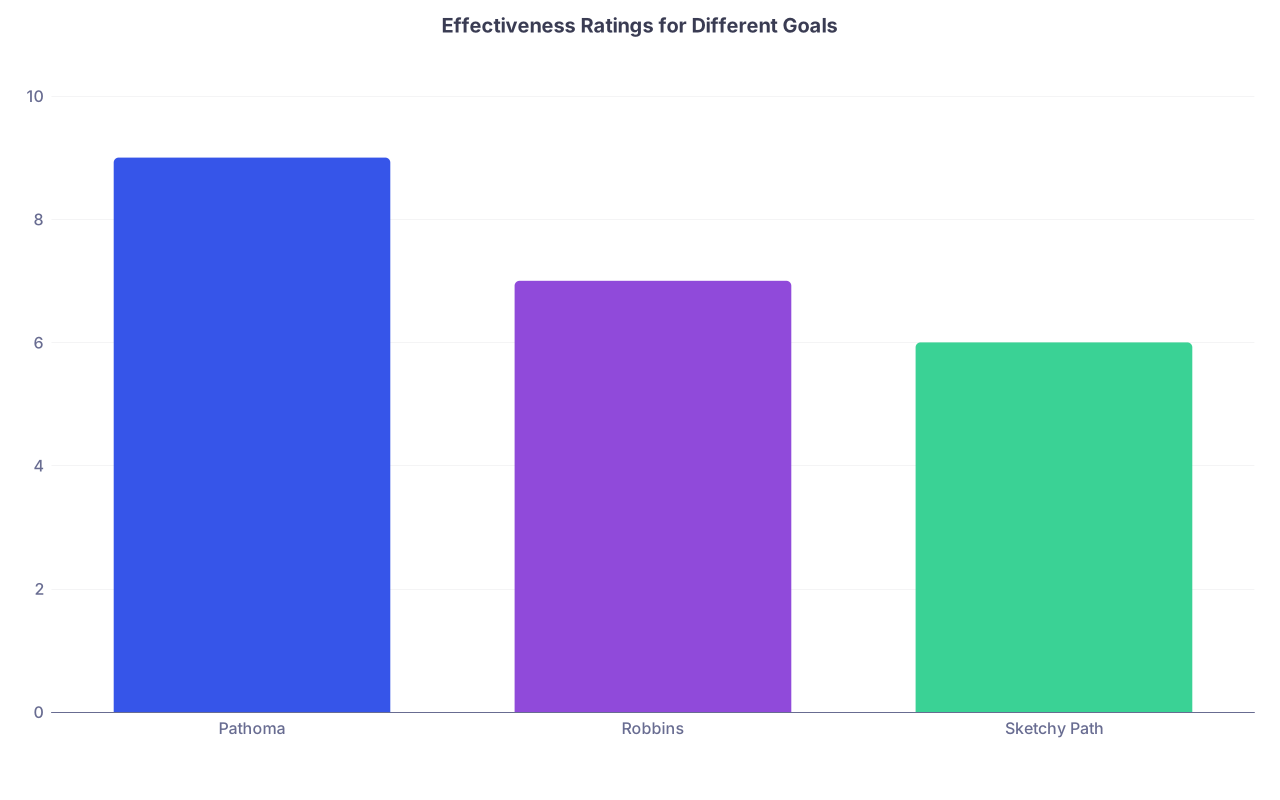
| Category | Value |
|---|---|
| Pathoma | 9 |
| Robbins | 7 |
| Sketchy Path | 6 |
(Scale: 1–10 effectiveness for each goal below; this chart is essentially that.)
If Your Priority Is: Step 1/2 Performance
- Pathoma: 9/10
- Robbins: 7/10 (as reference)
- Sketchy Path: 6/10 standalone, higher as supplement
Recommended sequence:
- Use Pathoma as your primary structured learning.
- Do questions early and consistently; link every miss back to either Pathoma or a quick Robbins read.
- Use Sketchy mainly for micro/pharm + a handful of path topics you persistently forget.
If Your Priority Is: Honoring School Path Exams
Especially in schools where professors say “as in Robbins chapter X…”
- Pathoma: 8/10
- Robbins: 9/10 (for those specific exams)
- Sketchy Path: 5–6/10
You will likely need:
- Pathoma for clarity and speed.
- Targeted Robbins sections for the details that your lecturers hammer.
- Old exams / school question banks to learn your faculty’s style.
If Your Priority Is: Deep Long-Term Understanding (Future Path/Rad-Onc/IM with academic bent)
- Pathoma: 8/10
- Robbins: 10/10
- Sketchy Path: 5/10
You should:
- Build your framework from Pathoma and lectures.
- Systematically read key Robbins sections for systems you care about.
- Accept that this adds time; protect your question-practice time fiercely.
9. Putting It All Together: Sample “Hybrid” Strategy

Let me give you a concrete example for, say, a 4-week cardio block.
Week 1–2 (Content Building)
- Watch Pathoma general path chapters related to hemodynamics + all cardio chapters (1–1.5× speed, pausing to write brief notes).
- Attend or skim lectures; for any confusing topic, glance at Robbins section (2–5 pages max).
- Start 10–15 questions per day related to cardio (school qbank or UWorld systems mode).
Week 3 (Integration)
- Re-watch key Pathoma cardio videos you struggled with (ischemic heart disease, cardiomyopathies, valvular disease).
- Watch Sketchy for any cardio path topics that keep slipping (e.g., rheumatic heart disease, certain vasculitides).
- Increase questions to 20–30 per day; start integrating a small number of mixed blocks.
Week 4 (Exam Week)
- Do a fast, focused re-watch of Pathoma cardio only (just segments tied to your weak points).
- Quick Robbins spot-checks for any professor-specific topics you know they love.
- Practice questions, then review explanations; tie new details back into your framework.
That is a realistic, sustainable pattern. Scales up to other systems.
FAQ (Exactly 5 Questions)
1. If I can only pick one as my primary pathology resource for Step 1/2, which should I choose: Pathoma, Robbins, or Sketchy?
Pathoma. It hits the best balance of depth, clarity, time cost, and exam alignment. Robbins is fantastic but too dense for most to realistically complete. Sketchy Path is excellent as a supplement but does not provide a full conceptual framework alone.
2. Is there any scenario where Robbins should be my main day-to-day pathology text?
Yes, but it is rare. If you are highly motivated, already efficient with reading dense text, genuinely enjoy pathology, and you are aiming for a deep academic understanding (future pathologist, academic IM, etc.), then Robbins Basic Pathology alongside Pathoma can function as a dual backbone. Even then, it should be targeted reading, not cover-to-cover slogging.
3. How much Sketchy Path is “enough” if I am already doing Pathoma and UWorld?
For most students, you do not need to complete all of Sketchy Path. Focus on topics that are list-heavy and confusing: vasculitides, glomerular diseases, hematologic malignancies, and key systemic diseases where you keep forgetting small associations. Sketchy Micro and Pharm are higher priority; treat Sketchy Path as selective reinforcement.
4. My school exams test microscopic details that Pathoma barely mentions. What should I do?
Use your lecture notes + targeted Robbins reading to cover those specifics. Identify which topics your faculty overemphasize (often spelled out in objectives or old exams), then read only those Robbins sections. Keep Pathoma as your conceptual core and USMLE questions as your performance barometer. Do not try to convert entirely to “Robbins mode” for everything.
5. How many passes of Pathoma should I aim for before Step?
Ideal pattern: one thorough pass during MS2 while you are doing each system, and one faster, integrated pass during dedicated Step prep. Some students do selective third passes of their weakest systems. More passes only help if you are actively engaging (pausing, recalling, annotating, and linking to questions), not just re-watching on autopilot.
Key points to walk away with:
- Pathoma should be the primary pathology backbone for most students; Robbins is high-yield depth, not a solo core; Sketchy Path is a powerful but secondary memory tool.
- Your real gains come from integrating whichever backbone you choose with relentless, early question practice.
- The best resource is the one you can actually finish, understand, and recall under timed conditions – not the one that looks most impressive on your shelf.