

You can take a pure rest and recovery gap year and still match well. But only if you’re smart about how you frame it and what you let slip during that year.
Let me be blunt: programs don’t actually care that you worked 60 hours a week at a “clinical research coordinator” job. They care that:
- You didn’t fall off a cliff clinically or professionally.
- You can explain your choices like a thoughtful, responsible adult.
- You still look like someone who’ll show up, work hard, and not burn out on them.
A rest year can help with that—or hurt it. The difference is in the execution.
The Real Question Programs Are Asking
When a PD or interviewer sees a gap year—especially a “rest” year—they’re not thinking, “Wow, lazy.” They’re thinking three specific things:
- Are you running away from something?
- Are you still serious about this specialty?
- Will this make you more stable and effective, or less?
That’s it. Every other worry (“Will they remember medicine?” “Are they high risk for burnout?”) plugs into those three.
Your job is to make sure your year, and your explanation of it, clearly answer:
- “I stepped away intentionally, not because I was falling apart.”
- “I stayed connected enough that I’ll transition back smoothly.”
- “I used that time to become a more sustainable, self-aware, and grounded physician.”
You don’t need a packed CV. You need a coherent story.
What “Pure Rest and Recovery” Can Look Like (That Programs Accept)
Let’s define “pure rest and recovery” realistically, not Instagram-style sabbatical.
Bad version (what makes PDs nervous):
- 12 months of: “I lived at home, slept, played games, hung out. No structure, no responsibilities, no medicine.”
- No clinical contact, no growth, vague explanations like “I just needed time.”
Better version (totally matchable):
- 6–12 months where your primary focus is rest and your health, but:
- You do small, low-burn professional things (a few shifts, light teaching/tutoring, casual mentorship, small ongoing project).
- You maintain some connection to clinical medicine or your specialty.
- You can actually point to how you came out of that time better functioning than you went in.
Notice: this is still a rest year. You’re not cramming in publications, full-time jobs, or another degree. But you are not going completely dark.
Here’s what makes programs more comfortable with a rest-heavy year:
- There’s some accountability in your life (part-time job, structured volunteer work, language class, etc.).
- There’s at least occasional patient contact or clinical exposure, especially if you’re more than 12 months from graduation.
- Your explanation in your personal statement and interviews is very clear, honest, and forward-looking, not defensive.
How Different Specialties See a Rest Year
Some specialties are more gap-year-paranoid than others.
| Specialty | Rest Year Friendliness | Key Concern |
|---|---|---|
| Family Med | High | Professionalism history |
| Psychiatry | High | Stability, insight |
| Pediatrics | Moderate-High | Ongoing engagement |
| Internal Med | Moderate | Clinical rustiness |
| General Surgery | Low-Moderate | Work ethic, commitment |
| Derm/Ortho/ENT | Low | Competitiveness signal |
For highly competitive surgical or procedural specialties (derm, ortho, plastics, ENT, NSGY), a true “no-activity” year is a harder sell. Doesn’t mean impossible, but you better have:
- Very strong baseline stats (Step scores, clerkship performance).
- Some ongoing academic or clinical tie-in.
- A compelling and mature explanation.
For primary care, psych, peds, and IM, a rest-heavy year is much easier to justify—as long as your story is coherent and honest, and you didn’t vanish.
The Three Non-Negotiables If You Take a Rest Year
1. You must have a clean, tight explanation
You’ll be asked, often:
“So, tell me about your gap year.”
If you start rambling or sound apologetic, you’re in trouble.
A good structure:
- Why you stepped away
- What you actually did
- How it changed you and why that helps you be a better resident
Example (burnout prevention version):
“After finishing medical school, I realized I’d been running on fumes for a long time. I decided to take a structured year focused on recovery and sustainability so I don’t burn out three years into residency. I moved closer to family, got consistent sleep and exercise back, and worked part-time as a clinical scribe two days a week to stay connected to patient care. I also started therapy and learned very practical tools for managing stress and perfectionism. I’m coming into residency with much better insight into my limits and a plan for staying healthy long-term.”
Straightforward. No melodrama. No oversharing. Clear arc.
What to avoid:
- Long emotional backstory with no resolution.
- Blaming your school, attendings, or system without any ownership.
- Sounding like you still haven’t fully recovered or stabilized.
2. You must maintain at least a thread of clinical or professional contact
If you truly do nothing medicine-adjacent for 12+ months, people start to worry you’ll be rusty and overwhelmed.
Here are “light lift” options that still look good but don’t kill your rest focus:
- Per diem or 1–2 shifts/week as:
- Scribe
- Medical assistant (if your background fits)
- Clinic assistant
- Remote/part-time:
- Tele-scribing
- Simple chart review or QA work
- Occasional:
- Volunteer clinic 1–2x/month
- Shadowing your future specialty once a month
- Informal teaching/tutoring pre-meds or MS1s
That’s enough to say:
- “I kept my clinical brain turned on.”
- “I stayed accountable and showed up to something.”
- “I didn’t detach entirely from medicine.”
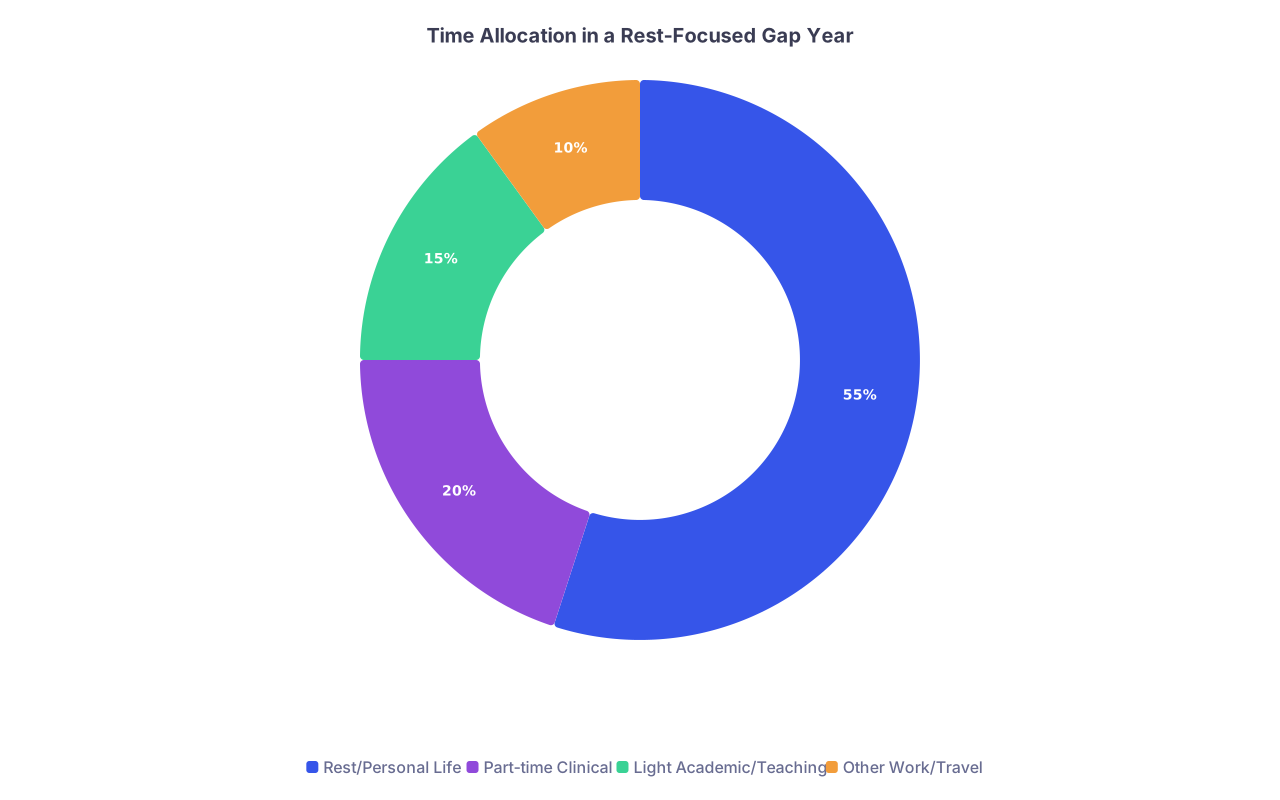
| Category | Value |
|---|---|
| Rest/Personal Life | 55 |
| Part-time Clinical | 20 |
| Light Academic/Teaching | 15 |
| Other Work/Travel | 10 |
You don’t have to hit those exact numbers, but you get the idea: majority rest, minority structured professional activity.
3. You must set up future you with good letters and momentum
If your rest year is between graduation and applying, or between MS4 and residency, think ahead.
Critical moves:
Keep in touch with letter writers.
Send them 1–2 updates during your gap year: what you’re doing, what you’re learning, that you’re excited for residency.If possible, add one fresh contact during the year who can vouch for you:
- Supervisor at a part-time clinic.
- Faculty you help with a small QI project.
- Volunteer clinic director.
You want at least one person who saw you recently functioning in a healthcare environment and can say: “They’re reliable, they show up, they’re stable.”
How to Frame Mental Health or Burnout as the Reason
Let’s be honest—this is a huge reason many people ask about “rest and recovery” years.
You can absolutely say your year was for mental health, burnout prevention, or addressing personal health issues. Programs are better about this now than they were. But you need to do it strategically.
Principles:
- Be honest, but not graphic.
- Emphasize insight and action, not just suffering.
- Focus on where you are now, not just what happened.
Example language:
For personal statement:
“By the end of my clinical years, I realized I was operating in a constant state of exhaustion and emotional overload. I chose to take a dedicated year focused on my mental and physical health, including working with a therapist, re-establishing healthy routines, and staying connected to patient care through part-time clinic work. This time has given me a more sustainable perspective on my limits and a deeper empathy for patients experiencing chronic stress and anxiety.”
For interview:
“I took the year for my own mental health and long-term sustainability. I was not hospitalized, but I was clearly heading in a direction I wasn’t okay with. Working with a therapist, scaling back, and having space to reset was huge. Now I’m in a stable place, I’ve been working consistently in [X setting], and I have concrete tools to handle stress that I honestly wish I’d learned 5 years ago.”
Avoid:
- Detailed psychiatric labels unless you’re very comfortable and stable talking about them.
- Anything that implies repeated severe impairment, hospitalizations, or unreliability unless you can clearly show stability and time since.
If you’re in doubt, discuss with a trusted mentor or advisor how explicit to be.
How Program Directors Will Actually Judge You
Most PDs won’t kill your application because of a rest year. They will kill it because of:
- Unexplained gaps.
- Vague or evasive answers.
- Poor letters, red flags, or professionalism issues.
- Signs you’re still unstable, ambivalent, or burned out.
When a rest year goes badly, it’s usually for one of three reasons:
It wasn’t truly “rest”—it was a collapse.
The person didn’t get care, didn’t build structure, and still looks overwhelmed a year later.They cut off all contact.
No clinical exposure, no letters, no faculty who can vouch for current functioning.They sound defensive or ashamed.
Long explanations, oversharing, or “I don’t want to talk about it” vibes.
You avoid all three by being:
- Structured (even mildly).
- Connected (even lightly).
- Clear and calm about your story.
Concrete Gap-Year Structures That Work
Here are a few “pure rest, but acceptable to programs” templates.
Model 1: 80% Rest, 20% Clinical
- 3–4 days/week: personal life, sleep, exercise, family, hobbies, therapy.
- 1–2 days/week: outpatient clinic scribing, MA work, or tele-scribing.
- 1–2x/month: volunteer clinic or shadowing in your target specialty.
Narrative: “I needed to step back, reset, and protect my long-term career. I stayed engaged enough to keep my clinical skills and identity active.”
Model 2: Rest + Teaching
- 3–4 days/week: rest, recovery, therapy, personal projects.
- 10–15 hours/week: MCAT/USMLE tutoring or TA work.
- Monthly: shadowing or occasional clinic.
Narrative: “I focused on wellness while also teaching, which forced me to stay sharp on core concepts and communication.”
Model 3: Rest + Small Project
- Majority of time: rest, life logistics, health.
- Light involvement: 1 small QI project or database project you can work on flexibly.
- Optional: 1 day/week clinical if possible.
Narrative: “I slowed my life down significantly but kept one purposeful project to stay engaged and productive.”
None of these require you to grind 40–60 hours/week. But they give you something to point to.

| Step | Description |
|---|---|
| Step 1 | Thinking about a rest gap year |
| Step 2 | Get specific advising first |
| Step 3 | Plan structured rest + 1–2 day/week role |
| Step 4 | Add at least monthly clinical exposure |
| Step 5 | Clarify your gap year narrative |
| Step 6 | Apply with clear explanation |
| Step 7 | Any red flags on record? |
| Step 8 | Can you maintain light clinical/teaching work? |
Where to Put This in Your Application
You should be consistent across:
ERAS experiences section
Don’t label it “year of rest.” Describe the concrete things you did (even if part-time), e.g., “Per diem scribe,” “Volunteer clinic assistant,” “Private tutor.” The rest piece comes in your narrative.Personal statement
One short paragraph is usually enough to address why you had a gap and what it did for you.Interviews
Be ready with a 30–60 second, calm, confident answer. Same structure every time.MSPE/Dean’s Letter
If applicable, ideally your school mentions it in neutral, matter-of-fact terms. If you can, talk with your dean’s office about how they’ll phrase it.
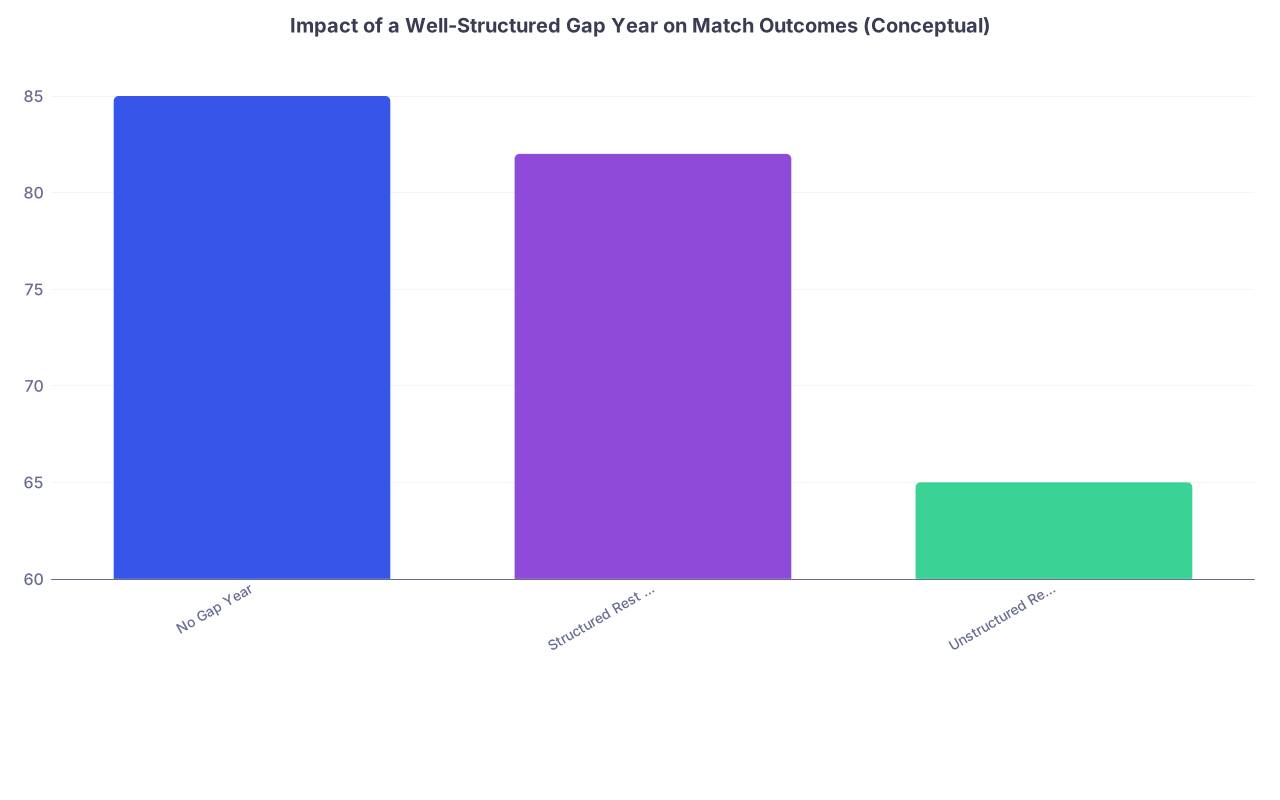
| Category | Value |
|---|---|
| No Gap Year | 85 |
| Structured Rest Year | 82 |
| Unstructured Rest Year | 65 |
(Those numbers are illustrative, not real data. The point: a structured rest year doesn’t tank you; a totally unstructured, poorly explained one can.)
FAQ: Rest and Recovery Gap Year Before Residency
1. Will programs judge me for taking a year “just to rest”?
Some will. Most won’t, if you present it well. The ones that matter to you—programs that value long-term sustainability and sane humans—will often see it as a sign of maturity, if you show you used the time deliberately, not as a collapse.
2. Do I have to disclose mental health as the reason?
No. You can. But you don’t have to name diagnoses. You can frame it as: “I took a year to focus on my health, establish sustainable habits, and prevent burnout, while staying partially involved in clinical work.” That’s honest without exposing everything.
3. How much clinical activity is “enough” in a rest year?
There’s no magic number, but 8–20 hours/week of something clinical or teaching-related is plenty. Even monthly clinical exposure plus a teaching/tutoring role can be okay, especially in non-surgical specialties. The key is: not zero, and not vague.
4. Is it worse to have no formal job listed for the year?
It’s worse to have literally nothing listed for the year. You don’t need a fancy job, but you should be able to list something: part-time scribe, tutor, volunteer work, project, caregiving, etc. “Open gap” with no entries and no narrative raises flags.
5. Should I avoid saying “burnout” explicitly?
You don’t need to avoid the word, but use it thoughtfully. Saying “I recognized I was burning out and took proactive steps to address it with therapy, rest, and structured part-time work” sounds mature. Saying “I was totally burned out and couldn’t function” without a clear recovery story makes programs nervous.
6. How long is “too long” for a rest-focused gap?
One year is usually fine. Two years starts to require stronger evidence of ongoing engagement and stability. Beyond two, you really need clear clinical involvement and strong letters. If you’re thinking longer than 12 months, talk to a mentor in your specialty before committing.
7. Bottom line: Can I take a real rest year and still match well?
Yes—if you keep at least a small professional foothold, get your health and life in order, stay connected to mentors, and tell a clear, confident story about why you did it and how it made you a stronger, more sustainable future resident. Rest isn’t the problem. Unstructured disappearance is.
Key points:
- A “pure rest” year is compatible with a strong match if you add light structure and honest framing.
- Maintain at least minimal clinical/teaching involvement and one recent professional contact who can vouch for you.
- Your explanation matters more than your activities—own the decision, show growth, and demonstrate you’re steady and ready to train.


