The Highest Paid Medical Specialties: A Detailed Earnings and Career Breakdown
In a rapidly changing healthcare system, understanding which medical specialties offer the highest compensation has become an essential part of career planning for medical students and residents. Income is not—and should not be—the only driver of specialty choice, but realistic salary insights can help you balance passion, training length, lifestyle, and long-term financial goals.
This expanded guide builds on current data on physician salaries in the U.S. and provides context you can actually use: what drives income differences, how specific high-earning specialties work day-to-day, and what to think about as you plan your residency and beyond. Whether you are still in pre-clinicals or ranking residency programs, this overview will help you place salary data into a broader medical education and healthcare careers framework.
Understanding the Physician Earnings Landscape
Before comparing individual medical specialties, it’s important to understand the forces that shape physician income across the board. These factors often matter as much as the specialty name itself.
Key Factors Influencing Physician Salaries
1. Specialty Type and Procedure Intensity
Generally, specialties that are:
- Procedure-heavy (frequent surgeries or invasive procedures)
- High risk (clinically and medicolegally)
- Technically complex
tend to be at the top of the earnings spectrum. This is why orthopedic surgery, interventional cardiology, and other procedural fields consistently rank high in compensation surveys.
In contrast, cognitive specialties (e.g., general internal medicine, pediatrics, psychiatry) often have lower average salaries despite being critically important to the healthcare system.
2. Geographic Location and Market Forces
Where you practice can change your income by six figures:
- Urban academic centers
- Often lower base pay than private practice, but may include protected time, research opportunities, and strong benefits.
- Suburban private practice / large multispecialty groups
- Frequently higher compensation tied to productivity (RVUs, collections).
- Rural or underserved areas
- Often offer loan repayment, signing bonuses, and elevated salaries due to high demand and physician shortages.
Even within a single state, physician salaries can differ dramatically between metropolitan and non-metropolitan regions.
3. Experience, Seniority, and Reputation
Early-career physicians commonly earn less while they:
- Build a patient base
- Develop procedural volume
- Gain referrals and regional reputation
Over time, especially in private practice or partnership-track models, compensation can increase substantially as physicians become more efficient and more in-demand.
4. Practice Setting and Ownership
Your practice model may matter as much as your specialty:
- Hospital-employed: predictable income, benefits, less business risk; may have caps.
- Private practice (solo or group): higher earning potential but greater business workload and financial risk.
- Academic medicine: often lower clinical pay, but supplemented by research, teaching roles, and leadership positions; prestige and schedule flexibility can be significant non-financial benefits.
- Locum tenens: higher hourly or daily rates, but variable consistency and fewer long-term benefits.
5. Workload, Call, and Scheduling
Higher compensation often correlates with:
- Night and weekend call
- High-intensity shifts (e.g., emergency medicine)
- Long OR days and demanding surgical schedules
Specialties with more predictable hours or limited call often see slightly lower base compensation. For many physicians, the trade-off is intentional: income is balanced against burnout risk and lifestyle preferences.
6. Payer Mix and Reimbursement Environment
The mix of private insurance, Medicare, Medicaid, and self-pay patients—and how each reimburses for procedures or visits—strongly affects income. Changes in:
- Federal and state policy
- Relative Value Unit (RVU) schedules
- Bundled payments and value-based care
can significantly shift the financial landscape for a given specialty over time. Staying informed about reimbursement trends is an important part of long-term career planning.
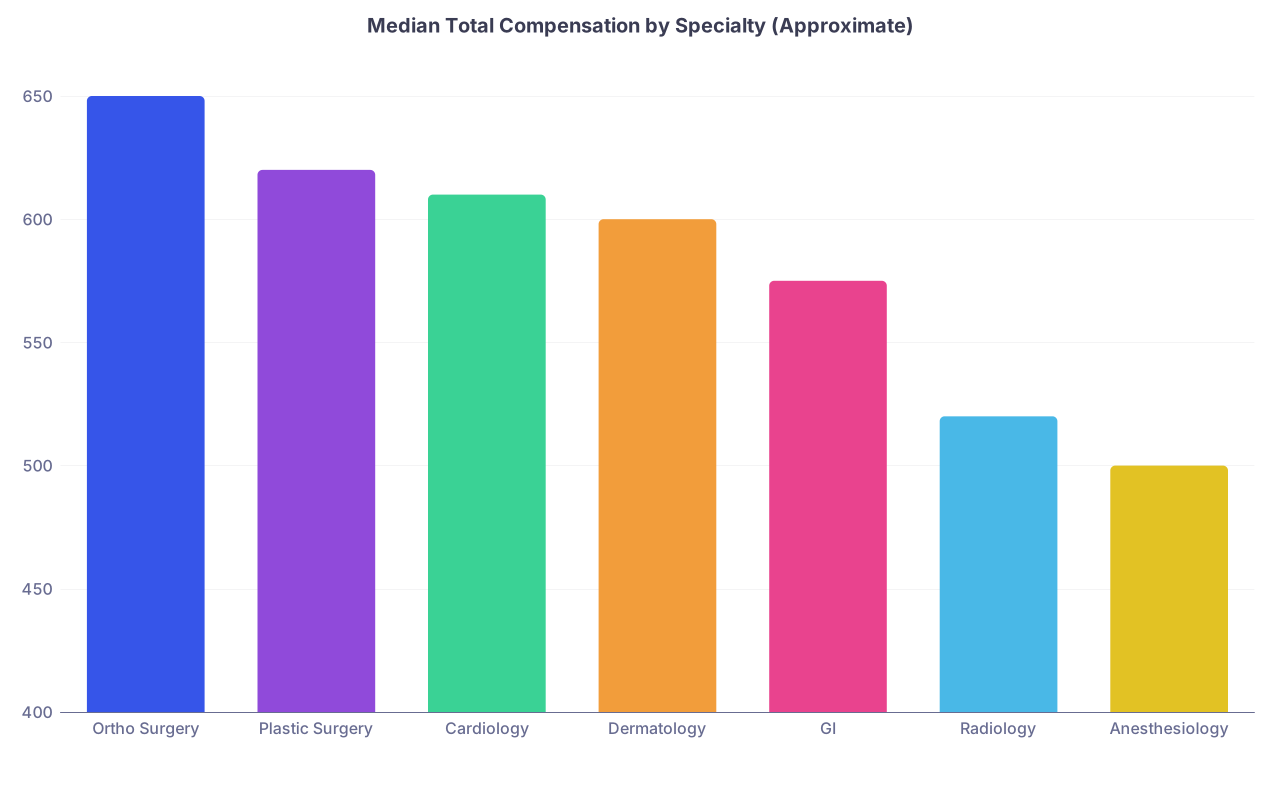
Top 10 Highest Paid Medical Specialties: Salary Snapshot
Based on recent U.S. data from 2023 and major compensation surveys, the following highest-paid medical specialties lead the earnings rankings:
| Specialty | Average Annual Salary | Overall Job Demand |
|---|---|---|
| Orthopedic Surgery | $511,000 | High |
| Plastic Surgery | $479,000 | Moderate–High |
| Cardiology | $459,000 | High |
| Gastroenterology | $422,000 | High |
| Dermatology | $421,000 | Moderate–High |
| Radiology | $413,000 | High |
| Anesthesiology | $405,000 | Moderate–High |
| General Surgery | $396,000 | High |
| Urology | $394,000 | High |
| Emergency Medicine | $385,000 | Variable by region |
These are average figures—actual salaries can vary significantly based on location, experience, and practice structure. Still, this ranking gives a reliable snapshot of which fields consistently sit at the top of the physician salaries spectrum.

Deep Dive: What the Top-Paid Specialties Actually Do
1. Orthopedic Surgery
Average salary: ~$511,000
Core focus: Musculoskeletal system—bones, joints, ligaments, tendons, and muscles
Orthopedic surgeons sit at the top of the highest paid medical specialties list. Their work includes:
- Joint replacements (hips, knees, shoulders)
- Fracture repairs and trauma surgery
- Sports-related injuries (ACL repairs, rotator cuffs)
- Spine surgery (for those with additional fellowship training)
Training Path:
- 5-year orthopedic surgery residency
- Optional 1–2 year fellowship in subspecialties (e.g., sports, spine, hand, trauma, joints)
Why the high pay?
- High procedure volume with significant technical skill
- Aging population driving demand for joint replacements
- High value and high RVU procedures
Lifestyle considerations:
- Significant call responsibilities, especially for trauma
- Long OR days and physically demanding work
- High medicolegal exposure in some markets
For students drawn to surgery, biomechanics, and tangible outcomes (e.g., restoring function, relieving pain), orthopedics offers both professional and financial rewards, but requires resilience and a high tolerance for long, intense workdays.
2. Plastic Surgery
Average salary: ~$479,000
Core focus: Reconstructive and cosmetic surgery of the face and body
Plastic surgeons perform a broad mix of:
- Reconstructive procedures (post-cancer breast reconstruction, trauma repairs, congenital defects such as cleft lip/palate)
- Cosmetic procedures (rhinoplasty, abdominoplasty, facelifts, liposuction, injectables)
- Complex wound coverage and microsurgery
Training Path:
- Integrated plastic surgery residency (6 years) or
- General surgery residency followed by a plastic surgery fellowship
Why the high pay?
- Many cosmetic procedures are cash-pay, not limited by insurance reimbursement
- High demand for aesthetic procedures in many regions
- Specialized technical skills, particularly in microsurgery and complex reconstruction
Lifestyle considerations:
- Schedule can be more controlled if predominantly cosmetic
- Reconstructive practice may involve call and complex inpatient cases
- Requires strong interpersonal and communication skills; patients often have high expectations around aesthetic outcomes
Students interested in artistry, precision, and both reconstructive and aesthetic challenges often find this specialty uniquely rewarding.
3. Cardiology
Average salary: ~$459,000 (often more for interventional cardiologists)
Core focus: Cardiovascular disease diagnosis and management
Cardiology includes:
- Non-invasive cardiology: Echo, stress testing, longitudinal management of heart disease
- Interventional cardiology: Catheter-based procedures (e.g., stents, angioplasty)
- Electrophysiology: Arrhythmia management, ablations, device implantation (e.g., pacemakers, defibrillators)
Training Path:
- 3-year internal medicine residency
- 3-year cardiology fellowship
- Optional additional 1–2 years in interventional or electrophysiology
Why the high pay?
- Complex procedures with high RVU values
- Enormous burden of cardiovascular disease in the U.S.
- Critical role in both acute (MI, arrhythmia) and chronic care
Lifestyle considerations:
- Interventional cardiologists often take emergent call (e.g., STEMI call)
- Non-invasive cardiology can offer more predictable clinic-based schedules
- High acuity, frequent high-stakes decision-making
Cardiology suits those who enjoy pathophysiology, longitudinal patient relationships, and acute critical care.
4. Gastroenterology
Average salary: ~$422,000
Core focus: Digestive system—from esophagus to colon, plus liver and pancreas involvement
Gastroenterologists manage:
- Endoscopies and colonoscopies (screening and diagnostic)
- Management of inflammatory bowel disease, liver disease, GI bleeding
- Advanced endoscopic procedures in some subspecialties (ERCP, EUS)
Training Path:
- 3-year internal medicine residency
- 3-year gastroenterology fellowship
- Optional additional advanced endoscopy training
Why the high pay?
- High volume, procedure-driven practice (scopes generate substantial RVUs)
- Strong demand due to colon cancer screening, chronic GI disorders, and aging population
- Ability to integrate outpatient procedures with clinic-based care
Lifestyle considerations:
- Mix of scheduled procedures and urgent consults (e.g., GI bleeding)
- Often shared call schedules within groups
- Balance between procedural work and longitudinal patient follow-up
GI is a good fit for those who like internal medicine but want a high proportion of procedures and a strong position in cancer prevention.
5. Dermatology
Average salary: ~$421,000
Core focus: Skin, hair, nails, and cosmetic dermatology
Dermatologists handle:
- Medical dermatology (acne, eczema, psoriasis, autoimmune skin disease)
- Skin cancer screening and excisions
- Cosmetic procedures (Botox, fillers, laser therapy)
- Dermatopathology (for those with additional training)
Training Path:
- 1-year internship (often medicine or transitional year)
- 3-year dermatology residency
- Optional fellowships in dermatopathology, Mohs surgery, pediatric derm, cosmetics
Why the high pay?
- High demand with relatively limited training slots (very competitive)
- Blend of insurance-based and cash-pay cosmetic services
- High productivity in outpatient settings
Lifestyle considerations:
- Typically excellent work-life balance: outpatient-based, minimal call
- Procedural and visual diagnostic work
- Highly competitive residency entry; requires strong academic performance
Dermatology is often cited as a field that optimally balances earnings, schedule, and clinical variety.
6. Radiology
Average salary: ~$413,000
Core focus: Interpretation of imaging (X-ray, CT, MRI, ultrasound, nuclear medicine) and image-guided procedures
Radiologists:
- Read imaging studies for nearly every other specialty
- Perform interventional procedures (for those in interventional radiology)
- Play a central role in cancer staging, trauma, and acute diagnosis
Training Path:
- 1-year internship
- 4-year diagnostic radiology residency
- Optional 1–2 year fellowship (e.g., neuro, MSK, IR, breast, body imaging)
Why the high pay?
- High diagnostic responsibility across nearly all patient populations
- Heavy use of advanced imaging in modern medicine
- Procedural subspecialties (IR) carry additional earning potential
Lifestyle considerations:
- Mix of daytime and overnight shifts; teleradiology options increasing
- Less direct longitudinal patient contact (more so in IR)
- Requires strong attention to detail and comfort with high-volume interpretive work
Radiology is well-suited to those who enjoy anatomy, technology, and diagnostic reasoning.
7. Anesthesiology
Average salary: ~$405,000
Core focus: Perioperative care, anesthesia delivery, pain management, and critical care
Anesthesiologists:
- Manage anesthesia for surgeries and procedures
- Provide airway management and hemodynamic monitoring
- May subspecialize in pain medicine, cardiac anesthesia, pediatric anesthesia, or critical care
Training Path:
- 4-year anesthesiology residency (often after a preliminary year)
- Optional 1-year fellowships in subspecialty areas
Why the high pay?
- Critical role in nearly all surgeries and many procedures
- High acuity, significant responsibility for patient safety
- Ability to increase earnings with extra call or additional cases
Lifestyle considerations:
- Early starts and variable end times based on OR schedules
- Call responsibilities in many practice settings
- Appeals to those who like physiology, pharmacology, and acute care without extensive clinic time
8. General Surgery
Average salary: ~$396,000
Core focus: Broad operative care of abdominal and soft tissue conditions
General surgeons perform:
- Appendectomies, cholecystectomies (gallbladders), hernia repairs
- Bowel surgery, some endocrine surgery, breast surgery in some practices
- Trauma surgery and emergency general surgery (depending on practice)
Training Path:
- 5-year general surgery residency
- Optional fellowships in trauma, surgical oncology, colorectal, minimally invasive surgery, etc.
Why the high pay?
- High volume of necessary, often urgent operations
- Significant call, especially at community or trauma centers
- Central role in acute care surgery
Lifestyle considerations:
- Demanding hours and unpredictable cases
- Significant call burden, including nights and weekends
- High satisfaction for those who enjoy acute, hands-on interventions and visible outcomes
9. Urology
Average salary: ~$394,000
Core focus: Urinary tract and male reproductive system
Urologists handle:
- Kidney stones, benign prostate hyperplasia (BPH), urinary incontinence
- Urologic cancers (prostate, bladder, kidney)
- Minimally invasive and robotic surgeries
Training Path:
- 5–6 year urology residency (integrated)
- Optional fellowships (oncology, endourology, pediatrics, reconstructive, etc.)
Why the high pay?
- Combination of clinic and high-value procedures
- Aging population and high prevalence of urologic issues
- Strong ongoing demand and relatively fewer urologists per capita
Lifestyle considerations:
- Mix of OR days and clinic days
- Call can be busy but often shared within groups
- Appeals to those who enjoy surgery, continuity of care, and working with predominantly adult patients
10. Emergency Medicine
Average salary: ~$385,000 (highly variable by region and shift load)
Core focus: Acute, unscheduled care for all ages and conditions
Emergency physicians:
- Stabilize and manage trauma, strokes, heart attacks, and undifferentiated complaints
- Work in shifts (days, evenings, nights) with no scheduled outpatient follow-up
- Coordinate care with consultants and inpatient teams
Training Path:
- 3–4 year emergency medicine residency
- Optional fellowships (ultrasound, critical care, toxicology, EMS, peds EM)
Why the pay (and why it’s changing)?
- Historically high due to shift-based, high-acuity work and physician shortages
- Increasing corporate consolidation and staffing by non-physician providers have impacted job markets in some regions
- Still strong demand in many rural and underserved areas
Lifestyle considerations:
- Shift work offers defined on/off time but includes nights, weekends, holidays
- No ongoing patient panel—suited to those who prefer acute, episodic care
- Burnout risk can be significant; resilience and strong coping strategies are essential
Beyond the Numbers: Choosing a Specialty Strategically
Balancing Income with Lifestyle and Personal Fit
While the above fields anchor the highest paid medical specialties, your long-term satisfaction will depend on much more than income alone. When exploring healthcare careers, ask:
- Do I enjoy chronic disease management or acute care?
- Do I want hands-on procedures or cognitive problem solving?
- How do I feel about nights, weekends, and being on call?
- Do I prefer continuity with patients or episodic encounters?
- What kind of team environment energizes me?
High compensation can be attractive, but entering a specialty misaligned with your personality or values often leads to burnout, even with a strong paycheck.
Actionable Steps for Medical Students and Residents
Maximize clinical exposure:
Use core and elective rotations to observe daily workflows in both high- and moderate-paying fields. Pay attention to:- How attendings talk about their careers
- Their schedules, stress levels, and family life
- The mix of clinic, procedures, documentation, and call
Talk openly about compensation and practice models:
Many trainees hesitate to ask about money. Respectfully ask attendings:- What practice setting they chose and why
- How compensation works in their group (salary vs production, partnership track)
- How their income changed from early career to mid-career
Consider debt and financial planning:
High educational debt can make physician salaries feel especially important. Regardless of specialty:- Learn basic financial literacy (loan repayment options, retirement accounts, disability insurance)
- Explore Public Service Loan Forgiveness (PSLF) if working in non-profit/academic settings
- Avoid lifestyle inflation too early in your attending years
Stay flexible and informed:
Compensation trends shift. For example:- Telemedicine expansion creating new models
- Shifts in emergency medicine and hospital-based fields due to staffing changes
- Evolving reimbursement models favoring value-based care
Following specialty-specific news, professional societies, and compensation surveys will help you adapt over the course of your career.

Frequently Asked Questions (FAQs)
1. What is currently the highest-paying medical specialty in the U.S.?
Orthopedic surgery remains at or near the top of most surveys, with average annual salaries around $511,000, and many orthopedic surgeons earning more depending on region, subspecialty (e.g., spine, sports, joint replacement), and practice model. Plastic surgery and certain interventional subspecialties of cardiology can also rival or exceed these numbers in specific practice settings.
2. How much do geographic location and practice setting really impact physician salaries?
Geography and practice setting can easily swing your income by $100,000–$200,000 or more:
- A plastic surgeon in a large urban academic center may earn significantly less than a colleague in private practice in a mid-sized city with strong demand.
- A hospital-employed cardiologist in a high cost-of-living area may see lower take-home pay than a cardiologist in a lower cost-of-living state with a productivity-based compensation model.
- Rural or underserved areas often offer higher salaries, signing bonuses, and loan repayment to attract physicians.
Where and how you practice can be almost as important as which specialty you choose when it comes to income.
3. Do all high-paying specialties require longer training?
Most top-paying specialties involve longer and more intensive training, but not all to the same degree:
- Surgical specialties (orthopedics, plastic surgery, urology, general surgery) typically require 5–7 years of residency, often followed by a fellowship.
- Internal medicine–based subspecialties like cardiology and gastroenterology usually require 3 years of IM + 3 years of fellowship (plus optional subspecialty training).
- Dermatology, anesthesiology, radiology, and emergency medicine have training paths of roughly 4–5 years after medical school.
While longer training can delay peak earning years, many physicians view it as a worthwhile investment for a high-satisfaction, high-income career.
4. How stable are salary figures in these high-earning specialties?
Physician compensation is dynamic, not fixed:
- Changes in federal and private insurance reimbursement can alter procedure-based incomes.
- Economic shifts, staffing models, and scope-of-practice expansions (e.g., advanced practice providers) can influence demand.
- Some fields, like emergency medicine and radiology, have experienced notable market shifts in recent years due to corporate consolidation and staffing changes.
That said, demand for skilled physicians remains strong, and the highest-paid specialties have historically stayed near the top of the earnings hierarchy even as exact numbers fluctuate.
5. Should I choose a specialty mainly based on salary?
Relying primarily on salary to guide your specialty choice is risky. While income is important—especially when managing six-figure educational debt—most physicians will work decades in their field. Consider:
- Your genuine clinical interests
- Preferred pace and intensity of work
- Tolerance for call, nights, and weekends
- Desire for patient continuity versus episodic care
- Long-term well-being and burnout risk
The best approach is to use salary insights as one factor among many—alongside mentorship, clinical exposure, and honest self-reflection—when choosing a specialty that aligns with both your professional goals and personal life.
By combining realistic expectations about physician salaries with a clear understanding of your values, strengths, and interests, you can choose from among the many medical specialties in a way that supports both financial security and long-term career satisfaction.