

Two residents were called into the PD’s office at 4:45 p.m. You know this story. One came out with a relieved, shaky smile. The other came out looking like someone had just pulled the floor out from under them. An hour later the group text was blowing up with “Congrats!!!” messages. You were not in that office. You did not get the job.
If that’s you right now—staring at your phone, trying not to refresh your email again—this is for you. Let’s walk through what to do in the first 72 hours, the next month, and the rest of residency so this does not stain the rest of your career.
Step 1: Your First 72 Hours – Contain the Damage
I’m not talking about your “career damage.” I’m talking about emotional damage that you can easily make worse if you react poorly.
1. Control your initial reaction (even if it hurts like hell)
You will feel something in this range: embarrassment, anger, humiliation, betrayal, numbness. All normal. What kills people isn’t the feeling; it’s the visible reaction.
Here’s what you don’t do:
- Don’t text your co-residents some version of “They picked favorites.”
- Don’t go on a rant about “toxic leadership.”
- Don’t passive-aggressively post anything online (“So much for merit…”).
- Don’t ice out the people who were selected.
Those reactions feel good for about 15 minutes and then they label you as “immature” or “unprofessional.” That label will follow you a lot longer than “didn’t get chief.”
Instead, for the first 24–48 hours:
- Limit what you say to: “I’m disappointed, but I’ll keep doing my best for the team.”
- If someone asks, you can be honest but contained: “Yeah, I applied. Didn’t get it. I’m processing, but I’ll be fine.”
- Do not ask for details or gossip. “Who else applied? What did they say about me?” Useless and messy.
If you feel like you’re about to cry in the workroom, go “check on a patient,” walk to a stairwell, or disappear to your car. Then cry. Out of sight. This isn’t about toughness. It’s about controlling who sees your rawest reactions.
2. Handle the congratulations to others like a professional
This is the first test. People will see how you respond to the new chiefs being announced.
What to do:
- Send a short, direct message to each new chief:
“Congrats on chief. You’ll do a great job—happy to help however I can.”
You don’t have to feel it. You just have to do it. - If there’s a group announcement and people look at you:
Small nod, maybe even clap once or twice, keep your face neutral-to-pleasant.
You’re not auditioning to be a saint. You’re just avoiding looking petty. Programs remember who can handle disappointment without lighting the place on fire.
Step 2: Quietly Gather Intel – Why You Weren’t Chosen
After you’ve survived the first 48–72 hours without saying something you’ll regret, then you move to the next step: understand what actually happened.
3. Ask for feedback the right way (timing and framing)
You should almost always ask for feedback. But timing matters.
Wait at least 3–7 days. Let the dust settle. Then email or talk to:
- Program director
- APD you trust
- Possibly your core faculty mentor
Sample script for an email:
“Dr. Smith, I wanted to briefly follow up about the chief selection. I was disappointed not to be chosen, but I’m committed to growing as a leader and a resident. If you’re willing, I’d appreciate 15–20 minutes for honest feedback on areas that may have limited my candidacy and what I can work on over the next year.”
Then in the actual conversation, your goals:
- Don’t defend yourself.
- Don’t argue the case for why they were wrong.
- Don’t fish for gossip (“Did so-and-so say something about me?”).
You’re there to collect data.
Questions you should ask:
- “If you had to name 1–2 main reasons I wasn’t chosen, what would they be?”
- “Were there specific concerns from faculty or nursing staff?”
- “If I wanted to strengthen my leadership profile going forward, what concrete things should I do this year?”
Write down what they say, even if it stings.
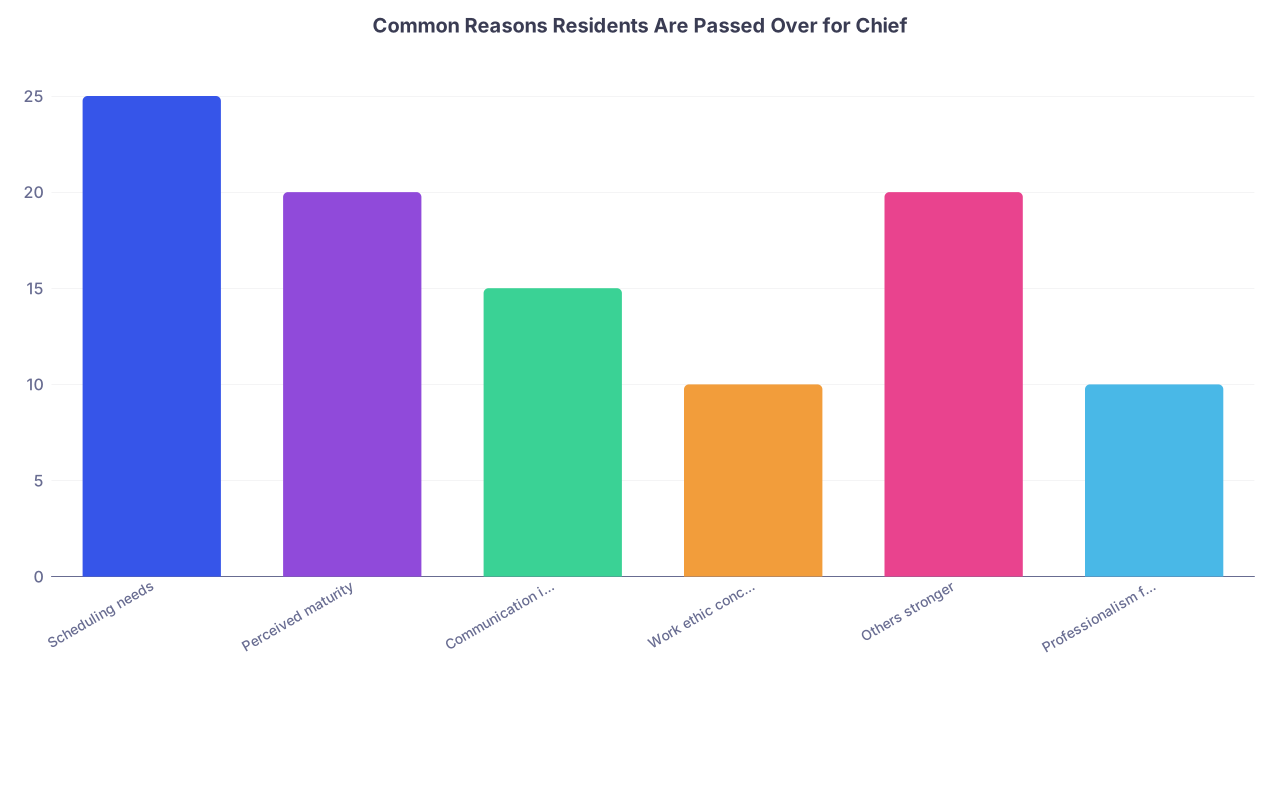
| Category | Value |
|---|---|
| Scheduling needs | 25 |
| Perceived maturity | 20 |
| Communication issues | 15 |
| Work ethic concerns | 10 |
| Others stronger | 20 |
| Professionalism flags | 10 |
4. Decode “polite” feedback into real feedback
Programs speak in code. I’ve heard all of these:
“We just had a lot of strong candidates this year.”
Translation: Often true, but you weren’t clearly above the pack in key areas.“We needed someone who could work well with all groups.”
Translation: Someone thinks you’re difficult with certain staff or co-residents.“We were looking for consistency.”
Translation: You have some great days and some not-great days; people remember the not-great.“You’re very independent.”
Translation: You may come off as dismissive, not collaborative, or not great at following the chain of command.
When you hear vague language, you can gently push:
“Would you be comfortable giving an example? It would really help me make the feedback actionable.”
You won’t always get details. But even the hesitation is information.
Step 3: Protect Your Reputation Right Now
Not getting chief doesn’t kill your career. How you respond can.
Let’s go through the landmines.
5. Don’t become “the bitter PGY-3”
This is the most common failure mode.
Behaviors that instantly mark you as bitter:
- Rolling your eyes or making faces when chiefs speak.
- Saying “Well I didn’t want it anyway” more than once.
- Constantly mentioning how “political” the selection was.
- Undermining or ignoring the new chiefs’ requests.
Everyone is watching. Attendings, nurses, juniors. They know you applied. They know you didn’t get it. Your behavior now either says “mature, resilient future colleague” or “person who will implode the first time life is unfair.”
Better replacement behaviors:
- When chiefs ask you to do something reasonable, do it without extra drama.
- If you disagree with a chief decision, address it 1:1, not in front of the group.
- Stop re-litigating the decision out loud. Treat it as done.
If you need to unload, pick exactly 1–2 safe people. Someone outside your program is ideal: an old mentor, a friend at another institution, a therapist. Get ugly there, so you can be composed at work.
6. Decide what to tell fellowship programs or future employers
You don’t have to explain in your application “I wasn’t chief.” Most fellowships know: there are always more strong candidates than slots.
If it comes up in an interview:
- “I applied for chief but was not selected. I was disappointed, but it pushed me to focus on [teaching / QI project / research / patient safety work], which turned out to be a good growth experience.”
No defensiveness. No blaming. Just factual and forward-looking.
Step 4: Rebuild – Turn This into Actual Growth (Not Instagram Quote Growth)
This is where you separate yourself. Some people let this sit like a bruise. The smart ones treat it like a diagnostic test.
7. Identify what’s actually true in the feedback
You might get three kinds of feedback:
- 30% is completely fair.
- 30% is partially true but exaggerated.
- 40% is politics, personality, or noise.
Your job is to find the first 30%.
Examples:
“Sometimes you come across as abrupt on the phone with consultants.”
That’s actionable. You can fix that.“You’re very efficient but some nurses feel you’re not approachable.”
Again, very fixable.“We worried about your time management on heavy rotations.”
Boring, but true. And fixable.
Pick 2–3 specific things to work on. Not 15.
8. Make a one-year “leadership rehab” plan
You didn’t get chief. Fine. You can still graduate as someone people trust and want to work with.
Break it into concrete behaviors.
Examples:
Communication with staff
- Once per shift, pause and ask a nurse: “Anything I can clarify or help with on our patients?”
- If someone emails or messages you, respond within 24 hours, even if it’s “Got it, I’ll look into this tomorrow.”
Professionalism / reliability
- Be early to sign-out, conferences, and OR starts for the next 6 months. Not on-time. Early.
- Stop pushing non-critical tasks to the last second. You know where you cut corners.
Teaching and mentorship
- Set a goal: One short, focused teaching moment per day with a student or intern.
- Offer to review an intern’s note, help them with their first family meeting, or prep them for their first overnight call.
Visible involvement
- Join or take a real role in a committee (QI, patient safety, diversity, scheduling).
- Lead exactly one manageable project you can finish before graduation.
The point isn’t to pretend you’re chief. It’s to show that chief title or not, you operate like a grown physician who cares about the system.

Step 5: How to Work With the New Chiefs Without Losing Your Mind
You might be answering to someone who was your co-resident yesterday. Maybe you like them. Maybe you don’t. Either way, this is where a lot of people blow up their reputation.
9. Set ground rules with yourself
Simple internal rules:
“I don’t vent about chiefs in front of interns, students, or nurses.”
You can think whatever you want. But downward venting poisons the environment and always gets back to leadership.“I will treat chief requests as I would attending requests unless they’re unsafe or clearly out of line.”
“If I have an issue with how something’s being handled, I’ll bring it up directly, not via sarcasm or side comments.”
This isn’t about liking them. It’s about showing you understand hierarchy and professionalism.
10. Have a direct, adult conversation if needed
If there’s awkwardness with a new chief (especially if they know you applied), consider saying something once:
“Hey, I just wanted to say congrats again. I know this year’s going to be busy for you. I applied as well and was disappointed not to get it, but I’m committed to supporting you and the program. If you ever feel like I’m not pulling my weight or you need something from me, please tell me directly.”
Do you need to say this? Not always. But when done calmly, it diffuses tension and shows maturity that people remember.
Step 6: Reframing the Story for Yourself (Because the Mental Game Matters)
This part isn’t fluffy. If you don’t reframe it internally, this experience can quietly poison how you see leadership and institutions.
11. Accept the non-meritocracy pieces without becoming cynical
Here’s the blunt truth: chief selection is rarely a pure “best clinician + best leader wins” contest.
Other factors:
- Schedule and service coverage needs.
- Who’s staying for a fellowship or extra year.
- Who the PD has worked most closely with.
- Prior conflicts, even minor ones.
- Program image and politics.
You can acknowledge that without becoming the resident who constantly mutters, “It’s all politics.” That person stops trying. And attending staff spot that attitude from a mile away.
Mature reframe:
- “The process wasn’t purely objective, but my job is to take the useful feedback and keep moving forward.”
12. Remember what actually matters for your career
Here’s what fellowship directors, hospital recruiters, and future partners care way more about than your chief status:
| Factor | Impact 5–10 Years Out |
|---|---|
| Clinical competence | Very high |
| Professionalism / reliability | Very high |
| Reputation with staff | High |
| Chief title | Low–moderate |
| Letters from respected attendings | Very high |
I’ve seen plenty of chiefs who ended up with mediocre reputations because they were disorganized or power-hungry. And plenty of non-chiefs who became go-to consultants, partners, or fellowship stars.
If you build a strong clinical and professional brand now, “wasn’t chief” becomes a footnote, not a headline.
Step 7: Planning Ahead – If You Still Want Leadership Roles
Not being chosen as chief doesn’t mean you’re cut out of leadership. It just means your first real leadership job isn’t that one.
13. Build a quiet leadership track record anyway
You can be the person people trust long before you have a title. Aim for:
- Being the go-to person when the team is drowning and needs help.
- Being the one who notices when the intern looks destroyed and says, “I’ll take those pages for 30 minutes, go eat.”
- Owning small but important systems: improving sign-out, cleaning up a consult workflow, fixing a chronic communication issue.
You don’t need approval to lead. You need consistency.
14. Line up people who will vouch for your growth
You want a handful of attendings—ideally respected, not just “nice”—who can say, honestly:
- “I’ve seen them take feedback and change.”
- “They handle disappointment with maturity.”
- “They work very well with the team.”
Those letters and phone calls do more for your career than one line on your CV that says “Chief Resident, 20XX–20XX.”
Tell one or two mentors transparently:
“I was disappointed not to be chief and I want to grow from it. Here are the 2–3 things I’m focusing on this year. If you ever see me slipping, I’d appreciate real-time feedback.”
Mentors love this. And it gives them a story to tell on your behalf later.
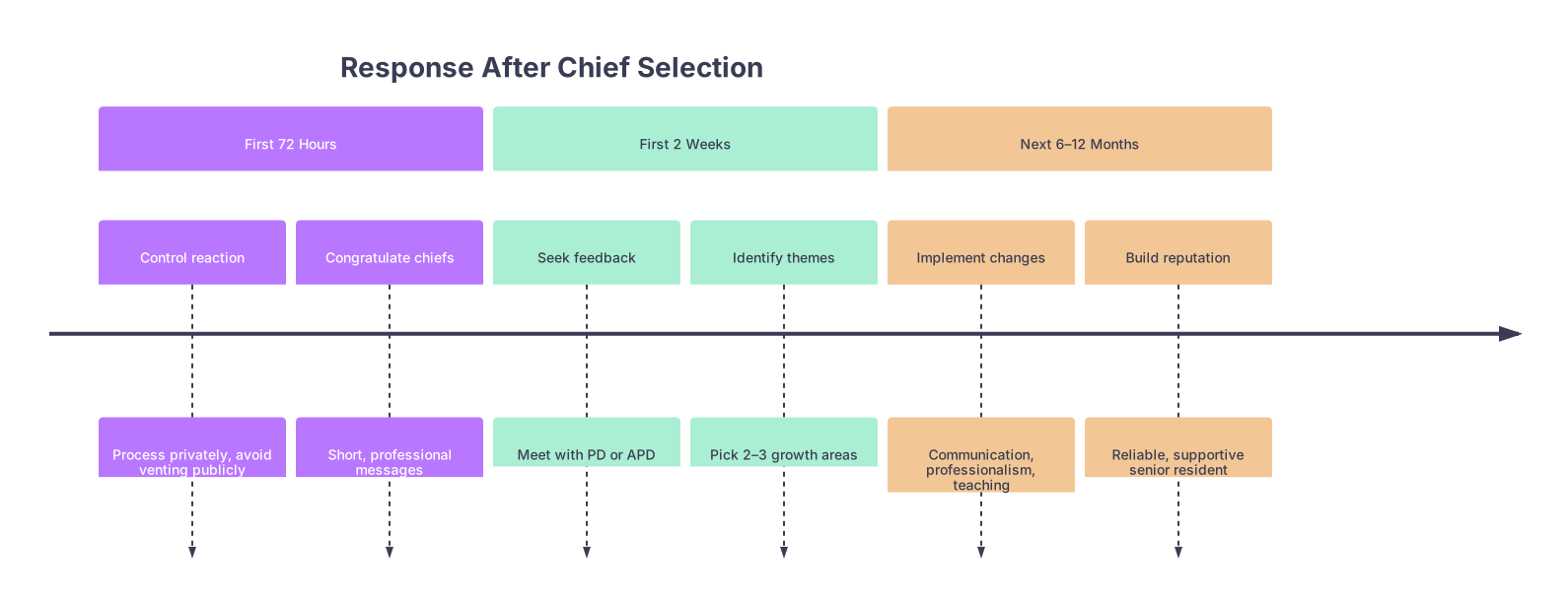
| Period | Event |
|---|---|
| First 72 Hours - Control reaction | Process privately, avoid venting publicly |
| First 72 Hours - Congratulate chiefs | Short, professional messages |
| First 2 Weeks - Seek feedback | Meet with PD or APD |
| First 2 Weeks - Identify themes | Pick 2–3 growth areas |
| Next 6–12 Months - Implement changes | Communication, professionalism, teaching |
| Next 6–12 Months - Build reputation | Reliable, supportive senior resident |
Step 8: Special Situations You Might Be In
Let me hit a few messy but common ones.
15. You had a professionalism issue earlier in residency
Maybe you had a warning. A note about unprofessional behavior. A conflict that escalated. That will hurt your chief chances.
Response:
- Don’t obsess over “if only that hadn’t happened.” It did.
- Demonstrate a boring, consistent track record for the rest of residency: on-time, prepared, no drama.
- Tell your PD directly: “I know my earlier issue likely affected the chief decision. My goal now is to finish residency with a track record that shows I learned from it.”
That kind of self-awareness is rare and memorable.
16. You think discrimination or bias played a role
Sometimes it’s not just “politics.” Sometimes the patterns are obvious: certain groups never get chief, certain personalities always do.
If you suspect this:
- Document patterns. Don’t rely only on feelings.
- Talk with a trusted faculty ally or ombuds person, not just co-residents.
- Ask neutral questions: “Over the last 5–10 years, how have chief selections been made? Are there criteria written down anywhere?”
If there’s clear, repeated bias, you can decide whether to push formally or protect your energy and focus on your own trajectory. Both choices are valid. Just don’t let quiet resentment eat you alive for years without either naming it or letting it go.
17. You’re comparing yourself nonstop to the person who did get chief
Stop. That road only leads to bitterness.
Different people bring different things:
- Maybe they’re better with administration.
- Maybe they’ve never rubbed anyone the wrong way.
- Maybe they’re staying on for a year, and you aren’t.
You don’t have to think they “deserved it more.” You just have to accept that the choice was made for reasons that may not all be visible or fair. Then return to the only pieces you control: your behavior and your growth.
The Bottom Line
Three points to leave you with:
The injury is real, but the scar is optional. Not getting chief hurts. Your job is to contain the damage in the first few days and avoid behaviors that turn a temporary disappointment into a permanent reputation problem.
Use the feedback, even if you hate how you got it. Strip away the politics and look for the 2–3 true, uncomfortable things you can actually change. Then build a quiet, consistent track record that people notice.
Your career is much bigger than one title. Five years from now, your competence, professionalism, and how people like working with you will matter far more than whether you were chief. Act today like the colleague you want to be then. The rest tends to follow.


