

What if the best chief resident on your program’s short list is the quiet one nobody’s talking about?
Let me be blunt: residency culture still worships the loud, hyper-visible, “natural leader” type. The resident who talks first in every meeting, cracks jokes on rounds, networks with everyone, and seems to know every attending’s pet project. When chief selection comes up, a lot of PDs and residents unconsciously picture… that person.
And they’re often wrong.
Not always. But often enough that it’s a problem.
You’ve probably heard some version of:
“Chiefs need to be extroverts.”
“You have to be super outgoing to manage conflict.”
“Introverts won’t command respect.”
These are myths. They persist because people confuse visibility with leadership, and comfort with social noise with actual effectiveness.
Let’s dismantle this properly: with data, psychology, and what I’ve seen play out in real programs.
The Myth: “Leadership = Extroversion”
The idea that extroverts are naturally better leaders is one of the most persistent, lazy assumptions in medicine.
Here’s what the research actually shows.
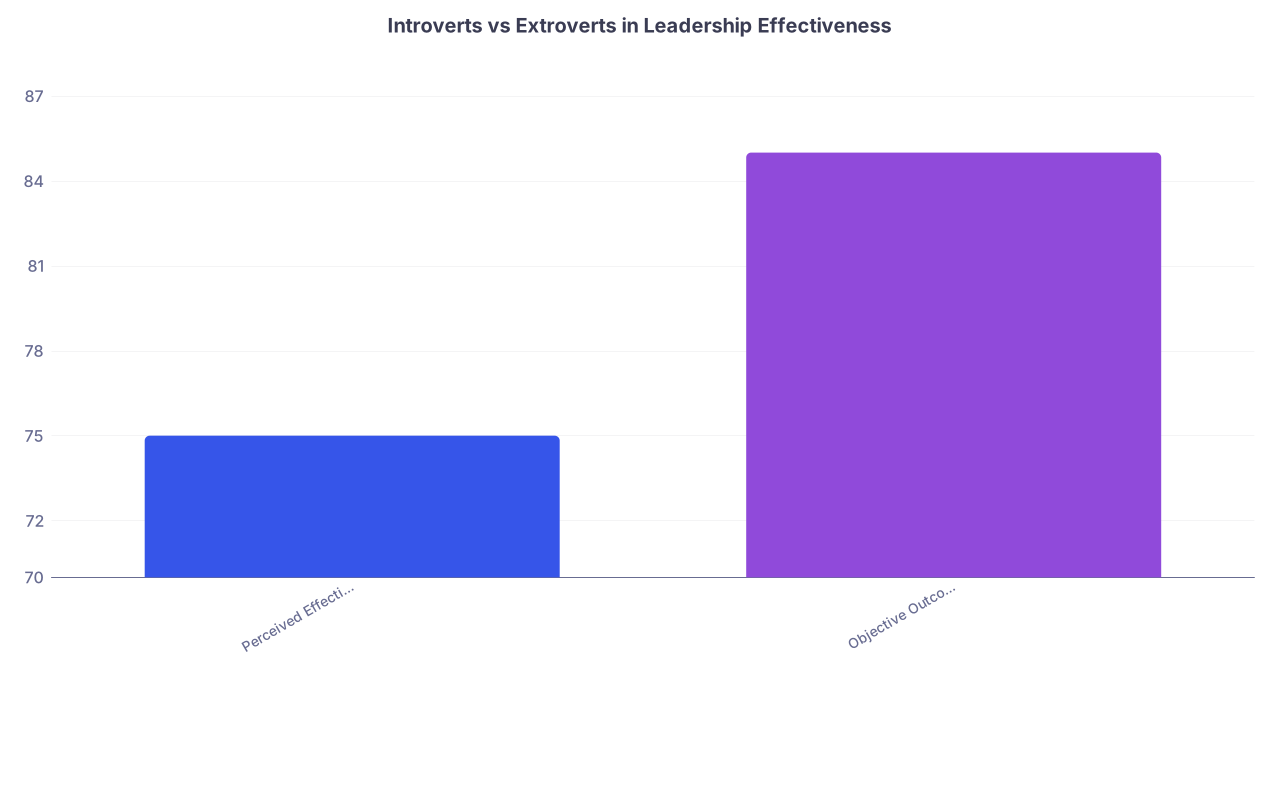
| Category | Value |
|---|---|
| Perceived Effectiveness | 75 |
| Objective Outcomes | 85 |
That rough split reflects a consistent pattern across studies: extroverts are perceived as better leaders, but introverts often produce equal or better outcomes in the right contexts.
Adam Grant’s well-known work at Wharton found this: introverted leaders outperformed extroverted leaders when they were managing proactive employees. Why? Extroverts were more likely to impose their own vision; introverts were more likely to listen and implement others’ ideas.
Medicine is full of proactive, opinionated people: residents with QI ideas, nurses with workflow fixes, pharmacists who catch medication safety issues. A chief who listens, synthesizes, and quietly empowers people can be a force multiplier.
But programs still conflate “talks a lot in public” with “good leader.” That’s not leadership. That’s theater.
What “Introvert” Actually Means (And What It Doesn’t)
A quick correction: introversion is not social incompetence or shyness. It’s mainly about energy.
Introverts typically:
- Recharge alone rather than in big groups
- Prefer depth over breadth in conversations and relationships
- Think before speaking, sometimes to a fault
- Feel drained by constant, unstructured social interaction
None of that disqualifies you from:
- Running a meeting
- Handling a conflict
- Advocating to the PD or chair
- Teaching on rounds
- Representing your program to applicants
It just means you’ll do those things differently. And often, better.
I’ve watched very introverted residents absolutely command respect during morning report—because every time they spoke, it was concise and high-yield. People learned to lean in when they opened their mouth.
The problem is not that introverts cannot lead. The problem is that we select and reward leadership that looks extroverted, even when it underperforms.
Core Chief Resident Tasks: Where Introverts Quietly Crush It
Let’s actually look at the job. Strip away the vague “be a leader” fluff and focus on what chiefs actually do day to day.
| Core Task | Why Introverts Often Excel |
|---|---|
| Schedule management | Detail-oriented, patient, thoughtful |
| Conflict resolution | Listen first, respond less reactively |
| Resident advocacy | Deep 1:1 relationships, trust |
| Education & teaching | Prepared, structured, focused |
| Systems/QI projects | Analytical, persistent |
1. Schedules and Logistics
Nobody glamorizes this, but it’s half the job.
Building schedules, fixing coverage, anticipating gaps, being fair over the year instead of just “hooking up” your friends—this requires:
- Detail orientation
- Patience
- Long-term fairness thinking
- Ability to say “no” firmly but respectfully
Introverts tend to:
- Spend more time planning before acting
- Notice the quieter residents who never complain but are getting hammered
- See patterns (e.g., who gets stuck with all the nights, or all the terrible rotations)
The extroverted chief who’s everyone’s buddy can drift into favoritism, even unintentionally. The introverted chief who tracks things, checks themselves, and double-checks the distribution? That’s the one residents later say, “She was actually fair.”
2. Real Conflict Management (Not Just “Being Charismatic”)
Here’s where the myth really collapses.
Conflict in residency isn’t usually yelling matches. It’s:
- The resident who feels their evals are biased
- The nurse who complains a specific intern is dismissive
- The senior who’s burned out and snapping at everyone
- The attending who keeps berating residents on rounds
Managing this requires:
- Listening without immediately centering your own opinion
- Making people feel heard, not managed
- Separating noise from signal
- Following up quietly over time
That plays to introvert strengths. Because many introverts:
- Ask more questions before deciding
- Are less driven to “win” the interaction
- Are less likely to escalate with emotional reactivity
- Can hold space for someone venting without needing to fill every silence
I’ve sat in on those “Can I talk to you about something?” resident–chief conversations. The loud, charming chiefs often rush to solution mode. The quiet chiefs pause, ask, “Tell me exactly what happened,” and only later propose next steps. People trust the second type more.
Visibility vs Impact: The Extrovert Advantage (and Its Limit)
Yes, extroverts have real advantages. Let’s not pretend they don’t.
They’re often:
- More comfortable speaking off the cuff in big meetings
- Quicker to network with faculty and hospital leadership
- More visible to PDs, chairs, and other decision-makers
- Perceived as more “leader-like” by default
That matters for being selected as chief. It’s political.
But once you’re in the role? Substance wins.
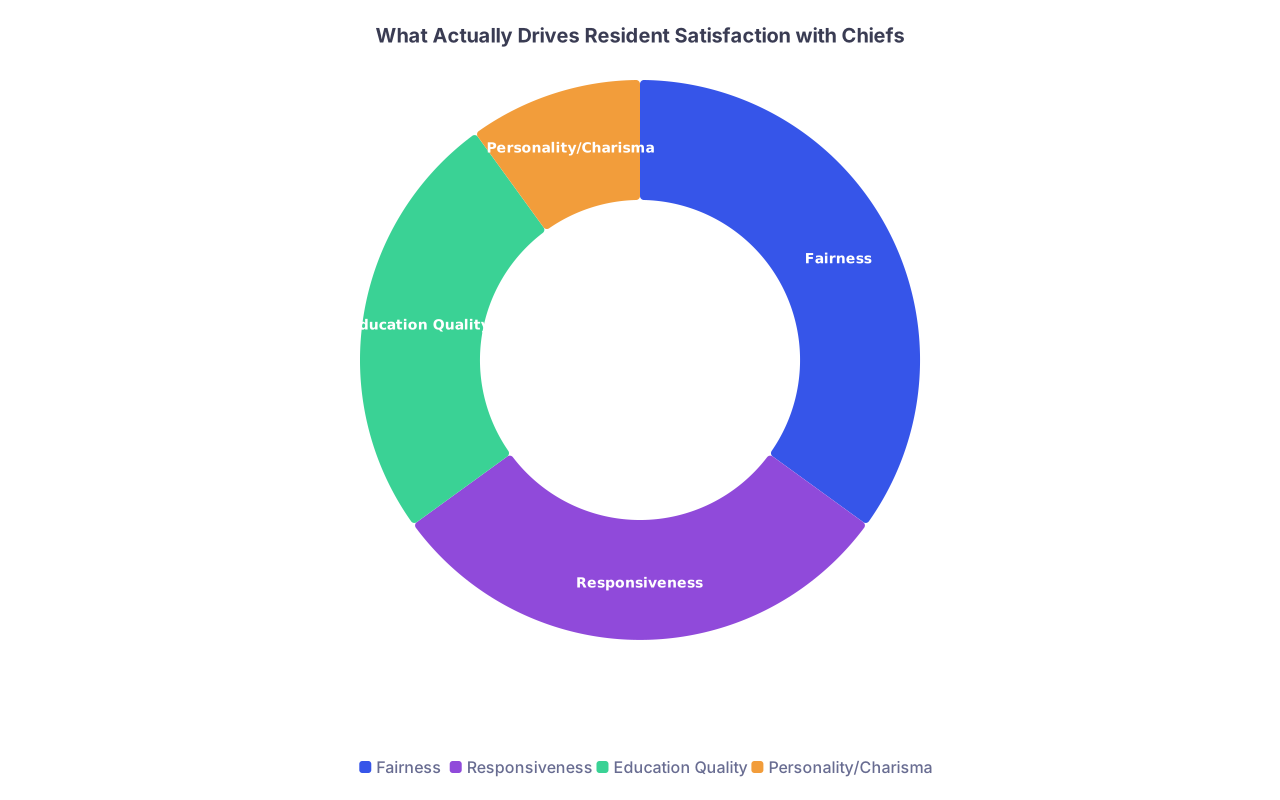
| Category | Value |
|---|---|
| Fairness | 35 |
| Responsiveness | 30 |
| Education Quality | 25 |
| Personality/Charisma | 10 |
When residents talk anonymously about good chiefs vs bad chiefs, they mention:
- “She always followed through.”
- “He was fair about vacation even when it sucked for him personally.”
- “She actually listened when people were drowning.”
- “He fixed things quietly instead of making announcements and doing nothing.”
Charisma barely makes the list. Yet programs keep over-weighting it.
Extroversion gets you in the spotlight. Introverted strengths often determine whether anything meaningful changes once you’re there.
Evidence From Medicine and Beyond
Let’s bring in some harder data and not just “I once knew a great quiet chief.”
Meta-analyses on leadership and personality
Large studies consistently find a modest positive association between extroversion and leadership emergence (who gets chosen), but much weaker and more context-dependent links with leadership effectiveness. Translation: extroverts get picked more; they aren’t always better.Healthcare-specific research
Studies of physician leadership show outcomes improve with leaders who:- Communicate clearly
- Engage teams in decision-making
- Are accessible and trustworthy
None of that demands extroversion. It demands emotional intelligence and follow-through.
Team-based work
Medicine is essentially a complex team sport. The more proactive the team (and residents are very proactive, for better or worse), the better introverted leaders tend to perform. They listen, integrate, and implement.
So if you’re an introverted resident thinking, “Chief isn’t for people like me,” the data doesn’t back that story. Your brain is just repeating a cultural script you absorbed from loud people who like microphones.
Where Introverts Actually Struggle (And How to Not Sabotage Yourself)
I’m not going to romanticize introversion. There are real pitfalls that will hurt you in a chief role if you ignore them.
1. Silence Misread as Indifference
If you’re quiet in meetings, people may assume:
- You don’t care
- You don’t have ideas
- You agree with whatever was just said
That’s false, but perception matters.
You don’t need to become the loudest person in the room. You do need to:
- Speak at least once in every major meeting you attend
- State your position clearly, even briefly: “I disagree with that for two reasons…”
- Follow up in writing when your natural instinct is to just “think about it” forever
You can do that without becoming a different person.
2. Avoidance of Hard Conversations
A lot of introverts hate:
- Breaking bad news about scheduling
- Giving negative feedback
- Saying “No, that’s not going to happen this block”
Too bad. That’s the job.
The fix is structure, not personality change:
- Use scripts for common hard conversations
- Schedule those conversations instead of doing them ad hoc (less emotional ambush for you)
- Pair directness with context: “I can’t give you that vacation week because of X, but here’s what I can do.”
The residents will respect you more for clear no’s than for vague “maybe” that never happens.
3. Social Energy Management
Introverted chiefs burn out when they pretend to be extroverts all year.
The job is inherently social: meetings, teaching, emails, check-ins, interview dinners. If you don’t protect your recharge time, you’ll hit a wall by November.
Be deliberate:
- Block “no meeting” hours on your calendar
- Batch non-urgent resident conversations
- Use email or messaging for updates instead of constant synchronous conversations when possible
This isn’t selfish. It’s maintenance. Overextended, resentful chiefs help no one.
If You’re an Introvert Considering Chief: A Reality Check
Here’s a rough, honest filter.
You’re likely to be an excellent chief if:
- Residents already come to you with real problems, not just gossip
- You’ve quietly fixed things (schedules, workflows, teaching) without fanfare
- Attendings describe you as “calm,” “reliable,” or “thoughtful”
- You’re willing to be fair even when it hurts your own convenience
You need to think twice (or be very deliberate) if:
- You categorically avoid any interpersonal conflict
- You’re so perfectionistic you can’t make timely decisions
- You’d rather vent for an hour than send a difficult 4-sentence email
None of those are introversion problems. They’re growth areas. Extroverted chiefs have them too; they just shout through them.
Practical Ways Introverted Chiefs Can Lead Effectively
Let’s get concrete. Here’s how introverts can use their strengths instead of fighting them.
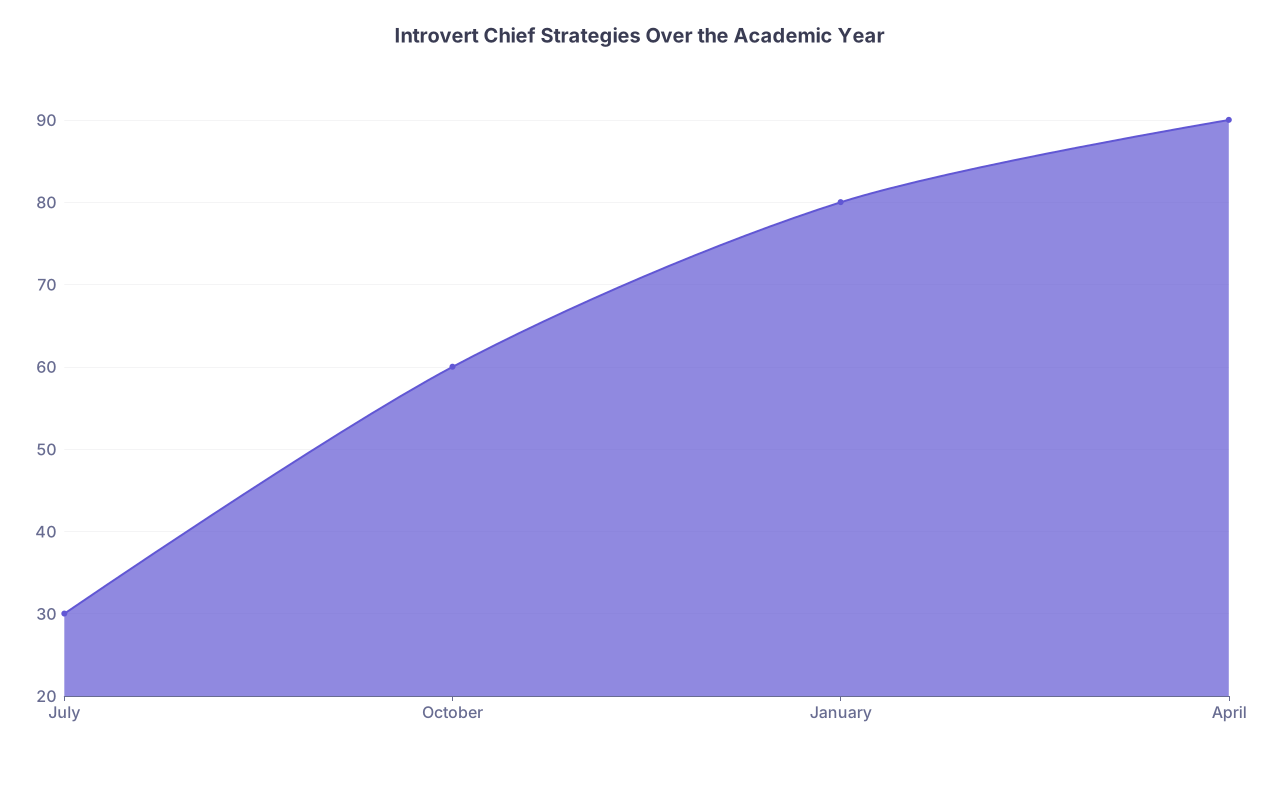
| Category | Value |
|---|---|
| July | 30 |
| October | 60 |
| January | 80 |
| April | 90 |
Call that curve “using your strengths instead of imitating extroverts.”
Lean into preparation.
You’ll probably never love speaking spontaneously in a room of 40. Fine. Prep 2–3 key points for every meeting. Prep your teaching with 1–2 killer cases instead of winging it. Residents do not care whether you’re naturally witty; they care if they learn something and feel respected.Use 1:1 conversations as your power move.
Extroverts dominate group spaces. Introverts often win in private. Chiefs who do quiet, consistent 1:1 check-ins build fierce loyalty. That loyalty matters when something blows up, because you’ve already banked trust.Document everything.
Introverts often think deeply but don’t broadcast. Convert that thinking into writing: clear emails, concise policy documents, transparent explanations of scheduling decisions. Residents will say, “I always knew where she stood.”Protect your energy intentionally.
Schedule your most draining tasks (big meetings, conflict conversations) when your social battery is highest. Cluster them. Then give yourself actual downtime, even if it’s 15 minutes with the door closed and email off.Be explicit about your style.
Tell your co-chiefs and PD: “I’m less talkative in big groups, but I process deeply and follow through. If it ever looks like I’m disengaged, ask me directly.” That one conversation can prevent a year of misinterpretation.
For Program Leadership: Stop Equating Volume with Value
If you’re a PD, APD, or faculty member nudging a certain “outgoing” resident toward chief, you need to ask yourself:
- Who do interns actually go to when they’re drowning?
- Whose feedback do residents trust?
- Who has quietly run half the QI or scheduling in the background?
- Who consistently follows through, not just talks well at meetings?
You may find your true leader is the introvert three rows back in morning report, not the one cracking jokes in the front.

If you only pick chiefs who look like generic extrovert leaders, you’re not selecting for leadership. You’re selecting for performance.
Medicine is already full of performance. We need more substance.
FAQ: Introverts and Chief Residency
1. Won’t being an introvert make it harder to deal with angry residents or attendings?
Not necessarily. In fact, introverts often de-escalate better because they don’t rush to fill silence or “win” the argument. If you learn a few core phrases (“Let me make sure I understand…” “Here’s what I can do…”), your calm, lower-reactivity style can be a huge asset in heated situations.
2. Do introverted chiefs get overlooked by program leadership for future roles?
They can, if they stay completely invisible. But leaders who deliver concrete results—better schedules, smoother rotations, real QI improvements—get noticed by the people who actually matter (chairs, PDs, hospital admin). Extroversion might get you quick recognition; sustained impact gets you long-term opportunities.
3. How can an introverted resident make a realistic case for being chief?
Do not sell charisma. Sell outcomes. Go to your PD with specifics: “Here’s how I’ve already improved X,” “Here’s feedback residents have given me,” “Here’s what I’d change about the schedule/education structure and how.” Data and thoughtfulness beat self-promotion if your leadership actually values substance.
4. What if I’m both introverted and socially anxious—should I still consider chief?
Those are different issues. Introversion is about energy; social anxiety is about fear. If your anxiety makes you avoid necessary conversations, dodge conflict, or shut down in meetings, you’ll need to work on that (with coaching, mentorship, or therapy) before or during a chief year. Being introverted is not a problem. Being unable to function in key interactions is. Address the anxiety; keep the introversion.
Key Takeaways
- There’s no solid evidence that extroverts make inherently better leaders—only that they get chosen more often.
- Chief resident success depends on fairness, follow-through, listening, and advocacy—areas where introverts can quietly excel.
- If you’re an introverted resident, stop disqualifying yourself. The system already overvalues noise. We need more leaders who think first, then speak—and then actually do something.


