
The usual “lifestyle specialties pay less” line is lazy and mostly outdated. The compensation data over the last 5–10 years says something very different: lifestyle specialties often earn more per hour and are closing—or have already closed—the total pay gap with many so‑called “high-paying” fields.
Let me walk through what the numbers actually show, not what the old attending who trained in 1998 keeps repeating on rounds.
The Core Myth: Prestige Pay vs Lifestyle Pay
The myth goes like this:
- If you want “good money,” do something like ortho, neurosurg, ENT, GI, cards.
- If you want “a life,” do derm, ophtho, radiology, anesthesia, PM&R, psych, EM, maybe gas.
- You can’t have both.
That dichotomy used to be closer to true 20+ years ago, when RVU structures, call demands, and private practice dynamics were different. Today, the lines have blurred.
Let’s anchor this in real data. You’ll see different exact numbers depending on survey (Medscape, Doximity, MGMA, specialty societies), but the rank order is surprisingly consistent.
| Specialty | Median Annual Compensation |
|---|---|
| Orthopedic Surg | $600k–$650k |
| Cardiology | $550k–$600k |
| Radiology | $500k–$550k |
| Anesthesiology | $480k–$520k |
| Dermatology | $480k–$520k |
| Emergency Med | $420k–$470k |
None of those are “poor.” And three of those—radiology, anesthesia, dermatology—are usually labeled “lifestyle specialties.”
So if lifestyle always meant less money, explain why derm and rads are consistently top‑tier or upper‑tier in total compensation.
The myth breaks for a simple reason: people ignore work hours and shift structure.
The Only Comparison That Matters: Dollars Per Hour
The raw salary number is the most abused metric in specialty conversations. It’s impressive but almost useless without hours.
The right question: “What’s the effective hourly rate?” That’s where lifestyle fields quietly win.
Let’s rough out realistic workloads for several specialties in full attending practice. These are ballpark but directionally right; I’ve watched these schedules in real life, not just on paper.
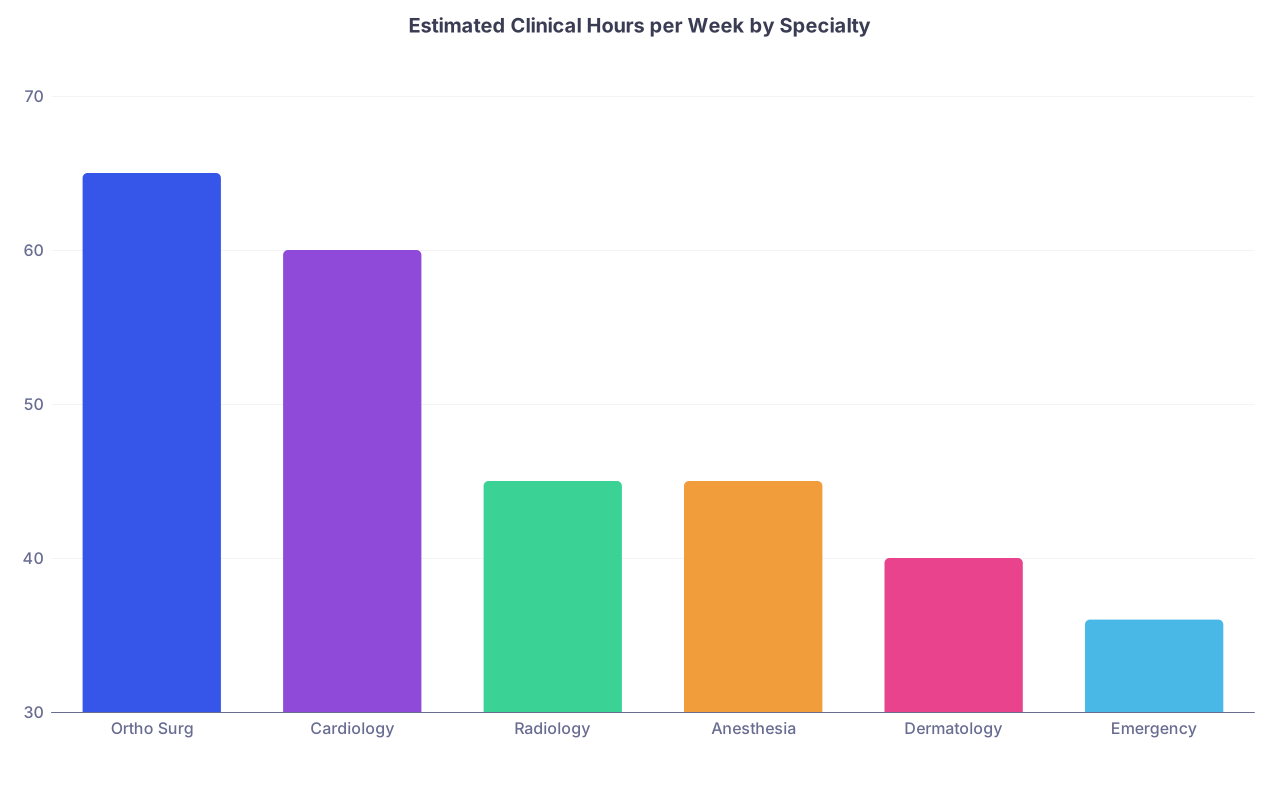
| Category | Value |
|---|---|
| Ortho Surg | 65 |
| Cardiology | 60 |
| Radiology | 45 |
| Anesthesia | 45 |
| Dermatology | 40 |
| Emergency | 36 |
Now combine those hours with the compensation estimates to get an approximate clinical hourly range. Yes, this is back-of-the-envelope, but it’s enough to expose the myth:
- Ortho: $600k / (65 hrs * 48 wks) ≈ $192/hr
- Cards: $575k / (60 * 48) ≈ $199/hr
- Radiology: $525k / (45 * 48) ≈ $243/hr
- Anesthesia: $500k / (45 * 48) ≈ $231/hr
- Derm: $500k / (40 * 48) ≈ $260/hr
- EM: $450k / (36 * 46) ≈ ~$271/hr
You can argue with the exact numbers, but the pattern is clear: lifestyle specialties are absolutely not paid less on an hourly basis. In many settings, they’re paid more.
So what’s really happening? The “grind” fields are often trading time and call for a bit more total annual pay—but not always, and not by much.
Lifestyle Specialty by Lifestyle Specialty: What the Data Actually Shows
Let’s go through the usual suspects one by one and compare myth vs reality.
Dermatology: The Poster Child Everyone Pretends Is Underpaid
Old narrative: “Derm makes less than procedural fields; it’s just 9–5 and happy rashes.”
Reality: Derm is one of the highest paid and best-lifestyle specialties in US medicine. Full stop.
- Typical clinical hours: 35–45 per week, minimal call, outpatient, almost no nights/weekends.
- Income: Commonly $450k–$600k+ in private practice; academic lower but still solid.
- Why so high?
- Procedure-heavy (biopsies, excisions, cosmetics, Mohs, lasers).
- High demand, aging population, skin cancer epidemic.
- Very efficient clinics—15 min or less per visit is normal.
The “paid less” story is a relic from when people weren’t factoring in how profitable short, procedure-rich visits are. Most derm practices are printing money compared to a high-volume, complex, old sick CHF clinic.
Radiology: The Ghost Specialist Working Fewer Hours for Serious Pay
People still say: “Rads is good lifestyle but they don’t make as much as surgeons.”
Look at current compensation and hours and that falls apart.
- Hours: 40–50 real work hours many places; telerads groups with flexible shifts, 7-on/7-off setups, remote work.
- Pay: $450k–$550k+ is common. Higher in private groups, nights, or telerads.
- Lifestyle perks:
- No clinic.
- No rounding.
- No patient panel.
- Limited (sometimes zero) in-person call.
Is radiology less intense than trauma surgery? Obviously. But less paid? When you match hours and subtract the nights/weekends grind… not so much.
Anesthesiology: The “Behind-The-Scenes” Field That Quietly Prints Money
You still hear attendings say, “Anesthesia used to be great but they’re getting squeezed.”
There is some truth: corporate anesthesia groups and anesthesia care team models (CRNAs) do affect negotiation power. But the idea that anesthesia is now a low-paid lifestyle job is fiction.
- Compensation: Often $450k–$600k; rural or high-demand areas can exceed that.
- Hours: Often 40–50/week with predictable schedules; call can be heavy in some centers, light in others.
- Upside: Lots of locums opportunities with high hourly rates, flexibility to front-load income.
And again, per-hour compensation is extremely competitive. Especially when you factor in that you don’t have a clinic or panel, and your documentation burden is often cleaner than a primary doc drowning in prior authorizations.
Emergency Medicine: The One Lifestyle Specialty Actually Getting Squeezed
If there’s a cautionary tale in this group, it’s EM.
Old story: EM had great pay, no call, defined shifts, flexible scheduling. True for a long time.
New reality is more complicated:
- Pay: Historically $350k–$450k. Some markets dropping as supply rises and corporate staffing groups dominate.
- Hours: 32–40 clinical hours/week, but nights/weekends/holidays are baked in forever.
- Trend: Job market tightening, particularly in desirable urban areas. Rural still needs docs.
EM still has a high hourly rate and very clear boundaries: you clock out, you’re out. No rounding. No clinic. The catch is you pay in circadian damage, burnout risk, and market volatility. That’s the trade, not simply “less money.”
PM&R, Psych, Ophtho: The Quiet Winners
These don’t get as much attention but they matter in this conversation.
Psychiatry
- Pay: Often $300k–$400k+, with private practice or telepsych pushing beyond that.
- Hours: 35–45 hours, mostly outpatient.
- Massive demand, robust private pay potential, especially if you cut insurance.
PM&R
- Pay: ~$300k–$450k depending on procedures (pain, EMG, interventional).
- Hours: Often 40-ish with reasonable call.
- Big upside if you lean into interventional pain (which starts to look more like a high-procedural specialty in pay and lifestyle).
Ophthalmology
- Pay: $400k–$600k+ in procedural-heavy private practice.
- Hours: Often 40–50/week, relatively light call, surgery is elective or semi-elective.
- Cataracts and refractive procedures are high-margin and high-volume.
Are these “low-paying” choices? Not even close. The hourly pay frequently crushes IM, FM, pediatrics, and can rival surgical fields while maintaining much better control of time.
Where the “Lifestyle = Less Pay” Myth Came From
This myth didn’t appear from nowhere. It’s a fossil from an older ecosystem.
Historically:
- Surgeons and proceduralists got the lion’s share of RVUs and call stipends.
- Primary care and cognitive specialties (including some lifestyle fields) were undercompensated.
- Private practice opportunities in some lifestyle fields were less developed.
Then a few things changed:
Demand spikes.
Psych, derm, rads, EM became bottlenecks. Mental health, imaging, skin cancer, and ED volumes shot up.Procedural creep into lifestyle fields.
Pain, derm procedures, ophthalmic surgery, interventional rads. More RVUs in fewer hours.The corporatization of medicine.
If you’re employed in a big system, your pay is benchmarked to MGMA-type productivity. And those benchmarks show that lifestyle fields generate plenty of revenue.Burnout data.
Systems realized that murdering work-life balance in every specialty was a retention problem. “Lifestyle” features—predictable schedules, better call structures—became retention tools, not charity.
The myth persisted because senior physicians trained under a very different economic structure and haven’t updated their internal spreadsheet in 20 years.
The Real Trade-Offs: It’s Not Just Money
Let’s be blunt. You shouldn’t pick a specialty only on hourly rate, because then you’ll be a well-paid, miserable physician. But you also shouldn’t fall for fake trade-offs that don’t exist.
Here’s what lifestyle specialties actually trade on:
Control of time
Defined shifts (EM, anesthesia, rads), clinic hours without inpatient (derm, most ophtho), or heavy outpatient psych. That’s real power.Intensity and emotional load
Many lifestyle specialties have less death, chaos, or chronic multi-organ failure. There are exceptions (trauma rads, EM resus, pain psych), but overall the emotional cost per dollar is lower.Academic vs private pay split
Lifestyle fields often have bigger pay differences between academic and private practice. Academic derm vs private derm is a different planet. Same for ophtho, radiology, and anesthesia.
And the true downside? Two things:
Residency competitiveness
Derm, rads, ophtho, anesthesia are historically competitive. You’ll need Step scores (or now: strong clinical evals + research + networking) to match.Market sensitivity in certain niches
EM with oversupply in urban areas. Anesthesia in regions fully dominated by CRNA-heavy corporations. Radiology in some saturated metro markets. But this is not fundamentally different from cards in a cards-heavy city or ortho in a saturated suburb. Markets move.
Data Snapshot: Lifestyle vs Non-Lifestyle, Side by Side
Let’s crystallize the comparison.
| Specialty Type | Typical Annual Pay | Weekly Hours | Call/Shift Pattern |
|---|---|---|---|
| Ortho Surgery | $600k+ | 60–70 | Heavy call, weekends |
| Cardiology | $550k+ | 55–65 | Nights, weekends |
| Radiology | $500k+ | 40–50 | Limited/night blocks |
| Anesthesia | $480k+ | 40–50 | Variable, shift-based |
| Dermatology | $480k+ | 35–45 | Minimal call |
| EM | $420k+ | 32–40 | Nights, weekends |
You’re not seeing some tragic pay gap for lifestyle fields. You’re seeing similar or slightly lower annual numbers, achieved with fewer hours and more control.
Now look at what actually drives physician income differences:
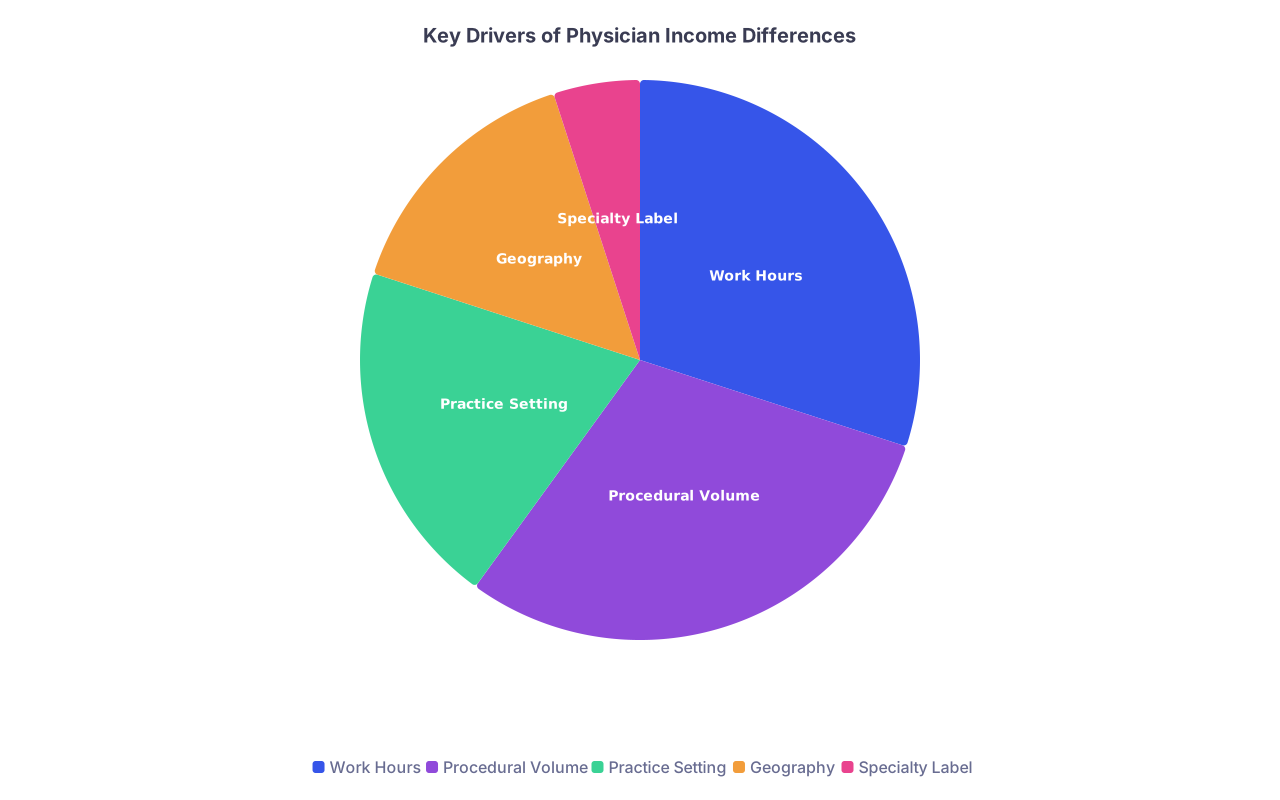
| Category | Value |
|---|---|
| Work Hours | 30 |
| Procedural Volume | 30 |
| Practice Setting | 20 |
| Geography | 15 |
| Specialty Label | 5 |
The “specialty label” itself matters less than people assume. Hours, procedures, whether you’re private vs employed, and where you live dominate.
How to Think About This as a Student or Resident
If you’re in the “I want a life but I don’t want to sacrifice income” phase, here’s the unvarnished approach:
Stop using outdated mental models.
The “poor lifestyle field vs rich intense field” dichotomy is sloppy. Look at actual numbers from current surveys, not what your attending made in 2005.Focus on how the specialty works day to day.
Clinic vs OR vs reading room vs ED bay. Panel responsibility vs shift work. That will affect your quality of life more than a +/- $50k swing on paper.Think in ranges, not absolutes.
A radiologist in rural private practice can out-earn a cardiologist in a big academic center. A derm in a low-volume academic clinic might make less than a hustling hospitalist doing extra shifts. The specialty doesn’t guarantee the outcome; the setup does.Protect your future options.
If you’re leaning lifestyle, strong board scores (Step 2 now), clinical evals, and networking become your currency. Competitive residencies are the real bottleneck, not pay.

FAQ (3 Questions)
1. So are lifestyle specialties always the “best deal” financially?
No. They’re often the best hourly deal, but the absolute top earners in medicine are usually procedure-heavy folks who also work a ton—high-volume ortho, GI, interventional cards, private practice ophtho, interventional pain, etc. The difference now is that you don’t have to choose between “rich and miserable” and “comfortable but broke.” Many lifestyle fields are rich enough and far from broke.
2. Is emergency medicine still a good choice given market concerns?
EM is the one lifestyle field where I tell people to truly study the market. The shift structure and hourly rate are still strong, but oversupply in certain regions, consolidation by contract management groups, and schedule intensity (nights/holidays forever) are real issues. If you genuinely love acute care and resuscitation, it can still be a great fit. If you’re picking it only for “lifestyle,” you’re about 10–15 years too late.
3. If money and lifestyle can both be good, what actually matters most in picking a specialty?
Fit. What pathology you enjoy, the patients you can tolerate for 30 years, whether you like procedures, how much you hate or love clinic, and your tolerance for chaos vs routine. The smartest choice is a specialty you like enough to practice for decades, that also gives you acceptable money and a schedule structure you can live with. The data just clears one thing up: choosing a lifestyle-friendly specialty doesn’t automatically mean choosing a lower-income future.
Key takeaways:
- “Lifestyle specialties pay less” is mostly outdated—on an hourly basis, they often pay more than many grind-heavy fields.
- Compensation now depends more on hours, procedures, practice setting, and geography than on some simplistic “lifestyle vs real specialty” divide.
- You can absolutely have strong income and a life—if you choose your specialty and practice environment with current data, not old war stories.