
Only about 20–25% of psychiatrists who try locums once actually understand how different inpatient, outpatient, and C/L work feels in this context—and price their time accordingly. The rest leave money, sanity, or both on the table.
Let me break this down specifically.
Locum psychiatry is not “just psychiatry in a different badge.” The pressures, expectations, liability profile, and day‑to‑day grind differ sharply between inpatient, outpatient, and consultation‑liaison (C/L). If you treat them as interchangeable, you either burn out or get exploited.
This is the playbook I wish most post‑residency psychiatrists had before saying yes to “a quick inpatient gig,” “some tele‑outpatient,” or “a C/L assignment that should be pretty light.”
You are post‑residency, in the job market. You want money, control, and experience—without stepping into a trap. Good. Let’s get surgical about it.
The Core Differences: Inpatient vs Outpatient vs C/L Locums
Before diving into each setting, get the global picture right: different locums environments carry different workloads, risks, and negotiation leverage.
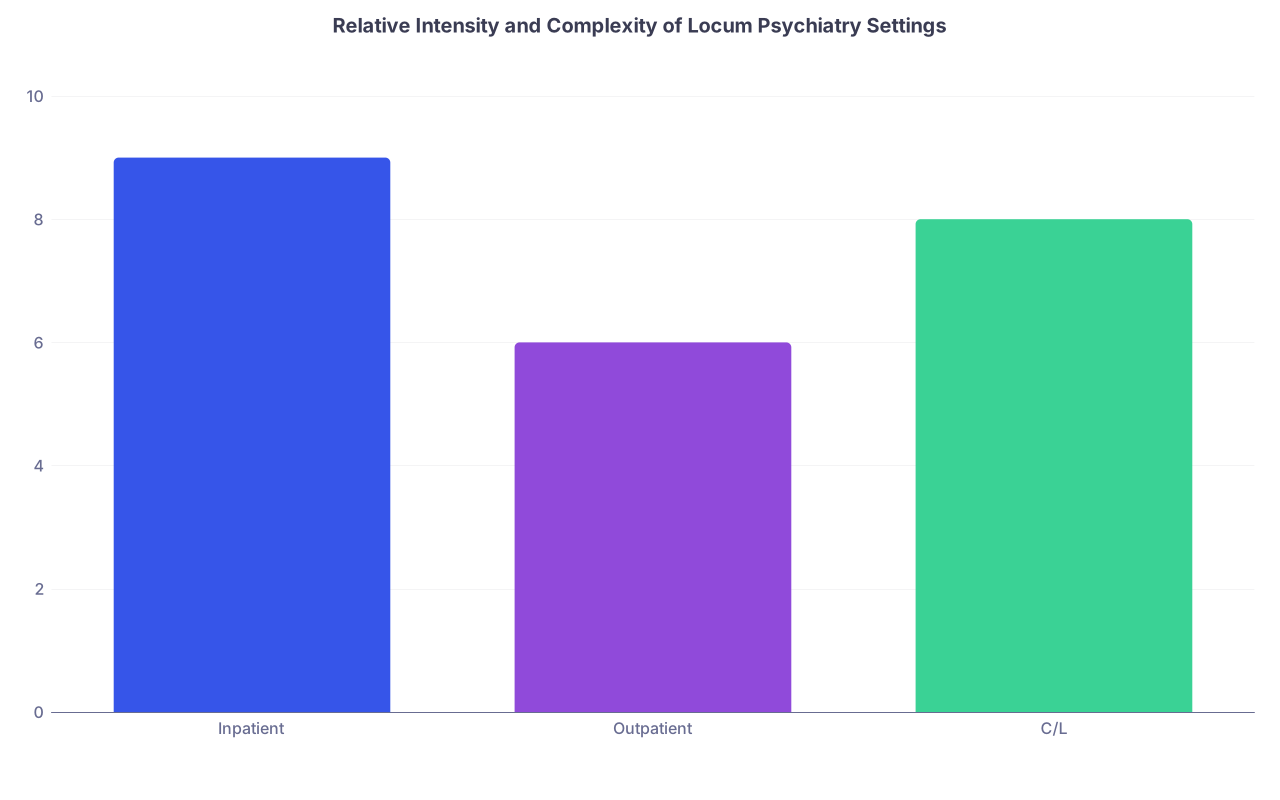
| Category | Value |
|---|---|
| Inpatient | 9 |
| Outpatient | 6 |
| C/L | 8 |
Interpretation (1–10 scale, my rough reality-based scoring from what I have seen and what colleagues report):
- Inpatient: 9 – Highest pace, highest acute risk, significant documentation and system friction.
- Outpatient: 6 – Cognitive/relationally heavy but more structured, generally predictable.
- C/L: 8 – Lower volume than inpatient units, but higher complexity per patient, political landmines everywhere.
Now let us break down each.
Inpatient Locum Psychiatry: What Actually Happens On The Ground
Inpatient is the default “we need a locum ASAP” situation. A psychiatrist left, census spiked, or coverage fell apart. You get the text: “15–18 patients per day, no call, easy gig.”
Reality check: those three numbers—census, admits, call—mean different things institution to institution.
Typical Inpatient Locums Structure
You will usually see one of these models:
Full unit coverage
- You are responsible for the entire census (12–24+ patients).
- You round daily, do admissions, discharges, and notes.
- Often: weekday coverage, plus optional or required weekend call.
Split‑coverage or “admitter” role
- One psychiatrist handles the existing census; you primarily do new admissions and some follow‑ups.
- Looks lighter on paper. Often is not. Admission workups + documentation can fry you.
Weekend or “vacation relief”
- Round on “stable” patients, maybe cap at 16–20.
- Frequently undersold: discharges, unsafe placements, and borderline cases tend to pile up for weekends.
| Setup Type | Daily Census | New Admits/Day | Call Expectation |
|---|---|---|---|
| Full Unit | 16–24 | 1–4 | Often nights/weekends |
| Admitter Model | 6–12 seen | 4–10 | Variable |
| Weekend Coverage | 16–20 | 0–2 | In-house or beeper |
You must pin down those numbers before you say yes. Vague answers are a red flag.
Specific Nuances That Matter
Census vs admission load
This is the biggest trick. “Capped at 16” can mean:- 16 long‑stay, relatively stable patients. Manageable.
- Or 16 patients turning over aggressively with 3–6 new admits per day. Miserable.
High‑turnover units mean:
- Full H&Ps on each admit
- Collateral contacts
- Orders, legal forms, safety plans
- Discharge planning that always feels rushed
Documentation burden and EHR
Some places want:- Full daily notes, plus separate treatment plans, plus separate risk assessments.
- Others accept brief SOAPs and checkboxes.
You want to ask:
- How long are typical daily notes?
- Are there separate “treatment plan review” notes?
- Who enters orders—do you, or do you have strong nursing support?
Legal and involuntary work
Locums psychiatry on inpatient often equals “you are the one signing the involuntary paperwork because you are physically present.”- Court days can blow up your schedule.
- In some states you will testify; in others you rarely see court.
Ask explicitly:
- How many patients are involuntary on average?
- Who handles court paperwork and coordination?
- Do I have to appear in person or just sign forms?
Team dynamics
Here is where things get surprisingly binary. Some places:- Strong social work, solid nurses, functional case management. You feel like a psychiatrist.
Others: - You are the de‑facto social worker, placement coordinator, PRN dispute mediator, and scapegoat.
You can sense trouble if:
- There is unusually high turnover in nursing or social work.
- They emphasize “easy patients, just sign meds” (translation: chaotic, no real system).
- Strong social work, solid nurses, functional case management. You feel like a psychiatrist.
Risk Profile: Why Inpatient Locums Rates Must Be Higher
Inpatient equals:
- Acute suicide and violence risk
- Restraint/seclusion decisions
- Heavy polypharmacy responsibility
- High paper trail for attorneys to dissect later
This is not “some med management.” It is high‑risk, high‑acuity medicine. If your hourly rate does not reflect that, someone else is pocketing the difference.
A healthy mindset:
Inpatient locums = “I am charging for risk, cognitive load, and emotional wear,” not just “hours present.”
Outpatient Locum Psychiatry: Clinic, Community, and Tele
Outpatient is where a lot of post‑residency psychiatrists try to “dip a toe” into locums. It looks benign on paper. “Monday–Friday, 8–5, no call, mostly med‑checks.”
Sometimes it is exactly that. Sometimes it is an EMR nightmare with 25+ visits a day and zero real support.
How Outpatient Locums Are Usually Structured
Typical models:
On‑site community mental health / clinic role
- 60‑min evals, 20–30‑min follow‑ups
- Mixture of SMI, mood, anxiety, substance use
- Often lots of disability forms, FMLA, and paperwork
Private‑group or hospital‑affiliated clinic
- More insured, fewer social determinants nightmares
- Higher expectation of detailed documentation and quality metrics
- Sometimes you are expected to “help build the panel”
-
- Work from home (or anywhere quiet)
- Often high volume med‑management focus
- Documentation standards vary dramatically across companies
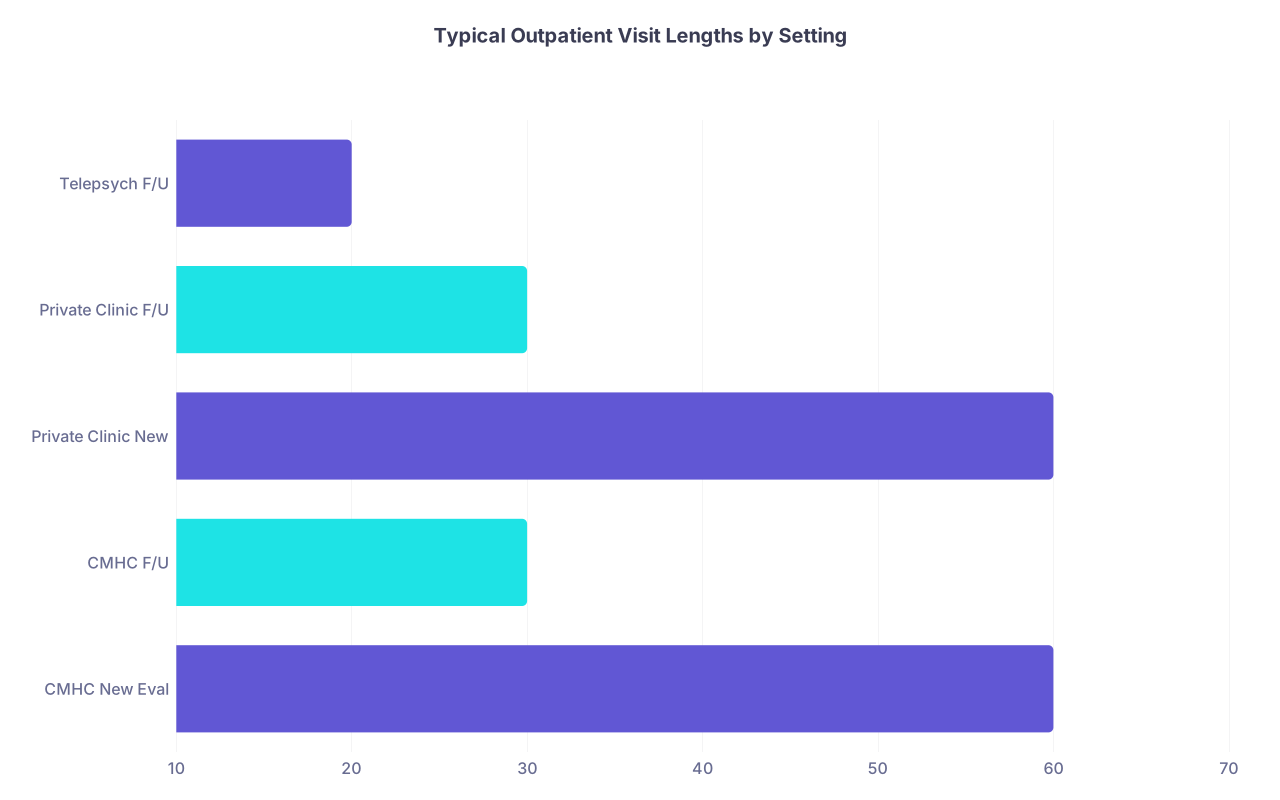
| Category | Value |
|---|---|
| CMHC New Eval | 60 |
| CMHC F/U | 30 |
| Private Clinic New | 60 |
| Private Clinic F/U | 30 |
| Telepsych F/U | 20 |
These times are the scheduled durations. Real world often compresses them further.
The Nuances That Will Make or Break Your Day
Volume and scheduling template
This is the single biggest determinant of whether outpatient locums is sustainable.You want concrete answers:
- How many patients per day, including no‑shows?
- Are new evaluations double‑booked?
- Who controls the schedule—you, front desk, or a practice manager obsessed with “access”?
A fair template for a new attending:
- 8–10 follow‑ups + 2–3 new patients per day, or
- 14–16 20‑minute visits if almost all are stable med‑checks
If they push above that, your quality goes down, and your medico‑legal exposure goes up.
Support staff and responsibilities beyond medication
The trap: “We just need you to manage meds. Simple.” That sentence usually means the opposite:- No embedded therapy
- Minimal case management
- No one else handling disability, work letters, school forms
Clarify:
- Who handles crisis calls between visits?
- Do therapists share responsibility, or is everything routed to you?
- Who completes long forms and prior authorizations?
EHR and template control
Some outpatient systems let you:- Build your own templates
- Pre‑chart or batch sign intelligently
Others: - Require 10+ mandatory click boxes and structured fields per visit.
Ask:
- How long do your current clinicians say an average note takes?
- Is there a “productivity” metric? RVUs, visits per day, etc.
- What is considered “behind” on documentation?
Continuity vs “drive‑by” psychiatry
Locums in outpatient often means:- You are a bridge psychiatrist while they recruit permanent staff.
- Or you are filling a telepsychiatry lane permanently staffed by contractors.
Ethically, continuity matters:
- Are you expected to start clozapine or long‑acting injectables when you will be gone in 3 months?
- Who will follow complex med regimens, cross‑tapers, or high‑dose polypharmacy after you leave?
You have to design your practice style around the reality of your tenure.
C/L Locum Psychiatry: The Most Misunderstood Lane
Consultation‑liaison (C/L) locums is where a lot of general psychiatrists underestimate the complexity. They hear “consult service,” picture a moderate pace, and miss the politics and cognitive load.
Reality: C/L is medicine + psychiatry + inter‑department diplomacy. And that is on a good day.
What C/L Locums Usually Looks Like
You are covering:
- Med‑surg floors
- ICU consults
- ED consults (sometimes)
- Capacity evaluations, agitation management, delirium, catatonia, “placement issues,” and “behavioral problems”
Daily load can vary:
- Some places: 4–8 consults / follow‑ups per day
- Others: 12–18, including multiple “stat” requests
The kicker: every consult feels heavy. You are not doing simple SSRI starts all day.
Particular C/L Nuances You Need to Respect
Role clarity: consultant vs disposition engine
There are two broad cultures:True consultation culture:
- You advise on diagnosis, meds, capacity, delirium, agitation.
- Primary team retains responsibility for disposition and medical management.
“Dumping” culture:
- Surgery or medicine calls for every mildly anxious or noncompliant patient.
- You get consulted to justify keeping the patient, discharging them, or labeling them as “psych.”
You want to know:
- How many consults per day for the current psychiatrist?
- Do they commonly request “admission for placement” or “psych admission for behavior”?
- Who ultimately decides discharge: you, or primary team?
Capacity evaluations and legal risk
C/L is the frontline for:- Refusal of life‑saving treatments
- Capacity for AMA discharges
- Guardianship considerations
Every capacity eval you sign can be scrutinized later. Especially if:
- The patient dies after an AMA
- The patient suffers a major adverse event after refusing recommended care
You should have:
- A consistent, documented capacity assessment framework
- Clear documentation templates for capacity notes
Interaction with ED and inpatient psych
Some hospitals blur lines:- C/L covers ED psych boarding patients
- You are pressured to accept inappropriate psych admits (“medically complex, but just send them upstairs”)
- You become the bottleneck or the scapegoat when beds are short
Ask:
- Do I cover ED psych? If so, how many per day on average?
- Do I have the authority to decline psych admission based on medical appropriateness?
Interpersonal politics
C/L locums is not just about clinical skill. It is about:- Saying “no” to surgeons diplomatically
- Explaining why psychiatry is not responsible for placement of every demented patient
- Being the visible “face” of mental health in a system that may or may not respect it
I have watched locums psychiatrists get labeled “difficult” in C/L because they refused to rubber‑stamp capacity decisions that were clinically terrible. That label travels.
You need a calm, documented, consistent style for:
- Refusing inappropriate requests
- Offering alternative, actual psychiatric recommendations
- Documenting your rationale in a way that is defensible later
Pay, Negotiation, and How Setting Should Change Your Rate
Locums agencies love to pitch everything as if it is roughly the same job with small variations. It is not. Your rate should explicitly track:
- Acuity
- Legal risk
- Workload intensity
- Call and off‑hours duties
- Geographic flexibility (desirable location vs middle of nowhere)
As a rough conceptual framework (not absolute numbers, but relative logic):
| Setting | Typical Risk/Complexity | Should Command Rate Premium? |
|---|---|---|
| Inpatient | High | Yes |
| Outpatient | Moderate | Baseline |
| C/L | High | Yes |
Things that justify pushing for higher rates in ANY setting:
- Mandatory in‑house call or frequent nights/weekends
- 16+ patients per day (inpatient) or 20+ visits per day (outpatient)
- Regular court testimony or heavy legal work
- ED coverage or frequent “stat” consults
- Poor location or difficult travel / housing conditions
You are not paid for how “nice” the staff are. You are paid for:
- Risk
- Load
- Disruption to your life
If all three are high and the rate is “standard,” you are underpricing yourself.
How to Vet an Assignment Before You Say Yes
This is where real professionals separate from desperate sign‑whatever new grads.
Use a simple mental checklist for each setting.

| Step | Description |
|---|---|
| Step 1 | Recruiter Calls |
| Step 2 | Ask about census and admits |
| Step 3 | Ask about visits per day |
| Step 4 | Ask about consult volume |
| Step 5 | Request call with onsite psychiatrist |
| Step 6 | Clarify call and documentation |
| Step 7 | Negotiate or decline |
| Step 8 | Accept with written terms |
| Step 9 | Setting Type |
| Step 10 | Any unclear answers? |
| Step 11 | Rate matches risk? |
Non‑negotiable questions for each type
You can adapt this, but if you skip these, you usually regret it.
For inpatient:
- What is the cap, and how many new admits per day on average?
- Who covers weekends and nights? What is my exact call responsibility?
- How much of my time will be court / legal work?
- Do I have mid‑level support or another psychiatrist on site?
For outpatient:
- How many scheduled patients per day?
- How long are new evals and follow‑ups on the schedule?
- Who handles between‑visit crises and refill requests?
- How much paperwork (disability, letters, FMLA, etc.) is typically routed to the psychiatrist?
For C/L:
- Average number of consults per day? Peak days?
- Do I cover the ED? Inpatient psych? Both?
- Who is responsible for psych admission decisions?
- What is the usual turnaround expectation for consults (e.g., same day, 24 hours)?
And across all settings:
- What EHR do you use, and do I get paid for orientation time?
- Is there protected time for documentation, or am I expected to chart at home off the clock?
- Are travel, lodging, and malpractice covered, and what are the tail provisions?
If the recruiter cannot answer, you ask to speak to:
- The medical director
- Or a current psychiatrist at the site
If they resist that call, that is data. Walk away.
Strategy: How to Use Each Setting at Different Career Phases
You are post‑residency, thinking job market and optional locums. You are not just grabbing the highest dollar amount. You are building skills, reputation, and leverage.
Here is how I would think about it.
Year 1–3 post‑residency
Goal: competency, not chaos.
- Do not start with the highest‑acuity inpatient or C/L if you felt shaky on those in residency.
- Consider a relatively well‑structured outpatient clinic locums or milder inpatient unit with clear caps.
- Use this time to:
- Learn realistic documentation pacing.
- Refine your risk‑assessment language.
- Watch how different systems function (and dysfunction).
Year 3–7 post‑residency
Goal: leverage and specialization.
If you enjoy acute settings, this is when inpatient or C/L locums can become extremely lucrative.
You now have enough experience to:
- Recognize bad culture fast.
- Say no to nonsense caseloads and lowball offers.
- Offer real value (e.g., you can handle delirium, catatonia, and ED boarding efficiently).
Outpatient tele‑locums can also anchor your schedule:
- Stable baseline income
- Occasional high‑yield inpatient or C/L blocks for extra cash
Later career
Goal: sustainability and control.
Many senior psychiatrists move toward:
- Part‑time outpatient or tele with reasonable volume
- Short, intense inpatient or C/L locums stints if they still like adrenaline
You can afford to say no to:
- Toxic systems
- Excessive call
- Places that view psychiatry as a dumping ground
The point is not “inpatient good, outpatient bad” or the reverse. The point is alignment between:
- Your skills
- Your tolerance for chaos
- Your financial and life goals
Quick Reality Checks Before You Sign Anything
A few blunt filters that have saved people a lot of regret:
- If the recruiter cannot tell you patient volume, they either do not know the site or it is bad.
- If the assignment “needs you to start next week” and has been open for months, ask why.
- If every description includes “easy patients” and “very chill,” assume the opposite until proven otherwise.
- If no physician at the site is willing to talk to you, they either do not have one (red flag) or the current one is unhappy (also a red flag).
Your license and reputation are harder to replace than any single paycheck. You act accordingly.
With these nuances clear—inpatient intensity, outpatient structure, and C/L politics—you are no longer walking into locums psychiatry blind. You are choosing your battlefield.
You are ready to evaluate your first (or next) set of offers with a cold eye. The next step is learning how to structure your time—multiple contracts, tele plus on‑site blocks, and exit ramps when a site goes sideways. But that is a story for another day.
FAQ (Exactly 5 Questions)
1. Is inpatient locum psychiatry too intense for a brand‑new graduate?
Not automatically, but it can be if you choose poorly. A capped, lower‑turnover adult unit with strong nursing and social work support can be very manageable for a new attending. A 22‑bed high‑turnover unit with 5–7 admits per day and mandatory call is a bad first assignment. The issue is not inpatient itself—it is volume, support, and expectations. If you felt shaky in inpatient during residency, start with a milder unit and avoid solo‑coverage roles at the beginning.
2. How do I compare two outpatient locum offers that pay about the same?
Ignore the base hourly rate for a moment and compare:
- Visits per day and visit length
- Complexity of population (CMHC vs insured private clinic)
- Documentation burden (EHR, metrics, required fields)
- Extra work: prior auths, disability forms, crisis calls
The clinic that schedules 18 patients per day with reasonable support is usually better than the one that pays a little more but expects 24+ visits and endless paperwork. Net stress per dollar is what matters.
3. Does C/L locums require a fellowship, or can a general psychiatrist do it?
Most C/L locums roles do not require fellowship training. Many are filled by general adult psychiatrists. What you need is comfort with: delirium evaluation, capacity assessments, catatonia recognition, and managing psychotropics in medically complex patients. If your residency training on medicine floors and ICUs was solid and you kept those skills fresh, you can do C/L. If you avoided those rotations and hated every minute of them, C/L may not be the best niche for you.
4. How much say do I actually have in locums contract terms?
More than recruiters like to admit, less than some physicians hope. You can almost always negotiate:
- Rate (especially for higher‑acuity work or unpopular locations)
- Schedule structure within reason
- Call expectations and compensation
- Length of assignment and extension options
You rarely get to rewrite hospital policies or radically change workflows. Your leverage increases with experience, a clean reputation, and willingness to walk away from bad offers. The biggest mistake is assuming the first offer is non‑negotiable.
5. What malpractice coverage should I insist on for locum psychiatry?
You want occurrence‑based coverage or, if the policy is claims‑made, written confirmation of tail coverage responsibility. Confirm:
- Policy limits (commonly 1M/3M in psychiatry)
- Whether telepsychiatry in other states is included, if relevant
- That the policy explicitly covers your scope of work (inpatient, C/L, ED consults as applicable)
Do not assume the agency’s one‑line reassurance is enough—ask for documentation. You are taking on high‑risk scenarios in inpatient and C/L; your malpractice coverage must not be an afterthought.