
Last month I spoke with a hospitalist who was turning down $280/hour locums offers because she “had little kids” and assumed it was impossible. Three weeks later, she was on assignment, her childcare was covered, her flight was paid for, and she was making more in 7 shifts than in a full month of her employed job. The difference was not magic; it was planning, boundaries, and using every lever the locums system actually gives you.
If you have young kids and you’re considering locum tenens, you’re not crazy and you’re not selfish. You just need a ruthless, realistic plan for childcare, travel, and call. Let’s build that out.
First Question: Are You Bringing the Kids or Leaving Them Home?
Everything else flows from this. Decide this before you start shopping assignments, otherwise you’ll end up with a “great job” that totally breaks your family.
You have three real options:
- You leave the kids at home with coverage.
- You bring them (and possibly your partner) with you.
- You do a hybrid: some trips solo, some with family.
Let’s be blunt.
- Under age 3 and no rock-solid local support? Bringing them usually makes more sense for longer assignments or rural gigs with housing.
- School-aged kids in a stable school and you have trusted backup caregivers? Leaving them home for 7–10 day stints can be much cleaner.
- Single parent with infants/toddlers and no support? You either build a support system (paid or family) or your locums options need to be very local and very controlled. Fantasy-flexible-locums-with-no-help is not a real thing.
Before anything else, answer these:
- Who is “home base adult” when you’re gone (if anyone)?
- For how many consecutive days can you be physically away without your home situation cracking?
- Are your kids portable right now? (Some toddlers are fine with new environments. Some are chaos grenades.)
Once you’re honest about that, you can pick assignments that match reality instead of hope.
Building a Childcare Stack That Actually Works
Think in layers. You will not survive this with just “my partner will watch them” or “we’ll find a sitter.” That’s how shifts get cancelled and reputations get wrecked.
Your childcare stack = primary plan + secondary + emergency.
Scenario A: You Travel Solo and Kids Stay Home
This works best if:
- You have a partner with predictable-ish schedule, and
- You add at least one external support.
Your stack might look like:
- Primary: Partner or co-parent manages day-to-day.
- Secondary: Nanny / daycare / after-school program.
- Emergency: Grandparent, neighbor, or backup agency sitter.
Do not rely solely on grandparents unless they’re already routinely involved and healthy enough for real duty. “They love the kids” is not the same as “they can manage five days of mornings, evenings, and daycare runs without resenting you.”
Practical steps:
Standardize your home routine
Write down the real schedule, not the ideal one.- Wake, breakfast, school/daycare times
- Bedtime routine, comfort items, allergies, medications
- List of regular activities (soccer Tue/Thu 5 pm, etc.)
This is not busywork. It makes it possible for someone else to step in without calling you 15 times per day.
Lock in a recurring nanny or sitter before your first assignment
Someone who:- Already knows your kids
- Has done dinner/bedtime in your home at least a few times
- Can be called for extra hours when you’re on assignment
Pre-book extra coverage for the dates you’re gone
Do not wait until you’re packing to find out daycare closes at 5:30 and your partner is on call those nights.Typical pattern that works:
For a 7-on locums stretch, you:- Pre-book nanny coverage 5–8 pm daily for that week.
- Arrange school drop-off help for early-morning call days.
- Budget extra cash for DoorDash / cleaning during your absence so the at-home adult is not drowning.
Scenario B: You Bring the Kids with You
This is a different game.
It works best when:
- The assignment is 1–3+ weeks in one place, or
- The site provides a house or apartment (common in rural, critical access gigs), or
- Your partner can work remotely and be the “primary parent” on location.
Key questions to ask the recruiter/hospital early:
- What housing is included? Hotel, extended stay, apartment, house?
- Can they house family members with you? (Most will. Some rural sites expect it.)
- Is the housing walkable to anything (parks, grocery, playground)?
- Are there any hospital rules about kids on campus, childcare resources, or local recommendations?
Then you layer childcare on the road:
If you have a partner coming, decide roles clearly
“We’ll figure it out when we get there” is how you end up sniping at each other at 11 pm in a hotel room.- Who handles mornings?
- Who handles bedtime?
- What happens if you get called in at 2 am?
For longer stints: set up local childcare
Options:- Local licensed daycare for 2–3 weeks
- Drop-in care centers (some cities)
- Posting for sitters on Care.com, Sittercity, or local FB groups 2–4 weeks in advance
Vet hard: video call first, then one on-site trial day where you’re around. If possible, arrive 1 day early for this.
For short stints (like 7-on blocks)
Sometimes partner + kids just “vacation” while you work.Good set-up:
- Walkable Airbnb with separate bedrooms
- Nearby playground and grocery store
- Clear rule: hospital calls trump everything; partner is fully in charge from X hour to Y hour.

Travel Logistics: Flights, Driving, and Housing With Kids
Locums companies actually pay for a lot, but you have to structure it right.
Flights vs Driving With Young Kids
Let’s keep it simple:
- Under 2–3 years old and you’re alone? Flying with the kid plus working call-heavy shifts is usually a mistake. Too many variables.
- Two parents, one working, one not? Flying can work if housing is kid-friendly and you’re not flipping day/night constantly.
- Multiple kids and lots of gear? Often better to drive for regional gigs and let the agency reimburse mileage instead of flights.
Always negotiate for:
- One round-trip coach ticket for you per assignment
- Mileage reimbursement if you drive instead of fly
- Ask (directly): “Does this facility ever cover family travel or larger housing for clinicians with children?”
- Sometimes yes, especially rural hospitals desperate for coverage.
Housing That Doesn’t Make Everyone Miserable
Non-negotiables when you have young kids with you:
- Separate sleeping area for kids if at all possible (suite, Airbnb, or 1–2 BR apartment).
- Fridge + microwave at minimum; mini-kitchen if possible.
- Laundry access. Toddlers + no laundry = bad math.
- Safe outdoor space or quick access to a park.
When talking with the recruiter:
- Ask for an extended-stay hotel or Airbnb-type housing instead of a single room.
- Be explicit: “I’m traveling with my family and I need a separate bedroom space. I’m willing to take a slightly lower rate if needed, but I cannot accept a single standard hotel room for a 2-week stay.”
Locums agencies can usually structure housing as:
- Direct-pay extended stay
- Corporate apartments
- A housing stipend so you book your own place
Often, housing upgrades cost the facility less than a $10/hour increase in rate. Use that.
Call and Schedule: Guardrails for Parents
Here’s where most physicians with kids either make or break their locums career. They accept call set-ups that would barely be survivable even without children, then wonder why everyone is miserable.
You must negotiate schedule like a parent, not like a 25-year-old with no attachments.
Call Patterns That Work With Young Kids
Better options:
- 7-on/7-off inpatient work where you’re fully away, and fully home.
- Pure days, no night call, for outpatient or hospitalist roles.
- Night-only blocks while kids are home with a partner and you sleep in provided housing.
Red flags (for parents with young kids):
- Home call where you’re expected to respond in 20–30 minutes and you have no on-site childcare.
- “Be available” admin days that are undefined and constantly encroach on your time.
- Very small groups where “we all help each other out” means your schedule gets changed last-minute.
Spell out in the contract:
- Exact call expectations (number of nights, home vs in-house, response time).
- Max shifts per week and max consecutive days worked.
- Whether post-call days are guaranteed off.
If you’re bringing kids:
- Avoid home call from a hotel/Airbnb when you’re the only adult with the kids.
What happens when the hospital calls at 1 am and your 3-year-old is asleep? You can’t leave them alone. The hospital does not care that you have a child in pajamas; they care that coverage is there.
You either:
- Have a second adult on-site at all times, or
- You insist on in-house call where your family stays at housing and you sleep at the hospital, or
- You don’t take that assignment.
Money: The Number That Makes the Chaos Worth It
The way you keep your sanity is by making the math work. Locums gives you leverage. Use it.
You need to know:
- Your real monthly family expenses.
- How much paid childcare and travel you’re going to need to pull this off.
Then decide your “worth it” threshold.
Example:
- Monthly expenses: $8,000
- Extra childcare/household support during locums months: +$2,000
- Total: $10,000
You take a 7-on hospitalist locums at $260/hour, 12-hour shifts:
- 7 shifts x 12 hours = 84 hours
- 84 x $260 = $21,840 gross before taxes
- Even after taxes and the babysitter, you cleared a month+ of expenses in one block.
That number is why the hassle makes sense.
You are allowed to say: “Below $X/hour, this is not worth time away from my kids.”
Typical ranges where parents feel it’s worth it (ballpark, will vary by specialty and region):
| Specialty | Common Locums Range | Typical 'Worth It' Floor |
|---|---|---|
| Hospitalist | $200–$280/hr | $230–$240/hr |
| EM | $220–$300/hr | $240–$250/hr |
| Anesthesia | $225–$325/hr | $250/hr+ |
| Psych | $170–$250/hr | $200/hr+ |
| Outpt Primary | $120–$180/hr | $150/hr+ |
If an assignment requires:
- Extra flights
- Upgraded housing
- More childcare on both ends
Your “worth it” floor goes up, not down.
Concrete Setups That Actually Work (Realistic Scenarios)
Let’s walk through a few working models I’ve seen hold up over time.
Model 1: 7-on/7-off, Kids Stay Home
Profile: Hospitalist, two kids under 6, spouse is non-physician with semi-flexible job.
Structure:
- Doc does 7-on in another state, flies in the day before, flies home the morning after.
- During 7-on:
- Spouse does school/daycare.
- Pre-booked nanny 5–8 pm each day for dinner/bedtime support.
- Grandparent on backup 1–2 days in case spouse gets sick or stuck.
- During 7-off:
- Doc is fully home, handles more childcare, gives spouse breathing room.
Why it works:
- Clear on/off blocks.
- Enough cash from locums rate to pay nanny and still come out very far ahead.
- Everyone knows the schedule months in advance.
Model 2: Local Locums + Home Every Night
Profile: EM doc, single parent, kids 3 and 7, no nearby family.
Structure:
- Only accepts local/regional shifts within 60–90 minutes.
- Hospital schedules are mostly 8–10 hour shifts.
- Hires a full-time nanny who:
- Covers after-school till bedtime reliably.
- Can sleep over a few nights per month for late shifts.
- Keeps kids in same daycare/school, no travel for them.
Why it works:
- No flights. No drastic environment changes for children.
- Higher hourly rate funds full-time nanny.
- Parent is physically present many days, and not permanently exhausted from brutal call.
Tradeoff: Takes fewer shifts per month, but those shifts are high-yield.
Model 3: Bring the Whole Family for Rural Blocks
Profile: Anesthesiologist, partner works remotely, one toddler.
Structure:
- Only accepts 2–3 week rural assignments that provide a house.
- Family drives out, brings portable crib, toys, groceries.
- Partner is full-time parent during the day, works online during naps/evenings.
- Doc does OR days and some in-house call, sleeps at hospital during overnight call.
Why it works:
- Everyone stays together, toddler has both parents around.
- Housing is paid; they effectively “live for free” during those weeks.
- No stress about child being alone overnight if called in.
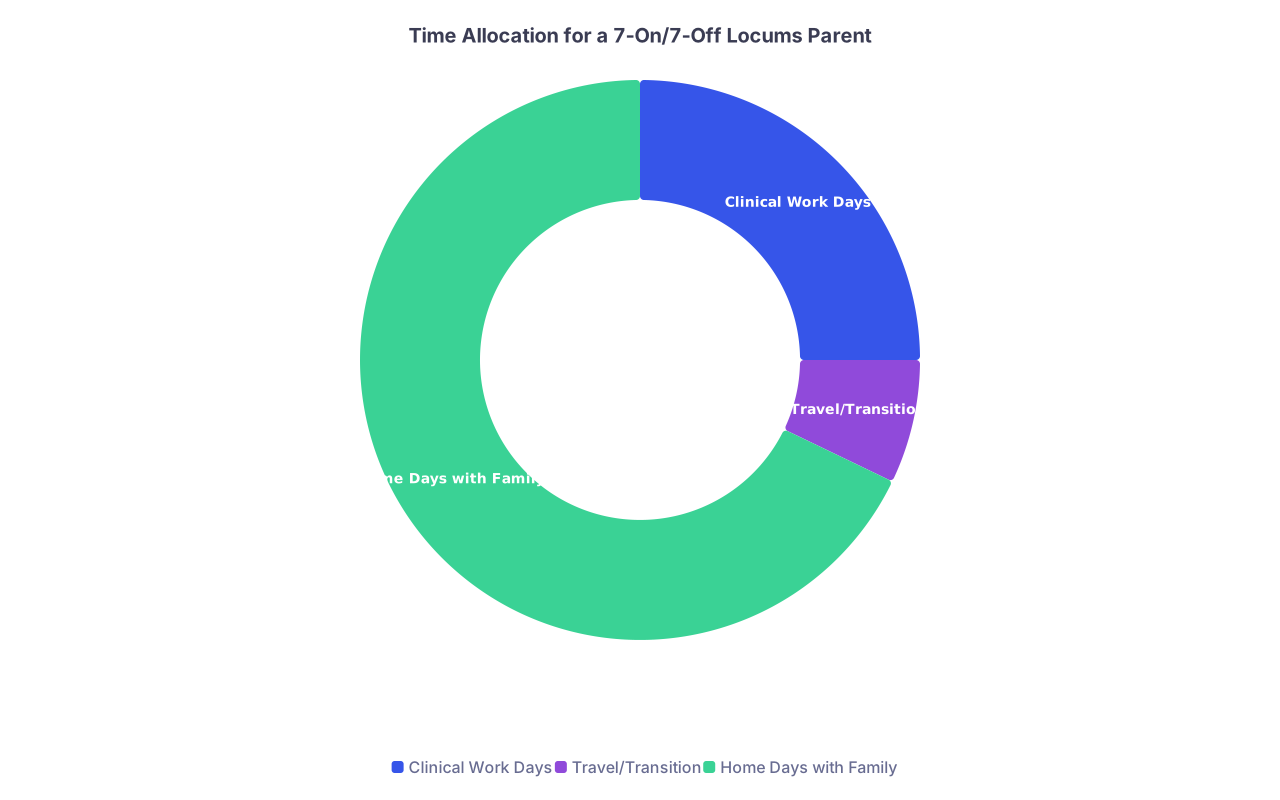
| Category | Value |
|---|---|
| Clinical Work Days | 7 |
| Travel/Transition | 2 |
| Home Days with Family | 19 |
Negotiation Phrases You Actually Use
You do not need to overshare your entire family story with the recruiter, but you do need to be direct.
Use phrases like:
- “I have young children, so my hard lines are: no overnight home call unless there’s in-house coverage option, and no more than X consecutive nights.”
- “I’m open to traveling with my family. Can the facility support an extended-stay or apartment with a separate bedroom?”
- “If you need more flexibility in schedule or more call, I’ll need a higher rate to make it worth arranging additional childcare.”
For home base:
- “I can commit to 7–10 day stretches away per month, but not more. I’m happy to be very reliable and cover holidays if we keep that structure.”
If a recruiter pushes back or tries to guilt you:
- That’s your cue. There are plenty of other assignments. A facility that doesn’t respect basic boundaries with parents is usually a nightmare to work for.
Practical To-Do Checklist Before Your First Locums With Young Kids
Here’s what you lock down 4–8 weeks before you ever step on a plane:
- Decide: kids travel vs kids stay home, for the next 3–6 months.
- Choose only assignments that fit that model.
- Lock your childcare stack:
- At-home: partner schedule + nanny/sitter + backup
- On the road: housing + local sitter options + partner roles
- Negotiate:
- Schedule specifics
- Call type/volume
- Housing type
- Rate that covers real family costs
- Build your “while I’m gone” binder/file:
- Kid schedules, pediatrician info, meds, insurance
- School/daycare contacts
- Emergency plan (who drives where, who can pick up)
- Run a trial:
- One weekend call or short local shift with full childcare plan active
- Fix whatever cracks (bedtime is chaos, no spare car seat, etc.)
Do this once, properly, and every assignment after that is just a variation—not a total reinvention.
FAQs
1. Is locum work realistic as a single parent with young kids?
Yes, but not in every form. The most realistic setups are either local/regional assignments where you’re home most nights and use paid, reliable childcare; or 7-on/7-off blocks with a very strong home-base caregiver (nanny, relative, or combo) and airtight planning. What usually fails is trying to do distant, high-call assignments with no partner, no robust childcare, and “I’ll figure it out.” If you’re solo, assume you’ll be buying more help than your partnered colleagues, then use higher-paying assignments to fund that.
2. Should I take the kids out of school for longer assignments?
If your kids are preschool or kindergarten age, pulling them for 2–4 week blocks can work fine as long as you keep some routine (bedtimes, learning activities, familiar toys). Once they’re solidly in elementary school and have friends, it’s usually better to keep school stable and have you travel solo or for shorter bursts. The best compromise for school-aged kids is often: home-based school + you doing 7–10 day assignments, not full 2–3 month relocations.
3. What if my partner is not on board with locums travel?
Then listen. A resentful or overwhelmed partner will sink this faster than any recruiter. Start with a trial: one short assignment that’s financially meaningful but limited in duration (say, 5–7 shifts). Pay for extra help while you’re gone so your partner doesn’t feel abandoned. Afterward, debrief honestly: Was the money worth the disruption? What felt hardest? You can always pull back to fewer assignments or closer sites; you’re not signing away your life.
4. Is it better to wait until my kids are older before doing locums?
Not necessarily. Older kids have school, sports, and social lives that are harder to uproot. Younger kids are more portable but need more hands-on care. The real question is your support system and finances, not their age. If locums would give you financial breathing room, a path out of a toxic job, or more total days at home per month, it can be worth doing now—as long as you build a serious childcare plan and say no to assignments that don’t fit it.
Key points: design your childcare and travel first, then pick locums that fit—never the other way around. Use your higher locums pay to overbuild support at home and on assignment. And be ruthless about schedule and call boundaries; your kids do not benefit from you taking “hero” shifts that wreck your family for a modest bump in pay.