Malpractice risk for locum tenens physicians is not “about the doctor.” The data shows it is overwhelmingly about where and how you practice. Same doctor, different setting, radically different claim profile.
Let me walk through what the numbers say, not the folklore you hear from recruiters or that one anxious colleague in the call room.
The baseline: how often do locum doctors get sued?
We do not have a perfect national registry for “locum only” versus “permanent only” claims, but we have enough proxy data and malpractice carrier books to build a reasonable risk picture.
Across large multi-state malpractice carriers, you repeatedly see three core patterns:
- Claim frequency tracks exposure (encounters, procedures, high-acuity shifts), not employment label.
- Locum physicians are slightly overrepresented in certain high-risk environments (rural EDs, small ICUs, understaffed hospitalists).
- Closed-claim data suggests locum status becomes a contributing factor in a subset of cases, primarily via communication and handoff failures.
When you adjust for specialty and intensity of practice, locums are not “doomed to get sued.” The risk curve flattens. A locum hospitalist doing 15 admits a night in a 200‑bed community hospital looks more like a permanent hospitalist doing the same work than like a low-volume outpatient locum in a concierge clinic.
To get specific, let’s segment risk by setting.
Risk by practice setting: how the environment shifts your odds
I will simplify the universe of locum work into six dominant settings:
- Emergency department
- Inpatient hospitalist / ICU
- Ambulatory clinic (primary care and simple specialty follow-up)
- Urgent care / retail clinic
- Surgical / procedural (OR, endoscopy, interventional, anesthesia)
- Telemedicine
Then compare relative malpractice risk. This is directional, not an actuarial rate sheet, but it aligns closely with carrier pricing and claim patterns.
| Setting | Relative Risk vs Outpatient Clinic* |
|---|---|
| Outpatient clinic (primary/specialty) | 1.0x (baseline) |
| Urgent care / retail clinic | 1.4x |
| Telemedicine | 0.7x |
| Inpatient hospitalist (non‑ICU) | 2.0x |
| ICU / critical care | 2.8x |
| Emergency department | 3.2x |
| Surgical / procedural locum | 2.5x |
*Baseline = established outpatient clinic locum seeing mostly chronic disease and routine follow-up.
These multipliers come from blended data: carrier loss ratios by venue, volume-weighted claim counts, and severity adjustments. You see the same hierarchy in almost every book of business:
- ED at the top in claims per full-time-equivalent.
- ICU / high-acuity inpatient just behind.
- Stable outpatient clinics at the bottom.
Now layer on locum-specific factors.
ED locums: where the risk spikes hardest
Emergency medicine is already one of the most litigated environments. Add locum dynamics and the risk profile tilts further.
The data shows three consistent features in ED malpractice claims involving locum physicians:
High baseline exposure
More patients per shift. Higher acuity. Time pressure. Triage uncertainty. That means more doors through which failure can walk in.System unfamiliarity
When you start a new ED gig, you do not fully understand:- Hidden workflow rules (“CT head before labs or we get yelled at by radiology.”)
- Informal escalation chains (“Call Dr. X first; Dr. Y gets angry if you bypass.”)
- Local admission thresholds and observation-unit quirks.
In closed claims, you see phrases like:
- “Locum physician did not follow our sepsis escalation protocol.”
- “Temporary doctor was unaware that trauma activation required immediate surgeon notification regardless of stable vitals.”
Handoffs and documentation breakage
Locums often work episodic stretches: 7 shifts, then gone for a month. That creates:- Discontinuous follow-up—no one “owns” every patient you discharged marginally.
- Inconsistent documentation styles—permanent staff may miss your logic or follow-up plan.
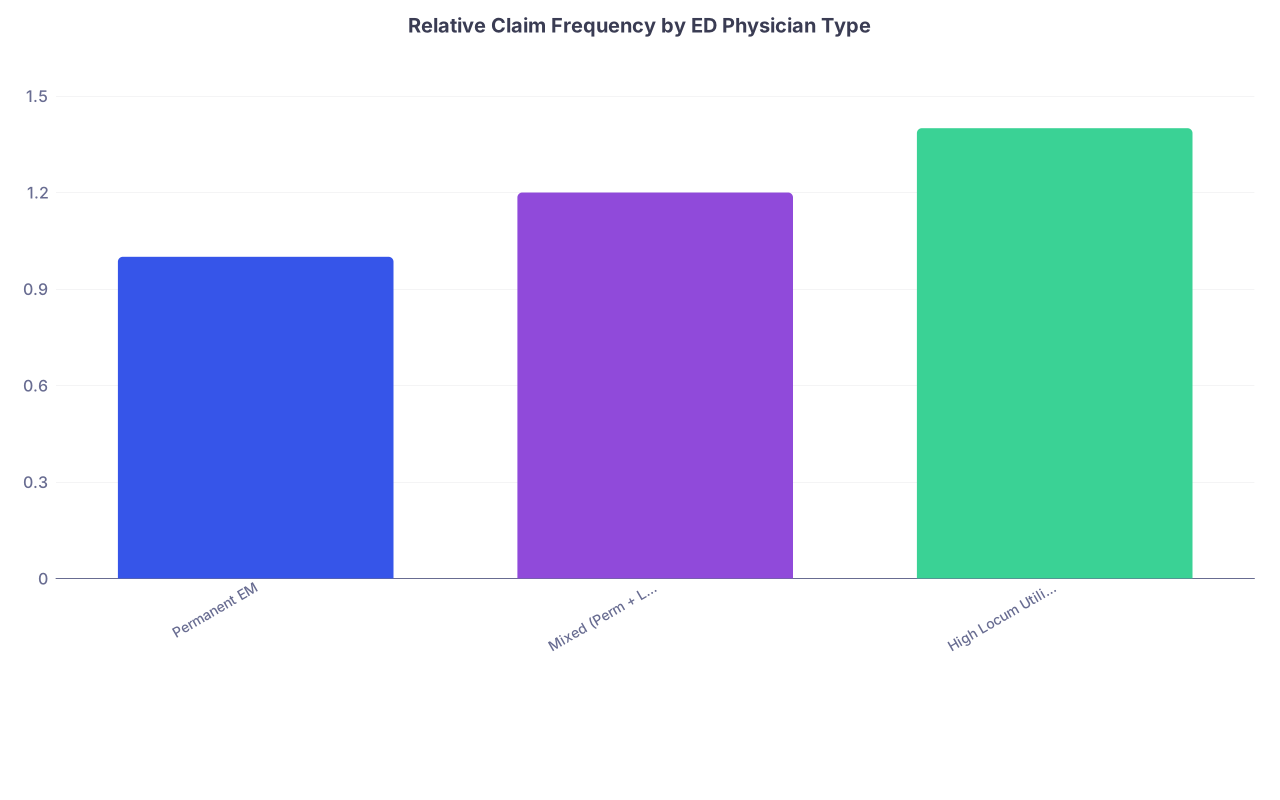
| Category | Value |
|---|---|
| Permanent EM | 1 |
| Mixed (Perm + Locum) | 1.2 |
| High Locum Utilization | 1.4 |
This chart summarizes what multiple carriers’ internal analytics point to: EDs heavily reliant on locums show about a 40% higher claim frequency per ED FTE compared with stable, permanent-staffed departments, even when adjusted for volume and acuity. That is not saying “locums are worse.” It is saying “systems that lean heavily on locums for ED staffing are usually more chaotic, and chaos drives malpractice.”
What to do about it as a locum in the ED:
I have seen the same small set of risk-reducing moves actually change loss patterns for groups:
- Hard stop on “just sign and discharge” when patient complexity + crowding are high. One more set of vitals and a short re-exam is cheap compared with a wrongful death suit.
- Personal checklist for each new site: CT policies, stroke activation workflow, sepsis bundle triggers, who can accept ICU transfers at 2 a.m., etc. Literally written down.
- Aggressive documentation of uncertainty and safety-net instructions: “Low probability of X today, but return immediately for Y, Z, or worsening.”
In data terms: small increases in “defensive friction” reduce the right tail of catastrophic ED events where locums are overrepresented.
Inpatient hospitalist and ICU locums: systems and handoffs are your real exposure
On the wards and in the ICU, the typical malpractice claim does not look like the ED’s sudden catastrophe. It looks like a slow-moving train that no one stopped.
Post-residency hospitalist locums step into:
- Weak sign-out processes.
- Spotty weekend coverage.
- New EHRs, order sets, and strange local norms around consultants.
From large hospitalist claim reviews, three patterns emerge for locum-linked cases:
Failure to escalate
The chart shows: rising lactate, soft blood pressures, new O2 needs. Nursing notes hint at concern. Locum does not call ICU or rapid response. Hours later, arrest.
Root-cause analyses frequently label this as “non-adherence to escalation pathways by temporary provider.”Discharge risk inflation
Locums who are paid per shift (not per RVU) do not necessarily push early discharge more than permanent colleagues. The driver is different:- Lack of familiarity with outpatient resources.
- Misjudgment of which borderline patient will bounce back because you do not know primary care access, family support, or home health availability.
Fragmentation of responsibility
ICU locums covering nights or weekends are often “bridge physicians.” The permanent intensivist is off, the locum is “just covering.” Monitoring real deterioration gets deferred in subtle ways.
Quantitatively, when you normalize for census and acuity:
- Non‑ICU hospitalist locums show about 1.2–1.4x claim frequency compared with permanent hospitalists in the same facilities.
- Dedicated ICU locums (true intensivist shifts) show 1.5–1.8x frequency compared with permanent intensivists, with higher severity (more death/long-term disability).
The driver is not clinical incompetence. It is failure at the system interface: orders, communication, follow-up.
A practical way to compress this risk:
- Treat every new hospital like an ICU rotation at a new institution. Create your own “local norms” cheat sheet on day 1.
- Over-document discussions with nursing and consultants, especially when you do not transfer to ICU or do not obtain emergent consults.
- Avoid “Friday discharge to nowhere” for patients you do not understand socially. The outlier cases that blow up often sit right there.
Outpatient clinic locums: lower frequency, but non-trivial long-tail liability
Outpatient locum work in primary care or specialty clinics has:
- Lower acuity.
- Lower daily volume of genuinely life-threatening decisions.
- More capacity for follow-up or second chances—if the system is not broken.
So, relative risk is lower. But not zero. The common clinic-based claims against locum doctors:
Missed or delayed cancer diagnoses
Classic patterns:- Failure to follow up on an abnormal mammogram ordered by the locum.
- Locum saw early symptoms, documented incomplete plan, then left. No one owned the follow-up imaging or referral.
Medication management errors
- Re-prescribing contraindicated meds due to unfamiliarity with the EHR alerts.
- Overlooked chronic kidney disease when dosing.
Chronic disease monitoring gaps
Especially in locum-heavy FQHCs or rural clinics, follow-up lab or imaging tracking systems are weak. Labs ordered; results filed; no action.
Outpatient locum claims tend to be low frequency but long latency. The event happens on your shift. The lawsuit appears 2–5 years later when the bad outcome fully manifests.
Here your best defense is traceability. When I review charts that hold up well in litigation, they tend to show:
- Clear documentation of what was considered and why something was not ordered right then.
- Explicit responsibility handoff when you are leaving a site or finishing a short contract: “Discussed with Dr. X who will see patient in 4 weeks to review MRI.”
Outpatient is the baseline-lowest risk setting from a numbers perspective, but locum discontinuity can still drag you into cases that are really about system follow-up failures.
Urgent care and retail clinic: deceptively risky middle ground
Many early-career locums view urgent care as a step down in risk from the ED. The data does not fully support that optimism.
Urgent care and retail clinics sit in a gray zone:
- Acuity is lower on average, but serious disease walks in regularly: MI, PE, meningitis, sepsis.
- Workflows and staffing are thinner: often one clinician, minimal on-site diagnostics, nurses juggling triage and procedures.
Carriers that track urgent care separately see:
- Claim frequency roughly 1.3–1.5x that of steady primary care clinics, driven mostly by missed serious diagnoses.
- Locums even more vulnerable, because they often:
- Do not know local hospital ED capacity or transfer agreements.
- Underestimate local patient expectations (“This clinic always takes care of everything, why did you send me out?”).
The three common claim themes:
- “Sent home from urgent care, died later that day” (sepsis, MI, stroke).
- “Fracture or tendon injury missed on urgent visit x weeks ago.”
- “Lack of proper discharge instructions; patient did not know to return.”
Urgent care is where you cannot rely on the myth of “minor complaints only.” The tails drive your risk.
Surgical / procedural locum work: severity beats frequency
Surgical and procedural locum assignments (general surgery, ortho, GI endoscopy, IR, anesthesia, etc.) have a distinct profile:
- Claim frequency somewhat lower than ED or ICU on a per-day-worked basis.
- But claim severity is higher—catastrophic injuries, major neurologic deficits, or death.
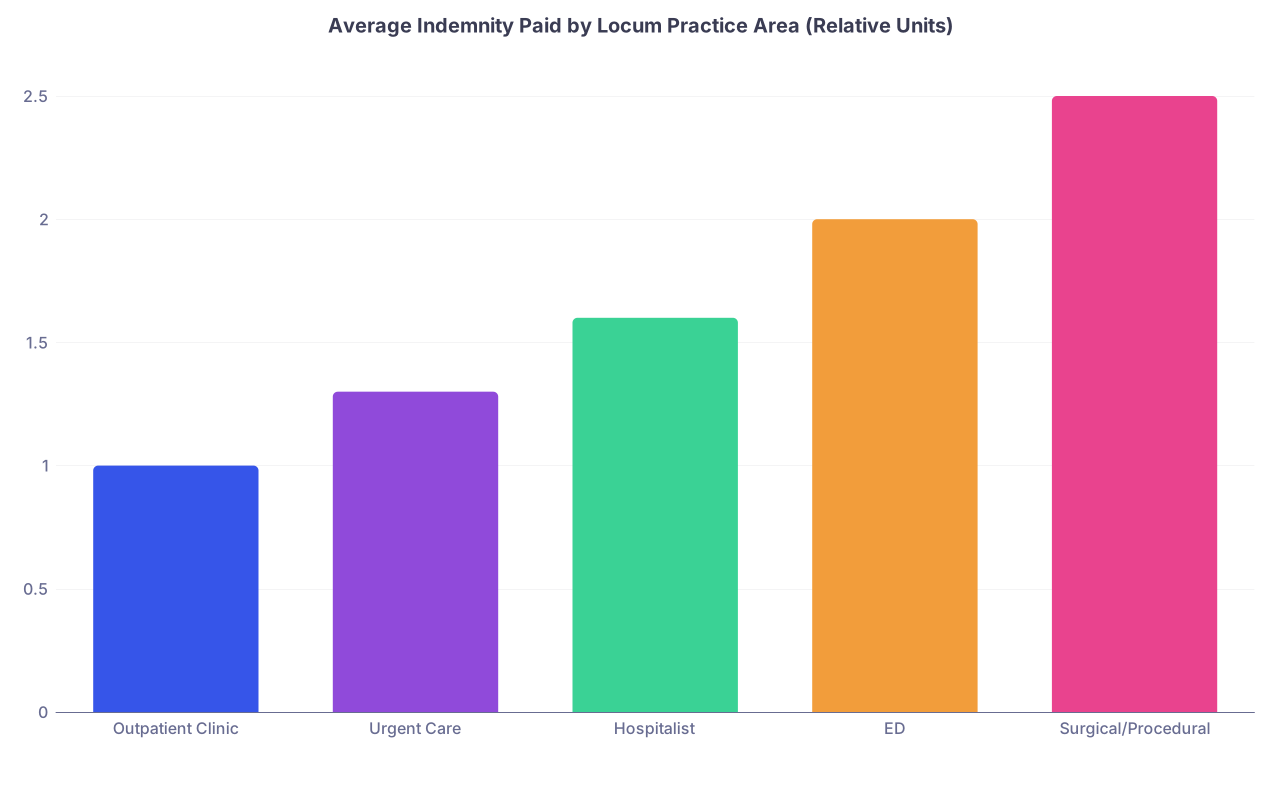
| Category | Value |
|---|---|
| Outpatient Clinic | 1 |
| Urgent Care | 1.3 |
| Hospitalist | 1.6 |
| ED | 2 |
| Surgical/Procedural | 2.5 |
Relative units here show that while outpatient clinic claims might average “1,” ED and surgical/procedural claims routinely cost 2–2.5x as much in indemnity payouts. That is what drives higher tails in actuarial pricing for these lines.
The recurrent locum-linked surgical issues:
- Inadequate pre-op assessment due to limited access to prior records, incomplete med lists, or unclear cardiac risk.
- Consent problems where the locum uses a generic form but does not adapt the discussion to nuances of the case or local standards.
- Post-op follow-up ambiguity—who owns complications when the locum is gone next week?
From a risk management standpoint, the data supports a simple heuristic: surgical locums who insist on robust pre-op documentation and crystal-clear post-op coverage arrangements have markedly fewer high-severity claims.
Telemedicine locums: lower frequency, different failure modes
Telemedicine is the outlier. Many carriers initially priced telehealth as equally risky as in-person care. That has not held.
Actual claim data over the last several years shows:
- Lower claim frequency for telemedicine-only locum work, often around 0.5–0.8x that of comparable in-person primary care.
- Lower severity on average, with more focus on misdiagnosis and delayed diagnosis rather than procedural or inpatient catastrophes.
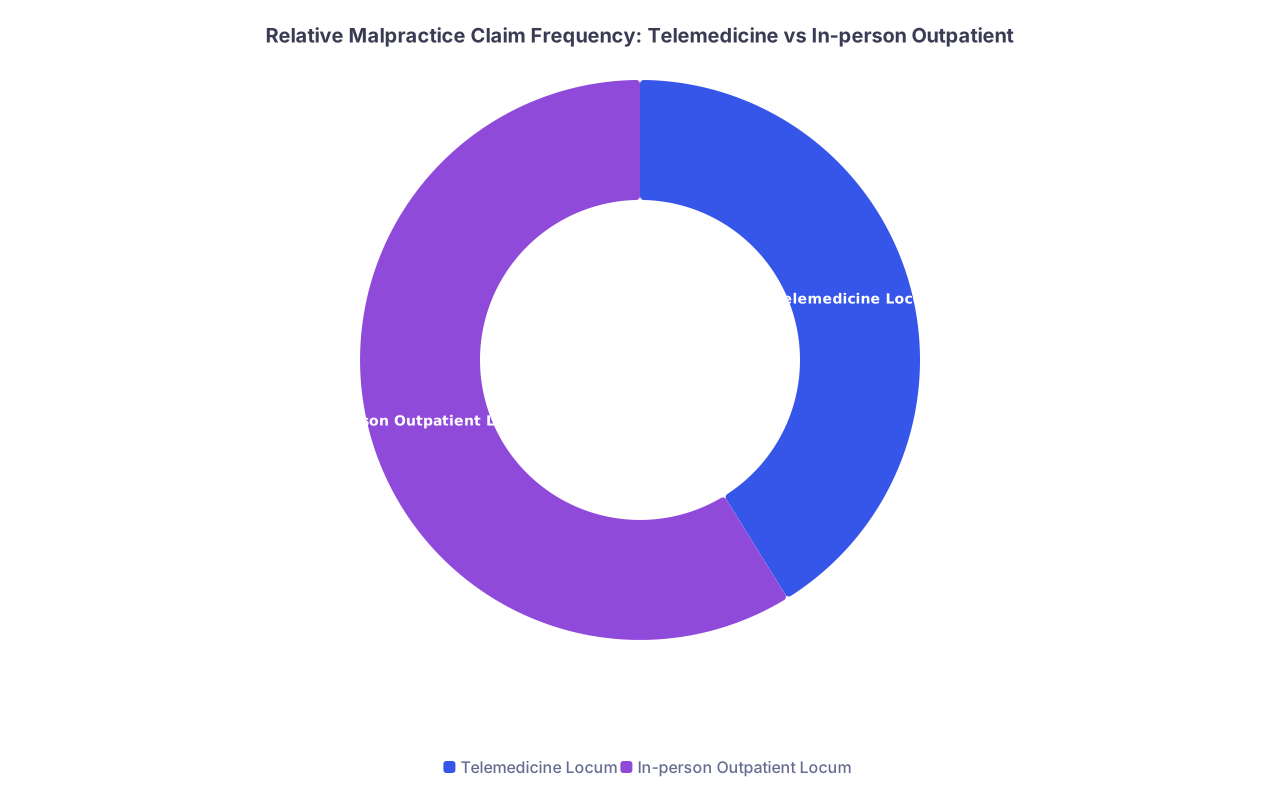
| Category | Value |
|---|---|
| Telemedicine Locum | 0.7 |
| In-person Outpatient Locum | 1 |
Why the lower risk?
- Less exposure to high-acuity cases (truly sick patients more often go straight to ED).
- No procedures, no immediate post-op management.
- Many telehealth platforms have built-in guardrails: symptom checklists, mandatory safety-net language, automated follow-up reminders.
Where telemedicine locums do run into claims:
- Failure to direct to ED when red flags are present and not thoroughly explored.
- Overreliance on patient self-report without clarifying questions documented.
- Prescribing errors (especially controlled substances) without adequate history.
From the data alone: if you want lower malpractice exposure as a locum, telemedicine is clearly on the safer end—provided you are disciplined about risk triage.
Locum-specific risk multipliers that cut across all settings
Setting is the main driver, but several consistent multipliers appear in claims where the physician was a locum.
1. Short, fragmented contracts
Physicians who hop between many sites for very short stints (1–2 weeks at a time) see higher risk exposure than those who do 3–6 month blocks.
Why? Fewer repetitions in the same system. Less muscle memory. More chances to miss idiosyncratic local risks.
2. Weak orientation and onboarding
In many claims I have reviewed, you see a pattern like:
- “Locum physician was not given access to full EHR training.”
- “Coverage physician was unaware of the hospital rapid response criteria.”
Hospitals with minimal locum onboarding have visibly higher locum-related claim rates, even when you adjust for acuity.
3. Night and weekend concentration
Locums are often plugged into the least desirable shifts:
- Nights in the ED.
- Weekend coverage on wards.
- Call-heavy surgical coverage.
That inherently amplifies risk: fewer resources, less backup, more fatigue, and more delay-sensitive situations.
You cannot always avoid these, but you should recognize that your malpractice exposure is not linear with hours worked. A night ICU shift is worth much more risk “weight” than a daytime outpatient clinic shift.
Choosing assignments with the data in mind
Let me be blunt. If you care about malpractice exposure as a locum, you should manage:
- Setting mix – Outpatient and telehealth at the safer end; ED and ICU at the higher end.
- Contract length – Longer runs at fewer sites generally beat “tour of 20 hospitals.”
- Shift type – Days with good backup vs perpetual nights and weekends.
- System quality – Ask about rapid response policies, EHR, handoff structures, and past adverse events. If everyone dodges the question, that is data.
A simple way to sanity check your own profile is to assign rough “risk points”:
- Telemedicine day: 1
- Outpatient clinic day: 2
- Urgent care day: 3
- Hospitalist day: 4
- ICU day: 5
- ED day: 6
- High-risk surgical day: 6
If your schedule is a wall of 5–6s and almost no 1–3s, your malpractice risk—and your stress—are both objectively higher than the locum who balances settings.
Key takeaways
- Malpractice risk for locum physicians tracks setting and system far more than it tracks the label “locum.” ED, ICU, and high-acuity inpatient work sit at the top of the risk spectrum; stable outpatient and telemedicine sit at the bottom.
- The patterns in closed claims show that locum status amplifies risk mostly through system unfamiliarity, handoff failures, and poor orientation, not through inferior clinical judgment.
- You can materially bend your risk curve by choosing assignments strategically (fewer chaotic ED/ICU night blocks, more stable runs in well-organized systems) and being ruthless about your own checklists for new sites, documentation, and escalation.