
You’ve got cardboard boxes half-packed in the living room, an email from a recruiter about a “perfect” 3‑month locums gig, and a lease in a new state starting in six weeks. HR wants your start date. Credentialing wants your life story. Your spouse wants to know what city you’re actually going to live in.
This is the messy middle: you’re finishing training or leaving a job, moving states, and trying to use locum tenens to keep income flowing without sabotaging your relocation or sanity.
Let’s walk through exactly how to plan locum assignments while you’re relocating to a new state—step by step, with the landmines called out.
Step 1: Decide Your Real Priority (Income, Location, or Lifestyle)
Before you answer a single recruiter email, you need to be honest with yourself: what matters most in the next 6–12 months?
For physicians in this transition, I see three common priorities:
- Maximize income quickly
- Anchor in the new state and build a life
- Maintain flexibility and avoid burnout after training or a bad job
You can’t fully optimize all three at once. Pick your top two.
Here’s how that plays out in reality:
If income is #1:
You’re more willing to take higher-paying assignments that might not be in your new state, might involve travel, and might start before your move date. You structure your move around income flow.If location (new state) is #1:
You focus on assignments in or near your new state, even if they pay a bit less or start slightly later. Your goal is to be physically and mentally present to actually relocate.If lifestyle/reset is #1:
You may choose fewer weeks of coverage, block scheduling (7 on / 7 off), or shorter commitments to avoid feeling like you jumped from residency into another grind.
Write this down: “For the next 6–12 months, my top priorities are: ______ and ______.”
Everything else we plan—start dates, where to work, housing—will anchor to that.
Step 2: Map Your Actual Timeline (Not the Fantasy Version)
Most people underestimate how long two things take:
- Licensing/credentialing
- Moving and getting settled
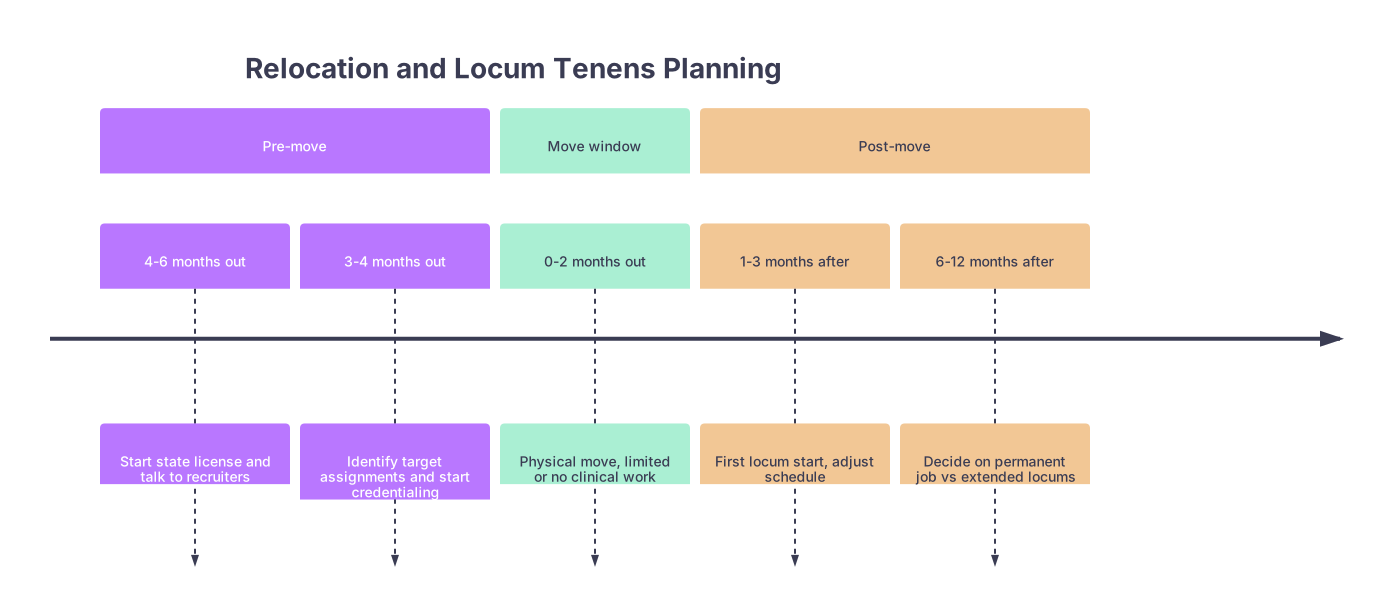
Let’s sketch a realistic relocation + locums timeline.
A typical sequence if you’re finishing residency/fellowship
| Period | Event |
|---|---|
| Pre-move - 4-6 months out | Start state license and talk to recruiters |
| Pre-move - 3-4 months out | Identify target assignments and start credentialing |
| Move window - 0-2 months out | Physical move, limited or no clinical work |
| Post-move - 1-3 months after | First locum start, adjust schedule |
| Post-move - 6-12 months after | Decide on permanent job vs extended locums |
Most states: 3–6 months for a new license if everything goes smoothly. Some are faster, some are wildly slower.
You need two overlapping tracks:
Track 1: Your physical move
- When does your current lease/job end?
- When can you realistically move your stuff and actually live in the new state?
- Any family constraints (kids’ school year, partner’s job, temp housing issues)?
Track 2: Your locums timeline
- When can you safely be ready to start working clinically again?
- What gap (in weeks) do you want between moving and your first shift?
- How much cash buffer do you have to survive 1–3 months with little or no income?
Be ruthless here. I’ve seen people destroy their nerves by agreeing to start a locums job in their new state “the Monday after we move on Saturday.” That’s delusional. You will be exhausted, disorganized, and behind on paperwork.
You want a buffer of at least:
- 1–2 weeks between move and first assignment if you’re desperate for income
- 3–6 weeks if you want to stay sane and actually set up a life
Step 3: Decide Where Your First 1–2 Assignments Should Be
You’re relocating to State B. So should you do locums:
- In State B only?
- In State A (where you’re leaving) before you move?
- In some other state entirely?
Here’s the decision logic that actually works.

| Step | Description |
|---|---|
| Step 1 | Relocating to new state |
| Step 2 | Work locums in current state first |
| Step 3 | Short assignment before move |
| Step 4 | Focus on new state locums |
| Step 5 | Open to travel or other states |
| Step 6 | Apply early for new state license |
| Step 7 | Consider multi state or IMLC options |
| Step 8 | Need income before move? |
| Step 9 | Want to settle quickly in new state? |
Option 1: Short-term locums in your current state (before the move)
Best if:
- You need income immediately after training
- Your current state license is already active
- You have 1–3 months before your hard move date
You leverage your existing license and credentialing familiarity. Less paperwork, faster start.
Downside: You’re splitting focus—working while you’re supposed to be packing, apartment hunting, dealing with movers, etc.
Option 2: Commit to assignments only in your new state
Best if:
- You really want to land and integrate in your new state
- You’re okay with a 1–3 month income gap
- Family/school/partner stability matters more than maximum earnings
You work fewer shifts but only where you’re heading long term. Sometimes this leads to permanent offers if you like the group.
Downside: You’re betting on a new license + new hospital credentialing finishing in time.
Option 3: Use other states or IMLC to bridge gaps
If your new state is slow with licensing (think CA, NJ, etc.), you might:
- Work via the Interstate Medical Licensure Compact (IMLC) in a fast state
- Take a short stint in a state that can license and credential you quickly
- Keep your current state license active for PRN-type locums after the move
This is more complex logistically, but can keep income flowing while your new state drags its feet.
Step 4: Understand the Licensing/Credentialing Bottleneck
Locums lives and dies by timing. Recruiters will always tell you, “We can get you through quickly.” Often that’s fantasy.
You need to know:
- Does your new state participate in IMLC?
- How long is that state currently taking for non-IMLC licenses?
- How long does the specific hospital’s credentialing usually take?
Here’s a rough comparison style visual for planning:
| Task | Conservative Timeframe | Aggressive Timeframe |
|---|---|---|
| New state license | 4–6 months | 2–3 months |
| IMLC-issued license | 1–3 months | 4–6 weeks |
| Hospital credentialing | 2–3 months | 4–8 weeks |
| Privileging with payer | 2–4 months | 1–2 months |
You protect yourself by:
- Asking every recruiter: “What’s your realistic average—from application submitted to first shift—for this site?”
- Getting written timelines from credentialing departments when possible
- Starting new state licensing 4–6 months before you want to work there, not 1–2
Step 5: Structure Assignments Around the Actual Move
Now the juggling act: how do you line up locums shifts around packing, driving/flying, and landing in the new place?
Think in blocks, not single days.
The safest structure I’ve seen work well:
Final month in old state
- No new long assignments
- If you must work, do local/PRN or short blocks with guaranteed off-days for move prep
- Avoid back-to-back 7‑on blocks right up to moving week
The move window (1–3 weeks)
- Block this as “no clinical work” if you can afford it
- Pack, travel, set up housing, get utilities, driver’s license, schools, etc.
First 2–3 months in new state
- Start with a block schedule that lets you breathe
- Example: 7 on / 7 off, or 10–12 shifts per month instead of 18–20
- Avoid 6‑month full-time contracts unless you’re sure you want that pace
- Start with a block schedule that lets you breathe
If you absolutely must keep income continuous
Then you compress, but still keep boundaries:
- End your final assignment in old state at least 5–7 days before moving
- Start your first new-state locums at least 7–10 days after arriving
- Use temporary housing that’s fully furnished for that first contract if possible
This is where people screw it up: agreeing to a “full time” 13-week locums contract starting three days after they move, and then living in moving chaos for three months.
Step 6: Plan Housing Intelligently (So You Aren’t Living Out of Chaos)
If you’re relocating permanently, housing gets complicated with locums:
- The locums site might offer housing, but you’re also signing a real lease/mortgage
- You might need temp housing before your “real” place is ready
- Travel stipends vs. provided housing can affect flexibility
You have three main strategies:
Strategy A: Let the locums agency provide housing for the first contract
Best when:
- You’re not sure which neighborhood you want long term
- Your permanent housing won’t be ready for a month or two
- You want to avoid dealing with furniture immediately
Downside: You lose some control. Locations can be inconvenient, and switching to your own place mid-contract can be messy.
Strategy B: Take a housing stipend and control your own setup
Best when:
- You want to lock in your real apartment/house and actually move in
- You expect to work within commuting distance of that home
- You have the energy to coordinate furniture, utilities, etc.
Downside: If the locums job shifts (new site, different town), your commute might become brutal.
Strategy C: Split strategy – temp housing first, then permanent place
Example:
- Month 1–2: Furnished rental or agency-provided housing near the hospital
- Month 3+: Move to your actual long-term place once you know the area and commute
This is often the most “adult” solution if you can manage two moves. It gives you breathing room to pick a good permanent location.
Step 7: Protect Your Income Gap with Real Numbers
You can do everything right and still hit a 1–2 month hiccup where licensing or credentialing drags.
You handle this by planning the money side like an adult, not like a resident counting down to the next paycheck.
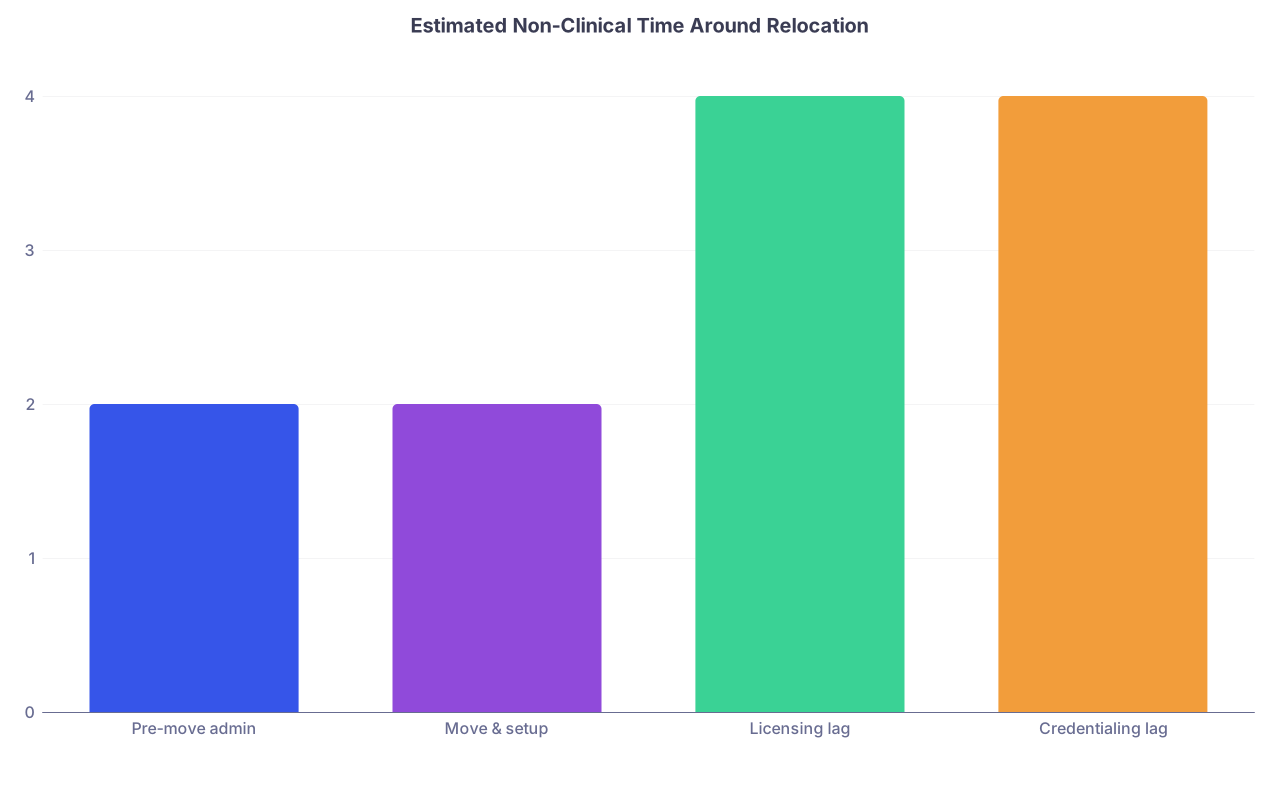
First, estimate your likely non-clinical time:
| Category | Value |
|---|---|
| Pre-move admin | 2 |
| Move & setup | 2 |
| Licensing lag | 4 |
| Credentialing lag | 4 |
Think in weeks. If you’re unlucky, you could have:
- 2 weeks: end-of-old-job wind down
- 2 weeks: actual move and setup
- 4+ weeks: waiting on license/privileges for first locums
That’s 2–3 months of little or no income.
Do the math:
- How much do you spend per month (including new housing)?
- How many months of that do you have saved?
- How much guaranteed income do you actually have lined up in signed contracts vs “we should be able to get you started”?
If you’re tight, here’s how you protect yourself:
- Keep your old state license active and consider short PRN shifts even after you move
- Prioritize an early-available assignment (even if lower pay) as your “anchor” contract
- Avoid turning down a solid, earlier-starting contract while waiting for the perfect higher-paying one
Step 8: Negotiate Contracts with Your Relocation in Mind
When you’re moving states, certain contract terms matter more than usual. Do not skim these.
Key things to push for:
Start date flexibility
- Try for a window: “Start between X and Y dates” rather than a fixed single date
- Put in writing what happens if licensing delays occur
Minimum vs. maximum shifts
- Lock in a reasonable minimum so income is predictable
- Keep the maximum capped so you’re not working 24 days a month while trying to settle
Cancellation policies
- What happens if you need to cancel shifts because your move gets delayed?
- What happens if they cancel before you start? Do you get any guaranteed pay?
Travel stipends that still work once you’re local
- Some contracts assume you’re flying in; once you relocate, that may change
- Clarify: if you become local, do they switch you to mileage or reduce pay?
You’re in a stronger position than you think if you’re a newly graduated specialist or in a high-demand field. Use that.
Step 9: Keep One Eye on the Permanent Job Market
Even if you swear you’re “just doing locums for a year,” most people relocating to a new state eventually want some stability—at least part-time.
You can use your locums strategically to:
- Test different hospital cultures and EMRs in your new state
- See which groups treat locums like colleagues vs. warm bodies
- Identify locations you’d actually be willing to commute to long-term
Track this in a simple way:
| Site | Commute | Team Culture | Workload | Would Consider Permanent? |
|---|---|---|---|---|
| Hospital A | 20 min | Supportive | Reasonable | Yes |
| Hospital B | 45 min | Toxic | Unsafe staffing | No |
| Clinic C | 10 min | Mixed | Busy but fair | Maybe |
I’ve watched plenty of physicians convert a good locums site into a well-negotiated permanent job because they had leverage: the group already knew their value.
Step 10: Communication Script: What to Tell Recruiters and Groups
If you sound vague with recruiters, they will pull you in every direction. You need a tight, clear script that reflects your relocation reality.
Something like:
“I’m relocating to [New State] in [Month]. I want assignments within [X miles/hours] of [City], starting no earlier than [Date] and ideally between [Date range]. I’m available for about [Y] shifts per month initially while I get settled.”
“I have an active license in [Old State] and could consider a short assignment there between [Month–Month], but anything I take must end by [hard date] because of my move.”
This filters out 80% of mismatched offers and keeps your inbox from becoming a second full‑time job.
Visual: How All the Pieces Fit Together
Here’s a simple high-level view of how you’re coordinating all of this:

| Step | Description |
|---|---|
| Step 1 | Decide priorities |
| Step 2 | Start new state license |
| Step 3 | Talk to recruiters |
| Step 4 | Short locums in old state |
| Step 5 | Wait for new state roles |
| Step 6 | Plan firm move date |
| Step 7 | Book housing plan |
| Step 8 | Sign first new state contract |
| Step 9 | Work and evaluate sites |
| Step 10 | Decide on extended locums or permanent job |
| Step 11 | Need pre-move income |
Quick Reality Check: Common Mistakes to Avoid
I’ve seen these derail otherwise smart plans:
- Agreeing to a full-time locums contract that starts less than a week after your move
- Assuming “licensing should be quick” because a recruiter said so
- Having zero financial buffer and then panicking when credentialing drags by 4–6 weeks
- Moving into a long-term lease far from the hospital you end up actually working at
- Not clarifying travel/housing terms before you become “local”
If you avoid just those, you’re already ahead of most people doing this for the first time.
FAQs

1. Should I delay my physical move until my first locum in the new state is 100% confirmed?
If money is tight, yes, you should strongly consider it. Staying put a few extra weeks can save you from sitting in a new apartment in a new state with no income because a license or credentialing step stalled.
But if family, school timelines, or a spouse’s job force a certain move date, then lock that date and plan assignments around it. In that case, your best play is:
- Keep your old state license active in case you need to fly back for short blocks
- Push hard for an early, reasonably paid contract in the new state as your anchor
- Accept that you might have a 4–8 week income gap and build savings to cover that
Do not move early on blind faith that “something will work out.” That’s how you end up taking whatever bad offer comes first.
2. Is it a bad idea to start my first locum job in my new state before I physically move there?
Not always, but you need to be intentional.
If the assignment is:
- Blocked (e.g., 7 on / 7 off), and
- Providing housing near the hospital, and
- You can fly in and out from your current home
…then you can absolutely start that job before your physical move date. This can be a strong move if:
- Your new state license came through early
- You want to test the site before committing to live nearby
- You use off-weeks to prep your move
Where it becomes a bad idea is if you’re:
- On scattered shifts that make travel brutal
- Trying to pack and manage house logistics from 3 states away
- Burning out before you’ve even settled into your new life
So yes, you can start early. Just make sure the schedule is block-based and you’re not trying to live in two states full-time.
3. How many locum agencies should I work with while doing this?
For a relocation phase, the sweet spot is usually 2–3 agencies.
One agency is too limiting—if they don’t have good coverage in your new state or your specialty, you’re stuck. Five agencies is chaos—you’ll get spammed, double-submitted, and waste time repeating your story.
Here’s how to handle it cleanly:
- Pick 2–3 agencies with strong presence in your new state and in your specialty
- Be upfront: “I am only working with a few agencies. Please always get my permission before submitting me anywhere.”
- Keep a simple spreadsheet of where you’ve been submitted, through which agency, and the status
If an agency starts playing games—submitting you without consent, ghosting, or pushing hard for assignments that ignore your move constraints—drop them. You’re relocating and building a new professional life; you don’t have time to manage nonsense.
Open your calendar right now and block out your move window, plus 2–4 weeks on either side. That’s your non-negotiable skeleton. Only after you see those blackout dates should you say yes to any locum assignment. That one step alone will prevent half the disasters I see in this exact situation.