
You are sitting in front of an email from a program coordinator. They want to schedule an interview for your reapplication cycle. At the bottom of their message, one line jumps out:
“During your interview, we would like to discuss your previous application cycle and the fact that you did not match.”
Your stomach drops. Because you have no idea how to explain this without sounding:
- Defensive
- Desperate
- Or like everything was someone else’s fault
This is where most reapplicants crash. Not on their CV. Not on their Step scores. On how they talk about going unmatched.
Let’s fix that. I will give you concrete scripts—email, ERAS, and interview—so you have actual sentences to use, not vague pep talk.
Ground Rules: How Programs Want You To Talk About “Unmatched”
Before the scripts, you need the framework. If you understand this, you can adapt anything to your voice.
Programs want three things from you:
Ownership without self-destruction
- You explain what went wrong.
- You do not whine.
- You do not catastrophize.
Evidence of growth
- Not “I learned a lot.”
- Show: new scores, new letters, new experience, concrete changes in strategy.
Present-focused, not trauma-dumping
- You are not there to replay your worst week.
- You are there to show why this time is different and why you are ready now.
If what you say does not hit those three points, it will sound weak or evasive.
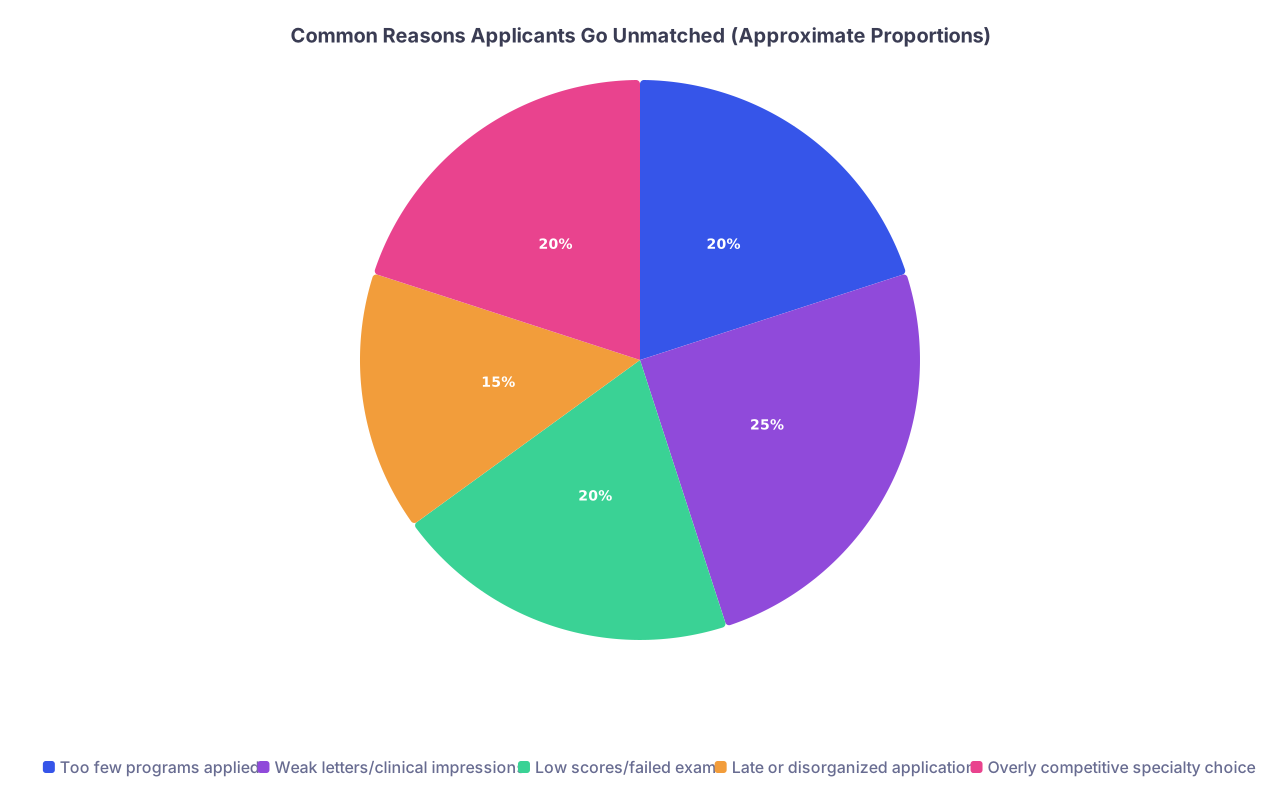
| Category | Value |
|---|---|
| Too few programs applied | 20 |
| Weak letters/clinical impressions | 25 |
| Low scores/failed exam | 20 |
| Late or disorganized application | 15 |
| Overly competitive specialty choice | 20 |
Step 1: Diagnose Your Unmatched Story (So Your Script Makes Sense)
You cannot use a generic script and expect it to land. First, figure out what actually happened.
Most unmatched stories fall into a few buckets:
Numbers / Application Fundamentals
- Low or borderline Step scores
- Failed exam on record
- Limited or no home program in specialty
- Weak or generic letters
Strategy / Volume
- Applied too narrowly (prestige-only, geographic fantasy, single region)
- Applied to too few programs
- Switched specialties late without building a credible application
Fit / Interview Performance
- Red flags raised in interviews
- Poor communication skills
- Unclear or scattered career narrative
- Unprofessional behavior or attire (yes, it happens)
Life Events / Timing
- Personal or family crisis
- Health issues
- Delayed exams, late application, or incomplete requirements
Write yours in one sentence. Literally:
- “I applied to too few programs and focused on highly competitive university programs with my Step 1 failure and average Step 2 score.”
- “I had a failed Step 1, limited home support, and my initial personal statement and application did not clearly explain my trajectory and growth.”
- “I changed specialties late, after a poor fit in my original field, and did not yet have the US clinical experience or letters to support the switch.”
That sentence becomes the backbone of every script.
Step 2: The Core Formula For Your Explanation
You will reuse this structure in email, ERAS, and interviews.
3-part formula:
- Brief, factual reason (10–20 seconds)
- Specific changes and growth (most of the time)
- Present-focused fit and readiness (why you are a good investment now)
Think:
“I understand what went wrong. I fixed specific things. Here is why that matters for you as a residency program.”
Now let’s build actual scripts.
Script Templates for ERAS / Application Documents
You need slightly different tones for different places in your application.
1. ERAS Application – “Reapplicant” / Explanation Box
Use this where you are directly asked about prior attempts or gaps.
Template 1 – Numbers / Strategy Issue
In my previous application cycle, I did not match into Internal Medicine. My application had two main weaknesses: I applied too narrowly and my academic performance, including a Step 1 failure, was not placed in sufficient context.
Since that cycle, I have focused on addressing both areas. Academically, I passed Step 2 CK with a score of 245, completed targeted board-style coursework, and engaged in structured exam coaching to build more effective study systems. From a clinical perspective, I have completed additional sub-internships in Internal Medicine at [Institution A] and [Institution B], with strong evaluations highlighting my work ethic, communication, and team-based care.
I used feedback from mentors and program faculty to revise my application strategy, broaden the types of programs to which I am applying, and ensure that my written materials and letters more accurately reflect my strengths and commitment to Internal Medicine. I view the unmatched year as a turning point that led to sustained improvement in both my clinical performance and professional maturity.
Template 2 – Late Specialty Switch
I entered my initial application cycle planning to pursue General Surgery. During my sub-internships, I recognized that my strengths and long-term goals aligned more closely with Internal Medicine, particularly in longitudinal patient care and complex diagnostic reasoning. I made the decision to switch specialties relatively late in the cycle, when I did not yet have the Internal Medicine-focused experiences or letters needed for a successful match.
Over the past year, I have fully committed to Internal Medicine: completing two acting internships, a continuity clinic experience, and a research project in heart failure outcomes. My evaluations from these rotations describe me as reliable, prepared, and strongly engaged with patient care. I have obtained new letters from Internal Medicine faculty who have directly observed my growth.
This period clarified my career path. I am now applying with training and mentorship that align with my genuine interests and abilities, and I am confident that I can contribute meaningfully to an Internal Medicine residency program.
Template 3 – Personal/Life Event (Use Only If True And Relevant)
Keep it controlled. No oversharing.
During my previous application cycle, I experienced a significant family health crisis that overlapped with my interview and exam preparation period. I chose to prioritize my family responsibilities, which affected my ability to complete certain components of the application process as strongly and timely as I had planned, and I ultimately did not match.
Since then, the situation has stabilized, and I have been able to fully re-engage with my training. Over the last year, I completed additional clinical rotations in [specialty], strengthened my exam performance, and worked closely with faculty mentors to refine my application.
This experience reinforced my resilience, time management, and commitment to medicine. I now approach residency with a clearer understanding of the demands of training and a support system that allows me to meet them.
2. Personal Statement – Weaving “Unmatched” Without Making It Your Whole Identity
If you mention going unmatched in your personal statement, keep it short. Do not turn the entire essay into a trauma memoir.
Use a tight paragraph like this:
At the conclusion of my first application cycle, I did not match. That outcome forced me to examine both my preparation and my long-term goals with unusual honesty. I recognized gaps in my clinical exposure, the need for stronger mentorship, and weaknesses in how I communicated my story on paper and in person. Over the past year, I have addressed those gaps through additional sub-internships, structured feedback on my communication skills, and closer collaboration with faculty mentors. This process solidified my commitment to [specialty] and helped me develop the resilience and self-awareness that I will carry into residency.
Do not apologize repeatedly. One clean paragraph is enough.

Script Templates for Emailing Programs As a Reapplicant
Sometimes you will proactively email programs (especially where you interviewed before or had contact). You must be brief, respectful, and not needy.
1. Cold Email to Programs Where You Previously Interviewed
Subject line options:
- “Reapplicant to [Program Name] – [Your Name]”
- “Follow-up Application – [Your Name], [Specialty]”
Template:
Dear Dr. [PD Last Name] and the [Program Name] Residency Team,
I hope this message finds you well. My name is [Your Name]. I interviewed with your program in the 2023–2024 cycle and am reapplying to [Specialty] this year.
Although I did not match in the previous cycle, I have spent the past year strengthening my application in several specific ways:
– Completed additional clinical training in [setting, e.g., inpatient Internal Medicine at X Hospital], with strong evaluations.
– Improved my exam performance, including [Step 2 CK score if new/strong, or other measurable achievements].
– Obtained new letters from [Dr. A, role; Dr. B, role] who can speak to my current clinical abilities and work ethic.I remain very interested in [Program Name] because of [1–2 specific, honest reasons: curriculum, patient population, education culture]. I would be grateful if you would consider my application again this cycle.
Thank you for your time and for your ongoing commitment to resident education.
Sincerely,
[Your Full Name]
AAMC ID: [ID]
Notice what is missing: no emotional dumping, no asking “why did I not match?”, no guilt-tripping.
2. Email to Programs You Previously Applied To But Did Not Interview
Keep it even simpler.
Dear Dr. [PD Last Name] and the [Program Name] Residency Team,
My name is [Your Name], and I am reapplying to [Specialty] in the 2024–2025 ERAS cycle. I applied to your program last year and remain strongly interested in [Program Name] because of [short specific reason].
Over the past year, I have focused on strengthening my application with additional clinical experience in [setting], improved exam performance, and new letters from faculty in [specialty]. I believe these experiences have helped me mature clinically and better prepared me to contribute as a resident.
I understand you receive many applications, but I would be grateful if you would consider reviewing my updated file this cycle.
Thank you for your time and consideration.
Sincerely,
[Your Name]
AAMC ID: [ID]

Script Templates for Interviews: How To Answer “Why Did You Go Unmatched?”
This is the question you absolutely must have a polished, memorized, calm answer for. No rambling. No sudden sweating.
Structure:
- One sentence: what happened
- Two to four sentences: what you changed
- One to two sentences: why that makes you stronger now
1. Template – Numbers + Strategy
“In my previous cycle, I did not match into Internal Medicine. Looking back with my mentors, two main issues stood out: my academic record, including a Step 1 failure, and a strategy that focused too narrowly on academic programs given my profile.
Over the past year, I have worked deliberately to address both. Academically, I passed Step 2 CK with a 245 after changing my study approach, using question banks more effectively, and working with a coach to build consistency. Clinically, I completed additional sub-internships at [Hospitals] where my evaluations consistently highlighted my reliability, communication, and team-based care. I also broadened and refined my application list to include programs where my strengths and goals are a better fit.
I view that unmatched year as a difficult but valuable turning point that forced me to grow. I am coming into this cycle with stronger skills, clearer insight into my learning style, and a realistic understanding of what residency requires.”
2. Template – Late Specialty Switch
“I did not match in my first application cycle because I changed specialties late, moving from Surgery to Internal Medicine after realizing that my interests and strengths aligned better with longitudinal, complex medical care rather than the OR. At the time, I did not yet have the Internal Medicine letters, experiences, or narrative to support a successful match.
Since then, I have committed fully to Internal Medicine. I completed two acting internships, took on continuity clinic work, and joined a heart failure outcomes project. My attendings in these settings have provided strong evaluations and letters that reflect my engagement with patient care and my fit for this specialty.
The switch and the unmatched year were humbling, but they clarified my path. I am now applying to the right field for the right reasons, with experiences that actually match who I am and how I want to practice.”
3. Template – Personal Circumstance (Keep It Controlled)
“I did not match in my prior cycle. During that period, I was managing a significant family health issue that overlapped with my interviews and exam preparation. I made choices that prioritized my family, and while I do not regret supporting them, it did affect the strength and timing of my application.
Since then, the situation has stabilized, and I have been able to re-focus fully on my training. I completed additional rotations in [specialty], improved my exam performance, and worked with mentors to strengthen my communication and interview skills.
This experience reinforced my resilience and clarified the systems I need in place to manage stress while still performing at a high level. I am confident in my ability to meet the demands of residency now.”

| Step | Description |
|---|---|
| Step 1 | Unmatched |
| Step 2 | Honest Self-Assessment |
| Step 3 | Identify Primary Issues |
| Step 4 | Targeted Improvements |
| Step 5 | Update Application Materials |
| Step 6 | Reapply Broadly and Strategically |
| Step 7 | Interviews with Clear Narrative |
| Step 8 | Match or Alternative Path |
What To Avoid Saying (These Will Sink You)
I have heard variations of all of these in real interviews. They do not land well.
Blaming programs or “the system”
- “The Match is unfair.”
- “Programs just care about scores.”
- “I think there was bias against IMGs / my school / my background.”
Even if pieces of that are true, saying it directly in an interview is a problem. It signals poor insight and externalization of responsibility.
Vague, content-free explanations
- “I think I just did not get lucky.”
- “It was really competitive.”
- “I am not totally sure what happened.”
Programs want evidence that you analyzed what went wrong and adjusted accordingly.
Overconfession and self-destruction
- Ten minutes of emotional play-by-play.
- “I was devastated and spiraled for months.”
- “I started questioning if I was meant to be a doctor.”
You can be human without turning the interview into a therapy session.
Overcompensation and arrogance
- “I actually think I should have matched and was surprised not to.”
- “I had stronger scores than many who matched.”
This comes across as entitled and unaware of the softer factors in selection.
| Situation | Weak Phrase | Strong Phrase |
|---|---|---|
| Low scores | "The test was unfair." | "My early exam prep was inefficient; I changed X." |
| Too few applications | "I guess it was just bad luck." | "My strategy was too narrow; I broadened it." |
| Late specialty switch | "I had no idea what I wanted." | "I realized late my strengths fit better in Y." |
| Personal crisis | "My life fell apart during applications." | "I faced a family health crisis and did Z." |
| General explanation | "I do not know why I did not match." | "In retrospect, A and B were my main weaknesses." |

| Category | Value |
|---|---|
| Clinical work | 35 |
| Test prep | 25 |
| Research/QI | 15 |
| Application strategy | 15 |
| Personal recovery | 10 |
Tailoring Scripts To Different Profiles
You are not a generic “unmatched applicant.” Let’s tune this a bit by situation.
1. US MD/DO Who Went Unmatched in Preferred Specialty
Your angle:
- Acknowledge competitiveness.
- Show that you are realistic now.
- Emphasize clinical performance and reliability.
Adjust script with phrases like:
- “I have broadened my geographic and program type range.”
- “I am applying to a mix of academic and community-based programs.”
- “I clarified my priorities with mentors and targeted programs where my strengths fit.”
2. International Medical Graduate (IMG) Reapplying
Your challenge is skepticism about system familiarity and communication. Your explanation should highlight:
- US clinical experience: “I completed X months of hands-on US clinical rotations in [specialty].”
- Letters from US faculty: “My new letters are from US attendings who directly supervised my inpatient work.”
- Step performance: Explicit, if improved or already strong.
Use lines like:
“Since my previous application, I focused on building US-based experience so you can evaluate me on the same terms as your current residents.”
3. Reapplying to a Different Specialty
Programs will worry about:
- Are you going to change your mind again?
- Are you truly committed?
You must show:
- How your prior path informs your current choice.
- That you have tested the new specialty through rotations, not just vibes.
Use:
“Working in [old specialty] helped me realize that what I valued most was [X aspect that aligns with new specialty]. That realization led me to seek out rotations in [new specialty], where I found that my strengths in [Y] were better utilized.”
Quick Practice Protocol: How To Make These Scripts Sound Natural
You cannot just read this once and wing it in an interview. Do this:
Write Your Version Out
Use one of the templates above. Adapt it with your actual details. Aim for 150–200 words.Cut It Down
Force yourself to trim to a 45–60 second spoken answer. Remove repetition and fluff.Record Yourself
Use your phone. Play it back. Check:- Do you sound defensive?
- Are you rambling?
- Is there a clear “here is what changed”?
Run It By One Harsh Person
Not the friend who says “sounds great” to everything. Someone who will say:- “You sound like you are blaming the system.”
- “You are oversharing here.”
- “You sound vague. What did you actually do?”
Lock It In
Memorize the structure, not the exact words. You want to sound practiced, not robotic.
Final Point: Your Goal Is Not To Make Them Feel Sorry For You
Your goal is to make them think:
- “This person understands what happened.”
- “They have done the work to fix it.”
- “We are not taking a risk; we are getting someone who has already been stress-tested.”
Going unmatched is not an automatic disqualifier. A sloppy, evasive, or melodramatic explanation is.
Key Takeaways
- Always use a three-part structure: brief reason → concrete changes → current readiness.
- Own your part without self-attack: no blame-shifting, no vague “bad luck” excuses.
- Turn the unmatched year into evidence of resilience and growth, not just a sad chapter.