
The worst mistake reapplicants make is waiting until the new ERAS season opens to start over. By then, you are already 3–6 months behind.
You are not “applying again.” You are rebuilding your candidacy on a fixed, unforgiving timeline. So let’s treat it that way.
Below is a month‑by‑month, then week‑by‑week calendar on when to secure:
- Mentors who will actually advocate for you
- Letters of recommendation (LORs) that are not recycled fluff
- New rotations that close the gaps that sunk you the first time
I will assume this: you went unmatched in March, and you are planning to reapply in the next ERAS cycle for the same or a closely related specialty. Adjust the months by 1–2 if your school calendar is shifted, but keep the sequence.
Big‑Picture Timeline: What Happens When
At this point you should see the full year as a project plan, not a vague “I’ll improve my app.”
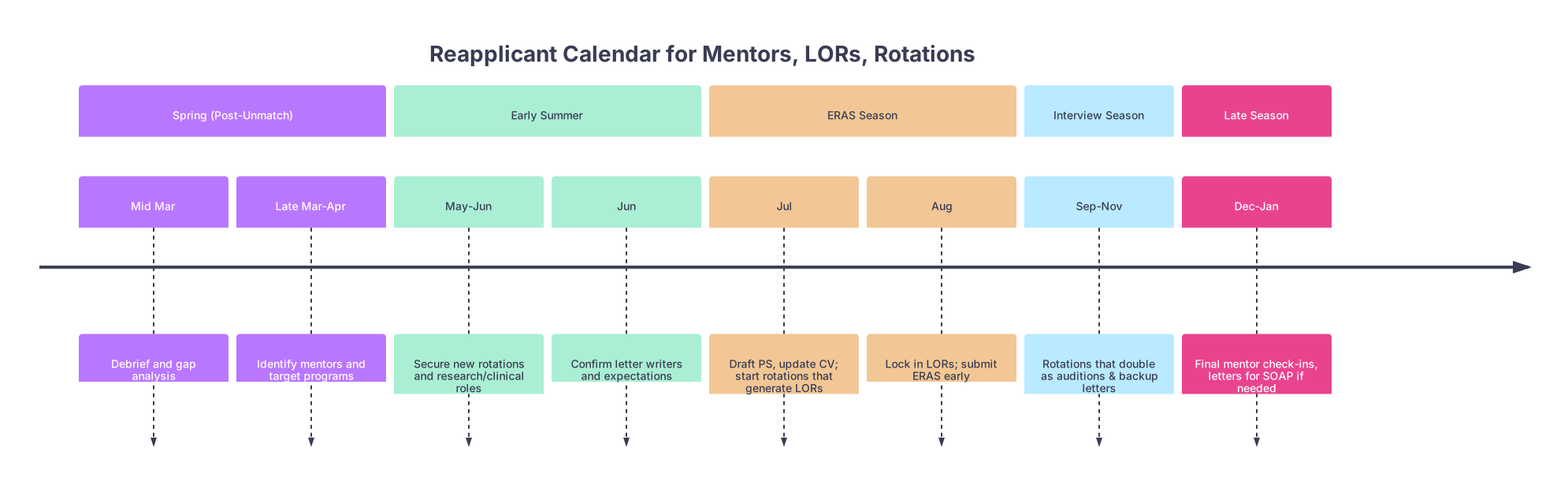
| Period | Event |
|---|---|
| Spring (Post-Unmatch) - Mid Mar | Debrief and gap analysis |
| Spring (Post-Unmatch) - Late Mar-Apr | Identify mentors and target programs |
| Early Summer - May-Jun | Secure new rotations and research/clinical roles |
| Early Summer - Jun | Confirm letter writers and expectations |
| ERAS Season - Jul | Draft PS, update CV; start rotations that generate LORs |
| ERAS Season - Aug | Lock in LORs; submit ERAS early |
| Interview Season - Sep-Nov | Rotations that double as auditions & backup letters |
| Late Season - Dec-Jan | Final mentor check-ins, letters for SOAP if needed |
Now let us walk the calendar properly.
March: The Week You Do Not Want To Remember
You just went unmatched. This month is about diagnosis, not panic applications.
Mid–March (Match Week)
At this point you should:
Get your data, not just your feelings.
- Request a meeting with:
- Your Dean of Students or Dean of GME
- Your specialty advisor or program director (PD) in your target field
- Ask them directly:
- “Where was my application below average?”
- “Were there red flags mentioned by programs?”
- “What did programs say in feedback, if anything?”
- Request a meeting with:
Write a one‑page gap summary. Literally write it. Three columns:
- “What hurt me” (e.g., low Step 2 CK, weak LORs, late ERAS, no home rotation)
- “How I will fix it this year”
- “Who I need to help me” (mentors, PDs, letter writers)
Clarify your target specialty and backup strategy.
- Decide now if you will:
- Reapply to the same specialty only
- Apply to primary specialty + a realistic backup (IM, FM, psych, prelim medicine/surgery)
- This decision controls which rotations and LORs you need. Do not “see how it goes” in August.
- Decide now if you will:
Late March – April: Mentor Hunt and Strategy Lock
This is your mentor‑securing window. Not in July. Now.
At this point you should:
1. Build your mentor “bench”
You want 2–3 active mentors, ideally:
- 1 core specialty mentor (attending or PD/APD in your target field)
- 1 generalist mentor (IM/FM/academic advisor) who understands match data
- 1 research or sub‑specialty mentor if scholarship is a weakness
How to do this in April:
- Email faculty you have worked with before:
- Subject: “Reapplication Strategy and Guidance Request – [Your Name]”
- Be blunt: you went unmatched, you are reapplying, and you want honest guidance and possibly future letter support.
- Ask for:
- A 30–45 minute meeting (in person or Zoom)
- A review of your ERAS from last year
- Their opinion on what is realistically fixable in 6–9 months
If a faculty member dodges, speaks vaguely, or refuses to open your old application, they are not your mentor. Move on quickly.
2. Lock your target program tiers
With mentor input, identify:
- 5–10 realistic programs you can rotate at (home + away + community)
- 1–2 regions where you will focus (e.g., Midwest community IM + your state’s university program)
This affects where and when you need audition‑style rotations.
3. Decide what type of rotations you must add
Ask mentors directly:
- “Given my profile, what specific rotations will change my competitiveness?”
Examples: - Failed to match in EM: you may need 3–4 SLOEs from fresh EM rotations
- Applying IM after failing to match in a surgical specialty: you need strong IM inpatient LORs from this year
- Below‑average Step scores: you must show clinical excellence and reliability through recent rotations with detailed letters
Write down a rotation wish list by month (June–November). You will be scheduling these next.
May – June: Lock Rotations and Pre‑Negotiate Letters
This is where reapplicants either recover or stay stuck.
At this point you should:
1. Book new rotations aggressively
- Emailing clerkship coordinators and PDs:
- “I am a recent graduate / reapplicant planning to reapply to [specialty] this cycle. I am interested in a [inpatient / outpatient / sub‑I] from [month] to [month] and hope to obtain a letter if I perform well.”
- Prioritizing:
- Sub‑Is/inpatient months in your target specialty (July–October)
- Home institution rotations where PDs already know you or can compare you favorably
- Community programs that actually rank their rotators
Do not waste months on low‑yield observerships unless you are an IMG with no other options.
2. Map rotations to LOR strategy
You need a minimal LOR architecture that looks like this:
| Target Specialty | Ideal Letters | Absolute Minimum Strong Letters |
|---|---|---|
| Internal Medicine | 3 IM + 1 other | 2 IM (1 from this year) |
| Family Medicine | 2 FM + 1 IM | 2 FM or 1 FM + 1 IM |
| Psychiatry | 2 Psych + 1 IM/FM | 2 Psych (1 recent) |
| Emergency Medicine | 2-3 SLOEs | 2 SLOEs (both current cycle) |
| General Surgery | 2-3 Surgery + 1 core | 2 surgery (1 from this year) |
Identify which specific rotation is responsible for each new letter. Write it down.
Example for a reapplicant to IM:
- July: University IM inpatient –> PD letter
- August: Community IM inpatient –> “workhorse” letter
- September: Cardiology consult –> subspecialty academic letter if needed
- Backup: October: FM clinic rotation –> FM letter if applying FM backup
3. Pre‑negotiate letters with faculty
By late June, for each rotation that is supposed to generate a letter, you should have said something like:
- “I am planning to reapply to internal medicine this cycle. My goal is to demonstrate improvement since last year and obtain a strong letter of recommendation if I meet your expectations. Is that something you would be comfortable considering?”
If they hesitate now, that is valuable information. Better to know in June than on August 30.
July: ERAS Opens – Your Mentors and Rotations Go Live
This is where many reapplicants freeze and start “perfecting” personal statements while losing weeks. Do not do that.
At this point you should:
1. Formalize your mentor roles
The first week of July:
- Send a concise email to your 2–3 core mentors:
- Updated CV
- Old ERAS (if they want it)
- Your gap summary (1 page)
- A proposed program list (tiered: reach / realistic / safety)
Ask specifically:
- “Can you review my program list and tell me where I am unrealistic?”
- “Can I list you as a reference if PDs contact you by phone or email?”
Mentors should now know they are on your team this cycle.
2. Start your “LOR work” on day 1 of each rotation
On your first day in a July rotation that you need a letter from:
- Introduce yourself to the attending/rotations director.
- Say, “I am a reapplicant to [specialty]. My goal this month is to show clear growth and hopefully earn a strong letter of recommendation if I reach your standards.”
This changes how they watch you. Good. You want that.
3. Draft your core application documents
By the end of July, you should have:
- Updated CV
- Personal statement v1 for your primary specialty
- Backup specialty PS v1 (if you are using one)
- A “reapplicant paragraph” drafted:
- Brief explanation of not matching
- Specific changes you made
- What mentors have done to support your growth
Send these to 1–2 mentors, not 7. Too many opinions will paralyze you.
August: LOR Deadlines and Early Submission
This is peak letter month. Your rotations and mentors must convert into actual documents.
At this point you should:
1. Ask for letters before the rotation ends
Timing rules of thumb:
- For a 4‑week rotation: ask at start of week 4
- For a 2‑week rotation: ask at end of week 1
Script:
- “I have really appreciated working with you this month. I am reapplying to [specialty] this cycle, and I would be honored if you would be willing to write a strong letter of recommendation on my behalf. Do you feel you know my work well enough to do that?”
If they say anything weaker than “Yes, absolutely,” that is a “no.” Thank them and move on. You cannot afford lukewarm letters as a reapplicant.
2. Support your letter writers properly
When they agree, send:
- Your CV
- Your personal statement draft
- Your gap summary with how you are improving this year
- A short bullet list:
- “If you agree, it would help if you could comment on:
- How I respond to feedback and criticism
- My reliability and ownership of patient care
- Growth you have seen compared with typical students/residents”
- “If you agree, it would help if you could comment on:
You are not scripting their letter. You are steering it away from generic fluff.
3. Submit ERAS early, not “perfect”
Your target: submit within 1–3 days of ERAS allowing submissions, even if:
- One letter is pending upload (fine)
- You will add a September rotation letter later (also fine)
Programs care far more about you being in the early pile than about the last 2% polish on your personal statement.
September – October: Audition Rotations and Backup Letters
At this point you should already be in the applicant pools, and interviews are starting to trickle in. You are not done.
1. Use fall rotations as live auditions
For September/October rotations:
- If at a program you are applying to:
- Introduce yourself to PD/APD; be explicit you applied there.
- Ask mentors beforehand: “Is this a program where a strong rotation can realistically help me?”
- Treat yourself like a sub‑I, not a visiting student:
- Pre‑round without being asked
- Call consults yourself (when allowed)
- Volunteer for admissions and discharges
You want attendings saying, “Feels like a solid intern already.” That sentence shows up in good letters.
2. Decide if you need additional LORs
By end of September, review your letters:
- How many are new this cycle? (You want at least 2)
- Do you have at least one from a PD or rotation director?
- Do you have letters that explicitly address “growth” since last year?
If the answer is no, then:
- Identify one October rotation with a faculty who is willing to:
- Compare you to current applicants
- Comment on your improvement and readiness for residency
Ask for a letter early in the rotation, as before.
3. Keep mentors updated monthly
Quick monthly email template to mentors:
- One paragraph: where you rotated, what went well, what you are improving
- One paragraph: interview invitations so far; any concerns
- One ask: “Is there any program you would feel comfortable emailing or calling on my behalf?”
Do not underestimate the impact of a behind‑the‑scenes phone call from a respected mentor. I have seen that move someone from the maybe pile to an interview.
November – December: Consolidation and Contingency Planning
Interview season is in full swing. The temptation now is to sit back and “see what happens.” Bad idea.
At this point you should:
1. Reassess your trajectory using real data
By mid‑November:
- Count:
- How many interviews you have
- How many are at programs you would actually rank
- Compare to last year at the same time.
If you are doing substantially better, good. Keep your foot on the gas.
If not, you may need to quietly strengthen your SOAP / backup plan.
2. Shore up mentors for late letters and SOAP
For certain programs and especially for SOAP later, you may need:
- A fresh generalist letter (FM/IM) if you pivot to a less competitive field
- A letter that describes your adaptability to other specialties
Use November/December to:
- Do short outpatient rotations or clinical positions where faculty can see you quickly and write:
- “I worked with [Name] for 4 weeks in our clinic…
Despite reapplying, they have maintained an excellent attitude, high reliability, and strong patient rapport…”
- “I worked with [Name] for 4 weeks in our clinic…
Ask those attendings explicitly if they would be willing to update or repurpose a letter for SOAP, if needed.
January – February: Final Check‑Ins and Rank List Reality
This is the quiet part of the year, and that makes people sloppy. Do not check out.
At this point you should:
1. Debrief with at least one mentor
Before you certify your rank list:
- Meet with your primary specialty mentor. Show them:
- Your interview list
- Your rough rank order
- Your reflection on how this reapplication year went
Ask for honesty:
- “Given how programs responded, does this rank list look realistic and balanced?”
- “Is there anything we should be doing now in case I do not match again?”
A good mentor will talk straight. A great mentor will help you prepare quiet contingencies (research positions, prelim years, extended clinical roles) without undermining your hope.
2. Keep your clinical presence alive
If you do not match again, being clinically inactive kills your chances more than almost anything. So:
- Continue some form of clinical role:
- Per‑diem work as a graduate in supervised settings (where legal)
- Research with clinical contact
- Teaching roles tied to patient care
Why? Because your third‑year reapplicant letters cannot read, “I have not seen them in patient care for 18 months.”
Quick Visual: When Your Effort Should Peak
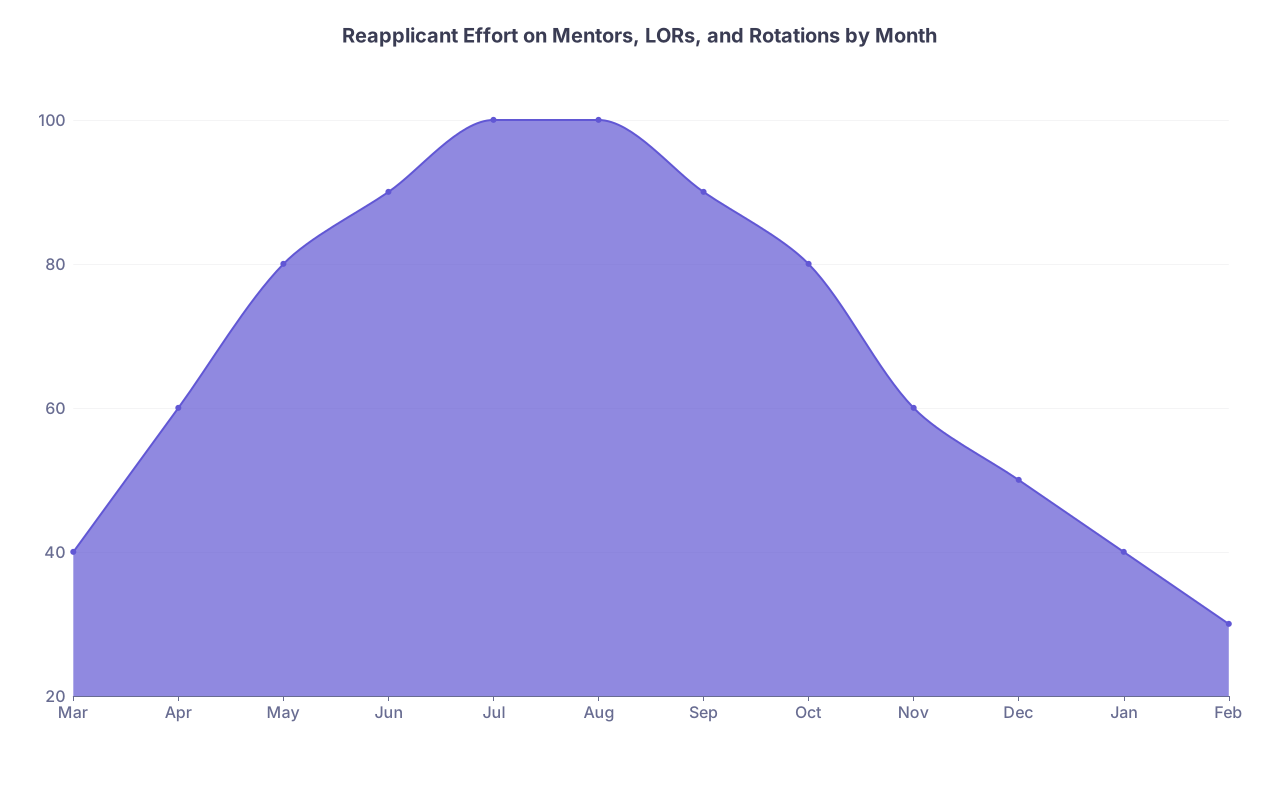
| Category | Value |
|---|---|
| Mar | 40 |
| Apr | 60 |
| May | 80 |
| Jun | 90 |
| Jul | 100 |
| Aug | 100 |
| Sep | 90 |
| Oct | 80 |
| Nov | 60 |
| Dec | 50 |
| Jan | 40 |
| Feb | 30 |
You should be at maximum intensity from May through August. That is when mentors, letters, and rotations are actually malleable.
Common Reapplicant Timing Mistakes (And What To Do Instead)
Let me be blunt about what I see every year.
Mistake 1: Waiting for programs to give detailed feedback
Most never will. The only people who reliably tell you the truth:
- Your home PDs and faculty who saw your full file
- Mentors who are willing to compare you to successful applicants
Fix: By April, you should already have at least one written gap analysis built from those conversations.
Mistake 2: Reusing the same weak letters
If the letter did not get you interviews last year, do not anchor your entire application on it again.
Acceptable reuse:
- A strong, detailed letter from a PD who still knows you well, plus at least 2 new letters this cycle.
Unacceptable:
- 3 recycled core specialty letters from >12 months ago with nothing new.
Mistake 3: Scheduling “fun” or random rotations during prime months
July–October as a reapplicant is not the time for:
- Dermatology electives when you are applying IM
- Overseas electives that cannot generate usable US LORs
- Research blocks with no direct clinical supervision or letters
Fix: Every rotation from July–October must have a clear purpose:
- Strong letter
- Direct exposure to your target programs
- Evidence of clinical growth
Sample High‑Yield Year Plan for a Reapplicant to Internal Medicine
| Month | Focus | Outcome |
|---|---|---|
| Mar-Apr | Gap analysis, mentors | 2 mentors committed |
| May | Schedule Jul–Oct IM rotations | 3 IM rotations booked |
| Jun | Confirm letter expectations | 3 attendings aware of LOR plans |
| Jul | Univ IM inpatient | PD letter (anchor) |
| Aug | Community IM inpatient | “Workhorse” letter |
| Sep | Cardiology consult | Subspecialty/academic letter |
| Oct | FM clinic (backup) | FM letter for backup apps |
That is what a deliberate year looks like. Not glamorous. Very effective.

Final Tight Summary
You secure mentors in March–April, not July. Debrief early, get brutal feedback, and build a small, committed mentor team that understands your reapplication strategy.
You engineer rotations in May–October to produce specific new LORs. Every rotation has a job: at least one strong, recent letter that explicitly shows growth and readiness.
You lock in letters and submit ERAS early, then keep mentors engaged through the season. Ask for letters before rotations end, support writers with targeted context, and use mentors strategically for advocacy, not just “advice.”