

Only 52% of unmatched seniors who reapply without a solid gap-year plan ever enter their original target specialty.
The rest drift. Into whatever will take them. Or they leave medicine entirely.
If you are staring at an empty Match Day envelope, preliminary and transitional year (TY) spots can be either a lifeline or a very expensive detour. The difference is strategy. Let me break this down specifically.
What “Prelim” and “Transitional” Actually Buy You
Most people use “prelim” and “TY” like they’re interchangeable. They are not.
| Feature | Preliminary Medicine | Preliminary Surgery | Transitional Year |
|---|---|---|---|
| Structure | Mostly inpatient IM | Mostly surgical services | Mix of IM, electives, lighter call |
| Typical Goal | Meet PGY-1 reqs for advanced (e.g. Neuro, Rads) | Same for advanced, surgery exposure | Broad base, flexibility, step-up for future apps |
| Lifestyle | Busy but manageable | Often brutal | Usually best of the three |
| Competitiveness | Moderate | High | High at good programs |
At core, all three give you:
- One year of ACGME-accredited clinical training
- Fresh letters from U.S. attendings
- A way to avoid a full “gap” from clinical medicine
But the strategic value depends heavily on your endgame.
Before you touch SOAP or scramble into anything, you need to answer, honestly:
- Am I trying to get back into the same specialty next year?
- Am I open to pivoting to a different categorical specialty?
- Do I mainly need U.S. clinical credibility (IMGs, I am looking at you)?
- Can I financially and emotionally handle the risk of being a PGY-1… and still unmatched for PGY-2?
If you do not answer those questions first, you are flying blind.
When Taking a Prelim or TY Year Is Smart – And When It Is Dumb
Strong indications a prelim/TY makes sense
You narrowly missed in a competitive field
Example: US MD, Step 2 CK 244, solid research in dermatology, 8 interviews, but did not match. You can probably still land Derm. You need to stay clinically active, get stronger letters, maybe improve your research productivity. A strong TY or prelim medicine at a place with a Derm department? Very logical.You need U.S. residency training to “convert”
Typical IMG story: Pass scores, some U.S. clinical experience, but no match. A prelim in medicine or surgery at a place with lots of IMGs and a categorical IM program can be your door into categorical internal medicine later. I have seen this play out dozens of times.You are targeting an advanced specialty that explicitly accepts TY/prelim interns
Radiology, anesthesiology, dermatology, PM&R, neuro – all have pathways that start PGY-2. A strong TY or prelim medicine year can make you more competitive for those PGY-2 spots next cycle.You have major application gaps that a structured year can fix
Weak letters. Questionable professionalism comments. No longitudinal clinical exposure. A successful, drama-free PGY-1 year with strong evaluations cleans up a lot of that.
Situations where a prelim/TY can hurt you
You secretly hope the prelim program will “convert” you to categorical but you have no written assurance
Programs rarely create extra categorical spots out of nowhere. The “maybe we can see what happens” line is famous. And usually empty. If they want you for categorical, they will say it clearly and in writing.Your scores or red flags are severe
Multiple Step failures, major professionalism issues, unlicensed status risks. A prelim year does not magically erase these. Sometimes a research year or formal remediation with documented improvement is more valuable than burning time in a misaligned PGY-1.You are already heavily in debt, with no backup plan
Adding another year of modest PGY-1 salary while punting the core problem can be financially dangerous. Especially if your odds of later matching remain low (e.g., repeated unmatched attempts in hyper-competitive specialties with no flexibility on your side).You do not actually want to practice primary care / hospital medicine / surgery backup
Because here is the ugly truth: many prelim-only folks end up staying in exactly those worlds—hospitalist, non-boarded roles, or non-training jobs. If that future is unthinkable to you, be very cautious.
Strategic Paths: How to Use These Spots Intentionally
There are a few clear strategies that work. Choose one. Do not try to “kind of” do all of them.
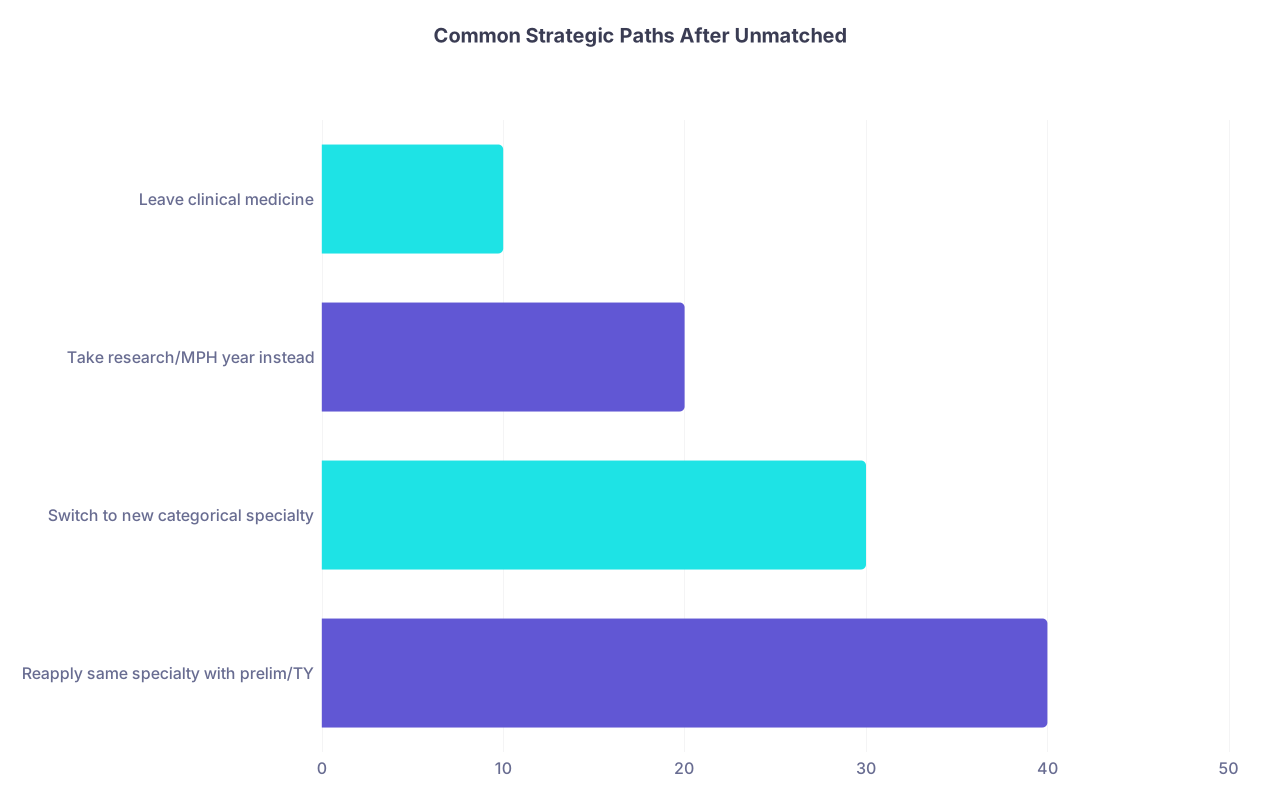
| Category | Value |
|---|---|
| Reapply same specialty with prelim/TY | 40 |
| Switch to new categorical specialty | 30 |
| Take research/MPH year instead | 20 |
| Leave clinical medicine | 10 |
Path 1: Reapply to the Same Specialty With a Stronger File
This is the classic Dermatology / Ortho / ENT / Rad Onc / IR story.
Key principles:
Pick a prelim/TY that aligns with your target specialty
If you want anesthesiology, prelim medicine at a place with a big anesthesia department makes more sense than a random community surgery prelim.Get face time with your specialty
You are not “just an intern.” You are an intern on audition for next year. That means:- Electives in the target department
- Volunteer for QI projects
- Ask explicitly for feedback and mentoring
- Be visibly excellent on the wards (yes, basic, but half of interns coast)
Time your reapplication early
You cannot wait until you are drowning in January PGY-1 to assemble your ERAS. Practically:- Personal statement and updated CV by June/July
- New letters from at least two attendings who saw you as an intern (even preliminary ones by September are usable)
- Program director letter that explicitly vouches for your performance
What success looks like:
I watched one unmatched radiology applicant land a TY at a mid-tier academic program. He showed up at every radiology noon conference, did an elective rotation, pushed a resident-level QI project on contrast safety, and had the PD of radiology personally call three PDs. Matched rads PGY-2 at a different institution the following year. It was not luck.
Path 2: Use Prelim/TY as a Bridge to a Different Categorical Specialty
This is under-discussed but very common. You aimed high (Derm, Ortho), did not match, and now you are reconsidering internal medicine, family medicine, psych, or anesthesia.
Here is how to do this without getting stuck:
Choose the prelim/TY that gives you categorical adjacency
Example: You are open to internal medicine or family med. Prelim medicine in a program with both IM and FM residencies is ideal. Transitional year with elective IM/FM time is close second.Be honest, early, with leadership
You tell your prelim PD: “My plan is to apply to categorical internal medicine this September. I would value your guidance and, if appropriate, your support.”
That sentence does a lot of work. It sets expectations and invites mentorship. PDs are far more willing to help when they do not feel manipulated last-minute.Target in-house and outside simultaneously
Many prelims pin all hope on “converting” at their own institution. Then they get blindsided when no spots exist. Apply broadly to categorical programs nationwide while exploring internal opportunities.Do not abandon your current duties chasing the next thing
If you become the flaky intern who disappears from the floor to email programs, your evaluations will quietly destroy you. PDs talk.
Typical good outcomes:
- Prelim medicine → categorical IM PGY-1 or PGY-2
- TY → categorical FM or IM, sometimes psych or neuro
- Prelim surgery → categorical general surgery is harder but not impossible; often people pivot to anesthesia, EM (where available), or IM
Critical Risk: The PGY-1 Trap
The biggest myth: “Once I am in the system, I will be fine.”
No. You can complete a prelim year, be board-eligible for nothing, and still be unmatched for PGY-2. I have seen PGY-1s finishing in June with no position lined up. It is ugly.
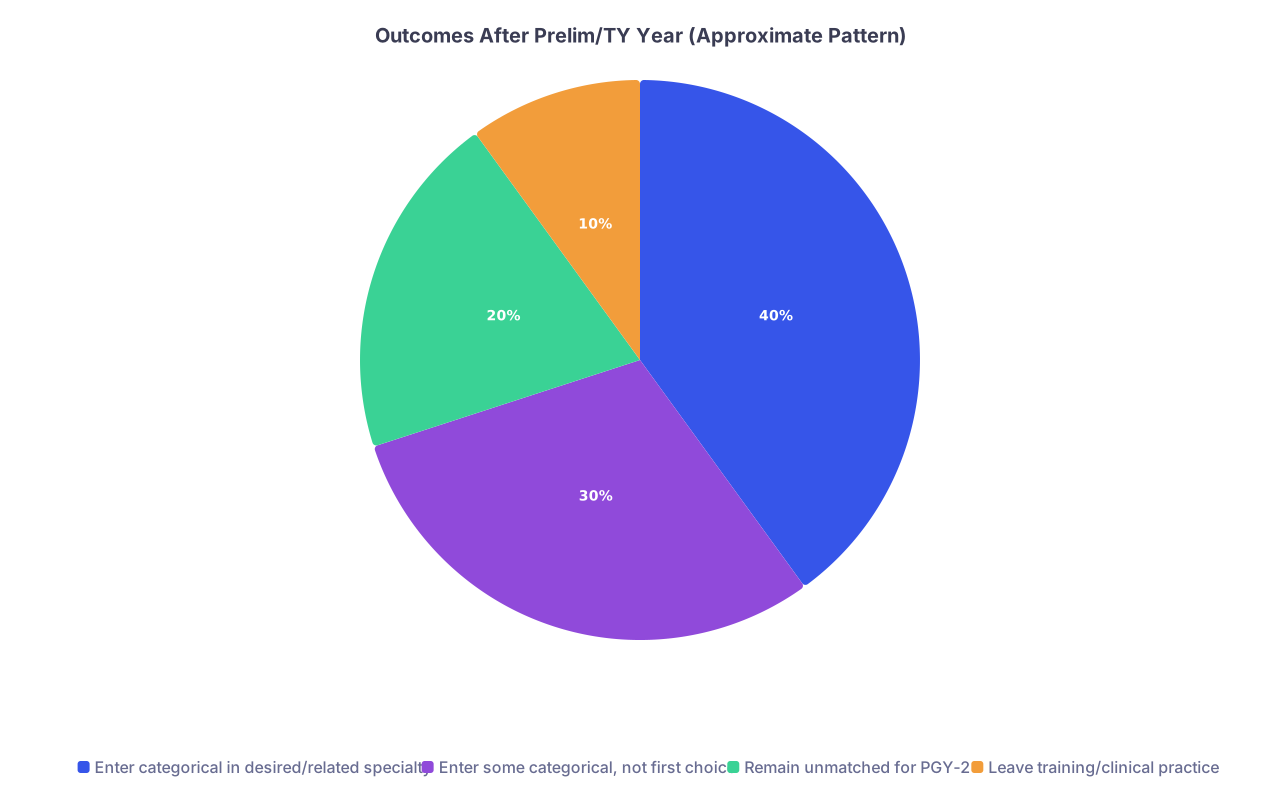
| Category | Value |
|---|---|
| Enter categorical in desired/related specialty | 40 |
| Enter some categorical, not first choice | 30 |
| Remain unmatched for PGY-2 | 20 |
| Leave training/clinical practice | 10 |
How to avoid the trap:
Start planning for PGY-2 during the first 1–2 months
That means: updating ERAS, clarifying your specialty target, scoping out which programs took prelims in the last 2–3 years.Track off-cycle and PGY-2 openings
Use:- FREIDA filters
- Specialty-specific listservs
- Program websites (some actually post openings)
- Word of mouth: residents and PDs often know of upcoming vacancies before they are public
Maintain credentialing cleanliness
No unexplained leaves. No major professionalism events. One flagged incident in a short PGY-1 year can sink your reapplication faster than a low Step score.Have a concrete “if I do not match again” plan
Examples:- Hospitalist-style non-training job where allowed
- Research position with clinical exposure in your target field
- Public health / MPH / MHA with continued clinical moonlighting if permitted
Pretending you will “definitely” match next time is how people end up jobless in June with a mortgage and no license pathway.
Choosing Programs Strategically, Not Desperately
SOAP makes rational choice harder. You feel like you will take anything. That is exactly how people bury themselves.
Here is the decision filter I use with unmatched grads during SOAP:

Does this program have a categorical pathway I might realistically want?
If no IM/FM/psych/anesthesia/rads/whatever you could accept long-term, it is a higher-risk choice.Has this program historically helped prelims into categorical spots (in-house or elsewhere)?
Ask directly: “In the last 3 years, where have your prelim graduates gone?”
A good program will rattle off actual places and specialties.Is there academic infrastructure relevant to my goals?
If you need research to reapply to Derm, a tiny community hospital with no derm faculty is not “better than nothing.” It is just nothing plus work.How malignant is the culture?
You are not angling for a 3-year sentence. But one year in a toxic environment can wreck your evaluations and mental health. Red flags:- Everyone warns you about “PD volatility”
- Chronic unfilled categorical spots
- Prelim residents treated as disposable service labor
Location vs. opportunity
Matching a prelim near home feels nice. But a stronger academic prelim in another state may open far more doors. Graduates underweight this routinely.
Specialty-Specific Nuances
Let us go a bit more granular. Some specialties interact with prelim/TY years very differently.
Internal Medicine / Family Medicine
- Prelim medicine is often the best on-ramp if you want IM or FM later
- Many IM programs have “informal” pipelines where strong prelims become categorical the next year
- If you are open to FM, a TY with outpatient-heavy electives can sell well on reapplication
- Boards: Your prelim IM year counts toward IM board-eligibility only if you enter an ACGME-accredited categorical IM program and they accept credit; some will insist you restart as PGY-1, some slot you as PGY-2
Anesthesiology / Radiology / Neurology / PM&R
These often have advanced positions starting PGY-2.
Strong path:
- TY or prelim medicine (occasionally prelim surgery)
- Early exposure and networking with anesthesia / rads / neuro / PM&R attendings
- Demonstrated interest: QI, case reports, elective time
Weak path:
- A random prelim with no affiliated department in your target field and no mentors. You end up applying cold, again.

| Step | Description |
|---|---|
| Step 1 | Unmatched in Advanced Specialty |
| Step 2 | Accept TY/Prelim IM |
| Step 3 | Do electives in target specialty |
| Step 4 | Obtain strong letters |
| Step 5 | Reapply to PGY-2 advanced positions |
| Step 6 | Start PGY-2 in target specialty |
| Step 7 | Apply to categorical IM/FM or reassess career |
| Step 8 | Matched? |
General Surgery
This one is tricky.
- Prelim surgery spots are often pure service roles
- Conversion to categorical general surgery is competitive and highly variable
- Programs sometimes “string along” prelims with vague hope of conversion that never materializes
Smart approach if you still want surgery:
- Choose programs known to convert at least 1–2 prelims per year into categorical
- Be at the absolute top of the prelim cohort (work ethic, technical skills, no attitude issues)
- Still apply broadly to other general surgery programs and, realistically, consider neighboring fields (vascular, anesthesia, even IM if burnout looms)
If your application to surgery was already weak (low scores, minimal research), a prelim surgery year alone will not fix that.
Highly Competitive Lifestyle Specialties (Derm, ENT, Plastics, Ortho, Ophtho, etc.)
These are brutally score- and connection-sensitive. A prelim or TY helps mainly if:
- You are doing it at a program with that specialty
- You are genuinely embedded in their world (journal clubs, clinics, research, teaching conferences)
- You can produce something tangible: new publications, strong chair-level letter
If your Step 2 is 220 with 1 derm interview total, a random TY is not a magical path into dermatology. At some point, you either pivot specialties or accept a much longer, more uncertain road.
How to Work the Year So It Actually Changes Your Trajectory
You cannot treat a prelim/TY like an incidental “holding pattern.” It has to be built like a project.
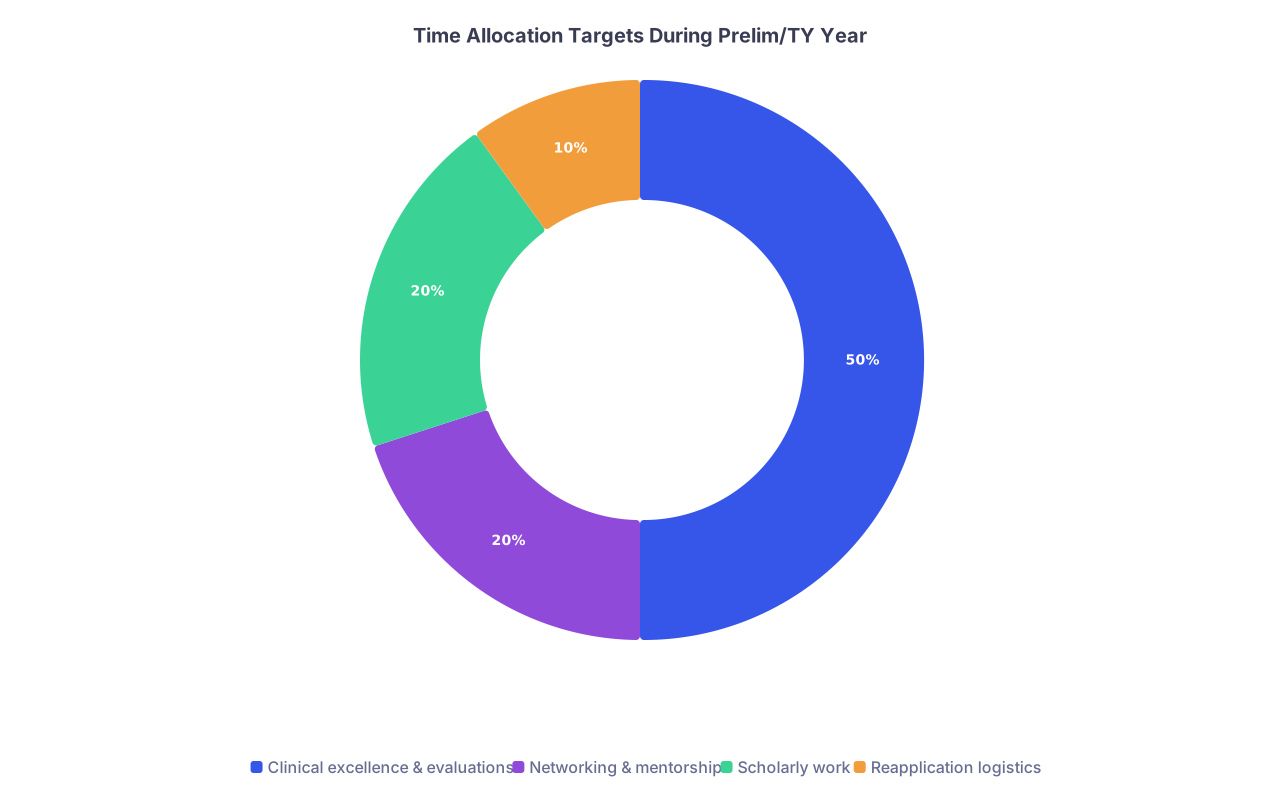
| Category | Value |
|---|---|
| Clinical excellence & evaluations | 50 |
| Networking & mentorship | 20 |
| Scholarly work | 20 |
| Reapplication logistics | 10 |
1. Clinical performance: non-negotiable
You want attending comments like:
- “Top 5% of interns I have worked with.”
- “Would strongly support for categorical spot in our program.”
Those phrases in a PD letter change outcomes.
That means:
- Show up early. Anticipate dispos. Be reliable.
- Do not be the intern constantly “too busy” to help others. PDs notice team behavior more than you think.
- Respond like an adult to feedback. No defensiveness, no excuses.
2. Intentional mentorship
Find 1–2 faculty in your intended field and one in your core prelim field.
You say: “Dr. X, I would really value your guidance. My plan is to apply to [specialty] this fall. I am hoping to use this year to grow clinically and academically so I can be a stronger applicant. Can we check in briefly every 1–2 months?”
Simple. Direct. Most faculty will say yes.
3. One meaningful project
Do not try to churn out five half-baked case reports at 2 a.m. Choose one project with:
- A realistic timeline to completion in under 9 months
- Clear mentorship
- Some link to your target specialty or to core ACGME competencies
Poster at a regional meeting is enough. A published paper is great but not mandatory.
4. Reapplication mechanics done on time
Too many prelims wake up in October and realize ERAS is open.
Your timeline, roughly:
- April–June: Clarify your target specialty and backup
- June–July: Draft personal statement, update CV
- July–Aug: Request letters from preliminary faculty who know you well
- Sept: Submit ERAS on opening; do not be late again
Do not underestimate how different your application looks with: “Strong evaluations in PGY-1 preliminary medicine at [respected institution]” plus new letters that say “outstanding intern.”
Financial and Psychological Realities
We should not pretend these do not matter.

Money
PGY-1 salary is usually 55–70k USD. Not terrible. But:
- Your loan interest keeps ticking
- You may need to relocate twice (for prelim, then for categorical)
- Couples and parents take a bigger hit (childcare, partner relocation)
Do a basic 3–5 year projection:
- Worst case: you never secure a categorical spot in a board-eligible field
- What is your earning potential then? (hospitalist without board eligibility in some states, urgent care, research, non-clinical)
- Does that keep your loans serviceable?
If the numbers look scary, that does not mean “do not take a prelim.” It means you must be even more surgical with program choice and performance.
Mental health
You are doing your intern year with the emotional weight of being “the one who did not match.” That eats at people.
What I have seen help:
- Early honest framing: tell a few trusted co-residents and attendings your situation. Secrecy adds stress.
- Formal therapy or counseling where available. Many GME offices have confidential resources. Use them.
- One non-medical anchor: consistent exercise, one night per week with a friend, some identity that is not “applicant again.”
Burnout during prelim year is a direct threat to your evaluations and your reapplication. Protect yourself.
Putting It All Together
Let me give you three quick composite examples. These are based on real patterns I have seen, with details blurred.
US MD, 235 Step 2, unmatched anesthesia
- Takes prelim medicine spot at a strong university hospital with big anesthesia dept
- Does anesthesia elective, QI project on perioperative hypotension, gets glowing letters from anesthesia and IM PD
- Reapplies early, matches categorical anesthesia at a different mid-tier program
IMG, multiple years out, 230s scores, unmatched in internal medicine
- Takes prelim IM at a community hospital that regularly promotes prelims internally
- Performs well but program has no open categorical spots; PD advocates to neighboring institutions
- Applicant applies broadly to IM/FM, matches categorical IM at a different community program
US DO, unmatched orthopedics with mediocre scores
- Takes prelim surgery at malignant program with no history of converting prelims
- Evaluations mixed, few mentors, no projects
- Reapplies to ortho, gets no interviews; reluctantly switches late to IM applications, ends up scrambling into an unstructured non-training job for a year
- A better move would have been TY or prelim medicine at a program with strong IM/FM, and earlier acceptance of the specialty pivot
That is the spread of outcomes you are deciding between.
FAQs
1. Is a transitional year always better than a preliminary medicine year?
No. TYs are “nicer” in lifestyle and flexibility, but prelim medicine is often more powerful if you are targeting IM, FM, neuro, anesthesia, or rads. A weak, isolated TY with no relevant departments is worse than a strong prelim IM in a hospital packed with your target specialty.
2. Can I get board-certified if I only complete a prelim year?
Not in any core specialty. A prelim or TY year alone does not lead to board eligibility. You must complete the full accredited categorical or advanced residency length (e.g., 3 years IM, 4 years anesthesia including PGY-1). Prelim/TY years usually count as PGY-1 toward that, but only once you are accepted into the categorical program.
3. How realistic is it to “convert” from prelim to categorical in the same program?
It depends entirely on the program. In some, 1–2 prelims convert every year. In others, zero. Ever. You need hard data: ask where the last 3 years of prelims went. If they cannot answer clearly, assume conversion is rare.
4. What if I do not match again after my prelim/TY year?
You have a few options: apply again (often to a broader or different specialty), seek non-training clinical roles where allowed, take a research or MPH/MHA year with clinical moonlighting, or pivot partially or fully out of clinical medicine. This is exactly why you should enter a prelim/TY with a realistic Plan B and not just “hope it works out.”
Key points to leave with:
- Prelim and transitional years are powerful tools only when matched tightly to a clear, realistic plan.
- Your performance, mentorship, and program selection during that single year matter more than most applicants realize.
- If you are going to take one of these spots after not matching, treat it as a deliberate bridge to something specific—not a vague holding pattern.


