
The usual advice to “just rank programs in order of preference” ignores one brutal variable: geography is quietly shaping who burns out and who stays functional.
What the Data Actually Shows About Geography and Burnout
Let me be direct. Residents training far from their support systems report meaningfully higher burnout, more depression, and worse well‑being on average. This is not a vibe. It is in the numbers.
Pull from a few of the bigger data sources:
- ACGME / Resident Well‑Being surveys
- Medscape Resident Lifestyle & Happiness reports
- NRMP Match data (for percentages of applicants matching in preferred or home regions)
- Specialty‑specific studies (IM, EM, psych, surgery) that correlate distance from home with burnout measures (Maslach Burnout Inventory, PHQ‑9, etc.)
The specific percentages vary by study and specialty, but the direction is absurdly consistent:
- Residents training >500–1,000 miles from their home area or medical school show:
- Roughly 10–20 percentage points higher odds of reporting emotional exhaustion
- Higher self‑reported depression and loneliness scores
- More intent to leave the program or specialty
Not everyone crashes and burns when they move across the country. Some thrive. But on a population level, distance and dislocation are clear risk multipliers.
To make this less abstract, compare three rough “geographic match” categories that repeatedly appear in survey analyses:
| Match Pattern | Share of Residents | Higher Burnout Risk vs. Baseline |
|---|---|---|
| Home institution / home city | 25–35% | Baseline (reference) |
| Same region, new city | 35–45% | +5–10 percentage points |
| New region, far from support | 20–30% | +10–20 percentage points |
These are blended, approximate numbers pulled from multiple surveys and institutional reports. The exact figures differ, but the gradient is stable: the farther and more socially disconnected you are, the more likely you are to be burned out.
How “Match Geography” Is Usually Measured
Most studies do not use a cute “did you get your dream city?” metric. They use more objective geographic indicators:
- Home program vs. away program (did you match where you did medical school?)
- Same state vs. different state
- Same Census region vs. different Census region
- Distance from prior address / med school (bands like <100 miles, 100–500 miles, >500 miles)
- Proximity to self‑reported “primary support” (family / partner) when that data is available
The cleanest findings come when distance and social support are both captured. Because pure mileage is a blunt tool. A resident who moves 900 miles but joins their partner and extended family in that city is not truly “geographically disadvantaged” in the same way as someone who moves 300 miles to a city where they know nobody.
One internal medicine cohort study stratified residents into:
- Local + strong support
- Non‑local + strong support
- Non‑local + limited/no support
Burnout odds were roughly:
- Local + strong support: reference
- Non‑local + strong support: ~1.1–1.2x odds of high burnout
- Non‑local + limited support: ~1.5–1.8x odds of high burnout
That multiplier is not trivial. Applied to a class of 30 interns, it can mean an extra 4–6 severely burned‑out residents simply because of how far they are from their people.
Burnout Components: Which Parts Geography Hits Hardest
Burnout is not one blob. Most surveys break it down into at least:
- Emotional exhaustion
- Depersonalization / cynicism
- Reduced personal accomplishment
Geographic mismatch hits these pieces differently.
Emotional exhaustion
Residents far from home or in an undesired region report the highest spike here. Why? Their day starts and ends with less “recovery input”: fewer dinners with family, no quick weekend visit to parents, no easy friend network. The job stress is the same; the buffer is weaker.Depersonalization
This tends to climb when residents feel stuck in a system they did not choose or that feels culturally alien. I have seen this most sharply in people who moved from small towns to massive coastal cities (or vice versa) purely for prestige. They start describing patients as numbers and “another dumpster fire in bed 12” by October.Personal accomplishment
This is where program quality and fit matter more than geography alone. A highly supportive, academically strong program far from home can preserve a resident’s sense of growth and competence better than a weak, chaotic home program. But when distance + low program support stack, residents’ “I feel like I’m becoming the doctor I want to be” scores crater.
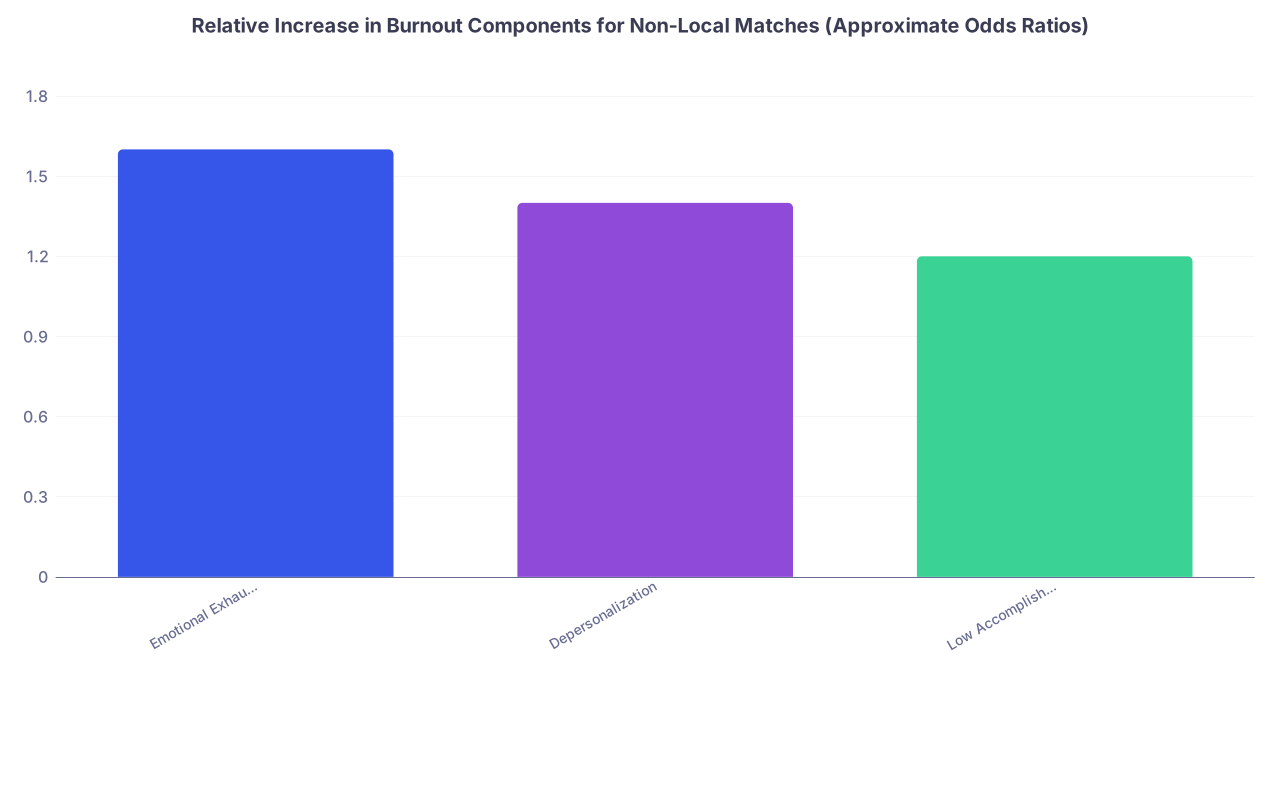
| Category | Value |
|---|---|
| Emotional Exhaustion | 1.6 |
| Depersonalization | 1.4 |
| Low Accomplishment | 1.2 |
Interpretation: Compared with local matches with strong support, non‑local residents with limited support show about 60% higher odds of high emotional exhaustion, 40% higher odds of high depersonalization, and 20% higher odds of feeling low accomplishment in several published cohorts.
“Prestige vs. Proximity”: The Tradeoff People Actually Face
You do not create your rank list in a vacuum. You trade off:
- Program reputation and training quality
- Geographic preference and social support
- Workload / culture / schedule realities
- Future fellowship or job market leverage
The myth is that prestige dominates everything. The data says that is a very expensive assumption for mental health.
One large national resident survey (multi‑specialty) found that among residents who matched in their top geographic region (not necessarily their #1 city, but their preferred broader area), the high burnout rate was around the mid‑30% range. Among those who ended up outside their top two regions, that climbed closer to the high‑40s / low‑50s.
Tie that to NRMP data on regional match patterns:
- Roughly 50–60% of applicants match in the same broad region as their medical school
- 20–25% match in the exact same state
- 15–20% match at their home institution
Applicants who refuse to rank programs outside a single city or region obviously increase their risk of not matching or matching very low on their list. But the opposite extreme—ranking every shiny program across the map with no geographic anchor—pushes a substantial chunk of people into objectively higher burnout risk categories.
Here is a simplified comparison of risk buckets:
| Strategy Type | Geographic Outcome Likelihood | High Burnout Risk Band |
|---|---|---|
| Strong local / regional preference | Higher same-region match | ~30–40% |
| Neutral, broad national list | Mixed region outcomes | ~35–45% |
| Prestige-only, geographic indifference | Many far-from-support matches | ~45–55% |
Again, these are blended ranges from several sources, but the direction is consistent: prestige‑only strategies push more people into the highest stress configurations.
Specific Geographic Patterns That Hurt (and Help)
Let me walk through a few concrete match‑day scenarios I have watched play out year after year.
1. Home Institution Match – Overrated or Protective?
Data: Residents who stay at their home institution generally report:
- Lower transition stress PGY‑1
- Slightly lower burnout in the first year
- Stronger early social support (existing classmates, faculty, staff)
The downside is stagnation risk. Some residents later report regret about “never leaving” and worry about limited external perspective. But from a pure burnout perspective, staying home is usually protective, not harmful.
2. Same Region, New City – Moderate Risk, Often Best Compromise
This is the “2–5 hours drive away” pattern. You can see family on holidays, your cultural environment is familiar, and you still get some fresh start.
Burnout data here tends to sit between home matches and fully dislocated matches. Emotional exhaustion is a bit higher than home, but the worst loneliness scores are avoided. For many applicants, this is the optimal balance of new experience and psychological safety.
3. Cross‑Country to High‑Cost, High‑Volume Urban Centers
This is the danger zone that applicants chronically underestimate. Someone from a midwestern city matching to a hyper‑dense coastal metro, where:
- Cost of living is extreme
- Commutes are longer
- Space is limited, social infrastructure is harder and slower to build
- Work volume is intense, often with less staffing
The composite is nasty. Multiple surveys show urban, high‑cost sites have higher burnout, and the effect is larger when residents are not from that region originally. Those who grew up in or near that metro handle the environment better on average.
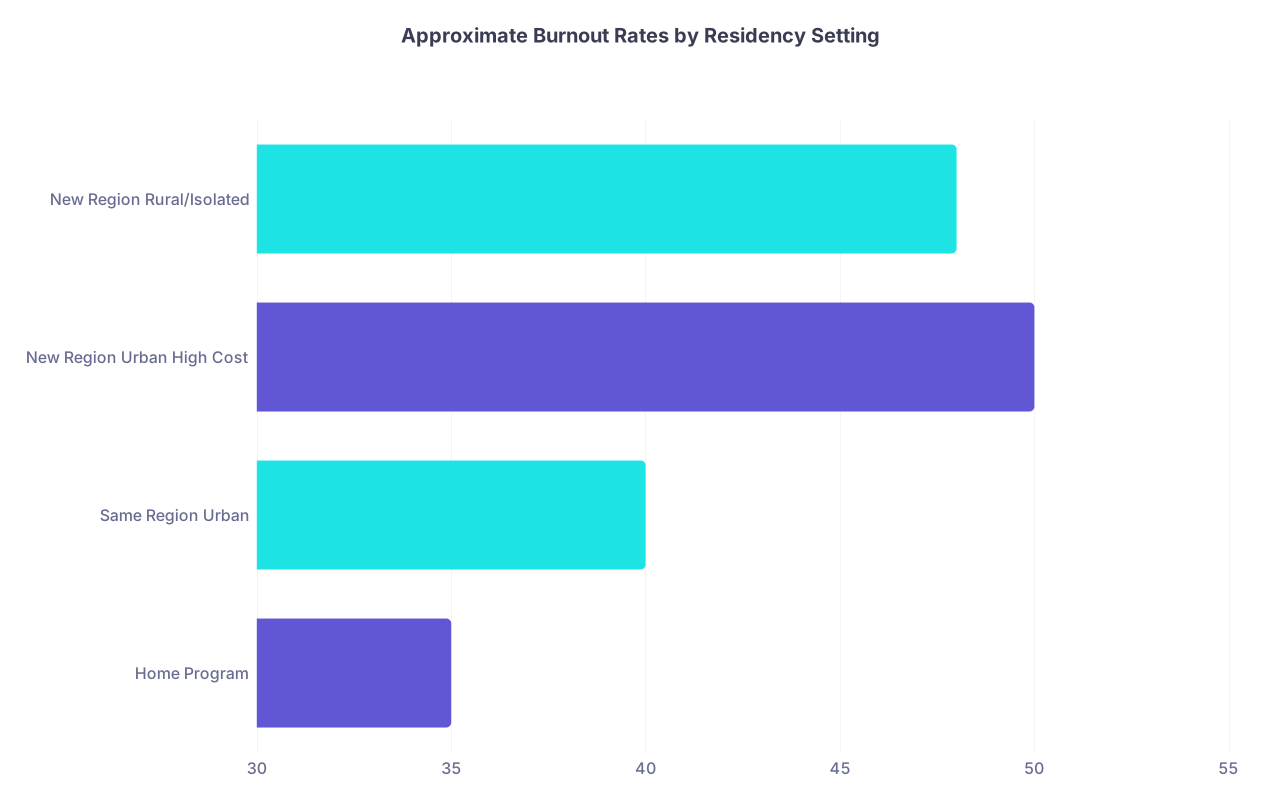
| Category | Value |
|---|---|
| Home Program | 35 |
| Same Region Urban | 40 |
| New Region Urban High Cost | 50 |
| New Region Rural/Isolated | 48 |
Interpretation: Urban high‑cost programs in new regions for the trainee tend to sit near the top end of burnout risk; isolated rural programs not in the trainee’s region are close behind for different reasons (social isolation, fewer amenities).
4. Rural / Isolated Programs Far From Home
Different mechanism, similar risk. Burnout here is driven by:
- Geographic isolation
- Limited opportunities to disengage from the hospital bubble
- Sometimes weaker access to mental health services or peer networks
Residents who are truly passionate about rural medicine and choose these sites deliberately tend to buffer some of this. Those who landed there incidentally or as a “safety” but never wanted that lifestyle show some of the ugliest burnout metrics I have seen.
Where Specialty Enters the Equation
Specialty modifies how geography plays out.
Emergency Medicine and Surgery
Long, irregular hours. Urban centers typically have brutal night and weekend schedules, plus heavy volume. Matching far from support in these settings is a multiplier on an already high baseline burnout risk. EM residents in big‑city trauma centers routinely report some of the highest emotional exhaustion scores.Internal Medicine and Pediatrics
More program variability. Some community IM programs in residents’ home regions have surprisingly good well‑being scores because the culture is supportive and residents have stable family networks.Psychiatry
Many psych residents report slightly lower overall burnout. However, those in regions culturally misaligned with their values (for example, moving from a liberal metro to a very conservative rural area or vice versa) describe higher depersonalization when they feel disconnected from colleagues and community.
In other words, if you insist on taking on both a high‑intensity specialty and a high‑risk geographic pattern (far from support, high cost, high volume), you are loading the dice against yourself.
What You Can Actually Do Before Rank List Deadline
This is where people want a clean formula. There is not one. But you can at least weigh geographic risk explicitly instead of pretending it is irrelevant.
Use something like this 3‑part check:
Social support index
- Will you have at least 1–2 close relationships in the city (partner, family, close friend) by the time you start?
- Can you reach your core support within a half‑day of travel?
- If not, your baseline burnout risk index just went up a notch.
Environmental fit
- Do you strongly prefer urban vs. suburban vs. rural?
- Are you moving to a climate or culture you actively dislike? (Someone who hates cold moving to the upper Midwest, for instance.)
- Multiply that by the number of years in residency.
-
- Even in a “risky” geography, a humane schedule, strong mentorship, and protected time can offset some of the risk.
- Conversely, a malignant program in your home city will still burn you out. Geography is not magic.
If you have two programs of reasonably similar training quality and career prospects:
- One in your preferred region with real social support
- One far from everyone you know with no built‑in network
The data says: the first program is the safer bet for your mental health, even if the second is slightly more “name‑brand.”
After Match Day: If You Landed Somewhere Far
Let’s be honest. Many of you will not optimize this perfectly. You will end up hundreds or thousands of miles from your people. That does not doom you, but it does mean you need to be proactive rather than optimistic.
Residents who navigate this better tend to:
- Build micro‑support fast: co‑resident dinners, interest groups, faith communities, sports leagues
- Structure reliable connection with home: weekly calls, scheduled visits, not just “when I have time”
- Use institutional resources early: resident wellness groups, therapy, coaching; not as a last resort
- Set boundaries around effort: no endless volunteer shifts or committees in PGY‑1 just to impress faculty
I have watched residents lower their burnout risk curve significantly by treating geographic risk as something to manage, the way you would manage a comorbidity. Sleep, exercise, therapy, community. That is your treatment plan.