
What if everyone else is quietly pulling 260+ Step scores while you’re still googling “how many UWorld blocks per day is enough”?
Yeah. That feeling.
Let me walk through the stuff that feels like you’re behind, and show you when it actually means you’re right where you should be.
First: The Lies Your Brain Is Telling You About Step Prep
Let me be brutally honest: your brain is a terrible Step coach.
It says things like:
- “You started too late.”
- “Everyone else finished UWorld twice already.”
- “If you’re tired, you’re not serious enough.”
- “You don’t remember anything, so nothing is working.”
I’ve watched so many classmates spiral from those exact thoughts. The scary thing is: some of them were absolutely convinced they’d fail. They didn’t. They passed. Many did really well.
Here’s the pattern I’ve actually seen from people who ended up okay:
- They felt behind almost the entire time.
- They had days where a single UWorld block wrecked their confidence.
- They thought “there’s no way this random mess in my head will come together.”
But their behaviors were quietly on track even while their anxiety was screaming.
So instead of asking, “Do I feel behind?” you need to ask, “What am I actually doing?”
Concrete Signs You’re More On Track Than You Think
1. You’re Doing Questions Almost Every Day
If you’re regularly doing QBank questions (even 20–40/day on busy clerkship days), you are not behind. You may not be at “ideal Instagram study grind” levels, but you’re not lost.
Here’s what looks secretly solid:
- On full study days: 2–3 blocks (40–60 questions)
- On busy days: 1 block (10–20 timed, reviewed)
- You review explanations, not just your percentage
- You occasionally tag or write down concepts to revisit
Here’s what actually is behind:
- You “save” QBank questions for later and keep re-reading First Aid or Anki instead
- You do questions but never review explanations
- You only do tutor mode, one question at a time, forever, because timed blocks scare you
If you’re in the first group—even if your percentages look ugly—you’re building the exact skill Step tests: recognizing patterns under time pressure.
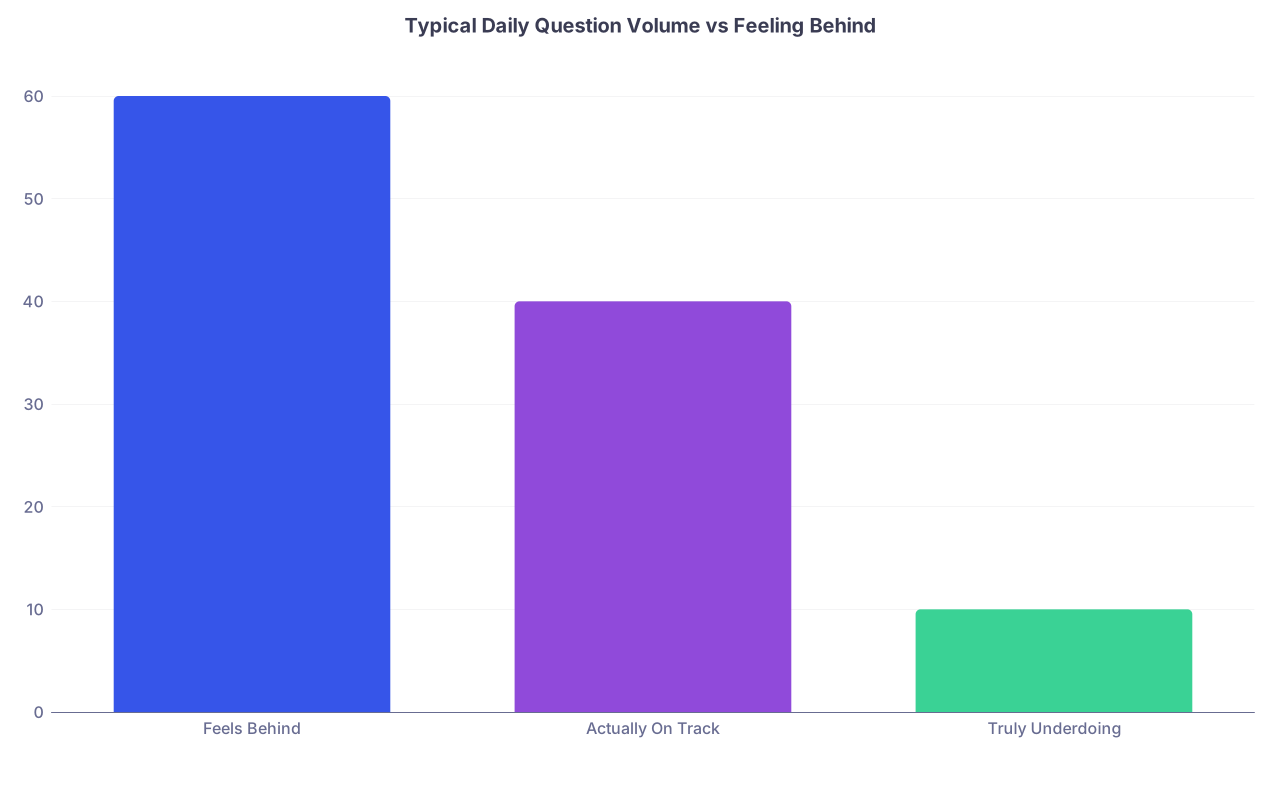
| Category | Value |
|---|---|
| Feels Behind | 60 |
| Actually On Track | 40 |
| Truly Underdoing | 10 |
Weird thing I’ve seen: the “I’m so behind” people are often the ones consistently grinding 40+ questions, while the “I’m fine” people are re-watching the same lecture three times and don’t realize they’re avoiding the real work.
If you’re in the questions almost daily, you are not behind. You’re in the arena.
2. Your Practice Scores Are Low… But Moving
This one hurts, I know.
NBME 1: 192
NBME 2: 205
NBME 3: 212
Your brain: “I’m dead. I’m never getting to 230+ at this rate.”
Reality: That’s exactly what improvement looks like.
Here’s what actually matters:
- Your scores are trending upward or at least not nosediving
- You can look at a wrong answer and say, “Yeah, I see why I missed that”
- You’re not making the same category of mistake every single time (e.g., always misreading the question, always panicking on biostats)
Slow, ugly, incremental progress is still progress.
What would worry me:
- Scores stuck in the same low band after 3–4 full-length practice tests with no change in approach
- You finish practice tests guessing on the last 10–15 questions every block because of time
- You refuse to take NBMEs because you’re “not ready yet” (and months go by)
If you’re taking NBMEs, seeing uncomfortable numbers, then adjusting your studying—congratulations, you’re doing exactly what the high scorers did. They just don’t post the early ugly scores on Reddit.
3. Your Schedule Isn’t Perfect, But It Actually Exists
You feel behind because your study schedule is messy. You’ve already “broken” it 5 times. You moved your exam once. You skipped half of what you planned to do this week.
That doesn’t mean you’re behind. That means you’re a human who made a plan and then collided with reality.
Here’s the key question: Do you roughly know:
- How many questions you’ll do per week?
- How many NBMEs you’ll take before test day?
- When you’ll finish your first full pass of UWorld (or your main QBank)?
If yes, and you’re moving in that direction—even imperfectly—you’re on the rails.
If no, and each day is just “vibes and random YouTube videos”… then yeah, that’s a problem.
I’ve seen people with color-coded, minute-by-minute Excel schedules panic and still do fine. I’ve seen people with a simple sticky note that says “2 blocks/day + Anki + NBME every 10 days” crush it.
Structure matters. Perfection doesn’t.
4. You Forget Stuff Constantly… But Then You Recognize It
This one is sneaky.
You see a question about some enzyme or random immunology thing and think, “I JUST REVIEWED THIS YESTERDAY. I AM DOING THIS ALL FOR NOTHING.”
Not true.
Step studying is not about:
- Perfect recall on first pass
- Feeling confident early
- Never forgetting anything
What actually happens for almost everyone who ends up fine:
- First exposure: “I’ve literally never heard of this in my life.”
- Second exposure: “This looks familiar but I still get it wrong.”
- Third exposure: “Oh, wait, I think it’s this… yep, okay.”
- Fourth exposure: “Got it without overthinking.”
If you’re:
- Seeing concepts come back around
- Recognizing that you saw them before
- Slowly needing less time to reason them out
…you’re not failing. You’re wiring your brain properly for the exam.
Be more worried if:
- Everything always feels brand new
- You never go back to your weak areas
- You constantly switch resources and never see the same concept twice
Forgetting then re-learning is part of being on track, not a sign you’re doomed.
5. You’re Tired, Frustrated, And Not Loving Every Second
You know who worries me more? The person who’s four weeks out from Step, constantly posting “I’m obsessed with this grind, let’s goooo” at 3 am.
Burnout wrecks more Step scores than “starting late” ever will.
If any of this sounds like you:
- You’re exhausted but still showing up most days
- You take a break, feel guilty, then still come back
- You have bad days where you barely get anything done, but the next day you try again
That’s… normal. That’s what being “on track” feels like from the inside. It doesn’t feel glorious. It feels like doubt with repetition.
You’re allowed:
- One truly off day a week
- To move your exam once if your practice scores support it
- To not be a motivational poster about the whole thing
If your life is 100% Step and 0% sleep, food, or basic sanity? That’s when I start to worry you’re sabotaging yourself.
6. Your Timeline Is Within A Reasonable Range
Let’s talk cold numbers for a second. No fluff.
| Situation | Dedicated Length |
|---|---|
| Strong preclinical foundation | 4–6 weeks |
| Average foundation, typical prep | 6–8 weeks |
| Weaker foundation / more anxiety | 8–10 weeks |
| Major gaps / life stressors | 10–12 weeks |
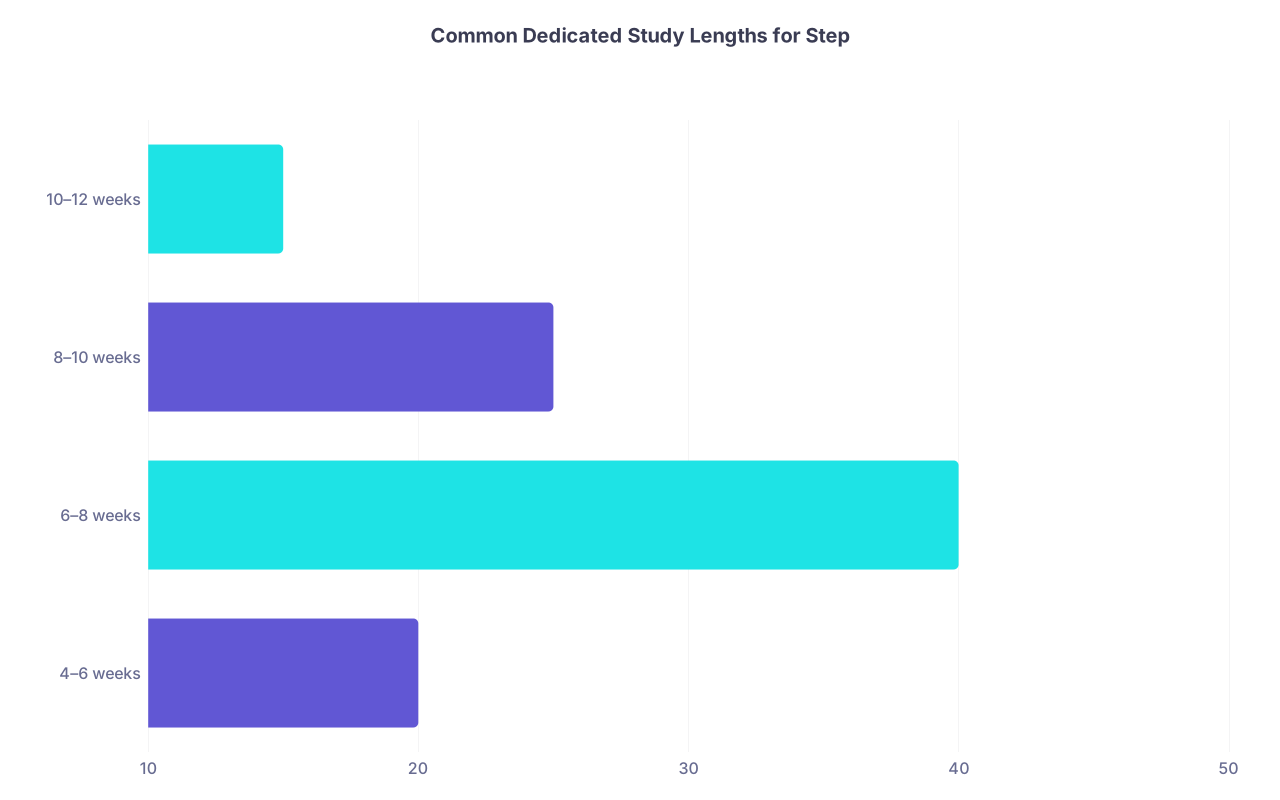
| Category | Value |
|---|---|
| 4–6 weeks | 20 |
| 6–8 weeks | 40 |
| 8–10 weeks | 25 |
| 10–12 weeks | 15 |
If you’re:
- Somewhere in that 4–10 week band of actual, focused study
- Doing consistent questions and dedicated review within that time
…you’re not off the map.
Are there people who studied for 4 months? Sure. A lot of them:
- Were juggling clerkships
- Had major test anxiety
- Or were basically re-teaching themselves core content they never learned the first time
Longer doesn’t automatically mean better. It often just means “more time to panic and change strategies 15 times.”
If your dedicated is:
- Short but structured → You’re probably okay.
- Long and totally chaotic → That’s what’s hurting you, not the calendar.
A Quick “Am I Actually On Track?” Checklist
No motivational quotes. Just a blunt self-audit.
You’re probably on track if:
- You’re consistently doing questions (150–300/week range, depending on phase)
- You’ve taken at least 1 NBME and scheduled more
- Your scores are low but not collapsing, or improving even a little
- You’ve accepted that some days will be trash but you keep coming back
- You know your weak areas and are actively revisiting them
- You’re sleeping something resembling a human amount (5–7+ hours)
You’re probably in trouble if:
- You keep saying “I’ll start for real next week”
- You refuse to take any practice tests because the score will “hurt your feelings”
- You spend most of your time passively watching videos and “feel like” you understand
- You’re changing your main resources every 5–7 days
- You’re not practicing timed blocks because they’re uncomfortable
Be honest with yourself for five minutes. Then adjust. That’s it.
How To Stop Feeling Behind Every Single Day
You might be technically on track and still completely miserable. So let’s fix at least some of that.
Try this for the next 7 days:
Pick a minimum you will hit no matter how bad the day is.
Example: 20 questions + 30 min of reviewing mistakes.Pick a standard day goal (what “good” looks like).
Example: 2 blocks (40 questions), full review, plus 30–60 min targeted review or Anki.Decide NOW when your next practice test is, and do not move it for vibes.
At the end of each day, write down:
- How many questions you did
- One area you struggled with
- One thing you did better than yesterday (even if tiny)
Stop comparing yourself to the loudest people in your group chat. Most of them are cherry-picking their best days or straight up lying.
Is this going to erase your anxiety? No. But it will convert some of that chaos into data and habits, which is what actually moves the needle.

| Step | Description |
|---|---|
| Step 1 | Start Step Prep |
| Step 2 | Do Daily Questions |
| Step 3 | Take Practice NBME |
| Step 4 | Stay the Course |
| Step 5 | Adjust Plan |
| Step 6 | Exam Day |
| Step 7 | Scores Improving? |
FAQs (The Stuff You’re Probably Still Spiraling About)
1. “My friend is on their second pass of UWorld and I’m halfway through my first. Am I screwed?”
No. Second passes look impressive but often have diminishing returns. A solid, thoughtful first pass—where you really learn from explanations—is way more important than flexing a “second pass” you breezed through. If you’re halfway through your first pass with weeks left, you’re still in the game. Focus on finishing well, not catching up to someone else’s tempo.
2. “My NBME score is way below my goal. Does that mean my goal is unrealistic?”
Not automatically. Early NBMEs are a baseline, not a verdict. What matters is how much time you have, how quickly your scores move, and whether your study changes after each exam. If you’re two weeks out and 30 points below your goal, yeah, that’s tight. If you’re eight weeks out and 25–30 points below? I’ve seen that turn into very respectable scores plenty of times with focused work.
3. “What if my classmates are secretly studying more than they say?”
Some are. Some are studying less. Some are lying to themselves. You can’t control any of that. I’ve seen students boast about 10–12 hour days and then bomb practice tests because half that time was doomscrolling or re-watching videos they didn’t need. You’re competing with a test, not a persona. Track your own inputs and scores. That’s reality. Everything else is noise.
4. “How do I know if I should push my exam back?”
Push it back only if:
- You’ve taken at least 1–2 recent NBMEs and your score is far below a safe/pass range, and
- You have a clear, specific plan for what you’ll do with the extra time (not “just more of the same panic”), and
- Pushing it won’t wreck major things (grad timeline, rotations, mental health even more)
If you just “feel unready” but your practice scores are within shouting distance of where you need to be, that feeling will probably never fully go away. Almost nobody feels “ready-ready.”
5. “Is it bad that I’m not using 5 different resources like everyone online?”
Honestly? That might be the best thing you’ve got going for you. The people juggling UWorld + Amboss + Boards & Beyond + Sketchy + 3 different decks often end up half-finishing everything. Most people do best with 1 primary QBank + 1–2 core references (FA/Boards & Beyond/Pathoma/etc.). Depth beats chaos. If your simpler setup keeps you consistent, you’re in a stronger position than you think.
6. “What if I do everything ‘right’ and still bomb Step?”
That’s the nightmare scenario your brain keeps replaying, right? You work, you sacrifice, and the score still smacks you in the face. Here’s the unglamorous, honest truth: if you consistently do questions, review mistakes, take practice exams, adjust your plan, and take care of basic sleep/food/brain needs, your odds of completely “bombing” go way down. Could you miss your dream score? Sure. Lots of people do. But “bombing” after doing the work is actually rare. And even if it happened—you’d still have options, paths, and a life. This exam is huge, but it’s not the final word on you.
Years from now, you won’t remember how far behind you felt during Step prep. You’ll remember that you kept going on the days when your brain swore you were already too late—and that those days counted more than you realized.