
You’re not paranoid. Med school does make you feel like everyone else is working harder than you.
The horrible feeling: “They’re all studying more than me”
Let me just say the quiet part out loud: it feels like everyone else is always “grinding.”
The girl in your class who posts Anki streaks on Instagram. The guy who casually mentions he’s “only” doing 500 cards a day. The group that camp out in the library until midnight like it’s their second home.
And you? You’re sitting there wondering:
- Am I already behind and just don’t know it yet?
- If they’re studying more hours, does that automatically mean they’ll score higher?
- Is there some secret schedule everyone got except me?
You start doing mental math.
“If she does 6 hours a day and I’m doing 3–4… that’s 14 extra hours a week… multiplied by 10 weeks… that’s 140 hours… I’m dead.”
Yeah. I know that spiral.
Let me be blunt: comparing “hours studied” in med school is one of the fastest ways to destroy your sanity and not actually improve your performance.
But let’s unpack it, because your anxiety is not irrational—it’s just mis-aimed.
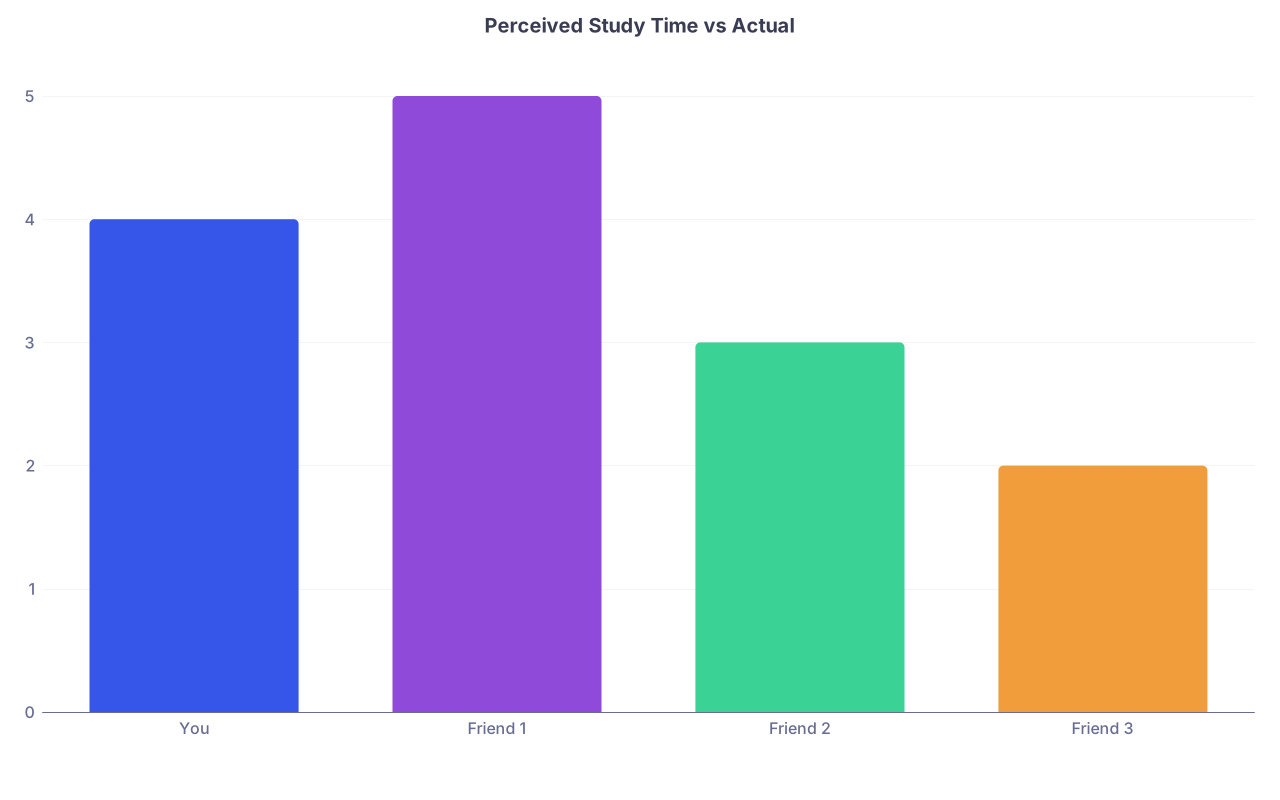
| Category | Value |
|---|---|
| You | 4 |
| Friend 1 | 5 |
| Friend 2 | 3 |
| Friend 3 | 2 |
Why it looks like everyone’s studying more than you
No, you’re not imagining it. But you’re also not seeing the full picture.
1. People advertise their best days, not their real average
You hear:
- “I did 10 hours yesterday.”
- “I finished the entire cardio section this weekend.”
- “I’m on a 120-day Anki streak.”
You don’t hear:
- “I scrolled TikTok for 3 hours this morning in bed.”
- “I stared at First Aid for 40 minutes and retained nothing.”
- “I rage-quit UWorld after missing 6 questions in a row.”
I’ve literally watched someone tell a group, “Yeah, I’m doing like 400 cards a day,” then open their laptop and their Anki due count said 120.
People round up. A lot.
2. Study hours aren’t standardized
“Studying” can mean:
- Phone in one hand, lecture on 2x speed, brain at 10%
- Actually doing 40 UWorld questions with full review
- Rewatching the same video for the third time and zoning out
- Sitting in the library with friends, half gossiping, half scrolling
Four hours of real, deep work can beat eight hours of “vibes” studying. But from the outside? It just looks like “they studied longer.”
3. You only compare upward
You don’t compare yourself to the classmate who never comes to lecture, starts watching boards videos at 11pm, and is perpetually confused.
You lock onto the top 5–10 most intense people and assume that is the norm.
It’s not. It’s just the loudest.
4. You’re blind to your own “invisible studying”
You don’t count:
- The time you spent really focused in lecture
- The walk where you mentally rehearsed pathways
- The spare 20 minutes between sessions doing Anki
- Teaching a friend a concept (which is high-yield studying)
But you absolutely count every time you don’t study:
the nap, the Netflix episode, the gym, dinner with family.
So your brain logs: “Everyone else: grind mode. Me: lazy trash.”
It’s not accurate, but anxiety is very convincing.
Are you actually falling behind? A brutal but honest checklist
Let’s stop guessing. Here’s a more objective way to tell if you’re behind, instead of “Sarah said she did 300 questions this week.”
Answer these honestly:
- Are you consistently passing your block exams without miracles?
- Can you explain major concepts out loud (pathways, mechanisms, typical presentations) without constantly checking notes?
- Are you keeping up (roughly) with your Anki/flashcard reviews within 1–3 days?
- Do practice questions feel hard-but-manageable, not like a foreign language?
- Is your stress coming more from comparison than from actual failing grades?
If your answers are mostly “yes,” you’re probably not behind. You’re just surrounded by noise.
If your answers are mostly “no,” okay. Then this isn’t just anxiety—there’s something to fix. But even then, the solution is not “study until your soul leaves your body.”
It’s “study differently and intentionally.”

The hidden truth: Hours don’t scale linearly with results
This part hurts if you’re anxious and your brain wants to believe more = better.
More hours can help.
But only up to a point.
After that you hit:
- Diminishing returns
- Burnout
- Fake productivity
- Slower recall and retention
Here’s what I’ve watched happen again and again:
Student A:
Studies 4 focused hours a day. Does questions, reviews them properly, does active recall, keeps up with spaced repetition.
Scores solidly above average. Still has a life.
Student B:
Studies 9–10 hours a day. Half of that is passive: rewatching lectures, “taking notes on notes,” highlighting things that will never be seen again.
Exhausted. Panicking. Scores average or below average. Wonders why the hours didn’t pay off.
The exam rewards:
- Retrieval practice (questions, flashcards, teaching)
- Integrating concepts (seeing patterns)
- Repeated exposure over time (spaced repetition)
It does not care that you highlighted every line in the renal physiology PDF.
| Pattern | Hours/Day | Style | Outcome Trend |
|---|---|---|---|
| Focused | 3–5 | Active recall, Qbank | Solid–High scores |
| Grind but passive | 8–10 | Rewatching, rereading | Mediocre, burnout |
| Inconsistent | 0–6 (chaotic) | Cramming, last-minute | Unstable, risky |
So when you see classmates bragging about insane hours, ask yourself:
“What kind of hours are those? And do I even want that life?”
Okay, but what if they really are doing more and get better scores?
Here’s the nightmare scenario your brain is screaming:
“What if they all do more questions, more cards, more hours—and then on exam day, they crush it and I get exposed as the one who didn’t try hard enough?”
I won’t sugarcoat this: some people really are studying more and better. Some of them will score higher than you. That’s real.
What’s not real is the idea that:
- You must match the highest-volume person to be safe
- Your only options are “overwork like them” or “fail”
- Your future depends on out-studying every classmate
You are not racing your entire class to one single finish line. You’re trying to:
- Pass your courses
- Build a strong foundation for clinical years/boards
- Protect your mental health enough to not implode by third year
You don’t need to be #1 in study hours.
You need to be effective enough, consistent enough, and functional enough.
And frankly, some of the loudest grinders? They’re the ones who crash hardest right before boards. I’ve seen it. Meltdowns in the hallway, blanking on basic questions because they’re fried.
A sane way to respond to “everyone is studying more than me”
Instead of trying to match their chaos, you need a quiet, boring, brutally honest system that works for you.
Step 1: Define “enough” for this week
Not for Step 1. Not for your entire med school career.
Just this week.
“Enough” might look like:
- Watch/attend required lectures for this block
- Do 20–30 practice questions per day, 5–6 days this week
- Clear (or almost clear) Anki reviews daily
- 1–2 hours of dedicated review of weak topics
That’s it. That’s already a lot, by the way.

| Step | Description |
|---|---|
| Step 1 | Set weekly goals |
| Step 2 | Block lectures |
| Step 3 | Question bank |
| Step 4 | Anki/flashcards |
| Step 5 | Daily schedule |
| Step 6 | Evaluate on Sunday |
Step 2: Track only what you control
You can’t control:
- How many hours your classmates study
- How fast they burn through questions
- What they post in the GroupMe
You can control:
- Hours of focused study you do (phone away)
- Number of questions you do and review
- Whether you show up to the schedule you set
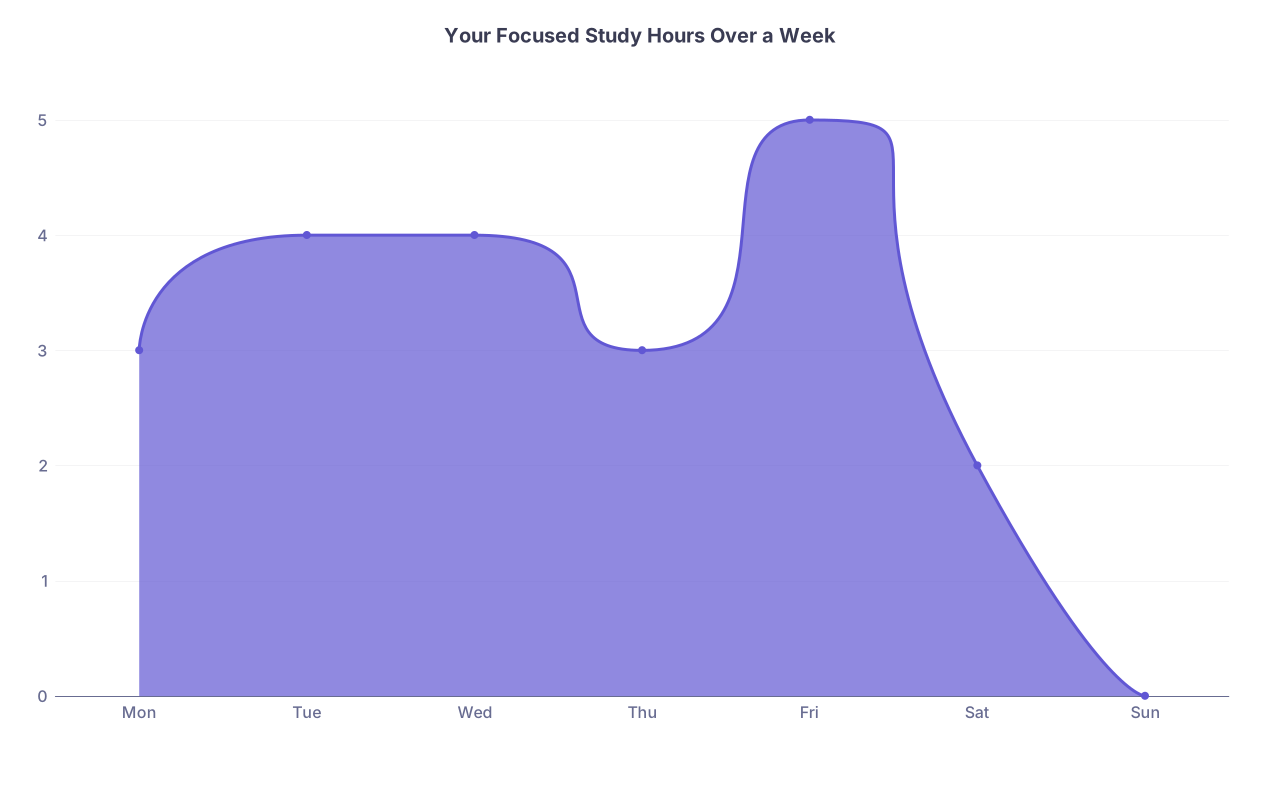
For 7 days, try tracking just:
- Focused hours (not total “sitting at desk” time)
- Questions done + reviewed
- Anki reviews completed
Then compare yourself to… yourself. Not Sarah. Not Anki-guy.
| Category | Value |
|---|---|
| Mon | 3 |
| Tue | 4 |
| Wed | 4 |
| Thu | 3 |
| Fri | 5 |
| Sat | 2 |
| Sun | 0 |
Notice patterns. Do you consistently hit 3–5 good hours? You’re fine. Seriously.
Step 3: Fix the weak link, not everything
If something’s off, don’t blow up your whole life. Target the problem.
Common weak links:
- You’re watching lectures but not doing questions
- You’re doing questions but not reviewing them properly
- You’re starting late in the day and losing your best brain hours
- You’re trying to do 8 different resources and doing none well
Pick one change:
- Add 10–20 questions per day
- Move your main study block to earlier in the day
- Drop one low-yield resource that’s eating your time
- Shorten your review time but make it more active (write key takeaways, not novels)
Tiny, consistent corrections beat all-or-nothing “I’m going to become a 10-hour-a-day robot” plans that last 48 hours.

The mental side: Your brain is not a machine
You’re probably scared that if you give yourself permission to not study 8–10 hours a day, you’ll slide into laziness and fail out.
Sometimes that fear keeps you moving.
But often, it just wrecks you.
Here’s what nonstop comparison actually does:
- Makes you feel guilty during every break (so breaks never recharge you)
- Makes you feel behind even when you’re on track
- Tricks you into thinking “panic = productivity”
- Pushes you to study while exhausted, which is just… bad studying
Med school is not a sprint. It’s not even a marathon. It’s like doing multiple marathons back-to-back while sleep deprived and caffeinated.
You need:
- Sleep (actual, real sleep, not 4 hours + vibes)
- Some movement (walking, gym, stretching—whatever’s realistic)
- Human contact that isn’t just “what did you get for #14?”
- Time off where you’re not secretly checking Anki on your phone
Protecting those isn’t laziness. It’s self-preservation.
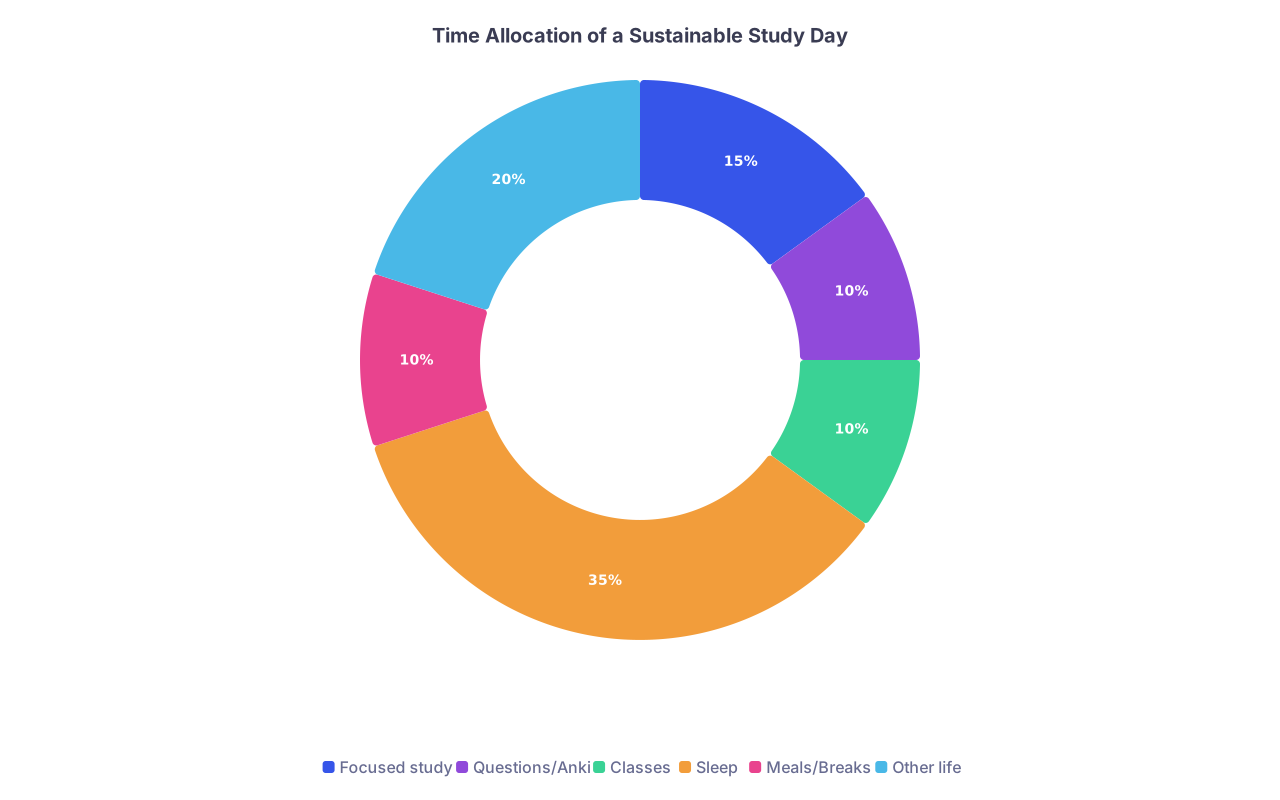
| Category | Value |
|---|---|
| Focused study | 180 |
| Questions/Anki | 120 |
| Classes | 120 |
| Sleep | 420 |
| Meals/Breaks | 120 |
| Other life | 240 |
When you zoom out across months, the person with 4–6 stable, high-quality hours most days wins over the person who oscillates between “12-hour grind” and “I can’t move.”
Scripts to shut down comparison in real time
You’re not going to stop hearing about other people’s study habits. But you can stop letting it ruin your day.
When someone says:
“I did 80 questions yesterday and 400 Anki reviews.”
Try:
“Nice, I’ve found a smaller number consistently works better for me. I’m focusing on steady progress.”
When someone asks:
“How many hours are you studying a day?”
Try:
“Enough to stay on track. I’m trying not to obsess over the number, just making sure I understand the material.”
And if a conversation is making your chest tight and your brain go into doom calculations?
You’re allowed to say:
“Hey, I’m trying not to compare study hours too much—it messes with my head. I’m gonna go finish something real quick.”
Then actually leave. Protect your bandwidth.

Reality check: What “falling behind” really looks like vs anxiety
Your brain says: “I studied 3 hours today, they studied 7. I’m behind.”
Real “falling behind” is more like:
- You’re consistently failing or barely passing exams
- You never finish question blocks or review them
- You’re weeks behind on lecture content with no plan
- You’ve basically stopped doing any spaced repetition
- You’re shocked by concepts on practice questions you should have seen
If that’s you, then yes, something has to change. But again, the fix is structured, not just “more hours.”
If that’s not you? If you’re passing, learning, doing some questions, and roughly keeping up?
Then no, you’re not secretly doomed because someone on your row is doing 100 more Anki cards.
You’re just a normal med student with an anxiety engine that likes to latch onto the most measurable thing it can find: hours.
What you can do today
Don’t write a 3-page planner fantasy. Do something small and real.
Today:
- Decide how much focused study time is realistic (3? 4? 5 hours?). Write that number down.
- Pick what you’ll do in that time: specific lectures, specific question blocks, specific Anki sets.
- Turn your phone on do-not-disturb for the first 60–90 minutes and actually do one block of deep study.
- At the end of the day, ask only: “Did I hit my focused hours and tasks?” Not “Did I study as much as everyone else?”
You’re not responsible for matching their pace.
You’re responsible for showing up to yours.
Open your calendar for this week right now. Block off just one 2-hour deep-work window tomorrow where your only metric is focus, not fear. Build from there.
FAQ (Exactly 6 Questions)
1. How many hours should I be studying per day in med school?
Most functioning med students land somewhere around 3–6 hours of focused studying on a typical weekday, depending on the phase (lighter in early pre-clinical, heavier near exams or dedicated boards time). Some do more, some do less. There’s no magic number. If you’re consistently passing, retaining material, and not completely falling apart mentally, your hours are probably fine—even if they’re lower than your loudest classmates.
2. If I’m not using Anki all day like everyone else, am I screwed?
No. Anki is a tool, not a religion. It’s powerful for spaced repetition, but it’s also easy to misuse by spamming cards mindlessly. If you prefer other active recall methods (self-quizzing from notes, teaching, written questions) and you’re performing well, you’re not doomed. If you’re struggling with recall, then yes—adding some form of spaced repetition like Anki can help. But you don’t have to copy someone else’s 1,000-cards-a-day routine.
3. My friend is already on their second pass of UWorld and I haven’t started. Am I behind?
You’re not automatically behind just because someone started earlier. What matters is where you are relative to your exam date and your understanding. Some people rush into question banks without a basic foundation and end up wasting questions. If you’re months away from boards, still building knowledge, and plan a realistic schedule to get through a question bank with proper review, you’re fine. If your exam is in 4 weeks and you’ve barely touched questions—then yes, time to urgently rework your plan.
4. Is it possible to do well without studying every single day?
Yes, but you can’t disappear for days at a time and then expect miracles. You don’t need a 365-day streak, but you do need consistency across weeks. That might look like 5–6 days of studying per week with one lighter or off day. The key is that your “on” days are focused and you’re not constantly playing catch-up. Some people thrive with one legit rest day; others prefer shorter daily blocks. Either way, disappearing for 3–4 days repeatedly is where things get ugly.
5. How do I know if my anxiety about falling behind is actually a warning sign and not just overthinking?
Look at data, not feelings. That means your exam scores, practice questions, ability to explain concepts, and how often you’re completely lost versus just uncomfortable. If your anxiety is high but your performance is steady and you’re keeping up with your plan, it’s likely comparison-driven. If your anxiety is high and your grades are dropping, you’re skipping content, or you avoid practice questions because you know they’ll be bad—then your anxiety might be pointing to a real problem. In that case, adjust your strategy and get help from an upperclassman, tutor, or advisor.
6. What if I genuinely can’t match my classmates’ hours because of health, family, or other responsibilities?
Then you build a plan around your bandwidth, not theirs. Plenty of students with kids, chronic illness, jobs, or other responsibilities still succeed by being ruthlessly efficient with the time they have. You’ll probably lean harder on: structured schedules, focused blocks, prioritizing high-yield resources, and saying no to “extra” things. You may not be able to out-hour them, but you can absolutely out-strategize them. Your situation is not a character flaw; it just means your path has less slack and more intention.