

You’re not paranoid. The fear of being sued as a physician entrepreneur is absolutely real.
But it’s also wildly distorted in your head right now.
You’re probably stuck in that mental loop: “If I start a company, I’ll miss some regulatory thing, get sued into oblivion, lose my license, destroy my career, and end up Googling ‘non-medical jobs with no license.’”
Let’s walk through what’s actually likely, what’s nightmare fuel, and what you can practically do so this fear doesn’t freeze you.
The Myth: One Lawsuit Will Destroy Your Life
Here’s the ugly truth: if you practice medicine or build in health tech, you will face legal risk. There’s no version of this where risk goes to zero. If you want zero legal risk, you become a librarian. Maybe.
But this idea that “one lawsuit = career obliterated + personal bankruptcy + board revocation” is… not how it usually plays out.
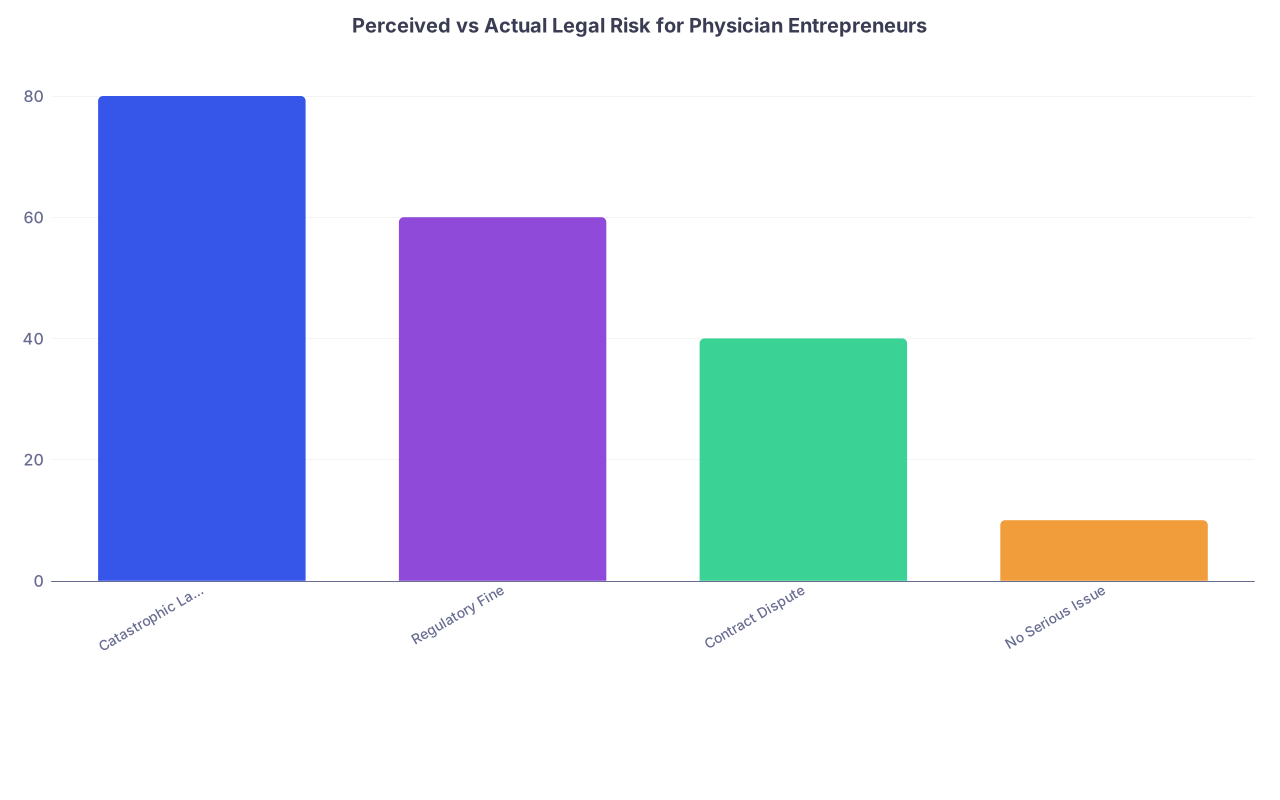
| Category | Value |
|---|---|
| Catastrophic Lawsuit | 80 |
| Regulatory Fine | 60 |
| Contract Dispute | 40 |
| No Serious Issue | 10 |
Here’s what I’ve actually seen with post-residency physician founders:
- They get uncomfortable demand letters.
- They deal with annoying contract disputes.
- Sometimes they deal with regulators (usually via lawyers, not FBI raids).
- Catastrophic, license-ending outcomes are rare and usually involve either fraud, gross negligence, or willful stupidity.
But your brain doesn’t care about probabilities. It shows you the worst headline: “Doctor-Entrepreneur Sued for Millions; Faces License Investigation.” And then it puts your name in that headline.
Let’s stop thinking like a headline and start thinking like someone who’s about to sign things that matter.
The Big 4 Legal Fears (And What Actually Happens)

When physicians ask me about legal risk as founders, they usually mean four things, even if they don’t say it this clearly:
- “Will I lose my personal house/savings if the company gets sued?”
- “Can I lose my license over a startup mistake?”
- “Can regulators (FDA, CMS, state board) just show up and ruin me?”
- “Am I signing something right now that will haunt me in 5 years?”
Let’s hit these one by one.
1. Personal Financial Ruin
This is why how you structure the company matters.
If you’re doing things as “Dr. You, solo person,” you’re asking for personal exposure. If you’re working under a properly formed entity (LLC, C-corp, etc.), with separate finances, contracts in the company’s name, and basic hygiene, you’ve at least put up a wall between “company gets sued” and “they come for your house.”
It’s not a magic shield. But it’s a serious layer of protection.
The scenarios where physicians truly get personally wrecked tend to look like this:
- They commingle personal and business funds constantly.
- They sign personal guarantees for big loans without understanding them.
- They commit obvious misconduct (fraudulent billing, fake data, etc.).
- They ignore problems and fail to respond to letters, notices, and deadlines.
The scenario in your head where you:
- Form a legit company
- Get real contracts
- Have insurance
- Try to do the right thing … and still end up totally ruined? That’s extremely, extremely unlikely.
2. Losing Your Medical License
This one’s the nuclear fear. “If I do a startup and it goes south legally, will I lose the one thing I can’t replace?”
State boards don’t revoke licenses because your startup had a contract dispute or even because your company got sued. They care about:
- Fraud
- Criminal activity
- Grossly unethical behavior
- Patient harm tied to your direct conduct or supervision
- Practicing beyond scope in a reckless way
You launching an AI triage tool that has a bug? Not an instant license death sentence. You knowingly marketing a device with falsified safety data? Yeah, that’s how people get in real trouble.
Most of the founders I’ve known who ended up talking to a board did so because:
- They tried some “creative” telemedicine arrangement that looked like a kickback scheme.
- They signed off on care pathways they never actually supervised.
- They blurred the line between “educational content” and “personalized medical advice” in terrible ways.
So your fear is valid, but the path from “I start a company” to “license gone” isn’t random. It goes through a series of very specific, very avoidable choices.
Common Legal Landmines in Medical Startups
Let’s be painfully honest: the health startup space is a legal minefield because people try to go fast and be clever, especially around regulations they barely understand.
| Area | Risk Level | Why It Blows Up |
|---|---|---|
| Telemedicine laws | High | State-by-state mess |
| Stark/AKS (referrals) | High | Huge penalties |
| HIPAA/data privacy | Medium | Fines, reputational hit |
| Employee issues | Medium | Wrongful termination, misclassification |
| Vanilla contracts | Lower | Annoying but survivable |
Telemedicine and Scope of Practice
This one’s a nightmare. States disagree about:
- What counts as “establishing a patient relationship”
- Whether you can prescribe certain meds via telehealth
- Whether you even need an in-state license
If you’re doing anything that smells like care delivery:
- Don’t “wing it” based on what a big name startup does.
- Don’t assume “but everyone else is doing it” is a defense.
- Don’t let non-physician cofounders push you into shady models like “we’ll hire one medical director to cover all states.”
This is where you get counsel early. Not Google. Not Reddit. Actual healthcare counsel.
Stark Law / Anti-Kickback
You already know the broad strokes: you can’t pay for referrals or structure ownership in a way that’s clearly “you scratch my back, I bill Medicare.”
But entrepreneur brain says: “What if we just structure incentives in a clever way?”
That’s how people end up in OIG settlements.
If your business model:
- Involves physicians referring to a service they partly own, and/or
- Touches federal payers (Medicare, Medicaid, Tricare) … you don’t improvise this. You get Stark/AKS-savvy counsel and you listen when they say “no.”
Data, HIPAA, and “But We’re Just a Wellness App”
I’ve seen this move so many times:
- Founder: “We’re not covered by HIPAA, so we don’t have to worry about that.”
- Two years later: they sign one BAA with a health system and boom—welcome to HIPAA-land retroactively for that pipeline.
Or worse, they casually store PHI in random places (personal Google Drive, shared Slack channels) and then panic when a large partner wants a security review.
HIPAA isn’t the only game either. There’s:
- State privacy laws (e.g., California’s CCPA/CPRA, others following)
- FTC rules around consumer privacy and deceptive practices
So the fear that “data mistakes can blow up on me later” is real. The way you handle it is not to avoid doing anything with data, but to treat “basic privacy and security architecture” as a day-one requirement, not a “Series B problem.”
Simple Structures That Dramatically Reduce Your Risk

You don’t need to be a lawyer. You need to stop pretending you will become one on nights and weekends while still moonlighting and building a product.
There are a few unsexy decisions that massively shift the risk curve in your favor:
Form the right entity, early.
Don’t operate as a sole proprietor if you’re doing anything clinical or anything that touches other people’s money or health data. Don’t DIY a Delaware C-corp off some generic template if you’re doing anything complicated with equity, physicians, or foreign founders. Spend the money once; sleep better for years.Get professional liability and business insurance.
Malpractice for your clinical role is one thing. But if you’re giving any kind of medical input via your startup, you may need coverage that matches that reality. Same with general liability and maybe cyber insurance if you’re handling data. Will this feel expensive? Yes. Is it cheaper than litigation? Also yes.Stop signing things you don’t understand.
Those “standard” contracts from hospitals, payers, or vendors? They often:- Shift all liability to you
- Give them IP rights to what you build
- Put you on the hook for indemnifying them for almost everything
A 30-minute contract review by a lawyer can save you from 5 years of “why did I sign this” regret.
Separate “medical advice” from “education” for real, not just in disclaimers.
The internet is full of trash “This is not medical advice” statements slapped on obviously medical content. Regulators and boards do not care what your footer says if your whole product is de facto clinical care. If a user can reasonably think you’re diagnosing or treating them, you’re in care territory.
The Emotional Side: Living With Risk Without Going Insane
Here’s what nobody tells you when you finish residency and step into the startup world:
The anxiety never fully goes away. It just stops running the show.
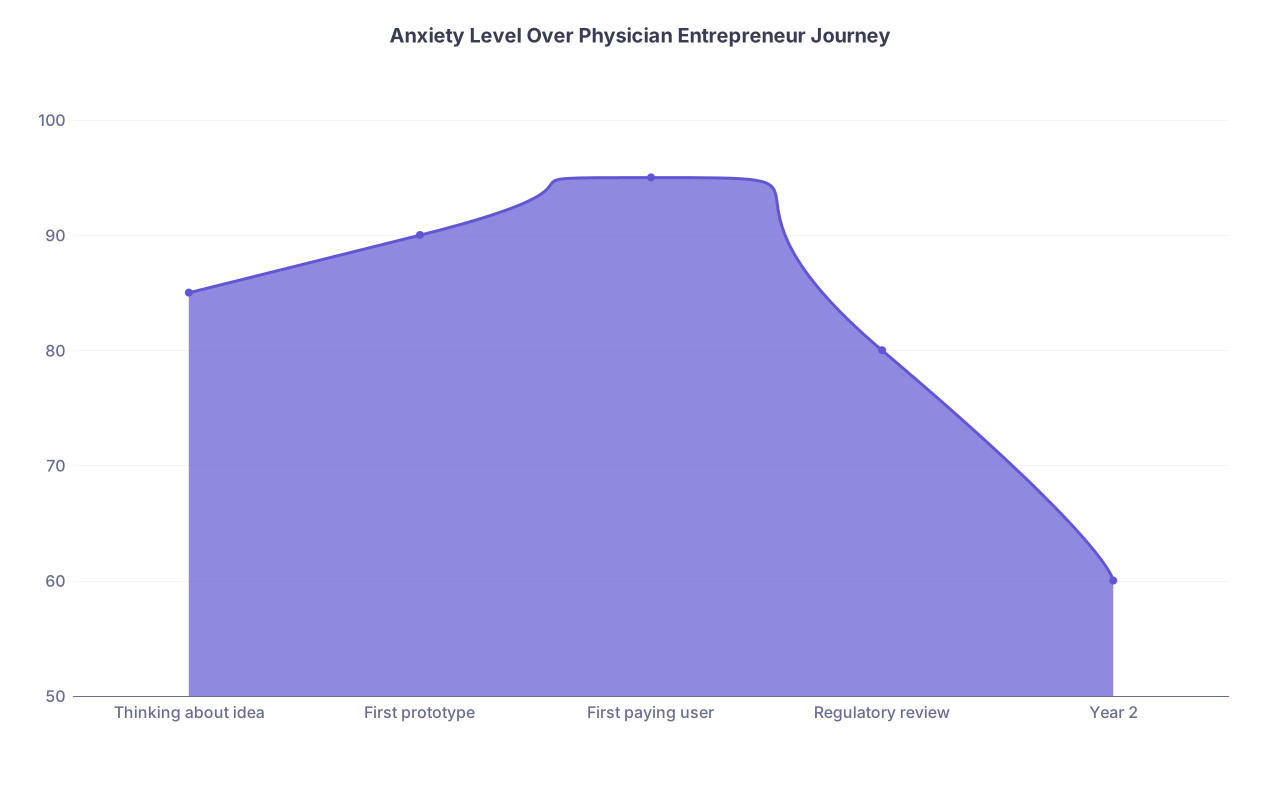
| Category | Value |
|---|---|
| Thinking about idea | 85 |
| First prototype | 90 |
| First paying user | 95 |
| Regulatory review | 80 |
| Year 2 | 60 |
In the beginning, all the risk is imagined. That’s why it feels infinite. There are no concrete problems, just like 20 horrible hypothetical futures stacked on top of each other.
Once you actually start:
- You have specific contracts that a lawyer can look at.
- You have a specific product that a compliance person can review.
- You have specific partners that can say “this clause worries us.”
It’s still stressful. But it’s targetable stress, not this free-floating “I’m probably doing something illegal and don’t even know it” dread.
I’ve watched physician founders survive:
- FTC inquiries
- FDA warning letters
- State AG letters
- Nasty cease-and-desist from entrenched players
They didn’t enjoy it, but it also didn’t instantly end their careers. They hired counsel, responded, negotiated, fixed issues, moved on. Their worst fear (total annihilation) didn’t happen.
Is there a path where things go catastrophically wrong? Yes. It involves:
- Ignoring expert advice
- Being arrogant about rules
- Doubling down when warned
If your whole personality is “I’m terrified of doing the wrong thing,” you are already less likely to be that person.
How to Move Forward Without Being Reckless

| Step | Description |
|---|---|
| Step 1 | Anxious but Interested |
| Step 2 | Define Business Model |
| Step 3 | Identify Legal Touchpoints |
| Step 4 | Hire Health Care Counsel |
| Step 5 | Form Entity and Get Insurance |
| Step 6 | Launch Limited Pilot |
| Step 7 | Monitor Issues and Adjust |
Here’s the move that works better than anything else:
Shrink the surface area of your risk and your product at the same time.
Instead of:
- National telemedicine rollout
- Multi-state complex reimbursement models
- Handling all the PHI on day one
You start with:
- One state or one narrow use case
- A clearer “this is educational, not care” phase
- Partnerships with people who already know the legal terrain
You give your future lawyer fewer things to hate.
You still might get demand letters. You still might get scary-looking emails from compliance officers. But instead of thinking “This is it, I’m done,” you can think, “Ok, this is one specific problem I can pay someone to help me solve.”
And look, if this all sounds like too much? If your anxiety is so high that even a small pilot feels like walking on a legal landmine? It’s okay to not be a founder. You can join someone else’s startup as medical director, advisor, or early clinical hire and let them carry more of the legal load. That’s still playing in the space without putting your name on every document.
FAQ (The Stuff You’re Probably Still Worried About)
1. Can I really lose my medical license over a startup that never treated a single patient?
It’s very unlikely if you weren’t practicing medicine or billing inappropriately. License issues usually come from:
- Fraud (billing, data, false claims)
- Criminal behavior
- Actual patient harm If your startup died at the “idea and prototype” stage and never delivered care or billed payers, boards generally don’t care. Dumb business decisions aren’t usually licensure issues.
2. If my startup gets sued, will my malpractice insurance cover it?
Usually not. Malpractice covers you for clinical care in specific settings under specific policies. Startup-related lawsuits often fall under:
- General business liability
- Professional liability for non-clinical services
- Cyber/privacy insurance
You need to ask an insurance broker who understands healthcare startups and be very clear about what you actually do.
3. Do I personally need a lawyer, or does the company just need one?
Both, sometimes. The company needs a lawyer for:
- Entity formation
- Contracts
- Regulatory issues
You may need your own counsel if: - There’s a dispute among founders
- You’re personally named in a lawsuit
- You’re signing personal guarantees or giving personal warranties
Company counsel represents the company, not you as an individual.
4. Is it safer to stay employed and build the startup on the side?
Legally? Sometimes it’s less safe if:
- Your employment contract has IP or non-compete clauses
- You use employer time, tools, or data
- Your employer can claim ownership over your idea
Many big systems are aggressive about this. If you’re moonlighting as a founder, get your contract reviewed. Don’t just assume “nights and weekends” equals “my stuff.”
5. What’s the single dumbest legal mistake you see physician founders make?
Signing things they don’t understand because they’re too embarrassed to admit they don’t get the legalese. That’s how you end up:
- Giving away IP
- Agreeing to ridiculous indemnity
- Accepting personal liability you never meant to take on
If you don’t understand a clause, that’s the clause that will bite you later. Get it explained before you sign.
6. How much money should I realistically budget for legal help early on?
For a fairly simple early-stage healthcare startup, ballpark:
- Entity formation and basic docs: low thousands
- Initial contract templates and review: low to mid thousands
- Targeted regulatory consults (HIPAA, telemed, Stark/AKS): a few thousand more
You don’t need to spend six figures upfront. But if you’re spending zero on legal in healthcare, that’s not lean—that’s reckless.
Key points to keep in your head when the anxiety spikes:
- The risk is real, but it’s not random. Catastrophe usually follows specific, avoidable choices.
- Boring structures—good entity, solid contracts, right insurance, real counsel—massively lower the chance that any one problem destroys you.
- Your fear of being sued doesn’t mean you shouldn’t build something. It means you’re the exact type of person who should build it carefully, not carelessly.


