

The fear that a startup will “ruin” your chance at traditional practice is massively overblown—and also…not completely crazy.
Both things are true.
You’re not wrong to worry that leaving the normal path (residency → attending job → grind) could make you radioactive to hospitals and groups later. I’ve seen attendings literally say, “We don’t want a tourist. We want someone who’s actually going to stay.”
So let’s talk about this honestly, not in that fake LinkedIn “follow your passion, everything works out” voice.
The Core Question You’re Terrified To Ask Out Loud
You’re really asking:
“If I go do this startup thing for 1–3 years…
- Will hospitals think I’m not serious about medicine anymore?
- Will I be ‘that weird CV’ nobody knows what to do with?
- Is my clinical brain going to rot while I pitch VCs?
- And if the startup flames out, will I be stuck, broke, and unemployable?”
You’re not imagining these fears. I’ve heard versions of this from:
- A cardiology fellow considering joining an AI diagnostics startup instead of a traditional group
- A hospitalist who took a full-time product role at a health tech company, then panicked about credentialing to go back
- An EM doc who cut shifts to almost zero for 2 years for a startup and then struggled to get back into a full schedule
But here’s the uncomfortable truth:
You can go back to traditional practice after a startup. People do it. Every year.
The real question is: under what conditions does it work…
…and under what conditions does it turn into a slow-motion train wreck?
How Traditional Employers Really See Startup Doctors
Let me strip away the fluff and tell you how hospital admins, group partners, and medical directors actually think when they see “Startup Founder / CMO” on a CV.
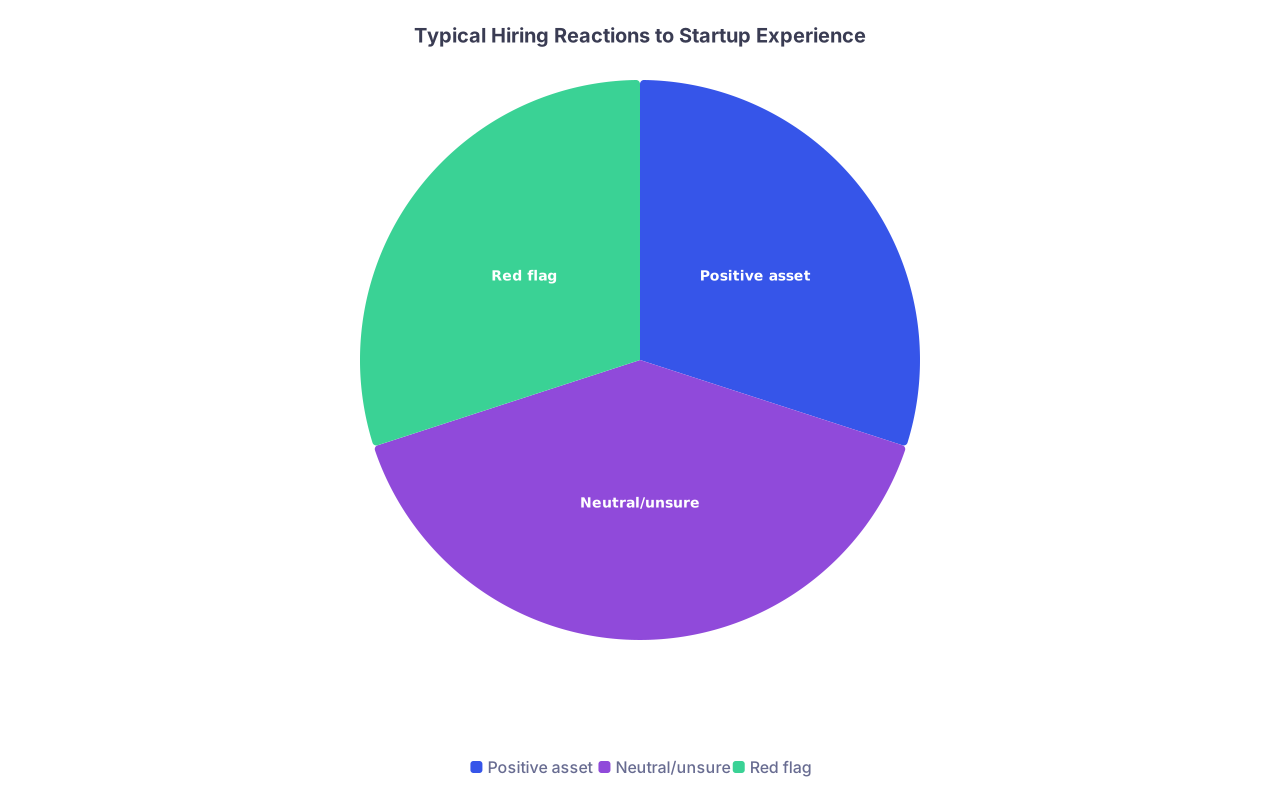
There are basically three gut reactions:
| Category | Value |
|---|---|
| Positive asset | 30 |
| Neutral/unsure | 40 |
| Red flag | 30 |
- “Asset: This is a leader, problem-solver, great for our system projects.”
- “Wildcard: Interesting, but are they rusty? Will they stay?”
- “Red flag: They’re a flight risk. They don’t want to actually see patients.”
You want to be seen as #1. You’re scared of being seen as #3.
And there’s a big gray zone in the middle.
Here’s what pushes you into each category.
Signals that help you go back
These are things that make employers think: this person is a clinician first, startup second.
- You maintained at least some clinical work during the startup (even 2–4 shifts/month)
- You stayed board certified and fully licensed without gaps
- Your startup work is clearly relevant to patient care or healthcare systems
- You can talk about your startup experience in practical, non-buzzword terms: “We reduced readmissions by 8%” instead of “We’re revolutionizing care with an AI-driven, patient-centered synergy”
- Your references include actual clinicians who’ve seen you practice recently
Signals that hurt you
These flip you into the “we’re not sure about this one” pile:
- Multi-year complete clinical gap with zero moonlighting, zero locums
- Letting licenses or board certification lapse because “I thought I was done with medicine”
- Startup work totally unrelated to clinical care (like generic software or non-health sectors)
- Talking like you’ve been living in VC pitch land: “We’re building a disruptive, scalable platform” while the medical director just wants to know if you can manage sepsis and not disappear in 6 months
- Obvious “I’ll bail as soon as my next startup idea hits” vibes
So the answer isn’t “startup = bad” or “startup = awesome differentiator.”
The answer is: startup + how you structure it and explain it = make or break.
The Clinical Rust Problem (Your Worst Nightmare)
Your worst-case fear is probably this:
You spend 2–3 years doing startup work.
You come back.
You’re slower. Less confident. Behind on guidelines.
Someone codes. You freeze.
Everything you secretly dread becomes real.
Here’s the harsh part: clinical skills do degrade if you step away fully. That’s not drama; that’s reality. I’ve watched:
- An EM doc who took 2 years off struggle massively with flow and procedures when they returned
- A hospitalist who forgot basic order sets and local workflows and felt like an intern again
- A subspecialist who felt dangerously behind on new therapeutics and trials
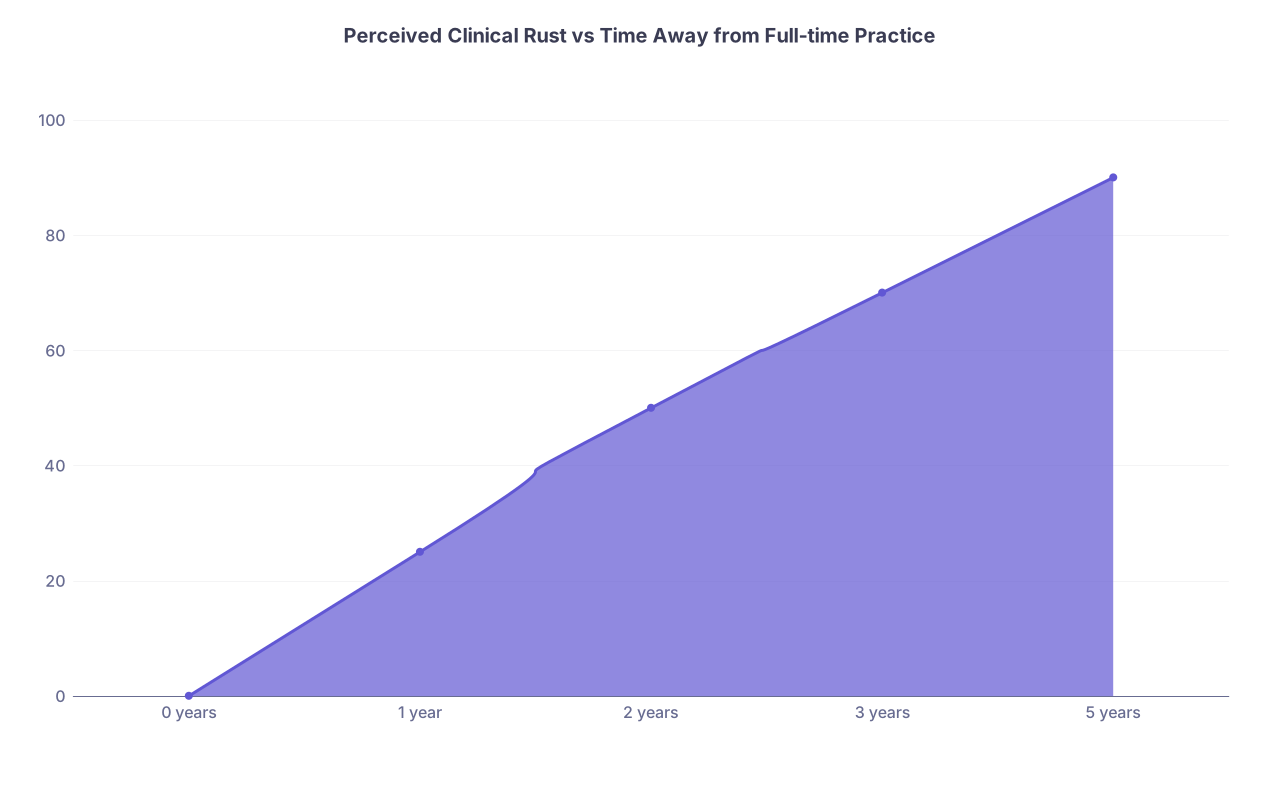
But here’s the hopeful part: this is predictable and you can plan around it.
| Category | Value |
|---|---|
| 0 years | 0 |
| 1 year | 25 |
| 2 years | 50 |
| 3 years | 70 |
| 5 years | 90 |
That line is what it feels like. Not a science graph. Just the anxiety curve.
The longer you’re fully out, the louder your brain screams, “You’re not a real doctor anymore.”
To keep this from becoming unmanageable, there are a few things that actually work:
- Keep 1 foot in: Even 1–3 days/month of clinical work makes a huge difference mentally and on paper
- Shadow or do a mini re-entry period before going full-time again (yes, even if it feels humiliating)
- Target jobs that expect a ramp-up, like hospitalist groups familiar with new grads or people returning from research, or staff model groups with structured onboarding, not “you’re solo nights next week, good luck”
Re-entry usually feels awful for the first 4–8 weeks. Then it gets rapidly better.
Everyone I’ve seen go back says some version of, “I thought I’d forgotten everything, but the pattern recognition came back faster than I expected.”
Your anxiety tells you the rust is permanent.
Reality is usually: annoying but fixable, if you plan for it.
The Credentialing & “Gap” Landmines
This is the boring, bureaucratic part that can destroy you if you ignore it while chasing your Series A.
There are three main landmines:
- Unexplained gaps in clinical work on your CV
- Lapsed licenses / DEA / board certification
- Case logs and references that are too old or too thin
Hospitals are deeply suspicious of gaps and missing data. They assume:
- Lawsuit.
- Impairment.
- Performance problems.
You and I know your “gap” was you killing yourself 80 hours/week on a startup. But if it’s not documented and framed properly, they fill in the worst possible story.
| Factor | Startup Path (Good) | Startup Path (Risky) |
|---|---|---|
| Clinical work | 2–4 shifts/month maintained | 0 shifts for 2+ years |
| Licensure | Active, continuous | Lapsed, late renewals |
| Board certification | Up to date, CME tracked | Expired, no recent CME |
| References | Recent clinical supervisors | Only startup cofounders |
| Gap explanation | Clearly documented as startup | Vague “personal time” |
If you’re even thinking startup, start doing these things now:
- Keep your licenses in good standing. Don’t play games with this.
- Track CME. It helps both boards and your own confidence.
- Save proof of clinical work: schedules, case logs, evaluations.
- Keep at least two clinical references relatively fresh.
You future-you will be extremely relieved you did.
How Long Is “Too Long” Away From Traditional Practice?
This is the question everyone dances around but you’re actually afraid to ask. So let’s hit it directly, even if the answer isn’t clean.
Is there a hard cutoff where you can’t go back?
No. I’ve seen people return after 5–7 years out. Painful, but possible.
Is there a point where it gets exponentially harder?
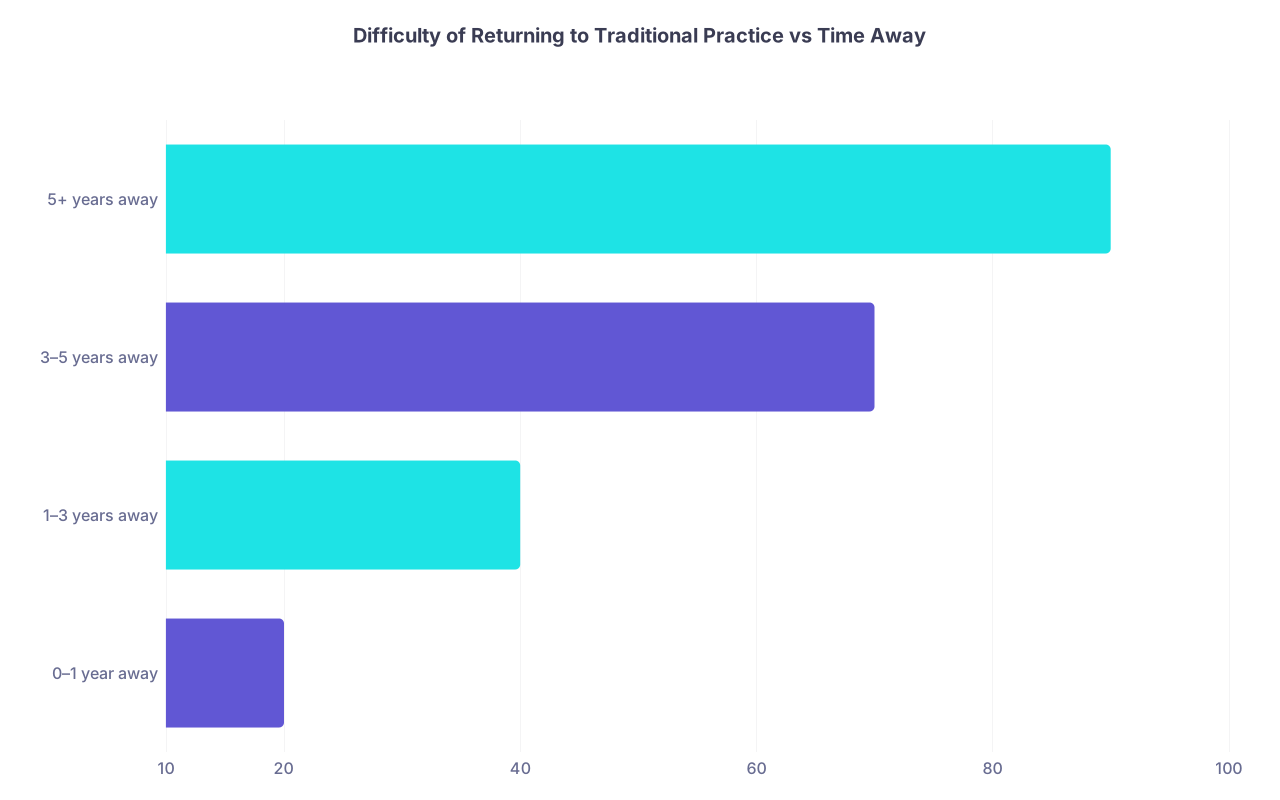
Yes. Rough ranges, based on what I’ve seen and heard from medical directors:
| Category | Value |
|---|---|
| 0–1 year away | 20 |
| 1–3 years away | 40 |
| 3–5 years away | 70 |
| 5+ years away | 90 |
0–1 year away
Feels like a weird sabbatical. Almost no one cares, especially if you stayed clinically active part-time.1–3 years away
Very doable if you kept a toe in and stayed certified. Expect more questions, but most reasonable employers will get it.3–5 years away
This is where people start saying things like, “We’ll need a structured re-entry plan,” or “We’re concerned about recent clinical experience.” Not impossible, but you need a strong story and possibly more hand-holding.5+ years away
Now you’re more like a re-entry candidate than a straightforward hire. Some places will flat-out say no. Others will want proctoring, mentorship, maybe even formal refreshers. Still not impossible, but you’ve made yourself a project.
If you’re planning a startup, a very conservative, anxiety-friendly rule of thumb is:
- Try not to go more than 2–3 years without at least part-time clinical work.
- If you’ve already crossed that line, don’t spiral—just accept you’ll probably need extra steps to come back.
How to Talk About Your Startup Without Freaking Employers Out
You know what makes admin types nervous? When you sound like you’re 60% doctor, 40% TED Talk.
They don’t want to hear a pitch deck. They want to hear:
- Are you safe?
- Are you staying?
- Do you actually want to be in the trenches, or is this a layover?
So you translate your story into a language they understand.
Instead of:
“I co-founded a disruptive AI startup to transform care delivery.”
Try something like:
“I spent two years working on a care coordination platform that reduced no-shows and improved follow-up. I kept up a few shifts a month during that time and realized I really missed direct patient care. I’m now looking for a stable, long-term clinical role where I can bring both my bedside experience and the systems skills I’ve built.”
Because what they really want to know is:
- “Are we just your rebound because your startup died?”
- “How soon until you quit and chase the next shiny thing?”
- “Will you actually show up for night float and weekends?”
If you can honestly say (and act like):
“I’ve done the startup thing. I learned a ton. I want to anchor my career in clinical work now,”
that goes a long way.
The Emotional Side Nobody Talks About
Let’s skip the logistics for a second.
The part that really eats people alive isn’t licenses or case logs. It’s identity whiplash.
You go from:
- Founder, CMO, “visionary,” giving talks, having a slide with your name on it
to - Pager, notes, call, being one attending in a sea of attendings
There’s grief in that.
Even if you want to go back.
And there’s shame too:
“I failed at the startup, so I’m crawling back to medicine.”
Here’s the blunt truth: most startups don’t work. That’s not a personal moral failing. That’s math. The people quietly going back to clinical work after startup attempts are way more common than the LinkedIn success stories. They just don’t post about it.
If you do go back: you’ll need a period where you let yourself mourn the version of your life where the startup made it. That doesn’t mean you were wrong to try. It means you’re human.
So…Can You Ever Truly Go Back?
Yes. You can. Many do.
But if you want to keep your future options open while still taking the startup risk, here’s the no-BS version of what I’d do if I were in your shoes:
- Decide right now that you’re not letting your license or boards lapse. Non-negotiable.
- Lock in some kind of recurring clinical work—moonlighting, per-diem, telemedicine, locums—even if it’s tiny.
- Keep receipts: CME, case logs, schedules, recent clinical references.
- Put a soft timebox in your head: “If after ~2–3 years this hasn’t stabilized enough to support me, I’m going to lean back into traditional practice, not spend 7 years in limbo.”
- Mentally rehearse your “return story” so you don’t sound defensive when someone asks, “Why the startup detour?”
That doesn’t guarantee an easy landing. But it keeps you solidly in the “plausible return” lane, not the “we have no idea what to do with you” lane.

| Step | Description |
|---|---|
| Step 1 | Residency or Early Attending |
| Step 2 | Join Startup Full or Part Time |
| Step 3 | Easier Return Options |
| Step 4 | Harder Reentry Path |
| Step 5 | Traditional Practice Job |
| Step 6 | Reentry Plan or Extra Training |
| Step 7 | Startup Succeeds |
| Step 8 | Hybrid Career or Nonclinical |
| Step 9 | Maintain Some Clinical Work |
FAQ (You’re Probably Still Thinking These)
1. If my startup fails, will programs or employers secretly judge me as a failure?
Some people will. Let’s not pretend everyone is enlightened. But most reasonable clinical leaders care more about: are you competent, safe, and planning to stay? I’ve heard more respect than contempt in practice when someone says, “I took a risk, learned a lot, now I want to be fully back in patient care.” Your job isn’t to win over every skeptic. It’s to be very clear, in your CV and conversations, that the startup was a chapter, not proof that you’re flaky or half-committed.
2. What if I’ve already been out of full-time clinical work for 3–5 years?
You’re not doomed, but you probably need an intentional re-entry plan. That might look like: starting with a lower volume/acuity setting, arranging shadowing or supervised shifts at the beginning, doing focused CME on updated guidelines, and being upfront with employers that you want and expect a ramp-up period. Some systems and specialties are way more re-entry-friendly than others (hospitalist medicine and primary care generally more so than ultra-procedural fields).
3. Will doing a startup hurt me if I later want an academic job?
It can actually help, if you frame it well and stayed even minimally involved in academic work (teaching, small QI projects, any publications). Academic centers love words like “innovation,” “implementation,” “systems improvement”—as long as you can still function on the wards. Where it hurts is if you vanish completely for years, come back clinically rusty, and have no scholarly output at all. If academia is even a distant possibility, keep tiny threads alive: a teaching session here, a poster there, some collaboration with your old department.
4. What’s one concrete thing I should do today if I’m seriously considering a startup?
Open your CV right now and add a “Clinical Activity (Ongoing)” section at the bottom. Then commit to filling it with something consistent—per-diem shifts, telehealth sessions, urgent care weekends—before you jump fully into startup mode. That one section becomes your insurance policy when you eventually need to convince a medical director, “Yes, I did a startup. But I never stopped being a doctor.”
Now—actually open that CV and look at your last verifiable clinical date. Does it tell a story you’d be comfortable explaining in two years? If not, fix that before you sign anything with the startup.


