
Last year I watched a brilliant interventional cardiologist walk out of a Series B board meeting white as a sheet. His “5%” founder stake—what he thought would set up his family for life—had quietly turned into a diluted, heavily preferred, liquidation‑last crumb worth almost nothing in any realistic exit.
He wasn’t dumb. He was simply outgunned. He’d accepted equity terms no seasoned physician founder would even entertain for ten minutes.
You’re post‑residency, maybe in your first or second attending job, and someone is dangling “meaningful equity” to join or start a medical startup—AI diagnostics, virtual care, device, you name it. The numbers sound huge. The documents look dense. And this is where most physicians get fleeced.
Let me walk you through what the experienced physician founders refuse to accept—no matter how shiny the pitch deck looks.
The First Lie: “You’ll Own X% of the Company”
The most common scam isn’t illegal. It’s structural.
Early on, a hospital exec, a non‑clinical cofounder, or a seed investor tells you: “We’ll give you 5%.” Or 2%. Or 10%. You mentally multiply that by a hypothetical $500M exit and decide you’re basically done.
But here’s what the seasoned founders know: that raw percentage is almost meaningless unless you pin down what kind of equity, on what base, with what protections, and what dilution expectations.
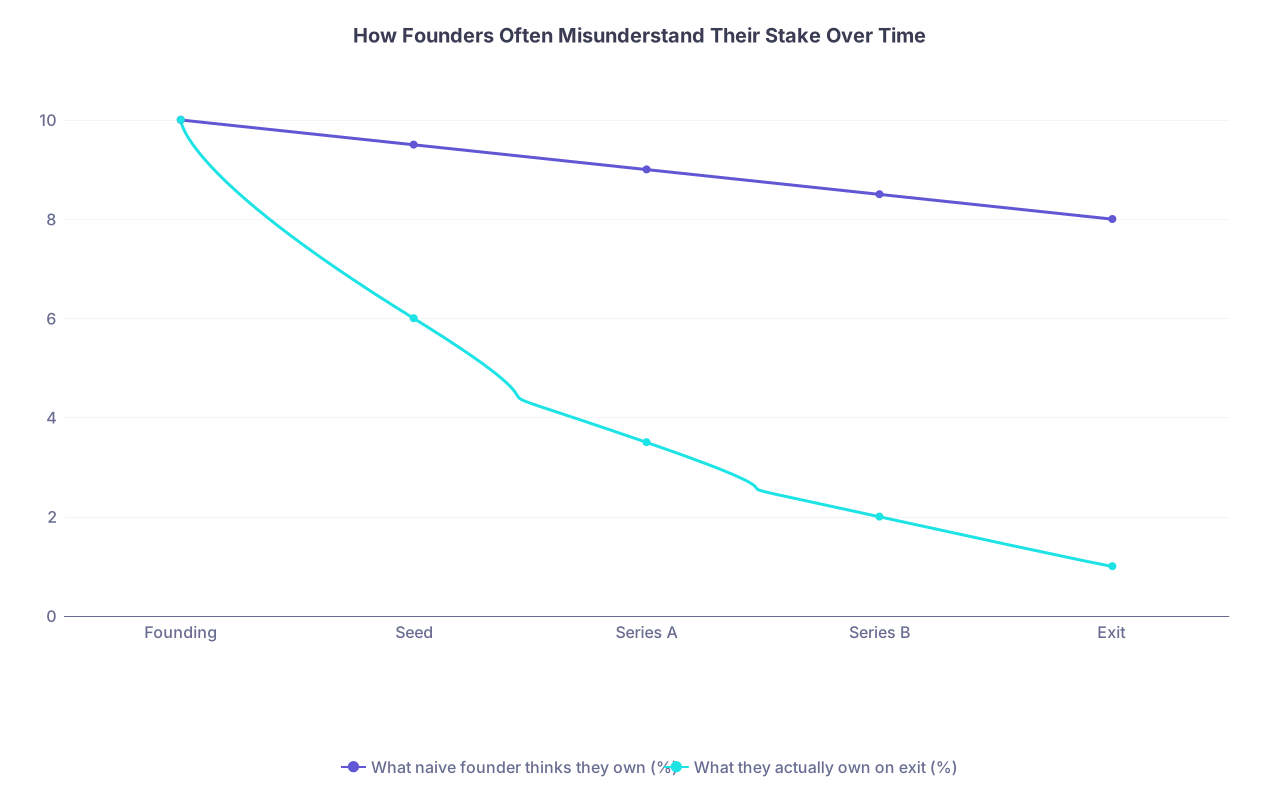
| Category | What naive founder thinks they own (%) | What they actually own on exit (%) |
|---|---|---|
| Founding | 10 | 10 |
| Seed | 9.5 | 6 |
| Series A | 9 | 3.5 |
| Series B | 8.5 | 2 |
| Exit | 8 | 1 |
What seasoned physician founders never accept here
They do not accept a naked statement like “you’ll own 5%” without:
Cap table transparency.
They want to see the full cap table now and pro forma cap tables for at least the next round. If you cannot see every class of stock and every option pool, that’s a red flag.Ambiguity around type of equity.
Common stock vs options vs RSUs vs phantom equity. Real founders do not accept “We’ll figure out the paperwork later.” They know that “5% as options” at a high strike price is not the same as “5% common stock at par value.”No anti‑dilution expectations at all.
They don’t demand magic “no dilution ever” (that’s not how startups work), but they do refuse situations where their role is “co‑founder in name only” while their stake dilutes to noise with every new pool and round.

Here’s what the savvy crowd does instead: they ask for a fully diluted percentage after the current option pool, and they expect realistic modeling of what happens at Seed, Series A, and Series B. If that modeling isn’t available, they hit pause.
They’d rather walk away than be the “medical face” of a company where they end up as a 0.4% common holder in a stack of aggressive preferences.
Common Stock That’s Actually Worthless (and Why Pros Refuse It)
Most physicians are offered common stock or stock options. Founders and employees hold common. Investors hold preferred. On paper, that’s normal. In practice, the terms of preferred often make your common effectively junk.
The twist: in healthcare, exits are often messy, acqui‑hires, or down rounds under pressure from regulatory or reimbursement shifts. That’s where structure matters.
Liquidation preferences: the quiet equity assassin
The experienced physician founders read the liquidation preference section like a hawk because they’ve seen how this plays out.
| Scenario | Exit Value | Investor Preference | Investor Gets | Common Pool (Founders + Team) |
|---|---|---|---|---|
| Clean 1x | $100M | 1x non-participating | $30M | $70M |
| Aggressive 2x | $100M | 2x participating | $60M+ | <$40M |
| Downside exit | $40M | 1x participating | $30M+ | Crumbs |
What they won’t accept:
Multiple liquidation preference (2x, 3x) without negotiating hard
Seasoned founders push back on anything beyond 1x like it’s a personal attack. Because it is—on your future payout.Participating preferred without a cap in a low‑margin, regulated space
“Participating” means investors get their money back and share the upside with common. In a big tech rocketship, maybe you tolerate that. In a healthcare startup with uncertain reimbursement and long sales cycles? That can nuke the common stack completely.Stacked, senior preferences in every round
You’ll see later‑stage investors want “senior” preference on top of earlier ones. If you aren’t watching, you end up last in line behind multiple classes of preferred, each with their own guaranteed payout before you see a dime.
The physician founders who’ve been through one bad exit never accept “Sure, the investors need downside protection, just sign here.” They insist on simple, clean preferences as much as possible. If the investor won’t budge, they adjust how much time and personal risk they’re willing to put in.
Vesting Traps: The “Founder” Who Actually Walks Away With Nothing
Another ugly surprise: the founder who’s treated like an employee with brutal vesting terms, cliff, and one‑way acceleration rules.
You’d be shocked how many physicians hold glossy business cards with “Co‑Founder & Chief Medical Officer” while sitting on unvested options that can be yanked the minute they push back on the CEO.
What the veterans refuse
They do not accept:
Four‑year vesting with a one‑year cliff and no credit for past work
If you’ve already built algorithms, brought in key pilot sites, or developed IP before the company even incorporated, seasoned founders negotiate vesting credit or a chunk granted as fully vested.No acceleration on change of control
Here’s the nightmare: company sells, acquirer keeps the tech, dumps you 3 months post‑acquisition “without cause,” and your unvested equity evaporates.Veteran physician founders push for:
- Double‑trigger acceleration (some or all unvests if there’s a change of control and you’re terminated without cause or you resign for good reason).
- At least partial single‑trigger on very early-stage deals where they are central to the IP.
Termination “for cause” defined so broadly it’s basically arbitrary
I’ve seen “cause” defined as “failure to meet performance objectives as defined by the board.” Translation: if you become inconvenient, they can fire you for cause and strip unvested equity. Pros hammer that clause down to real misconduct: fraud, felony, gross negligence.

| Step | Description |
|---|---|
| Step 1 | Join startup |
| Step 2 | Low leverage - reconsider |
| Step 3 | Contribute over years |
| Step 4 | Keep vested only |
| Step 5 | Partial payout |
| Step 6 | Maximize equity payout |
| Step 7 | Vesting terms fair |
| Step 8 | Company exit |
| Step 9 | Acceleration present |
The naïve physician thinks “If the company does well, I’ll be taken care of.” The experienced founder assumes the opposite: “If I do not hard‑wire protection into the documents, nobody is coming to rescue me later.”
Board and Control: Equity Without Power Is Just Decoration
Here’s the thing sophisticated founders understand that most physicians miss: 5% of a company with zero governance rights and no information access is very different from 5% with a board seat and veto power over major dilution.
You will be offered “advisory board” titles like candy. Those usually come with peanuts and no control. Fine, if that’s what you want. But if you’re a true founder, that’s not acceptable.
What seasoned physician founders won’t accept on control
No board seat or formal governance role when they’re core to the IP and the story
If your name, your reputation, your network, and your research are front and center in every pitch deck, and they still won’t put you on the board or at least as a board observer? Veterans walk.No protective provisions for founder common
Major dilution events, sale of the company, option pool expansions—these shouldn’t be able to happen without at least some check from founders. The pros fight for protective provisions or at minimum, blocking rights on the worst abuses.Being outvoted by a bloc of investors on every decision that matters
Once preferred shareholders control the board, you’re riding shotgun at best. That’s tolerable if your equity is large and economically protected. It’s not tolerable if you’re the face of the company with a tiny, fragile slice.

The sophisticated physician founders say it plainly: “If you want me to carry the clinical credibility of this company, I’m not doing it from the kiddie table.”
The Salary–Equity Trade: What Pros Refuse to Subsidize
This is where hospitals and health systems love to play games.
You’re offered a “Chief Medical Officer” or “Clinical Innovation Lead” role with modest equity in a spin‑out or internal startup. The pitch: “We can’t pay you full market attending salary, but you’ll own part of the upside.”
The seasoned founders see exactly what’s happening: the institution is trying to buy a startup using your underpaid labor as capital.
Red lines veterans don’t cross
Below‑market salary and weak equity
They will take a pay cut only for founder‑level equity with strong terms. They do not accept “50% of market salary for 1% options fully diluted” in a company controlled by a health system that can replace them at will.Sweat equity with no written grant
I’ve seen physicians work 10–20 hours/week for months “with the promise of equity once we raise.” Veteran founders treat that as a joke. They insist on a written equity grant with vesting, even if subject to board approval, before committing meaningful time.Non‑competes that handcuff them while they own almost nothing
If the institution or startup wants draconian non‑compete or IP assignment language and refuses to give meaningful equity, veterans walk. They know giving away their optionality is worth far more than a token slice.
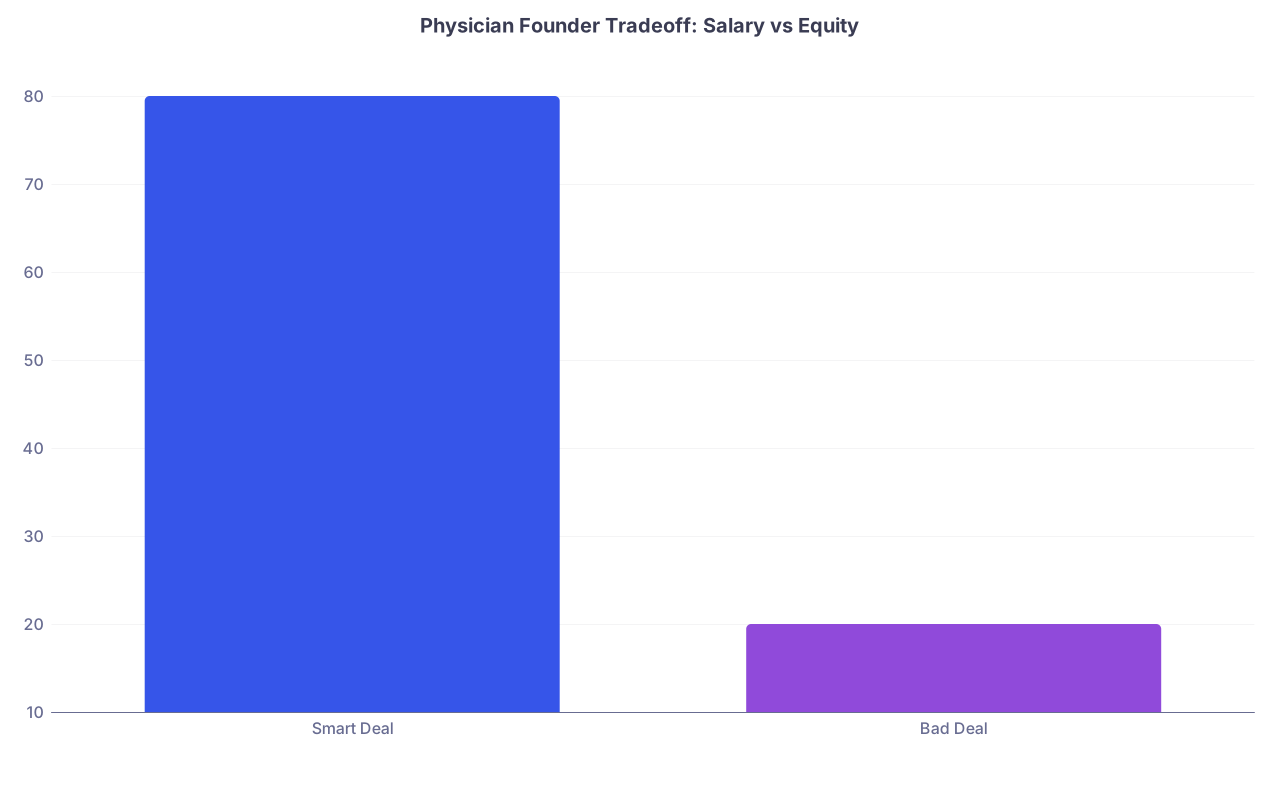
| Category | Value |
|---|---|
| Smart Deal | 80 |
| Bad Deal | 20 |
Interpretation: in a “smart deal,” overall expected compensation (cash plus realistic equity) is closer to 80% of full market attending comp with real upside. In bad deals, you’re at 20% of what you could have made clinically with almost no chance of a life‑changing payout.
Hospital- or University‑Backed Startups: Special Landmines
Academic physicians get hit hardest here.
You bring the idea, maybe even the initial data and prototype, to your department chair. They “love it.” Next thing you know, the tech transfer office and some external VC are structuring a NewCo and telling you what your equity will be.
Seasoned physician founders inside academia play this game differently.
What they don’t accept from institutions
Zero or tiny founder equity when they contributed core IP and sweat
If you’re the PI on the key patents or you built the early prototype on your nights and weekends, seeing 1–2% while the university and a payor‑friendly VC split the rest is a slap. The pros push back early—before IP is completely assigned.No say in licensing negotiations
They insist on being at the table, or at least properly represented, when the license terms are drafted. They know license terms can make or break the startup before it starts—royalty rates, milestone payments, and reversion rights all matter.Automatic assignment of all “related” IP for years
Tech transfer offices love sweeping language that vacuums up anything “related to your field” you might invent over some period. Sophisticated founders get that language narrowed aggressively.
| Issue | Institution Priority | Savvy Physician Priority |
|---|---|---|
| Equity split | Preserve institutional stake | Fair founder economic upside |
| IP control | Maximize future licensing | Freedom for future innovations |
| Time commitment | More unpaid faculty effort | Protected, compensated time |
The young physician thinks, “This is how it’s done, I should just be grateful.” The seasoned founder thinks, “This is negotiable—and if they won’t negotiate, I can take my next idea elsewhere.”
The “Strategic Advisor” Hustle
Here’s a quiet corner of equity negotiations that burns a lot of physician reputations without anyone talking about it.
You’re invited to be a “Strategic Advisor” or join a “Medical Advisory Board.” They wave 0.05–0.25% equity at you (sometimes less), spread over years, with vague expectations like “monthly calls” and “occasional intros.”
What experienced physician founders refuse:
Equity without clarity on expectations
If you’re risking your name and network, you want clear terms: how often you’ll meet, what you’re expected to do, what compensation you get (cash, equity, both), and what happens if either side wants out.No indemnification or D&O coverage when advice crosses into governance
If they start asking you to approve trials, protocols, or pricing strategies that could be litigated later, veterans want to see that their liability is covered. If there’s no D&O policy and no indemnification clause, the equity isn’t worth the personal risk.Companies that want your logo on their slide but no real voice
If you’re just ornamentation, the equity should be priced like that—small, clean, and no conflict. If they want to tell investors “Dr. X is core to our strategy,” you negotiate up.

The seasoned folks treat advisory equity as a contract, not a favor. They don’t accept messy, verbal, or “we’ll send you something later” arrangements.
How Savvy Physician Founders Actually Negotiate
Here’s the dirty little secret: the most seasoned physician founders are not necessarily the best technical negotiators. They’re just unwilling to be naive.
They do a few key things religiously:
They hire a startup‑savvy attorney who has specifically done founder‑side work in healthcare. Not the malpractice lawyer their group uses. Not a friend from med school who “went into law.” Founder‑side, healthcare‑literate counsel.
They anchor high on equity when they’re truly core. If the tech cannot exist without their clinical know‑how, data access, or IP, they ask for numbers that make non‑physician founders flinch. And then they negotiate down from there.
They tie time to equity. If you want them two days a week, they price that as both lost clinical income and sweat equity. They don’t let anyone pretend their nights and weekends are free.
They refuse exploding offers meant to shut down thoughtful review. Any investor or cofounder saying, “We need you to sign this within 48 hours or the opportunity is gone” gets mentally filed under “Not trustworthy.”

| Step | Description |
|---|---|
| Step 1 | Interest in startup |
| Step 2 | Request cap table and docs |
| Step 3 | Hire founder side lawyer |
| Step 4 | Define time and role |
| Step 5 | Propose equity and cash mix |
| Step 6 | Renegotiate or walk |
| Step 7 | Sign and execute |
| Step 8 | Terms fair |
The difference is not that they never compromise. They compromise a lot. But they do not compromise blindly.
Quick Reality Check: What Actually Moves the Needle
You don’t need to become a securities lawyer. But you do need to care—specifically—about a few levers that seasoned physician founders watch like hawks:
- Fully diluted equity percentage after current and planned pools
- Type of equity (common vs options; preferred only in rare cases for founders)
- Vesting schedule, cliff, and acceleration in change of control
- Liquidation preference stack and participation
- Board role and/or protective provisions
- Salary vs equity trade and who is really funding the company—investors or your underpaid labor
- IP assignment and institutional rights (if you’re in academia or a large system)
Get those mostly right, and you’ll survive a lot of smaller imperfections. Get them wrong, and you can work like a dog for years and walk away with less than a year of attending income.
FAQs
1. What’s a reasonable equity stake for a physician cofounder?
If you’re a true cofounder—meaning you’re involved from the start, central to the idea or IP, and committing serious time (at least 20–30% FTE)—I routinely see physician founders at 10–30% of the common at incorporation, depending on how many cofounders there are and who’s doing what. Anything below low single digits for a real cofounder is suspect. For an early CMO joining a seed‑stage company later, 1–5% is more common. Below 1% at seed for a core role? That’s usually too low.
2. Are stock options always worse than restricted stock for physicians?
Not always, but options are often less favorable for mid‑career physicians. You’re not a 22‑year‑old engineer living on ramen; you care about taxes and cash flow. Early restricted stock at a low valuation can let you lock in long‑term capital gains. Options, especially with a high strike price, may end up underwater or too expensive to exercise. Seasoned founders ask their lawyer and a tax pro to run scenarios before they decide.
3. Should I ever accept equity with no salary as a physician founder?
Only if: (1) the equity is truly founder‑level (not token), (2) you can survive financially without the salary for a defined runway, and (3) you have strong governance and legal protections. Most physicians can’t or shouldn’t go to zero salary; they structure a part‑time clinical role and part‑time startup work. Pros see pure equity‑only deals as high‑risk gambles that must come with corresponding upside.
4. How much dilution is “normal” for a healthcare startup?
Rough ballpark: from founding to Series B, total founder and employee common might get diluted 30–60%, depending on how much capital you raise and how aggressively investors price risk. Seasoned founders plan on ending up with 30–50% of their original stake by the time of a serious exit. The key is: that remaining stake must still be meaningful, and preferences shouldn’t have gutted the economics.
5. When is it actually smart to walk away from an equity offer?
Veteran physician founders walk when three things line up: (1) tiny or fragile equity (sub‑1% fully diluted with harsh terms), (2) heavy time or reputation demands (they want you as the public face or major operator), and (3) no real governance or legal protection. If all three are true, you’re not a founder or partner; you’re a marketing asset with liability. They’d rather build their own thing—or wait for a better offer—than be the clinical window dressing on someone else’s cap table.
Years from now, you won’t remember every clause in these documents, but you will remember whether you treated your time, expertise, and reputation as cheap or as scarce assets. Equity negotiations are just the written record of how much you believed you were worth.