
The biggest lie holding physician-founders back is this: “I cannot build a MedTech company because I do not have a tech background.”
Wrong. You can. But only if you stop pretending you will “pick up the tech later” and instead follow a deliberate playbook for building the right team.
You are post‑residency, staring at the job market, and you see the same problems every day: broken workflows, useless EHR clicks, preventable errors, unacceptable delays. You have ideas. Maybe you even have a prototype on paper.
What you do not have:
- An engineering degree
- Time to “learn to code” properly
- A ready-made tech cofounder
That is not fatal. It just means you must treat team-building like a clinical protocol, not a side quest.
Here is the step‑by‑step playbook.
1. Get ruthlessly clear on the problem before you hire anyone
If you start by “looking for a developer,” you are doing this backwards.
You first need a problem statement that is specific enough that a technical person can actually say, “Yes, I know how to build that,” or “No, that is three projects disguised as one.”
Write this down. Literally.
1.1 Define the clinical problem like a consult note
Use this structure:
Patient/setting
- Who exactly are you serving?
- Example: “Hospitalist teams in community hospitals (100–300 beds) using Epic.”
Current workflow
- Bullet the steps. No hand‑waving.
- Example:
- Nurse pages hospitalist when vitals trigger
- Hospitalist logs in to EHR, clicks through 8 screens
- Orders entered, but no real‑time prioritization across patients
Concrete pain
- Time wasted, money lost, risk added. Be specific.
- “Average of 45 minutes per shift lost to manual risk‑sorting.”
- “Missed early sepsis flags documented in 3 of 20 chart reviews.”
Your hypothesis for a solution
- Short, clear, non‑technical.
- “A tool that surfaces the top 5 highest‑risk inpatients to the hospitalist every hour, inside their existing EHR workflow.”
If you cannot articulate this in one page, you are not ready to recruit a tech team. They will either build the wrong thing or walk away.
1.2 Decide the simplest possible first product
Not “the platform.” Not “the ecosystem.” Your MVP (minimum viable product).
Ask yourself:
- If I could only solve one piece of this in the next 6 months, what would create undeniable value?
- What can be tested with 10–20 users, not 10,000?
Examples of good MVP scopes:
- A simple web dashboard that ranks inpatients by sepsis risk for a single hospitalist team
- A mobile app that lets home-health nurses capture wound images and structured data, then sends a standardized summary to the supervising physician
- A browser extension that streamlines prior authorization letters for a single high‑cost drug class
You are not picking tech. You are constraining the problem so the tech people can later pick sane tools.
2. Translate “I need tech people” into actual roles
Most physician-founders make the same mistake: they post “Looking for a technical cofounder” and then have 8 random coffee chats that go nowhere.
You do not need “a tech person.” You need specific roles.
| Role | Primary Responsibility |
|---|---|
| Product Lead | Translate clinical problem to features |
| Software Engineer | Build the actual product |
| UX/UI Designer | Make it usable in real clinical flows |
| Data/ML Specialist | Handle algorithms, models, analytics |
| Fractional CTO | Set technical direction and standards |
You will not hire all of these as full‑time employees on day one. That would be insane and expensive. But you must understand what each does so you can combine them intelligently.
2.1 Product lead (often you, at the beginning)
Someone has to sit between “doctor brain” and “developer brain.” Early on, that is you.
Your responsibilities:
- Write clear user stories (e.g., “As a hospitalist, I want to see my top 5 risk patients when I log in, so that I know who needs attention first.”)
- Decide what not to build in version 1
- Coordinate feedback from early users and translate it into changes
If you find a strong product‑oriented cofounder later, great. For now, accept that this is your job.
2.2 Software engineer vs “guy who can code”
You want someone who can:
- Ship a working prototype in 6–12 weeks
- Make basic architecture decisions that will not collapse at 100 users
- Communicate like a normal adult, not like a Stack Overflow comment thread
Ignore anyone who:
- Wants to rewrite your entire idea in Web3 or blockchain
- Talks more about frameworks than about user problems
- Treats healthcare constraints (HIPAA, security, downtime) as “details”
2.3 Data/ML: when you actually need it
If your first product is:
- A smart triage tool
- A predictive risk score
- An image interpretation aid
…then yes, you need data and ML expertise. But be honest: Many physician ideas are glorified workflow tools. That is fine. Do not invent AI just to sound fundable.
You can:
- Start rule‑based (simple scoring systems, thresholds)
- Use ML later once you have real data and proof of demand
If you are doing regulated SaMD (software as a medical device) based on an algorithm, that is a different beast. You must bring in serious expertise early. Not a weekend Kaggle hobbyist.
3. Know your constraints: time, money, and risk comfort
You are post‑residency. Maybe you have some attending income. Maybe you have loans the size of a mortgage. Your team‑building strategy depends on your situation.
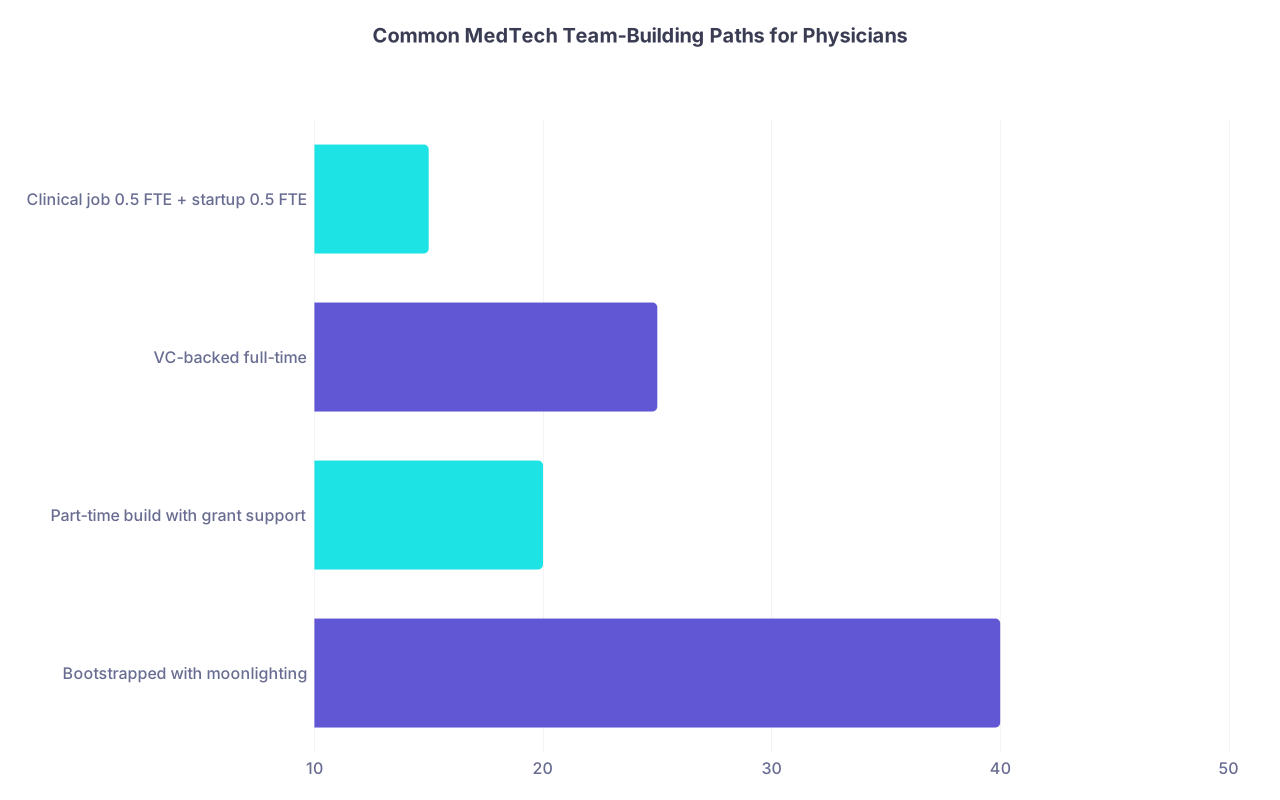
| Category | Value |
|---|---|
| Bootstrapped with moonlighting | 40 |
| Part-time build with grant support | 20 |
| VC-backed full-time | 25 |
| Clinical job 0.5 FTE + startup 0.5 FTE | 15 |
These paths are real. I have seen all of them.
3.1 Be explicit about your runway and risk
Write down:
- How many months of living expenses you have saved
- How many hours per week you can realistically give to the startup
- Whether you are willing to cut clinical work to 0.5 FTE in 12–18 months
Then pick a matching approach:
Very limited cash, full‑time attending job
- Use contractors, no full‑time hires
- Build extremely narrow MVP
- Target pilots that can generate early revenue or strong grant narratives
Some savings + willing to reduce clinical time
- Look for a true technical cofounder with equity
- Avoid over‑outsourcing (you want internal knowledge)
Backed by early‑stage investors
- Hire a lead engineer or fractional CTO quickly
- Still start lean—burning money on a huge team before product‑market fit is how startups die
4. Where to actually find your MedTech team
Stop yelling into the LinkedIn void. You need targeted channels.
4.1 Go where healthcare‑curious tech people already are
Concrete places:
- Digital health hackathons (HLTH, MIT Hacking Medicine, local university events)
- Healthtech meetups in your city
- Online communities:
- Indie Hackers (search for “health”, “EHR”, “clinical”)
- Specific Slack/Discord groups like “Health Tech Nerds”, “Clinician coders”
When you show up, do not say, “I have an idea, who wants to build it?”
Instead:
- Bring your 1‑page problem statement
- Bring simple sketches of the MVP
- Be ready to say exactly what you bring (clinical insight, access to pilot sites, domain credibility, willingness to hustle on regulatory/reimbursement)
4.2 Tap academic and hospital ecosystems
You have access non‑clinical founders would kill for:
- Residents who code
- Informatics fellows
- Bioengineering students needing capstone projects
- Hospital innovation centers
Specific moves:
- Email the director of your hospital’s innovation or digital office with a 1‑paragraph summary and ask for office hours
- Offer to guest‑speak in a bioengineering or CS class on real clinical problems and then stay afterward to meet interested students
- Reach out to the Chief Medical Information Officer or Clinical Informatics team; they often know “that one engineer” who is obsessed with healthcare
4.3 Use freelancers and agencies strategically, not blindly
You can absolutely start with:
- A freelance designer to mock up your MVP screens
- A small dev shop to build a clickable prototype
But you must control for three failure modes:
- They treat it like a generic app, ignore regulatory/security
- They vanish when the contract ends, leaving you with code nobody wants to maintain
- You overspecify the solution and underspecify the problem
The right way:
- Hire a fractional CTO or experienced technical advisor for a few hours per month to:
- Vet agencies and freelancers
- Review architecture
- Set technical standards
This adds cost, but it saves you from the classic “we built the wrong thing in the wrong way” disaster.
5. Run a tight, low‑risk trial with potential teammates
You would not hire a surgeon based on their CV alone. You would watch them operate.
Same concept.
5.1 Start with a small, paid project
Before offering cofounder equity or a long contract, define a 4–6 week trial project:
- Clear deliverable (e.g., interactive prototype with 3 core flows)
- Fixed budget
- Weekly check‑ins
What you are testing:
- Do they ask smart questions about workflow and users?
- Do they push back when your request is technically silly?
- Do they communicate delays early or vanish until the deadline?
Red flags:
- “Just tell me what to build, I will do it” with no questions
- Obsession with tech stack instead of user problem
- Refusal to document anything
5.2 Use a simple decision process
You can picture it like this.

| Step | Description |
|---|---|
| Step 1 | Define trial project |
| Step 2 | Find candidate |
| Step 3 | 4-6 week paid trial |
| Step 4 | Offer deeper role or equity |
| Step 5 | Pay, document, part ways |
| Step 6 | Refine requirements |
| Step 7 | Quality OK and good communication |
You iterate until you find someone you actually trust.
6. Structure equity, pay, and expectations like an adult
Most physician-founders either give away equity like candy or hoard it out of fear.
Both are dumb.
6.1 Equity for true cofounders vs early contributors
Rough rule of thumb (not legal advice, but grounded in reality):
- Technical cofounder who is committing similar long‑term effort as you:
- 25–50% equity, vested over 4 years with a 1‑year cliff
- Early technical lead who joins once there is funding and some traction:
- 0.5–3% equity, vesting
- Advisors who spend 1–2 hours/month:
- 0.1–0.5% equity, vesting over 1–2 years
Write it down. Use standard documents (e.g., YC’s templates, Carta, or lawyer‑drafted). No handshake “we will sort equity later.” That always blows up.
6.2 Mix cash and equity realistically
Given your stage, a common pattern:
- Contractors: cash only, no equity, clear milestones
- Key early hire or near‑cofounder: lower cash than market + meaningful equity
- Advisors: very low cash or none + small equity
You cannot pay FAANG‑level salaries and maintain runway. But you also cannot expect top technical talent to work for peanuts and a dream.
7. Build a lightweight but real product process
You are used to clinical protocols. Good. Use that instinct.
For your MedTech build, adopt a simple weekly cadence:
Weekly planning (30–60 minutes)
- What 2–4 features or improvements matter this week?
- What must be done to test them with users?
Build and check‑ins
- Short async updates (Slack, email)
- Developer asks questions as they come up
Weekly review with actual users
- Screenshare demo with 2–5 clinicians, not just you
- Collect feedback in a shared doc
Decide what to kill
- At least once a month, explicitly stop something that is not working or necessary
This is not full enterprise agile with story points and burn‑down charts. It is “just enough structure” to stop your team from thrashing.
8. Do not outsource your understanding of the tech
You do not need to become an engineer. You do need to get technically literate enough not to be conned or sidelined.
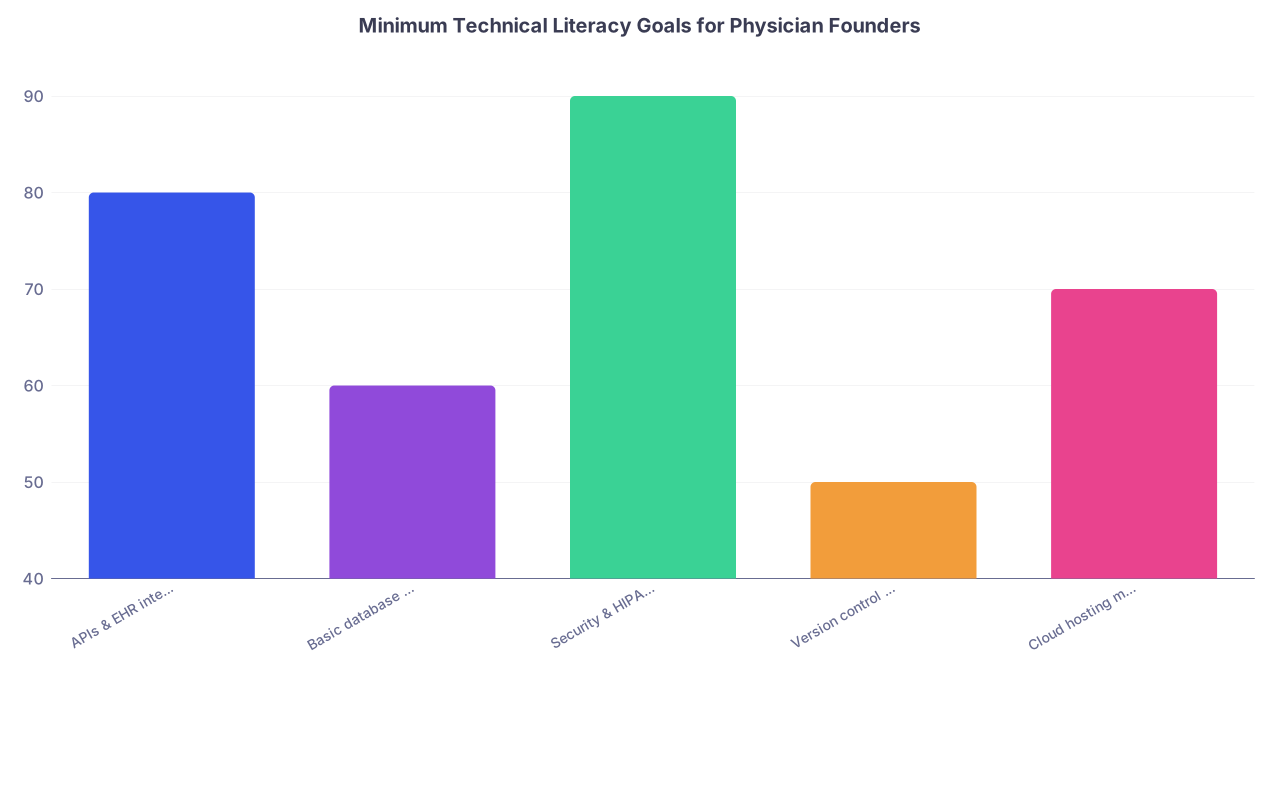
| Category | Value |
|---|---|
| APIs & EHR integration | 80 |
| Basic database concepts | 60 |
| Security & HIPAA basics | 90 |
| Version control awareness | 50 |
| Cloud hosting models | 70 |
Interpretation: You should be highly fluent in what touches regulation and data flow, and at least conversant in how people actually build and deploy software.
8.1 Concrete literacy goals (30–60 days)
Learn these concepts at a high level:
- API: How your product might talk to Epic, Cerner, or another system
- Database: Difference between storing structured vs unstructured data; basics of SQL vs NoSQL
- Security: Encryption in transit vs at rest, access controls, audit logs
- Cloud: What AWS/Azure/GCP provide, and why you do not host on a random shared server
- Version control: Why engineers use Git, what “branch” and “merge” mean (no need to use it yourself)
Pick one short, concrete resource per topic and grind through it. You can do this in 10–20 focused hours. It will pay off for years.
9. Clinical, regulatory, and integration realities you cannot ignore
You think in patients and guidelines. Your tech team may think in features and sprints. Someone must connect those worlds.
That someone is you—at least at first.
9.1 Clarify your regulatory category early
Is your product:
- Pure workflow/administrative (e.g., scheduling, documentation helpers)?
- Clinical decision support that is “assistive” but not determinative?
- SaMD that actually drives diagnosis/treatment decisions?
If you are flirting with FDA territory, bring in:
- A regulatory consultant
- Or at least a mentor who has shipped a regulated product
You do not want to retrofit compliance later. That is how you end up rewriting half the product.
9.2 Plan for integration reality, not fantasy
Engineers new to healthcare assume:
- “We will just integrate with Epic / Cerner / Athena.”
You know better.
You must:
- Decide whether your MVP runs beside the EHR (e.g., standalone web app) with manual copy/paste
- Or whether you need real integration from day one (usually you do not)
The usual trajectory:
- Standalone tool with manual data entry or CSV import
- Early, narrow integration (e.g., FHIR for key resources like patients, encounters, observations)
- Deeper integration once you have proven value
Map this out so your tech team does not waste months building fancy integration for Version 0.1.
10. Put it all together: your 90‑day team‑building plan
Here is what a focused 90 days can look like for a post‑residency physician with no tech background.
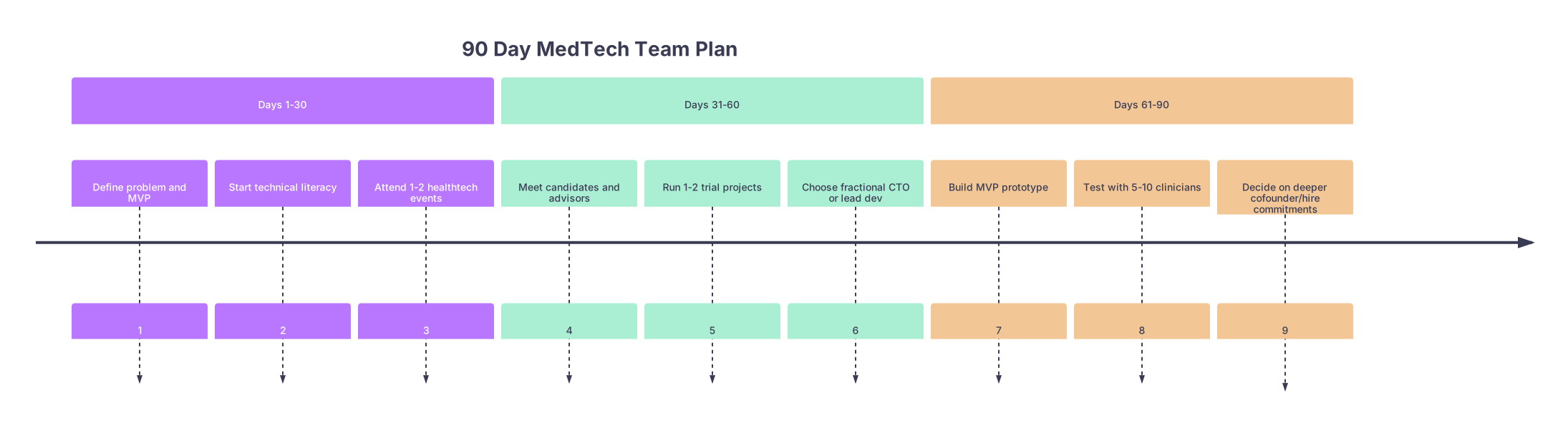
| Period | Event |
|---|---|
| Days 1-30 - Define problem and MVP | 1 |
| Days 1-30 - Start technical literacy | 2 |
| Days 1-30 - Attend 1-2 healthtech events | 3 |
| Days 31-60 - Meet candidates and advisors | 4 |
| Days 31-60 - Run 1-2 trial projects | 5 |
| Days 31-60 - Choose fractional CTO or lead dev | 6 |
| Days 61-90 - Build MVP prototype | 7 |
| Days 61-90 - Test with 5-10 clinicians | 8 |
| Days 61-90 - Decide on deeper cofounder/hire commitments | 9 |
Your mission in each phase:
Days 1–30
- Tighten your problem statement
- Sketch your MVP
- Get just enough technical fluency
- Start showing up where tech talent actually hangs out
Days 31–60
- Run small test projects with 1–3 candidates
- Bring on a fractional technical advisor if possible
- Document everything you are learning about scope, constraints, and costs
Days 61–90
- Commit to one primary technical partner for this phase
- Build something demo‑able
- Put it in front of real clinicians, not just friends
- Use that experience to decide who you want in the trenches long term
You are not “building the whole company” in 90 days. You are assembling a functional, minimal MedTech team that can create and test a real product.
Quick comparison: common paths to your first MedTech team
| Path | Pros | Cons |
|---|---|---|
| True tech cofounder | Deep alignment, long-term owner | Hard to find, big equity grant |
| Fractional CTO + contractors | Good quality, flexible cost | Less day-to-day bandwidth |
| Small dev agency | Faster initial build | Risk of misalignment, code handoff |
| Technical employee hire | Control, continuity | Salary burden before product-market fit |
None of these are “the right answer” universally. The right answer is the one that matches your constraints and your seriousness.
FAQ (exactly 4 questions)
1. Do I really need a technical cofounder, or can I just use contractors?
You do not automatically need a technical cofounder. Early on, a combination of you (as product/clinical lead), a strong fractional CTO or technical advisor, and targeted contractors can get you to a working MVP and first pilots. You should consider a true technical cofounder when:
- The product’s long‑term value is deeply tied to complex engineering or data science;
- You are ready to commit several years to the company;
- You find someone who shows ownership, not just task completion, during trial projects.
Do not rush cofounder titles. Test the relationship with real work first.
2. How do I know if a developer understands healthcare enough for my MedTech startup?
Ask them to walk through a specific clinical workflow you give them and propose how they would support it technically. Look for:
- Questions about users, environments (ED vs clinic), and failure modes;
- Awareness of HIPAA, PHI, audit logs, downtime;
- Ability to say “we should not do this yet” when you push for over‑complex features.
You can also test them by having them integrate a dummy FHIR API or mock some EHR‑like data. If they hand‑wave away integration and regulation, they are not ready for real health tech.
3. What if I cannot afford to pay market rates for engineers yet?
Then you must shrink scope ruthlessly and mix compensation. Options:
- Focus on an ultra‑simple MVP that a strong part‑time engineer or small shop can build in 6–8 weeks;
- Offer a lower cash rate plus modest equity to someone who is excited by the clinical mission;
- Keep your clinical job and use that income to fund targeted development, not a large burn rate.
What you cannot do: expect senior talent to work indefinitely for “future upside” with no clear plan or structure.
4. How technical do I personally need to become as a physician founder?
You do not need to write production code. You do need to:
- Understand concepts like APIs, databases, and security well enough to ask good questions;
- Read simple architecture diagrams and data flow descriptions;
- Grasp the trade‑off between speed and technical debt.
Aim to be “conversational” in tech, just as a surgeon is conversant in anesthesia without being an anesthesiologist. That level of fluency will let you lead effectively, evaluate advice, and avoid being locked out of crucial product decisions.
Open a new document right now and write your one‑page problem and MVP definition. Do not search for a developer, do not design a logo, do not pitch investors until that page exists and makes sense to someone outside your specialty. Then—and only then—start assembling the MedTech team that can actually build it with you.