
The courtship starts long before anyone uses the word “acquisition.”
By the time a Big MedTech company floats “strategic options” to you, they’ve already mapped your cap table, talked to your hospital CIO, and quietly surveyed your key customers. You’re not entering a relationship; you’re entering the last act of a play they’ve been scripting for months.
Let me walk you through how it really works when Medtronic, J&J, Stryker, Abbott, BD, or any of their cousins “court” physician-led startups. Because if you’re a post‑residency doc walking into this dance thinking it’s just about term sheets and valuation, you’re already outgunned.
The First Move: “Let’s Explore Strategic Collaboration”
The first real approach almost never starts with “We want to buy you.” It starts with something much softer: “We’d love to explore strategic collaboration.”
Here’s the sequence I’ve seen over and over:
- You present at a mid-tier conference. Not the flashy TED‑style stuff. Think TCT, AAOS, RSNA, HIMSS, Heart Rhythm Society, or some subspecialty meeting. You’re on some “Emerging Technologies” panel.
- After your talk, someone with “Business Development” or “Strategic Partnerships” on their badge—plus a logo from a Big MedTech name—comes up:
“Really interesting data. We’ve been thinking about workflows exactly like this for our [X product line]. Would you be open to an intro call with a few folks from our team?” - Within two weeks you’re on a Zoom with five people from the other side. One talks. The others listen.
You think this is about scientific alignment.
They’re doing reconnaissance.
They’re trying to answer:
- Are you a “feature” (something they can build or copy) or a “platform” (something they might have to buy)?
- Are you coachable or combative?
- Are you a single‑physician vanity project or an actual business with an execution engine?
The language they use is consistent: “pilot,” “integration,” “joint workflow,” “co-marketing,” “clinical validation.” They’re not buying anything yet. They’re renting proximity.
How They Quietly Diligence You Before You Notice
By the time someone from Corporate Development shows up, their commercial and clinical teams have already had eyes on you.
Here’s what really happens behind the scenes—none of this shows up in any polite BD email:
- They ping their KOLs: “Have you heard of Dr. X’s platform? Anyone actually using it?” If your colleagues shrug, that’s a mark against you. If they say, “Oh yeah, our informatics chief keeps nagging me about that,” it’s a plus.
- They check with hospital IT/CIOs they know: “Is this thing a nightmare to integrate? Are the founders reasonable? Are they SOC2 compliant, or is this a security risk waiting to happen?”
- They look up your regulatory path: Is your device still stuck in 510(k) purgatory? Is your SaMD class II but behaving like it’s class I? They know the FDA game way better than you do.
- They talk to their sales reps: “Are customers asking about this startup? Has anyone mentioned it as a reason they’re considering another vendor?”
You might think your first NDA call is the beginning. It’s not. It’s midway.
By then, many big players will already have a blunt internal slide that says something like:
| Dimension | Internal Question |
|---|---|
| Tech Risk | Build vs. buy vs. ignore? |
| Commercial Risk | Will this hurt our core line? |
| Regulatory | Is there hidden liability here? |
| Founder Risk | Are these people going to behave? |
| Timing | Do we need this now or in 3 years? |
You’re being graded before you even know there’s a test.
The “Courtship” Phases: How They Pull You In Step by Step
Nobody in Big MedTech says “acquisition” first. They test the relationship like a surgeon tests a tendon—gentle tug, then more force, then full traction.
Think of it as four escalating levels.
Phase 1: The Flirt — “Non‑binding Collaboration”
This is the “let’s get dinner” phase. Looks harmless. It’s not.
You’ll see words like:
- “Non-binding memorandum of understanding”
- “Joint pilot initiative”
- “Co-development of clinical evidence”
They might offer access to their installed base—“We can introduce you to a few of our strategic accounts”—in exchange for early access to your roadmap, data, or integrations. They’re not paying much, if anything. Maybe they cover some pilot expenses, maybe they don’t.
The power play here is simple: you feel validated. “Medtronic is interested in us. We must be onto something.” That emotional high makes founders reveal more than they should.
Here’s what you need to understand: at this stage, they’re mainly trying to see whether your tech fits inside their ecosystem, both technically and politically.
- Technically: Can your software sit on their hardware? Does your workflow cannibalize their existing clinical pathways or complement them?
- Politically: Are their internal champions excited or threatened by you? That matters more than your ROC curve.
Phase 2: The Dating — “Strategic Partnership”
Now money might start flowing. Not acquisition money. But enough to keep you on the line.
They’ll dress it up with grand language:
- “Preferred integration partner”
- “Exclusive workflow optimization partner”
- “Strategic channel collaboration”
You might get:
- Joint marketing at conferences
- Access to their sales force in “select regions”
- Early integration into one product line
Here’s the catch: exclusivity clauses start sneaking in. They’ll call them “field‑limited exclusivity” or “preferred integration rights.” I’ve seen physician founders sign deals that quietly block them from working with competing MedTech companies in their exact target segment for years.
They haven’t bought you. But they’ve partially taken you off the market.
That’s not an accident. It’s a de‑risking maneuver:
“Let’s see if your solution actually moves the needle for our customers—without committing to buying you.”
Phase 3: The Engagement — “Strategic Investment”
The flip switches when Corporate Development or the corporate venture arm shows up with a check.
Now the game is explicit: they take a minority equity stake.
Typical play:
- They invest via their corporate venture fund—Medtronic Ventures, J&J Innovation, BD Ventures, etc.
- Sometimes they take a board seat; sometimes just an observer seat.
- They secure rights: ROFR (right of first refusal), ROFO (right of first offer), or “matching rights” on any acquisition offer.
You see capital and credibility. They see an option.
Let me be blunt. Strategic investments from Big MedTech are not “nice validation.” They’re structured options on your future. They cap your upside in exchange for survival money and faster access.
And yes, this is where a lot of physician-led startups get trapped. You take a $5–10M “strategic” round, burn the money integrating deeply into one company’s platform, and then discover no one else will touch you because:
- You look like a captive asset already.
- Your main strategic counter-bidders don’t want a bidding war where the incumbent has matching rights and better info.
I’ve heard the line in internal meetings: “We don’t need to overpay. We already have a toe in the cap table and integration hooks.”
Phase 4: The Marriage — “Acquisition Conversation”
By the time the A word appears, a lot of the negotiation has already happened through structure, dependencies, and integration.
They’ve learned:
- Your real revenue, not your deck revenue.
- Your true deployment costs.
- How painful your tech is in the field.
- How your leadership behaves under delay, failure, or bad news.
If they’re still serious, they start the formal M&A courtship: banker involvement, internal business cases, synergy models, and the inevitable “build vs. buy” argument inside their walls.
You see a term sheet. They’ve already fought a multi-month internal political war about you.
What They’re Really Optimizing For (It’s Not Just Your Technology)
Physician founders overestimate their tech and underestimate everything else. I’ve sat in rooms where the tech looked mediocre but the acquisition still went through because of one thing: distribution fit.
Here’s what the big players actually scrutinize.
1. Can they sell your thing with their existing sales force?
No MedTech major wants to build a new sales motion if they can avoid it. They ask:
- Can their current reps add your device/solution onto their existing bag?
- Does your price point match their usual deal size or is it too tiny to bother?
- Does adoption require changing physician behavior in ways reps can’t control?
If your tech requires a whole new story, a new budget owner, and massive workflow change, they discount you heavily. Even if clinically you’re brilliant.
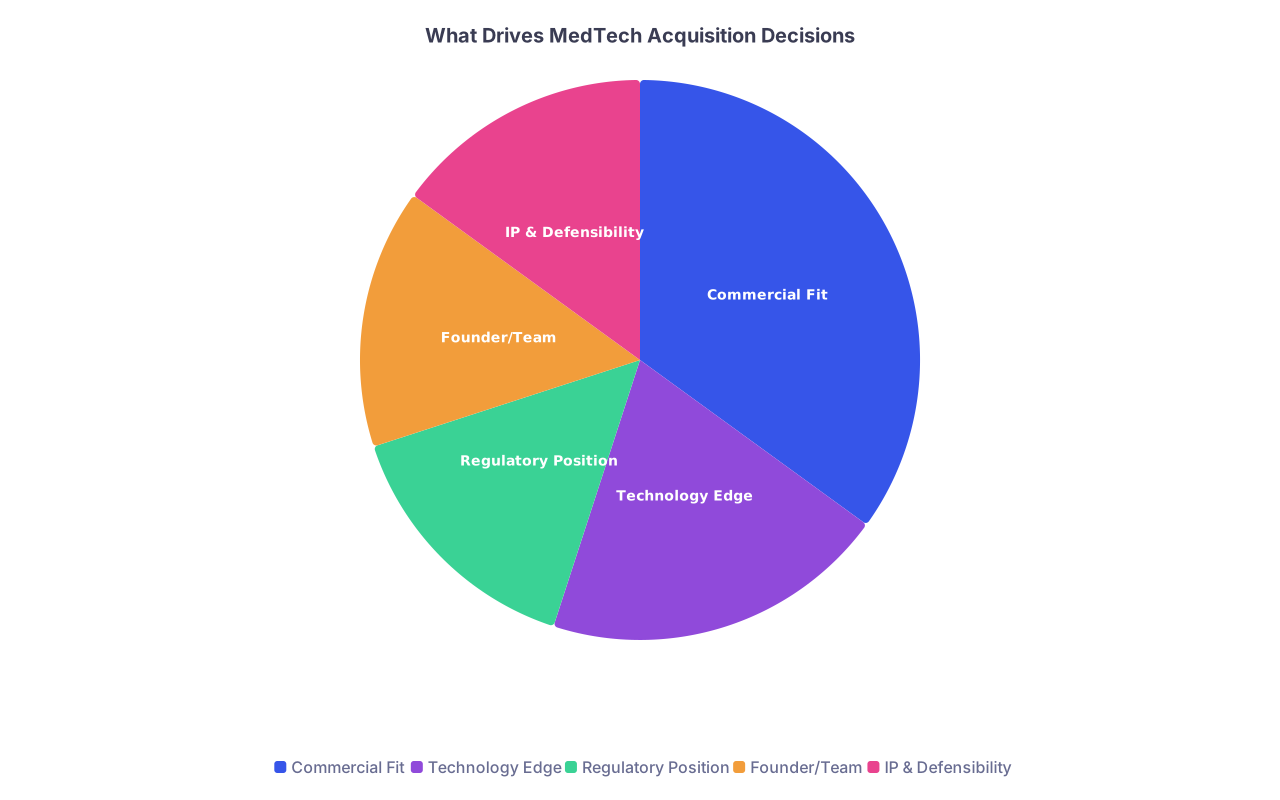
| Category | Value |
|---|---|
| Commercial Fit | 35 |
| Technology Edge | 20 |
| Regulatory Position | 15 |
| Founder/Team | 15 |
| IP & Defensibility | 15 |
They’ll never show you that chart. But it’s how the weighting actually looks behind closed doors.
2. Are you a threat or a bolt‑on?
Big incumbents ask: “If we don’t buy them, will they materially hurt us?”
If your startup:
- Shrinks procedure time in a way that favors a competitor’s device
- Eliminates the need for a consumable they profit from
- Standardizes a workflow so payers start pushing against their upsell items
…you’ve turned into a threat. Which can increase your acquisition value but also increases the incentive to block or slow you instead.
Bolt‑on solutions—things that make their current offering more attractive without disrupting the money machine—are safer buys.
3. Will your regulatory posture become their liability?
Physician founders like to “push the envelope” on indications in marketing and real‑world use. Regulators and corporate compliance departments do not share that enthusiasm.
They look hard at:
- Your IFU vs how your customers actually use the product
- Any “off-label” behavior that’s become standard in the field
- Sloppy data claims in decks, websites, or conference talks
I’ve watched deals stall for six months while a startup “cleans up” its marketing claims and documentation to align with the 510(k) file. You do not want to be in that spot with your deal momentum dying.
4. Are you coachable post‑acquisition?
This one is brutally simple. They ask themselves: “If we bring this physician founder inside… will they break more glass than they’re worth?”
Founder behavior that kills deals:
- Publicly trashing big industry players in talks or on Twitter
- Acting like every commercial suggestion is “selling out”
- Refusing to delegate or professionalize the leadership team
I’ve literally heard: “Great tech. Unacquirable founder.”
Tactics Big MedTech Uses to Court You (and Corner You)
Let’s talk about the mechanics. There are patterns.
The “Escalating Access” Move
They start by offering something low‑risk and high‑ego for you:
- Speaking slot at their satellite symposium
- Advisory board membership
- Co‑authorship on a white paper
Then they escalate access:
- Limited integration test with one product line
- Pilot in 3–5 shared accounts
- Joint data presentation at a major meeting
Each step gives you more legitimacy. Each step also gives them:
- More insight into your tech and team
- More dependence from your side on their distribution
- More arguments internally for or against acquisition
If you ever feel like, “We can’t walk away now; we’re too embedded,” that’s the point. That’s control.
The “Starve and Save” Strategy
This one’s uglier but very real.
- They explore partnership but drag their feet on real revenue commitment.
- You scale up in anticipation: hiring, infrastructure, regulatory, support.
- Market conditions wobble; fundraising gets harder. Your runway shrinks.
- They know your cash position (because you overshared in “strategic” meetings).
- They come back with a term sheet at a much lower valuation than you imagined—but wrapped in language like “rescue,” “stability,” “long-term home.”
You tell yourself it’s a win. You saved the company. They know they got an asset at a discount.
This is why I tell physician founders: never build your runway assumptions on a hypothetical MedTech partnership turning into real dollars. Until you have signed revenue contracts with clear minimums, it’s just theater.
The “Box the Competition Out” Clause
Behind every “strategic” deal there’s usually a paragraph or two of landmines:
- Rights of first refusal on any change of control
- Rights to match any bona fide third‑party offer
- Restrictions against non‑approved integrations with direct competitors
You sign one of those with Company A, then Company B—who might otherwise be your natural acquirer—looks at the contract and says, “No thanks. Not going to enter a bidding war where we feed them free price discovery and they can just match.”
I’ve seen physician founders furious that a “friendly partnership” killed their M&A leverage. But the documents said exactly what they said. You just didn’t realize the long‑term impact.
The Internal War You Don’t See (Inside Big MedTech)
While you’re fantasizing about acquisition multiples, here’s what’s actually happening inside those shiny headquarters.
Picture an internal slide deck titled “Opportunity Assessment – [Your Company Name].” It gets kicked around like this:
- Product/clinical team: loves you because you solve a real gap clinicians complain about.
- Regulatory/compliance: nervous about your borderline claims and incomplete documentation.
- Commercial leadership: split; some see you as a cross‑sell tool, others as a distraction.
- Finance: skeptical of your projections and pushing for a lower price or more earn‑outs.
- Corporate development: stuck in the middle, trying to push a coherent recommendation up to the executive committee.
Then there’s the build‑vs‑buy slide. There always is.

| Step | Description |
|---|---|
| Step 1 | Identify Startup Tech |
| Step 2 | Monitor Only |
| Step 3 | Build Internally |
| Step 4 | Delay - Small Pilot |
| Step 5 | Hard Negotiate |
| Step 6 | Move to Acquire |
| Step 7 | Core to Strategy |
| Step 8 | Can We Copy Fast |
| Step 9 | Is Startup Gaining Traction |
| Step 10 | Will Competitor Buy |
You’re not just being evaluated on your own merits. You’re being evaluated in the context of:
- Their internal engineering timelines
- Their fear of competitors making a move
- Their other priorities in the current fiscal year
This is why conversations can be red‑hot in Q3 and ice‑cold in Q1. Budgets roll over. Priorities shift. Your existential future is a single line item in someone’s corporate portfolio review.
Common Mistakes Physician Founders Make in This Courtship
Let me be candid. I’ve watched very smart clinicians walk straight into predictable traps.
Mistake 1: Confusing interest with inevitability
Two dinners, one advisory board invite, and a few “we’re excited about your vision” emails do not equal an acquisition path. At least half of “strategic discussions” never progress past slideware.
Your job: keep building an independent business as if no acquisition will ever happen. If a deal comes, it should be accretive, not existential.
Mistake 2: Giving away roadmap and architecture too early
Big MedTech has engineers. Good ones. If you hand them detailed plans—your unique data schemas, algorithmic tricks, user insights—you are giving their R&D team a free consulting gig.
Share enough to prove value. Never so much that they can clone your value.
Mistake 3: Accepting lopsided “strategic” terms for short‑term cash
I’ve seen physician startups accept:
- Deep exclusivity across their core use case
- Non‑standard IP assignment terms
- Uncapped most‑favored‑nation pricing commitments
All for low seven‑figure deals that don’t even cover two years of burn.
That’s not strategy. That’s desperation dressed as partnership.
Mistake 4: Ignoring the internal MedTech politics
You fall in love with one champion inside the big company. Maybe a VP of Clinical Innovation. Maybe a former physician now in strategy.
They seem powerful. They’re not powerful enough.
If your deal doesn’t have:
- A P&L owner (business line leader) who sees direct revenue impact
- A commercial leader who believes their reps can sell it
- A regulatory lead who’s comfortable signing their name on it
…it’s fragile. One reorg and you’re gone.
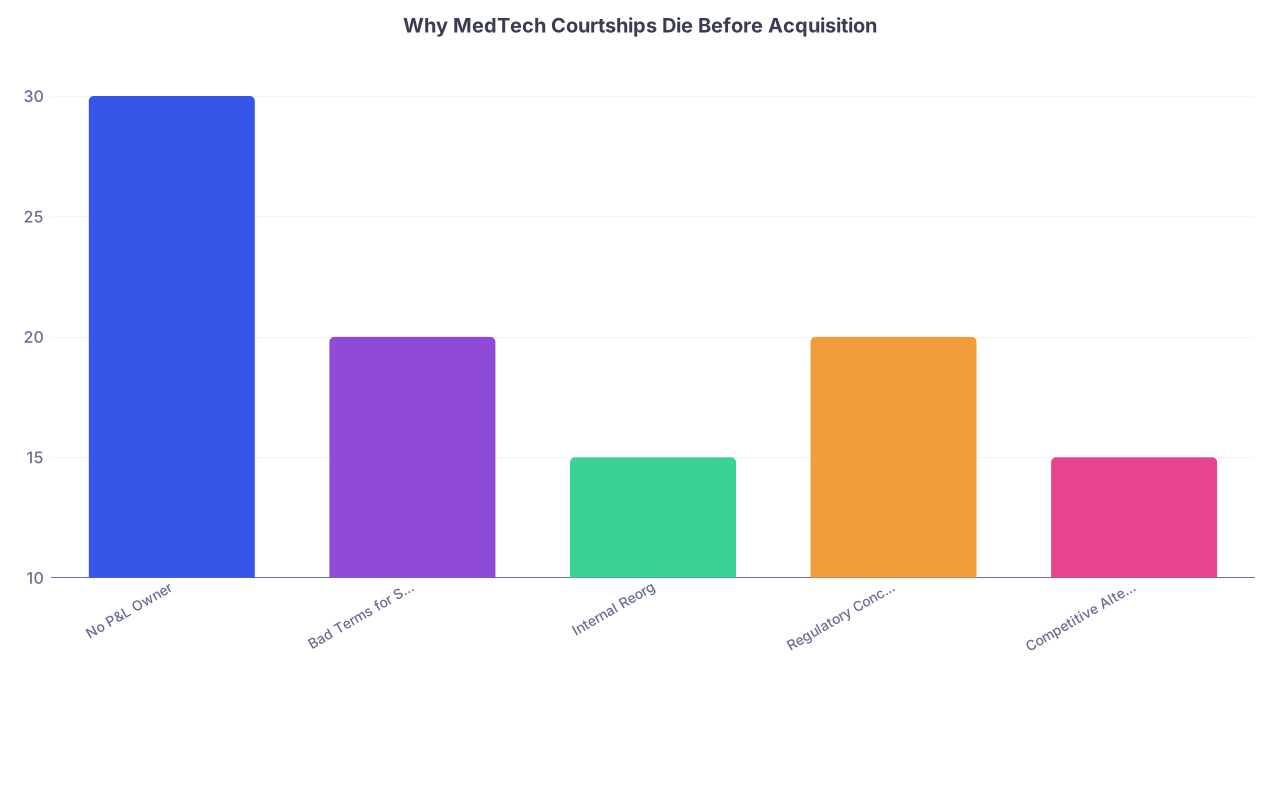
| Category | Value |
|---|---|
| No P&L Owner | 30 |
| Bad Terms for Startup | 20 |
| Internal Reorg | 15 |
| Regulatory Concerns | 20 |
| Competitive Alternative | 15 |
Again, you’ll only see the sanitized version: “We’ve decided to focus our resources elsewhere at this time.” Translation: one of those bars killed you.
What Smart Physician Founders Do Differently
You can’t change how Big MedTech behaves. You can absolutely change how prepared you are.
They build from day one like no one will save them
The physician‑founder companies that end up with the strongest exit terms do one thing very consistently: they never behave like acquisition is the plan. It’s an option, not the strategy.
They:
- Get paying customers early, even if pilots are messy.
- Learn how to sell without leaning on any single strategic.
- Keep burn disciplined so they’re not negotiating from panic.
Then when MedTech comes knocking? They have leverage. Because “no” is viable.
They stage‑gate their disclosures
Instead of data‑dumping everything in the first “strategic partnership” call, they tie details to milestones:
- Initial discussions: high-level capabilities, not architecture
- After NDA + pilot LOI: more technical specifics, still no crown jewels
- After serious term sheet: deeper access, joint planning
They also keep parallel conversations open. One of the healthiest signals to a Big MedTech suitor is: “We’re talking to a few players; right now nothing exclusive.” That’s not posturing. That’s how you avoid being commoditized.
They negotiate “strategic” clauses like life depends on it (because it does)
Founders who’ve seen this movie before pay brutal attention to:
- Exclusivity: Is it narrow in scope, time‑limited, with clear performance triggers?
- Rights of first refusal/offer: Are there carve‑outs? Time limits? Matching terms that don’t chill the market?
- Integration demands: Are they paying you to prioritize their stack or just hijacking your roadmap?
When a Big MedTech company says, “This is just our standard language,” translated: “This is the language that benefits us in 90% of cases.” You’re not 90% of cases. You’re one. Push back.
A Quick Reality Check for Post‑Residency Founders
If you’re a physician just out of training or a few years into practice, trying to build a startup while working a real job, here’s the uncomfortable truth: Big MedTech sees you as either adorable or risky until you prove otherwise.
They assume:
- You don’t fully understand sales cycles.
- You underestimate regulatory burden.
- You’ll get seduced by first‑time money and status.
You fight that by surrounding yourself with people who have sat on both sides of the table—someone who’s done BD from inside a big company and someone who’s taken a startup through acquisition before.
Think of it as building your translation layer. So when the polite corporate language says, “We’d like to explore non‑exclusive collaboration around adjacent workflow domains,” you can hear the subtext clearly.

What Happens After the Honeymoon: Life Post‑Acquisition
One last piece most physician founders do not spend enough time on: what your world looks like after you sign.
The big MedTech courtship narratives focus on valuation and headlines. But I’ve watched acquisitions where the founder was miserable within six months.
Common post‑acquisition realities:
- Your product gets deprioritized after a reorg, stuck in “integration” limbo.
- Your promised autonomy evaporates as you’re handed layers of approvals.
- Your clinical vision is warped to fit SKU targets and quarterly revenue pressures.
On the flip side, I’ve seen it work brilliantly when:
- The acquiring company puts your product at the center of a strategic initiative, not as a side project.
- They give you a dedicated integration team and clear top‑down sponsorship.
- Your role is clearly defined: not just “founder trophy,” but operationally meaningful.
How do you influence this before signing?
You ask the questions physician founders almost never ask:
- “Who owned the last two acquisitions you did? Where are those products now?”
- “Can we talk to a founder you acquired in the last five years, privately?”
- “What integration budget and headcount are already earmarked for our product?”
The answers tell you whether you’re joining a long‑term family or becoming a line item in a slide deck.

Where You Go From Here
If you’re a physician building in the post‑residency, post‑fellowship world, the Big MedTech courtship will come sooner than you expect if you’re doing anything interesting. It might show up as a friendly BD email, an advisory board invite, or a “quick chat” at a conference.
Now at least you know what’s happening on their side of the glass.
Your job over the next stretch is simple but not easy:
- Build a real business that can live without them.
- Learn to read their signals without getting intoxicated by the attention.
- Protect your leverage—cap table, contracts, and IP—so that if and when the acquisition conversation becomes real, you’re not entering as a supplicant.
Because the courtship is just one chapter. The real story is whether you build something durable enough that acquisition is a strategic choice, not an emergency exit.
And when you’re ready to think about how to actually structure those terms so you don’t regret them five years later—that’s another conversation entirely.