
Think Clinical Credibility Guarantees Sales? It Doesn’t. Here’s What the Data Shows.
The market does not care that you were chief resident. It barely cares where you trained. And it absolutely does not reward you just because your idea is “clinically sound.”
In medical startups, the sacred cow is this: “If I’m a strong clinician and the product is evidence-based, hospitals and payers will obviously buy.”
They will not. And the numbers are brutal.
Let me walk through what actually moves revenue, using data from digital health, medtech, and enterprise SaaS—plus what I’ve seen sitting in on buyer committees where someone says the quiet part out loud:
“This is clinically great. I still have no idea who will pay for it or how we roll it out.”
If you’re post‑residency, post‑fellowship, or mid‑career and thinking, “I’ll build something better than the junk I use every day” — good. You probably can. But if you think clinical credibility guarantees sales, you’re walking into a buzzsaw.
What Buyers Actually Optimize For (Spoiler: Not Your CV)
Start with the uncomfortable truth: hospitals, payers, and large employers don’t buy “clinical credibility.” They buy risk reduction and ROI.
And they measure that very differently than you do.
Here’s a simplified view of what each side thinks they’re selling/buying:
| Perspective | Top 3 Things They Care About |
|---|---|
| Clinician-Founder | Clinical efficacy, guidelines alignment, safety |
| Hospital Buyer | Financial ROI, workflow impact, implementation risk |
| Payer / Employer | Total cost of care, member engagement, measurable ROI |
Now layer in some data:
- A 2023 Rock Health report on digital health showed B2B healthcare sales cycles often run 6–18 months, and sometimes longer for health systems. That’s not about clinical debate—that’s internal budget, IT, legal, integration risk.
- Multiple analyses (eg, Bain, McKinsey) show that clinical value without clear financial ROI or utilization strategy almost never gets budget. Great outcomes that no one uses are a rounding error, not a business case.
- An internal evaluation I saw at a large IDN: three vendor solutions for reducing readmissions. The one with the strongest clinical evidence was rejected because the integration cost and staffing requirements were higher for the same projected readmission reduction.
Clinicians assume: “If it improves outcomes, it will obviously save money and they’ll buy.”
Buyers ask: “Can I prove the savings this fiscal year, and who’s job breaks while we roll this out?”
Those are not the same question.
Myth: “If It’s Clinically Superior, It Will Win the Market”
I’ve watched strong, data-rich, guideline-perfect solutions lose to mediocre tools with better commercial execution.
Not once. Repeatedly.
Example 1: The Great “Physician-Designed EHR” Graveyard
Every few years, a new “built by doctors, for doctors” EHR pops up promising to fix the disaster that is documentation.
They almost always lean hard on clinical authority:
- Designed by cardiologists from [Top 10 institution]
- Used at [well-known academic center]
- Evidence-based workflows
Yet what dominates the market?
Not the clinically elegant system. The ones that:
- Integrated with existing hospital IT stacks
- Signed multi‑year enterprise deals with brutal legal terms
- Offered aggressive implementation support and training
- Survived procurement committees that cared about stability more than joy
The result: clinically inferior and hated systems win. Because they solved the buyer’s risk and integration problems better, not the clinician’s cognitive load.
Example 2: Digital Therapeutics vs “Crappy But Simple” Apps
Take digital therapeutics (DTx) in areas like diabetes and mental health.
- Many have strong RCT-level evidence.
- Several received FDA clearance.
- Some secured reimbursement pathways.
Yet, adoption is tepid outside a few standout cases. Why?
Because:
- Enrollment processes are clunky
- Clinician time is needed to prescribe or monitor
- IT integration is painful
- Payers have to adjust workflows to process reimbursement
Meanwhile, low‑evidence wellness apps with direct‑to‑consumer models sometimes do huge volume. Are they clinically better? No. But they:
- Obsess over user onboarding and retention
- Don’t depend on multi‑stakeholder healthcare procurement
- Actually get used, daily, by a large base of paying customers
Clinical superiority is a necessary but not sufficient condition in healthcare. It can keep you from being dismissed, but it doesn’t close deals.
The Harsh Funnel: From “Clinically Great” to “Actually Purchased”
Let’s map the real journey from idea to revenue for a B2B healthcare solution.
Because the gap between “good medicine” and “good business” is exactly where clinician-founders get crushed.

| Step | Description |
|---|---|
| Step 1 | Clinically Sound Idea |
| Step 2 | Prototype or MVP |
| Step 3 | Pilot with Friendly Site |
| Step 4 | Document Outcomes and ROI |
| Step 5 | Budget Owner Approval |
| Step 6 | IT and Security Review |
| Step 7 | Legal and Contracting |
| Step 8 | Implementation and Training |
| Step 9 | Organization Wide Rollout |
| Step 10 | Renewal and Expansion |
Where does clinical credibility actually matter most? Stages B–D. Proof of concept. Getting your first pilot. Publishing or presenting outcomes.
Where do deals most often die? E–G.
- Budget owner does not see a compelling financial case
- IT says integration complexity too high
- Legal kicks back on risk, data use, or liability
I sat in a hospital committee once where a clinician‑led startup had shown legitimately strong reductions in 30‑day readmissions. The CMO was impressed. The frontline docs liked it.
The CFO’s question: “Can I cancel an FTE or a vendor line item if I buy this?”
Answer: No.
Outcome: Dead. Despite the evidence.
This is the part founders don’t want to hear: your win condition isn’t clinical approval, it’s budget displacement. Whose line item are you replacing or shrinking?
If you cannot answer that in one sentence, you’re not ready to sell.
What the Data Actually Shows About Why Healthcare Startups Win
Forget the mythology. Let’s look at patterns across companies that do get traction.
1. They Translate Clinical Wins into Financial Metrics
Successful startups don’t stop at “reduced readmissions” or “better blood pressure control.” They quantify it in the buyer’s language:
- Reduced readmissions → fewer penalties under HRRP + better LOS → $$ per bed per year
- Better BP control → lower downstream stroke/MI + actuarial modeling → PMPM savings
- Faster throughput in clinic → additional billable visits per day → annual revenue gain
If you want to make your clinical story legible to a CFO or VP of Population Health, you need to turn outcomes into P&L terms.

The companies that win:
- Run pilots with explicit economic endpoints, not just clinical ones
- Publish not just in JAMA or NEJM, but in health economics and outcomes research journals or white papers
- Hand buyers a ready‑made ROI model — ideally co‑branded with a well‑known system or payer
You can be incredibly persuasive to a peer with Kaplan–Meier curves. That doesn’t move budget. Budget moves when someone can point to a spreadsheet showing 3x payback in under 24 months.
2. They Focus on Utilization and Adoption, Not Just Efficacy
Controlled environments lie. That RCT where 80% of patients used your tool correctly is not how the real world behaves.
Digital health data is clear on this:
- Many “high-evidence” apps have horrific retention outside study settings
- Real‑world adherence plummets once research coordinators disappear
- Clinicians stop using tools that add 5–10 clicks per patient, even if outcomes improve
So, the startups that sell and stay sold:
- Obsess over minimizing cognitive and workflow friction
- Co‑design with nurses, MAs, schedulers, not just attendings
- Instrument everything: daily active users, time to task, dropout reasons
Think of clinical efficacy as a ceiling. Real-world utilization is the floor. Revenue lives at the intersection of “works in practice” and “people actually use it without being bribed or policed.”
3. They Nail a Specific Buyer, Not “Healthcare”
Another trap: “Our solution helps providers, payers, and employers!”
Translation: you haven’t done the hard work of picking a real customer.
Here’s how serious companies behave:
- They pick a primary economic buyer persona (e.g., VP Care Management at regional Blues plan, or CFO of 300–800 bed IDNs).
- They understand that persona’s two or three screaming problems and link directly to one of them.
- They tune messaging, pricing, and proof points to that persona. Everyone else is secondary.
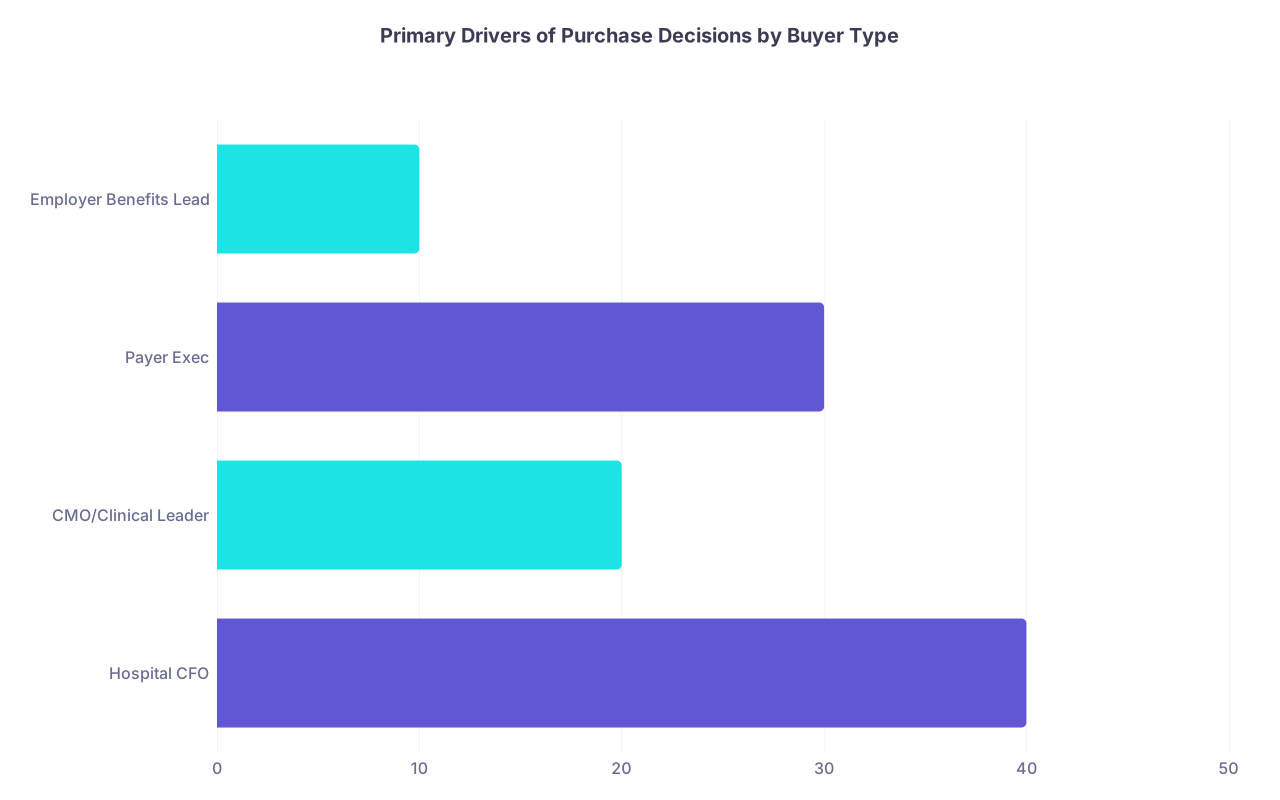
| Category | Value |
|---|---|
| Hospital CFO | 40 |
| CMO/Clinical Leader | 20 |
| Payer Exec | 30 |
| Employer Benefits Lead | 10 |
The numbers here aren’t about exact percentages; they reflect a consistent reality I’ve seen:
Most commercial decisions are 60–70% financial / operational, 20–30% clinical, and the rest politics and inertia.
If all your decks scream clinical benefits and your pricing slide is an afterthought, you’re playing the game sideways.
Clinical Credibility: Helpful, Yes. Protective Moat? Not Really.
Let’s be fair. Clinical credibility isn’t useless. It helps you in three big ways:
Early Access and Trust
Clinicians are more likely to let you pilot in their clinic or unit if you’ve walked in their shoes. It cuts through some skepticism.Avoiding Dangerous Mistakes
You’re less likely to design something that violates basic safety, workflow reality, or guidelines. That keeps you out of obvious trouble.Storytelling to Clinician Champions
You can speak their language. That matters for recruiting internal champions who will go to bat for you.
But here’s the uncomfortable flip side:
- Every health IT vendor now parades a “Chief Medical Officer” or “Clinical Advisory Board” with academic logos. Your MD is not a unique differentiator.
- Some buyers have been burned by clinician‑founded startups that were clinically elegant but commercially naive. The “doctor‑led” brand can trigger skepticism, not confidence: “Are they serious about implementation or is this just a side‑project passion?”
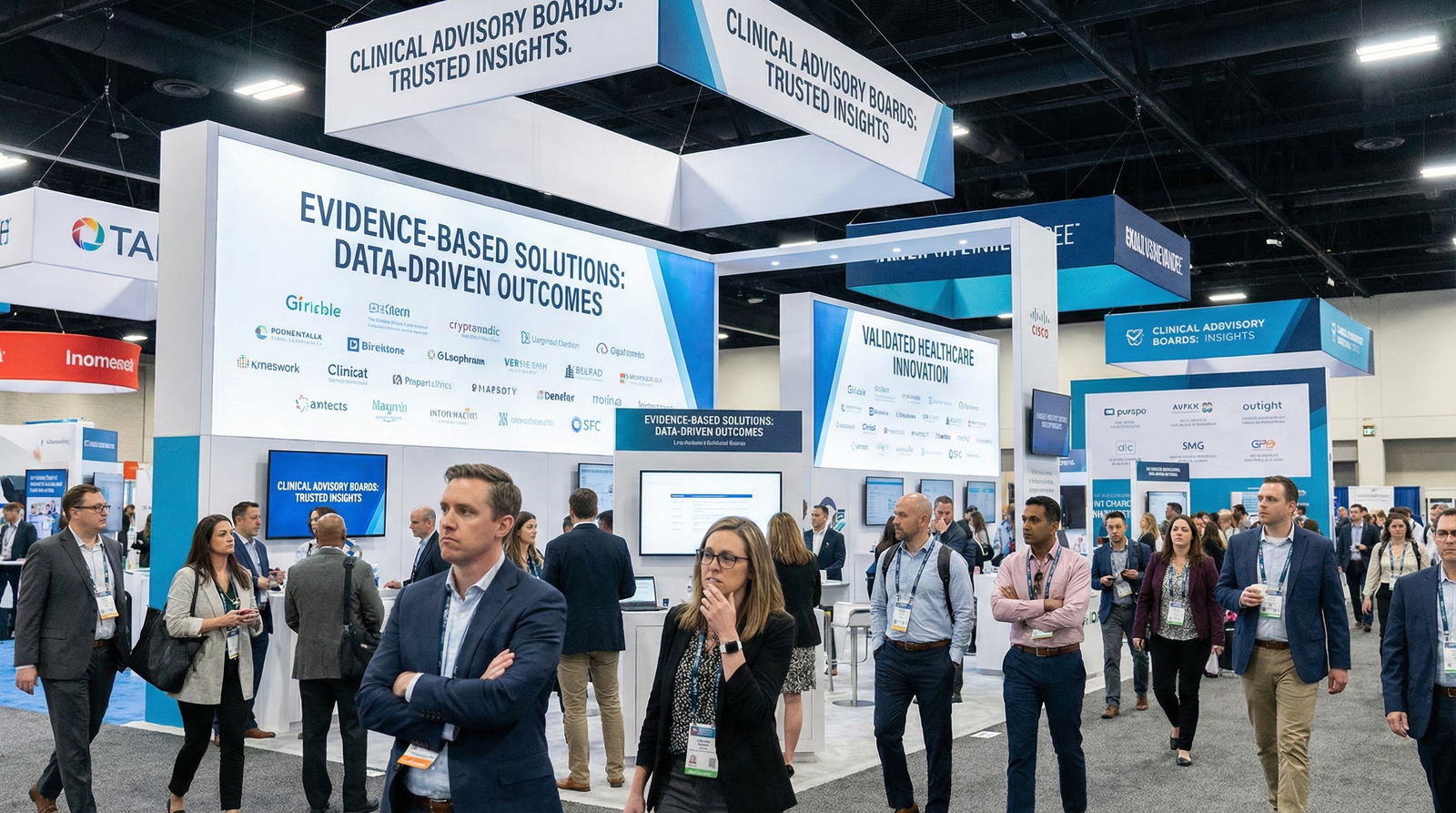
So no, clinical credibility does not guarantee anything beyond a slightly easier opening conversation. After that, you’re judged like every other vendor:
- Can you deliver on time?
- Can you integrate without blowing up IT?
- Can you prove ROI in the language the buyer uses?
If You’re a Clinician Founder, Here’s How to Stop Losing on Sales
Let me give you a more constructive version: what to do instead of hiding behind your credentials.
1. Learn the Buyer’s P&L Like You Learned Pathophysiology
You do not need an MBA. You do need to understand:
- Where your buyer’s money comes from
- Where it leaks
- Which levers they control vs which are locked by regulation or contracts
For a hospital:
- Inpatient vs outpatient revenue
- Penalties (readmissions, HACs, etc.)
- Capacity constraints and staffing costs
For a payer:
- PMPM cost structures
- High-cost members and conditions
- Contracting dynamics with employers and providers
Your sales narrative should start from their pressure points, not your clinical frustrations.
2. Instrument the Hell Out of Real-World Use
Do not just measure clinical endpoints. Measure:
- Adoption time per site
- Time per task
- Dropoff curves
- Support ticket categories
- Which roles actually touch the product and how often
Then, walk into renewal and expansion conversations with hard usage and impact data. Not vibes.
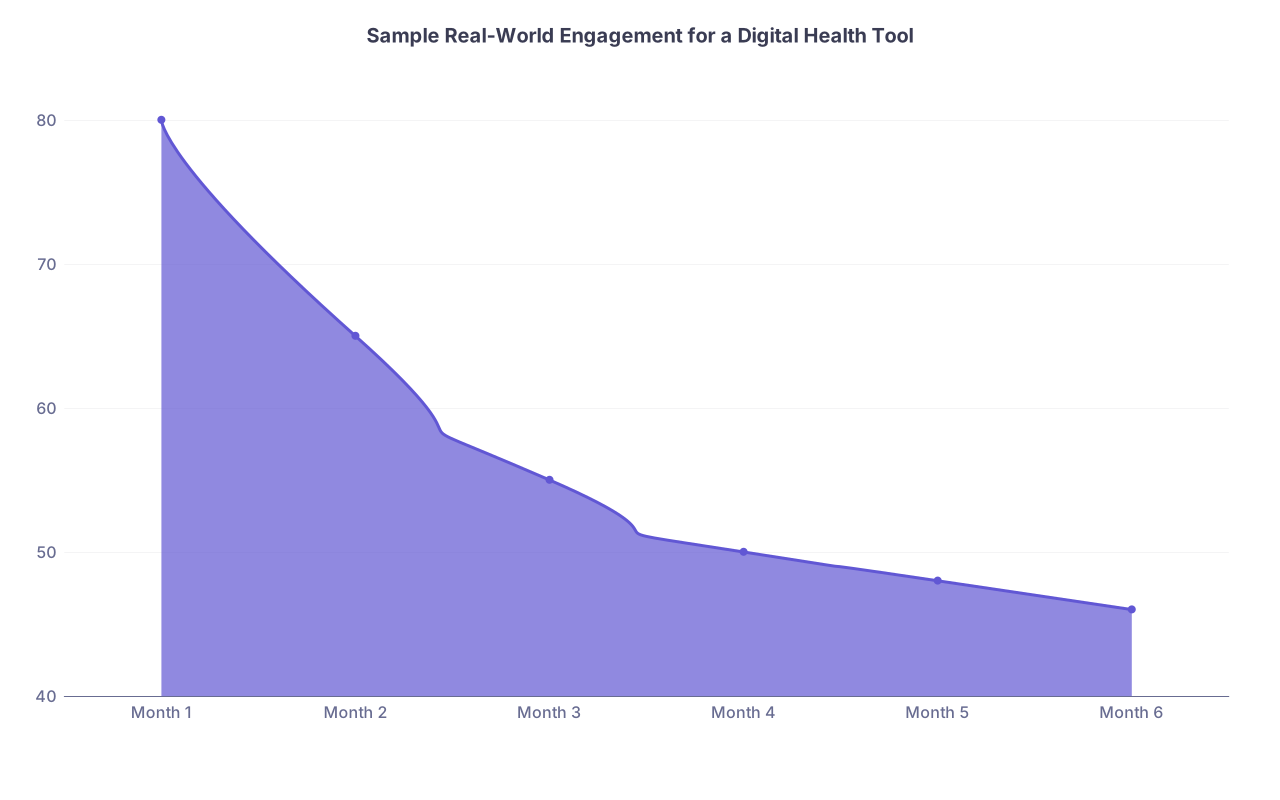
| Category | Value |
|---|---|
| Month 1 | 80 |
| Month 2 | 65 |
| Month 3 | 55 |
| Month 4 | 50 |
| Month 5 | 48 |
| Month 6 | 46 |
This is what most products actually look like: steep initial engagement, then decay. The difference between successful and failing startups is what they do when they see this curve.
The serious teams:
- Shorten onboarding
- Reduce required touches
- Automate nudges and reminders
- Remove low-value features that create friction
The naive teams:
“Users just need more education.”
No. If it requires constant re-education, the product is wrong.
3. Bring in Non-Clinical Commercial Talent Early
You’re good at medicine. Maybe research. Maybe product thinking.
You are almost certainly not:
- An expert sales operator
- A world-class enterprise negotiator
- A seasoned health system implementation lead
The best clinician-led companies I’ve seen did one thing consistently: they hired or partnered with people who’ve actually sold into health systems or payers before.
And then—this is the hard part—they listened when those people said, “We need to narrow the use case,” or, “This feature is killing adoption,” or, “Your pricing makes zero sense for how budgets are structured.”

You’d never let a Med‑Peds intern design a neurosurgical approach alone. Don’t let someone who’s only ever operated inside hospital hierarchies design your go‑to‑market solo.
The Bottom Line
Three things I want you to walk away with:
Clinical credibility is table stakes, not a trump card. It can open doors, but it does not close deals. Buyers are optimizing for risk, ROI, and workflow impact—not for how many letters you have after your name.
Revenue follows utilization and economic proof, not just evidence. If people don’t actually use your product in the messy real world, and you cannot translate outcomes into P&L language, your “clinically superior” solution will lose to something dumber but more usable.
If you want to win, learn the buyer’s world or bring in people who live in it. Treat understanding budgets, incentives, and operations with the same seriousness you gave to residency. Otherwise, you’re just another brilliant clinical idea dying in procurement purgatory.
Believe the evidence, not the mythology. Clinical excellence is your starting line, not your finish.