
Most applicants are quietly breaking NRMP rules without realizing it. Not with what they say in interviews—but with what they put in writing afterward.
If you’re asking, “Can I tell a program they’re my #1?” you’re already ahead of half your class. Because the NRMP does draw a line between what’s allowed, what’s dumb but legal, and what will get you (or a program) in real trouble.
Let me walk you through exactly what you can say, what programs can say, and how to use this strategically without risking an NRMP violation or looking naïve.
1. The Core Rule: You Can Express Preference. You Cannot Make Promises.
Here’s the clean version of the NRMP communication rule:
- You may express interest and preference (e.g., “You are my top choice.”)
- You may not solicit or offer commitments (e.g., “I promise to rank you #1 if…”).
- Programs may not ask you how you are ranking them, and you may not ask programs how they will rank you.
That’s the backbone.
The misunderstanding comes from people confusing “I like you best” with “I guarantee I’ll do X and you guarantee you’ll do Y.” The first is allowed. The second is a violation.
| Action / Phrase Type | Status |
|---|---|
| “You are my top choice / #1 program” | Allowed |
| “I intend to rank you highly” | Allowed |
| “Will you rank me highly?” | Banned |
| “We will rank you to match here” (program) | Banned |
| “If you rank us #1, we will rank you #1” | Banned |
So yes—you can tell a program they’re your #1. As long as it’s not tied to conditions, demands, or quid pro quo.
2. Exactly What You Can Safely Say (With Examples)
Let’s get concrete. These are phrases that are NRMP-compliant and commonly used.
If they truly are your #1
Use one clear line. Do not waffle.
Examples you can send in an email after interviews are done:
- “I wanted to let you know that [Program Name] is my top choice, and I will be ranking your program #1.”
- “I have completed my interview season and can say that [Program Name] is my first choice, and I will rank it #1 on my list.”
- “I remain very enthusiastic about [Program Name] and will be ranking your program first.”
These are allowed because you’re just expressing your preference. You’re not demanding a ranking from them, you’re not asking for confirmation, and you’re not setting up a deal.
If they’re not #1 but you like them
You don’t have to say “#1” to show genuine interest. This is what “ranking highly” language is for.
- “I plan to rank [Program Name] very highly on my list.”
- “I would be genuinely excited to train at [Program Name] and expect to rank your program near the top of my list.”
- “You are one of my top choices and I’d be thrilled to match at your program.”
Again: totally fine, NRMP-wise. Whether it’s strategically smart is a separate question (I’ll come back to that).
What you should not say
Here’s where people get cute and get themselves in trouble:
- “If you rank me to match, I guarantee I’ll rank you #1.”
- “My school said I can share that you’re my #1 if you’ll rank me highly too.”
- “Can you tell me where I stand on your list?”
- “Will I match here if I rank you #1?”
These cross into soliciting commitments or pressuring the program to disclose ranking intentions. That’s what NRMP forbids.
3. What Programs Are Allowed (And Not Allowed) To Say Back
Programs are on a tighter leash than you.
Here’s the NRMP’s stance boiled down:
- Programs may express interest (“We really enjoyed meeting you; we think you’d be a great fit.”)
- Programs may not ask you how you’ll rank them.
- Programs may not guarantee positions or say things that reasonably sound like guarantees (“We will rank you high enough to match.” “You are at the top of our list.”)
So if a program says:
- “We will rank you to match.”
- “You are in our top tier, you should feel confident you’ll match here.”
- “If you rank us #1, I’m sure we’ll match.”
That’s all improper and technically reportable.
Will people still hear this? Yes. I’ve seen it happen in OB/GYN, EM, IM, and surgery. Some PDs still talk like it’s 1995. But NRMP rules are clear: they’re not supposed to.
Your best move when this happens:
Thank them, don’t commit to anything in writing, and ignore it when you build your rank list. The algorithm already favors your true preferences. You don’t gain anything by over-trusting a verbal “promise.”
4. The Big Question: Should You Tell a Program They’re #1?
Legally: yes, you can.
Strategically: it depends.
Here’s how I’d break it down.
When it makes sense to say it
You should consider telling a program they’re your #1 if:
- You’ve finished all your interviews or are certain nothing will surpass them.
- You’ve thought it through—location, training, family, lifestyle, fellowship goals—and they’re actually your top choice.
- You are comfortable standing by that statement even if your friends are all saying “Don’t box yourself in.”
In that case, a clear, single “you’re my #1” message can:
- Signal genuine commitment
- Slightly nudge a borderline rank decision in your favor
- Help the program feel safer ranking you a bit higher (if they’re on the fence about whether you’d really come)
Will it magically move you from rank #40 to #1? Absolutely not. But programs do pay attention to sincere, specific expressions of interest—especially from applicants who are already competitive for them.
When you should not say it
Do not tell more than one program they’re your #1. That’s not just unethical—it can blow up spectacularly if PDs talk (and yes, they sometimes do).
You also shouldn’t say it:
- Just because your advisor told you “everyone lies, it’s fine.”
- To try to “game” the match. The algorithm already optimizes for your true preferences if you rank honestly.
- If you’re still genuinely unsure or your list is moving every week.
You can show strong interest without using the “#1” language. Use “rank you highly” or “one of my top choices” instead.
5. How To Write a #1 Email That’s Clear and Not Cringey
You do not need a novel. Short, specific, and sincere beats flowery, desperate paragraphs.
Here’s a simple structure that works:
- Greet and thank
- One or two specific reasons you like the program
- Clear “you’re my #1” statement
- Brief closing
Example:
Subject: Continued Interest in [Program Name]
Dear Dr. [PD Last Name],
Thank you again for the opportunity to interview with [Program Name]. After completing my interviews, I’m confident that your program is the best fit for my goals in [specialty], especially because of the strong [specific feature: ICU experience, global health track, operative volume, etc.] and collegial culture I experienced on interview day.
I wanted to let you know that [Program Name] is my top choice, and I will be ranking your program #1.
Thank you again for your time and consideration.
Sincerely,
[Your Name], [Your Med School]
That’s it. One clear sentence. No hedging. No begging.
Send it once, within a week or two before the rank list deadline. You do not need to keep “following up.” That just makes you look anxious.
6. Common NRMP Pitfalls Around “#1” Conversations
Here’s where people mess this up.
1. Asking programs how they’ll rank you
You are not allowed to ask:
- “Will I be ranked to match?”
- “Can you tell me approximately where I’ll be on your list?”
- “Do I have a good chance of matching at your program if I rank you first?”
This puts the program in a position where giving an honest answer would likely break NRMP rules. Smart programs will dodge. Less smart ones will violate policy. Either way, you don’t win.
2. Letting program ‘reassurances’ change your rank order
You hear:
- “You’re very high on our list.”
- “We’d love to have you.”
- “You have a strong chance here.”
And suddenly you push them to #1 because “they basically promised.”
Stop. The algorithm already favors your true preferences. If you love Program A more than Program B, rank A above B, regardless of who made you feel warmer and fuzzier on the phone.
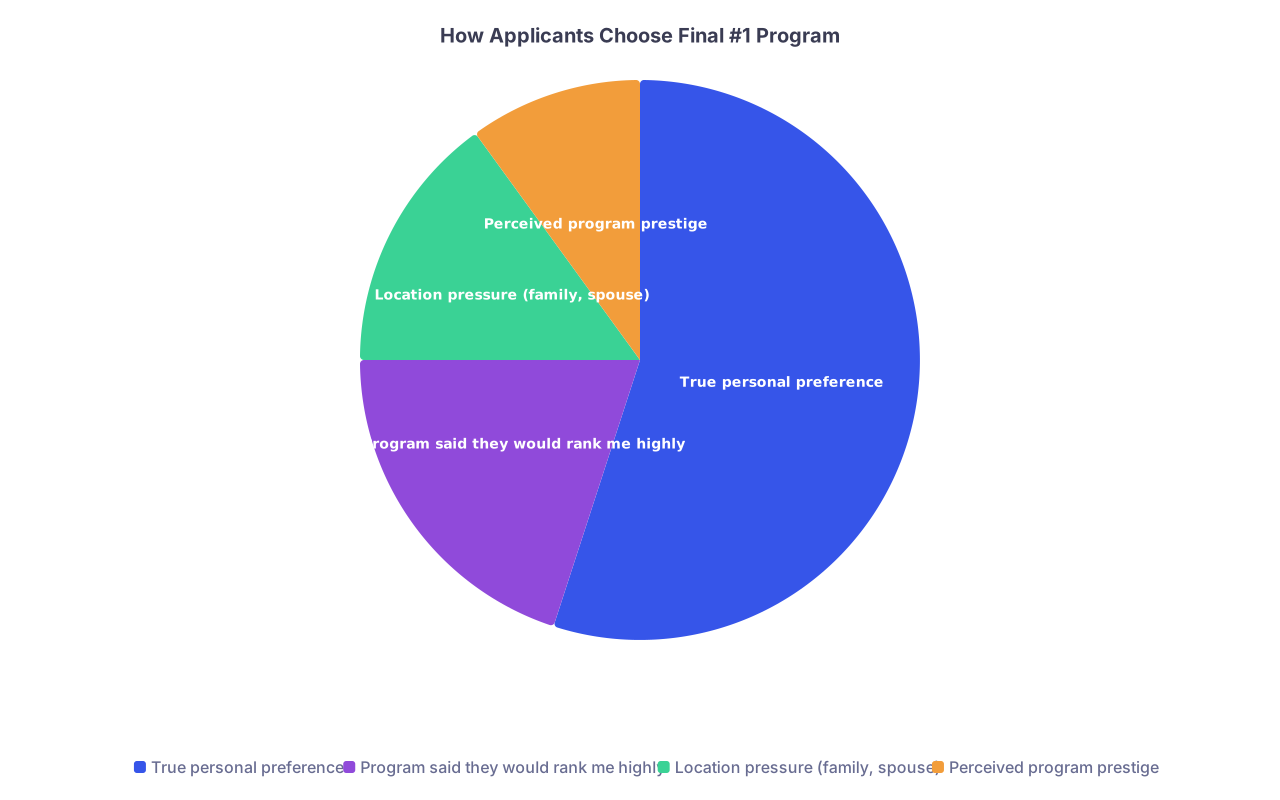
| Category | Value |
|---|---|
| True personal preference | 55 |
| Program said they would rank me highly | 20 |
| Location pressure (family, spouse) | 15 |
| Perceived program prestige | 10 |
Too many applicants let that “20%” drive the bus. Don’t be in that bucket.
3. Over-communicating or sending mass ‘you’re my favorite’ messages
You don’t need to send 15 “you’re one of my top choices” emails. Most programs skim these at best.
Better strategy:
- Identify 2–5 programs you’re genuinely very interested in.
- Send each one well-written, specific interest emails (not copy-pasted).
- Only tell one program they’re #1.
Quality, not volume.
7. What Happens If Someone Violates NRMP Rules?
NRMP has real teeth. They do investigations. They ban people. They publish match violations.
Who can get in trouble?
- Programs / PDs for asking you to reveal rank order, promising ranking outcomes, or making match-contingent offers (e.g., “If you promise to rank us #1, we’ll tell you we ranked you #1”).
- Applicants for soliciting commitments, signing contracts before the match where it’s prohibited, or trying to trade ranking commitments.
You’re not going to get in trouble for saying “you are my #1” in a straightforward, honest way. That’s explicitly allowed.
Where applicants get risky is:
- Email chains where both sides start talking about “guarantees” or “if you do X, I’ll do Y.”
- Putting in writing that multiple programs are your “definite #1.”
If you do encounter a clear NRMP violation from a program (e.g., they insist you reveal rank order), you can:
- Politely deflect: “I’m still finalizing my list, but I remain very interested in your program.”
- Document it and, if serious enough, consider reporting it to NRMP after the match if you choose.
8. Strategy: How to Use Communication Without Trying to Game the Algorithm
You cannot outsmart the match algorithm. Trying to is a waste of energy.
So what’s actually effective?
- Build your rank list in your true preference order, independent of what anyone said.
- Use communication to:
- Clarify fit
- Show genuine interest
- Resolve close ties between programs you like similarly
Think of your “you’re my #1” email as a professional courtesy and a small tie-breaker, not a magic lever.

| Step | Description |
|---|---|
| Step 1 | Finish Interviews |
| Step 2 | Decide True #1 Program |
| Step 3 | Send #1 Email to That Program Only |
| Step 4 | Identify Next 3 to 5 Strong Fits |
| Step 5 | Send Targeted Interest Emails |
| Step 6 | Build Rank List in True Preference Order |
| Step 7 | Submit Rank List |
That’s the sane path. Anything else is drama.
FAQ: NRMP, #1 Emails, and Post-Interview Communication
1. Can I tell more than one program they’re my #1?
You can, but you shouldn’t. It’s not an NRMP violation by itself, but it’s dishonest, and if it ever comes to light (PDs talk, faculty move, people compare notes) it reflects badly on you and your school. Tell one program they’re #1. Tell others they’ll be ranked “highly” if that’s true.
2. Does telling a program they’re my #1 actually help me match there?
Sometimes, yes—but only at the margins. If the program already likes you, a clear “you’re my #1” can make them more comfortable ranking you slightly higher. It will not rescue a weak interview or turn a bottom-third candidate into a top-tier one. Think of it as a small nudge, not a lottery ticket.
3. When is the best time to send a “you’re my #1” email?
Within 1–2 weeks of the rank list deadline, after you’ve finished all interviews and locked in your true #1. Sending it too early looks impulsive; sending it the night before the deadline may be too late for them to realistically discuss it. Late January to early/mid-February is typical for March match.
4. What if a program asks me directly, “Will you rank us #1?”
That’s inappropriate on their part. You can answer without violating rules yourself by staying vague: “I’m still finalizing my rank list, but I’m very interested in your program.” You do not have to answer, and you definitely shouldn’t feel pressured to commit or lie in the moment.
5. Can I change my mind after telling a program they’re my #1?
NRMP doesn’t punish you for changing your rank list after saying that—there’s no legal contract. But ethically, you should only use “you are my #1” when you’re as sure as you reasonably can be. If something major changes (family emergency, partner’s match, etc.), then yes, you might have to shift. But don’t treat the phrase casually.
6. Should I call, email, or send a physical letter for post-interview communication?
Email is standard. It’s traceable, professional, and easy for PDs to skim. Phone calls can feel intrusive unless explicitly invited. Physical letters are slow and more likely to be lost or ignored. Send a concise, specific email; that’s plenty.
Key Points:
- You are allowed to tell a program they’re your #1; you are not allowed to ask for or offer ranking guarantees.
- Rank programs in your true preference order; don’t let flattery or “we’ll rank you high” talk rearrange your list.
- Use a single, honest #1 email and a few targeted interest notes—not a mass campaign—to communicate professionally without breaking NRMP rules.


