

The casual way some programs talk in emails and phone calls would absolutely get them in trouble if applicants actually reported it.
You’re not crazy for wondering “Is this allowed?” after a weird post-interview email or phone call. The NRMP Match rules around communication are stricter than many people think—and programs cross the line more than they should.
Let’s walk through what actually counts as an NRMP Match violation in emails and phone calls, what’s just sketchy but allowed, and how you should respond.
1. The Core Rule: No Asking About Rank Lists. Ever.
Start here: any attempt to get you to reveal, change, or promise anything about your rank list is dangerous territory for them.
The NRMP rules are clear: programs and applicants can voluntarily share interest, but they cannot:
- Ask how you’re going to rank them
- Pressure you to rank them in a certain way
- Request or require any verbal or written “commitment” outside the Match
If that happens over email or phone, it’s a potential match violation.
Clear violation examples
These are not allowed:
- “Will you be ranking us first?”
- “We need to know where we stand on your list.”
- “Please reply confirming you’ll rank us highly so we can consider you for our list.”
- “If you rank us #1, we’ll rank you highly as well.”
- “We expect a firm commitment from you before ranking you.”
Any of those, in writing or verbally, are flirting with or outright violating NRMP policy.

| Step | Description |
|---|---|
| Step 1 | Program message |
| Step 2 | High risk - possible violation |
| Step 3 | Gray zone - save email |
| Step 4 | Likely allowed |
| Step 5 | Mentions rank list? |
| Step 6 | Asking your rank or commitment? |
| Step 7 | Pressuring or quid pro quo? |
2. What Programs Can Say (Annoying, But Legal)
Here’s the uncomfortable part: a lot of stuff that feels manipulative is technically allowed, as long as they don’t demand anything from you.
Programs are allowed to:
- Express interest (“You will be ranked to match.”)
- Say how they feel about you (“You’re one of our top candidates.”)
- Send “love letters” after interviews
- Answer your questions about program ranking policies in general terms
- Communicate with you by email or phone, even after interviews, as long as no pressure or soliciting of rank info happens
So is this a violation?
“You will be ranked to match.”
- Allowed. Gross? Maybe. Against the rules? No.
“We intend to rank you highly.”
- Allowed. They’re permitted to volunteer this.
“We enjoyed meeting you and hope you strongly consider us.”
- Definitely allowed.
There’s a line between “we like you” and “tell us how you’re ranking us or promise something.” Expressing interest is allowed. Fishing for rank info or commitment is not.
3. Concrete Examples: Emails and Calls That Cross the Line
Let’s get specific, because this is what you actually need.
Email phrases that are likely NRMP violations
Anything like:
- “Reply to this email and let us know where we are on your list.”
- “We only rank applicants who commit to ranking us first. Please confirm.”
- “We’d like to know if you’ll be ranking us to match so we can finalize our list.”
- “If you don’t plan to rank us highly, please tell us so we can offer your spot to someone else.”
Those are bad. They’re asking you to disclose or change your rank list behavior.
Phone call violations
Real-world style examples I’ve heard:
- “We’re calling to see if you can tell us… are we in your top 3?”
- “We have limited spots on our rank list. If you’re not ranking us highly, we need to know.”
- “We only rank candidates who commit to us. Can you verbally commit to ranking us first?”
If a faculty member, PD, coordinator, or chief does this on the phone, it’s not “just a chat.” It’s still a program communication under NRMP rules.
Pro tip: if it feels like a negotiation or an interrogation about your ranks, it’s probably wrong.
4. What About “Second Looks,” Texts, and Back-Channel Calls?
This is where programs sometimes get cute and sloppy.
Second looks
Allowed:
- Inviting you for an optional second look (no pressure, no expectation, no rank talk)
- Saying “This won’t affect your ranking”
Potential problems:
- “We strongly recommend you do a second look if you want to be ranked competitively.”
- “We may rank people higher if they do a second look.”
- “We need to know after your second look if you’ll rank us #1.”
That’s dangerous. When second looks become implicit tests of loyalty, it starts smelling like a violation.
Personal calls from residents or faculty
These are totally allowed if they’re informational and non-coercive.
Not allowed:
- A resident calls and says: “The PD wants to know if you’ll rank us first.”
- Faculty says: “We can advocate for you if you commit to ranking us highly.”
Doesn’t matter that it came from a resident instead of the PD. It still counts as program-level communication.
5. Post-Interview Contact: What’s Allowed vs. Shady
Here’s a practical way to think about any email or call you get.
| Type of Message | Usually Allowed | Possibly a Violation |
|---|---|---|
| “We enjoyed meeting you” | Yes | No |
| “We’ll rank you highly” | Yes | No |
| “Will you rank us first?” | No | Yes |
| “Please tell us where we rank” | No | Yes |
| “We rank only those who commit” | No | Yes |
If you’re squinting at an email and thinking “This feels off,” there are usually keywords:
- “commitment”
- “promise”
- “in exchange for”
- “we only rank people who…”
- Any direct question about your rank list
Save those emails. Don’t answer directly. You may want them later.
6. What You Can Say (Without Getting Yourself in Trouble)
You’re not bound by the same restrictions as programs, but the NRMP still expects honesty and no side deals. Plus, you want to protect yourself.
You can:
- Express interest: “Your program is one of my top choices.”
- Be honest but vague: “I’ll be ranking your program very highly.”
- Say nothing about rank order at all: “I really enjoyed meeting your team.”
I recommend staying non-committal. You don’t need to tell anyone who’s #1. Ever.
If a program pushes, you can answer safely with something like:
- “I’m still finalizing my rank list, but I remain very interested in your program.”
- “I’m committed to following the NRMP rules and submitting my rank list confidentially.”
That sends the message without creating drama.
7. How to Respond to a Possible Violation
Here’s the real decision tree when you get a sketchy email or call.

| Step | Description |
|---|---|
| Step 1 | Receive sketchy email or call |
| Step 2 | Take screenshot or notes |
| Step 3 | Probably just annoying - ignore or reply blandly |
| Step 4 | Do not answer rank question |
| Step 5 | Reply with neutral statement or no reply |
| Step 6 | Consider contacting NRMP |
| Step 7 | Move on and rank as you want |
| Step 8 | Asking about your rank list or commitment? |
| Step 9 | Serious or repeated? |
Step-by-step:
Document it
Screenshot the email. If it’s a call, write down date/time, who you spoke with, and as close to verbatim as you remember.Do NOT answer their rank question
Don’t tell them how you’ll rank them. Don’t make promises. You’re not obligated to respond at all.Optionally send a neutral reply
If you feel you must reply, use something like:
“Thank you for your message. I’m grateful for the opportunity to interview and will be submitting my rank list through the NRMP system.”Consider whether to report
If it’s aggressive, repeated, or clearly conditional (“we only rank those who commit”), you can contact the NRMP for guidance or file a report.
8. What the NRMP Actually Does About Violations
People assume “NRMP violation” is just a scary phrase with no teeth. Wrong.
If you report a serious communication violation and NRMP investigates, possible outcomes for the program include:
- Private reprimand
- Public listing of violation on NRMP’s website
- Probation
- Being barred from future Matches
For you as an applicant, you’re protected against retaliation under NRMP policy—but yes, in reality, people worry. That’s why many violations never get reported.
You need to decide your risk tolerance:
- Mildly gross email from a community program you don’t care about? Probably you ignore.
- Clear quid pro quo from a big-name academic place? Might be worth at least asking NRMP anonymously for guidance.
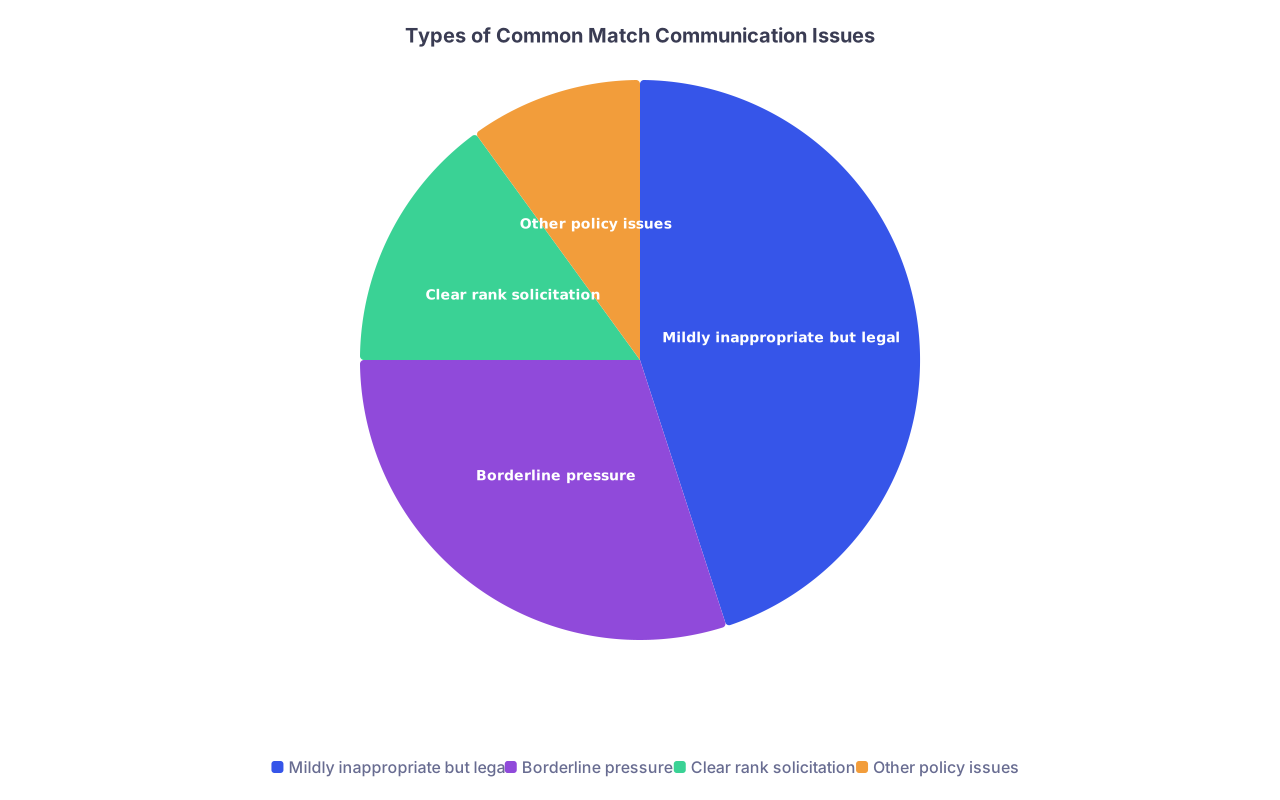
| Category | Value |
|---|---|
| Mildly inappropriate but legal | 45 |
| Borderline pressure | 30 |
| Clear rank solicitation | 15 |
| Other policy issues | 10 |
9. Red Flags vs. Dealbreakers: How It Should Affect Your Rank List
Here’s my honest opinion: if a program is sloppy or unethical in Match communication, that’s often a preview of how they handle schedules, evaluations, and wellness.
Strong reasons to drop them on your list:
- They repeatedly pressure you for rank info
- They explicitly say they only rank those who “commit”
- Different people from the program contact you separately with the same pressure
Milder yellow flags:
- One resident sends a weirdly intense “we love you, rank us high!” email
- PD says “We’ll rank you to match” in a generic email to many applicants
You don’t need to panic over every awkward phrase. But persistent pressure? That’s character revealing.

10. Quick Gut-Check Rules You Can Memorize
If you remember nothing else, remember this:
- If they ask where you’ll rank them → problematic.
- If they condition your chances on you ranking them a certain way → likely violation.
- If they pressure you on the phone to commit verbally → not okay.
- If they just say they like you and will rank you high → allowed, you still don’t owe them anything.
Your rank list is confidential. You do not have to share it, explain it, or defend it to anyone.
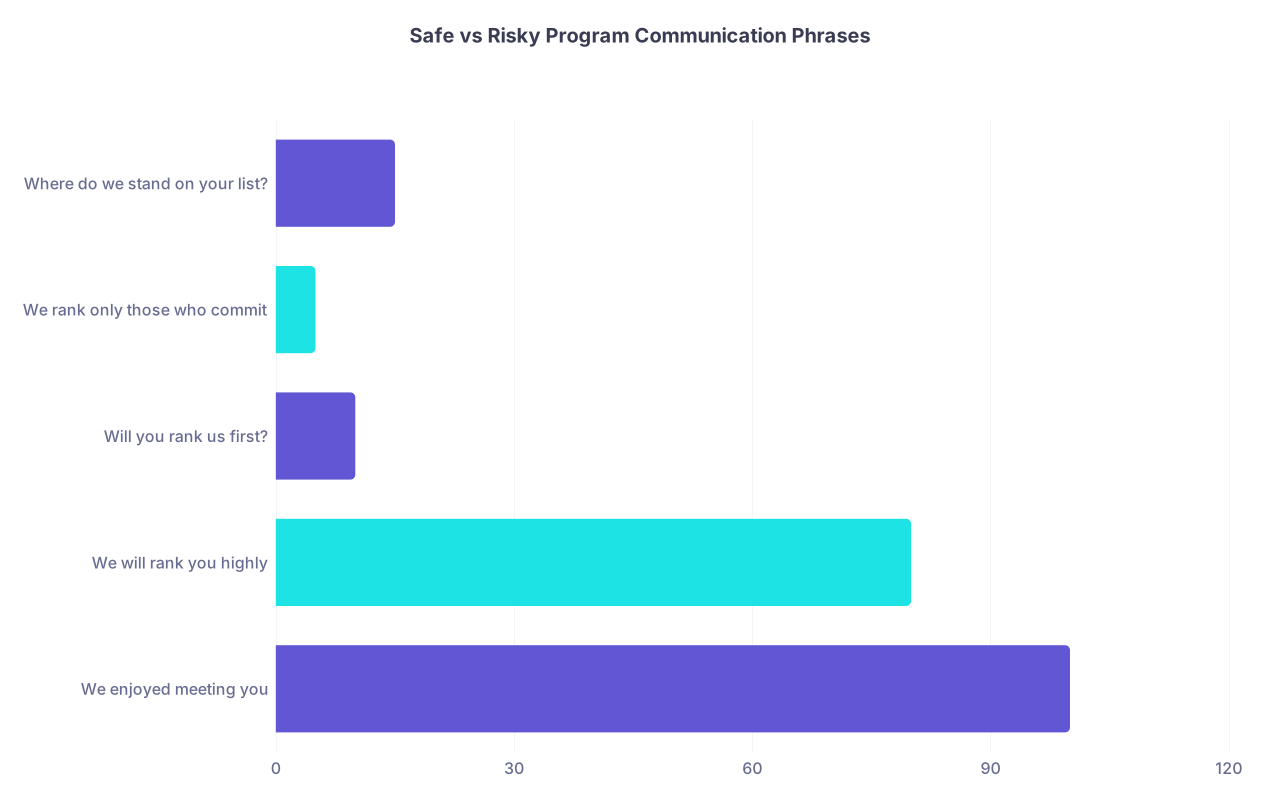
| Category | Value |
|---|---|
| We enjoyed meeting you | 100 |
| We will rank you highly | 80 |
| Will you rank us first? | 10 |
| We rank only those who commit | 5 |
| Where do we stand on your list? | 15 |
FAQs
1. Is it an NRMP violation if a program says “We will rank you to match”?
No. That’s allowed. Programs can tell you they’ll rank you highly or “to match.” It can be misleading or manipulative, and many applicants get the same message, but it’s not a rule violation by itself. The line is crossed when they start asking you to disclose or promise anything about your rank list.
2. What if a resident—not the PD—asks how I’ll rank the program?
It still counts. Anyone clearly representing the program (PD, APD, faculty, coordinator, chief, or resident acting in that role) is covered by the NRMP rules. If a resident says, “The PD asked me to find out where we are on your list,” that’s a serious problem for the program. You should avoid answering and consider documenting it.
3. Can I tell a program they’re my #1 without causing any violation?
Yes. You are allowed to share your plans voluntarily. But I wouldn’t tell multiple programs “You’re my #1”—that’s dishonest and can bite you later if someone complains. Safer phrasing is “You’re one of my top choices” or “I’ll be ranking your program very highly.” You keep flexibility without lying or overcommitting.
4. A program emailed asking if I’m still interested. Is that okay?
Yes. Programs are allowed to ask if you’re still interested in their program, especially close to rank deadline. That’s different from “Where will you rank us?” A simple answer like “Yes, I remain interested in your program” is fine. If they go further and ask about your rank list, that’s where it starts to be a problem.
5. How do I quietly ask the NRMP about a questionable email or call?
You can contact the NRMP directly through their website or by phone and describe what happened without immediately filing a formal complaint. They can tell you if what you’re describing fits a potential violation and what your options are. Before you do that, save the email or write down specifics from the call (names, date, time, wording) so you’re not relying on vague memory.
Bottom line:
- Programs cannot ask you how you’ll rank them or demand any commitment—by email, phone, or through residents.
- They can tell you they like you or will rank you highly; you don’t owe them any rank info back.
- If communication feels like pressure or a deal around rank lists, don’t answer it directly—document it, protect yourself, and rank programs in the order that’s best for you.


