
The myth that residents “make good money” is flat-out wrong in most high-cost cities.
You’re working like an attending-lite and getting paid like a mid-level office worker—often less when you factor in hours. Let’s walk through what residents actually earn by year, what that turns into after taxes, and what it realistically covers (and doesn’t).
Resident Salary by Year: What You Actually Get Paid
Programs vary, but they’re all playing in the same ballpark. Here’s the core pattern:
- PGY-1: lowest
- Each year: small bump, often 2–4%
- Big city and prestige ≠ big salary (sometimes it’s worse relative to cost of living)
Typical ranges as of recent years:
| PGY Level | Common Range (Base) | More Realistic Average |
|---|---|---|
| PGY-1 | $58,000–$68,000 | ≈ $62,000 |
| PGY-2 | $60,000–$72,000 | ≈ $64,000 |
| PGY-3 | $63,000–$75,000 | ≈ $66,000 |
| PGY-4 | $66,000–$78,000 | ≈ $69,000 |
| PGY-5 | $69,000–$82,000 | ≈ $72,000 |
Now break that down to hourly, using a realistic 60–80 hour workweek (and yes, many of you are doing more):
Let’s take a $62,000 PGY-1:
- Weekly hours: 70 (middle of the “normal” residency range)
- Weeks: 52
- Total hours: 70 × 52 = 3,640
- Hourly before tax: $62,000 / 3,640 ≈ $17.03/hr
That’s pre-tax. You’re doing ICU nights, rapid responses, death notifications—for close to what some high school grads make at overtime-heavy jobs.
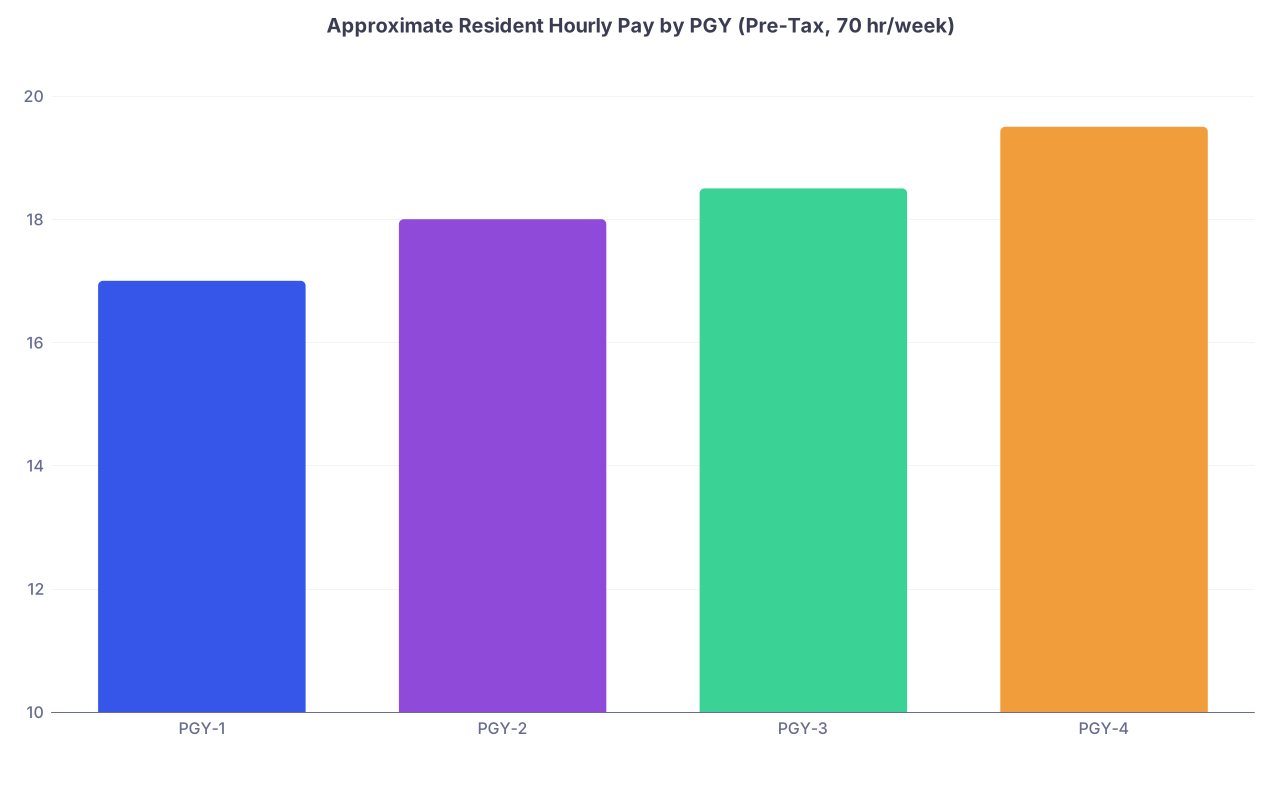
| Category | Value |
|---|---|
| PGY-1 | 17 |
| PGY-2 | 18 |
| PGY-3 | 18.5 |
| PGY-4 | 19.5 |
Bottom line: Residents are not “well paid.” They’re underpaid for their skill and hours, and the system runs on that reality.
What’s Left After Taxes and Deductions?
Base salary is fantasy money. Your real life runs on take-home pay.
Typical deductions from your paycheck:
- Federal income tax
- State income tax (if applicable)
- Social Security and Medicare
- Health, dental, vision premiums
- Disability insurance (if your program includes or offers buy-up)
- Retirement contribution (if you choose to contribute—many can’t at first)
Let’s do a realistic example for a PGY-1 making $62,000 in a state with income tax:
- Gross monthly: $62,000 / 12 ≈ $5,166
- After federal, state, FICA: often ≈ 25–30% gone
- After benefits (health, disability, maybe a small 401(k) contribution): another 5–8%
You’re often landing around:
- Take-home pay: $3,200–$3,700 per month
Pick the middle: say $3,500/month net.
That’s the number you care about. Not 62k. Not some “salary survey” blissfully ignoring rent.
What Does a Resident Salary Actually Have to Cover?
Here’s what that $3,200–$3,700/month is up against.
1. Housing (Your Biggest Line Item)
In most cities where big academic centers live, housing hits hard.
Typical ranges:
- Low-cost city, shared housing: $600–$900
- Mid-cost city or solo modest 1BR: $1,100–$1,600
- High-cost city (NYC, SF, Boston, LA), basic 1BR near hospital: $2,000–$3,000+
If you’re in a high-cost area and living alone, housing can chew up 50–70% of your take-home pay. That forces trade-offs: roommates, longer commutes, older buildings, sketchy neighborhoods.
I’ve seen interns in NYC split a 3-bedroom walk-up with 4 residents. One in the living room “converted bedroom” with a curtain. Why? Because $1,100 each was the only way to make the math work.
2. Utilities, Internet, Phone
Ballpark monthly:
- Utilities (electric, gas, water, trash): $80–$200
- Internet: $50–$90
- Cell phone: $40–$100
Call it $200–$350 total if you’re not going wild.
3. Food
You’re busy. You’re tired. You’re not cooking from scratch every night.
Reasonable resident food budgets:
- Frugal home-cooking, minimal eating out: $250–$350/month
- Moderate: $350–$500/month
- Hospital cafeteria + DoorDash/Grubhub creep: $500–$800/month
Plenty of residents end up in the $400–$600/month range without even trying because post-call and 28-hour brain says, “Just order something.”
4. Transportation
Depends entirely on your setup:
- Car payment: $0–$500+
- Car insurance: $70–$180
- Gas: $60–$200
- Parking at hospital: sometimes free, sometimes $30–$150
- Public transit: $70–$130 monthly pass in many big cities
A conservative estimate:
- With car: $250–$600/month
- Without car (urban, using public transit/Uber occasionally): $70–$250/month
5. Loan Payments
Here’s where it gets dangerous.
During residency, you’ve got three main options:
- Full standard payments: usually impossible
- Income-driven repayment (IDR) for federal loans
- Deferment/forbearance (not smart long-term, but people do it)
Federal med school debt is often $200,000–$400,000+. Under an IDR plan during residency, you might pay:
- $0–$400/month depending on your income, spouse income, and family size
Lots of residents land in the $150–$350/month range if they’re on IDR and single.
If you’re trying to get PSLF (Public Service Loan Forgiveness), you’ll want to be in IDR and making those qualifying payments.
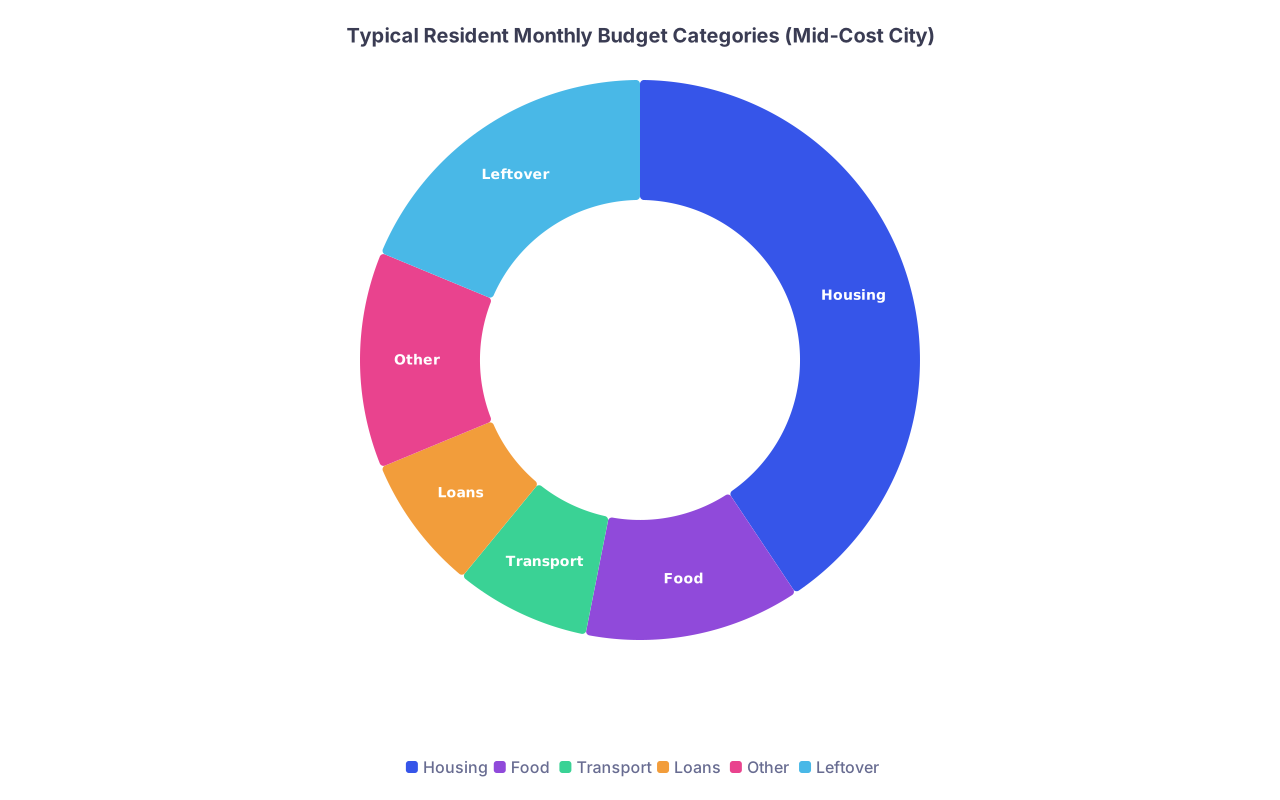
| Category | Value |
|---|---|
| Housing | 1300 |
| Food | 400 |
| Transport | 250 |
| Loans | 250 |
| Other | 400 |
| Leftover | 600 |
Those aren’t theoretical. That’s what a lot of people’s budgets actually look like.
6. “Everything Else” Bucket
This is where people get crushed if they don’t pay attention:
- Clothing (including replacing worn-out shoes and coats)
- Licensure fees, exam fees, professional society dues
- Board prep resources (Qbanks, review books)
- Occasional travel (weddings, family emergencies, holidays)
- Gifts, subscriptions, random Amazon stuff
- Gym membership or exercise classes
- Therapy or mental health care if not fully covered
You can easily blow $300–$600/month here if you’re not careful.
How the Math Really Feels: A Sample Monthly Budget
Let’s take that PGY-1 net of $3,500/month in a mid-cost city.
Say your budget looks like this:
- Rent (room in a 2BR): $1,100
- Utilities + Internet + phone: $250
- Food: $450
- Transportation (car, gas, insurance, parking): $350
- Student loans (IDR): $250
- Misc / personal / board prep / random stuff: $400
Total: $2,800
Leftover: $700
That $700 has to cover:
- Emergency fund (if you’re building one)
- Travel
- Extra exam costs
- Any savings or investments
Now move that same resident to a high-cost city:
- Rent (small studio near hospital): $2,200
- Utilities + Internet + phone: $300
- Food: $500
- Transportation (public transit + occasional Uber): $200
- Student loans (IDR): $250
- Misc: $400
Total: $3,850
But your take-home was $3,500. You’re short.
How do people cover the gap?
- Roommates or moving farther away
- Credit cards (bad, but common)
- Family help
- Moonlighting (if allowed and later in training)
How Pay Changes by Year – And Why It Still Feels Tight
Each PGY year, you get a bump—usually 2–4%. That sounds fine until you compare it with:
- Rent increases
- Inflation
- Rising food and gas costs
- Added expenses (kids, moving for fellowship, more exam fees)
Say you go from:
- PGY-1: $62k → net $3,500/month
- PGY-2: $64k → net maybe $3,650/month
- PGY-3: $66k → net maybe $3,800/month
That $150–$300/month extra disappears quickly with a single rent hike or needing a car repair.
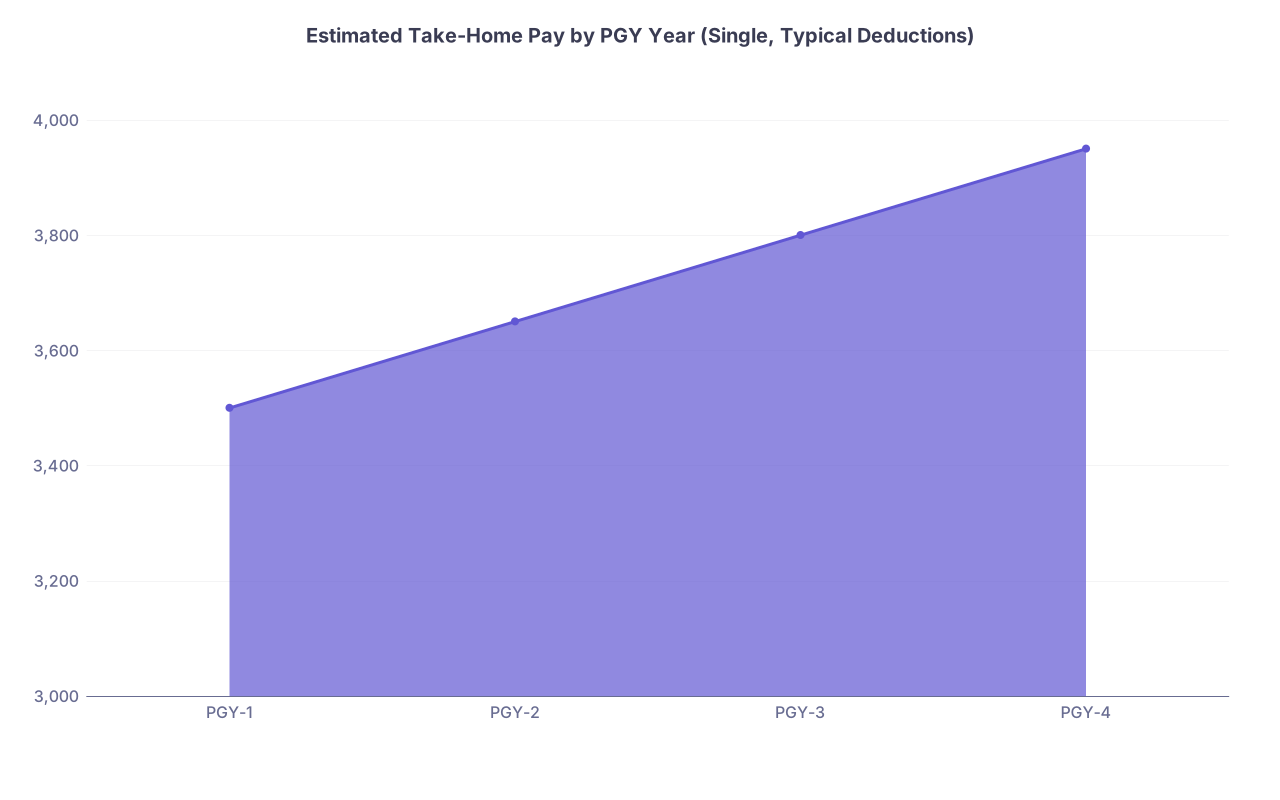
| Category | Value |
|---|---|
| PGY-1 | 3500 |
| PGY-2 | 3650 |
| PGY-3 | 3800 |
| PGY-4 | 3950 |
The jump only really shows up after residency and fellowship when you go from, say, $70k to $250k+ attending income. That’s the real shift. Residency is survival mode, not wealth-building mode.
What Residents Commonly Underestimate (Financially)
Here’s where I see people get surprised or burned:
Moving costs
New city, new apartment, deposits, furniture, travel—easily $3,000–$6,000. Many residents start residency already in the hole.Licensing and exam fees
USMLE Step 3, state licenses, DEA, board exams, credentialing—this stuff adds up. Some programs reimburse part of it. Many don’t.Taxes on moonlighting
That extra $800 from a weekend of moonlighting? Gets taxed hard. Plan for 30–40% effective rate on 1099 income.Cost of being “the doctor friend”
People assume you’re doing well. You get invited to trips, dinners, weddings. It’s very easy to spend like your future attending self instead of your current resident self.Mental health toll of constant money stress
Fighting with a partner about money. Worrying about making rent. Choosing between visiting family and staying financially afloat. It wears on you.
Quick Comparison: Resident Pay vs Other Paths
Just for perspective.
| Role | Typical Annual Pay | Typical Hours/Week | Rough Hourly (Pre-Tax) |
|---|---|---|---|
| PGY-1 Resident | $62,000 | 60–80 | $15–$20 |
| New Grad RN (big city) | $80,000–$110,000 | 36–40 | $40–$55 |
| NP/PA (primary care) | $100,000–$130,000 | 40–50 | $40–$60 |
| Software engineer (entry) | $90,000–$130,000 | 40–50 | $40–$60 |
Does that mean medicine is a bad choice? No. But you should be honest: residency is the low-paying apprenticeship phase of a very long training pipeline.
How to Survive Financially as a Resident (Without 50 Tips)
You don’t need a massive spreadsheet system. You need a few key decisions:
Lock in a realistic housing cost first
Decide your housing budget as a percentage of take-home—ideally 25–35%, max 40%. Then reverse-engineer where and with whom you can live.Go on an income-driven repayment plan early
If you’ve got federal loans and no rich uncle, IDR plus PSLF consideration is usually the better move during residency than trying to crush your loans aggressively.Build a tiny but real emergency fund
Even $1,000–$2,000 saved helps avoid credit card disasters when your car dies or you need a last-minute flight home.Automate one small good behavior
- $50–$100/month into a high-yield savings account
or - $50–$100/month into Roth IRA (if your tax situation makes sense)
- $50–$100/month into a high-yield savings account
Not huge. Just consistent.
- Know your true monthly “fixed nut”
Add up bare minimum costs: rent, utilities, phone, loan payment, food at survival level, transport. That number tells you how close you are to the edge.

| Step | Description |
|---|---|
| Step 1 | Start Residency |
| Step 2 | Estimate Take Home Pay |
| Step 3 | Set Housing Budget |
| Step 4 | Choose Roommates or Location |
| Step 5 | Pick IDR Plan for Loans |
| Step 6 | Build 1000 to 2000 Emergency Fund |
| Step 7 | Automate Small Monthly Savings |
FAQs About Resident Pay and Expenses
1. Do residents get paid overtime or extra for night shifts?
No, not in the way most workers do. Resident salaries are usually fixed. Whether you work 40 or 80 hours, your paycheck is the same. Some programs offer a small differential for nights or extra call stipends, but it’s usually minor and not true time-and-a-half overtime.
2. Can residents realistically save money during training?
Yes, but not a lot unless you’re in a low-cost city, have roommates, or get help from family or a partner. Think small wins: a few hundred a month into savings or retirement, not massive investing. The goal during residency is more “avoid digging a deep hole” than “build serious wealth.”
3. Is moonlighting a good way to boost income as a resident?
For upper-level residents in programs that allow it, moonlighting can help—but it’s not free money. The trade-off is fatigue, less study time, and higher taxes on 1099 income. It’s worth considering once you’re comfortable clinically and not drowning, but it shouldn’t be your first-line fix for a broken budget.
4. Are fellowships paid more than residency?
Often slightly, but not dramatically. Many clinical fellowships pay like a PGY-4 or PGY-5 at that hospital’s scale. You might see a few thousand a year more, but you’re nowhere near attending money yet. Think of fellowship as “bonus years of resident-level pay.”
5. Do hospitals help with housing for residents?
Some do, many don’t. A few major academic centers have subsidized housing or on-campus apartments that are cheaper than market rates. Others might offer a small “housing stipend” (like $3,000–$10,000 per year), which sounds impressive but disappears quickly in places where rent is $2,500/month. Always ask about this on interview day or check the GME website.
6. How much should a resident put toward student loans?
During residency, I like a simple rule:
- Get on an income-driven repayment plan for federal loans.
- Make the required payment (often $0–$400).
- Don’t aggressively overpay unless your debt is relatively low or you’re certain you won’t use PSLF.
Preserve cash flow and sanity now; you’ll have far more power to attack debt as an attending.
7. What’s the single smartest financial move a new resident can make?
Decide your housing cost before you fall in love with an apartment. Figure out your take-home pay, set a hard housing cap (ideally 25–35% of that), and refuse to cross it. That one decision will do more for your financial and mental health over the next 3–7 years than any fancy budgeting trick.
Open your latest pay stub (or contract if you haven’t started yet), calculate your estimated monthly take-home, and write down your target housing budget as a dollar amount. That number should guide every apartment tour and roommate conversation from here on out.