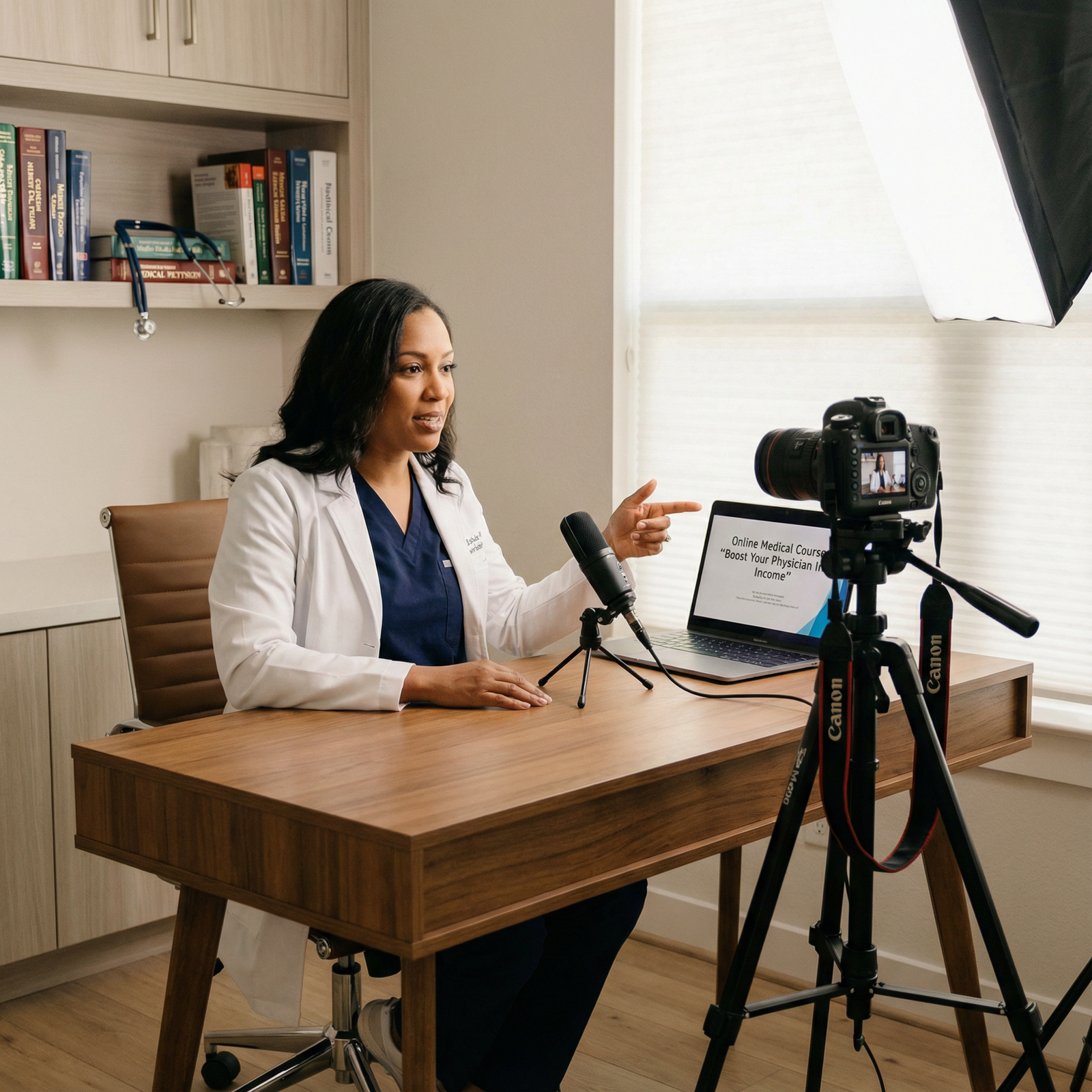
Introduction: Why Online Course Creation Belongs in Your Physician Side Hustle Toolkit
The modern healthcare environment is volatile: changing reimbursement models, increasing administrative burdens, uncertain employment contracts, and burnout risks all affect physician income and career satisfaction. Many physicians are recognizing that relying solely on clinical work can be financially—and emotionally—precarious.
Online Education has emerged as a powerful way for physicians to both diversify income and extend their impact beyond the exam room. By turning your clinical expertise, training experience, and real-world insights into structured online courses, you can:
- Create new revenue streams that are not tied directly to your clinical hours
- Reach learners globally—students, trainees, other clinicians, and patients
- Build a personal brand and thought leadership in your niche
- Contribute to improving Health Literacy at scale
This guide outlines the top types of online courses physicians can teach, how these can meaningfully supplement Physician Income, and step-by-step strategies to design, launch, and grow your own course-based side hustle.
Why Online Education Is a Smart Side Hustle for Physicians
Teaching online isn’t just “extra work”—when done strategically, it’s an asset that compounds over time.
Key Benefits for Physicians
True Income Diversification (Beyond More Shifts)
Traditional “side gigs” for doctors often mean more clinical hours—locums, moonlighting, call coverage. Online course creation, by contrast, can become:- Semi-passive income once content is created and systems are in place
- Scalable: one course can serve 10 or 10,000 learners with minimal incremental effort
- Less vulnerable to local market changes, hospital politics, or schedule cuts
Monetizing Expertise You Already Have
Years of training have given you advanced clinical knowledge, pattern recognition, and decision-making frameworks that others are willing to pay to learn. Courses simply package that expertise in a structured, accessible format.Flexible Around a Clinical Schedule
You can film lectures on weekends, outline modules during call downtime, or respond to student questions asynchronously. There’s no fixed clinic template or on-call schedule dictating your course work.Professional Branding and Authority Building
Being a recognized educator in a niche can enhance:- Speaking and consulting opportunities
- Academic promotion and teaching portfolios
- Negotiation power for leadership or hybrid clinical-educator roles
Impact Beyond Your Zip Code
Courses focused on Health Literacy, Telemedicine best practices, or chronic disease education can reach underserved populations and clinicians worldwide, amplifying your contribution to the future of medicine.
High-Impact Course Ideas Physicians Can Teach Online
The best course topics sit at the intersection of your expertise, learner demand, and your genuine interest. Below are high-yield categories that translate particularly well into online formats.
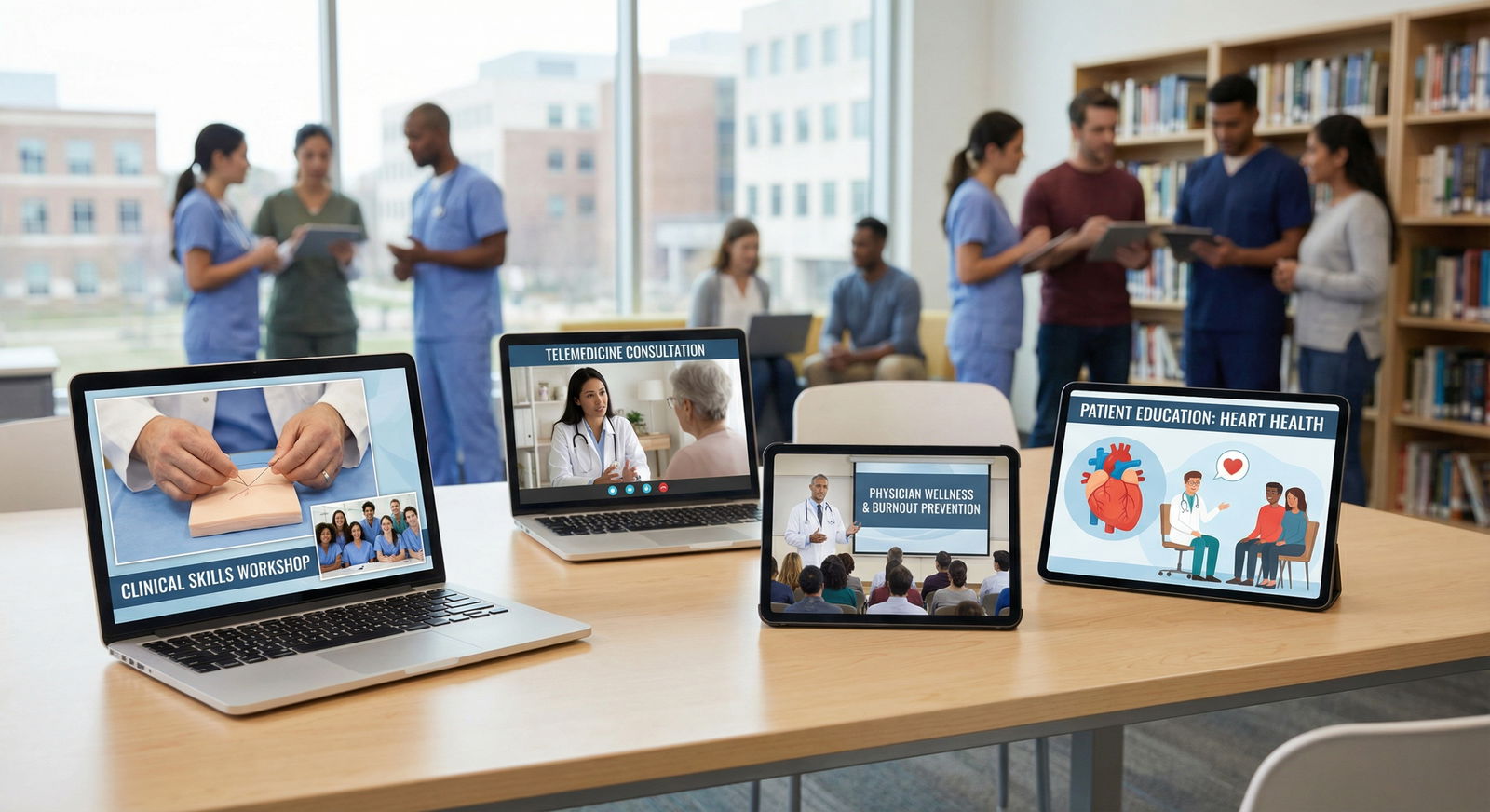
1. Medical Education for Pre-Meds, Students, and Residents
Physicians are uniquely qualified to demystify the path to and through medical training.
a. Pre-Med and Admissions Strategy Courses
- Navigating the pre-med path and choosing majors
- MCAT strategy and content review (especially for high-yield systems)
- Crafting compelling personal statements and AMCAS applications
- Preparing for interviews (traditional, MMI, virtual interviews)
- Building a competitive CV: research, shadowing, volunteering
Example course ideas:
- “From Premed to MD: A Step-by-Step Roadmap to Medical School Admission”
- “MCAT for Busy Nontraditional Applicants: Efficient Study Systems”
b. Foundational Science and Organ-System Review
You can create board-style, clinically integrated explanations for:
- Cardiology, nephrology, pulmonology, GI, neuro, etc.
- Pathophysiology modules using real clinical cases
- Pharmacology made practical: how drugs are actually used at the bedside
Target audience: Medical students, PA/NP students, international graduates prepping for licensing exams.
c. Clinical Skills and Clerkship Preparation
Courses that reduce the “hidden curriculum” are in high demand:
- History-taking frameworks and patient-centered interviewing
- Physical exam fundamentals (cardiac, lung, neuro, MSK) with video demos
- How to present patients on rounds efficiently and clearly
- Documentation and note-writing using real or de-identified examples
- Approaching common inpatient and outpatient complaints
Example:
- “Day One-Ready: Clinical Skills Bootcamp for MS3s”
- “How to Crush Your Medicine Rotation and Impress Your Attendings”
2. Specialty Knowledge and Procedural Skills
Your specialty is a gold mine for niche Course Creation opportunities.
a. Procedural Tutorials (Within Proper Legal and Ethical Limits)
You can’t teach invasive procedures to the public, but you can teach:
- Conceptual overviews for trainees (e.g., lumbar puncture indications, consent, troubleshooting)
- Simulation-based videos using models or task trainers
- Step-by-step procedural checklists and mental models
Examples:
- “Core Emergency Procedures for EM and IM Residents”
- “Ultrasound-Guided Vascular Access: A Practical Introduction”
b. Specialty Deep Dives for Trainees and APPs
- “Crash course” intros for new residents or advanced practice providers
- High-yield updates in cardiology, dermatology, oncology, etc.
- How to interpret specialty-specific tests (e.g., ECGs, CT scans, PFTs, sleep studies)
Example:
A cardiologist creates “ECG Interpretation from Zero to Confident” with structured modules, practice cases, and downloadable reference algorithms.
3. Professional and Personal Development for Healthcare Workers
Physicians can also lead courses that address the human side of medicine.
a. Burnout Prevention, Resilience, and Mental Health
High need, especially post-pandemic:
- Recognizing early signs of burnout and moral injury
- Evidence-based wellness practices tailored to shift work
- Cognitive-behavioral and mindfulness tools for clinicians
- Building peer support and setting boundaries
Courses might target:
- Medical students and residents
- Attending physicians facing mid-career burnout
- Multi-disciplinary teams (nurses, APPs, allied health)
b. Time Management and Productivity in Medicine
Your experience navigating competing demands is valuable:
- Managing inboxes, EMR messages, and documentation efficiently
- Block scheduling, batching tasks, and template use
- Prioritization frameworks during busy clinic or call shifts
- Strategies for protecting focused time for research, writing, or family
Example:
- “Productivity for Physicians: Getting Home on Time Without Sacrificing Care”
4. Health Literacy and Patient Education Courses
Improving Health Literacy is central to better outcomes and is an ideal area for mission-driven course work.
a. Chronic Disease Self-Management
Patients and caregivers are searching for trustworthy, structured information that’s more practical than handouts but more digestible than journal articles.
Potential topics:
- Diabetes: medication basics, glucose monitoring, nutrition, foot care
- Hypertension: lifestyle interventions, medication adherence
- Heart failure: symptom monitoring, diuretics, when to call the doctor
- COPD and asthma: inhaler techniques, trigger management
- Autoimmune disease: understanding flares, medication risks/benefits
These courses can be:
- Patient-facing (simpler language, visuals, concise modules)
- Caregiver-focused (e.g., dementia care, stroke recovery at home)
b. Preventive Medicine and Lifestyle Change
- Intro to Mediterranean or plant-forward eating patterns
- Exercise prescriptions for different age groups and comorbidities
- Sleep hygiene and circadian health
- Cancer screening explanations (risks, benefits, shared decision-making)
You might also incorporate Telemedicine elements by showing how patients can use remote monitoring devices, portals, and virtual visits effectively.
5. Telemedicine Skills and Digital Practice Building
Telemedicine is now a permanent part of healthcare, and many clinicians still feel undertrained.
a. Starting or Optimizing a Telehealth Practice
Relevant to both employed and independent physicians:
- Platform selection, documentation, and billing fundamentals
- Workflow design (scheduling, rooming, follow-up)
- Legal and regulatory basics (licensing, prescribing, cross-state rules)
- Integrating remote patient monitoring and digital tools
b. Virtual Communication and “Webside Manner”
Teaching other clinicians how to:
- Build rapport through a screen (eye contact, body language, environment)
- Perform modified virtual physical exams
- Deliver bad news or sensitive discussions remotely
- Manage safety concerns and escalate to in-person care appropriately
These courses directly support the Phase: MISCELLANEOUS_AND_FUTURE_OF_MEDICINE by preparing clinicians for ongoing digital transformation.
6. Research Methods, Statistics, and Academic Skills
Your experience with research and quality improvement is valuable to trainees.
- Study design basics: observational vs. interventional, bias, confounding
- IRB processes and ethical considerations
- Reading and critiquing medical literature
- Biostatistics for clinicians (confidence intervals, regression, survival analysis)
- Manuscript writing, responding to reviewers, and conference presentations
Example:
- “Clinical Research for Busy Residents: From Idea to IRB Approval”
- “Statistics Made Practical for Clinicians and Trainees”
Choosing the Right Platform for Your Physician-Led Online Course
Where you host your course affects your reach, control, and revenue potential. Consider your goals, tech comfort, and audience.
Marketplace Platforms (Built-in Traffic, Less Control)
Udemy
- Pros: Large user base, easy setup, frequent sales drive volume
- Cons: Lower price points, limited control over pricing and discounts
Skillshare
- Pros: Great for shorter, creative or professional development content (e.g., wellness for clinicians, productivity)
- Cons: Payment is based on watch time; not ideal for high-ticket, niche medical courses
Coursera / edX
- Pros: Academic credibility, institutional partnerships
- Cons: Typically require affiliation and more complex application processes
Branded Course Platforms (More Control, You Drive Traffic)
Teachable, Thinkific, Kajabi
- Pros: You own your “school,” set pricing, bundle products, and build a brand
- Cons: You’re responsible for marketing and student acquisition
LinkedIn Learning
- Pros: Strong for professional, leadership, or digital health topics; boosts personal brand
- Cons: Selective; you’ll typically apply or be invited, and content scope is more corporate-focused
Free/Hybrid Platforms to Build Audience
YouTube
- Build a channel with free, high-value content (e.g., brief teaching pearls or patient education)
- Use descriptions and end screens to funnel viewers to your paid, structured courses
Email Newsletters / Blogs
- Provide ongoing teaching and updates
- Serve as your main marketing engine for new course launches
For most physicians, a practical path is:
- Start with short-form free content (YouTube, blog, social media) to validate interest.
- Launch a structured introductory course on a hosted platform (Teachable/Thinkific).
- Add more advanced or niche courses, bundles, or membership communities over time.
A Step-by-Step Framework for Creating a Successful Online Course
Creating a course can feel overwhelming. Breaking it into clear steps helps you move from idea to launch without getting stuck.
1. Identify and Validate Your Niche
Ask:
- Who exactly is this for (e.g., “US MS2s studying for Step 1,” “new family medicine attendings starting telemedicine”)?
- What painful problem am I solving for them (exam anxiety, clinic overwhelm, knowledge gaps)?
- Are there existing courses? If yes, what can you do differently (better organization, physician-led, specialty-specific, more practical)?
Validate quickly by:
- Posting polls in relevant Facebook/Reddit groups or physician communities
- Asking your residents, students, or patients what they’d pay to learn in a structured way
- Running a low-cost webinar and seeing who signs up and what questions they ask
2. Design a Clear, Outcome-Focused Course Outline
Work backward from a single promise:
- “By the end of this course, you will be able to ______.”
Then:
- Break that into 4–8 modules
- Each module into 3–7 short lessons (5–15 minutes)
- Include practice: cases, checklists, reflection prompts, quizzes
For example, a telemedicine course might have modules:
- Foundations and regulations
- Tech and workflow setup
- Virtual communication skills
- Clinical scenarios and red flags
- Documentation and billing
- Quality improvement and scaling
3. Create Engaging, High-Quality Content Efficiently
You do not need Hollywood production.
- Use simple equipment: a good USB microphone, webcam/DSLR, and decent lighting
- Create slides with clean design and large fonts
- Use clinical cases and real-world stories to illustrate each concept
- Add downloadable resources:
- PDF checklists (e.g., “Virtual Visit Prep Checklist”)
- Templates (e.g., patient handouts, email scripts)
- Algorithms and flowcharts
Mix formats:
- Video lectures for core teaching
- Screen shares for EMR, data, or stat demos
- Short text lessons or summaries for quick reference
- Quizzes for self-assessment and CE/CME (if you navigate accreditation)
4. Choose Your Teaching and Interaction Style
Decide how interactive you want your course to be:
- Self-paced only: No live component; students watch on their own time. Lowest ongoing time commitment.
- Self-paced + Live Q&A: Pre-recorded modules plus monthly group Zoom sessions. Stronger community and perceived value.
- Cohort-based: Everyone starts together, with scheduled live sessions and assignments. More intensive but can support higher pricing.
For busy clinicians, a hybrid self-paced + periodic live Q&A is usually sustainable and effective.
5. Market to the Right Audience Without Feeling “Salesy”
You’re not selling snake oil; you’re offering structured guidance to people who need it. Focus your messaging on:
- The problem you solve (“Overwhelmed by clinic telehealth demands?”)
- The transformation you offer (“Confidently see patients virtually with efficient workflows”)
- Evidence of your credibility (training, experience, testimonials, case stories)
Use:
- Social media posts with micro-lessons and tips
- Guest appearances on podcasts or webinars
- Email sequences welcoming subscribers, sharing value, and inviting them to enroll
- Your existing networks: alumni groups, specialty societies, local residency programs
6. Engage Learners and Iterate for Continuous Improvement
- Create a simple community space (platform forums, Slack, Discord, or private Facebook group) for Q&A and peer support
- Ask for feedback via surveys after each module and at course completion
- Track frequently asked questions and update content or add bonus lessons
Over time, you’ll:
- Refine explanations that confuse people
- Add new modules based on evolving guidelines, Telemedicine regulations, or exam changes
- Increase your course’s value and justify price increases
Frequently Asked Questions (FAQ)
1. What types of online courses are most profitable for physicians?
Courses that solve a clear, high-stakes problem for a specific audience tend to be most profitable. Examples include:
- High-yield exam prep (e.g., specialty board reviews, OSCE prep)
- Telemedicine practice building and optimization for clinicians
- Specialty skills or interpretation courses (e.g., ECGs, imaging, procedural frameworks)
- Comprehensive chronic disease management programs for patients and caregivers
Higher-priced “professional” courses (for clinicians or trainees) generally contribute more significantly to Physician Income than low-cost general wellness courses, though both can work if scaled appropriately.
2. Do I need teaching experience or academic affiliation to create an online course?
Formal teaching or academic titles help but are not required. What matters most is:
- Real-world expertise and clinical experience
- Ability to communicate clearly and structure content
- Ethical and evidence-based information
If you lack prior teaching experience, start with a narrower, simpler topic and refine based on learner feedback. Over time, your courses themselves become strong evidence of your teaching abilities.
3. How much time does it realistically take a physician to create a course?
For a focused 4–6 hour course:
- Planning and outlining: 5–10 hours
- Content creation and recording: 15–30 hours (spread over weeks)
- Editing and platform setup: 10–20 hours (or outsourced)
- Initial marketing setup: 10–15 hours
Total: roughly 40–70 hours for a solid first course. After launch, maintenance may be as little as a few hours per month, especially if it is primarily self-paced.
4. Is it safe and legal to teach medical content online?
Yes, if you:
- Avoid providing individualized medical advice or establishing a doctor–patient relationship with learners
- Use clear disclaimers that your course is educational, not a substitute for in-person care
- Protect patient privacy and use only de-identified or simulated cases
- Respect scope-of-practice boundaries when teaching non-physicians
For patient-facing content, keep recommendations in line with widely accepted guidelines and encourage learners to review specifics with their own clinicians.
5. How can physicians get started with online course creation if they feel overwhelmed?
Begin with the smallest viable step:
- Identify one narrow problem you can help solve (e.g., “How to present patients effectively on rounds”).
- Outline a 60–90 minute mini-course rather than a full curriculum.
- Record simple videos with minimal editing using tools you already have.
- Host it on an easy platform (Teachable, Thinkific, or even unlisted YouTube links behind a paywall).
- Offer it to a small group (your residents, local med school) at a low introductory price in exchange for feedback.
Once you see that learners find value—and you see revenue coming in—it becomes much easier to invest in more comprehensive Course Creation projects.
Online Education is no longer a fringe side project; it is a strategic, scalable way for physicians to expand their impact, enhance Health Literacy, and strengthen financial stability in an uncertain healthcare system. By packaging your clinical wisdom and real-world experience into well-designed online courses, you not only diversify your income but also contribute meaningfully to the future of medicine—whether in exam prep, Telemedicine, chronic disease management, or clinician wellness.
The best time to start building your educational assets was a few years ago; the second-best time is now.