
The fastest way to blow up a medical career right now isn’t a lawsuit. It’s an “innocent” side gig that quietly breaches your contract.
Most doctors do not lose sleep over this. They should.
You’re probably not trying to be sneaky. You’re trying to pay off loans, hedge against burnout, or build something of your own. But the combo of vague employment contracts + rapidly evolving side hustles (telehealth, social media, expert work, startups) is a legal landmine. And HR will not save you from yourself.
Let’s walk through how good physicians—ethical, well-meaning, not reckless—accidentally breach agreements and put their jobs, licenses, and finances at risk.
1. The Non-Compete Trap: “It’s Just a Little Telehealth…”
The most common mistake? Underestimating how broad your non-compete and “restricted activities” clauses really are.
You think non-compete = “cannot work down the street for a rival hospital.”
Your contract probably thinks non-compete = “cannot do almost any clinical work (and sometimes nonclinical work) in this region, in any capacity, for anyone else, without prior written consent.”
Common landmines:
- Telemedicine for another group
- “Just one weekend a month” at a competing hospital
- Call coverage for a private group in the same catchment area
- Urgent care shifts for a chain that your system views as a direct competitor
- Remote consults across state lines with a company your employer doesn’t like
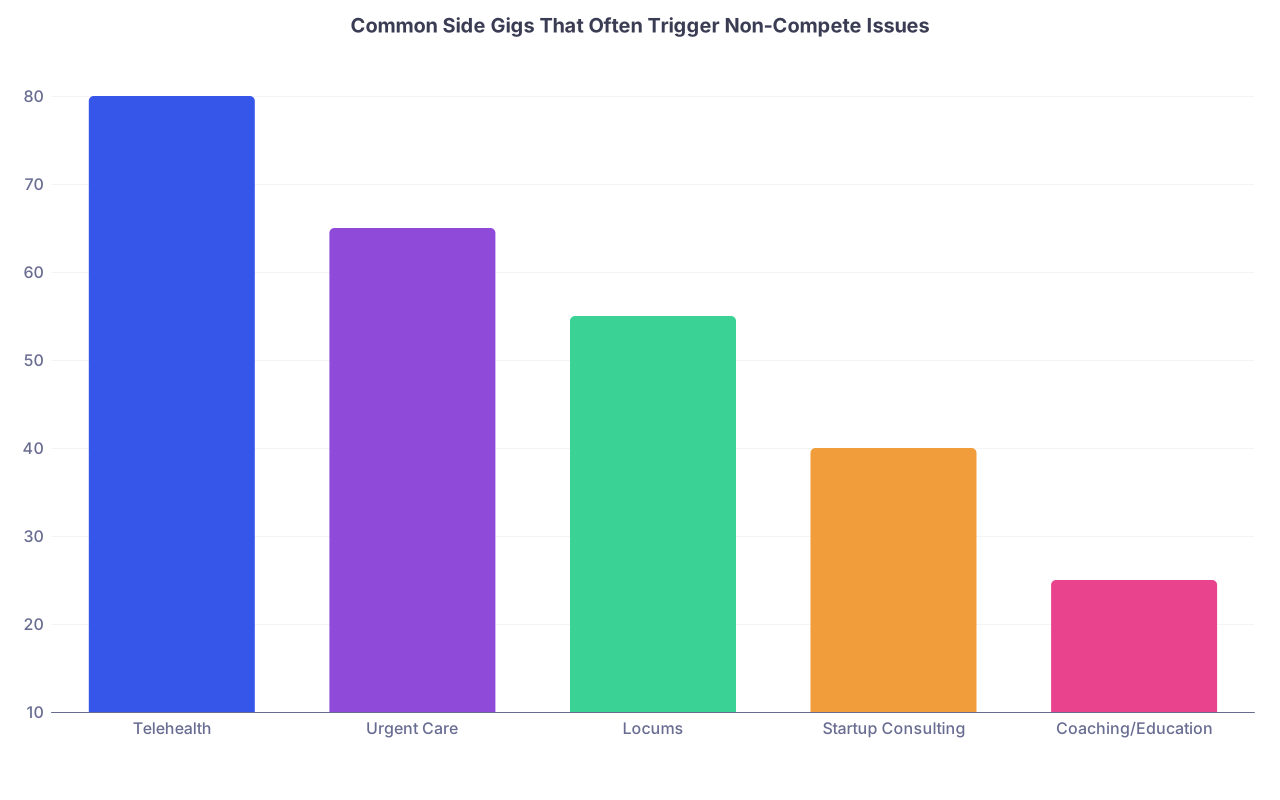
| Category | Value |
|---|---|
| Telehealth | 80 |
| Urgent Care | 65 |
| Locums | 55 |
| Startup Consulting | 40 |
| Coaching/Education | 25 |
Those percentage-style values reflect what I see most often when physicians get “the email” from legal or admin.
What you’re missing in the contract
Most doctors only look for the mileage radius and the duration:
- “25 miles for 1 year after termination.”
They ignore the rest of the paragraph. Big mistake.
Buried in that section are phrases like:
- “directly or indirectly”
- “in any capacity whatsoever”
- “including but not limited to employee, contractor, owner, member, consultant, or advisor”
- “within the hospital’s primary and secondary service area”
- “or via telemedicine or virtual care to patients located within this geographic region”
That last one is how a “work-from-home side gig” lands you in breach.
How this blows up in real life
Scenario I’ve seen play out:
- Hospitalist signs with Large Health System A
- Side gig: works remote for Telehealth Co. B seeing urgent care-level patients statewide
- Some of those patients live inside System A’s service area
- System A considers Telehealth Co. B a competitor
- Contract: “Physician shall not provide medical services to any competing entity… within the primary or secondary service area… including via telemedicine.”
- Result: lawyer letter, threats of injunction, demand to stop immediately, sometimes repayment of a signing bonus
You think you’re “just seeing sinus infections on video.” They see you as feeding a competitor.
How to avoid this mistake
Have a physician contract attorney review your main job contract before you ever sign it.
Not a general lawyer. Not your cousin who “does some contracts.” Someone who reads physician employment agreements weekly.Demand precise non-compete language. Push for:
- Clearly defined geography (zip codes or counties, not “service area”)
- Clear scope (clinical patient care vs. everything under the sun)
- Clear carve-outs for specific side gigs if you already have them
Before starting any side clinical work, ask yourself:
- Is this within my employer’s radius or service area?
- Does any part happen via telehealth into that area?
- Does my employer compete with this entity in any way?
If you’re not sure, you don’t guess. You get a written opinion or written consent.
2. The Moonlighting Clause You Never Read
The second big trap: the “outside activities” or “moonlighting” clause. It usually sounds harmless and bureaucratic—until you violate it.
Typical language (paraphrased, but I’ve seen this exact flavor too many times):
“Physician shall devote full professional time and attention to Employer and shall not engage in any other professional or commercial activities, paid or unpaid, without prior written consent of Employer.”
Looks like boilerplate. It is not.
This can technically rope in:
- Paid telehealth
- Medical expert witness work
- Consulting for medtech or pharma
- Developing CME content for another system
- Paid speaking engagements
- Owning part of an ASC or urgent care
- Coaching other physicians
- Starting a startup on the side if it touches healthcare in any way

The subtle ways you breach this
You assume:
- “They only care about clinical work.” Not true.
- “It’s nonprofit work, so it doesn’t count.” It might.
- “This is entirely nonclinical, so they won’t care.” They might care a lot if it uses your medical expertise or their brand.
I’ve seen a physician in an academic center get called into a dean’s office because their name appeared on a CME program for another hospital—honorarium was a few hundred dollars. Contract technically required prior approval. HR was not amused.
Another? A hospital-employed cardiologist quietly did paid advisory work for a cardiac device startup that happened to be trying to sell to that same hospital. Instant conflict-of-interest and contract violation.
What you should be doing instead
- Create a written log of every side activity—paid, unpaid, clinical, nonclinical. If it uses your MD or your reputation as “Dr. X,” it goes in the log.
- Run them through the actual contract language, not your feelings about what “should” matter.
- When in doubt, request written permission using extremely specific descriptions:
- Time commitment
- Role (advisor, speaker, 1099 doc, etc.)
- Entity name
- Whether there is any overlap in patients, geography, or business with your employer
Verbal “that should be fine” from your department chair is toilet paper. If legal disagrees later, they’ll throw the chair under the bus and come after you.
3. Using Employer Resources for Your Side Hustle (Huge No-No)
This one feels minor. It’s not.
You will be shocked how fast an employer goes from “supportive of your side project” to “you misused company resources” when there’s conflict.
Common ways doctors slip:
- Using hospital email for expert witness work or startup communication
- Storing consulting files or lecture slides on your hospital OneDrive
- Taking notes for your side business in Epic or hospital-provided devices
- Using your MA, nurse, or clinic staff to help with scheduling for your “personal projects”
- Working on your course, book, or newsletter on hospital time while on the clock
| Action | Risk Level |
|---|---|
| Using hospital email for side gig invoices | High |
| Storing startup docs on hospital laptop | High |
| Taking a quick personal call at lunch | Low |
| Using office printer for side materials | Medium |
| Having staff help with your side clinic | Very High |
Some contracts and policies state explicitly that anything created on employer devices or networks may be considered their property. That podcast outline you wrote on your work laptop at lunch? They could theoretically assert an interest.
Is this always enforced? No. But when conflict arises—say you leave and start a competing venture—it suddenly matters a lot.
Avoid these rookie moves
- Do not use employer email for any side gig. Create a separate domain and account.
- Do not store side gig files on employer cloud accounts or devices.
- Do not ask staff to “help with a few things” for your other work. That’s how people lose jobs.
- Do not work on side contracts, billing, or meetings during your scheduled clinical time.
Treat your side gig like a completely separate company. Because that’s exactly how your employer’s lawyers will treat it.
4. Confidentiality & Intellectual Property: Accidentally Stealing From Yourself
You’ll see some version of two key clauses in almost every physician contract:
- Confidentiality / non-disclosure
- Work-for-hire / intellectual property assignment
Doctors routinely underestimate the second one.
How IP clauses bite you
Your contract might say something like:
“All inventions, discoveries, writings, processes, course materials, or other works created by Physician during the term of employment that relate to the business of Employer shall be the sole property of Employer.”
Now combine that with you:
- Building an online course while employed
- Writing a book based on your clinical experience in their system
- Designing a protocol or clinical pathway that you then want to commercialize
- Creating a software tool, app, or AI triage algorithm on nights and weekends
If it “relates to the business” of your employer, they can claim ownership or at least a piece of it.
I’ve personally seen academic centers assert rights to:
- A resident’s educational website built on their own time
- A faculty member’s simulation curriculum later sold to another institution
- Physician-authored patient handouts turned into a branded product
The confidentiality side
You also have strict obligations not to disclose:
- Internal data, metrics, or outcome statistics
- Negotiated payer rates
- Details about internal processes and systems
- Patient-related examples that can be traced back, even indirectly
This torpedoes a lot of “innocent” side content:
- Highly detailed blog posts about your hospital’s failures
- Case-based social media threads where the identifiers aren’t as removed as you think
- Sharing de-identified yet specific EHR screenshots in a course or on Twitter
- Presentations where you flash internal dashboards or financial data
If you build a business that depends on internal information from your employer, you are building on stolen ground.
How to protect yourself
- Before you build anything substantial—a course, app, book, or product—have an attorney review both your employment contract and the IP terms of whatever you’re building.
- Whenever possible, negotiate IP carve-outs:
- Pre-existing works
- Clearly independent side projects
- Noncompeting educational content
- Keep clinical details and internal data out of your side hustle materials unless you have explicit, written clearance.
5. Licensing, Malpractice, and “Just Advice Online”
Here’s a quiet way to wreck your license: your side gig edges from “education” into “medical practice” without adequate coverage or compliance.
The problem areas:
Social media / YouTube / TikTok:
You start giving specific, problem-focused guidance that sounds like care: “If you have X, you should ask your doctor to prescribe Y and do Z tests.” Someone in another state follows it, has a bad outcome, and now you’re defending yourself as having created a physician–patient relationship.Coaching / consulting:
You advertise “health coaching” but operate like a remote concierge clinic without appropriate licenses, malpractice, or oversight.Telehealth for a side company:
You assume they’ve got your back. Then you realize no one actually confirmed malpractice details, charting standards, or scope-of-practice issues across states.
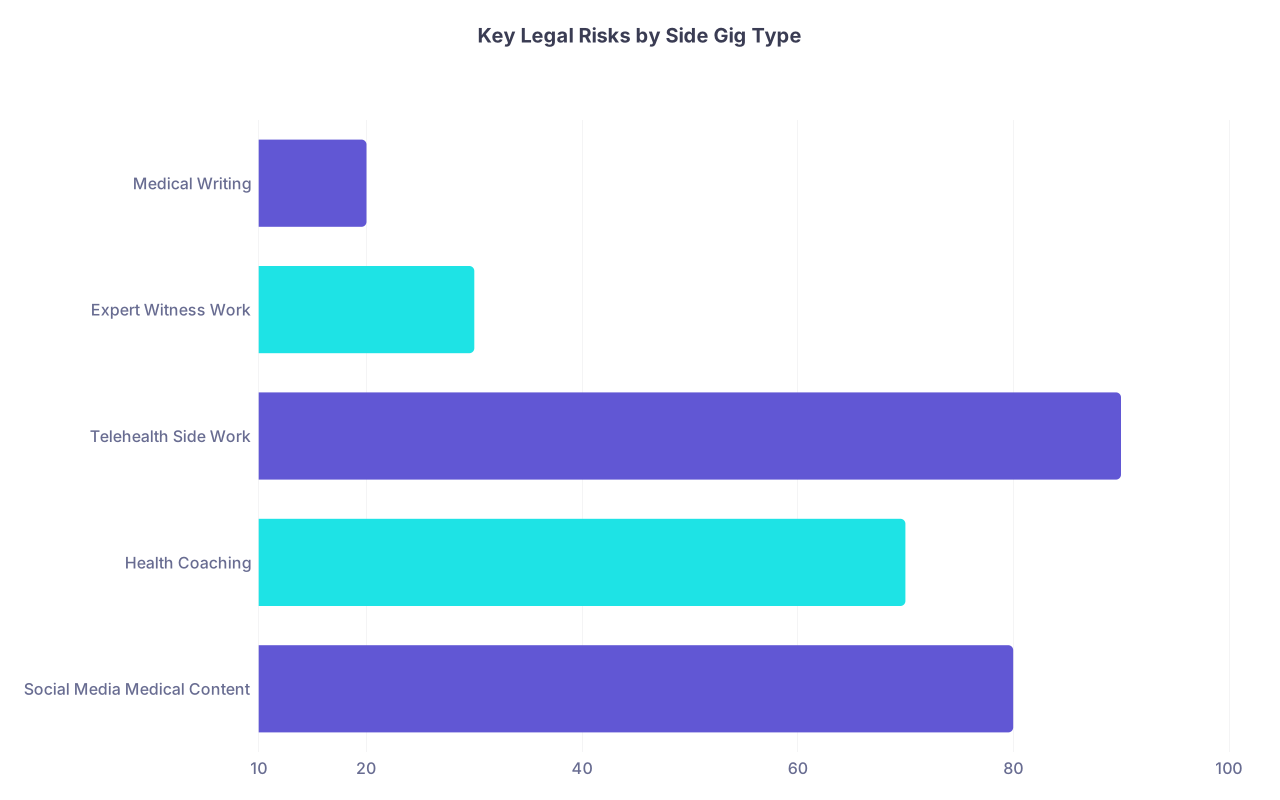
| Category | Value |
|---|---|
| Social Media Medical Content | 80 |
| Health Coaching | 70 |
| Telehealth Side Work | 90 |
| Expert Witness Work | 30 |
| Medical Writing | 20 |
How this ties back to your main contract
Many contracts contain language like:
- “Physician shall maintain standards of professional conduct consistent with Employer policies and applicable law at all times.”
- “Any act that may bring disrepute upon Employer shall constitute grounds for termination.”
So if your side hustle gets you a board complaint or bad press, your employer can say you violated the “conduct” section—contract breach, with cause.
And “for cause” termination often triggers:
- Repayment of signing bonus
- Loss of tail coverage (if they were covering it)
- Loss of relocation assistance
- Possible report to the NPDB depending on circumstances
You were trying to build a wellness coaching brand. Now you’re fighting for your career.
Minimum protections you should insist on
- Clear disclaimers and content boundaries on social media and any online platform—no individualized medical advice.
- Explicit, written confirmation of malpractice coverage scope for any clinical side work.
- If doing coaching, keep it lifestyle/education-focused and avoid diagnosing, prescribing, or “managing” conditions.
And keep your employer’s name entirely out of it unless they’ve explicitly approved association.
6. Conflicts of Interest and the “Invisible Line” You Cross
You can be legally compliant and still violate your employer’s conflict-of-interest or professionalism policies. Which is enough to get you disciplined or fired.
Conflicts I’ve watched explode:
- Referring hospital patients to your own side clinic or business without disclosure and approval
- Promoting your own products or services (courses, supplements, paid programs) to your hospital’s patient population
- Sitting on the advisory board of a company that sells to your hospital without full disclosure and clearance
- Using your MD title and hospital affiliation to endorse a product online that makes claims your system can’t stand behind

Notice something: you might think, “But I’m just trying to help patients by giving them access to my better service.” Your CMO might think, “You’re profiting off our patient base and undermining our brand.”
And the contract probably has generic but powerful language:
- “Physician shall avoid actual or apparent conflicts of interest.”
- “Physician shall comply with Employer’s conflict-of-interest policies.”
- “Failure to disclose external financial interests relevant to Employer’s business shall be grounds for immediate termination.”
Protect yourself like this
- Treat your employer like a regulator, not a buddy. Fully disclose any financial stake you have in healthcare ventures that might touch patients, vendors, or referrals.
- Get formal COI review in writing if you sit on boards, join startups, or open anything that could intersect with your hospital’s operations.
- Do not market to your employer’s patients without explicit, written blessing. Even then, tread carefully.
7. Actually Making Side Gigs Contract-Safe
You can absolutely have side hustles as a physician without blowing up your main job. But you cannot wing it.
Here’s the disciplined approach that keeps you out of trouble:
Step 1: Get a contract-literate mindset
Stop thinking:
- “Would a reasonable person care?”
Start thinking:
- “Could a risk-averse hospital lawyer interpret this as a breach?”
Because that’s who you’re actually dealing with when things go sideways.
Step 2: Map your risks across all gig types

| Step | Description |
|---|---|
| Step 1 | New Side Gig Idea |
| Step 2 | Check Noncompete and Malpractice |
| Step 3 | Check Moonlighting and IP |
| Step 4 | Seek Legal Review |
| Step 5 | Request Employer Approval |
| Step 6 | Clinical or Nonclinical |
| Step 7 | Competitor or Same Region |
| Step 8 | Uses Employer Data or Brand |
Use that mental flow every single time you consider a new opportunity.
Step 3: Build clean separation
- Separate email, devices, file storage, branding, and work hours
- Separate legal entity (LLC or similar) for your side work
- Separate malpractice and compliance for any clinical component
Step 4: Use professionals strategically
- Physician contract attorney for:
- Your main employment contract
- Any significant side contract (telehealth, consulting, startup equity)
- Accountant who understands multi-entity physician income
- Occasionally, a healthcare regulatory attorney if you’re touching telehealth across states, AI in medicine, or clinical startups
Yes, this costs money. It costs less than losing your job, repaying a $50k bonus, or defending a board complaint triggered by a side gig.
8. The Future: More Side Gigs, Stricter Scrutiny
We’re heading into a world where:
- More doctors want diversified income and independence
- More systems are consolidating and tightening control
- Telehealth, content creation, and AI blur the line between “side hustle” and “practice of medicine”
That means:
- HR and legal teams are becoming more sophisticated about monitoring side activities
- Non-compete and IP clauses are being updated to explicitly include telehealth, social media, and digital products
- Your digital footprint is easy to track and archive—screenshots live forever

| Category | Value |
|---|---|
| Year 0 | 100 |
| Year 1 | 130 |
| Year 2 | 170 |
| Year 3 | 220 |
| Year 4 | 280 |
| Year 5 | 350 |
So the physicians who thrive will be those who:
- Treat contracts as real, enforceable tools—not annoying paperwork
- Build side hustles on clean, compliant foundations
- Get everything important in writing and keep good records
The ones who don’t? They’ll be the cautionary tales your hospital’s lawyer tells at conferences.
The Bottom Line: Don’t Be the “Innocent” Example
If you remember nothing else, keep these three points burned into your brain:
Your “innocent” side gig can absolutely breach your main contract. Non-competes, moonlighting clauses, IP rights, and COI policies are broad on purpose. Assume they apply until proven otherwise in writing.
Verbal permission is worthless when the lawyers get involved. If your side work touches patients, competitors, or healthcare money, you need clear documentation: contract review, written approvals, separate coverage and entities.
Clean separation protects you. Separate tools, time, branding, and data for your side gig. Never blur the line using employer resources or patient relationships to feed your own venture.
You can have side hustles as a physician. You should, frankly. Just don’t build them on top of a contract breach you didn’t bother to read.