
The most lucrative physician side hustles are the ones no one will talk about on LinkedIn.
I’m talking about NDAs, ghostwriting, and pharma money. The work that never hits your public CV but quietly pays off your loans, covers private school tuition, or builds that “I can walk away from this job” fund. You will not hear about this at your residency noon conference. You will hear about it in hallway whispers, on private Signal threads, and in “hey, can I pick your brain?” calls.
Let me walk you through what actually happens behind the scenes.
The NDA World: Where the Real Money (and Silence) Lives
Most physicians think NDAs equal “big pharma secrets.” That’s part of it. But the truth is broader and frankly more interesting.
Here are the main buckets where doctors are routinely under NDA and paid very, very well:
- Pharma and biotech advisory boards
- Med device user-experience and product development
- AI and digital health validation work
- Market research and “key opinion leader” consults
- Quiet startup equity deals
You see the sanitized version in glossy brochures: “Dr. Smith is a consultant to X company.” What you do not see is the specific arrangement: $500–$900/hour for “strategic input” on Zoom calls that last 60–90 minutes, under contracts you can’t show your co-residents.
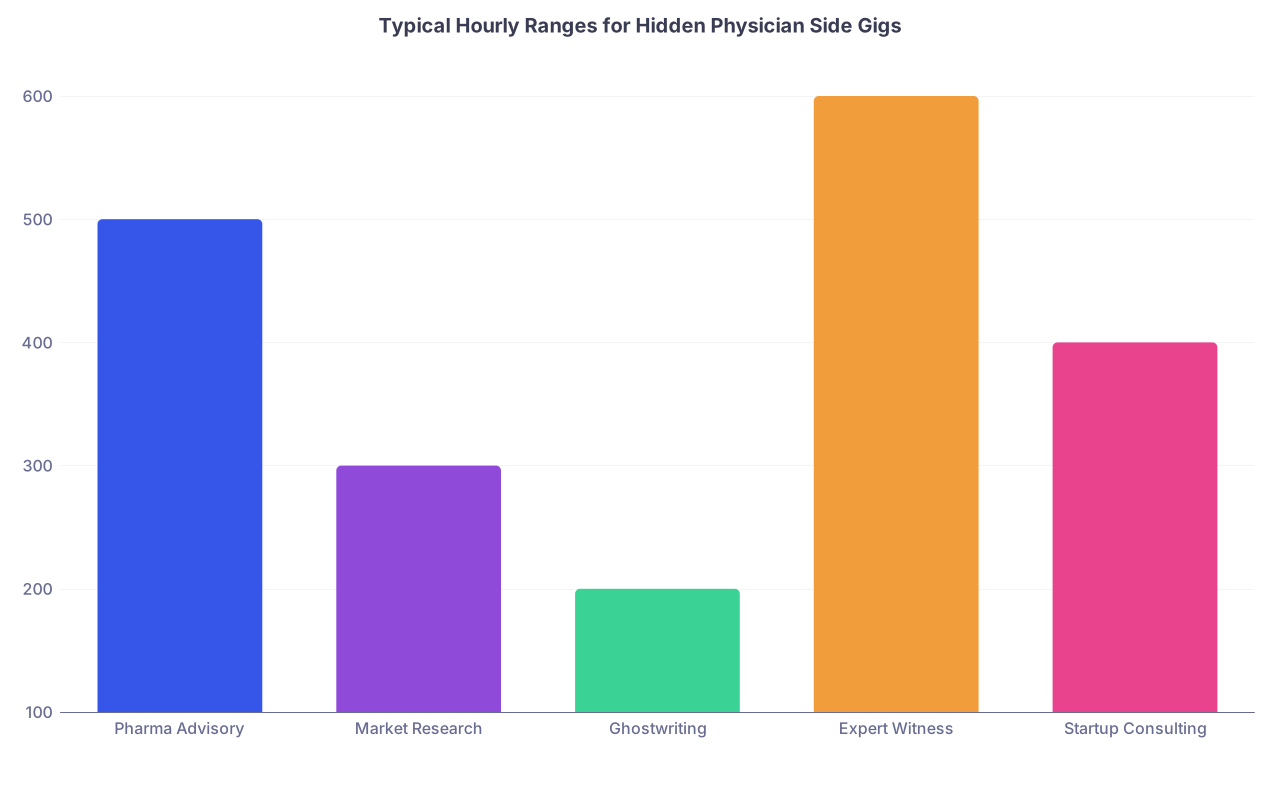
| Category | Value |
|---|---|
| Pharma Advisory | 500 |
| Market Research | 300 |
| Ghostwriting | 200 |
| Expert Witness | 600 |
| Startup Consulting | 400 |
I’ve watched this play out in real time:
A cardiologist at a mid-tier academic center—no major R01 funding, not chair-level. But he’d been first author on some guideline-adjacent papers. One evening after grand rounds, he steps into the hallway, answers a call, comes back in and mutters, “That’s another $750 for an hour next week.” Pharma advisory board. Under NDA. No public credit, no social media posts, direct deposit into an LLC.
What an NDA Actually Means for You
Most of the time, the NDA isn’t about your soul. It’s about:
- You not copying their draft slides or internal docs
- You not disclosing product timelines or unpublished data
- You not blabbing competitor-sensitive strategy in a podcast
The language sounds scary: “irreparable harm,” “injunctive relief,” “trade secrets.” But from the company’s side, they’re more worried about the other companies, not about you tweeting.
Where it does matter for you:
Conflicts of interest.
Those “this presentation contains discussion of off-label use…” slides? The real conflict is often bigger: you’re sitting on early product insight while your colleagues are guessing. If you’re academic, you now have disclosure requirements. Some docs conveniently “forget” to list half their consulting gigs.Intellectual property.
If you suggest a tweak that becomes a key feature, do you own any part of it? Often the NDA is bundled with a consulting agreement that says “work for hire.” Translation: they own everything you say while under contract, unless negotiated otherwise.Time and scope creep.
What starts as “a one-hour advisory call once a quarter” morphs into “can you quickly review this deck?” “can you hop on a call?” “can we send you this protocol?” That’s when physicians either learn the word “change order” or get quietly exploited.

The Unspoken Gatekeeping
How do docs actually get into these NDA worlds? Not by filling out “Become a KOL” forms online.
The real funnels:
- Senior attendings bringing their “favorite fellow” into calls
- Medical society committees feeding names to industry liaisons
- Publication editors quietly recommending frequent authors
- Reps telling their medical affairs teams “this doc is sharp and reasonable”
I’ve sat in on those selection conversations:
“Who do we want on this advisory board? We need someone younger this time.”
“Who’s good on panels?”
“Who won’t go rogue on social media?”
Your Twitter thread with 5,000 likes is not the main thing. Your reputation among the 20–30 people who regularly interact with industry is.
Ghostwriting: The Secret Career of Invisible Physicians
Let’s drop the act: a depressing amount of content with a doctor’s name on it was not fully written by that doctor.
I don’t mean academic-level fraud. I mean:
- “Patient-friendly” booklets with a doc’s name on the cover
- Blog posts on large health sites by “Dr. So-and-so”
- CME modules “authored” by big-name faculty
- LinkedIn thought leadership posts for hospital executives
- Opinion pieces placed in mainstream media
There is an entire quiet ecosystem of physicians who write all of this—for money, under someone else’s name, and often under NDAs.
What Physician Ghostwriters Actually Do
Here’s what the gigs look like in the real world:
- A health-tech startup hires a doc to “help us sound clinically credible” on their website. The founder’s name goes on the byline. The doc is ghost.
- A “celebrity” dermatologist signs a deal for a skincare book. They’re fully booked in clinic. A physician ghostwriter gets three hours of interviews, drafts the manuscript, the derm tweaks 5–10%, and that’s it.
- A pharma company wants a series of “educational” blog posts about a disease area for a branded site. They hire a medical communications agency, which then hires a physician ghostwriter on contract. The on-paper author is a key opinion leader who barely touches the text.
| Type of Writing | Who Gets the Bylines | Who Often Does the Work |
|---|---|---|
| Academic Papers | Faculty/Researchers | Trainees, junior faculty |
| Patient-Facing Articles | Brand MD, Editor | Physician ghostwriter |
| Health-Tech Blog Posts | Founder, CMO | Contract physician |
| CME Modules | KOL Faculty | Medical writer MD |
| Popular Health Books | Named Physician | Ghost physician writer |
This is one of the few side gigs where you can sit in sweats at home, no pager, no Zoom, and still leverage your MD.
How Much Do Ghostwriters Make?
You won’t see these rates transparently advertised. Here’s the honest range I’ve seen:
- Blog articles: $300–$800 per 1,000–1,500 words for physician writers (much less for non-MDs)
- CME modules: $2,000–$6,000 per module, depending on complexity and references
- White papers / clinical monographs: $3,000–$10,000+ per project
- Books: Often a flat fee ($10,000–$40,000) or a quiet co-author credit with royalty percentage
For a resident, matching your call-night pay with one weekend of writing isn’t hypothetical. It’s happening. But no one’s presenting this at your “nonclinical careers” lunch because the people doing it don’t want more competition.
The tradeoff: you get cash, not credit. Your name does not go on PubMed. For some, that’s a nonstarter. For others, that’s the selling point.
Pharma Money: The Stuff That Makes Docs Nervous to Admit
This is the one that makes people twitchy. Pharma money has baggage. Sunshine Act. NYT exposés. Grand rounds rants about “industry influence.”
So what do smart physicians do? They move the action into less visible channels:
- Advisory boards, not speaker bureaus
- Disease-state education, not branded slide decks
- Consulting through an LLC, not personal honoraria
- Medical strategy for innovation, not “sales support”
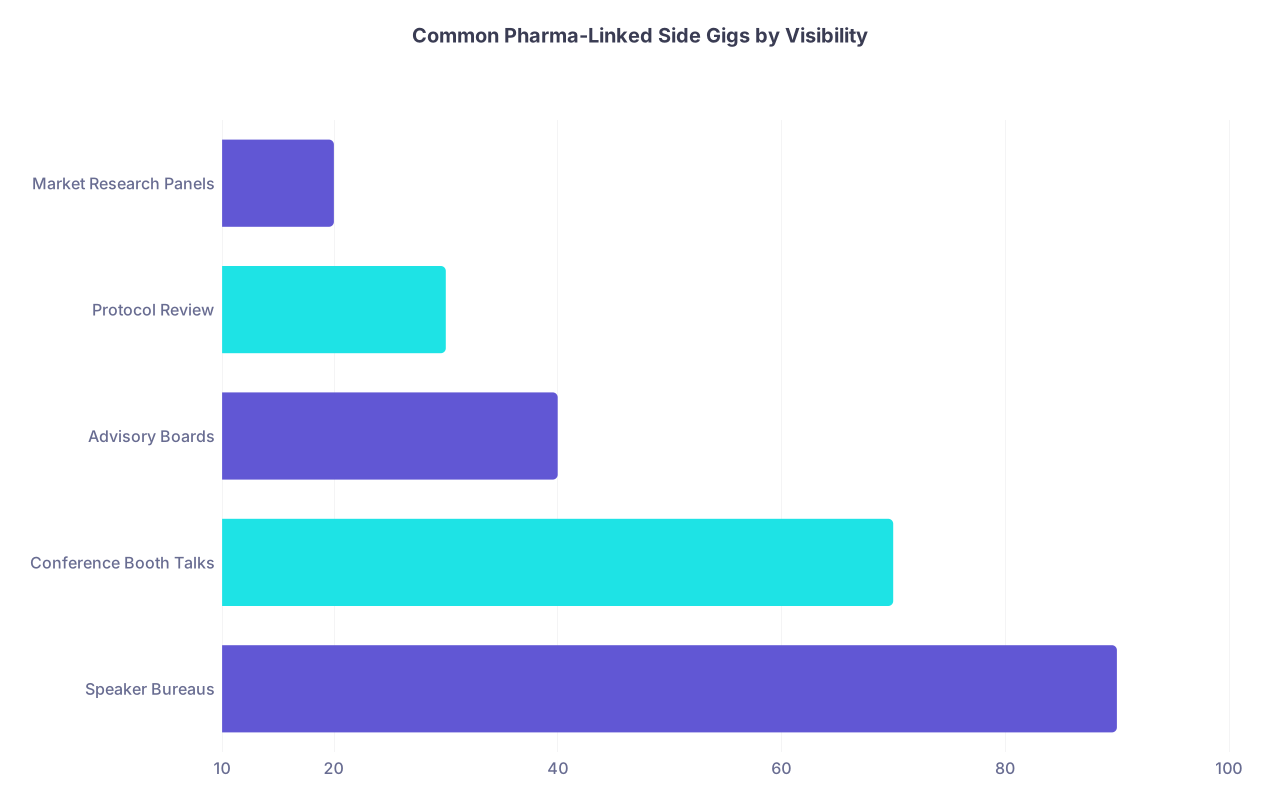
| Category | Value |
|---|---|
| Speaker Bureaus | 90 |
| Conference Booth Talks | 70 |
| Advisory Boards | 40 |
| Protocol Review | 30 |
| Market Research Panels | 20 |
That visibility number is roughly “chance your colleagues will find out and care.” You see the pattern.
What Pharma Actually Wants From You
Strip away the cynical view for a second. When pharma and biotech pay physicians well, they’re mainly buying one thing: real-world, pattern-level clinical judgment.
They want to know:
- How do you actually choose drug A vs drug B in clinic?
- Which side effects make you abandon a therapy?
- What do your partners complain about with the current options?
- What language resonates when you explain this disease to patients?
In advisory boards, I’ve heard medical affairs directors say explicitly:
“Do not tell us what you think we want to hear. We hear that internally all day. Tell us what your peers say about us when we’re not in the room.”
The docs who make the most here are not the ones who flatter. They’re the ones who can say, calmly and specifically, “No one is going to use this because you buried the lab monitoring requirements in the PI, and it adds 15 minutes to a 20-minute visit.”
The Types of Pharma Gigs Physicians Don’t Advertise
Let’s be very concrete.
You’ll rarely see a LinkedIn post that says: “Just got $900 for an hour on a virtual advisory board!” But I’ve seen dozens of:
- “Regional advisory meetings” at hotels: 10–15 docs, $1,000–$2,500 each, half-day plus dinner.
- “National advisory boards”: Fly you out, nice hotel, 6–8 hours of discussion, $3,000–$6,000 plus travel.
- “Virtual insight sessions”: 60–90 minute Zoom, $500–$1,500, small group.
- Single “KOL call”: 30 minutes to 1 hour one-on-one, $300–$1,000.
And no, the invites usually don’t come from a website form. They come from a medical science liaison you’ve been civil to for three years, who suddenly says, “We’re putting together an expert panel, can I send you some info?”

The Gray Zones and Ethical Lines
This is where physicians either evolve or crash.
The fact that these gigs are under NDAs, ghostwritten, or routed through pharma doesn’t automatically make them dirty. But they do change the risk profile.
Conflicts of Interest: What Actually Gets You in Trouble
The big academic scandals are rarely “Doc made $8k on an advisory board.” It’s usually:
- Unreported equity in a company whose products you’re researching
- Ghostwritten articles that the author pretends to have fully written
- Guideline committees stacked with people with undisclosed financial ties
- Off-label promotion dressed up as education
The quiet rule: If you can not explain the arrangement in one clear, non-weasel sentence to your department chair and your most skeptical co-resident, it’s probably a problem.
“This company paid me $4,000 to give talks that are basically sales pitches” — at least that’s honest.
“This company paid me to help them understand how we treat advanced heart failure and what barriers patients face” — also fine.
The danger is “They paid me to ‘educate’ docs on our local patterns, but the slides were 90% brand messaging and the rep prepped me.”
That’s where your name and reputation get sticky.
The Career Risk No One Talks About
You know who cares a lot about your industry relationships? Future employers, editorial boards, and promotion committees.
I’ve been in those rooms:
“Oh, he’s on every speaker bureau under the sun. Hard pass.”
“She’s got five different pharma consultancies. Is she going to push their drug on our pathway committee?”
On the flip side:
“He consults with two or three companies in this niche. That’s actually a good sign—he’s clearly respected in that space.”
It’s not the presence of industry ties. It’s the pattern. All brand, no science? Red flag. Some targeted advisory work with disclosure? Fine.
How Docs Actually Get Into These Gigs (Not the Fairy Tale Version)
Nobody is mailing you a golden ticket. There’s a pattern I’ve seen again and again for the people quietly pulling six figures a year from side hustles they never post about.
Step 1: Develop One Visible, Credible Niche
Notice I said one.
The people who get meaningful NDAs and ghostwriting and pharma work are usually “the [x] person” for something pretty specific:
- “The doc who sees the ugly real-world side of [new drug class] in community practice”
- “The tele-ICU intensivist who understands remote workflows”
- “The hospitalist who built an order set that actually works”
- “The obesity medicine doc who can actually write in plain English”
You do not need to be a world expert. But you do need to be concretely useful.
Step 2: Be Easy to Work With, Professionally Uncomplicated
This part sounds boring, but it’s why people get repeat work.
On the sponsor side, the conversations are like:
“Who do we invite back?”
“Her feedback was direct but she didn’t grandstand.”
“He turned in the draft on time and didn’t disappear.”
“She gave us pushback on the messaging but not in a hostile way.”
I’ve watched physicians kill entire future pipelines for themselves with one ego-driven performance on a call.
Step 3: Get in the Right Rooms and Let People Know, Quietly
The first 1–2 gigs are the hardest. After that, your name starts circulating.
Where do those first ones come from?
- You present something sharp at a regional meeting and someone from industry approaches after.
- You do a small, annoying CME writing project for low pay, do it well, and the medical communications people remember your name.
- You help your department with a white paper, your chair forwards it to a company rep, and suddenly you’re on their radar.
The move too many doctors miss: explicitly saying, “If you hear of any consulting or writing needs in this area, I’m open to that.” No one is a mind reader. Industry people assume you’re too busy or uninterested unless you say otherwise.

| Step | Description |
|---|---|
| Step 1 | Start - Clinically Active Doc |
| Step 2 | Develop Specific Niche |
| Step 3 | Create Visible Work - Talks or Writing |
| Step 4 | Meet Industry or MedCom Contacts |
| Step 5 | First Small Project |
| Step 6 | Deliver High Quality On Time |
| Step 7 | Repeat Invitations and Referrals |
| Step 8 | Higher Value NDA and Advisory Work |
Where This Is All Headed: AI, Data, and a New Market for Your Brain
You’re not imagining it. Things are shifting.
The future of these “quiet” side hustles is not just traditional pharma and ghostwriting. Three new fronts are already opening:
AI model validation and auditing
Startups building diagnostic or triage tools need real clinicians to say, “No, this is not how we actually think.” They’ll pay for that. They already are. Under NDAs.Data interpretation, not data generation
Pharma and health-tech are drowning in real-world evidence. What they lack is clinicians who can turn that into, “So, on a Tuesday afternoon in a busy clinic, here’s what this actually means for the doc in the room.”Reputation-laundering through “independent voices”
Companies know overt ads are distrusted. They’re moving toward “educational content” and “expert explainers.” That means more ghostwritten articles, more unnamed physician work product, more “we’ll pay you but we don’t need your name on it.”
The MD that used to be useful mainly for billing is becoming a filter—“Is this product, message, or algorithm even plausible in the wild?” That’s where the long-term money is.
But you won’t find that in 10-step blog posts about “50 side hustles for doctors.”
How to Play This Game Without Burning Your Career Down
If you want in on this world—and let’s be honest, many of you do—here’s the distilled version of not being stupid about it:
- Do work you can morally defend, even if it were fully public. Because sometimes it will be.
- Keep your conflicts list clean, current, and ruthlessly honest. Half-truths are what sink people.
- Favor strategy and insight roles over straight-up branded promotion. They age better on your conscience and your CV.
- Build one niche, not five. Be the go-to for something narrow and real.
- Treat every first project as an audition for ten more. Because that’s how the industry side actually thinks about you.
You are not just “selling out” if you do this right. You’re selling your judgment, not your integrity. Big difference.
With that, let’s tackle the questions people usually ask me in hushed tones after I explain all this.
FAQ (5 Questions)
1. Is it actually “safe” for my career to do pharma advisory work or ghostwriting?
Safe if you’re selective and transparent. Dangerous if you’re greedy and sloppy. Occasional well-chosen advisory work, fully disclosed, is considered normal these days—even at serious academic centers. Being on every speaker bureau, hiding consults, or fronting ghostwritten opinion pieces as your own? That’s what raises eyebrows in promotion committees and editorial boards.
If you can say in one sentence what you did, who paid you, and why it made sense clinically, you’re probably fine.
2. How do I get my first NDA / advisory board invite if I’m “just” a resident or early attending?
You’re not getting a $4,000 national advisory board as a PGY-2. But you can get:
- Small market research calls ($200–$400 for 30–60 minutes)
- Low-level writing projects through medical communications agencies
- Unpaid but visible tasks—like helping your department with guidelines or patient materials—that later get forwarded to industry
Start by becoming visibly competent in a specific micro-area. Present at local or regional meetings. Publish something practical in a society newsletter. Those are the things industry people actually read when they’re scouting.
3. Is physician ghostwriting “ethically sketchy”?
It depends on how it’s done and how it’s disclosed.
If you’re writing educational material, it’s medically accurate, and the named author really does review and approve it, you’re basically a specialist translator. That’s fine. If you’re fabricating data, pushing hidden brand messaging, or helping someone pretend they did academic work they did not do, that’s where it crosses the line.
The key question: would you be comfortable if the acknowledgments section said, “We thank Dr. X for assistance in drafting this manuscript”? If the answer is no, ask yourself why.
4. How much of this can I do before I have to worry about the Sunshine Act or institutional policies?
In the U.S., almost all pharma-related payments end up in the Open Payments database. You cannot hide it. Your name, the company, and the amount—right there. If that idea makes you sweat, reevaluate what you’re doing.
Institutionally, every place has its own thresholds and reporting systems. Some want anything over $5 reported; others are more relaxed. The smart move: sit down with your conflict-of-interest office early and say, “Here’s what I’m doing and considering. What do you need from me?” The people who get nailed are the ones who try to wing it.
5. With AI and content mills, will physician ghostwriting and consulting even be needed in 5–10 years?
The low-end, generic “Top 10 symptoms of X” content? That’s already dead. AI does that cheaper and faster. But nuanced, liability-sensitive, brand-adjacent, or guideline-aware content? That still needs an MD signature behind the scenes.
Same with consulting. Companies will use AI for cheap pseudo-insight. But when they’re about to bet $50 million on a launch strategy, they want a handful of real docs to sanity-check it. That’s not going away. It’s just shifting toward deeper, more specialized input and away from “please read these slides out loud at a dinner.”
You now know the game most people only see the surface of. The next move is yours. If you decide to step into this world, do it eyes open, with a clear niche and a clean conscience. The rest—rates, NDAs, invitations—that’s just mechanics.
And once you’ve built that quiet, profitable second track to your career, then we can talk about the next frontier: how to use it to buy your time back from the system entirely. But that’s a story for another day.