

Most physician side hustles fail before they start because doctors think they need to “build the next great app.” They don’t.
The tech-startup fantasy is one of the most persistent and unhelpful myths in the physician side hustle world. You’ve probably heard some version of it:
- “I have this app idea that could change medicine.”
- “If I just had a developer, we could scale this to millions.”
- “We’ll use AI, subscriptions, maybe a marketplace…”
Then nothing happens. Or worse, something happens: tens of thousands of dollars vanish into a hole called “MVP development” and the project never lands a single paying user.
Let me be direct: most physicians are sitting on valuable, monetizable expertise that can be turned into low-tech, low-cost, low-risk side hustles. No coding. No VC funding. No pitch decks.
And the data backs this up.
The App Myth: Why Doctors Keep Chasing Software Unicorns
There’s a reason the “doctor builds an app” storyline is so seductive. You see headlines about physician-founders exiting for 8 or 9 figures. You hear about Teladoc, Doximity, Headspace Health, or app-based CBT. You don’t hear about the 99% of physician-led apps that never clear four figures in revenue.
Here’s what’s actually true:
- Most new apps have almost no users.
- Healthcare apps face brutal regulatory, privacy, and integration barriers.
- Doctors systematically underestimate the cost and complexity of software development.
Industry-wide, estimates suggest less than 0.5% of consumer apps ever earn $10,000+ in lifetime revenue. Healthcare apps are even worse; they require higher trust, more compliance, and often need institutional adoption, not just individuals downloading something “fun.”
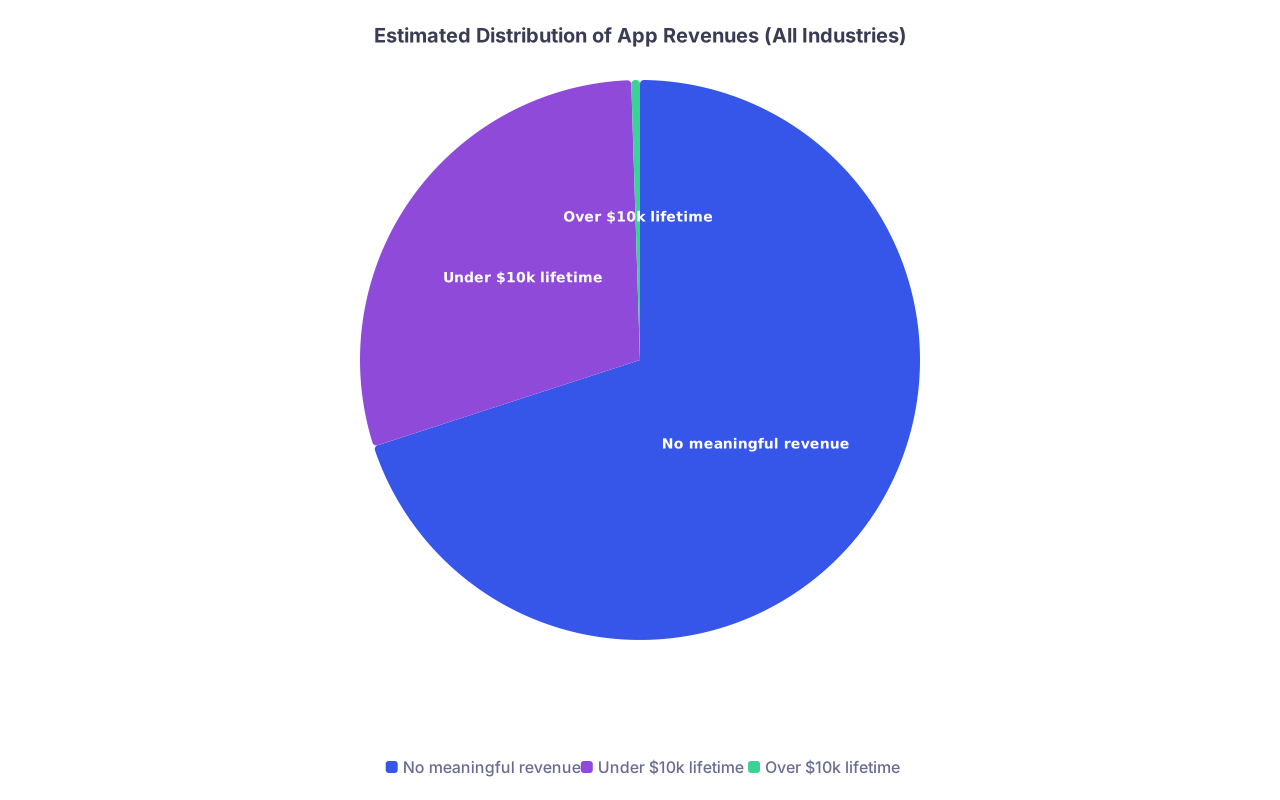
| Category | Value |
|---|---|
| No meaningful revenue | 70 |
| Under $10k lifetime | 29.5 |
| Over $10k lifetime | 0.5 |
Now layer on physician realities:
- You are not a full-time CTO.
- You do not have 60–80 hours a week to iterate product-market fit.
- You probably do not want your name on a HIPAA breach or FDA warning letter.
I’ve watched multiple attendings burn $30k–$100k building “MVPs” that never left test flight. Not because the idea was awful. Because they picked the hardest possible medium—custom software—before proving anyone would pay them for anything.
The biggest myth is that tech is where the real money is. For physicians, that’s often wrong. The real money is in boring, unsexy leverage of what you already know.
What the Data Actually Shows About Profitable Physician Side Hustles
Look at what physicians are actually doing to generate consistent extra income. Not what gets written up in TechCrunch. What people talk about quietly in hospital lounges and Facebook groups.
You see the same clusters:
- Clinical moonlighting / per-diem work
- Telemedicine (yes, still alive if you’re smart about niche and licensing)
- Expert work (chart review, IME, medico-legal, consulting)
- Teaching, courses, exam prep, paid speaking
- Niche content creation (paid newsletters, communities, coaching)
- Non-clinical consulting (pharma, med device, health systems, payer, startups—but as an advisor, not a founder)
Basically none of these require you to invent or own an app.
Let’s be specific.
| Side Hustle Type | Needs Custom App? | Typical Startup Cost |
|---|---|---|
| Chart review / IME | No | Very low |
| Telemedicine (locums) | No (use platform) | Very low |
| Online course / CME | No | Low–moderate |
| Med-legal expert witness | No | Very low |
| Coaching / advising | No | Very low |
| Independent telehealth | No (off-the-shelf) | Moderate–high |
Notice the pattern: value comes from your brain and your credibility, not a shiny icon in the App Store.
Why Apps Are a Terrible Default Side Hustle for Most Doctors
Building an app is like deciding your “first workout” will be an Ironman triathlon. Could you, theoretically, become that person? Sure. But not this month. And not as your “casual side thing.”
Here’s where app fantasies collide with reality for physicians.
1. You’re trying to learn two hard things at once
Being a physician is hard. Building a software company is hard. Trying to be a beginner entrepreneur and beginner in tech product development simultaneously is how smart people lose years and money.
Much smarter:
Be a beginner entrepreneur in a domain where you’re already an expert—medicine.
2. Custom software front-loads cost and risk
Every dev shop promises a “simple MVP”:
- $25k–$50k for something barely functional
- No users
- No marketing plan
- No real regulatory review
Meanwhile, you could:
- Stand up a paid Zoom-based group program using Stripe and a simple website.
- Record a structured video course on a specific topic you already teach residents.
- Offer B2B consulting to a health system on exactly the workflow your app was supposed to fix.
These options cost hundreds, maybe a couple thousand, not tens of thousands.
3. Healthcare apps run into the buzzsaw of compliance
People forget:
- HIPAA (and state privacy laws)
- FDA for certain decision-support or diagnostic functions
- Data security
- Integration headaches (EHRs, claims, etc.)
As a doctor, your risk tolerance for screwing this up should be low. One sloppy BA agreement can be more painful than three rough clinic days back-to-back.
4. Distribution is the real problem, not code
Most physicians think the bottleneck is “finding a developer.” It rarely is. The problem is:
- Finding 100 people who will pay you.
- Reaching them.
- Getting them to trust you enough to pull out a credit card.
You can—and should—test whether people pay you before you ever write a line of code. That’s the part almost no one does.
The Boring Truth: Your Expertise Is Already Product-Ready
The better side hustle play for physicians: stop trying to be a software founder and start being a specialized problem solver.
Not vague “coaching.” Not “content creation” where you post memes on Instagram and hope sponsors find you. I mean very targeted, high-signal offers.
Think like this:
- “I help mid-sized hospitalist groups reduce 30-day readmissions for CHF patients.”
- “I train private practice pediatrics offices to standardize ADHD diagnosis and follow-up.”
- “I help med students who failed Step 1 once pass on their second attempt with a structured recovery program.”
- “I help startups sanity-check clinical claims and safety language before they talk to investors.”
None of that requires an app. All of that can generate real money.
Example 1: Med-legal work
Every malpractice defense firm I’ve worked around has the same complaint: good, responsive physician experts are hard to find.
The work:
- Chart review
- Opinions
- Depositions
- Trial testimony (sometimes)
Rate: often $300–$600/hour or more, depending on specialty and experience. Zero apps involved. You need:
- A basic website or even just a decent LinkedIn
- A CV
- Some outreach to attorneys / expert witness directories
That’s it.
Example 2: Structured teaching that people actually pay for
Not generic YouTube. Something like:
- A 6-week live Zoom course for FMGs on US residency application strategy.
- A focused OB anesthesia crisis-management course for CRNAs.
- Board review workshops for residents in your specialty.
Price it:
- $497–$997 per participant for a well-designed, small-cohort program.
- 10–20 participants = $5k–$20k per cohort.
You can host on existing platforms: Zoom + Kajabi/Teachable/Thinkific. No app. No dev.
Example 3: B2B consulting and advisory
Companies pay for:
- Clinical advisory boards
- Review of trial protocols or inclusion criteria
- Input on UX of clinician-facing tools
- Speaking to their sales or marketing teams about real-world practice
This is already happening. Quietly. The most financially successful physicians I know outside of pure investing are doing B2B consulting, not gambling on apps.
Where Technology Does Help (Without You Building It)
Tech isn’t the enemy. It’s just the wrong starting point when you insist on owning the tech.
What works far better for physicians:
Use existing platforms:
- Zoom for delivery
- Stripe/PayPal for payment
- Notion/Google Docs for materials
- Kajabi/Teachable for courses
- Substack/ConvertKit for newsletters or communities
Use horizontal tools to automate admin:
- Calendly for scheduling
- Simple CRMs or just Google Sheets for tracking clients
- Chat platforms (Slack/Discord) for group programs
In other words, become a power user, not a founder.
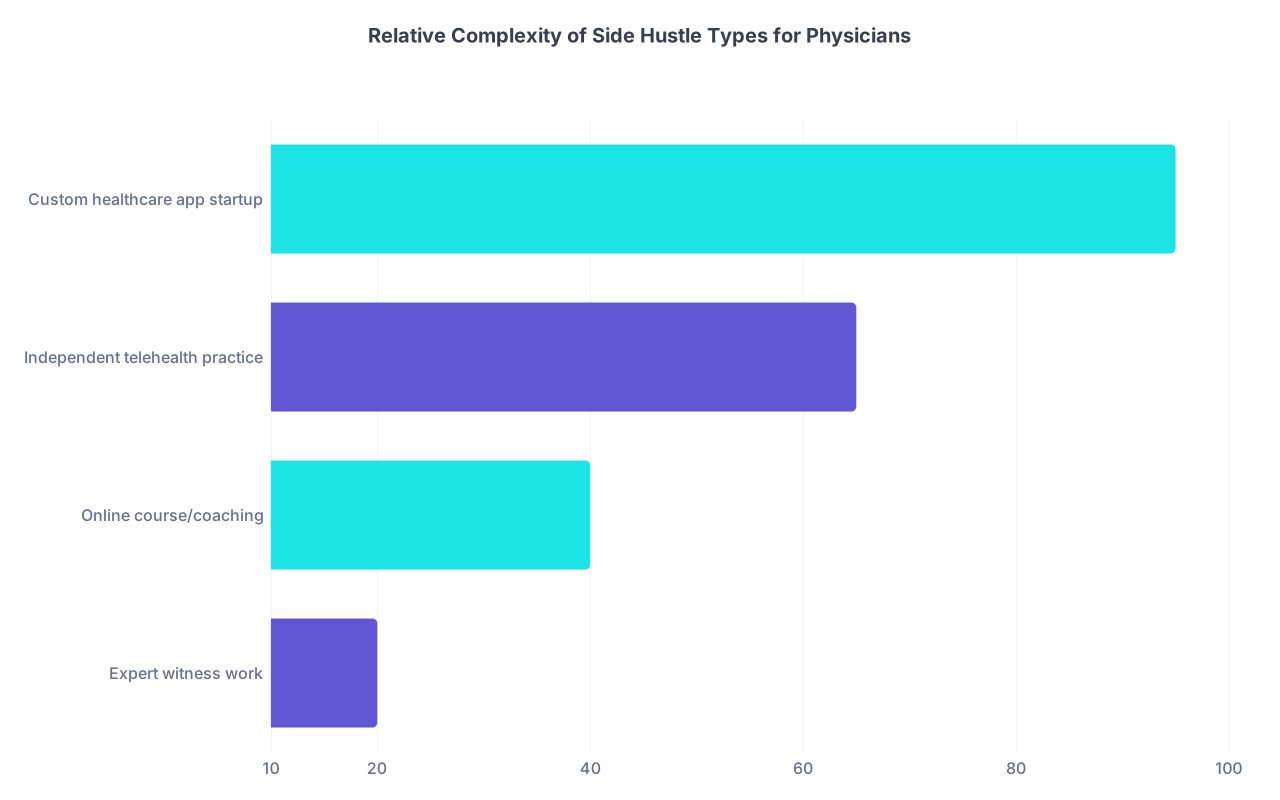
| Category | Value |
|---|---|
| Expert witness work | 20 |
| Online course/coaching | 40 |
| Independent telehealth practice | 65 |
| Custom healthcare app startup | 95 |
Complexity on a 0–100 scale. Guess which one physicians keep picking first.
How to Choose a Side Hustle That Doesn’t Eat Your Life
Let’s be practical. Here’s a simple way to think about what’s actually feasible.

| Step | Description |
|---|---|
| Step 1 | Want a side hustle? |
| Step 2 | Use clinical skills - moonlighting, telemed |
| Step 3 | Optimize rate and schedule |
| Step 4 | Consulting, coaching, med legal |
| Step 5 | Courses, membership, teaching |
| Step 6 | Test offer with 3-5 paying clients |
| Step 7 | Refine, then consider tech tools if needed |
| Step 8 | Need money fast? |
| Step 9 | Prefer 1 to 1 or 1 to many? |
Notice nowhere in that flow does it say “hire a dev.” Because you only earn the right to even consider a custom tool once:
- You’ve proven people will pay you.
- You’ve run into a specific manual bottleneck that tech could solve.
- There’s no existing tool you can reasonably use or glue together.
Most doctors are at step zero: no validated offer, no customers, no clear problem statement. Jumping to code from there is like ordering an OR build-out before you’ve finished residency.
But What About the Doctors Who Did Build Big Apps?
Yes, they exist. Some facts that usually get left out:
- Many had non-clinical co-founders who were full-time on the business.
- They often took huge pay cuts, left clinical practice, or burned nights and weekends for years.
- They raised outside capital and gave up sizable ownership.
- Survivorship bias is massive—you’re hearing about the 1 in thousands that hit, not the graveyard.
If you want to go that route, that’s not a side hustle. That’s a career change into tech entrepreneurship. Different game, different risk profile.
Nothing wrong with that. Just don’t confuse it with “earning an extra $3–5k/month in a sustainable way.”
A Saner Roadmap: From Idea to Income Without an App
Here’s a playbook I’ve seen work repeatedly for physicians who actually get traction:
- Pick a narrow, painful problem you understand deeply.
- Talk to 10–20 people who have that problem. Ask them:
- What they’ve tried
- What failed
- What a good outcome would look like
- Design the simplest offer that helps:
- A 4-week 1:1 program
- A 90-minute paid workshop
- A small-group coaching cohort
- Charge real money, not $9:
- Aim for $300–$2,000 depending on the value and client type (B2C vs B2B).
- Deliver using basic tools.
- Only once you’ve:
- Helped multiple people
- Have consistent demand
- Know exactly what workflow is painful
Consider: “Would software make this meaningfully better?”
And even then, start with no-code tools, not full custom development.
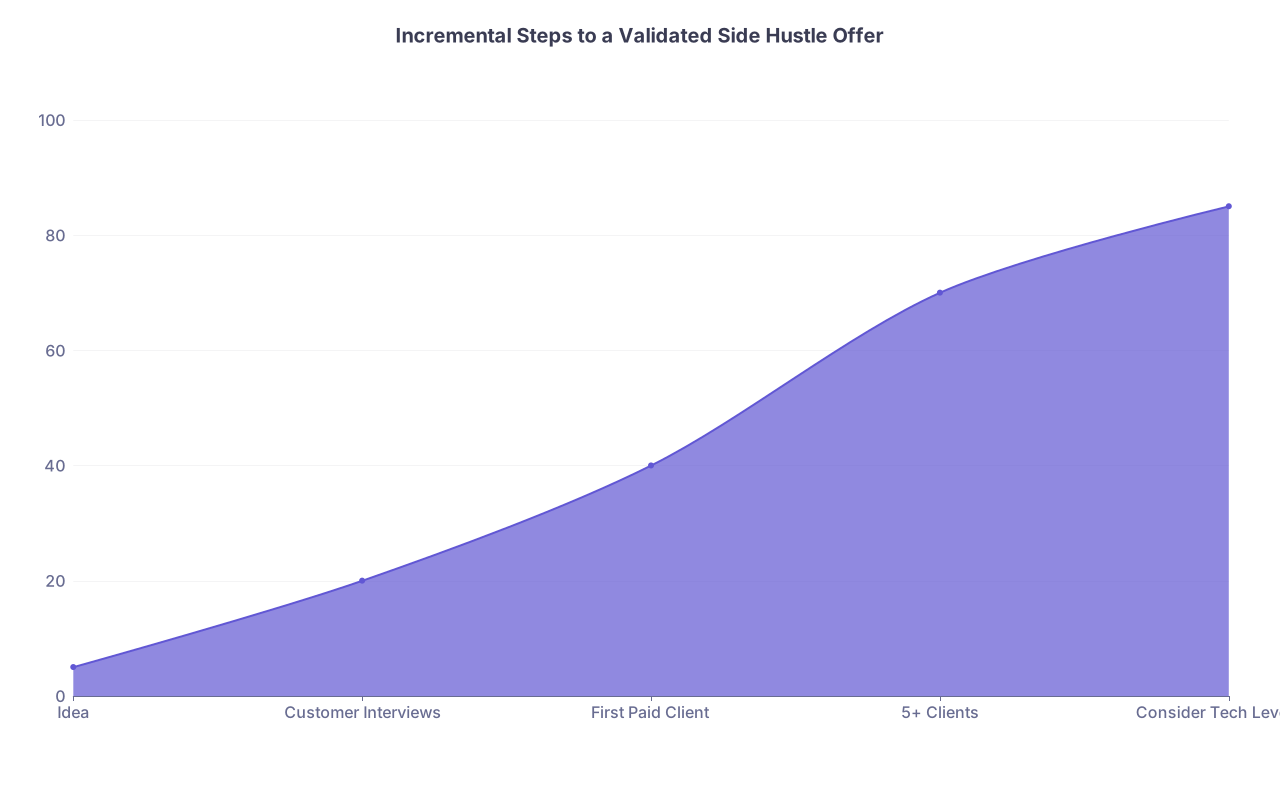
| Category | Value |
|---|---|
| Idea | 5 |
| Customer Interviews | 20 |
| First Paid Client | 40 |
| 5+ Clients | 70 |
| Consider Tech Leverage | 85 |
In other words, validate the business before you fantasize about the app.
The Future of Physician Side Hustles (Spoiler: Still Not Mostly Apps)
As AI and automation eat more of the low-level cognitive work, physician side hustles will actually have more opportunity—but again, mostly not in custom software.
Where the leverage will be:
- Translating complex medical and regulatory realities into products non-clinicians build
- Serving as fractional CMOs (Chief Medical Officers) for smaller health companies
- Running highly specialized online programs that AI tools amplify, not replace
- Building communities that trust you specifically in a noisy information environment

You’ll still see a few physicians become true tech founders. But they’ll be the exception. The bulk of sustainable, realistic physician side income will come from:
- Expertise
- Trust
- Communication
- Targeted problem-solving
Not from being the 9,876th medication tracker in the App Store.
FAQs
1. But I really do have a great app idea—should I just ignore it?
No. Write it down. Then force yourself to do this first: figure out a way to solve the same problem manually, with no software. If you cannot get anyone to pay you for the manual version, the app will almost certainly fail. If the manual version works and demand grows, you may eventually justify building tech around it.
2. Do I need a personal brand or big social media following for non-app side hustles?
For most physician side hustles, no. You need trust from the right 50–500 people, not 50,000 random followers. Med-legal, B2B consulting, niche courses, and expert work can all be filled via referrals, targeted outreach, and existing professional networks. A large social presence helps, but it’s not a prerequisite.
3. How many hours per week do realistic physician side hustles take?
If you choose something aligned with your existing expertise, you can start with 3–5 focused hours per week: one evening or a weekend block. The trap is picking a path (like custom app development) that instantly demands 15–20 hours/week just to make progress. That’s what burns people out.
4. What’s one concrete side hustle I could start in the next 60 days?
Pick a problem you already get asked about constantly—by patients, colleagues, or trainees. Turn it into a small, paid, live workshop or 4-week program delivered over Zoom. Charge something like $197–$497. Get 5–10 people to sign up. Run it once. That experience will teach you more about real demand and value than a year of “working on an app idea.”
Key points to remember:
- Most physician side hustles that actually make money are low-tech and expertise-driven, not app-driven.
- Custom software multiplies risk, cost, and complexity; validate a simple paid offer first.
- Use existing tools to deliver real value now; consider building an app only after you have proof, demand, and a clear, repeated workflow that truly needs automation.


