
Will a Side Hustle Make Me Look Uncommitted to Medicine on My CV?
What if that little side project you started to pay rent is the thing that quietly kills your chances with residency programs?
Because that’s the fear, right? You’re imagining some stern PD scrolling your CV, pausing on “Etsy shop,” or “YouTube channel,” or “consulting LLC,” and thinking: Ah. Not serious about medicine. Next.
Let me just say the scary part out loud: yes, a side hustle can hurt you.
But only if it’s framed badly, looks like a distraction, or directly contradicts the story you’re trying to tell as a future physician.
And it can also do the opposite. I’ve literally seen people get interview questions like, “I just had to ask about your real estate business / app / photography — tell me about that,” and it turned into a 10‑minute conversation that helped them stand out.
So you’re not crazy for worrying. But you also don’t have to choose between being a one-dimensional “I only breathe medicine” robot and a financially sane human who does other things.
Let’s sort out which side hustles and which ways of presenting them look committed… and which scream, “I wish I were doing something else.”
What Program Directors Actually Care About (Not What We Imagine)
You’re probably picturing some cartoon villain PD who wants residents to have no life, no personality, and no interests outside of work. That’s not reality.
What they actually care about:
- Will you show up?
- Will you be reliable and not burned out or constantly distracted?
- Will you progress through the program and pass your boards?
- Will you not cause headaches (patient complaints, professionalism issues, scheduling disasters)?
Everything on your CV is filtered through those questions.
So when they see a side hustle, they’re not thinking, “How dare they have other interests.” They’re thinking:
- Does this compete with medicine or complement it?
- Does it fit the timeline or look like they were half‑in, half‑out?
- Does it suggest they have transferable skills (leadership, systems thinking, communication, tech)?
- Does it raise any red flags: money issues, time commitment concerns, professionalism?
Where you get into trouble is when:
- The side hustle looks more impressive or time‑intensive than your medical activities.
- There’s a huge research/clinical gap… but a thriving TikTok brand.
- The hustle is ethically questionable or borderline unprofessional.
So no, they’re not anti-side-hustle. They’re anti-people-who-can’t-prioritize.
Types of Side Hustles: Green Flags vs Red Flags
Let’s be blunt. Not all side hustles are created equal in the eyes of medicine.
| Hustle Type | How It Usually Looks on a CV |
|---|---|
| Med-adjacent (education, tech, writing) | Generally positive |
| Professional/skills-based (coding, design, consulting) | Neutral to positive |
| Creative (art, music, photography) | Positive if balanced |
| Retail/reselling/service work | Neutral, depends on context |
| Content influencing/“guru” stuff | Risky, depends how framed |
Green-ish: Stuff That Aligns With Medicine
These tend to help your story if you explain them well:
- Medical education content (blog, YouTube, tutoring, MCAT/Step prep)
- Health tech (app development, data analytics, EMR optimization)
- Research consulting, data/statistics freelance work
- Medical writing, copyediting, test question writing
- Teaching-related work (online courses, structured tutoring)
These say: “I like medicine so much I built spin‑off projects around it.” Hard to complain about that.
Neutral-But-Tricky: Skills That Aren’t Medical
- Programming
- Graphic design
- Web development
- Translating/interpreting
- Tax/finance/accounting services
These can be great if you tie them to things like systems, problem-solving, communication, or patient education. If they look like your real passion and medicine is a side thing… not as great.
Higher Risk: Content + “Brand” Side Hustles
I’m talking:
- TikTok, YouTube, Instagram health “influencer”
- Coaching programs, especially “six-figure doctor” type content
- Trading, crypto, MLM stuff, aggressive financial branding
Residency programs are conservative. They’ve seen physicians fired or dragged online. If your content looks:
- Unprofessional
- Clickbait-y
- Non–evidence-based
- Politically extreme or inflammatory
- Like it could violate patient privacy
…they get nervous. Fairly or not.
So you can still do this stuff, but you have to be extremely careful about professionalism, tone, and how you present it.
How to Put a Side Hustle on Your CV Without Shooting Yourself in the Foot
This is where most people mess up. The side hustle itself isn’t the problem. It’s:
- The title
- The description
- The timing
- The overall story it tells
1. Use Professional, Boring Titles
If you put “YouTuber” as a CV entry, yeah, that’s going to raise eyebrows.
Instead frame it in language residency people understand:
- “Founder, Online Medical Education Platform (Ad revenue-based)”
- “Freelance Medical Writer”
- “Private Educational Tutor – MCAT and Step Prep”
- “Small Business Owner – E-commerce Retail (Part-time during training)”
Same activity, less cringe.
2. Describe It With Outcome + Time Scope
You want it to sound structured, contained, and not like it devoured your life.
Good description elements:
- Purpose: what you actually provided/created
- Scope: part-time, limited, flexible, seasonal
- Skills: what you learned/spent time on
- Medicine tie-in if possible
Example:
“Founder, Online Question Bank for Premed Students
Part-time (avg 4–5 hrs/week) during M3–M4. Developed 250+ practice questions with detailed explanations, used by ~300 students. Gained experience in curriculum design, evidence-based teaching, and user feedback analysis.”
That reads like education + entrepreneurship + teaching. Not “I was obsessed with my startup and ignored my patients.”
3. Address the Time Commitment in Your Head (and in Interviews)
You’re terrified of this question:
“So how did you balance this with medical school / residency?”
Answer strategy:
- Emphasize it was flexible and low-hour.
- Make it clear that exams, rotations, and patient care came first.
- Give a concrete example of cutting back when things got intense.
Something like:
“I averaged about 3–4 hours a week, usually on weekends. Anytime I had a big exam block or heavy rotation—like ICU—I either paused it completely or just batched content ahead of time. I’ve always treated training and patient care as the non-negotiable priority.”
That’s what they want to hear: that you know what comes first.
When a Side Hustle Actually Does Look Like Lack of Commitment
Let’s not pretend there aren’t scenarios where side hustles look bad. I’ve seen versions of this:
- Low clinical evaluations + big braggy business lines on the CV
- Failed Step attempts while running a busy content brand
- CV heavy with entrepreneurship and almost no academic or service footprint
- Obvious money-first vibe while applying to demanding fields like neurosurgery or derm with mediocre stats
That tells a different story:
“I’m more into business than I am into medicine, but I still want an MD paycheck and status.”
Residency directors can’t say that out loud, but they think it.
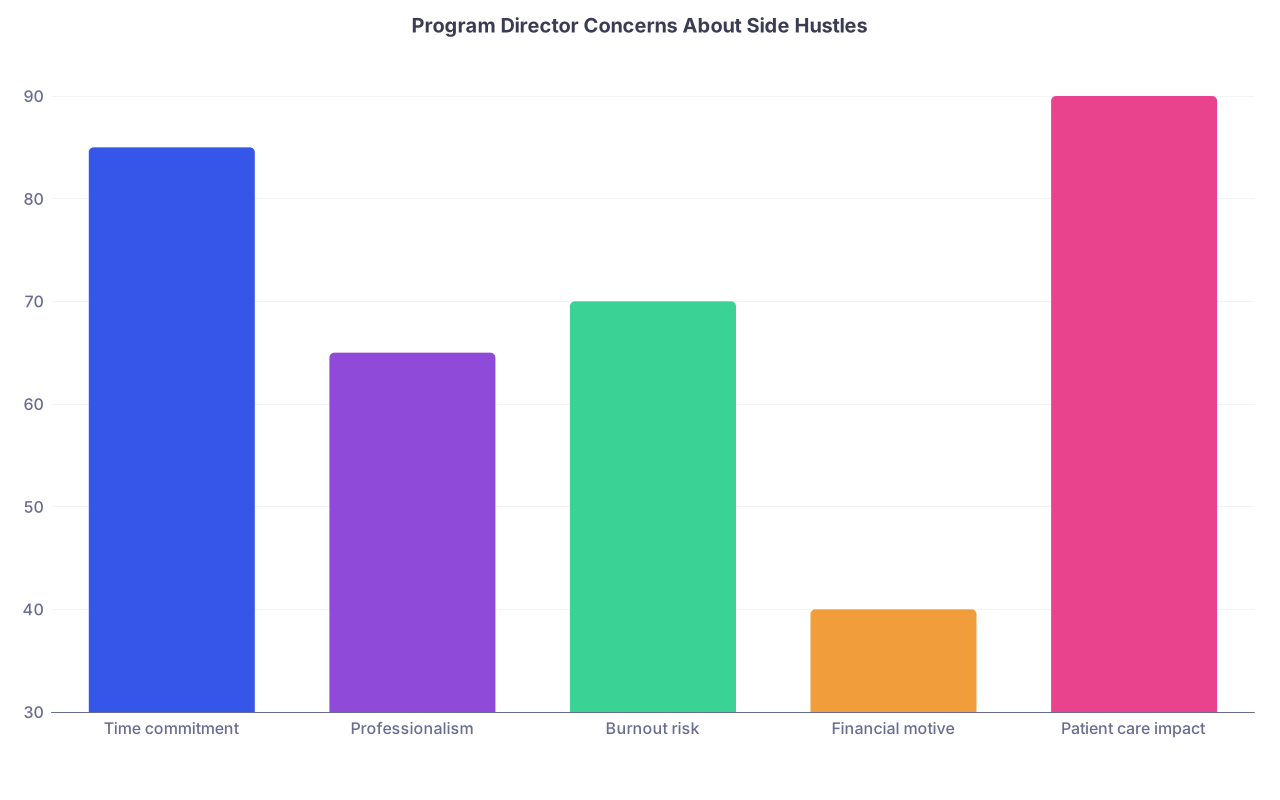
| Category | Value |
|---|---|
| Time commitment | 85 |
| Professionalism | 65 |
| Burnout risk | 70 |
| Financial motive | 40 |
| Patient care impact | 90 |
If any of the following are true, I’d be very careful:
- Your hustle is clearly your main focus on social media (daily posts, constant launches).
- Your academic performance is borderline for your chosen specialty.
- You’ve had professionalism issues in the past.
- The hustle is controversial, polarizing, or legally sketchy.
In those cases, you either:
- Tone it down, clean it up, and reframe it.
- Or accept that some programs will screen you out for it.
Should You Even Put the Side Hustle on Your CV?
Here’s the question running under all of this: “Do I risk listing it at all… or just hide it?”
Let me be direct:
- If it fills a gap and shows responsibility when your life looked tough (e.g., you worked to support your family), I’d include it.
- If it’s small, not central, and doesn’t add much, you can leave it off. No one needs to know you did DoorDash two nights a week M1 year.
- If it’s prominent online and easily searchable, you should assume they can find it. Better to own and frame it.
Ask yourself:
- Does this make me look more mature, resourceful, and multidimensional?
- Or does it raise questions I don’t want to answer?
If it’s the second one… it might belong in your private tax records, not your ERAS.
How to Talk About Your Side Hustle So It Sounds Like a Strength
You’re going to get asked about it if it’s on your CV. That’s actually good—better than getting grilled on a weak research abstract you barely remember.
You want to hit three beats when you talk about it:
- Why you started it – honest but not desperate.
- What you learned – skills relevant to medicine.
- How you kept medicine first – priorities, boundaries.
Example for a tutoring side hustle:
“I started tutoring MCAT/Step partly to help with expenses and partly because teaching forces me to master material more deeply. It also taught me how different people process information and the importance of checking understanding instead of just talking at someone. That’s been directly useful on the wards, explaining diagnoses and plans. I’ve always capped my hours and scaled back before exams or difficult rotations, because I knew my primary responsibility was to my patients and my training.”
Nothing in there screams “uncommitted.”
For a non-medical one, like web design:
“I’ve always liked building things, so I picked up web design in college and kept a couple small clients through med school. It gave me a productive outlet outside medicine and taught me project management, honest client communication, and how to explain technical things in plain language. When rotations picked up, I reduced it to very occasional, low-demand projects, because I couldn’t risk compromising clinical performance.”
You’re basically saying: “Yes, I did this. No, it didn’t come before medicine.”
The Future Reality: Medicine + Side Income Is Becoming Normal
You’re not overreacting to think about this, but you’re also not alone. The culture is shifting.
Look around:
- Attendings doing telemedicine plus consulting
- Hospitalists with real estate portfolios
- Surgeons writing books, running courses, investing in startups
- Residents with popular podcasts discussing evidence-based medicine
The old “medicine must be your entire identity” model is already cracking because:
- Salary pressures and debt are insane
- Burnout is everywhere
- Work hours is technically capped (sort of)
- People want diversification for financial and emotional reasons
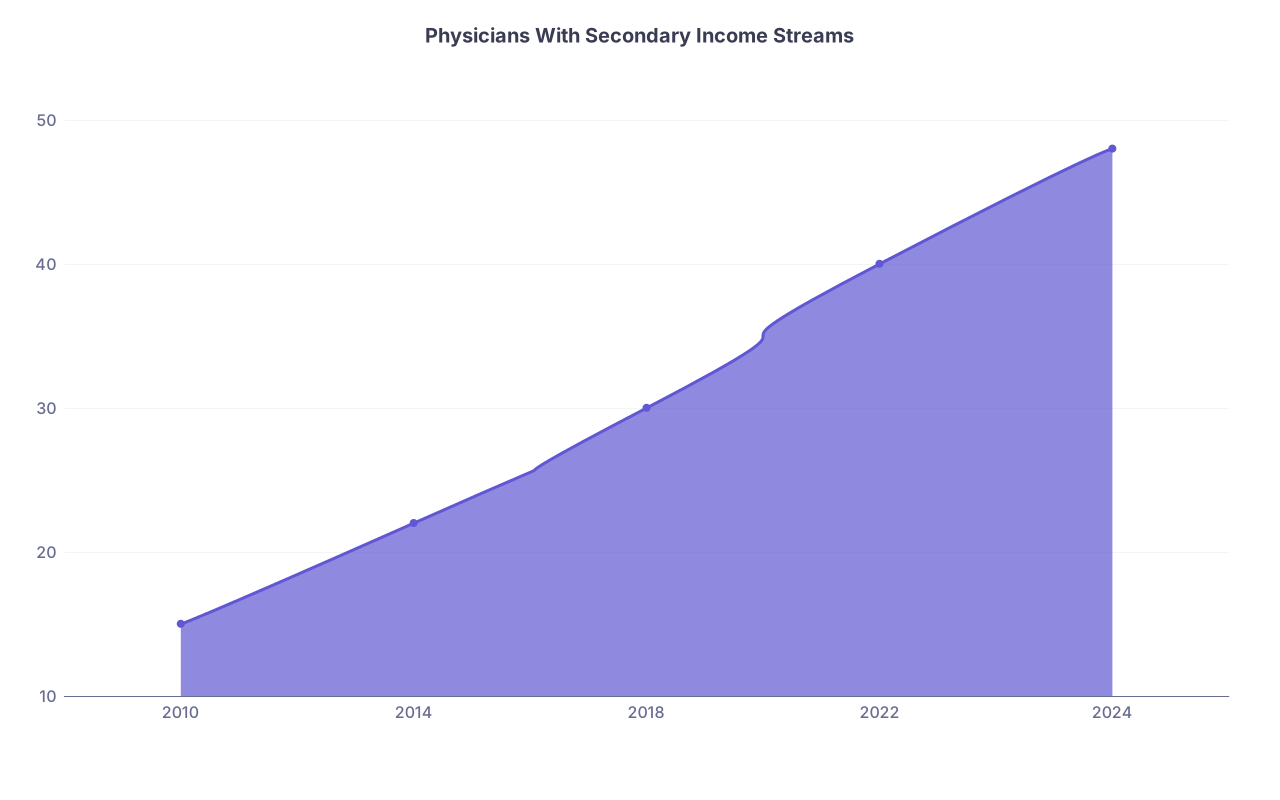
| Category | Value |
|---|---|
| 2010 | 15 |
| 2014 | 22 |
| 2018 | 30 |
| 2022 | 40 |
| 2024 | 48 |
I’m not saying every PD loves this trend. Many don’t. But pretending it doesn’t exist is delusional.
The people who will win long term are the ones who:
- Do excellent clinical work
- Stay professional online and off
- Build side interests / income in a way that enhances, not undermines, their identity as physicians
That’s the bar. Not “never earn a dollar from anything else.”
Quick Gut-Check Checklist: Is My Side Hustle “Safe” To List?
If you’re still spiraling, run it through this:
- Would I feel comfortable if my PD, co-residents, and patients saw this?
- Can I explain it in 2–3 sentences without sounding defensive or weird?
- Did I keep it clearly secondary to my clinical/academic responsibilities?
- Is there any angle where it could look like compromised patient care or professionalism?
- Does it fit the story I’m telling about the kind of physician I want to be?
If you’re getting nervous on multiple questions, adjust:
- Change how you label it
- Shorten the description
- Focus on professionalism and skills
- Or leave it out entirely
You’re allowed to make things smaller on paper than they are in your head.

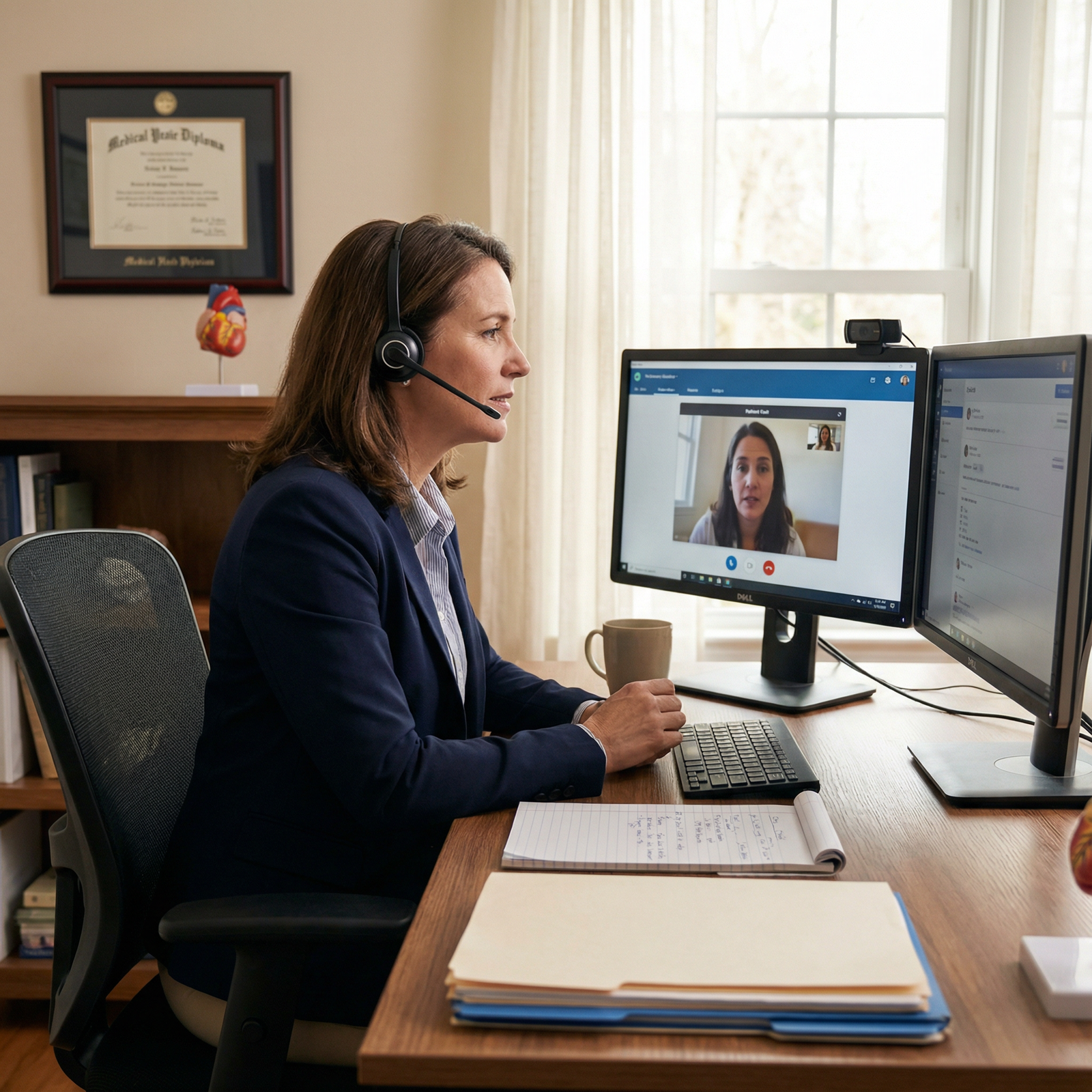
| Step | Description |
|---|---|
| Step 1 | Have a side hustle |
| Step 2 | Do not list on CV |
| Step 3 | Optional - may omit |
| Step 4 | List with professional title |
| Step 5 | Emphasize limited time and priority of medicine |
| Step 6 | Is it professional and ethical |
| Step 7 | Does it add value to your story |
FAQs – Side Hustles and Looking “Uncommitted” to Medicine
1. Will programs think I’m not serious about medicine if I have a non-medical side hustle?
They’ll think you’re not serious if your performance or professionalism is weak, not just because you have a side hustle. If your evaluations, exams, and letters are solid, a small, well-framed side job usually reads as: responsible, resourceful, human. The danger is when the hustle looks like the main character and medicine looks like the side quest. Don’t let that happen.
2. Should I delete my YouTube/TikTok/Instagram channel before applying?
If it’s unprofessional, sensationalist, or could be misinterpreted—yes, honestly, strongly consider shutting it down or scrubbing it. If it’s high‑quality, evidence-based, respectful, and clearly not consuming your whole life, you might keep it and frame it carefully. But you must assume people will stalk you online. If you’d cringe showing it during an interview on a big screen… fix it or nuke it.
3. Do I have to disclose how much money I made from my side hustle?
No. This isn’t a tax audit. You don’t need to list revenue. Focus on time, responsibilities, skills, and outcomes. If they ask something like “Was this a major commitment?” you can say, “It was modest in scope and intentionally structured to fit around my training.” You don’t owe anyone your income breakdown.
4. What if I need the side hustle money to survive? Will that look bad?
Needing money isn’t a character flaw. Lots of applicants work jobs to support themselves or family. That can actually read as maturity and grit—if your academics and clinical work stayed strong. Be honest but matter‑of‑fact: “I worked part time to help with living expenses and loans, and I learned a lot about time management and priorities.” Don’t turn it into a sob story; frame it as responsibility.
5. Where on my CV should I put the side hustle?
Usually under “Work Experience,” “Leadership/Entrepreneurship,” or “Teaching” depending on what it actually is. Use a professional title, list dates, 1–3 short bullet points. Don’t give it more space than your clinical or research work. If it dominates your CV visually, that’s a problem in itself.
6. What’s one thing I should fix today to make my side hustle look less risky?
Rename and reframe it. Right now. Open your CV and any public online bio. Change “YouTuber / Content Creator” to something like “Creator, Evidence-Based Health Education Channel.” Write one tight, boring, professional 2–3 line description focusing on skills, impact, and limited time commitment. That one small language shift alone can move you from “maybe not serious about medicine” to “interesting, well-rounded applicant.”
Open your CV right now and find the line where your side hustle lives—or where it would go. Ask yourself: “If a skeptical PD read only this line, would they trust me more… or less?” Then fix the wording until the answer is “more.”