The most profitable work many attendings do is not on the EMR. It’s what happens on that laptop once the pager quiets down.
Call nights are supposed to be about “availability for patient care.” In reality, a large chunk of attending physicians are quietly building second (and sometimes third) income streams between consults, cross-cover pages, and ICU admits. Admins know it. Co‑attendings know it. We just do not talk about it on official channels.
Let me walk you through what’s actually happening in those call rooms, what’s smart, what’s reckless, and how people are turning dead hospital time into real money without tanking their careers.
The Unspoken Economics of Call
Here’s the truth nobody says in resident orientation: from the hospital’s perspective, your time is cheap insurance. They’re paying for you to be there, not to be productive every minute. Nights, weekends, low‑census stretches—there’s massive unused cognitive bandwidth.
Most attendings hit a few basic patterns on quieter stretches of call:
- Scroll aimlessly, text friends, binge YouTube.
- Catch up on sleep, notes, CME.
- Or—and this is the growing group—build a side business.
The math is simple and ruthless. Clinical work has a ceiling: contract rate, wRVU cap, call stipend that barely buys a used Honda. Side hustles, if they’re built correctly, compound. One hour tonight can earn for months or years.
I’ve watched attendings in:
- Community IM programs
- Academic EM departments
- Private practice anesthesiology groups
…all quietly move from “extra 10–20k a year” to “my side business is now my escape hatch.”
They don’t advertise this at M&M. You only hear it at 2 a.m. over cold pizza, when a senior attending suddenly mentions a “course launch” or a “client call” and you realize you’ve missed an entire hidden curriculum.
What They’re Really Doing at 2 A.M.
Let’s cut through the vague “entrepreneurship” talk. On actual call nights, here’s what I’ve directly seen attendings doing on laptops and tablets.
1. Telehealth and Asynchronous Care (The Quiet Volume Machines)
This is the most common, because it feels closest to medicine and least like “cheating” on your primary job.
You’ll see attendings:
- Logging into a national telehealth platform for a few hours for low‑acuity visits.
- Handling asynchronous consults (text/video questions) for direct‑to‑consumer platforms.
- Doing follow‑up chronic care tele-visits for their own patients if it’s their call week and the hospital is slow.
The savvy ones build systems around this. They know peak times, best-paying platforms, and how to template so visits are lightning fast and safe.
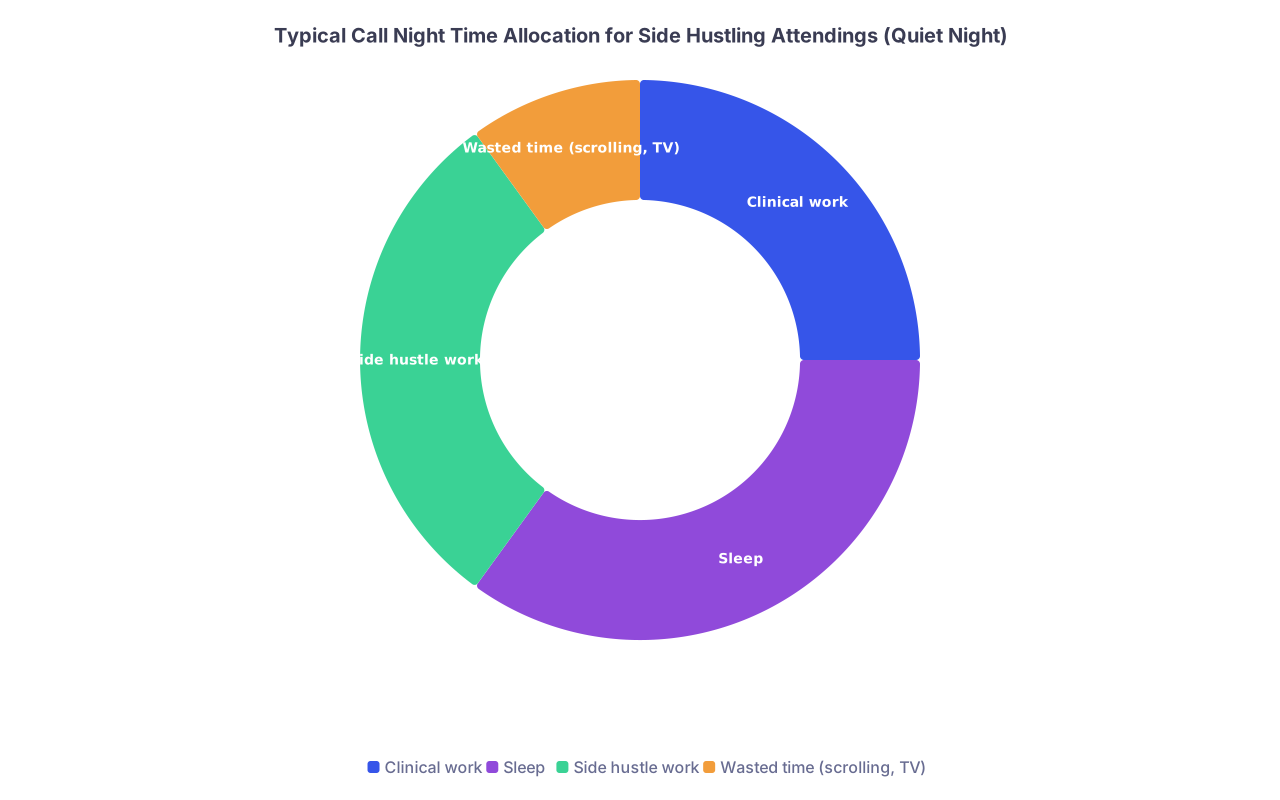
| Category | Value |
|---|---|
| Clinical work | 25 |
| Sleep | 35 |
| Side hustle work | 30 |
| Wasted time (scrolling, TV) | 10 |
Why this works on call: you’re already in medical mode. Decision fatigue is real, but triaging URIs and med refills via telehealth is primitive compared to admitting a crashing GI bleed. On a slower night, you may literally have clean 60–90 minute blocks without a single page.
What admins care about: if you miss pages or delay consults, you’re done. The smart attendings:
- Keep telehealth sessions short (10–15 minutes).
- Avoid stacking visits back-to-back.
- Never use hospital networks for third-party clinical platforms unless contractually cleared.
- Document like a hawk—because plaintiffs’ attorneys do not care you were “also on call at the hospital.”
The money: nothing crazy per hour, but linear and predictable. Think $80–$200/hour depending on platform and specialty. The bigger play is using telehealth to build a private panel that later feeds into cash-based services (sleep consults, obesity medicine, hormone clinics, ADHD follow-up, etc.).
2. Niche Online Clinics and Micro‑Practices
This is where the more entrepreneurial attendings live.
They’re not just doing random telehealth shifts for a corporation. They’re building a niche clinic that lives mostly online:
- Sleep medicine focused on physicians and shift workers.
- “Second opinion” consults for complex oncology or rheumatology cases.
- Hormone and metabolic clinics for a very specific demographic.
- Lifestyle and performance medicine for executives or athletes.
Hospital nights become build time:
- Drafting protocols and patient onboarding flows.
- Assembling educational handouts.
- Responding to patient portal messages for a small, high-yield panel.
- Setting up automations (intake forms, scheduling, payment integration).

| Step | Description |
|---|---|
| Step 1 | Call night starts |
| Step 2 | Clinical work |
| Step 3 | Side clinic tasks |
| Step 4 | Set up automations |
| Step 5 | Patient messaging |
| Step 6 | Content for patients |
| Step 7 | Pager busy? |
The quiet truth: most of these businesses start as “I’m just doing a few tele visits on the side,” then morph into structured micro‑practices because the demand is insane and the margins are better than their day jobs.
I’ve seen a sleep-trained pulmonologist do call from a community hospital, and during a single quiet weekend he’d:
- Answer 8–10 portal questions from his cash-pay sleep clients.
- Record two short educational videos for new patients.
- Update his intake questionnaire based on the last month’s recurrent issues.
All in the same building where the hospital paid him a modest nightly stipend. The real money was coming from the thing he built in the gaps.
3. Course Creation, Content, and “Expert Platforms”
Here’s the one residents almost never suspect, even when it’s happening in front of them.
A lot of attendings are building course-based and content-based businesses on call, especially those in academia or with a teaching bent. They’re not necessarily TikTok-famous, but they’re quietly profitable.
What this looks like behind the scenes:
- Recording slide decks with voiceover for an online course (USMLE strategies, specialty board prep, procedural skills).
- Writing chapters for a paid “mini-fellowship” or advanced CME course.
- Drafting newsletter content for paid subscription lists (e.g., “Real-world Cardiology for PCPs”).
- Outlining a book or guide physicians will later buy for $49–$199.

The play here is leverage. One well-structured course, created over a few months of intermittent call nights, can produce years of income. I know an academic neurologist who built a subspecialty board-prep course almost entirely between 10 p.m. and 3 a.m. on stroke call. That course now reliably throws off six figures a year. His colleagues think he “just does a lot of teaching.”
The smart ones batch:
- One night: outline and script.
- Another: record 3–4 modules.
- Another: edit lightly and upload.
No fancy studio. Just a half-decent mic and screen recording.
4. Consulting, Expert Witness Work, and “Phone-a-Doc” Retainers
Consulting is the quiet aristocracy of physician side hustles. Ridiculously high leverage if you position yourself correctly.
On call nights, the consulting attendings are not doing heavy client-facing work. They’re:
- Reviewing briefs and medical records for expert witness cases.
- Drafting opinion reports.
- Going through slides or decks for upcoming pharma/medtech advisory boards.
- Responding to async questions from startups on paid “expert networks.”
| Type | Typical Hourly Range | Call-Night Friendly? |
|---|---|---|
| Expert witness | $300–$800+ | Yes (document review) |
| Pharma advisory | $250–$500 | Yes (prep work) |
| Startup consulting | $200–$400 | Yes (async Q&A) |
| Expert phone panels | $150–$300 | Yes (scheduled) |
The trick: keep live commitments out of unpredictable call blocks. So they structure contracts around:
- Paid record review with a 1–2 week turnaround.
- Async Q&A via email or portal.
- Occasional scheduled calls on non-call days.
Then, once the hospital is quiet and notes are done, they open that Dropbox folder and start reviewing cases for $400/hour equivalent.
One hospitalist I know literally built an entire med-mal expert witness practice in the gaps of nocturnist shifts. The first few cases were rough. By year three he had templates, references, and a rhythm. The “second job” out-earned his hospital contract.
5. Real Estate and Financial Ops (The Spreadsheet Commanders)
This one’s less creative but extremely common: attending physicians using call nights as their financial operations center.
You’ll see:
- Spreadsheet modeling for new real estate deals.
- Analyzing multifamily property P&Ls sent by brokers.
- Coordinating with property managers via email.
- Running numbers on private equity or syndication deals.
- Rebalancing investment portfolios or tax-loss harvesting.
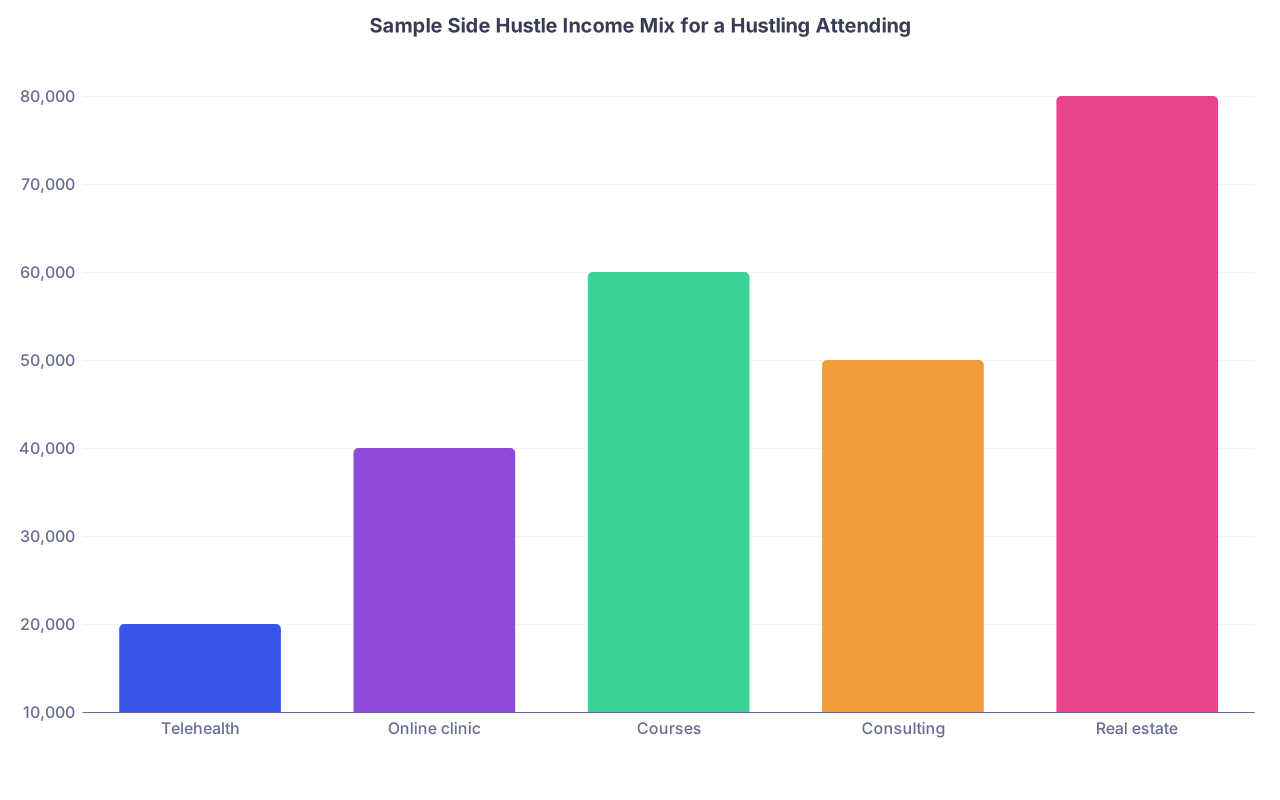
| Category | Value |
|---|---|
| Telehealth | 20000 |
| Online clinic | 40000 |
| Courses | 60000 |
| Consulting | 50000 |
| Real estate | 80000 |
Real estate Twitter will tell you this is the One True Path. That’s nonsense. But I’ve watched plenty of attendings turn call downtime into the research and negotiation time needed to actually make decent deals instead of panic-buying the first physician-only syndication someone emails them.
The quiet pattern: they treat this like a second job with scheduled blocks. “From midnight to 1 a.m., if we’re quiet, I’m digging into those 3 properties.” Same discipline they use to get through a floor census now applies to analyzing cap rates.
The Environmental Reality: What You Can Actually Pull Off
You’re not building a full SaaS company during an ICU call shift. Let’s be real.
Different call structures lend themselves to different side hustles:
| Call Type | Typical Busy Pattern | Best-Fit Side Hustles |
|---|---|---|
| In-house ICU | Spiky, unpredictable | Document review, content writing |
| In-house EM | Often slammed, rare lulls | Micro-tasks, short telehealth |
| Home call (surgery) | Periodic OR trips | Real estate, course building |
| Hospitalist nights | Front-loaded admissions | Telehealth, online clinic ops |
| Home tele-ICU | Screen-based, variable | Content, consulting prep |
The attendings who make this work long term understand their call patterns like a business owner understands foot traffic:
- They know which nights are historically light.
- They know which shifts are likely to be annihilated by admissions.
- They pre-plan their side hustle tasks accordingly.
On a known high-volume night? They only load “low cognitive load” tasks—answering simple emails, light editing, checking dashboards.
On a traditionally slow Sunday night? They may plan to record course content, hammer out a full consulting report, or do deep work on their online clinic infrastructure.
Ethics, Contracts, and How People Don’t Get Fired
You’re probably wondering: “How much of this is actually allowed?”
Here’s the unpolished answer.
Most hospital contracts boil down to:
- You must be immediately available.
- You must respond promptly.
- You cannot use hospital resources for outside business.
- You must avoid conflicts of interest and maintain patient safety.
The attendings who survive and thrive:
- Bring their own devices and hotspot for anything non-hospital.
- Never install side-hustle apps or tools on hospital computers.
- Keep side activities to clear downtime, with one ear always tuned to the pager.
- Turn down any side work that could directly compete with their institution’s services unless they have explicit permission.

I’ve heard chairs say it outright in closed-door meetings: “I don’t care what you do between pages as long as the medicine is solid and nothing gets delayed.” That’s the unwritten policy in many places.
Where people get burned:
- Missing critical pages because they were on a telehealth visit or a Zoom for their startup.
- Doing side-hustle documentation on hospital machines, which then become discoverable in litigation.
- Using protected time (conference, admin time) in obvious, visible ways for their side business.
So yes—it’s absolutely possible to ethically and legally build significant non-clinical income on call nights. But the attending who prioritizes a coaching client over a septic patient is going to have a very short, ugly career.
How They Actually Start (Not the Instagram Version)
The mythology is that someone has a grand vision, quits extra shifts, and “launches their business.”
Reality is much uglier and smaller in the beginning.
Here’s the pattern I’ve seen in attendings who successfully turn call time into durable side income:
Year 1: Exploration
They dabble. Try a telehealth platform, do a single expert call, write a few blog posts, play with an online course outline. Pure experimentation. No one knows what they’re doing yet, including them.Year 2: First Channel That Actually Works
Something hits. A small course sells. A niche clinic fills quickly. An attorney raves about their report and sends three more cases. They double down on that.Year 3–4: Systemization
They build templates, SOPs, automations. Call nights shift from “What can I do?” to “I have a list of 5 leverage tasks queued up.” Time becomes structured: 30 minutes for email, 45 for creation, 15 for planning.Year 5+: Optionality
Now the conversation behind closed doors flips from “I hope I can get a raise” to “If they don’t fix this schedule, I’ll cut to 0.6 FTE and just ramp my clinic/course/consulting.”
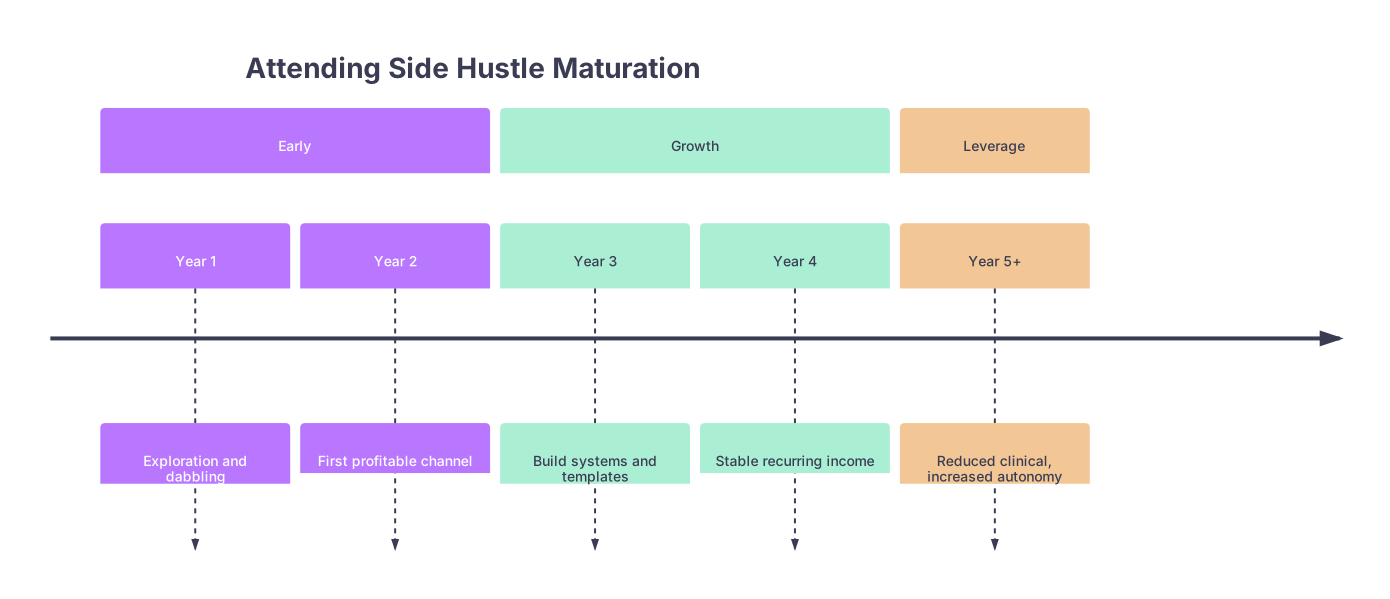
| Period | Event |
|---|---|
| Early - Year 1 | Exploration and dabbling |
| Early - Year 2 | First profitable channel |
| Growth - Year 3 | Build systems and templates |
| Growth - Year 4 | Stable recurring income |
| Leverage - Year 5+ | Reduced clinical, increased autonomy |
The key difference between the ones who succeed and the ones who just talk about “doing something on the side” is ruthless protection of those call-night blocks. They treat them like real work sessions, not vague “I’ll work on my thing if I have time.”
Practical Guardrails If You’re Considering This
You don’t need another rah-rah speech. You need constraints.
Think of these as the quiet rules most successful side‑hustling attendings follow:
Never schedule hard commitments during unpredictable call blocks.
No Zoom-based coaching sessions. No live webinars. No hard-deadline deliverables the next morning.Choose side work that tolerates interruption.
Writing, reviewing documents, building slide decks, templated telehealth. Anything that can handle “BRB, new admit” without imploding.Default to “no” on conflict-heavy ideas.
If your hospital has a weight-loss clinic, maybe don’t launch a directly competing GLP‑1 teleclinic with their patients. There are a hundred other angles.Keep hospital and side-hustle worlds technically separate.
Separate devices, separate accounts, separate clouds. Don’t be lazy here.Remember the real risk is reputational.
Colleagues will forgive you making money. They won’t forgive you if a patient deteriorates while you’re on a sales call.