
It’s 10:30 p.m. You just finished a brutal ward day, you’re scrolling through a group chat, and someone drops a screenshot: “$180/hour nocturnist moonlighting, 7-on/7-off, credentialing paid.” Your first thought: I could crush my loans in a year. Your second thought: Or this could crush me.
You’re not just asking “Is moonlighting worth it?” You’re really asking: “Is this the best way to use my limited extra time compared to all the other side hustles physicians are doing now?”
Here’s the answer you’re looking for.
The Core Question: What Are You Optimizing For?
Before comparing moonlighting to everything else, decide what actually matters most to you. Because different side gigs “win” on different metrics.
The big four:
- Max dollars per hour right now
- Long-term upside (equity, career pivot, scale)
- Lifestyle (control, flexibility, predictability)
- Risk (clinical, legal, burnout, reputational)
If your #1 priority is immediate cash and you don’t hate clinical work, moonlighting is hard to beat. If your #1 priority is flexibility and future leverage, many non-clinical or low-clinical side gigs win.
Let’s break it down.
What Moonlighting Actually Looks Like (Reality, Not Fantasy)
Moonlighting = extra clinical work outside your primary job/contract. Could be inpatient, outpatient, urgent care, ED, telemedicine, locums-lite. Usually hourly.
Typical scenarios I see:
- IM resident doing nights at a community hospital
- EM attending picking up per diem shifts at a low-volume rural ED
- Hospitalist taking weekend shifts at a SNF/hospitalist group
- Psych attending doing additional telepsych consults from home
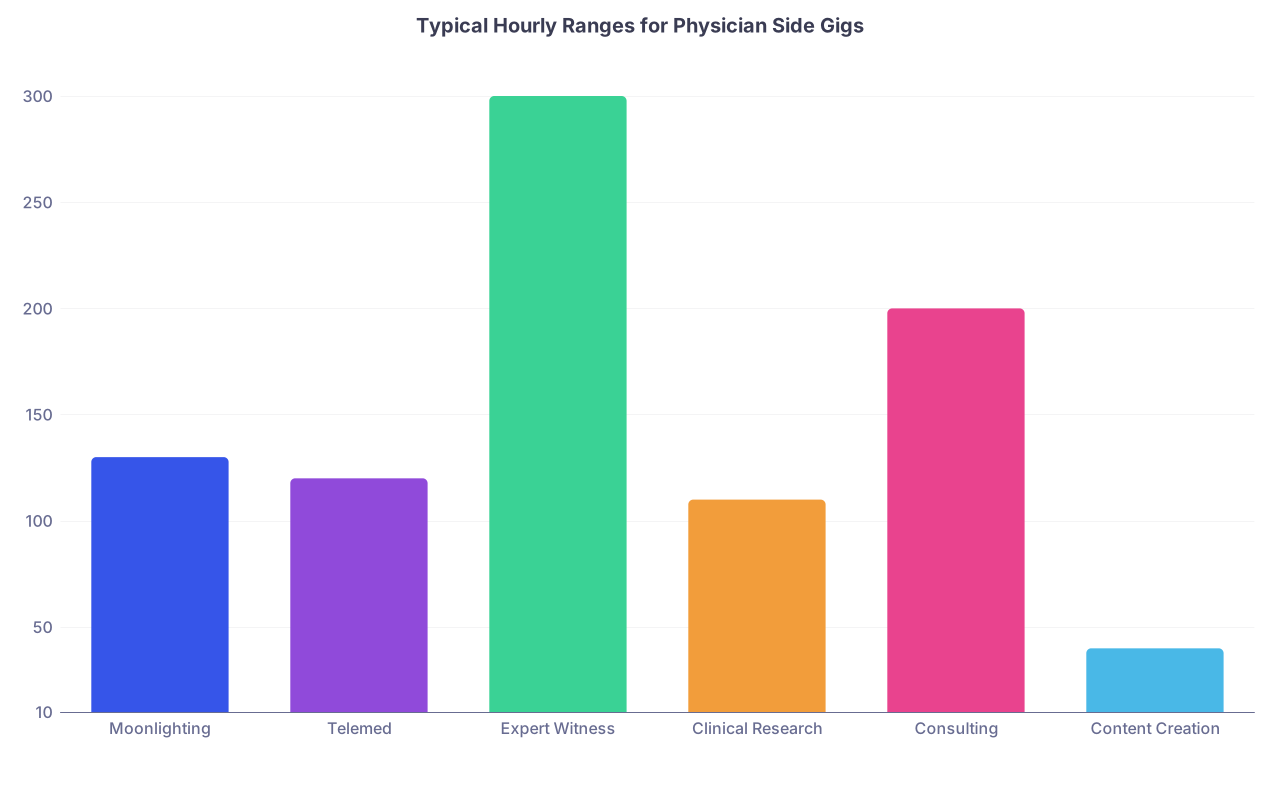
| Category | Value |
|---|---|
| Moonlighting | 130 |
| Telemed | 120 |
| Expert Witness | 300 |
| Clinical Research | 110 |
| Consulting | 200 |
| Content Creation | 40 |
Numbers are ballpark, vary by specialty and region, but the pattern holds: moonlighting is near the top for reliable, repeatable, immediate pay.
Pros of Moonlighting
- Very high hourly pay compared to most side gigs
- You’re using skills you already have — zero learning curve
- 1099 arrangements let you stack deductions (LLC, SEP IRA etc.)
- More shifts = more money; simple and linear
- Keeps your clinical skills sharp, helps new grads build reps fast
Cons of Moonlighting
- It’s more clinical work. When you’re already tired from clinical work
- Night/weekend heavy; crushes social life and recovery
- Malpractice risk is real; you’re often in less-supported environments
- Opportunity cost: you’re trading hours that could build long-term leverage (business, brand, skill-stack) for one-time pay
- Taxes: if you don’t plan, a painful April is waiting
So is it “worth it”? If you just need money quickly — yes. Compared to other side gigs, moonlighting wins on speed-to-cash and predictability. But that’s only one dimension.
How Moonlighting Compares to Other Common Physician Side Gigs
Here’s the quick comparison you’re actually trying to see.
| Side Gig | Main Benefit | Time Flexibility | Income Speed | Long-Term Upside |
|---|---|---|---|---|
| Moonlighting | High hourly pay | Low-Med | Fast | Low |
| Telemedicine | Convenience | High | Fast | Low-Med |
| Expert Witness | Very high hourly | Med | Medium | Low-Med |
| Clinical Research | Academic/extra pay | Low-Med | Slow-Med | Med |
| Consulting/Advisory | Network & equity | Med-High | Medium | High |
| Content/Brand | Autonomy & scale | High | Slow | Very High |
Let’s walk through the main contenders.
Telemedicine vs Moonlighting: Same Work, Different Life
Telemedicine is the closest cousin to moonlighting. Still clinical, still direct patient care, often still 1099.
Common setups:
- Urgent care style platforms (rashes, UTIs, refills, basic triage)
- Niche telemed (ED follow-up, weight loss, psych, hormone clinics)
- After-hours call coverage from home
Where Telemed Wins
- You can work from your couch. Or hotel. Or office
- Micro-shifts: 2–3 hours in the evening instead of whole nights/weekends
- Lower intensity (for many platforms) vs running a busy floor
- Less commuting, less hospital politics, lower exposure risk
Where Moonlighting Wins
- Higher and more consistent hourly rates in many specialties
- More billable complexity (procedures, admissions, codes)
- Better fit if you like being hands-on, team-based, in-person
My view:
If you’re an intern or early resident trying to pay off debt quickly and can physically tolerate more in-person work, moonlighting usually beats telemed on raw income. If you’re an attending with a young family who values evenings at home, telemed often beats moonlighting on quality of life per dollar.
High-Dollar Niche: Expert Witness Work vs Moonlighting
Non-clinical, legal-adjacent, usually high hourly rates once established.
You review charts, write opinions, sometimes testify. Malpractice cases, standard of care disputes, etc.
Typical: $300–$600/hour for review, more for deposition/trial. But — and this is the big but — it’s sporadic, requires credibility, and the ramp time is real.
Compared to Moonlighting
- Hourly: expert work blows most moonlighting rates out of the water
- Volume: much lower and less predictable
- Stress: different flavor. Less 2 a.m. codes, more adversarial attorneys
- Ramp: can take 1–3 years to build a consistent pipeline
If your goal is to replace moonlighting long-term with something more sustainable, expert witness work is a strong candidate. But if you need an extra $5–10k in the next 3 months, moonlighting is more realistic.
Clinical Research and Trials: Side Income + CV vs Pure Cash
Think sponsored clinical trials, site PI roles, or helping run industry or investigator-initiated studies.
Why docs do this:
- Extra income
- Academic or “thought leader” positioning
- Interesting science, access to cutting-edge therapies
Income can be solid for PIs and site owners, but early on it’s often slow, bureaucratic, and grant-dependent.
Compared to moonlighting:
- Way more admin, coordination, and meetings
- Less immediate pay; revenue often lags months behind work
- Higher long-term positioning value if you want academic or industry roles
I wouldn’t put clinical research in the “should I do this instead of moonlighting to crush loans this year?” bucket. It’s more of a career-shaping side channel than a pure side hustle.
Consulting, Startups, and Advisory Roles
This includes:
- Paid advisory boards for pharma/medtech/digital health
- Consulting for startups (clinical workflows, product design, sales to hospitals)
- Short-term projects (market research interviews, strategy calls)
Rates: $200–$500/hour for one-off calls is normal for experienced physicians. Equity/options are common for deeper advisory roles.
Where this beats moonlighting:
- Leverage. One good relationship can lead to multiple gigs or a future job
- Non-clinical skill-building (business, product, strategy)
- Often more interesting than another 12-hour shift
Where moonlighting beats this:
- Predictability. You pick up a shift, you get paid. End of story
- No business development. Consulting requires networking and pitching
- Less conflict of interest complexity (you still need to be careful with both)
If your 5–10 year plan includes medtech, pharma, admin, or leaving full-time clinical work, consulting is more strategically valuable than moonlighting — even if it pays less at first.
Content, Courses, and Personal Brand: The Long Game
This is the “YouTube doctor,” newsletter, course creator, or niche blogger route. Or social media with actual strategy.
Income sources:
- Ad revenue / sponsorships
- Paid courses and webinars
- Affiliate deals
- Speaking
Real talk: 90% of doctors who “start a blog” never make serious money. But the 10% who treat it like a real business can absolutely surpass moonlighting and then some. The upside is uncapped and scalable.
Downsides:
- Very slow initial payoff (often 6–18 months before real income)
- Requires skills you didn’t learn in residency (marketing, copywriting, audience building)
- Public visibility has reputational risks if you’re careless
Compared to moonlighting:
Moonlighting is a high-paying job. Content is a build-an-asset play. If you’re sacrificing all extra hours for shifts, you’re probably never going to build that asset.
If you’re early in your career and even think you might want an escape ramp from full-time clinical work, I’d seriously consider trading at least some moonlighting hours for building a brand or product.
The Real Cost of Moonlighting: Burnout and Risk
This part gets hand-waved way too often.
I’ve seen this exact pattern:
PGY-2 IM resident:
“I’m just doing 4–6 extra 12s a month.”
Six months later: cynical, exhausted, snappy with nurses, charting sloppier, relationship strained, studying for boards half-assed.
Moonlighting multiplies whatever is already going on:
- If you’re already on the edge of burnout, it pushes you over
- If your main job is toxic, moonlighting feels like escape — but it’s still more work
- Sleep debt plus complex clinical decisions is a malpractice time bomb
There’s also legal and financial risk:
- Separate malpractice policies with different exclusions
- Contract gotchas (non-competes, indemnification, tail coverage)
- Taxes on 1099 income if you’re not using quarterly payments and deductions right
You can do moonlighting safely, but only if you treat it like a real business, not random cash.
Practical Framework: Should You Moonlight or Do Something Else?
Use this short decision filter. Be honest with yourself.
What’s your primary pain point right now?
- Crushing short-term debt / need cash → moonlighting / telemed
- Want out of clinical in 5–10 years → consulting/content/startup work
- Want academic/industry posture → research/consulting/expert work
How’s your burnout level (0–10)?
- 0–4: Moonlighting is on the table
- 5–7: Cap moonlighting tightly and favor low-stress, flexible gigs
- 8–10: Fix your baseline life first; side hustles will just mask the problem
What’s your time control in your main job?
- Shift-based with predictable off days: moonlighting fits better
- Chaotic clinic + call + admin: I’d lean toward remote/flexible gigs
How much runway do you have?
- Need money this quarter → moonlighting/telemed
- Can think in 12–24 month horizons → add or prioritize brand/consulting
How I’d Approach It in Different Phases
If I were:
Resident early PGY-2 with moderate loans
I’d do limited moonlighting (max 2–4 shifts/month), build an emergency fund, and protect study/sleep time like my life depends on it. Zero elaborate side businesses yet.New attending with big loans but low burnout
I’d do targeted moonlighting or telemed for 12–24 months with a hard end date, while using some free time to build at least one higher-leverage channel (consulting seeds, content, or niche expertise).Mid-career attending, already tired
I’d dramatically limit moonlighting, pick 1–2 non-clinical side gigs with future upside (consulting, expert witness, content), and accept slower short-term financial progress in exchange for durability.
Visual: Where Each Side Gig Sits on the Map

| Step | Description |
|---|---|
| Step 1 | Need Fast Cash |
| Step 2 | Moonlighting |
| Step 3 | Telemedicine |
| Step 4 | Want Future Leverage |
| Step 5 | Consulting |
| Step 6 | Content and Courses |
| Step 7 | Prefer Non Clinical |
| Step 8 | Expert Witness |
| Step 9 | Clinical Research |
FAQs (Exactly 7)
1. Is moonlighting actually worth it during residency, or should I just focus on training?
If you’re in a reasonably humane program and not barely surviving, limited moonlighting can be worth it — if it doesn’t wreck your board prep or health. I’d cap it at 2–4 shifts/month for most residents. If you’re in a malignant program or already drowning, don’t add moonlighting. Fix your main situation first.
2. How much moonlighting is “too much” as an attending?
When your error rate climbs, your patience drops, or your non-work life disappears, you’ve crossed the line. As a rough rule: if you’re routinely over 60–65 clinical hours/week (main job + moonlighting), you’re burning future you to benefit current you. That’s rarely a good trade long-term.
3. Is telemedicine safer than in-person moonlighting from a malpractice standpoint?
Not automatically. Telemed has its own risk profile: limited exams, documentation-intensive, sometimes sketchy corporate setups. The key is solid malpractice coverage, clear protocols, and avoiding ethically gray companies. Don’t assume “I’m just on video” means “I can be casual.”
4. Can I realistically replace moonlighting income with expert witness work?
Yes, but not immediately. You’ll usually need a few years of attending-level experience, some networking with attorneys, and a track record. Expect ramp-up time of 1–3 years before it’s consistent. Once built, a handful of good cases per year can rival or beat a lot of moonlighting income for fewer total hours.
5. Are non-competes an issue if I moonlight or do telemed?
They can be. Many hospital and group contracts have restrictive language around outside clinical work, sometimes even broad “no competing medical services” clauses. Have a healthcare attorney review your main contract before you sign a moonlighting or telemed agreement. Don’t assume “everyone does it” will protect you.
6. If I want to eventually leave clinical medicine, should I still moonlight now?
You can, but I’d treat it as a temporary tool, not a default. Use moonlighting to buy yourself financial breathing room (emergency fund, high-interest debt gone), then start trading some of those hours for building skills and networks outside direct patient care — consulting, product work, content, industry connections.
7. What’s the biggest mistake physicians make with moonlighting and side gigs?
They chase short-term dollars with zero strategy. They pile on moonlighting until they’re fried, don’t account for taxes, and never invest time into higher-leverage activities. Then 5–10 years later, they’re richer on paper but trapped. The smarter play: use moonlighting selectively while steadily building something that gives you options later.
Key takeaways:
Moonlighting is absolutely “worth it” for fast, predictable cash — but it’s a terrible long-term sole strategy. Stack it intentionally: limited, time-bound, and alongside at least one higher-leverage, future-oriented side gig that doesn’t depend on you being in a hospital at 2 a.m. forever.