
It’s 9:30 p.m. You finished charting an hour ago, the kids are finally asleep, and you’re sitting on the couch scrolling past doctors on Instagram, YouTube, TikTok, and Substack. They’re talking about “leaving clinical medicine,” “building a personal brand,” and “making more from content than from call.”
You’re wondering: is this real money, or just online flexing?
Here’s the direct answer:
Content creation can be very profitable for doctors. But for most physicians, it will never replace a full-time clinical salary—and the way people talk about it online is often wildly distorted.
If you go in thinking “easy passive income,” you’ll be disappointed. If you go in thinking “slow, high-leverage side hustle that might eventually rival part-time clinical income,” you’re in the right ballpark.
Let’s break it down like a sane adult, not like a TikTok guru.
Where Does the Money Actually Come From?
Doctors don’t get paid to “post.” They get paid through specific revenue channels. If you don’t understand these, you’ll waste a lot of time shouting into the void.
Here are the main ways physician content creators actually make money:
- Ads (YouTube, blogs, podcasts)
- Sponsorships and brand deals
- Affiliate marketing
- Digital products (courses, ebooks, PDFs, templates)
- Memberships / subscriptions (Patreon, paid newsletters)
- Indirect income (speaking gigs, consulting, patient referrals, book deals)
Let’s be concrete.
| Income Source | Typical Monthly Range* | Time to Meaningful Income |
|---|---|---|
| YouTube Ad Revenue | $100–$5,000+ | 12–24 months |
| Sponsorships | $500–$10,000+ per deal | 12–36 months |
| Digital Courses | $1,000–$30,000+ | 6–24 months |
| Paid Newsletter | $200–$5,000+ | 12–36 months |
| Affiliate Income | $50–$3,000+ | 6–24 months |
*For those who take it seriously and stick with it, not for accounts with 800 followers and three posts.
The pattern is obvious when you’ve seen enough of these:
- Ad-only models are usually small to moderate income.
- The real money comes when a doctor sells something high value (course, membership, consulting) to a specific audience, and uses content as the top of the funnel.
How Much Can a Doctor Realistically Make?
Let me give you ballpark tiers. These are directional, based on real creator data, not fantasy.
Tier 1: “Beer Money / Nice Dinner” ($100–$500/month)
This is where most physicians who dabble land.
You:
- Post somewhat inconsistently
- Do not have a clear niche
- Maybe have a small blog or YouTube with a few thousand views a month
- Get occasional affiliate sales or tiny ad revenue
It’s not life-changing. It’s just pleasant.
Tier 2: “Decent Side Hustle” ($500–$3,000/month)
You’ve taken it seriously for at least 12–18 months.
You:
- Post weekly or more
- Have a defined audience (e.g., premeds, IM residents, weight loss patients, aesthetics patients)
- Have one monetization mechanism: maybe a course, affiliate deals, or sponsorships
- Might have 5k–50k followers on one or more platforms, or 10k+ monthly blog readers
Now this starts to matter. That $2k/month can be:
- A whole 529 plan funded
- Maxing out a Roth IRA
- Offsetting 1 day/week of clinical work over time
Tier 3: “Serious Income” ($3,000–$20,000/month)
This is the group everyone online likes to pretend they’re in.
Here’s what it actually looks like:
- There’s an actual business behind the content: funnels, email list, products, onboarding, support
- The doctor is niche and clear: e.g., “sleep medicine doc teaching people with insomnia,” “cardiologist teaching high-risk patients about lifestyle,” “EM doc teaching premeds and residents”
- There are multiple revenue streams stacked: products + sponsors + affiliates, etc.
- Time investment is significant: initially 10–20 hours/week, sometimes more
At this level, some physicians reduce clinical FTE. They go 0.6–0.8 and keep both worlds.
Tier 4: “You Could Quit Clinical” ($20,000+/month, sustainable)
This is rare. Many talk about it. Few live it for longer than a brief spike.
Pattern here:
- Very strong, trusted brand
- Big email list
- High-priced offerings (courses, group programs, consulting packages, or major sponsorship deals)
- Often: team support (VA, editor, marketing, tech help)
- The doctor is running a media/education business, not a hobby channel
If your goal is “replace my attending income with content,” you’re aiming here. That is possible—but absolutely not automatic, and it will feel like building a second career.
Time vs Money: Does the Math Even Work for Physicians?
Here’s the harsh truth: in the first 6–12 months, the hourly pay from content creation is atrocious.
You’ll spend:
- 5–10 hours per week learning platforms, writing, recording, editing
- 0–$200/month on software, hosting, maybe editing help
- And you’ll make… basically nothing at the start
Content makes sense financially for doctors only when you think in leverage and time horizon.
You’re trading:
- 1 hour today for content that can reach people and sell things for years
- 1–2 years of low return for the chance to have a system that keeps generating income
Compare:
- Extra clinical shift: high immediate pay, zero leverage
- Well-built piece of content and product: low initial pay, potentially high long-term leverage
If you’re drowning right now and need cash this month, content is the worst choice. Moonlight. Pick up extra shifts. Locums.
If you’re reasonably stable and thinking 3–5 years out? Now we’re talking.
Who Actually Wins at Content Creation (and Who Doesn’t)
There’s a pattern to the physicians who make real money from content. And a pattern to those who burn out posting for free.
Doctors Who Do Well:
They usually have at least 3 of these:
Niche clarity
“I help X with Y” is sharp.
Examples:- “I help residents crush Step 3 and boards.”
- “I help midlife women manage perimenopause symptoms.”
- “I help premeds get into US MD schools without a 520.”
Consistency over 12–24 months
Not “I posted Reels for six weeks and nothing happened.” The algorithm will not respect your feelings.A product or service that solves a specific problem
Not vague “education.” Real offerings:- A structured weight loss program
- An insomnia course with a defined timeline
- A premed mentorship membership
- A “private practice launch” course for specialists
Willingness to be visible and opinionated
Bland, generic posts = no trust. No trust = no sales. You do not need to be controversial, but you do need to be specific and clear.Basic business sense
They know that “more followers” isn’t always more income. 5,000 right people beats 200,000 randoms.
Doctors Who Struggle or Quit:
Patterns I see all the time:
- Treating content like a vanity project, not a business
- Copying trends instead of solving real problems
- Posting to other doctors while trying to sell to the public (or vice versa)
- Refusing to ever sell anything—then wondering why there’s no money
- Expecting clinical-level hourly rates in month three
If you aren’t willing to treat it like a business, that’s fine. Just don’t expect business-level income.
Hidden Risks, Legal Landmines, and Reputational Issues
This is the part almost no influencer talks about because it’s not sexy. But you, as a doctor, absolutely must pay attention to this part.
Medical-Legal Risk
You need clear boundaries:
- Don’t give personalized medical advice
- Use disclaimers (“for educational purposes only,” “not a doctor-patient relationship,” etc.)
- Be cautious with case examples and HIPAA
- Understand your state board’s guidance on social media and advertising
Some specialties are more sensitive (psych, OB, peds). You can still create content, but you must be deliberate.
Employer and Contract Problems
If you’re employed:
- Check your contract for:
- Moonlighting and outside income clauses
- Use of your name, title, and affiliation
- Restrictions on use of hospital logos or imagery
- Many academic centers are touchy about “Dr. X from Prestigious University” doing sponsored content
If you’re in private practice:
- Advertising rules vary by state and specialty boards
- You may need to disclose financial relationships clearly
Reputational Risk
You risk:
- Being seen as “the TikTok doc” instead of a serious clinician (especially by older colleagues)
- Being judged for monetizing knowledge
(The same people often teach CME for honoraria, but somehow this is “pure.” Take that as you will.)
If your ego can’t handle criticism from anonymous accounts and the occasional salty colleague, content creation may drive you nuts.
Strategic Approaches That Make Sense for Different Doctors
Let’s get practical. There isn’t one “right way” to do this. But there are sensible strategies depending on your situation.
If You’re a Resident or Fellow
You have time constraints but also a long runway.
Best plays:
- Pick a target audience that’s not your current patients: premeds, med students, residents behind you, or general public education in a non-sensitive niche.
- Start building skills: writing, video, explaining things clearly.
- Focus on audience growth and email list, not crazy monetization yet.
- Maybe launch a small digital product or coaching offer (e.g., “CV review for med school,” “mock interviews”).
Goal: by attending-hood, you have an audience and platform that can be monetized more seriously.
If You’re an Early-Career Attending
You’re relatively young, maybe burned out, and wondering about options.
Best plays:
- Pick a niche that intersects:
- What you know extremely well
- What people are already paying for
- What you’re willing to talk about for a few years
- Start with one primary channel (YouTube, newsletter, or blog) and repurpose to social.
- Create one clear, structured offer as early as possible (course, group, 1:1 service).
- Expect 12–24 months of grind before significant money.
Goal: build a side arm that gives you leverage and optionality. Maybe allows you to reduce clinical time eventually.
If You’re Mid/Late Career
You have credibility and expertise. You may have less tolerance for tech nonsense.
Best plays:
- Lean into depth, not volume:
- Long-form newsletter, podcast, or high-value course.
- Use your existing professional network:
- Corporate wellness talks
- CME courses
- Consulting based on your content.
- Get help early:
- Hire an editor, tech VA, or marketing assistant rather than DIY everything.
Goal: Is this a legacy project, a partial transition plan, or meaningful extra income? Clarify that before you start.
So… Is It Just Hype?
No. But the way it’s sold online usually is.
Here’s the summary without fluff:
- Content creation is not a fast path to replacing your clinical income.
- It is a powerful, leveraged way to:
- Add a meaningful side income stream
- Create career optionality
- Build a direct relationship with people you can help outside the constraints of RVUs and clinic schedules
If you approach it like a real business—with a clear audience, clear offer, and long-term horizon—it can be incredibly profitable.
If you approach it like “I’ll post some stuff and get brand deals,” you’ll mostly get frustration and a few free products.
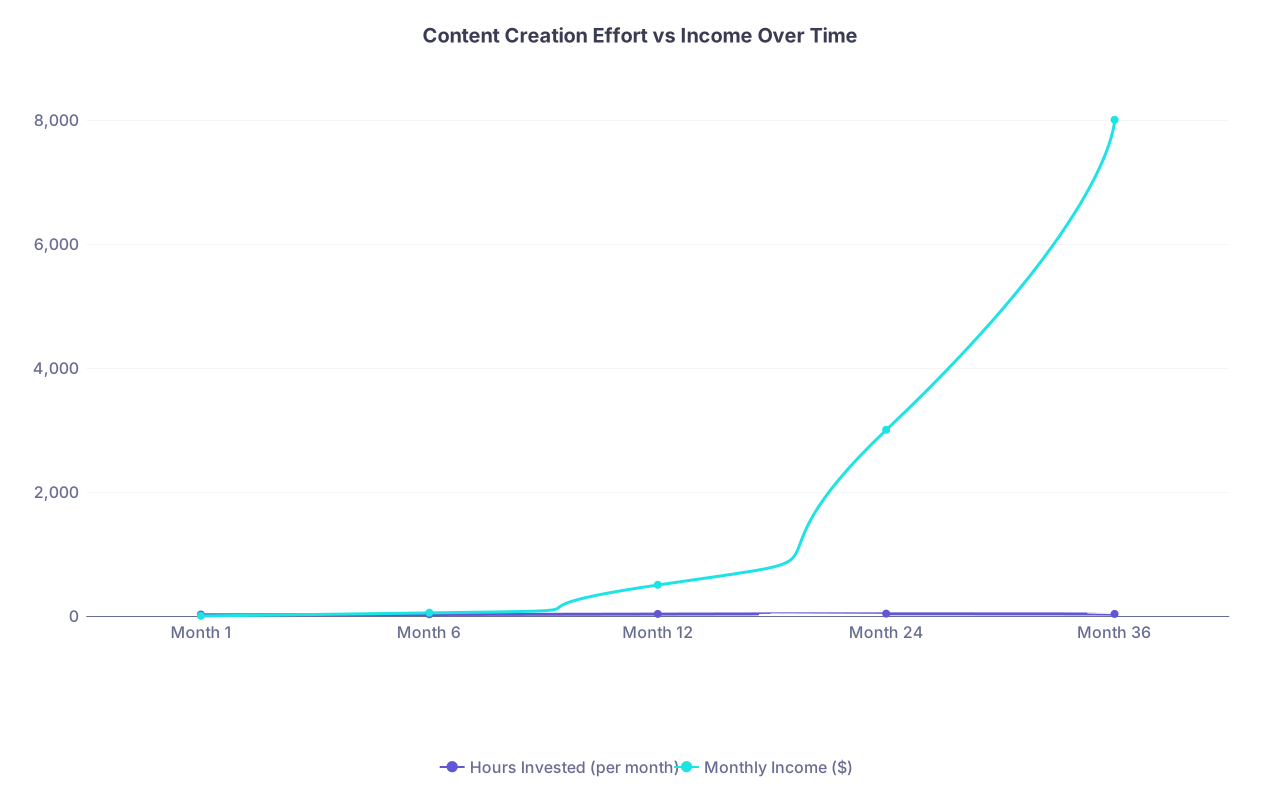
| Category | Hours Invested (per month) | Monthly Income ($) |
|---|---|---|
| Month 1 | 20 | 0 |
| Month 6 | 25 | 50 |
| Month 12 | 30 | 500 |
| Month 24 | 35 | 3000 |
| Month 36 | 30 | 8000 |

| Step | Description |
|---|---|
| Step 1 | Start |
| Step 2 | Pick Niche |
| Step 3 | Choose Main Platform |
| Step 4 | Create Weekly Content |
| Step 5 | Build Email List |
| Step 6 | Launch Simple Offer |
| Step 7 | Refine Based on Feedback |
| Step 8 | Scale with Systems or Team |
| Step 9 | Define Goal |
FAQ: Content Creation for Doctors
1. Can content creation realistically replace my attending income?
Yes, but it is uncommon and takes years, not months. You’d be building a full-fledged education/media business with real products, systems, and likely a small team. Treat that goal like a second career, not a hobby.
2. What’s the best platform for doctors to start on?
Pick one long-form “home base” where content can compound: YouTube, a blog, or an email newsletter. Then optionally repurpose snippets to social (Instagram, TikTok, LinkedIn). For most physicians, I’d start with either YouTube (if you’re comfortable on camera) or an email newsletter (if you prefer writing).
3. Do I need a huge following to make money?
No. You need the right following. A 2,000-person email list of highly engaged premeds can absolutely support a $10k+ product launch if your offer is good and priced appropriately. Vanity metrics (followers, likes) matter less than depth of trust and match between audience and offer.
4. How much should I worry about legal and compliance issues?
A lot. You are always a physician. Use clear disclaimers, avoid personalized advice, separate educational content from clinical care, and review your employment contract and state board rules. If you’re running anything significant, talk to a healthcare attorney once and get your setup and language reviewed.
5. What’s the first thing I should create to monetize?
Not a massive course. Start with a simple, focused offer:
- A 60–90 minute paid workshop
- A short, high-yield PDF or mini-course
- A defined 1:1 service (CV review, application coaching, specific health goal) You can expand and refine once you’ve seen what people actually buy and ask for.
6. How do I know if content creation is even worth trying?
Ask yourself:
- Am I willing to commit 12–18 months with low financial returns?
- Do I have at least one group of people I really want to help outside clinic?
- Can I handle being visible online and occasionally criticized? If the answer to all three is yes, it’s worth a serious experiment. If one of them is a hard no, there are probably better side hustles for you.
Here’s your next step:
Tonight, write one sentence that answers this: “I want to help [specific group] do/achieve [specific outcome] using [my expertise].”
If you cannot write that sentence clearly, you’re not ready to pick a platform or a camera. Fix the sentence first. Everything profitable in physician content creation starts there.