
You are sitting in the call room at 2:30 a.m., staring at your bank app between pages of a progress note. Compensation has not kept up. The RVUs are a joke. The hospital just cut CME money again.
Your phone buzzes: another email, another “physician side income opportunity.”
“Turn your medical license into passive income!”
“Earn $10,000 per month from home, just signing charts!”
You are tired. The offer sounds tempting. And this is exactly where physicians get hurt.
Let me be blunt: there are side hustle offers that no physician should touch. Not because they “might not be worth your time,” but because they can end your career, bankrupt you, or put you in front of a medical board or federal prosecutor who has no patience for “I did not realize.”
This is your damage-control guide.
The Big Picture: Why Side Hustles Are So Dangerous For Physicians
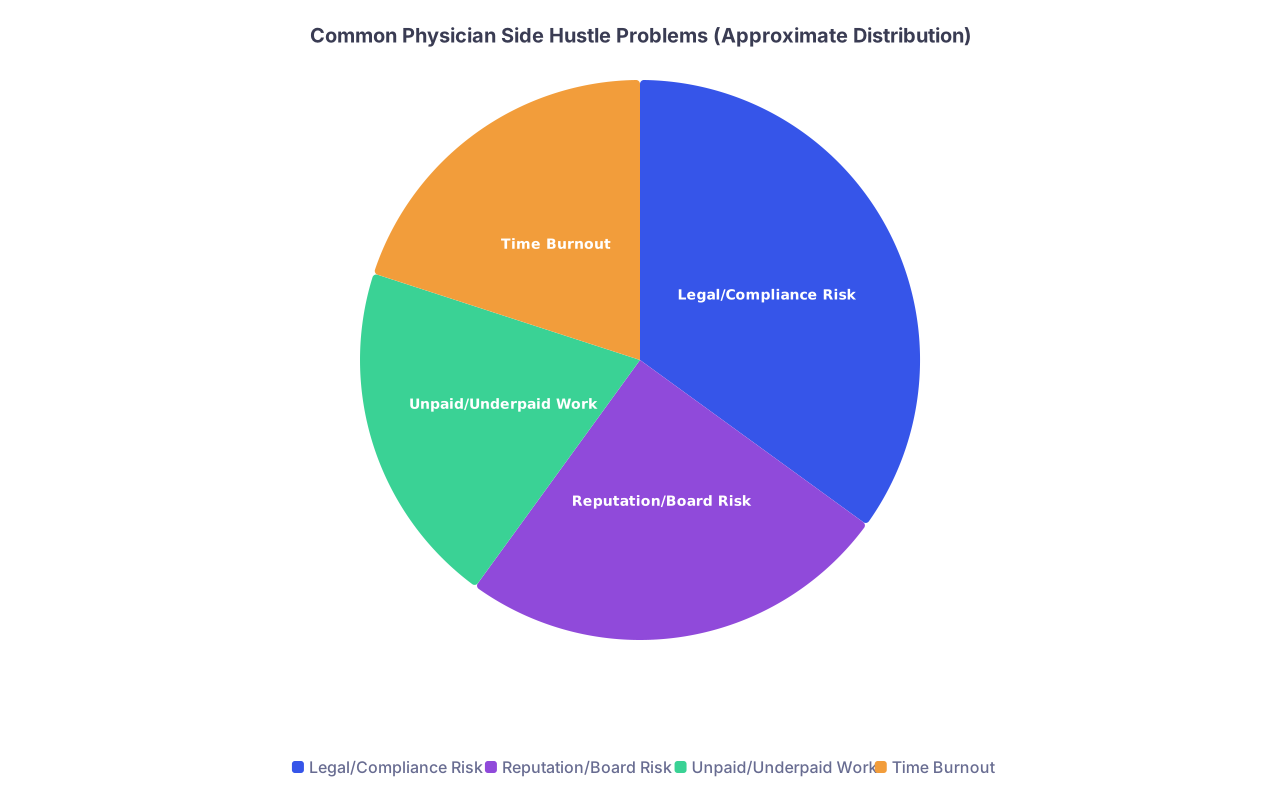
| Category | Value |
|---|---|
| Legal/Compliance Risk | 35 |
| Reputation/Board Risk | 25 |
| Unpaid/Underpaid Work | 20 |
| Time Burnout | 20 |
You are not a generic freelancer. You are a licensed professional with:
- A DEA number
- An NPI
- A state license tied to a medical board that can end you with one vote
Side hustles for physicians are not just “extra gigs.” Every one of them runs through:
- Fraud and abuse laws (Stark, Anti-Kickback)
- Malpractice exposure
- State telemedicine and prescribing laws
- Tax and employment law
Non-physician friends can dabble. You cannot. The wrong $500 “easy documentation review” gig can cost more than your entire attending salary ever brought in.
So let us walk through 10 specific offers no physician should accept—what they look like, why they are toxic, and what to do instead.
1. “Just Sign This”: Rubber‑Stamp Telemedicine and Chart Review Mills
These are everywhere. Pitched as:
- “We do all the work; you just review and sign”
- “Our NPs/health coaches do the encounter; you sign off for oversight”
- “We handle the telemedicine platform, you just approve prescriptions and billing”
The red flag: you are being paid to attach your license to care you did not actually provide.
Common setups:
- DME (braces, back supports, genetic tests) requested from mass telemarketing campaigns
- Weight loss, TRT, or ADHD telehealth where non-clinical “sales reps” pre‑qualify patients
- “Supervising physician” for dozens of APPs you never meet, in states you barely understand
Why this is career-suicide territory:
Standard of care still applies
Medical board does not care what your contract said. If your name is on the order, they treat it as your patient. “The company said it was fine” is not a defense.Kickback and fraud risk
Many of these operations bill Medicare/Medicaid or commercial insurers at high codes for minimal contact. When the investigation comes, they pull billing under your NPI and your name is front and center.Volume that proves you are lying
I have seen physicians “telemedically following” hundreds of patients a day on paper. You cannot defend that. The volume itself is the evidence you did not do what you attested to.Supervision in name only
If your contract describes you as a “supervising” or “collaborating” physician but you have no real oversight process, that is a problem. Boards are cracking down on paper-only supervision.
Absolute no-go patterns:
- They cannot clearly explain how many patients per hour/day they expect you to “review”
- You are paid per “approved” encounter or per prescription, not per hour or salary
- They pressure you to sign “standing orders” for controlled substances or high‑risk meds
- Their onboarding prioritizes billing instructions over clinical protocols
2. “Mass Prescribing” For Cash‑Pay Online Clinics

This one usually sounds like:
- “We are a direct‑to‑consumer telehealth brand”
- “We do weight loss / TRT / ED meds / hair loss / ADHD—cash only, no insurance”
On the surface: no insurance, so no fraud risk, right? Wrong.
Red flags:
- Their website is 95% marketing: “Fast results, no waiting rooms, no judgment”
- “Instant approvals” implied or promised
- They boast “minimal friction” or “zero hassle prescribing experience” to patients
Here is the mistake: assuming cash-pay equals fewer rules. Boards and DEA do not care who paid. They care whether:
- There was a legitimate doctor-patient relationship
- There was an adequate history, exam, and documentation
- Prescribing was clinically justified and monitored
Nightmare scenarios:
- ADHD mills: 3–5‑minute video visits resulting in chronic controlled stimulant prescriptions across state lines, with no physical exam, no PDMP checks, no collateral information.
- TRT factories: automatic testosterone and anastrozole combos based on single “low-normal” lab, with no proper endocrine workup.
- GLP‑1 shops: automatic semaglutide prescriptions for cosmetic weight loss, with minimal screening for contraindications or eating disorders.
When the scandal hits (and it will), media, regulators, and boards will hunt down:
- The medical director
- The top prescribers
- The doctors whose names are all over the scripts
If their entire business model relies on speed and guaranteed treatment, they will eventually need scapegoats. They will not choose the investors.
Walk away if:
- They emphasize “up to $1,000+ per day writing quick telehealth scripts”
- They dismiss your concerns with “our lawyers have already cleared everything”
- Your clinical judgment is treated as a barrier, not the point
3. “Just Lend Us Your License/DEA/NPI”
This is not a side hustle. This is a one‑way ticket to losing your license.
Typical lines:
- “We just need a medical director on paper.”
- “We already have protocols; we just need your DEA number for ordering medications.”
- “You will not need to see patients; you are only there for compliance.”
Translation: they want your license as a shield.
Common places this shows up:
- Med spas offering injectables, fillers, hormone pellets, IV infusions
- “Wellness clinics” selling peptides, compounded meds, or off‑label regimens
- DME or lab companies that “need a doctor to sign orders”
You are responsible for every order, every medication, every protocol that flows under your credentials. I have watched physicians try to argue they were “only a figurehead.” Boards do not care.
Never:
- Let any entity use your DEA to order stock medications without strict written controls and real oversight
- Allow standing protocols to be used under your name without your direct involvement in creating, updating, and enforcing them
- Sign as “medical director” without malpractice coverage that explicitly covers that role
If the offer is essentially “your license for our business,” decline immediately.
4. Referral Kickbacks Disguised As “Consulting Fees”
This one is more subtle. It sounds like:
- “We pay consulting fees to physicians whose patients utilize our services.”
- “We offer honoraria when your patients get labs/genetic tests with us.”
- “We share revenue to reward our top referring doctors.”
That is not “consulting.” That is pay for referrals. Which is exactly what the Anti‑Kickback Statute and many state laws prohibit, especially for federal payors.
Red flags:
- You only get paid when your patients use their service
- The amount correlates with volume, not time or expertise
- There is no real work product beyond “advising about our service”
- They hand you a contract that looks like legal word salad but cannot explain, in plain English, what you are actually being paid for
The government has seen every version of this game. Calling it “medical advisory compensation” will not save you if the actual function is “we pay you more when you send us more patients.”
Safe pattern:
You are paid for definable, documented work (meetings, policy review, actual consulting) at a market‑reasonable hourly rate, not tied to referral numbers or revenue.
Anything else: hard pass.
5. “Equity For Nothing” In Startups And Clinics
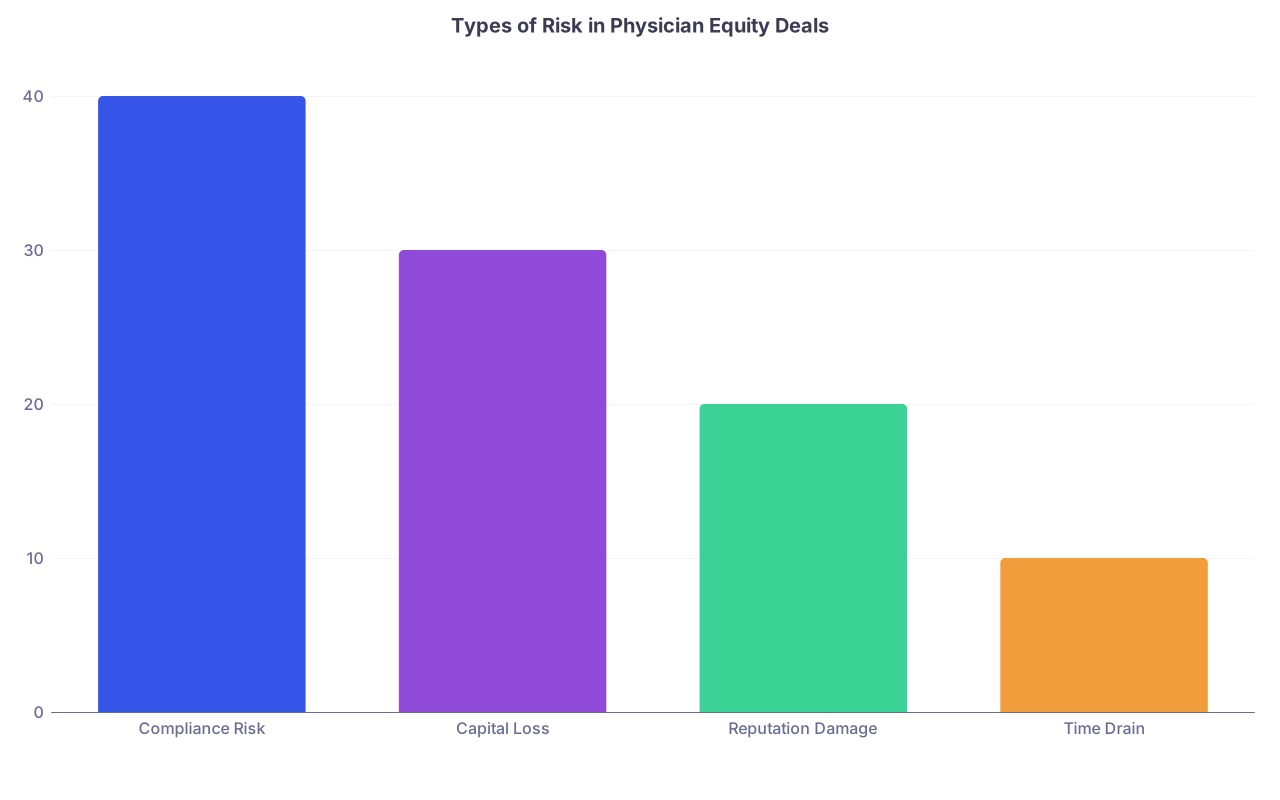
| Category | Value |
|---|---|
| Compliance Risk | 40 |
| Capital Loss | 30 |
| Reputation Damage | 20 |
| Time Drain | 10 |
A startup or private clinic offers you:
- Equity in the company “in exchange for your name and guidance”
- A small percent ownership if you sign on as “CMO” or “Medical Director”
- Shares for minimal or no cash contribution
Feels flattering. Feels like you are finally being treated like a partner.
Here is the problem: regulators and plaintiffs’ attorneys will treat you like an owner, too. With all the responsibility. Especially when the company is in a gray zone (AI diagnostics, at‑home testing, wellness products with drug‑like claims, etc.).
Common ugly endings:
- Company bends or breaks regulations → Feds investigate → they look for “who is the doctor responsible for clinical oversight and safety?” Congratulations, it is you.
- Investors sue after business failure, alleging misrepresentation of clinical safety or efficacy. Your name is on the pitch decks.
- Board sees you as the physician face of a product that hurt people, even if you did not design it.
Bad signs:
- They want you on the website and pitch materials but not in actual decision‑making
- No D&O (directors and officers) coverage explained or offered
- They dismiss your compliance concerns as “we will fix that later, once we grow”
If they want to use your credibility, then you must have:
- Real, documented influence over clinical operations
- Adequate legal protections
- The ability to say “no, we are not doing this; it is not safe or legal”
If you do not, then your credibility is just collateral.
6. “Clinical Research” That Is Really Marketing

This pitch shows up as:
- “Help us with a post‑marketing registry study.”
- “We pay per patient enrolled in our observational trial.”
- “All you need to do is recommend the product and fill out a quick survey.”
You are not being recruited as a researcher. You are being recruited as a salesperson with a white coat.
Red flags:
- You are paid per patient who is put on the sponsor’s product
- There is minimal or no IRB oversight
- No clear consent process distinct from normal clinical consent
- “Research” tasks are basically checkboxes after you prescribe their drug or device
The dangers:
- Kickback allegations (being paid to switch or start patients on a specific product)
- Ethics complaints for blurring the line between research and clinical care
- Publication and reputation damage if the “data” is clearly biased marketing output
Legitimate research has:
- Independent IRB review
- Clear study protocol and inclusion/exclusion criteria
- Transparent payment structure not driven by product use alone
- Separation between research consent and normal treatment decisions
If the sponsor seems more excited about “capturing market share” than about answering a meaningful clinical question, walk away.
7. MLMs, Supplements, And “Wellness Products” With Your Name Attached
You get approached by:
- A “nutraceutical” company that wants you to “endorse” or “recommend” their products
- An MLM‑style supplement scheme where “doctors can build downlines too”
- A “biohacking” brand looking for a “physician ambassador”
Here is the trap: they lean heavily on “these are just vitamins” or “just wellness.” They are also unregulated messes half the time.
Problems you inherit:
- You are vouching for safety and efficacy of products that may not have quality control, consistent dosing, or even accurate labels
- If patients have adverse events and your name is on the promotion, you are the obvious target
- MLM structures often veer right into illegal territory (pyramid schemes, deceptive marketing)
These outfits love phrases like “clinically tested,” “doctor developed,” or “supported by physicians.” That “physician” might be you. On a website cached forever.
Avoid:
- Any offer where your income depends on recruiting other people under you
- Endorsing products where you have not seen robust data and manufacturing transparency
- Being listed as “creator,” “developer,” or “medical formulator” when you did nothing of the sort
If you would be embarrassed to defend the product in front of your hospital MEC or state board, you do not want your name on it.
8. Under‑Documented Expert Witness And Chart Review Gigs

| Step | Description |
|---|---|
| Step 1 | Initial Contact |
| Step 2 | Conflict Check |
| Step 3 | Written Scope Agreement |
| Step 4 | Retainer and Rate Set |
| Step 5 | Record Review |
| Step 6 | Written Opinion |
| Step 7 | Deposition or Testimony |
Expert witness work and chart reviews can be excellent side income. Done properly. The problem is the sloppily arranged, handshake‑style deals.
Red flags:
- “We just need a quick letter; we will send a flat fee.”
- No written agreement about your role (consulting vs testifying expert)
- No clarity on whether your materials are discoverable
- Requests that you “tone down” or “shape” your opinion to match their narrative
Two key risks:
Ethical and board exposure
If you give biased, sloppy, or obviously one‑sided opinions, opposing counsel can complain to your board. Many do.Nonpayment and legal entanglement
Without clear rates, retainer, and scope, you can end up doing hours of unpaid work or be dragged into court fights about your own role.
Avoid any “just help us out with this one case, we can sort details later” invitations. Legitimate medicolegal work looks organized and contract-based, not casual.
9. “Passive Real Estate In Medicine” That Is Not Really Passive
| Hustle Type | Main Red Flag |
|---|---|
| Owning imaging center | Stark/AKS conflicts |
| Owning ASC tied to referrals | Self-referral issues |
| Office building with own practice as tenant | Lease terms scrutiny |
| Hospital JV real estate deal | Complex compliance review |
Real estate is fine. But “doctor‑only” real estate schemes around medical services can be regulatory minefields.
Common pitches:
- “Own part of the imaging center you refer to.”
- “Invest in an ASC and capture facility fees.”
- “Group of local doctors buying the building and leasing to their practices.”
You must watch for:
- Stark Law (self‑referral) issues when you both own and refer
- Fair market value requirements for rent and returns
- Complex safe harbor conditions that your “friend’s lawyer” has not actually analyzed
The mistake: assuming that because lots of doctors are doing it, it is safe. Bad assumption. I have seen physician groups unwind deals at great cost when a new compliance officer or external auditor looked under the hood.
Before you sign:
- Have an independent health care attorney (not the deal’s attorney) review the structure
- Understand exactly how returns are calculated and how referrals relate to ownership
- Be ready to walk away if anyone says, “Everyone does this; enforcement is rare”
10. Content Creation Deals That Try To Own Your Professional Voice
You are invited to:
- Host a podcast “presented by” a pharma or device sponsor
- Create educational videos for a medical startup’s platform
- Write blog posts or appear in ads as a “featured physician”
Done right, this can be safe and even fun. The red flag is control.
Risks:
- Contracts that give the company perpetual rights to your name, likeness, and content, even after you leave
- Edits or scripts that subtly (or not so subtly) push off‑label uses or unapproved claims
- Being positioned as endorsing services/products you do not fully stand by
Problems that show up years later:
- That old ad resurfaces while you are applying for an academic appointment or leadership role
- A product you promoted runs into safety issues; your face is still on video saying it is “life‑changing”
- You discover they spliced or re‑edited your words to say something you never intended
Non‑negotiables:
- Clear review and approval rights on anything with your name or image
- Ability to revoke use of your likeness after a defined period or upon termination
- Explicit limits on how content can be edited and where it can be used
If the contract reads like you are selling your professional identity for a few thousand dollars, close the document and walk away.
Quick Diagnostic: Fast Screen For Side Hustle Red Flags
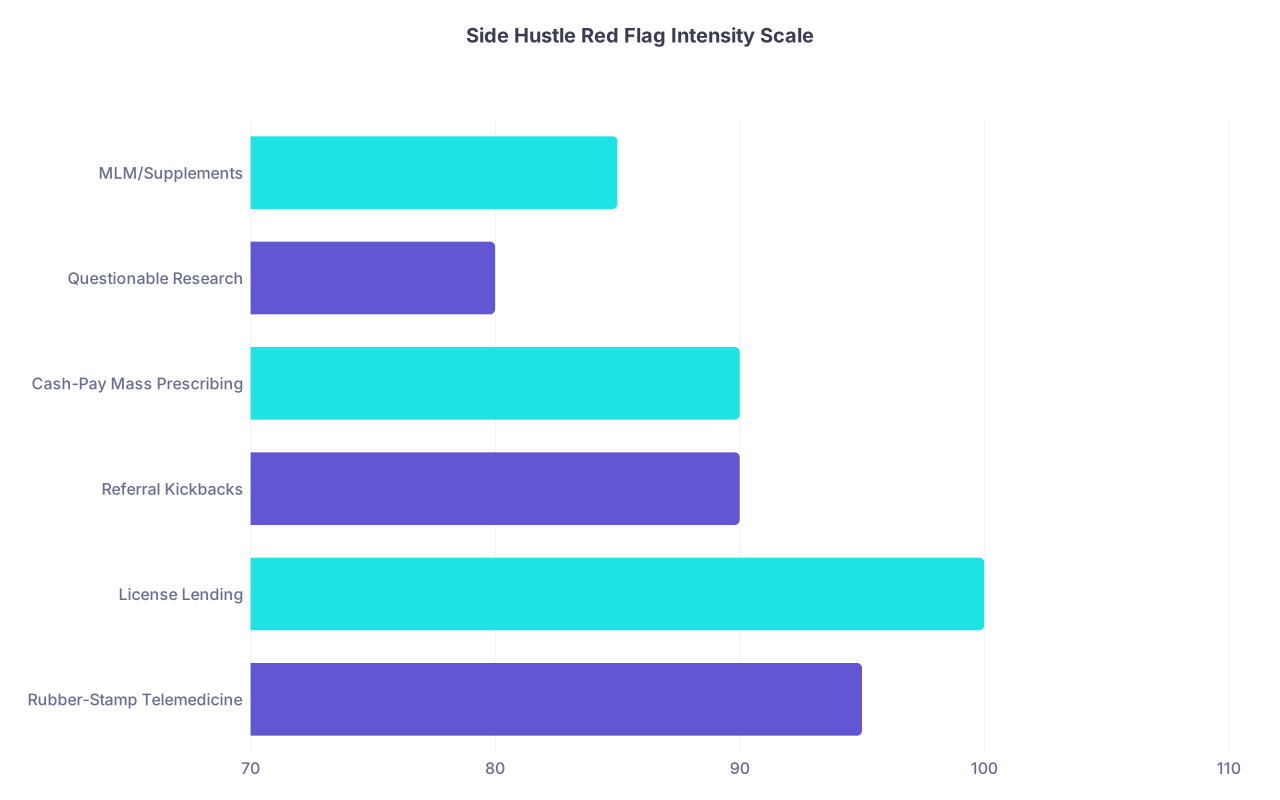
| Category | Value |
|---|---|
| Rubber-Stamp Telemedicine | 95 |
| License Lending | 100 |
| Referral Kickbacks | 90 |
| Cash-Pay Mass Prescribing | 90 |
| Questionable Research | 80 |
| MLM/Supplements | 85 |
Run any offer through this mental checklist:
- Are they more interested in your license/DEA/NPI than in your actual expertise?
- Is compensation tied to volume of prescriptions, referrals, or product use?
- Are you being asked to “just sign,” “just approve,” or “not worry about the details”?
- Is there a rush to sign before you can run it past your own attorney or compliance expert?
- Would you be comfortable explaining this arrangement, step by step, to:
- Your state medical board
- A local journalist
- Your residency program director
If the honest answer is no for that last one, you already know what to do.
FAQ (Exactly 3 Questions)
1. How do I safely evaluate a side hustle without overreacting to every risk?
Start by classifying the work: clinical vs non‑clinical. Clinical side gigs (telemedicine, supervising, prescribing, med spa, research) require a much higher bar: written contracts, malpractice coverage, legal review, and very clear workflows that match the standard of care. Non‑clinical gigs (teaching, writing, consulting, speaking, product design) are safer but still need contracts that protect your name and time. If there is any involvement with prescriptions, billing, or referrals, assume you need a health care attorney’s eyes on the agreement.
2. Is all telemedicine side work dangerous, or just some of it?
Telemedicine itself is not the problem. Sloppy or exploitative telemedicine is. Legit telehealth gigs have: clear visit length expectations, state‑specific licensure requirements spelled out, robust documentation standards, appropriate prescribing policies (especially for controlled substances), and malpractice coverage. The dangerous ones push speed, high‑volume scripts, cross‑state care without clarity, or “chart signing” for encounters you did not really do. The more their business model depends on you prescribing quickly and often, the more you should back away.
3. What kind of side hustles are generally safer for physicians to pursue?
In general, the safest involve your brain but not your license: medical education, course creation, legitimate expert witness work (properly contracted), writing and editing, paid speaking with clear disclosures, advisory roles that do not tie pay to referrals or prescriptions, and non‑health‑care‑regulated businesses (real estate outside of referral structures, general entrepreneurship not involving patients). The key pattern: you are paid for your time and expertise, not for your ability to drive billable medical services or product use.
Today, pick one concrete step: open your email or messages, find one “opportunity” that has been nagging at you, and run it through the five‑question checklist above. If it triggers even two major red flags, reply with a simple, final line: “After review, I will not be moving forward with this.” Then delete the thread.