
You’re on call, scrolling your contract between pages in the EMR, and you finally see it in black and white: no moonlighting, no outside clinical work, no exceptions without written approval. The student loans are still there. Your kid’s daycare just raised rates. And the “just pick up extra shifts” advice everyone keeps giving you? Completely off the table.
If your contract bans moonlighting, you’re not stuck. You just have a narrower lane. The trick is to pick side hustles that don’t trigger “practice of medicine” clauses, don’t compete with your employer, and don’t fry your brain more than your day job already does.
Let’s go through what that looks like step by step.
Step 1: Actually Read Your Contract (Like a Lawyer Would)
Before you start anything, you need to know exactly what your employer banned.
Most hospital or group contracts use one or more of these phrases:
- “No outside clinical or professional services for remuneration without prior written consent.”
- “Physician shall not engage in the practice of medicine outside Employer’s facilities.”
- “Exclusive services agreement – physician shall render services solely on behalf of Employer.”
What does that usually mean in practice?
No moonlighting doing clinical care.
That’s ER shifts, hospitalist work, UC, telehealth visits, locums, concierge care, anything where you’re diagnosing, prescribing, billing, or documenting as a physician.Often no competing medical services.
So you can’t start a nearby clinic, telemed company, or cosmetic practice that captures the same patients.But non-clinical work is often fair game if:
- You’re not treating patients.
- You’re not using employer time/resources.
- It doesn’t create a conflict of interest.
Here’s what you do this week:
- Pull your contract and highlight:
- “Outside employment”
- “Moonlighting”
- “Exclusive services”
- “Non-compete” / “Restrictive covenants”
- “Intellectual property” / “Inventions”
- If you’re unsure, pay for one hour with a physician contract attorney.
Don’t cheap out on this. It can save you from being fired over a side gig that could have been structured differently.
Once you know where the landmines are, you can walk around them instead of over them.
Step 2: Know the Categories That Are Usually Safe
There are 4 big buckets that usually stay out of the contract danger zone:
- Non-clinical medical work (no patient care; using your MD/DO brain, not your license directly)
- Content and education (courses, writing, speaking)
- Business and investing (real estate, small businesses, consulting unrelated to patient care)
- Completely non-medical skills (tech, writing, design, coaching in non-medical areas)
Your employer typically cares about three things:
- Are you treating patients or billing as a doc?
- Are you competing with them for patients or contracts?
- Are you doing it on their time or using their logo/resources?
If you stay away from those, you usually have room to move.
Step 3: High-Yield Non-Clinical Medical Side Hustles
These are things I’ve seen docs do without breaking their no-moonlighting clauses, as long as they’re careful.
1. Chart Review and Utilization Management
This one’s quiet, well-paid, and very “under the radar.”
What it is:
Reviewing medical charts for:
- Insurance companies (utilization review, prior auth appeals)
- Disability determinations
- Workers’ comp cases
- Legal cases (not as an expert witness, just chart review/summary)
You’re not the treating physician. You’re giving an opinion on documentation, necessity, or standards.
Why contracts usually allow it:
You’re not directly providing care, not billing, and often operating as an independent contractor with a non-clinical title (e.g., “Medical Reviewer,” “Physician Advisor”).
How to get started:
- Look for roles with:
- Optum
- eviCore
- NaviHealth
- Insurance carriers (BCBS, Cigna, etc.)
- Also smaller IME (Independent Medical Exam) or chart review companies.
Start with part-time remote reviewer roles. Many are 5–10 hours a week.
Watch out for:
- Time conflicts: Do it outside your clinic hours and off the hospital VPN.
- Confidentiality: Don’t use your work email; keep everything separate.
- Volume creep: This work can eat all your nights if you let it.
2. Expert Witness / Med-Legal Consulting (Non-Treating)
This one makes people nervous. But when it’s done correctly, it’s not “moonlighting.”
What it is:
- Reviewing charts and giving opinions for legal teams (plaintiff or defense).
- Preparing written reports or affidavits.
- Possibly testifying in court or depositions.
You’re not treating the patient. You’re not prescribing. You’re an expert.
Why this can be contract-safe:
- It’s considered consulting, not clinical practice.
- You usually operate as an independent contractor or LLC.
- Many employers don’t consider this “outside practice of medicine.”
How to cautiously enter:
- Start with simple cases:
- Standard of care opinions
- Causation analysis
- Disability / impairment ratings
- Get listed with:
- National expert witness directories (SEAK, JurisPro, etc.)
- Local attorney networks (through bar associations)
Critical moves:
- Check with a contract attorney: some employers specifically mention med-legal work.
- Don’t do cases directly involving your own hospital or system.
- Keep your CV clean and honest; anything you say on a stand will be read back to you.
Income potential can be excellent ($300–$700/hr once established), but don’t start there. Build slowly.
3. Medical Writing and Editing
No stethoscope, no problem.
What it is:
- CME content creation
- Patient education materials
- Health website articles
- Editing for journals or publishers
- Writing for pharma or device companies (fair-balance content, not ghostwritten “research”)
Why contracts rarely care:
- You’re not practicing medicine; you’re providing educational content.
- It doesn’t usually compete with your employer (unless you’re ghostwriting for a competitor’s academic department—don’t do that).
Where to find gigs:
- Medical communications agencies (search “medical writer physician” on LinkedIn)
- CME companies
- Big health sites (Healthline, WebMD, Verywell, Medscape)
- Upwork/Contra for starter gigs (low pay initially, but good for samples)
How to set it up:
- Build a simple portfolio:
- 2–3 sample articles (even self-written), 800–1500 words each.
- One clinical topic in your specialty.
- One general health topic.
- One patient-facing piece in plain language.
- Create a separate professional email and maybe a simple website.
This is a side hustle that scales: start at $75–$150/hr, move up with expertise.
4. Course Creation and Teaching (Non-Clinical)
Think beyond “board review.”
What it can look like:
- Teaching MCAT, USMLE, or specialty boards (for big companies or independently)
- Creating online courses for:
- Premeds (“How to shadow ethically,” “How to write a personal statement”)
- Residents (“How to not screw up consult notes,” “Billing basics in IM”)
- Non-medical topics you’re good at (Excel for healthcare workers, time management for residents)
Why this usually flies:
- You’re not diagnosing or prescribing.
- You’re in “education” territory, which contracts rarely ban.
Where to look / how to start:
- Kaplan, Blueprint, med school prep companies
- Udemy, Teachable, Kajabi for your own course
- Speaking for small conferences, local societies
Guardrails:
- Don’t use your employer’s logo or slides.
- Don’t repurpose internal lectures you created on the clock if your contract claims IP.
- Avoid referencing identifiable patients in your stories.
5. Clinical Adjacent Consulting (But Not Direct Care)
This is that gray-zone work around healthcare, but not actually being “the doc”:
Examples:
- Advising digital health startups on workflow, clinical relevance, or guideline alignment.
- Helping device or pharma companies with advisory boards (where allowed by your employer’s conflict-of-interest rules).
- Workflow consulting for private clinics (e.g., “How to streamline your intake process”).
Why it often passes the test:
- You’re not the treating provider.
- You’re helping shape products, strategy, or workflow.
Important:
- Check any conflict-of-interest and “industry relationships” policies from your employer.
- Don’t share proprietary or internal data from your health system.
Step 4: Non-Medical Side Hustles That Avoid Contract Drama Completely
These are the ones your contract almost never touches, because they have nothing to do with medicine.
1. Real Estate (But Do It Like You’re Not an Intern Forever)
Real estate is the cliché physician side hustle because it’s flexible and not “doctor work.”
Options:
- Long-term rentals (single-family, small multifamily)
- Short-term rentals (Airbnb/VRBO) if you have the stomach for guests
- Passive investing in syndications/RE funds (if you actually understand the deal)
You’re not “moonlighting” if you own property. You’re just an investor.
How to make it not a second full-time job:
- Hire property management. Yes, it cuts into returns. Also yes, it saves your sanity.
- Don’t start with a 12-unit building if you’ve never changed a light fixture.
- Learn basic underwriting (honestly, a weekend of focused reading can save you from terrible deals).
2. Non-Medical Online Businesses
You have skills beyond medicine. Or you can develop some.
Real examples I’ve seen from physicians:
- eCommerce brand (specialty coffee, scrubs, planners)
- Niche blogs or YouTube channels about:
- Parenting as a physician
- Productivity and time blocking
- Tech or gaming (yes, seriously)
- SaaS niche tools for scheduling, productivity, or education
Why this is contract-proof:
- Zero overlap with clinical care.
- No competing with your hospital or group.
But:
- It takes time to ramp up to real money.
- You need to treat it like a real business, not a hobby, if income is the goal.
3. Coaching, But Not “Medical Advice”
Coaching gets dangerous when it crosses into “treating.”
What you can usually do:
- Career coaching (for premeds, med students, residents)
- Productivity or time-management coaching
- Financial literacy coaching (if you know what you’re talking about)
- Communication or leadership coaching for professionals
What you should not do if your contract bans outside clinical work:
- “Functional medicine coaching” that really looks like patient care
- “Wellness coaching” where you’re recommending meds, supplements, or treatment plans
- Anything where clients call you “my doctor”
Draw the line aggressively:
- Clear disclaimers: “This is not medical advice and I am not acting as your physician.”
- Don’t diagnose, prescribe, or manage conditions.
- Don’t review their labs or imaging.
When in doubt, keep your coaching non-medical and high-level.
Step 5: Structure It So You Don’t Get Burned
The side hustle itself is only half of it. The way you structure and run it matters just as much.
Use an Entity (LLC/PLLC) Early
You don’t need to overcomplicate this, but:
- Form a basic LLC for your non-clinical work.
- Separate bank account, separate email, separate invoicing.
- Keeps your finances clean and helps with liability and taxes.
If you ever do anything that looks clinical in the future (in a different job without the restriction), you may need a PLLC or professional corp depending on your state. That’s another conversation.
Do It On Your Own Time and Hardware
I’ve seen people get in trouble not for the side gig itself, but because they were:
- Using hospital computers to write their articles.
- Taking consulting calls in the clinic hallway.
- Storing side business files on their hospital OneDrive.
So:
- Use your own laptop/phone.
- Work before/after hours or on days off.
- Don’t let it bleed into your clinical schedule or patient care.
Keep It Off Social Media (At Least at First)
If you’re still figuring out what’s allowed, maybe don’t launch an Instagram called “The Side Hustle Hospitalist” tagging your institution.
Later, as you’re sure of your boundaries, you can show more. Early on, stay discreet:
- No employer logos.
- No photos in hospital-branded gear promoting your side gig.
- No posts that suggest your employer endorses your project.
Step 6: Pick Based on Your Reality, Not Internet Hype
Let’s be blunt. You’re not a YouTube star yet. You’re an exhausted physician with limited bandwidth.
Pick side hustles that match:
- Your time
- Your mental energy
- Your financial urgency
Here’s a quick comparison:
| Side Hustle Type | Startup Time | Income Timeline | Contract Risk |
|---|---|---|---|
| Chart Review/Utilization | Low | Fast (1–3 mo) | Low-Medium |
| Med-Legal / Expert Work | Medium | Medium | Medium |
| Medical Writing | Low | Medium | Low |
| Teaching/Courses | Medium | Medium-Slow | Low |
| Real Estate Investing | Medium | Medium-Slow | Very Low |
| Online Non-Med Business | High | Slow | Very Low |
If you need money this year, chasing a massive YouTube channel is probably not your first move. Chart review + some medical writing? Much more realistic.
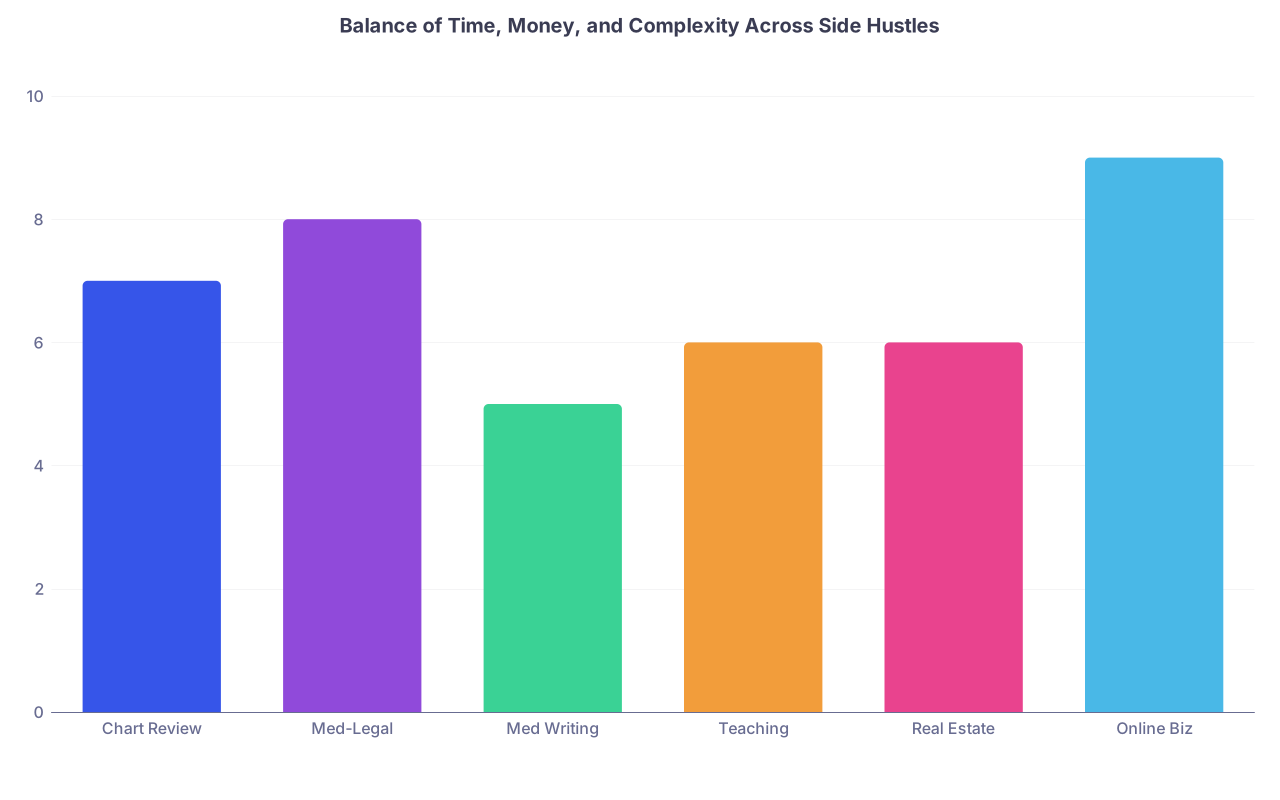
| Category | Value |
|---|---|
| Chart Review | 7 |
| Med-Legal | 8 |
| Med Writing | 5 |
| Teaching | 6 |
| Real Estate | 6 |
| Online Biz | 9 |
(Think of that as “complexity to start” on a 1–10 scale. Lower is easier.)
Step 7: Practical 90-Day Plan if Your Contract Bans Moonlighting
You want something concrete. Here’s a realistic 3-month sequence.
Weeks 1–2: Clarity and Protection
- Re-read your contract, highlight key clauses.
- Book a 60-minute review with a physician contract attorney.
- Ask point blank: “What non-clinical side work is allowed? What should I avoid?”
- Decide on 1–2 possible side hustles that fit:
- One faster-income (e.g., chart review or writing)
- One longer-term build (e.g., real estate or a course)
Weeks 3–6: Set Up One Income-Generating Path
If you pick chart review:
- Update your CV to highlight:
- QI work
- Committee roles
- Any leadership
- Apply widely:
- Insurance companies
- UM vendors
- Remote reviewer positions
- Be ready to start with low-hour contracts (5–10 hrs/week).
If you pick medical writing:
- Create 3 solid writing samples.
- Build a simple one-page website or strong LinkedIn profile.
- Pitch 5–10 companies or editors per week.
Weeks 7–12: Layer in a Slow-Burn Project
Examples:
- Start real estate education and possibly your first small rental.
- Outline and record your first mini-course for premeds, residents, or a non-med niche.
- Test small coaching offers (non-medical) with a few clients.
You’re not trying to build an empire in 90 days. You’re trying to prove the concept, get your first $1,000–$5,000 of non-clinical income, and see what’s sustainable.
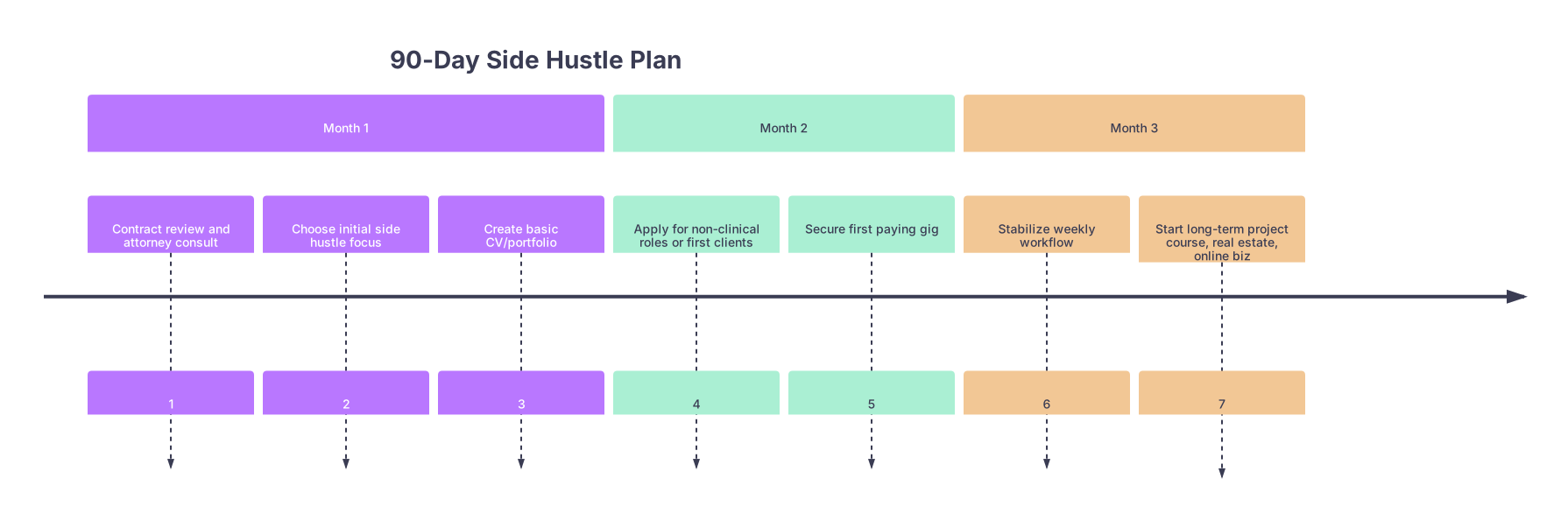
| Period | Event |
|---|---|
| Month 1 - Contract review and attorney consult | 1 |
| Month 1 - Choose initial side hustle focus | 2 |
| Month 1 - Create basic CV/portfolio | 3 |
| Month 2 - Apply for non-clinical roles or first clients | 4 |
| Month 2 - Secure first paying gig | 5 |
| Month 3 - Stabilize weekly workflow | 6 |
| Month 3 - Start long-term project course, real estate, online biz | 7 |
Quick Reality Checks (That Most People Skip)
Your employer won’t bail you out if you cross the line.
If they decide your “coaching” is actually moonlighting, they can fire you. That’s it. So err on the side of caution.Non-clinical work can be just as draining as clinical work if you hate it.
Don’t force yourself into medical writing if you loathe writing. Pick something that doesn’t make you miserable.You don’t need to monetize every hobby.
It’s okay to keep some things as hobbies. Your side hustle should either:- Move the financial needle, or
- Build skills/options for the future
Ideally both.
Bottom Line: If They Ban Moonlighting, You Still Have Options
Three key points to leave with:
- Your contract closes one door (clinical moonlighting) but leaves several others wide open—especially non-clinical, educational, consulting, and non-medical business paths.
- Clarity beats bravado. Spend the hour with a lawyer, understand your restrictions, and then build something that doesn’t get you fired.
- Start with one realistic, low-friction side hustle and prove to yourself you can earn outside your W-2. Once that’s real, you can layer in bolder projects and long-term plays.
You’re not just a pair of hands on the schedule. You’re a skilled professional with options—as long as you’re smart about how you use them.