
The usual “grind harder” side hustle advice for burned‑out physicians is garbage.
If you’re already fried from 12‑hour days and EMR battles, you don’t need another job that feels like a second residency. You need something that brings in money without wrecking what’s left of your mental health.
This is for you if:
- You’re clinically capable but emotionally done.
- You need extra income (loans, childcare, divorce, whatever).
- You absolutely do not have the bandwidth for a second high‑stakes, high‑drama role.
I’m going to walk you through low‑stress, realistic side hustles specifically for MDs, how to pick, how to start, and what to avoid so you don’t accidentally build yourself a second career you hate.
Step 1: Be Honest About Your Burnout and Your Limits
Do not skip this. This is where most physicians screw it up.
You’re used to ignoring how tired you are. That works (sort of) on a night shift. It does not work when you’re adding extra work voluntarily.
Ask yourself three blunt questions:
- How many hours per week can I truly add without falling apart?
- What kind of stress am I absolutely unwilling to tolerate right now? (patient complaints, time pressure, conflict, deadlines, speaking to strangers, etc.)
- How fast do I need money? (now vs. 3–6 months from now)
Be concrete, not vague. Example:
- “I can realistically add 4–6 hours per week on weekdays after kids are asleep. Weekends are off‑limits.”
- “I cannot deal with real‑time interactions or angry people. Asynchronous only.”
- “I need cash flow within 60–90 days, not 2 years from now.”
That profile immediately knocks out: starting a big YouTube channel, brick‑and‑mortar anything, time‑intensive consulting that takes months to ramp.
And it makes asynchronous, flexible, low‑urgency work more attractive.
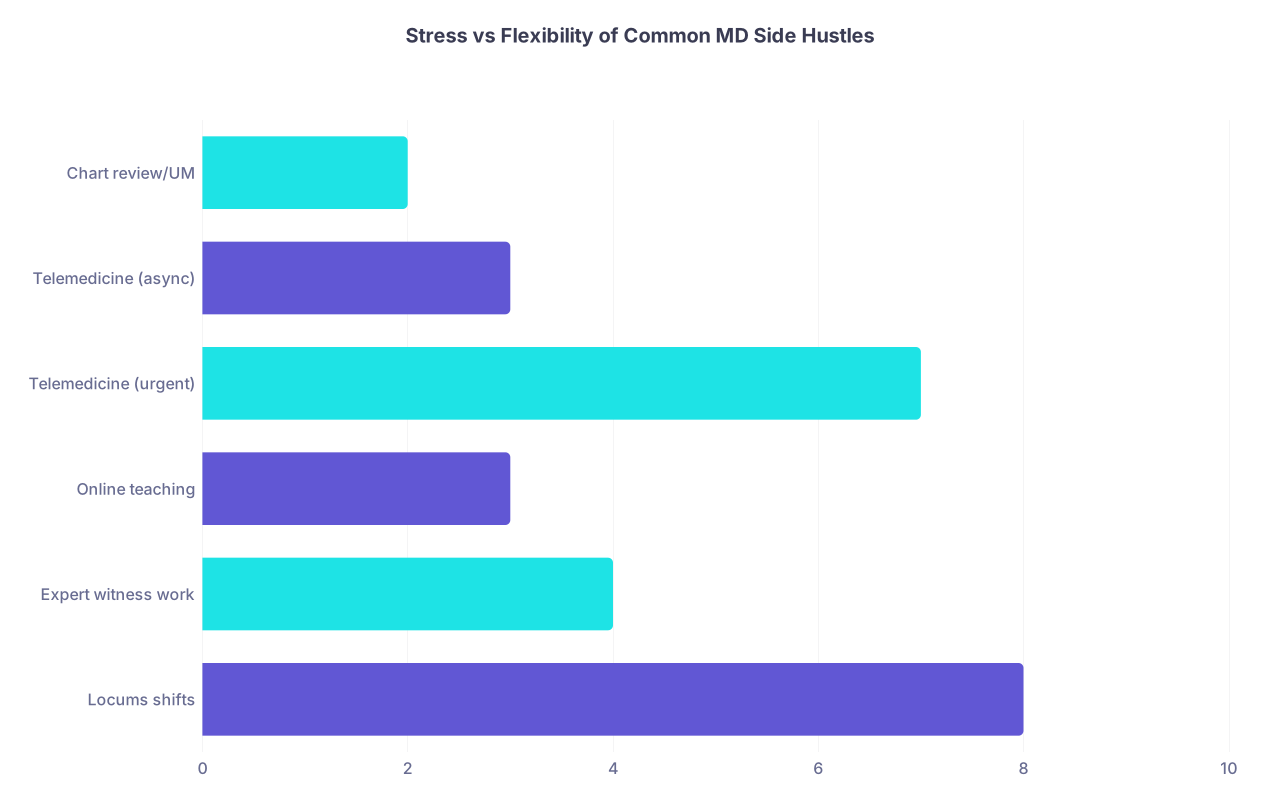
| Category | Value |
|---|---|
| Locums shifts | 8 |
| Expert witness work | 4 |
| Online teaching | 3 |
| Telemedicine (urgent) | 7 |
| Telemedicine (async) | 3 |
| Chart review/UM | 2 |
(Scale: 1 = very low stress, 10 = high stress. Rough reality check, not gospel.)
Step 2: Understand the “Low-Stress” Criteria for MD Side Hustles
“Low-stress” for a physician is different from “easy.”
For our purposes, low‑stress usually means:
- No night calls, no pages, no 2 a.m. emergencies.
- Minimal real‑time interaction or ability to pause/stop at will.
- No long‑term obligation to specific patients or clients.
- Low litigation/complaint risk compared to your day job.
- Clear boundaries: work is done when you close the laptop.
Quadrants that tend to work well for burned‑out MDs:
- Asynchronous clinical work
- Non-clinical work that still uses your MD brain
- Teaching/education on your own terms
- System‑level or “meta” work (policy, utilization, safety)
Let’s go through concrete options inside each.
Option 1: Asynchronous Telemedicine & Medical Messaging
Synchronous video visits often feel like “regular clinic, just with worse audio.” Hard pass if you’re burned out.
Asynchronous telehealth is different:
- You log in when you want.
- You review cases / messages.
- You send an assessment/plan.
- No live back‑and‑forth, minimal small talk.
Common setups:
- STD treatment, hair loss, weight loss, contraception, basic derm.
- Corporate platforms that pay per case or per hour.
- Some allow strict “no nights” and short bursts of work.
The upside:
- You’re still using your clinical skillset.
- Mental load is lower than full clinic.
- You can literally do cases on your couch.
The downside:
- Repetitive.
- Pay per case can be underwhelming if the platform is saturated.
- You must protect yourself medicolegally: appropriate documentation, clear boundaries, avoid “scope creep” in chat.
What to do this week:
- Make a list of 3–4 platforms that offer asynchronous work in your state.
- Send applications with one simple constraint: “no nights, low commitment.” If the recruiter starts talking about 20+ hours/week, walk.
Option 2: Chart Review, Utilization Management, and Peer Review
If your idea of a good night is silently judging other people’s notes, this is your lane.
These roles sit at the intersection of clinical judgment and insurance/quality. Examples:
- Utilization management physician reviewer
- Independent chart review (for disability claims, occupational health, workers comp)
- Peer-to-peer review for insurers
- Quality/safety chart abstraction
Why burned‑out docs often like them:
- Zero direct patient contact.
- Work is mostly reading, thinking, and making a yes/no or brief narrative decision.
- It’s usually remote.
- The stakes feel more “administrative” than “life or death.”
Real stress points:
- Insurance companies can be soul‑sucking if you take their behavior personally.
- You may hate saying “no” even when it’s technically correct.
- Some companies push productivity metrics aggressively.
So you choose carefully. A reasonable utilization management gig might look like:
- 5–10 hours/week, fully remote.
- You pick half‑days or evenings.
- Mostly reviewing inpatient stays, procedures, or imaging requests.
How to move toward this:
- Update your CV with any leadership, quality, or committee work.
- Target “physician advisor,” “utilization management physician,” “independent medical reviewer” job postings.
- Be explicit in interviews: you want part‑time or per‑diem, low volume, clear metrics.

Option 3: Expert Witness and Med-Legal Work (With Limits)
Expert witness work is often misunderstood. People imagine screaming lawyers and hostile cross‑examination.
Reality for many physicians:
- The bulk of the work is chart review and report writing.
- Depositions or trial testimony are a small fraction of the time.
- Pay can be very high per hour, especially in certain specialties.
Stress profile:
- The work itself is intellectually engaging, not emotionally draining.
- Deadlines exist but are usually reasonable and known weeks ahead.
- Conflict is “professional conflict” — not a screaming family in room 4.
However:
- If you are deeply conflict-averse or already shaking at confrontational emails, this might feel like too much.
- You need to be meticulous. Sloppy work gets exposed.
- It can be feast-or-famine; not ideal if you need predictable income next month.
Two ways to get started without drowning:
- Register with established expert witness directories or agencies rather than trying to market yourself from scratch.
- Start with straightforward cases (e.g., standard of care reviews, causation opinions) and cap your intake at 1 case/month.
If you’re burned out but still proud of your clinical judgment, this can be surprisingly satisfying. You’re paid to think deeply and explain medicine clearly. That’s it.
Option 4: Low-Stress Teaching and Content Work
Key phrase: low stakes, asynchronous, and not dependent on a massive audience.
Everyone hears “start a YouTube channel” or “build an Instagram.” That’s a multi-year marketing job, not a side hustle you use to pay daycare in 3 months.
Better options:
-
- Community colleges (anatomy, physiology, pathophysiology).
- Nursing, PA, or NP programs.
- Usually evening classes, often hybrid or online.
- You get a syllabus and a structure. You show up, teach, grade. Done.
- Low emotional load if you’re not trying to be the perfect mentor for 40 students.
Paid content creation for established platforms
- Question-writing for USMLE/COMLEX/board prep companies.
- Writing or reviewing medical educational content.
- Clinical guideline summaries, patient education materials.
You’re not trying to become an influencer. You’re helping others teach, behind the scenes.
Concrete steps:
- List three areas you know cold (e.g., chest pain evaluation, diabetes management, OB triage).
- Search: “[topic] question writer job,” “[company] medical content writer,” “adjunct clinical faculty MD.”
- Send short, direct messages: emphasize reliability, clinical experience, and that you’re seeking 5–10 hours/week.

| Step | Description |
|---|---|
| Step 1 | Identify strength area |
| Step 2 | Search for adjunct or content roles |
| Step 3 | Send 5 short applications |
| Step 4 | Get first small contract or course |
| Step 5 | Decide if stress level is acceptable |
| Step 6 | Stop and reassess options |
| Step 7 | Slowly add hours or 2nd contract |
Option 5: Niche Second-Opinion and Consult Work (On Your Terms)
This one can be beautiful if you set boundaries correctly.
You essentially offer:
- Narrow, high‑expertise second opinions or chart reviews.
- Cash pay, no insurance billing.
- Written reports or scheduled consults on a limited basis.
Best for:
- Subspecialists with clear expertise (e.g., difficult rheum cases, complex IBD, congenital heart, rare cancer subtypes).
- Hospitalists or intensivists willing to review complex hospitalization courses for families.
- Docs with strong communication skills who can explain complexity clearly.
How to keep it low stress:
- Limit to a tiny number of cases per month (like 2–4).
- Use a clear intake form and require records in advance.
- One structured visit (or written report), no ongoing care.
- Explicit contract: this is a consult/second opinion only; no 24/7 access.
The reality check: you’ll need:
- Malpractice coverage that fits this model.
- Clear documentation templates.
- A simple payment structure (e.g., flat fee per consult).
This is not a “money now” idea. It’s a 6–12 month build. But if you’re moving away from full‑time clinical work, it can become your soft landing.

Option 6: Very Low-Touch Consulting and Advisory Work
Bad version of “consulting”: flying to hospital systems to fix their EMR, 3 days a week, endless stakeholder meetings. That’s not what you want.
Better, low‑stress versions:
- Advisory board roles for startups in your clinical space.
- Short‑term projects: “review our protocol,” “advise on product for 5 calls over 3 months.”
- Surveys and quick‑hit opinion work (yes, the per‑survey pay is usually mediocre, but it’s nearly zero stress).
The senior your title and the more niche your expertise, the easier this becomes. But I’ve seen residents do small paid projects for digital health startups: reviewing user flows, sanity‑checking medical claims, designing questionnaires.
The key:
- You’re not personally responsible for outcomes.
- You’re not on call.
- Time is capped and pre‑agreed. You’re paid for your judgment, not your constant availability.
You find these with:
- Physician networking groups.
- LinkedIn actually used purposefully (title and headline that screams your niche).
- Reaching out to companies directly: “I’m an internist with X years in Y niche. If you ever need short, paid advisory work on [specific area], I’m available for limited hours.”
The “Bad Idea” List: Side Hustles That Feel Low Stress but Usually Aren’t
Burned‑out physicians often get seduced by things that sound low stress but quietly eat their soul. Watch out for:
Extra shifts / PRN clinical work in your same environment
If your current job is killing you, doing more of the same somewhere else is not a side hustle. It’s self‑harm with W‑2 paperwork.Building a huge public brand when you’re exhausted
Massive social media content creation is a full-time digital marketing job. If you’ve got real burnout, you do not need the dopamine rollercoaster of views and trolls.Real estate you actually manage yourself
Unless you love dealing with tenants, contractors, and midnight leak calls, this becomes another call schedule.Anything with unclear boundaries and “unlimited” access
Coaching, concierge, or “DM me anytime” models can feel like residency call in disguise. Don’t volunteer to be everyone’s on‑demand brain.
| Type | Stress Level | Startup Time | Patient Contact | Income Speed |
|---|---|---|---|---|
| Async telemedicine | Low-Medium | Short | Limited | Fast |
| Utilization management | Low | Medium | None | Medium |
| Expert witness (small scale) | Low-Medium | Medium | None | Medium |
| Adjunct teaching/content work | Low | Medium | Minimal | Medium |
| Extra clinical shifts | High | None | High | Fast |
How to Choose: A Simple Decision Framework
Use this quick filter to avoid overthinking yourself into paralysis.
If you need money in under 60 days
Look at:- Asynchronous telemedicine
- Extra clinical shifts at a different, less toxic site (only if your burnout is more about politics than medicine itself)
- Question writing/content if you can land it quickly
If you can wait 3–6 months for real momentum Add:
- Utilization management / chart review
- Teaching / adjunct roles
- Early, small expert witness work
If you’re planning an exit from full‑time clinical in 1–2 years Start building:
- Expert witness brand
- Niche consultation / second‑opinion practice
- Advisory/consulting relationships
One guardrail: never add more than 5–10 side‑hustle hours per week for the first 2–3 months. If you feel better and want more later, fine. But you start light.
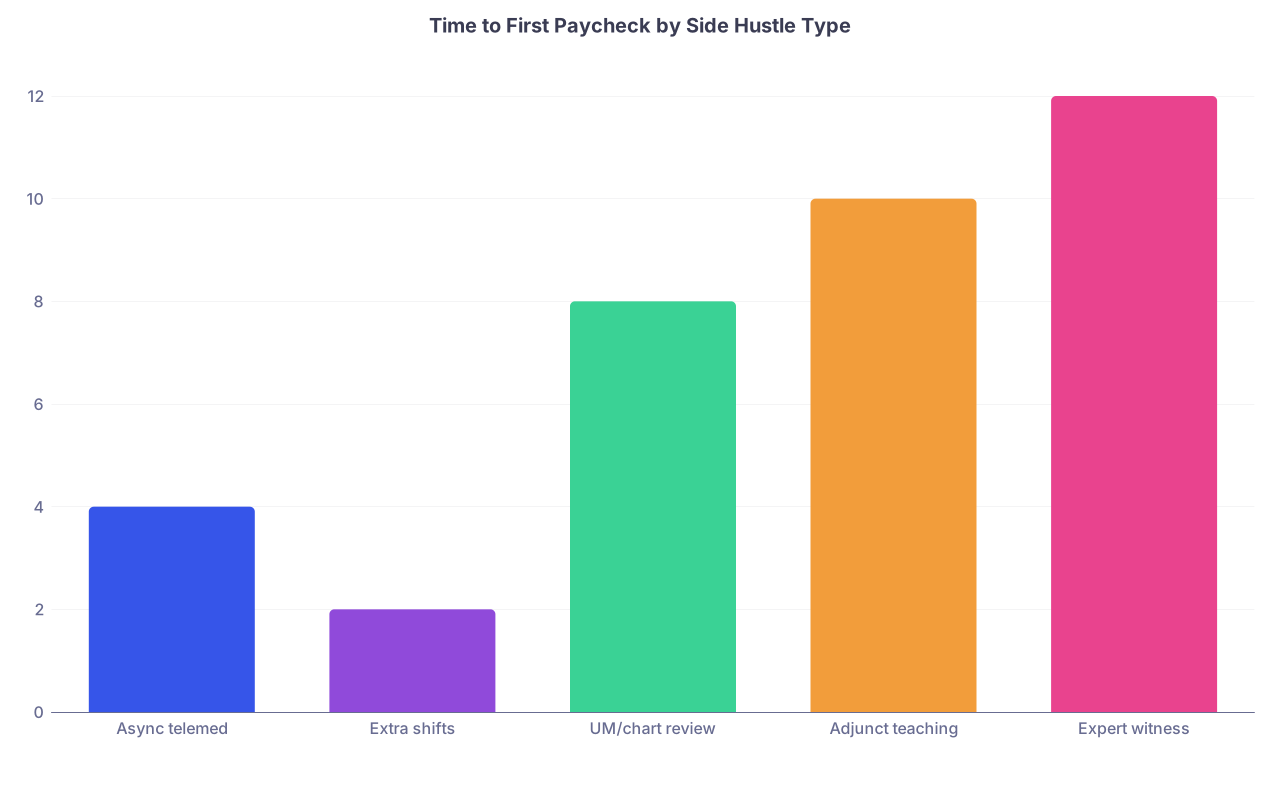
| Category | Value |
|---|---|
| Async telemed | 4 |
| Extra shifts | 2 |
| UM/chart review | 8 |
| Adjunct teaching | 10 |
| Expert witness | 12 |
(Approximate weeks from “start looking” to “first money in” for a reasonably active physician.)
Very Practical Next Steps (No Vision Boards Needed)
Do this in the next 7 days. Not “someday.”
Day 1–2: Clarify constraints
- Write down:
- Max hours/week you’ll allow (hard cap).
- Days/times available.
- What stressors you refuse to tolerate.
- If you’re in therapy or have a trusted colleague, say it out loud to someone.
Day 3–4: Pick 1–2 lanes
- From this list, pick two that sound least miserable:
- Async telemedicine
- UM / chart review
- Expert witness work (light)
- Adjunct teaching / question writing
- You are not marrying them. Just dating them.
Day 5–7: Launch minimum effort actions
- Update your CV to highlight:
- Clinical experience
- Any leadership/committee/teaching
- Board certification and state licenses
- Send:
- 3–5 applications for low‑stress roles in your chosen lane.
- 1–2 “interest emails” to programs/companies (short, direct).
Then stop. Watch what comes back. Evaluate based on:
- Stress profile described.
- Time requirements.
- How your body feels when you imagine doing it.
If you feel dread, walk away. You are not obligated to accept anything just because it’s offered.

The Future Angle: You’re Not Just Plugging a Financial Hole
Here’s the bigger picture you probably haven’t been told: low‑stress side hustles are not just Band‑Aids for burnout. They’re leverage.
Every hour of income that doesn’t come from your main job:
- Buys you negotiating power (fewer shifts, different contract).
- Lowers your anxiety about “what if I leave.”
- Shows you that your MD has value outside the exam room.
Physicians who build even a modest side income often:
- Cut back FTE without financial collapse.
- Switch into nonclinical roles with less fear.
- Walk away from abusive environments because they finally can.
So yes, right now you might just need to pay bills without destroying your sanity. But do not miss the strategic angle: you’re building your exit options.
FAQ (Exactly 4 Questions)
1. I’m so burned out I can barely function. Should I even be taking on a side hustle?
If you’re at the point of true functional collapse (can’t get out of bed, panic every shift, active suicidal thoughts), no, your priority is stabilization: medical care, therapy, maybe short‑term leave. Side income can wait. If you’re “regular burned out” — exhausted but still functioning — then a very small low‑stress side hustle (2–4 hours/week) can actually help by buying you future options and a sense of control. The line is whether adding any work worsens your mental health. If it does, stop.
2. Will taking a nonclinical side hustle hurt my career or make it look like I’m “less serious” about medicine?
In practice, no. Most leaders know the system is brutal. Nonclinical roles like UM, quality, teaching, and content development are increasingly common and often help you move into leadership, admin, or alternative careers later. Just keep your clinical work solid and avoid anything that conflicts with your primary employer’s policies or competes directly with their business.
3. How much can I realistically make from low-stress side hustles?
Very rough ballpark for part‑time, low‑stress roles (5–10 hours/week):
- Async telemed: maybe $500–$2,000/month depending on volume and pay structure.
- UM/chart review: $1,000–$3,000/month.
- Adjunct teaching/content: $500–$1,500/month at first.
- Light expert witness: one decent case can be $2,000–$10,000 spread over weeks or months.
These are not guarantees, but they’re realistic ranges I’ve seen. The main point: you do not need to replace your full salary to dramatically change your options.
4. How do I keep a side hustle from turning into a second full-time job?
You set hard boundaries before you start: maximum hours/week, maximum number of clients/cases, and specific days/times you will work on it. You say “no” early when people push for more. You avoid models that require 24/7 access, call, or “whenever you can squeeze it in” commitments. The test: if your side hustle starts causing the same dread as your main job, you either cut it back or drop it. You’re not a resident anymore; you do not owe anyone your 80‑hour weeks.
Open your calendar right now and block a 30‑minute slot in the next 48 hours labeled “Money Without Meltdown.” In that slot, pick one lane from this list and send at least two applications or inquiry emails. That’s your first real step out of the trap.