
Malpractice History or Board Action? Side Hustles That Still Work
What do you actually do for extra income when your name pulls up board actions or malpractice hits on the first page of Google?
Let me be blunt: some doors will quietly close. Others are still wide open. Your job is to stop wasting energy on the locked ones and walk straight through the ones that still pay, still respect your expertise, and do not obsess over your record.
This isn’t theory. I’ve watched docs with probation, public reprimands, even suspended licenses rebuild income streams. Not all of them came back to full-time clinical practice, but many built stable, sometimes better lives through side work that didn’t care about their perfect record.
Let’s sort out what still works for you and how to move right now.
Step 1: Face Your Actual Risk Profile (No Fantasy)
There are three rough buckets you might fall into:

| Situation | License Status | Risk Level for Employers | Strategy Focus |
|---|---|---|---|
| Malpractice only | Active, unrestricted | Low–moderate | Almost all side hustles open |
| Minor board action | Active, restricted or conditions | Moderate | Non-clinical + limited clinical |
| Suspended/expired | No active license | High | Non-clinical only |
- You have malpractice suits or payouts, but your license is clean or fully active.
- You have board action (probation, public reprimand, limitations) but still hold an active license.
- Your license is suspended, surrendered, or gone.
You need to know exactly which one you are. Not what you “feel” it is. Pull your:
- State medical board profile
- National Practitioner Data Bank (NPDB) self-query
- Federation of State Medical Boards (FSMB) Physician Profile
If reading those makes your stomach drop, good. That’s your reality map. From there, we can pick targets that still make sense.
Step 2: Know Who Actually Cares About Your Record
Different side hustles care about different things. Some do background checks and credentialing; some only care you’re competent and show up.
Here’s the pattern I’ve seen over and over:
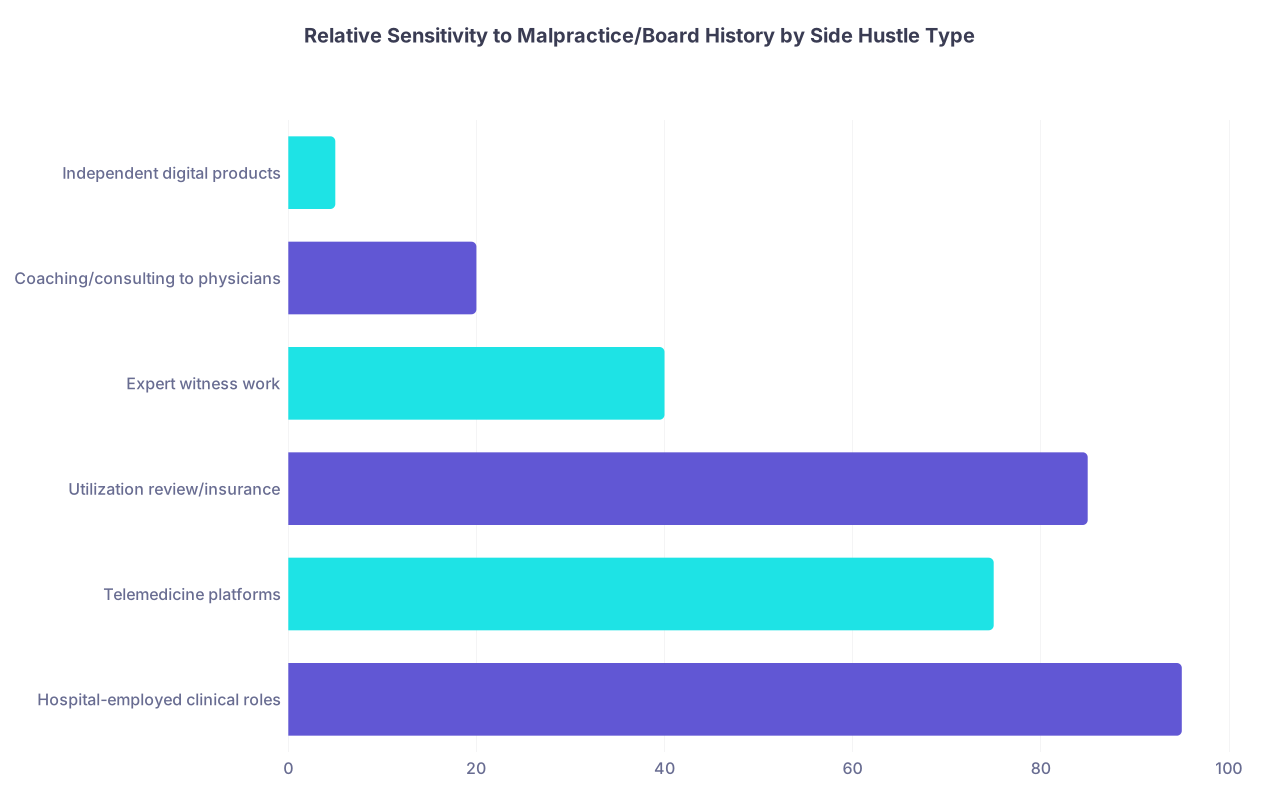
| Category | Value |
|---|---|
| Hospital-employed clinical roles | 95 |
| Telemedicine platforms | 75 |
| Utilization review/insurance | 85 |
| Expert witness work | 40 |
| Coaching/consulting to physicians | 20 |
| Independent digital products | 5 |
Sensitivity (not exact numbers, but directionally accurate):
- Hospital-employed clinical roles: Extremely sensitive
- Large telemedicine platforms: Moderately to highly sensitive
- Insurance/UM companies: Highly sensitive to serious board actions
- Expert witness: Mildly sensitive; sometimes your “baggage” is a known quantity
- Physician coaching/consulting: Barely sensitive unless your issue was egregious ethics/fraud
- Independent digital products/courses: Almost not sensitive at all (patients aren’t credentialing you)
Your move: stop pouring time into the “extremely sensitive” group if your record is bad enough that you keep hitting walls. That traditional job search feeling of “maybe one more application” is a time sink. Put that energy into the lanes below.
Step 3: Side Hustles That Still Work With Malpractice History
If your only black marks are malpractice payments, settlements, or a few lawsuits, you’re not as toxic as you think. In some specialties (OB, surgery, ED), malpractice history is almost standard.
1. Telemedicine (with thoughtful platform selection)
You’ll still face credentialing, but many telemed groups are more flexible than major hospital systems, especially smaller or niche platforms.
Good fits:
- Low-risk visits: urgent care, minor primary care, mental health follow-ups
- Cash-pay or direct-to-consumer platforms (less insurer scrutiny)
- After-hours or international telehealth services
Wrong move: blasting applications to the biggest, most brand-conscious platforms first. They often have the strictest screens.
What to do:
- Be upfront but concise when asked about malpractice:
“Yes, I have had one malpractice settlement related to a postop complication. No license actions, and no ongoing restrictions.” - Have your narrative ready: what happened, what changed, and how your practice patterns improved since. One page. Clear. No defensiveness.
- Target smaller or niche telehealth groups that care more about coverage and reliability than an absolutely pristine record.
2. Locums in Tolerant Markets
Some locums agencies and sites in rural or high-need areas will accept physicians with prior malpractice hits if:
- License is active and unrestricted
- No current board probation
- Issues are old and clearly addressed
Look for:
- Smaller community hospitals, critical access hospitals
- Understaffed regions that prioritize warm bodies with skills over shiny CVs
You’ll still get credentialed, but the threshold may be more realistic. Do not hide anything. Locums agencies hate surprises more than they hate bad history.
3. Expert Witness (Yes, Even With Malpractice)
This surprises people. Having been sued does not disqualify you from being an expert witness. In fact, some attorneys like experts who understand the system from the inside.
Who this works for:
- Proceduralists (surgery, OB/GYN, anesthesia)
- EM, hospitalist, ICU, psych
- Anyone who can interpret standards of care and documentation
How to start:
- Build a clean, professional CV focusing on clinical experience and any leadership, QI, or teaching work
- List yourself on expert witness directories
- Reach out to med-mal defense firms in your state, introduce yourself plainly
You WILL be asked about your history in depo. So what? You tell the truth. Your job is to be credible, not perfect.
Step 4: Side Hustles That Work With Board Action or Probation
Different game now. Once you have public board action, especially recent or serious, some “credentialed” side hustles shrink.
But several strong options remain.
1. Chart Review / Utilization Management (with nuance)
Classic idea: “I’ll just do chart review from home.”
Reality: many UM/UR companies run background and board checks and may flinch at active probation or recent serious actions.
But not all of them.
You have better odds if:
- Your issue is not fraud, abuse, sexual misconduct, or serious impairment with no resolution.
- You can show current stability: completed monitoring, treatment, or board terms.
Target:
- Smaller independent review organizations (IROs)
- Peer review roles for smaller health systems or payers that need specialty input
- Project-based chart review companies
Script when asked:
“I had a board action related to X in [year]. I’ve completed all board requirements, maintained compliance, and have had no further issues. I’m happy to supply all documentation.”
Do not write an essay. Answer what they ask. No more.
2. Non-Clinical Consulting to Healthcare Businesses
Here’s the lane that’s massively underused by doctors with rough histories: B2B work, not B2C.
Your clients are:
- Startups building health tech tools or apps
- Medical device companies
- EMR vendors
- Private equity-backed groups buying or managing practices
- Small telehealth startups
These folks care about:
Can you make our product, service, or process better, safer, or more marketable?
Unless your issue is outright fraud or public scandal, many founders simply do not dig that deeply into your state board profile, especially for 1099 consulting. And if they ask, again—be factual, brief, and emphasize what you’ve changed operationally since then (documentation processes, safety checks, etc.).
Step 5: Side Hustles That Work Even If Your License Is Gone
This is where a lot of physicians think they’re dead in the water. Not true. You lose some clinical routes, but non-clinical and “physician-adjacent” paths remain.

License gone, revoked, surrendered, or permanently inactive: do not build plans that require credentialing, prescribing, or direct patient treatment. You will just self-sabotage.
Instead, lean into:
1. Physician-Facing Coaching / Business Services
You’re not treating patients; you’re helping physicians.
Possible formats:
- Burnout recovery coaching
- Practice management consulting (workflow, documentation, scheduling, staffing)
- EMR efficiency training
- Interview prep / career transition coaching
- Specialty-specific mentoring (e.g., “Starting your first OB/GYN job: contract landmines and survival guide”)
Do you need a perfect record for this? No. In fact, some doctors trust coaches more when they know you’ve been through hell and survived.
You must:
- Be transparent enough you’re not misleading anyone: “I had disciplinary issues in [area]; I now work exclusively in non-clinical arenas and help physicians avoid my mistakes.”
- Focus on tangible outcomes for clients, not your life story.
2. Content Creation: Courses, Books, Niche Sites
This can be slow to monetize, but very protective of your situation.
You can build:
- A paid course for residents on documentation that actually defends in court
- A niche blog about a highly specific clinical area (with monetization via sponsorships, affiliates, or products)
- A short book (Amazon, self-published) about lessons learned from your journey, malpractice-proofing your practice, or smart contracts for new attendings
Patients are not credentialing you here. They’re either not involved, or they’re reading you as an author/expert, not a treating physician.
Crucial:
Do not claim or imply you are currently treating patients if you’re not licensed. Don’t blur that line. Stick with education, teaching, and general information, not personal medical advice.
3. Industry Roles That Do Not Require an Active License
Some jobs prefer a license, but don’t strictly require it:
- Medical writing for CME, journals, pharma, or education companies
- Medical editing, accuracy review, or KOL ghostwriting
- Certain health-tech product roles (clinical advisor, workflow specialist, content architect)
Those might start as a side hustle (freelance writing, contract advisory work) and become a full pivot if you want.
Again, your story matters less here than your output. Can you meet deadlines? Write clearly? Understand clinical nuance? That’s the currency.
Step 6: Where You Must Be Extremely Careful
Some paths are landmines if you have malpractice history or board action. Either because of legal constraints or optics that will bite you later.
Avoid or handle with massive caution:
1. Anything That Feels Like “Shadow Practice”
If your license is gone or limited and you:
- “Advise” people individually about their health online
- Run supplement or wellness clinics that blur into treatment
- Do telehealth overseas but it’s clearly U.S.-based and aimed at U.S. patients
You’re begging for new trouble. Boards and attorneys love these cases. Don’t become the poster child of “practicing without a license.”
2. High-Visibility Social Media “Doctor Influencer” Brands
Can you build a big TikTok or Instagram following? Sure.
Should you, with a searchable board action? Depends.
If your issue was relatively minor, settled, and you own it publicly with maturity, you might be okay.
If your issue was egregious (fraud, sexual misconduct, diversion), big public-facing branding around “Dr. So-and-So” invites scrutiny, call-outs, and potentially new problems. You can still do content, but consider:
- Using your real name without pushing the “Doctor brand” front and center
- Sticking to education, commentary, and system critiques, not personal medical advice
3. Working Under Someone Else’s Credentials
This comes up more than people admit. A desperate doc, restricted or unlicensed, gets offered a “back office” consulting role that looks suspiciously like they’re practicing through another physician’s NPI.
Do not touch this. That’s how people go from “had a rough patch” to “now has federal charges.” If your gut says, “This seems off,” listen to it.
Step 7: How to Talk About Your History Without Torching Opportunities
You will be asked. Employer paperwork, phone screens, or even clients who Googled you.
Here’s the basic structure that works:
- State the issue in one sentence, without spin.
- Give minimal but clear context (1–3 sentences).
- Describe concrete steps taken since then.
- Tie it to what you do differently now.
- Stop talking.
Example for malpractice only:
“In 2016 I had a malpractice settlement related to a postoperative complication in a complex case. The board found no standard-of-care violation, but I took it seriously. Since then I’ve changed how I communicate risks and follow-up plans, and I’ve led two QI projects on post-op handoffs at my hospital.”
Example for board action:
“I had a board action in 2019 related to [documentation / prescribing / boundary] issues. I completed all terms, including [monitoring program, coursework, supervision]. I’ve had no further incidents and now focus on [type of work] where those safeguards are built in.”
Do not:
- Trash the board
- Blame only others
- Launch into a 20-minute narrative
- Start crying on a phone screen (save that for therapy or trusted friends)
Short, factual, and forward-focused.
Step 8: Build a 6–12 Month Side Hustle Plan (Not a Fantasy)
You’re not trying to fix everything this month. You’re buying options.
Here’s a realistic 6–12 month layout:

| Step | Description |
|---|---|
| Step 1 | Month 1 - Reality check |
| Step 2 | Month 2-3 - Low-barrier work |
| Step 3 | Month 3-6 - One scalable lane |
| Step 4 | Month 6-12 - Decide - grow or pivot |
| Step 5 | Pull board and NPDB reports |
| Step 6 | Draft 1-page honest narrative |
| Step 7 | Apply to 5-10 telemed or review gigs |
| Step 8 | Start 1 consulting or writing contract |
| Step 9 | Build simple website or landing page |
| Step 10 | Create 1 pilot offer or product |
| Step 11 | Keep side hustle as extra income |
| Step 12 | Or scale it toward primary income |
Month 1:
- Get your documents and story straight.
- Decide: Are you trying to stay clinical long term, or are you open to a full non-clinical pivot?
Months 2–3:
- Go after the fastest-pay side hustles you still qualify for: telemed, chart review, freelance writing, or small consulting projects.
- Goal: cash flow, not perfection.
Months 3–6:
- Pick ONE scalable, lower-risk lane: physician coaching, consulting, expert witness, or digital product building.
- Build minimal infrastructure: simple website, Calendly, basic contract.
Months 6–12:
- If your primary clinical job stabilizes, keep the side hustle for de-risking.
- If clinical doors keep slamming, start shifting more weight into the non-clinical or semi-clinical lane that’s gaining traction.
FAQ (Exactly 4 Questions)
1. Should I hire a lawyer or PR firm to “fix” my online reputation before starting side hustles?
If your situation is serious or recent, yes, at least talk to a healthcare attorney. Not to magically erase your past, but to understand what you can and cannot claim publicly. Online reputation services can sometimes bury results, but they’re rarely a complete fix and can be expensive. Most side hustles that still work for you won’t hinge on page one being spotless; they’ll hinge on you telling a coherent, honest story and choosing the right arenas.
2. Can I still do locums or moonlighting if I’m on probation with restrictions?
Maybe, but don’t count on it. Most hospitals and locums agencies get skittish around active probation, especially for issues involving impairment, prescribing, or boundaries. If your restrictions are narrow (e.g., no OB privileges but you’re doing clinic-only internal medicine), you might find limited roles that fit. Just assume you’re operating from a disadvantage and actively build non-clinical options in parallel. Waiting for probation to end while doing nothing else is a bad bet.
3. Is it ethical to sell courses or coaching if I’ve had board trouble?
It depends on what you’re selling and how you present yourself. If you’re teaching documentation, risk management, burnout recovery, or practice management—and you’re upfront that you’ve had your own issues and learned from them—that can be entirely ethical and even valuable. What’s not ethical: pretending you’re an unblemished authority, implying you’re in active clinical practice when you are not, or veering into “stealth medical advice” territory without a license. Be honest and stay in your lane.
4. How long do I need to wait after a board action or malpractice case before side hustles become realistic?
You do not need to wait to start. What changes with time is not “permission” but perception. Fresh, serious actions are obviously more concerning for employers. But you can immediately begin lower-visibility side hustles: writing, consulting, course building, small B2B advisory work. For higher-scrutiny roles (telemed, UM, corporate jobs), you typically want some distance plus clear remediation—completed board terms, clean drug screens, stable work history. Think in years for major trust-rebuild, but in months for getting some sort of side-income going.
Key points:
- Stop chasing doors that are clearly closed; focus on side hustles that do not live and die on pristine credentialing.
- Get brutally clear on your history, build a short honest narrative, and pick one or two realistic lanes to pursue for 6–12 months.
- Do everything in a way that’s legally clean and ethically solid, so you’re not rebuilding your life now only to blow it up again later.