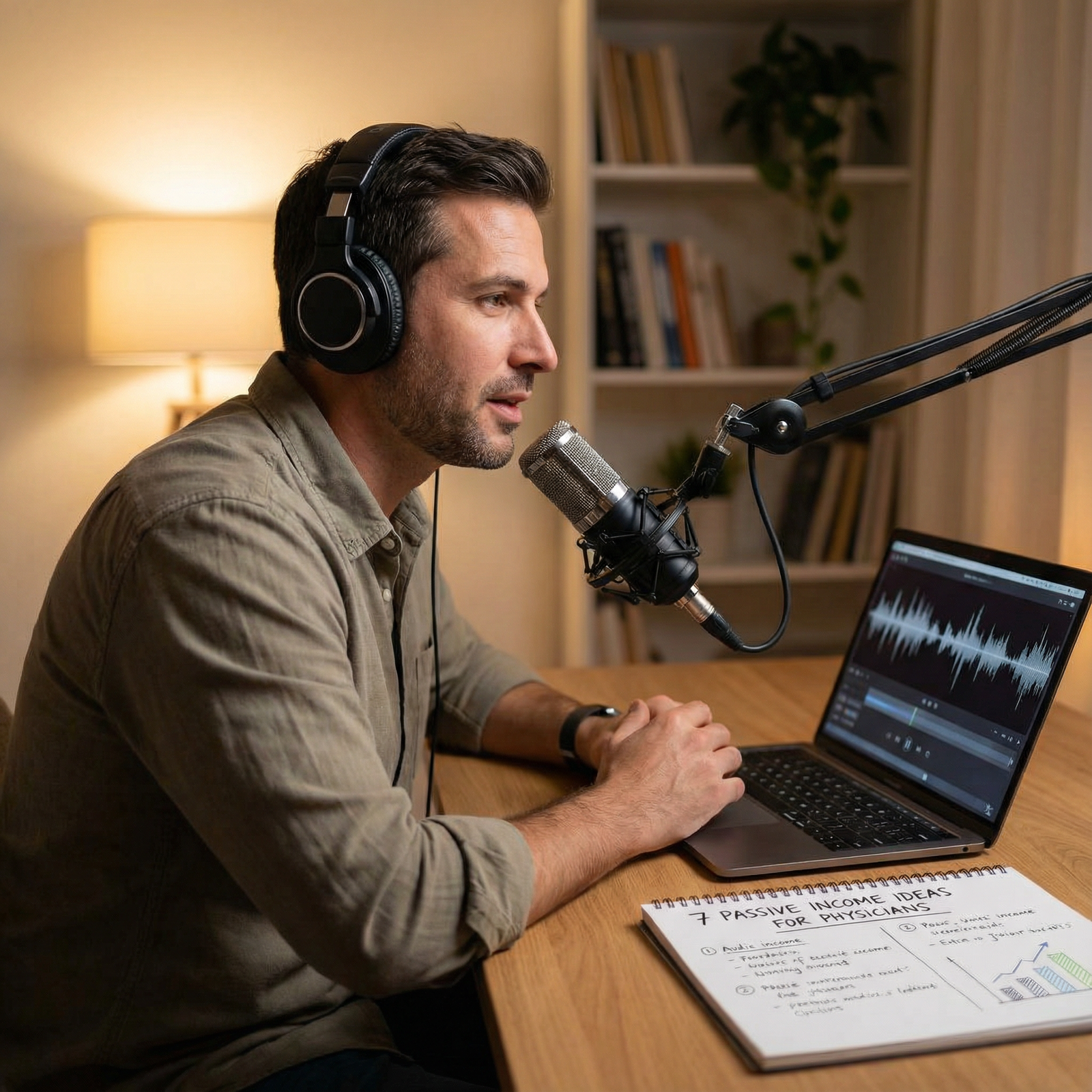
In today’s rapidly evolving healthcare landscape, more physicians are looking beyond traditional clinical work to diversify their income, expand their impact, and future‑proof their careers. Whether you are a subspecialist, a general practitioner, or a resident just starting out, thoughtful side hustles can significantly enhance your Physician Income, Skill Development, and long‑term satisfaction in Healthcare Careers.
This guide explores high‑yield, realistic side hustle ideas for both specialists and generalists, along with practical steps to get started safely and sustainably.
Why Physicians Should Consider Side Hustles Today
Side hustles are no longer just a “nice to have” for doctors—they’ve become a strategic career tool. Done right, they can be financially rewarding while also deepening your expertise and expanding your professional network.
Financial Security and Flexibility
Physician compensation is increasingly affected by:
- RVU targets and productivity pressures
- Changes in reimbursement models
- Rising costs of malpractice, staff, and overhead
- Variable call pay and bonus structures
A well‑chosen side hustle can help you:
- Accelerate student loan repayment
- Build a robust emergency fund
- Increase retirement savings and investment capacity
- Fund childcare, elder care, or educational expenses
- Create a safety net if you change jobs or contracts
Think of an additional revenue stream as insurance against future uncertainty in healthcare.
Skill Development Beyond the Exam Room
Side hustles can develop skills that traditional training often overlooks but that are critical for 21st‑century physicians:
- Business and finance: Pricing, contracts, negotiations, budgeting
- Leadership and management: Hiring, delegating, strategic planning
- Communication: Teaching, public speaking, layperson education
- Technology: Telehealth workflows, digital tools, app or content platforms
These are exactly the skills that open doors to leadership roles, medical directorships, entrepreneurship, and non‑clinical Healthcare Careers in the future.
A Tool Against Burnout and Career Stagnation
Clinical work can be emotionally and cognitively intense. A side hustle:
- Provides a different type of intellectual challenge
- Allows you to reconnect with interests beyond documentation and metrics
- Can be structured with more autonomy and creativity than your day job
- Helps you remember why you went into medicine in the first place
Many physicians report that a well‑aligned side hustle increases their overall job satisfaction and sense of control over their career.
Networking and Long‑Term Opportunities
Stepping into new arenas—consulting, teaching, digital health, or media—expands your network beyond your own hospital or practice. This can lead to:
- Invitations to speak at conferences or industry events
- Advisory roles with startups, payers, or health systems
- Collaborative research, innovation projects, or quality initiatives
- Future full‑ or part‑time roles outside of traditional clinical work
By intentionally building relationships in multiple spheres, you create optionality for your future.
High‑Value Side Hustles for Specialists
Specialists bring deep domain knowledge that is highly marketable outside the clinic or OR. Below are structured ideas tailored to specialty physicians.

1. Consulting for Healthcare Organizations and Industry
As a specialist, your practical experience is invaluable for organizations that design, manage, or fund healthcare.
Possible clients include:
- Hospitals and health systems (workflow optimization, QI projects)
- Insurance companies and payers (utilization review, guideline development)
- Medtech and device companies (product design, clinical input)
- Digital health startups (clinical validation, protocol development)
- Law firms (expert opinion, chart review, medical malpractice insight)
How to get started:
- Identify 1–2 areas where you have credible expertise (e.g., stroke pathways, heart failure management, perioperative care).
- Update your CV to include leadership roles, QI projects, and publications.
- Create a concise 1‑page “consulting profile” highlighting problems you solve.
- Start with your current network: administrators, former co‑residents, industry reps.
- Consider joining physician consultant networks or platforms that match experts with companies.
Key considerations:
- Understand fair market value for your specialty and region.
- Request written contracts that clarify scope, confidentiality, and intellectual property.
- Review for conflicts of interest with your primary employer or academic institution.
2. Medical Writing and Content Development in Your Specialty
Specialists are in demand to create accurate, nuanced medical content. Opportunities include:
- Clinical review articles and CME modules
- Patient education materials (booklets, handouts, web content)
- Industry white papers, slide decks, and training manuals
- Evidence summaries or guideline updates for societies
- Scriptwriting for medical podcasts or video series
Practical steps:
- Start by contributing to your specialty society’s newsletter or blog.
- Build a small portfolio—1–3 written pieces you can share with potential clients.
- Create a simple professional website or LinkedIn profile highlighting your niche topics (e.g., “Board‑certified gastroenterologist specializing in IBD and quality improvement”).
- Reach out to CME providers, medical communications agencies, and health media platforms.
3. Specialty Telemedicine and Remote Consultation
Telemedicine has opened flexible side opportunities for nearly every specialty:
- Follow‑up care for chronic specialty conditions
- Second‑opinion consults for patients or other physicians
- Pre‑operative assessments or post‑op check‑ins (where appropriate)
- Triage consults for urgent care or ED teams
Implementation tips:
- Decide whether to join an established telehealth company or build your own micro‑practice.
- Clarify licensing requirements—start with one or two states you’re already licensed in.
- Standardize your virtual visit templates and documentation to streamline workflow.
- Ensure malpractice coverage specifically includes telemedicine.
This can be a particularly effective side hustle for physicians with young families or those who want fewer in‑person shifts.
4. Educational Workshops, Simulation, and Seminars
Many specialists underestimate how valuable their procedural or diagnostic expertise is to others.
You can:
- Run hands‑on workshops for residents, APPs, or primary care physicians (e.g., joint injections, derm procedures, EKG interpretation).
- Offer simulation‑based training for emergent scenarios (airway crises, sepsis, trauma).
- Provide focused CME events for community clinicians in your niche.
How to structure this:
- Partner with your hospital’s CME office or simulation center.
- Charge per participant or via a flat honorarium.
- Consider recording the sessions and repurposing the content into online modules for additional revenue.
5. Coaching, Mentoring, and Career Guidance for Trainees
Specialists can provide targeted career and exam support to:
- Medical students exploring your specialty
- Residents applying for competitive fellowships
- Fellows transitioning to attending roles
Services might include:
- Application and personal statement review
- Mock interviews and board exam coaching
- Career planning sessions (academic vs. community, negotiation strategies)
This can be offered privately, through institutional programs, or via structured coaching platforms for physicians.
6. Creating Specialty‑Focused Online Courses or Memberships
If you repeatedly teach the same concepts, consider scaling your efforts:
- Create a high‑yield online course (e.g., “Interpreting Chest CT for Non‑Radiologists,” “Practical Heart Failure Management for PCPs”).
- Build a membership site for ongoing education with monthly webinars, case reviews, or journal clubs.
Execution roadmap:
- Identify your target learner (e.g., NPs in primary care, internal medicine residents).
- Outline 5–8 core modules based on frequent questions you already receive.
- Record video lectures or screen‑share slide decks with clear audio.
- Host on platforms like Teachable, Kajabi, or a learning management platform suited to CME.
- Market through your professional networks and societies.
Versatile Side Hustles for Generalists and Primary Care Physicians
Generalists bring a broad, systems‑level understanding of health—ideal for a wide range of opportunities across clinical, wellness, and population health domains.
1. Freelance Medical Consulting and Primary Care Expertise
As a generalist, your value often lies in your holistic view of patients and systems. You can consult on:
- Care coordination models and chronic disease management programs
- Preventive care strategies for employers, schools, or community centers
- Primary care redesign and workflow optimization in clinics
- Population health initiatives and community outreach programs
How to position yourself:
- Highlight your breadth: multimorbidity, medication management, social determinants of health.
- Develop a clear “offer” (e.g., “I help clinics reduce hospital readmissions in high‑risk Medicare patients”).
- Collaborate with local health departments, FQHCs, or ACOs looking to improve metrics.
2. Health and Wellness Coaching for Individuals and Groups
Wellness and preventive care are natural extensions of primary care expertise.
You might offer:
- Lifestyle medicine‑informed weight management programs
- Hypertension, diabetes, or metabolic syndrome coaching
- Sleep, stress management, and resilience coaching for professionals
- Corporate wellness workshops for businesses
Important distinctions:
- Clarify whether you are acting in a clinical capacity (with charting, prescriptions, and malpractice) or as a coach (behavior change, education, accountability only).
- Coaching can often be offered across state lines with fewer regulatory hurdles—but must be clearly non‑diagnostic and non‑prescriptive.
3. Writing, Blogging, Podcasting, and Social Media Education
Generalists are ideal educators for the public on broad health topics.
You could:
- Launch a blog focused on primary care myths, screening, or chronic disease.
- Host a podcast interviewing other clinicians or covering patient stories.
- Build a YouTube channel with short, patient‑friendly explanations of common conditions.
- Create an email newsletter for your community or a niche audience.
Monetization pathways include:
- Sponsorships and brand partnerships (with strict conflict‑of‑interest and ethics checks)
- Advertising revenue from platforms
- Premium subscriber‑only content or guides
- Referrals into your coaching or clinical services
This is also a powerful way to establish a personal brand in Healthcare Careers and broaden your impact.
4. Community Health Education and Public Speaking
Primary care physicians can have outsized impact through local engagement:
- Partner with schools to provide seminars on adolescent health, vaccines, or mental health.
- Collaborate with gyms or community centers on heart‑health or diabetes prevention programs.
- Work with faith‑based organizations to deliver culturally sensitive health sessions.
- Offer talks for employers or unions on workplace health and ergonomics.
Compensation may be direct (speaker honoraria) or indirect (visibility leading to consulting or coaching engagements).
5. Remote Monitoring and Chronic Disease Management
With the explosion of remote monitoring tools and value‑based care, generalists can:
- Provide oversight services for remote patient monitoring (RPM) programs.
- Serve as a part‑time medical director for telehealth chronic care management companies.
- Help design care pathways that integrate wearable and home‑based data.
This is especially well‑aligned with physicians interested in digital health and the future of medicine.
6. Developing or Co‑Creating Medical Apps and Digital Tools
You don’t need to be a programmer to contribute to meaningful digital health products. As a generalist you can:
- Partner with developers to design symptom checkers, self‑management tools, or decision aids.
- Serve as the clinical lead for an app (building evidence‑based content and workflows).
- Help test prototypes and refine user experience based on real clinical scenarios.
Focus on areas where your day‑to‑day practice reveals clear unmet needs (e.g., medication adherence, culturally tailored education, care coordination).
Practical Roadmap: How to Launch a Physician Side Hustle Safely and Sustainably
Side hustles work best when they are intentional and structured—not impulsive or reactive. Below is a practical framework.
1. Clarify Your Goals and Constraints
Before you commit to anything, ask:
- Am I primarily seeking more income, more fulfillment, new skills, or future options?
- How many hours per week can I realistically commit without risking burnout?
- What timeline am I working with (e.g., cover fellowship years, build long‑term business)?
Your answers will determine which opportunities make the most sense.
2. Inventory Your Skills, Interests, and “Edge”
Reflect on:
- What do colleagues and trainees already come to me for help with?
- What parts of my job energize me the most (teaching, procedures, complex cases, communication)?
- What non‑clinical skills do I have or want to develop (writing, speaking, tech, leadership)?
Your ideal side hustle sits at the intersection of:
- Your medical expertise
- Your genuine interests
- A real market need
- A feasible time/energy commitment
3. Start Small and Test the Waters
Avoid overcommitting early:
- Pilot 1 focused project (e.g., a single workshop, a handful of consults, a small telemed panel).
- Track your hours and income honestly.
- Evaluate whether the work feels sustainable and enjoyable.
If it goes well, you can then formalize it into an LLC, expand your client base, or build more structured offerings.
4. Protect Your Time, Energy, and Reputation
A successful side hustle should enhance—not erode—your life.
- Time blocking: Reserve specific hours or days for side work; avoid letting it repeatedly spill into your family or rest time.
- Quality over quantity: Maintaining high standards is crucial for your name and Physician Income long‑term.
- Boundaries: Be clear with clients about response times, availability, and scope of work.
Watch for early signs of burnout: irritability, insomnia, dread, or declining clinical performance. These are signals to scale back or redesign your commitments.
5. Address Legal, Ethical, and Financial Considerations
Before you get too far:
- Check your employment contract for moonlighting or non‑compete clauses.
- Confirm that your malpractice insurance covers any clinical side work.
- Consider forming a simple business entity (e.g., LLC) for liability and tax benefits; consult a CPA familiar with physicians.
- Keep personal and business finances separate; track all income and expenses.
- Avoid conflicts of interest (especially with industry), and follow institutional disclosure policies.
A short consultation with a healthcare attorney or accountant early on can prevent major problems later.

Frequently Asked Questions About Physician Side Hustles
1. What types of side hustles are most realistic for a busy resident or early‑career physician?
For residents and new attendings with limited time, low‑overhead, flexible options work best, such as:
- Telemedicine shifts (if allowed by your program and licensing)
- Small‑scale medical writing or editing projects
- Paid tutoring for exams (USMLE, specialty boards)
- Occasional workshops or lectures for schools or community groups
Start with opportunities that allow you to say “no” when rotations or call schedules get heavy, and avoid anything requiring large upfront financial investment.
2. How can I balance my clinical workload with a side hustle without burning out?
A few practical strategies:
- Cap your side hustle at a specific number of hours per week (e.g., 4–6 hours).
- Use lighter clinical days or specific evenings for non‑clinical work, and protect at least one full day weekly for rest.
- Automate and streamline repetitive tasks (templates, canned emails, checklists).
- Regularly reassess: if your side hustle starts to compromise sleep, relationships, or clinical performance, it’s time to scale back or redesign it.
3. Is it safe or advisable to have multiple side hustles at once?
It can be—but only if each is small and manageable. For most physicians:
- Start with one primary side hustle and stabilize it.
- Once you have clear workflows and know your limits, you may add a second, complementary activity (e.g., consulting plus occasional speaking).
- Be careful that the cumulative time doesn’t erode your wellbeing or the quality of your work. Depth usually beats breadth, especially early on.
4. How does a side hustle actually help my long‑term medical career?
A strategic side hustle can:
- Differentiate you from peers when applying for leadership roles or academic promotions
- Demonstrate initiative, innovation, and broader systems thinking
- Build a professional brand and network beyond your local institution
- Give you non‑clinical options if you later want to pivot to medical education, administration, industry, or entrepreneurship
Many physicians ultimately transition a successful side hustle into part‑time or full‑time work aligned with their evolving life goals.
5. What are the biggest mistakes physicians make when starting a side hustle?
Common pitfalls include:
- Ignoring employment contracts and moonlighting restrictions
- Underpricing services and overcommitting time
- Failing to set clear boundaries with clients or collaborators
- Neglecting legal and tax considerations until there’s a problem
- Choosing a side hustle purely for money, with no alignment to interests or skills
Avoid these by starting small, seeking mentorship from physicians already doing similar work, and being intentional about what you say “yes” to.
Thoughtfully chosen side hustles can enhance your Physician Income, expand your Skill Development, and open new doors within and beyond clinical practice. Whether you’re a specialist, a generalist, or in training, exploring structured opportunities outside traditional roles can help you design a more resilient, fulfilling future in healthcare.