
Why Every Doctor Needs a Side Hustle: Financial Security Beyond the Hospital
In today’s healthcare environment, the traditional image of a physician working a single full‑time job in a hospital or clinic is rapidly fading. Reimbursement pressures, rising expenses, and burnout have pushed many physicians to reconsider how they structure their careers and finances. Side Hustles are no longer fringe or “nice to have”—they’re becoming a strategic necessity for long‑term financial security, career flexibility, and Work-Life Balance.
This guide explores why every doctor should seriously consider a side hustle, how it fits into modern Healthcare Careers, specific examples that work well for physicians (including Telemedicine and beyond), and practical strategies to integrate these ventures without sacrificing patient care, personal relationships, or your own well‑being.
The New Financial Reality for Physicians
Mounting Student Debt and Delayed Wealth Building
For many new doctors, financial stress begins long before the first attending paycheck. Median medical school debt often hovers around $200,000 or more, and that may not include undergraduate loans, credit card balances, or residency‑related costs.
This level of debt delays major life milestones:
- Buying a home
- Starting a family
- Saving for retirement or children’s tuition
- Investing in practice ownership or other opportunities
A well‑chosen Side Hustle can accelerate debt repayment by adding thousands of dollars per year in extra income, reducing total interest paid and shaving years off loan terms. For example, a physician who earns an additional $1,500–$2,000 per month through Telemedicine or consulting can redirect that money toward aggressive loan payoff without relying solely on their primary salary.
Declining Reimbursements and Rising Administrative Burden
Many physicians report that their work feels harder while their effective pay feels smaller. Contributing factors include:
- Lower reimbursement rates from private insurers and government payers
- Increased prior authorization and documentation requirements
- Growing overhead costs for staffing, technology, and compliance
- Pressure to see more patients in less time
These forces leave many doctors feeling trapped in a volume‑driven system. A diversified income strategy—with side ventures that pay for your expertise, not just your time—can buffer you from healthcare system volatility and help restore a sense of control.
Cost of Living and Geographic Constraints
Physicians often train and practice in high‑cost urban areas where salaries don’t always keep up with living expenses. Housing, childcare, malpractice insurance, and taxes can quickly erode take‑home pay.
A lean, remote‑friendly Side Hustle (like online teaching or digital products) allows you to:
- Earn location‑independent income
- Build assets that are not tied to a single employer or region
- Maintain flexibility if you or your family need to relocate
Why Multiple Income Streams Are Now Essential
For modern Healthcare Careers, relying on a single employer and a single paycheck is a risk—professionally and financially. A diversified income portfolio offers:
- Financial Security: Backup income if your contract changes, your employer restructures, or you need to reduce clinical hours.
- Negotiation Power: Confidence to push back on unreasonable demands when you’re not financially dependent on one job.
- Career Optionality: Ability to transition into non‑clinical work or semi‑retirement on your terms, not out of desperation.
Key Benefits of Side Hustles for Doctors
1. Building Real Financial Security and Autonomy
Physician salaries can be high on paper, but lifestyle creep, taxes, and debt can leave little margin. A Side Hustle can:
- Fund extra loan payments
- Boost retirement savings (e.g., maxing out a solo 401(k) or SEP‑IRA from 1099 income)
- Create an emergency fund more quickly
- Pay for big life expenses (college savings, parental leave, sabbaticals)
Example:
A hospitalist earning $275,000 per year adds a Telemedicine Side Hustle one evening a week and one weekend morning per month. At $100–$140/hour, they generate an extra $20,000–$30,000 annually—enough to fully fund a backdoor Roth IRA, add to a taxable investment account, or accelerate mortgage payoff.
2. Expanding Your Skill Set Beyond Clinical Medicine
Side Hustles often demand skills traditional medical training doesn’t emphasize, such as:
- Business strategy and entrepreneurship
- Marketing, branding, or social media
- Negotiation and contract review
- Technology (telehealth platforms, online course tools, analytics)
These skills are increasingly valuable as healthcare shifts toward digital health, value‑based care, and patient‑centric models. A cardiologist who helps design a remote monitoring program, for instance, is strengthening both their CV and their future career resilience.
3. Rekindling Passion and Reducing Burnout
Burnout is pervasive in medicine—characterized by emotional exhaustion, depersonalization, and decreased sense of accomplishment. Surprisingly, a well‑aligned Side Hustle can reduce burnout when it:
- Aligns with your values and passions (e.g., lifestyle medicine, advocacy, teaching)
- Offers a sense of creative control and ownership
- Allows you to see direct, positive impact outside the constraints of your healthcare system
Many physicians describe their side ventures as “oxygen”: a space where they can practice medicine—or use their expertise—on their own terms.
4. Expanding Your Professional Network and Opportunities
Side Hustles connect you with people beyond the hospital staff lounge:
- Healthcare startups and digital health companies
- Policy organizations, nonprofits, and advocacy groups
- Academic institutions, CME providers, and professional societies
- Entrepreneurs, investors, and other physicians building businesses
This expanded network can lead to:
- Advisory and board positions
- Speaking engagements or writing contracts
- Leadership roles in new or evolving fields
- Future full‑time or part‑time non‑clinical opportunities
5. Supporting Healthier Work-Life Balance (Counterintuitive but Real)
Work-Life Balance doesn’t always mean “less work”—it can mean better‑aligned work. A strategic Side Hustle can help you:
- Gradually reduce clinical FTE without losing income
- Transition from shift work to more predictable schedules
- Design your weekly rhythm around family, health, and personal priorities
Over time, some physicians move from 1.0 clinical FTE to 0.7 or 0.8, supported by side‑income. The net effect: similar or higher total income with more control, less burnout, and more time for what matters most.
High-Impact Side Hustle Ideas for Physicians
Not all side hustles are equal in terms of income potential, flexibility, or alignment with your training. Below are physician‑friendly options that can fit various personalities and schedules.
1. Telemedicine: Flexible Clinical Income on Your Terms
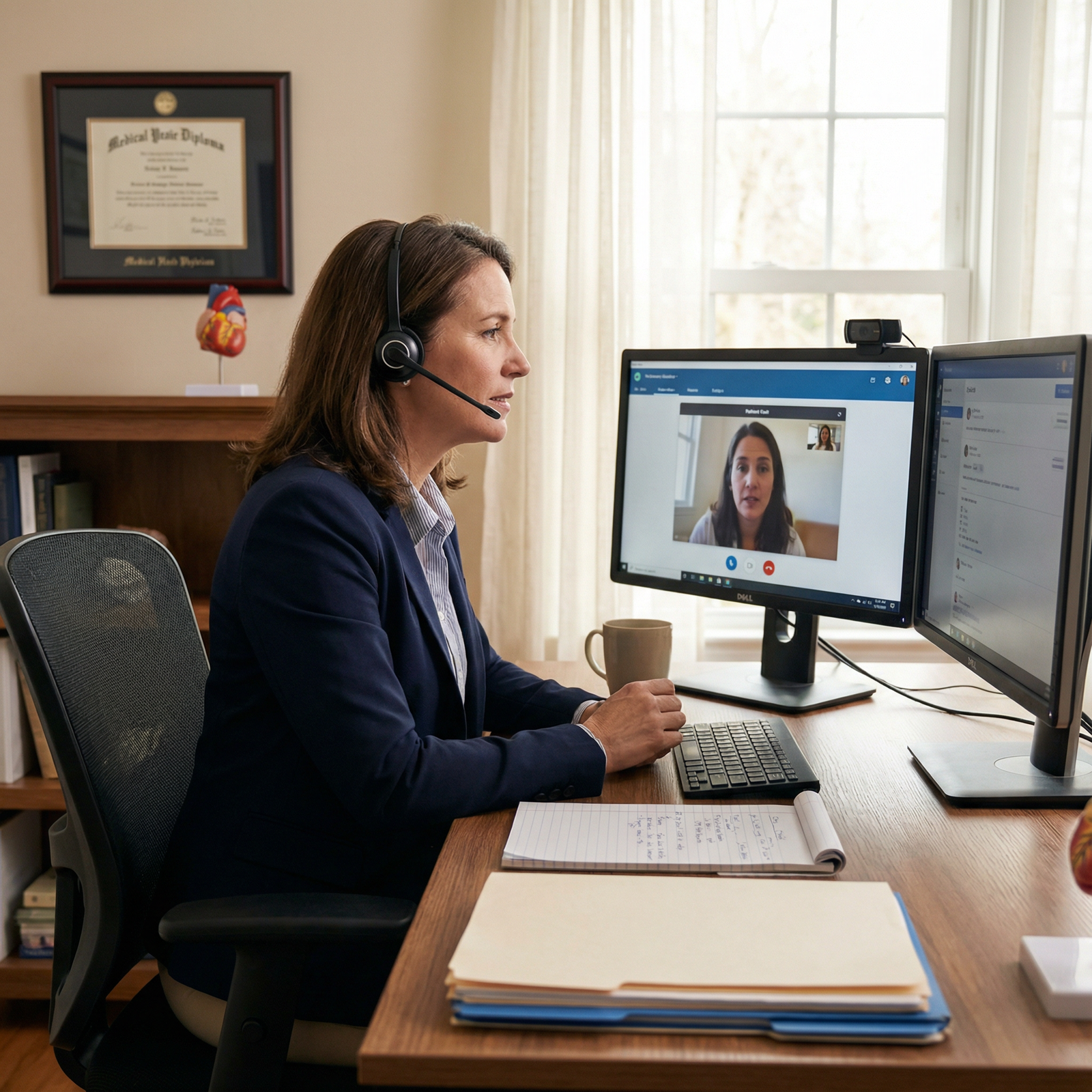
Telemedicine has transformed Healthcare Careers by decoupling patient care from physical location. As a Side Hustle, Telemedicine offers:
- Flexible scheduling (evenings, weekends, short shifts)
- Remote work from home or while traveling (within licensing constraints)
- Options across specialties—urgent care, psychiatry, primary care, dermatology, etc.
Actionable tips:
- Start with a low‑commitment telehealth company offering 4–8 hours/month.
- Clarify malpractice coverage and licensing requirements upfront.
- Use dedicated time blocks rather than squeezing visits between other tasks.
2. Consulting for Healthcare Companies and Startups
Your clinical experience is invaluable to organizations developing:
- Digital health platforms
- Medical devices or diagnostics
- Pharmaceutical products
- Workflow and EHR solutions
Consulting roles may include:
- Clinical advisor or subject‑matter expert
- Product testing and feedback
- Guideline or content development
- Key opinion leader or speaker roles
To get started:
- Update your LinkedIn profile to highlight niche expertise and your openness to consulting.
- Join physician entrepreneur communities and digital health forums.
- Start with small, clearly scoped projects (e.g., reviewing clinical content) to gain experience.
3. Medical Writing, Media, and Content Creation
If you enjoy communication, medical writing and content creation can be both intellectually rewarding and profitable:
- Articles for medical journals, CME, or patient‑facing websites
- Health columns or blogs for media outlets
- Scriptwriting for patient education videos or courses
- Social media content for health brands or institutions
This Side Hustle can be built gradually in small time blocks (e.g., 1–2 hours/week) and often leads to ongoing contracts.
4. Teaching, Tutoring, and Academic Side Gigs
Teaching is a natural extension of clinical practice:
- Adjunct faculty roles at medical schools or PA/NP programs
- Board exam prep (USMLE/COMLEX, specialty boards)
- Guest lectures, workshops, and CME presentations
- Structured online teaching for global audiences
Benefits include:
- Reinforcing your own knowledge
- Enhancing your academic profile
- Building a reputation as an educator in your field
You can start locally (your residency program, nearby institutions) and expand online over time.
5. Investing and Real Estate: Building Passive (or Semi-Passive) Income
While not strictly “side jobs,” investing strategies can become powerful Side Hustles when approached systematically:
- Real estate: Single‑family rentals, small multi‑family properties, short‑term rentals, syndications, or REITs
- Stock market: Long‑term index investing, dividend strategies, or structured options (for experienced investors)
- Private investments: Angel investing, physician‑only funds, or startup equity (with careful due diligence)
Pitfalls to avoid:
- Overleveraging with too much debt
- Investing in products you don’t fully understand
- Allowing real estate management to become another full‑time job
Many physicians prefer “semi‑passive” approaches, such as hiring property management or investing in REITs and diversified index funds.
6. Online Courses, Webinars, and Digital Products
You can package your expertise into scalable offerings:
- On‑demand courses for patients (e.g., chronic disease management, lifestyle change)
- Skill‑based courses for clinicians (e.g., procedures, communication, documentation)
- Webinars for institutions or professional societies
- Digital tools (checklists, templates, patient guides) sold online
This model allows you to do the work once (creation) and earn income repeatedly over time. It pairs well with blogs, podcasts, or social media channels that attract your target audience.
7. Health and Wellness Coaching or Lifestyle Medicine
If you’re passionate about prevention and behavior change, health coaching can be a natural fit:
- One‑on‑one or group coaching programs
- Niche focus (e.g., physicians’ health, obesity, menopause, athlete care, burnout recovery)
- Hybrid models combining evidence‑based medicine with coaching frameworks
Important considerations:
- Understand the legal and regulatory boundaries between “coaching” and medical practice in your region.
- Clarify whether you will or will not prescribe or treat within that business.
- Ensure clear documentation, consent, and liability protection.
How to Build a Side Hustle Without Sacrificing Your Medical Career
1. Clarify Your Goals Before You Start
Begin by asking:
- What problem am I trying to solve? (Debt? Burnout? Career transition? Savings gap?)
- How much time can I realistically commit each week?
- Do I prefer clinical or non‑clinical work for my Side Hustle?
- What do I want this to look like in 3–5 years? (Small supplement vs. major income stream?)
Clear goals help you choose a Side Hustle that fits, instead of chasing every shiny opportunity.
2. Protect Your Primary Career: Boundaries and Compliance
Your main job, license, and reputation remain central. Safeguard them by:
- Reviewing your employment contract for moonlighting or non‑compete clauses.
- Understanding institutional policies on outside work, intellectual property, and use of employer resources.
- Keeping Side Hustle work separate from clinic time and systems (devices, email, EMR).
- Avoiding conflicts of interest, especially in pharma, device, or competitor engagements.
When in doubt, consult legal or employment counsel—especially for higher‑risk ventures.
3. Start Small and Iterate
Resist the urge to overbuild. A better approach:
- Choose one Side Hustle and commit 2–4 hours per week for 3–6 months.
- Track income, time spent, and your energy level (does it drain or energize you?).
- Refine or pivot based on what works.
This experimentation approach reduces risk and helps you discover what actually fits your life.
4. Use Systems and Tools to Stay Organized
Physicians already juggle complex schedules. Treat your Side Hustle professionally:
- Use a digital calendar to block protected Side Hustle time.
- Leverage task managers (e.g., Todoist, Asana, Notion) for projects and deadlines.
- Maintain separate email and cloud storage for your business.
- Track income and expenses using simple bookkeeping software (e.g., QuickBooks, Wave).
These practices also make tax time easier and position you for growth.
5. Prioritize Your Health and Relationships
The goal of a Side Hustle is not to work nonstop—it’s to create Financial Security, optionality, and better Work-Life Balance. Guard against overwork by:
- Setting hard limits on total weekly work hours.
- Scheduling regular “no work” blocks for family, friends, exercise, and rest.
- Checking in with your partner or support system about how the Side Hustle is affecting them.
- Being willing to pause or scale back during demanding clinical rotations or life events.
Remember: a sustainable Side Hustle enhances your life; it doesn’t consume it.

Frequently Asked Questions About Physician Side Hustles
1. Can a Side Hustle negatively affect my medical practice or reputation?
Yes, it can—if poorly managed. Common pitfalls include:
- Letting side work bleed into clinical hours
- Posting unprofessional content on public platforms
- Engaging in conflicts of interest or violating institutional policies
You can avoid these by:
- Keeping clear time and technology boundaries
- Using professional judgment with online presence and endorsements
- Being fully transparent when needed (e.g., disclosures in talks, research, or content)
When structured thoughtfully, a Side Hustle can actually enhance your reputation as a leader, educator, or innovator.
2. How do I ensure my Side Hustle is legally and ethically compliant?
Consider these steps:
- Review your employment contract for moonlighting and intellectual property clauses.
- Check state medical board regulations on outside employment, Telemedicine, and advertising.
- Obtain appropriate malpractice insurance if your Side Hustle involves clinical care.
- Use written contracts for consulting, speaking, or content work specifying scope, compensation, and ownership.
- Consult with a healthcare attorney or experienced colleagues for higher‑risk ventures.
Ethically, keep patient welfare, transparency, and professionalism at the center of all your decisions.
3. I don’t know what kind of Side Hustle is right for me. Where should I start?
Begin with a self‑inventory:
- What parts of your work do you enjoy most (teaching, problem‑solving, writing, tech, communication)?
- What skills do colleagues consistently praise you for?
- What topics do you read about or talk about for fun?
Then:
- Explore 1–2 low‑risk opportunities aligned with those interests (e.g., tutoring if you love teaching, Telemedicine if you like clinical problem‑solving).
- Talk to physicians already doing those Side Hustles—most are surprisingly generous with advice.
- Commit to a small trial period to test fit before scaling up.
4. How can I balance my Side Hustle with family and personal responsibilities?
Communication and intentional planning are critical:
- Involve your partner or family early in your decision to start a Side Hustle.
- Agree on clear time blocks for side work and for protected family time.
- Re‑evaluate the schedule periodically—especially after big life changes (new baby, new job, illness).
- Be willing to scale back during high‑stress seasons and increase during more flexible periods.
Remember, the long‑term aim is to improve your family’s financial stability and daily life, not sacrifice relationships for short‑term gains.
5. When does a Side Hustle stop being “on the side”?
Over time, some physicians find that their Side Hustle:
- Matches or exceeds their clinical income
- Provides greater satisfaction and flexibility
- Opens doors to leadership or entrepreneurial roles
At that point, you may transition to:
- A hybrid career (reduced clinical FTE plus larger side business)
- Primarily non‑clinical work with limited clinical practice
- Full‑time entrepreneurship or consulting
There’s no “right” endpoint. The key is to regularly reassess whether your current mix of clinical and non‑clinical work aligns with your financial goals, values, and health.
In an era of evolving healthcare systems, rising financial pressures, and increasing burnout, physicians can no longer rely solely on a single clinical job for long‑term stability and satisfaction. Thoughtfully chosen Side Hustles—whether in Telemedicine, consulting, teaching, digital health, real estate, or creative endeavors—offer physicians a path to genuine Financial Security, diversified income, and a more fulfilling Work-Life Balance.
By starting small, setting clear boundaries, and aligning your Side Hustle with your strengths and interests, you can build a career that extends beyond the hospital walls while still honoring your commitments to patients, colleagues, and yourself.