
It’s 9:47 p.m. You’re back in your apartment or call room. The suit is on the chair, the tie’s half-untied, your hair’s still full of static from the stupid badge clip. Your laptop is open to ERAS, and all you can think is:
“I just destroyed that interview. That’s it. I’m done. They’re never ranking me. What if this screws my entire match?”
You replay every awkward pause. The weird answer you gave to “Tell me about yourself.” The joke that landed flat. The faculty interviewer who went stone-faced when you stumbled on “Why this program?”
Your brain is doing what it always does: taking one bad thing and extrapolating it into “I’m not matching anywhere.”
Let me say this clearly:
One bad interview — even a truly awful, want-to-dig-a-hole-and-live-there interview — does not doom your match chances.
Let’s untangle the panic and then figure out what you actually need to do next.
Reality check: How much does one bad interview actually matter?
You’re probably picturing a program meeting where they say:
“Wow, this one interview was terrible, so this applicant must be trash overall. Let’s blacklist them and also send a memo to every other program.”
No. That’s not how this works.
Programs look at you as a package: application, letters, scores, experiences, and interviews across the day. One ugly conversation is a data point, not a full personality assessment.
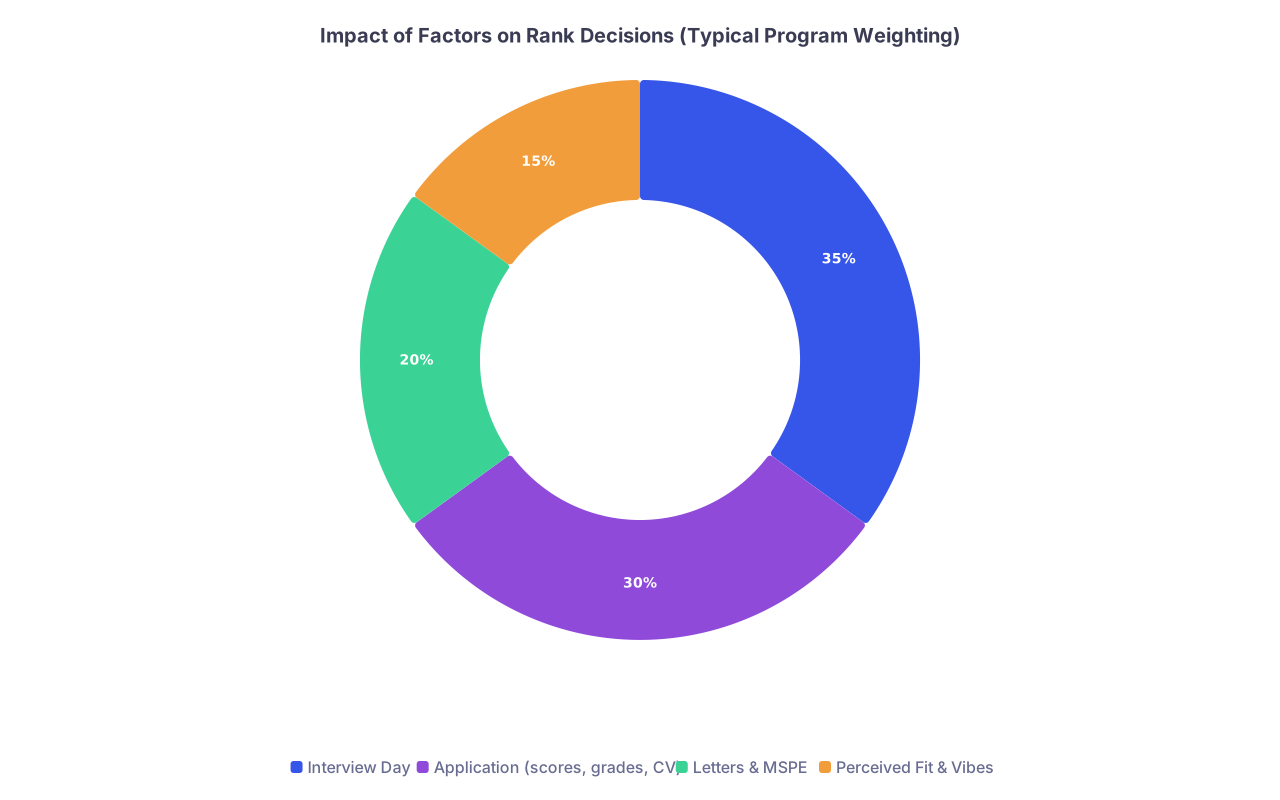
| Category | Value |
|---|---|
| Interview Day | 35 |
| Application (scores, grades, CV) | 30 |
| Letters & MSPE | 20 |
| Perceived Fit & Vibes | 15 |
Does the interview matter? Yeah, obviously. But here’s what I’ve seen happen in real life:
Applicant absolutely tanked one faculty interview (stared at the floor, froze on a behavioral question, admitted they were nervous)
→ Still matched there because residents and PD loved them elsewhere in the day.Applicant had a super awkward PD interview, said they didn’t know much about the city, stumbled through “Why us?”
→ Still ranked decently because their application was strong and other faculty wrote “quiet but thoughtful.”Applicant totally nailed all interviews at one program, was sure it was a love-fest
→ Matched somewhere else because that program ranked them fine but not sky-high. It goes both ways.
One bad interview usually matters in one of three ways:
You were awkward, rambly, or just “off”
→ Probably puts you a bit lower on their list, not off it entirely.You came across as uninterested or generic
→ You might get tagged as “meh,” again lower but not doomed.You said something genuinely concerning (unprofessional, big red flag)
→ This is when it can be fatal at that specific program. Still doesn’t nuke your entire season.
Most of the time, what you call “bombed” is actually “average to slightly below average” in their eyes. You’re judging yourself on a perfection scale; they’re judging you against a huge pool of applicants, many of whom also had awkward moments.
The difference between “I felt bad” and “That was actually bad”
Your internal rating system is not reliable right now. You’re biased. You’re tired. You care too much.
Here’s a rough way to separate “my anxiety talking” from “okay, that was legitimately rough.”
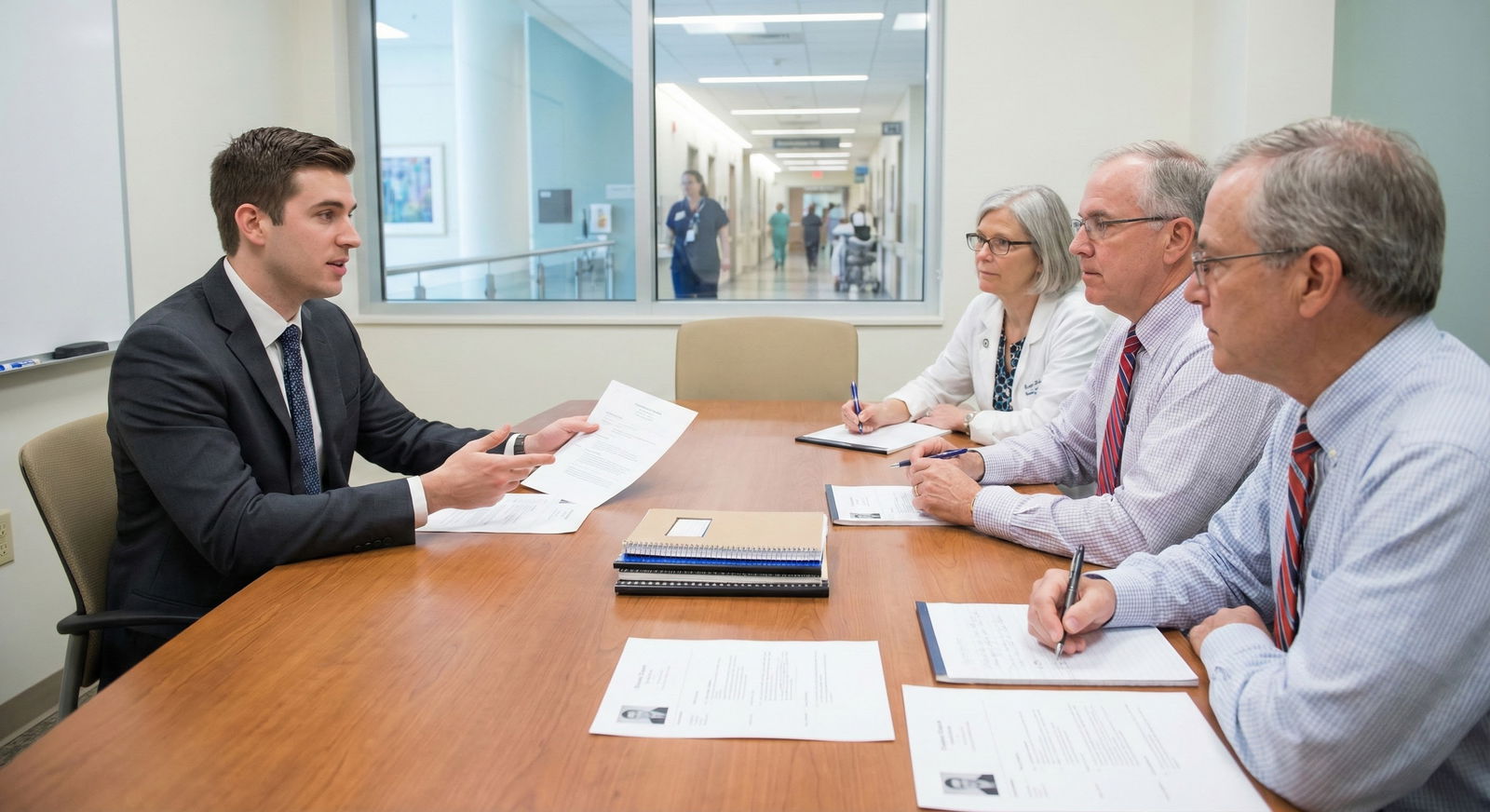
Ask yourself these questions:
Did I answer every question, even if not perfectly?
- If yes, you probably did fine. Programs see nervousness 24/7 during interview season.
Did I stay professional? No eye-rolls, no trash-talking previous programs, no weird comments?
- If yes, you likely didn’t set off red-flag alarms.
Was there a catastrophic moment? Like contradicting your own application, saying something offensive, explicitly disinterested, or obviously lying?
- If no, again — probably not as bad as you think.
The interview that haunts you is usually the one where:
- You rambled too long
- Forgot a specific detail about the program
- Didn’t have a crisp “Why this specialty?” answer
- Felt like you weren’t connecting
Those are fixable things. And programs know it’s early season. They know people are rusty.
Do programs “blacklist” applicants for a bad interview?
The urban legend is strong: you bomb one interview, the PD texts all their friends, and suddenly you’re dead to every program in a 4-state radius.
Doesn’t happen.
Are there actual red-flag situations that get shared? Rarely, yes:
- Professionalism concerns:
- Being rude to staff
- Making inappropriate jokes
- Arguing aggressively with interviewers
- Dishonesty:
- Getting caught lying about research or credentials
- Huge behavioral issues:
- Showing up clearly intoxicated or impaired
- Storming out or refusing parts of the day
That’s “we remember your name for years” territory.
But normal human awkwardness? Being shy? Saying, “I’m nervous”? Screwing up a question?
That doesn’t trigger some underground blacklist spreadsheet.
Where it does hit you:
- That program might rank you lower.
- That specific interviewer might not be your advocate in the ranking meeting.
- You might not get the “bump” that a super strong interview would’ve given you.
Annoying? Yes. Fatal? No.
How many interview “misses” can you tolerate and still match?
You’re probably doing this math in your head:
“If this one went badly, do I need to crush every single remaining interview to survive?”
No. You’re aiming for “solid and consistent,” not “life-changing TED talk” at every spot.
| Total Interviews | Match Outlook (for most IM/FM/Peds/Neuro/Psych) |
|---|---|
| 2–3 | Risky, need things to go pretty well |
| 4–6 | Reasonable but still some anxiety |
| 7–10 | Generally safe if interviews are average+ |
| 11–15 | Very strong odds unless pattern of disasters |
You’re allowed:
- A couple awkward days
- One or two interviews where you walk out thinking, “No way they liked me”
- Some answers you wish you could re-do
Programs know applicants are human. They look at patterns.
If 3–4 different interviewers at the same program all report “strange interaction” or “didn’t seem interested” — that can hurt.
If ten different programs report that? Yeah, then there’s a pattern.
One rough early interview? That’s noise.
Early-season bomb vs late-season bomb: Is early worse?
You’re worried because it’s early.
Like: “If I messed up early, will every other interview go like this? Am I just bad at interviews?”
Here’s the truth no one says out loud:
Almost everyone is rusty for the first one or two interviews.
The timing actually helps you. That program:
- Was your practice run whether you meant it or not.
- Saw you before everyone gets fully polished.
- Knows most applicants are still figuring out their answers.
Late-season bombs are rarer but also not lethal. By then, you usually have enough other interviews banked that one mess doesn’t matter.
Think of it like this: your first bad exam of MS1 felt like the end of the world. By MS4, you’ve bombed enough things to realize… you survive.
Same here.
What you should do the day after a bad interview
Okay, the interview felt terrible. You woke up still nauseous. Fine. Now what?
You need a same-day or next-day recovery plan. Not more spiraling.

| Step | Description |
|---|---|
| Step 1 | Terrible-feeling interview |
| Step 2 | Dump memories onto paper |
| Step 3 | Identify 3 weakest moments |
| Step 4 | Rewrite answers |
| Step 5 | Practice out loud with a person |
| Step 6 | Update prep notes for next interview |
| Step 7 | Move on and stop rehashing |
Here’s what I’d actually do:
Write down what happened while it’s fresh.
Not to torture yourself. To extract data.- Which questions made you freeze?
- Where did you ramble?
- When did you feel the energy shift?
Identify exactly 3 things you didn’t like.
Just three. Not twenty.For example:
- My answer to “Tell me about yourself” was unfocused.
- I didn’t have a good “Why this program?” answer.
- I panicked on a conflict/teamwork question.
Rewrite those answers same day.
Not a script — a structure.- “Tell me about yourself” → present (who you are), past (how you got here), future (where you’re headed in this specialty).
- “Why this program?” → 2–3 specific program features + how they match your values/needs.
- Behavioral questions → use a quick STAR structure (Situation, Task, Action, Result) in your head.
Practice out loud with a human.
Not just in your head. That’s where anxiety lives.Ask a friend, partner, co-intern, or even record yourself on your phone and pretend it’s a person. Aim for:
- Shorter answers (60–90 seconds)
- Clearer beginnings and endings
- One concrete example per answer
Do not email them to apologize or “clarify” answers.
Unless you said something factually wrong or unprofessional, sending a follow-up email like “I’m sorry I was nervous” just highlights what you think went wrong. Let it fade.Schedule your next prep session.
Put an actual time on your calendar within 48 hours to rehearse again. Anxiety calms down when you have a plan, not when you keep telling yourself “I’ll do better next time” with zero structure.
Should you still rank a program where you think you bombed?
This one drives people insane:
“If I think I tanked, should I even rank them? Or is that pointless?”
Rank them exactly where you’d want to go if they loved you. Because you have no idea how they actually felt about you.
You’re not a mind-reader. You’re just someone who’s exhausted and hypercritical of yourself.
I’ve watched this specific scenario play out:
- Applicant: “That interview was a disaster, I’m sure they hated me.”
- February comes. Program ranks them highly, because:
- The faculty interviewer wrote “a bit nervous but very earnest, seems like a good fit”
- Residents loved talking to them at lunch
- Application and letters were strong
So yeah. Rank them honestly. Your job is not to predict their rank list; your job is to make yours true to your preferences.
How to keep today’s bad interview from infecting the next one
The real danger isn’t that you bombed one interview.
It’s that you carry that failure energy into all the rest.
You start thinking:
- “I’m not good at interviews.”
- “They can all tell I’m anxious.”
- “I don’t belong in this specialty.”
That is way more dangerous than one awkward Zoom call.
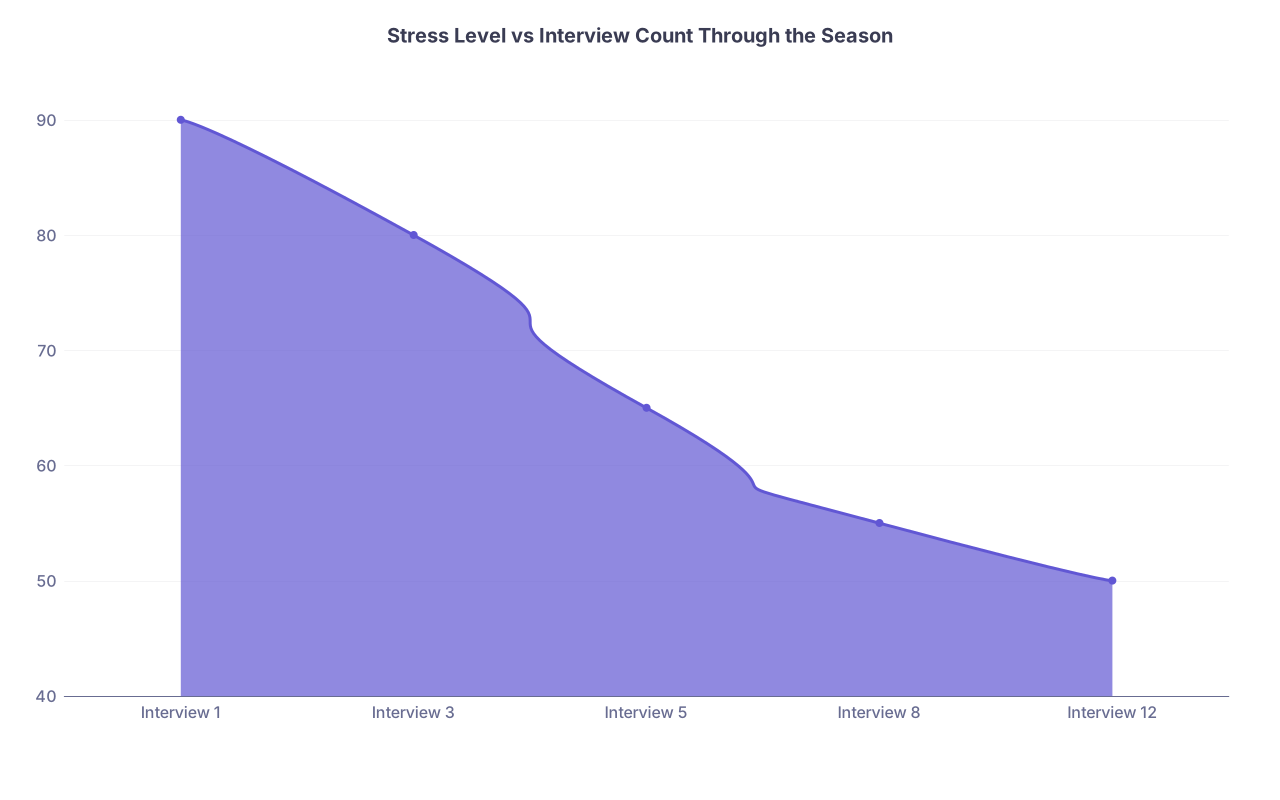
| Category | Value |
|---|---|
| Interview 1 | 90 |
| Interview 3 | 80 |
| Interview 5 | 65 |
| Interview 8 | 55 |
| Interview 12 | 50 |
Most people feel like this:
- Interview 1–2: anxiety 9/10, performance 6/10
- Interview 3–5: anxiety 7/10, performance 7–8/10
- Interview 6+: anxiety 5–6/10, performance 8/10
You get better fast if you don’t let shame shut you down.
To avoid dragging today’s mess into tomorrow:
Set a time limit for obsessing.
Give yourself 1–2 hours max to replay, vent, text your group chat, spiral. Then stop. After that, only talk about it if you’re actively learning from it.Create a 1-page “interview cheat sheet.”
One side of paper / one doc with:- 3 key stories (teamwork, conflict, failure)
- 3 reasons you chose this specialty
- 3 strengths you actually believe you have Review this before each interview instead of rehashing your worst one.
Decide on one micro-goal for the next interview.
Not “Be perfect.” That’s useless.Things like:
- “Keep most answers under 90 seconds.”
- “Mention 2 program-specific things when they ask ‘Why us?’”
- “Pause and breathe before I answer.”
Micro-goals are how you build confidence again. Not magic mindset quotes on Instagram.
When should you actually worry?
I’m not going to sugarcoat it: there are situations where you need to stop and reassess.
You should do a more serious check-in if:
You’ve had 4+ interviews and feel like:
- You’re freezing on standard questions every time
- You’re getting visibly flustered or tearful regularly
- You’ve gotten direct feedback that you seem uninterested or disengaged
Multiple trusted people (mentor, advisor, not-your-mom) have watched you do a mock interview and say:
- “You’re not coming across how you think you are”
- “You’re underselling yourself badly”
- “You sound like you don’t want this specialty”
If that’s happening, the answer isn’t “panic harder.” It’s get help:
- Ask your school for a formal mock interview with someone experienced.
- Ask a resident you trust to run you through tough questions.
- Record yourself and actually watch it, painful as that is, and fix one thing at a time.
But again: that’s a pattern problem.
Not a “one horrific early interview” problem.
Quick recap you can screenshot
If your brain is fried, here’s the TL;DR you need:
- One bad interview does not doom your match chances.
- Early-season bombs are common; programs know people are rusty.
- You are a terrible judge of your own performance when anxious.
- Don’t send “sorry I was nervous” emails — let it go.
- Use the bad interview as data: fix 3 things, practice, move on.
- Rank programs based on where you want to go, not where you “think” you did well.
- The real danger is letting one bad day poison all the others.
FAQ (Exactly 4 Questions)
1. Should I send a follow-up email to “clarify” or apologize for a bad answer?
Usually no. Unless you stated something factually wrong and important (like misrepresenting research, messing up a date that changes a key timeline, or saying something that genuinely needs correction), sending an “I’m sorry I was nervous” email just spotlights what you think went wrong. Programs expect nerves. They don’t need a post-game breakdown. If you want to follow up, a normal, brief thank-you email is enough: “Thank you for the opportunity to interview; I enjoyed learning more about X.”
2. I cried after the interview. Does that mean I’m not cut out for residency?
No. It means you’re human and under an absurd amount of pressure. I’ve seen applicants who later became excellent residents sob in their car or bathroom after bad interviews or bad shifts. Emotional reaction ≠ lack of resilience. What matters is what you do tomorrow. Do you shut down and avoid preparing, or do you take a breath, fix what you can, and show up again?
3. I completely blanked on a clinical question. Is that a huge red flag?
Not necessarily. Most residency interviews aren’t oral boards. If you calmly said something like, “I’m blanking on specifics right now, but here’s how I’d approach the problem,” that can actually be fine. They’re looking more at how you think and how you handle pressure. If you panicked and spiraled, that’s still human. One flubbed clinical question at one program isn’t going to erase your entire application.
4. What if this program was my top choice and I’m sure I blew it?
You still rank them where you’d want to go. Your perception of “blew it” is unreliable. I’ve watched people match at the exact place they were convinced went horribly. Could they rank you lower than they would have if you’d crushed it? Sure. Could they still rank you high enough for you to match there? Also yes. Don’t try to do their side of the algorithm. Do yours honestly.
Today’s next step:
Open a blank document or grab a piece of paper. Write down the 3 weakest moments from that interview — just three. For each one, write a better version of how you wish you’d answered. Then read them out loud, once. That’s it. Don’t fix your entire interview style tonight. Just rewrite those three moments so the next program doesn’t get the same version.