
It’s 6:45 a.m. You’re sitting in your car outside a hospital you’ve never been to, in a suit that feels like a costume, refreshing the interview email for the 20th time. Your stomach’s in knots. You’re replaying every past awkward moment: the handshake you missed, the joke you didn’t get, the time you said “you too” when the waiter said “enjoy your meal.”
And now you’re supposed to go charm a program director?
You’re thinking:
“I’m socially awkward. Not ‘quirky-cute’ awkward. Actually awkward. Can I still do well in residency interviews? Or am I just walking into a slow-motion rejection?”
Let me say this flat-out: yes, you can do well. I’ve watched more than one low-key, introverted, “I-hate-small-talk” applicant walk out with strong impressions and great outcomes. Not because they magically became extroverts. But because they played to their strengths and stopped trying to be someone they’re not.
You don’t need to be charismatic. You need to be coherent, kind, and prepared.
Let’s break this down in a way that doesn’t just say “be yourself” (which is useless advice if “yourself” currently feels like a malfunctioning robot in a blazer).
What Programs Actually Care About (Spoiler: Not Your Party Skills)
Here’s the thing nobody says out loud during this whole circus: programs are not recruiting TED speakers. They’re recruiting people they can trust at 3 a.m. on a bad call night.
They’re asking themselves three basic questions about you:
- Can I work with this person without wanting to scream?
- Will they show up, learn, and not crumble under stress?
- Are they at least normal-adjacent in a clinical setting?
Notice what’s not on that list:
“Are they charming?”
“Would they host a great dinner party?”
“Are they the funniest person in the room?”
Programs want functional, not flashy.
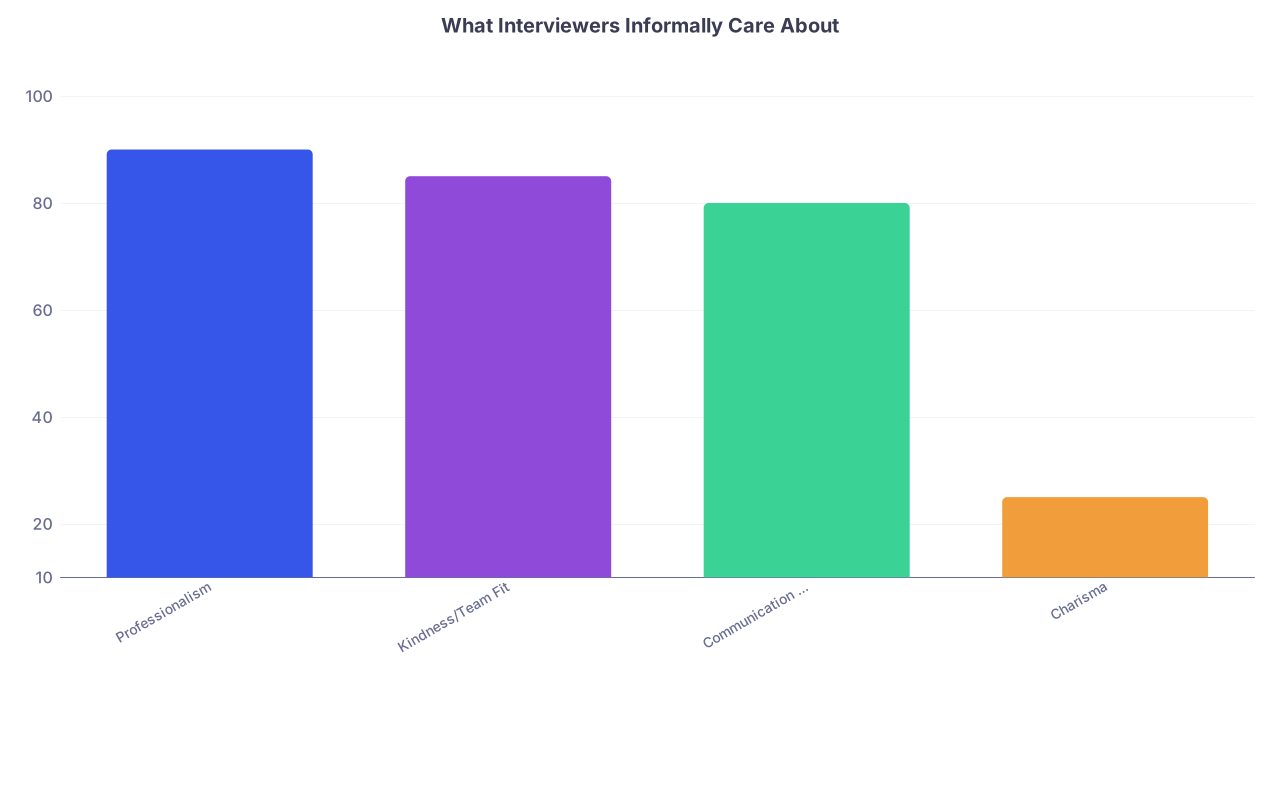
| Category | Value |
|---|---|
| Professionalism | 90 |
| Kindness/Team Fit | 85 |
| Communication Clarity | 80 |
| Charisma | 25 |
That last bar? That’s where all your panic is focused. And it’s the least important.
What matters way more than charisma is this:
- You answer questions clearly without rambling into chaos.
- You seem like you’d be respectful to nurses, other residents, and staff.
- You show genuine interest in the program (not fake-overexcited, just engaged).
- You have some self-awareness.
Being “socially awkward” doesn’t disqualify you from any of that.
Socially Awkward ≠ Doomed: The Difference That Actually Matters
Here’s the painful part: there is a line that programs worry about. But it’s not “awkward vs smooth.” It’s “a bit awkward vs concerning.”
A bit awkward looks like:
- Slightly stiff at first, then warms up.
- Laughs nervously or fidgets with hands.
- Pauses to think before answering.
- Asks a few safe, basic questions because they’re anxious.
Concerning looks like:
- Completely flat affect or no eye contact the entire time.
- Monosyllabic answers with no detail.
- Angry/defensive responses to normal questions.
- Inappropriate comments, oversharing, or boundary issues.
Most anxious, “I’m so awkward” applicants I’ve met are nowhere near the second category. But their brain tells them they are.
If you’re even worried enough to read this, you’re probably firmly in the “a bit awkward but absolutely workable” zone.
Stop Trying to Be Charismatic. Aim for “Steady and Human.”
The worst thing you can do as an awkward person? Decide you’re going to “fix” it by becoming The Most Outgoing Applicant Ever for one day. That’s how you end up talking too fast, oversharing, or laughing in weird places because you’re overcompensating.
Your target isn’t “wow.” It’s “okay, I’d work with them.”
Think of it like this: the baseline you’re aiming for is:
- Pleasant
- Clear
- Not hostile
- Mildly interested
That’s it. That’s the bar.

You can be awkward and still hit that baseline.
Concrete Ways to Make Your Awkwardness Less Obvious (And Less Painful)
You don’t have to change your personality. But there are specific behaviors you can tighten up so you look more “quiet but solid” and less “lost in space.”
1. Script the parts that always trip you up
Interviews are fake social interactions. They’re predictable. That’s good for you.
Write out and practice:
- Your “Tell me about yourself”
- Why this specialty
- Why this program
- A patient story you can tell clearly
- A conflict story (difficult team member, tough feedback, etc.)
- A failure story (bad grade, exam, or rotation, and what you did next)
Don’t wing these. People with natural social ease can improvise and still sound coherent. If you know you can’t, don’t try.
Record yourself on your phone. Yes, it’s excruciating. Do it anyway. Listen once. Fix the messiest parts. You’ll sound 20–30% better almost immediately.
2. Use a simple structure for answers so you don’t ramble
If your brain likes to spin in circles under stress, give it guardrails.
Use something like this for most answers:
- One-sentence answer
- Brief example
- One sentence tying it back to residency
Example: “What’s a strength you bring to residency?”
Answer structure:
- “One strength I bring is X.”
- “For example, during Y rotation, I…”
- “I think this will help in residency because…”
You don’t need 8 clever points. You need one clear point with a concrete story.
3. Practice just enough eye contact and body language
No, you don’t need to stare into their soul. That’s weird.
Aim for:
- Looking at the interviewer’s face about 50–70% of the time.
- Occasionally glancing away while thinking. That’s normal.
- If virtual: look at the camera briefly every couple sentences. Not the whole time.
Body language basics (low-effort version):
- Sit with both feet on the floor, back supported.
- Hands visible, not clenched out of sight; rest them lightly on the table or in your lap.
- Nod occasionally as they speak.
- Smile once in a while when appropriate. Not a permanent grin. Just signs of life.
If you feel physically rigid, practice with a friend or alone, just answering questions in a chair. You’re teaching your body a default posture.
How to Survive (And Not Completely Hate) Small Talk
This is where a lot of awkward people die inside. The pre-interview social, the waiting room, the “any questions?” time with residents.
Good news: you don’t need to be interesting. You just need to not look hostile or totally shut down.
I’d prep a few simple, generic questions you can recycle. Things like:
- “What surprised you most about this program after you started?”
- “How’s the call schedule changed in the last couple years?”
- “What do most residents do on their days off around here?”
- “If you had to pick this program again, would you? Why?”
You can literally ask similar questions at multiple interviews. Nobody’s tracking that.
And if your brain freezes, you can always fall back to:
“Can I ask what your typical day looks like as a PGY-2 here?”
People love talking about themselves. Let them.

| Step | Description |
|---|---|
| Step 1 | Arrive Early |
| Step 2 | Check In |
| Step 3 | Short Small Talk |
| Step 4 | Formal Interview |
| Step 5 | Resident Q&A |
| Step 6 | Thank You/Goodbye |
| Step 7 | Post-Interview Notes |
You don’t have to dominate the conversation at any of those steps. You just need to participate enough that you’re not a ghost.
Virtual Interviews: Secret Advantage for Awkward People
If your interviews are virtual, you actually have more control.
Set yourself up so your environment does some of the social work for you:
- Stable internet, quiet room, neutral background.
- Camera at eye-level. No up-the-nose angle.
- Decent lighting (lamp behind your screen, not behind your head).
Then build a “cheat frame”:
- Sticky notes near the screen with 3–4 bullet points:
- Key strengths
- 2 patient stories
- 2 questions to ask
- One note that says: “Pause. Breathe. It’s okay.”
- One note that simply says: “Shorter answers.”
You can glance at these between questions. No one cares. Everyone knows virtual is weird.

The One Thing You Can’t Do: Be So Guarded You Seem Cold
This is where anxious/awkward people sometimes shoot themselves in the foot. They’re so afraid of saying the wrong thing that they say almost nothing.
Residency is a people job. If you come across as a complete black box, that’s a red flag. Not because you’re quiet, but because they can’t get any sense of how you’ll be with patients and teams.
So you have to let some realness through. That might mean:
- Sharing a non-dramatic, genuine reason you chose the specialty.
- Admitting you struggled with something and improved.
- Showing a bit of appropriate emotion in a patient story (frustration, sadness, motivation).
Here’s the line: vulnerable, not confessional.
“I failed Step 1, my family life is a disaster, my relationship is falling apart, and I don’t sleep” is too far. That’s a therapy conversation, not an interview one.
But:
“I really had to work on my time management after my third-year clerkships. I got specific feedback about X, which I didn’t enjoy hearing, but I made changes by doing Y and Z. Since then…” — that’s good. That’s mature. Programs like that.
Reality Check: How Much Can Interviews Actually Hurt You?
Let’s be honest: they can hurt you if:
- You’re rude, dismissive, or arrogant.
- You say something offensive or wildly inappropriate.
- You clearly don’t care about the program.
- You seem genuinely unstable or unsafe.
What almost never tanks an applicant:
- Being a bit quiet.
- Occasional awkward pauses.
- Slightly weird laugh.
- Needing a second to think.
- Repeating a similar question residents have heard before.
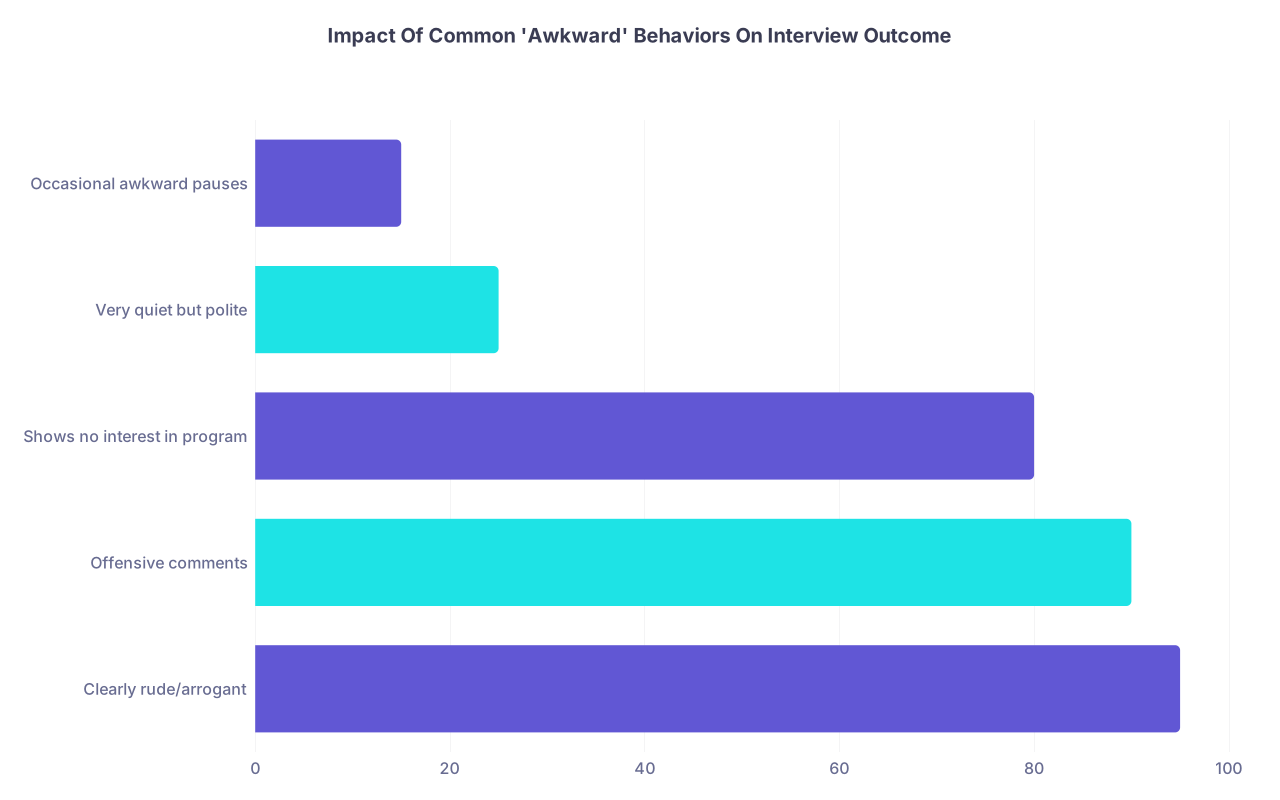
| Category | Value |
|---|---|
| Clearly rude/arrogant | 95 |
| Offensive comments | 90 |
| Shows no interest in program | 80 |
| Very quiet but polite | 25 |
| Occasional awkward pauses | 15 |
That bottom stuff is what you obsess over at 2 a.m. The top stuff is what actually matters to programs.
You’re probably catastrophizing your minor quirks and ignoring the big picture: you’ve come this far. Someone invited you. That means on paper, you’re already good enough.
Your job at the interview isn’t to prove you’re perfect. It’s to not set yourself on fire.
A Simple 7-Day Prep Plan for the Socially Awkward
If your interview is a week or more away, here’s a bare-minimum structure that actually helps instead of just spiraling.
| Day | Focus |
|---|---|
| 7 | Draft answers to 10 common questions |
| 6 | Record yourself once, adjust worst parts |
| 5 | Research 3 specific things about each program |
| 4 | Practice 30 minutes with a friend or mirror |
| 3 | Make your question list and sticky notes |
| 2 | Test tech, choose outfit, brief run-through |
| 1 | Rest, light review, sleep like it actually matters |
Is this perfect? No. Is it 10x better than doomscrolling Reddit and convincing yourself you’re doomed? Absolutely.
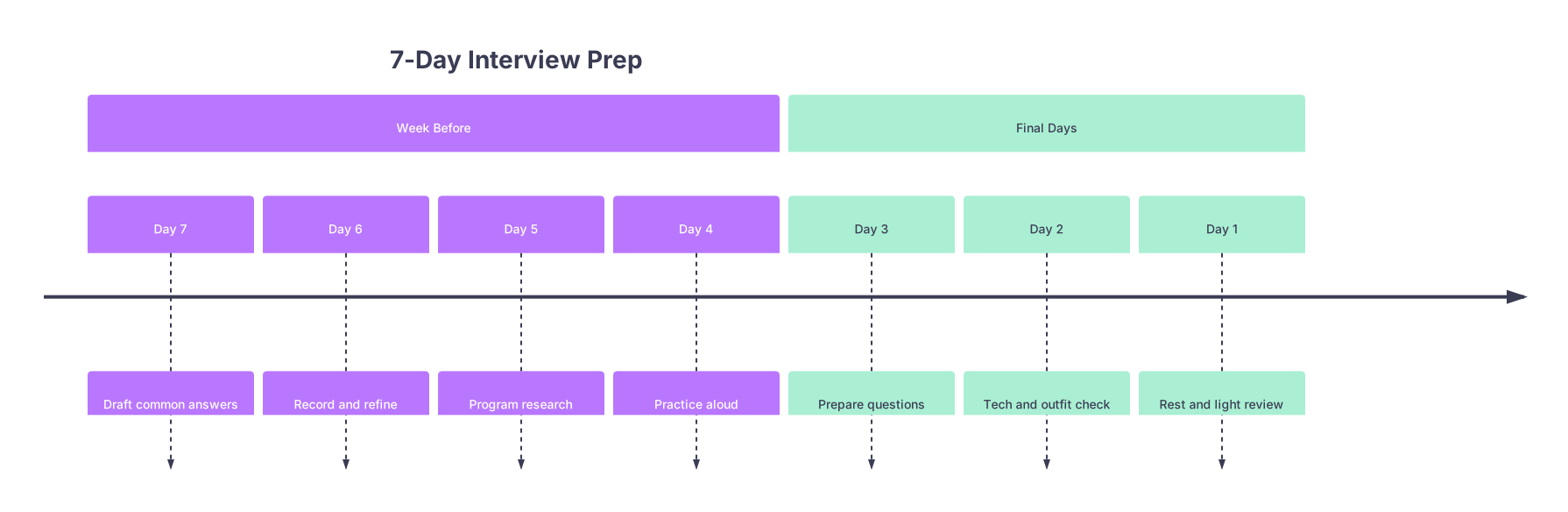
| Period | Event |
|---|---|
| Week Before - Day 7 | Draft common answers |
| Week Before - Day 6 | Record and refine |
| Week Before - Day 5 | Program research |
| Week Before - Day 4 | Practice aloud |
| Final Days - Day 3 | Prepare questions |
| Final Days - Day 2 | Tech and outfit check |
| Final Days - Day 1 | Rest and light review |
If You Have an Actual Social or Communication Disorder
Quick but important note. If you’re not just “awkward” but have something like:
- Autism spectrum
- Social anxiety disorder
- Stuttering
- ADHD that impacts conversations
You’re not alone, and you’re not disqualified from medicine.
You’ll want to:
- Practice even more with people who can give honest, kind feedback.
- Focus hard on clarity and structure of answers.
- Consider mentioning briefly that you tend to process a bit more internally, but it doesn’t affect your clinical care — only if you feel comfortable and only if it explains something real they might notice (like longer pauses).
You don’t owe anyone your diagnosis. But having a realistic self-understanding helps you plan.
Bottom Line
You don’t need to magically transform your personality before interviews.
You need to:
- Be prepared enough that you’re not panicking for every question.
- Show that you’re thoughtful, kind, and capable.
- Hit “functional and human,” not “most charismatic person alive.”
You’re allowed to be quiet. You’re allowed to be awkward. You’re not allowed to write yourself off before you even show up.
Today, do one thing that slightly tilts the odds in your favor:
Open a blank doc and write out your answer to: “Tell me about yourself.” Then say it out loud. Once. Into your phone. Don’t aim for perfect. Aim for “less chaotic than it was in my head.”
Do that, and you’re already doing more than most people who are just sitting there spiraling.
FAQ (Exactly 6 Questions)
1. What if I completely blank on a question and just stare?
Pause. Take a breath. Say, “That’s a really good question. Let me think for a second.” Look slightly away, gather your thoughts, then give any organized answer you can. A 3–5 second pause is not fatal. Panicking and word-salading for two minutes is worse.
2. Should I tell them I’m socially awkward or introverted?
You don’t need to label yourself. But you can frame it positively if it comes up: “I’m more on the introverted side, so I tend to listen carefully and think before I speak. It’s helped me connect one-on-one with patients.” Don’t turn it into a pity monologue.
3. How much should I smile if it doesn’t feel natural?
You don’t need a permanent smile. Aim to smile:
- When you first say hello
- Once or twice during a story (if appropriate)
- When you say goodbye and thank them
That’s enough to read as warm, not fake.
4. Is it bad if I don’t have any funny or charming stories?
No. You’re not auditioning for stand-up. Serious, thoughtful stories about patients, learning from mistakes, or working with teams are far more powerful than forced jokes. Calm and sincere beats awkward comedy attempts.
5. How do I handle group settings like pre-interview dinners if I hate them?
Show up. Stay for a reasonable amount of time. Ask a few residents simple questions. You don’t need to be the loudest voice. It’s okay to listen more than you talk. If you’re on Zoom, keep your camera on, nod, ask 1–2 questions, and you’re fine.
6. What if my awkwardness actually does hurt one or two interviews?
Then it hurts one or two interviews. Not your entire career. People bomb days. Programs disagree about “fit.” You’re applying to many places for a reason. Use any rough experience as data: what went wrong, what you can tighten, then move on and try again the next day.