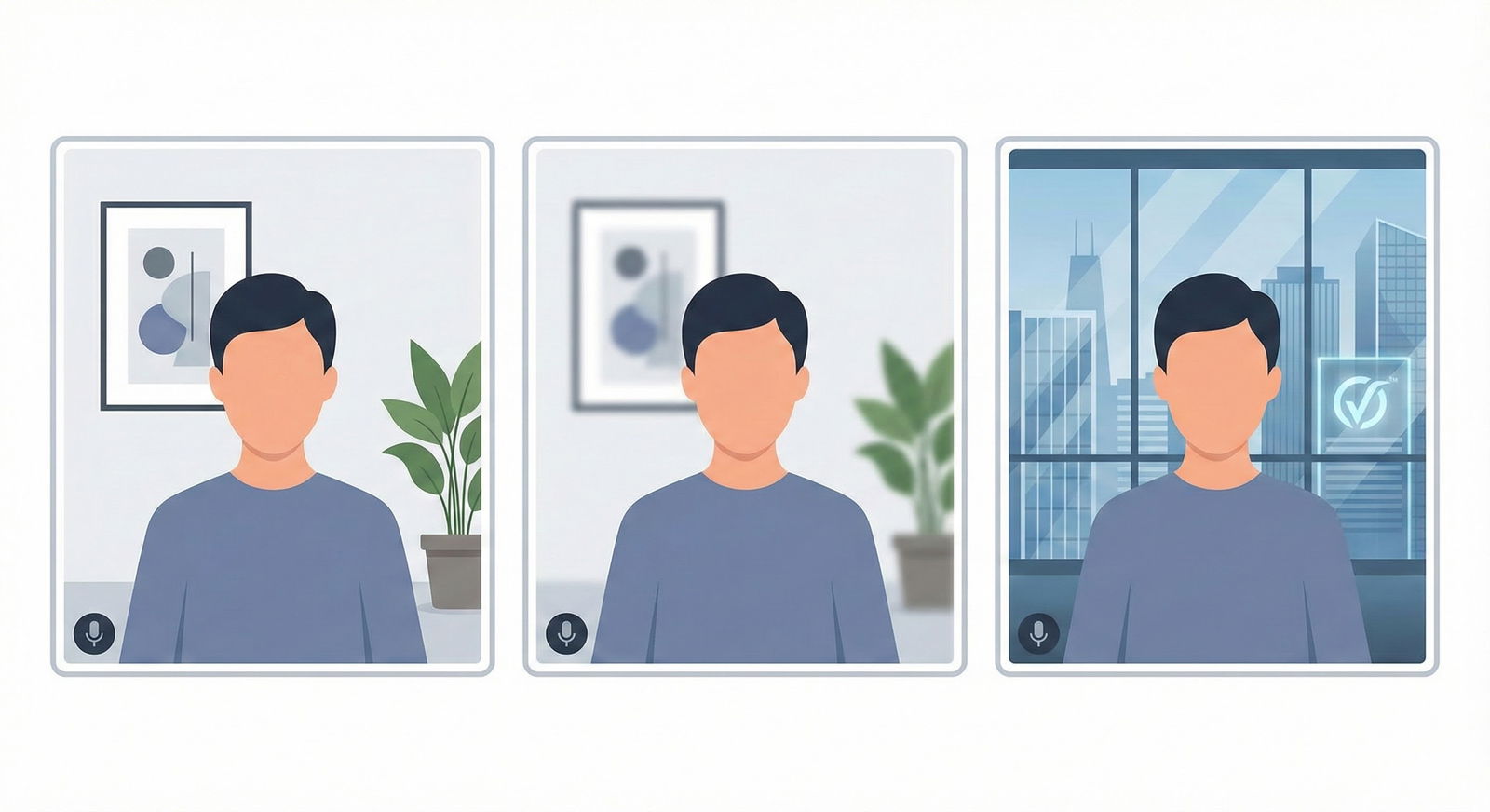
Using notes in a virtual residency interview is not “cheating.” It is only bad when you do it badly.
The moral panic around notes on Zoom is mostly fiction. Programs are not running some secret honor code tribunal about your Post-it under the monitor. They are watching for something else entirely: whether you seem present, genuine, and able to think on your feet.
You can absolutely use notes. Many strong applicants do. I’ve seen applicants crush interviews with a one-page cheat sheet taped behind their webcam—and I’ve seen others torpedo themselves by reading bullet points like a hostage statement.
Let’s separate superstition from what actually matters.
What Programs Actually Care About (Not What Reddit Says)
Here’s the part people gloss over: there’s no NBME-style rulebook for virtual interviews. Programs don’t have a universal policy that “notes are forbidden.” They mostly care about three things:
- Do you seem engaged and authentic?
- Are your answers coherent, relevant, and concise?
- Do you look like someone they’d trust at 3 a.m. on call?
Every PD panel, every NRMP survey, every “what matters most” breakdown boils down to the same theme: behavior and communication, not your setup.
The NRMP Program Director Survey (yes, the real one) consistently shows key interview factors are:
- Perceived commitment to the specialty
- Interpersonal skills
- Interaction with faculty and residents
- Professionalism
- “Fit”
None of those gets tanked automatically because you glanced at a keyword.
Where notes get you in trouble is when they visibly interfere with those things. When your eyes are obviously darting to the side. When your tone shifts from conversational to script-reading. When you answer like you’re performing a memorized monologue instead of talking to another physician.
Programs don’t care if there’s a piece of paper near your computer. They care if it feels like they’re talking to a robot.
The Big Myth: “Notes = You’re Not Prepared”
This is the loudest and dumbest myth.
You’ll hear attendings tell students: “If you need notes, you’re not ready.” That sounds good in a grand-rounds-hero sort of way. It is also disconnected from how high-stakes communication actually works in medicine.
People who use notes at critical moments in medicine:
- Surgeons running down key steps before a rare procedure
- ICU teams checking off bundles
- Code leaders using algorithms taped to the wall
- Attendings reading from structured handoff templates
Using prompts is not a sign of weakness. It is a sign you understand human memory under stress.
A virtual interview is a high-stress, one-shot performance. Your working memory is tanked by adrenaline. Expecting yourself to recall every example, date, and program-specific detail perfectly is fantasy.
What programs do pick up on is over-rehearsal:
- Candidates giving the exact same “Why this specialty?” speech in identical wording every time
- People who clearly memorized a generic answer and jam it into every question, relevant or not
- Applicants who freeze when the conversation goes off-script
Ironically, a few well-placed notes make over-rehearsal less necessary. You can outline instead of memorize. That usually produces more natural conversation, not less.
What the Data and Reality Actually Show
Let me connect this to actual outcomes, not just vibes.
There is no survey asking PDs “Do you hate notes?” because PDs don’t care about your stationery. But there is persistent data on what tanks interviews:
- Poor eye contact (yes, that includes staring off-screen constantly)
- Seeming distracted or disengaged
- Rambling, disorganized answers
- Generic responses that show zero knowledge of the program
- Inability to articulate specific experiences or growth
Notes, if used poorly, can worsen all of those. If used correctly, they directly improve several:
- You remember the name of the faculty member whose paper you read
- You mention the specific QI project the program lists on their site
- You recall the exact situation for your “tell me about a conflict” story
- You keep answers tighter because you’re following your own 3-point outline
So the honest equation looks more like this:
- No notes + poor prep + high anxiety → scattered, generic, or blanking out
- Smart notes + real prep + moderate anxiety → specific, grounded, present
- Over-scripted notes + performative prep → stiff, unnatural, obviously reading
The danger is not the notes. It is using them as a crutch instead of a cue.
The Right Way vs. The Wrong Way to Use Notes
Let’s be blunt. There is a wrong way.
Wrong looks like:
- Full paragraphs written out for every common question
- Screen full of text you’re clearly reading from
- Eyes repeatedly shifting sideways or downward
- Voice flattening into “reading voice” for entire answers
- Trying to secretly scroll during a question
Right looks more like what good attendings do in family meetings: 2–3 words per idea, glance, then talk like a human.
Here’s a simple breakdown.
| Approach | Outcome |
|---|---|
| Short keywords / prompts | Natural, conversational answers |
| Full scripted paragraphs | Robotic, obvious reading |
| Notes placed near camera | Minimal eye movement noticeable |
| Notes off to the side | Constant eye-darting and distraction |
| 1-page summary / map | Useful anchor without dependence |
| Multiple pages / complex doc | Cognitive overload, visible distraction |
If your “notes” look like an essay, you’re doing it wrong.
If they look like the back-of-a-hand-off-card, you’re closer to the mark.
What To Actually Put in Your Notes
Let me be concrete. Here’s what belongs in your cheat sheet and what does not.
Good things for notes:
Bullet keywords for your 4–6 core stories
- “Angry patient – de-escalation – apology – follow-up call”
- “QI: discharge med rec – pharmacy collab – readmission drop”
Program-specific hooks
- “PD: Dr. Smith – med ed research”
- “Curriculum: X+Y, global health track, night float system”
Your key themes
- 3 words that summarize what you want them to remember:
“Ownership / teaching / QI” or “Vulnerable pops / Spanish / advocacy”
- 3 words that summarize what you want them to remember:
A few questions YOU want to ask
- “How do residents get feedback on consult notes?”
- “Recent changes based on resident input?”
Brutal basics
- Time zones
- Names of programs/interviewers spelled correctly
- Any stats or numbers from your own experiences (QIs, research)
Bad things for notes:
- Full answers to “Tell me about yourself”
- A word-for-word “Why this program?” monologue
- Long philosophical statements about your “calling”
- Scripted jokes or forced “fun facts”
Your notes are a memory scaffold, not a teleprompter.
The Tech/Setup Side: Where Notes Actually Become Visible
Most applicants underestimate how obvious their eye movements are.
If your notes are off to the right of your screen, your interviewer sees your eyes slide horizontally every few seconds. They might not consciously label it “notes” but they absolutely register: distracted, unfocused, not quite with me.
Minimal setup to avoid that:
- Put your primary notes right below or just above the camera
- If you’re using a second monitor, close it or move Zoom to the monitor with your notes right under the webcam
- Use large font, minimal text—you don’t want to be scanning, just glancing
Here’s a simple prep flow that actually maps to how your brain behaves under stress:

| Step | Description |
|---|---|
| Step 1 | Draft key stories |
| Step 2 | Convert to 2-3 word prompts |
| Step 3 | Create 1-page notes by camera |
| Step 4 | Mock interview with notes visible |
| Step 5 | Shorten notes further |
| Step 6 | Finalize setup for real interview |
| Step 7 | Too reliant on reading? |
You should be “over-prepared” enough that by interview week, you barely look at the page. But you could look, if needed. That’s the safety net.
Risk Management: When Notes Can Actually Hurt You
Let’s be fair. There are a few ways notes can backfire badly.
Technical meltdown + note dependence
If your screen share glitches, or Zoom restarts, and you’ve been leaning on on-screen notes, you’re cooked. Paper next to the webcam is safer than a Word doc buried behind five windows.Ethics and testing language
A very small number of programs or centralized interview platforms might explicitly say “no notes, no outside materials” in their instructions. If they say that, do not play games. Follow it. You’re not going to lose a match spot because you didn’t use notes, but you can absolutely cause yourself trouble by violating explicit instructions.Overconfidence in scripts
This one I see all the time in mocks. Applicant has “perfect” answers written out. Then the interviewer asks a slightly different version of the question. Candidate panics and tries to jam their script into a different question → looks tone-deaf.
Charts and structured thinking will do more for you than any script. Here is a way to think about your prep volume vs. reliance on notes.
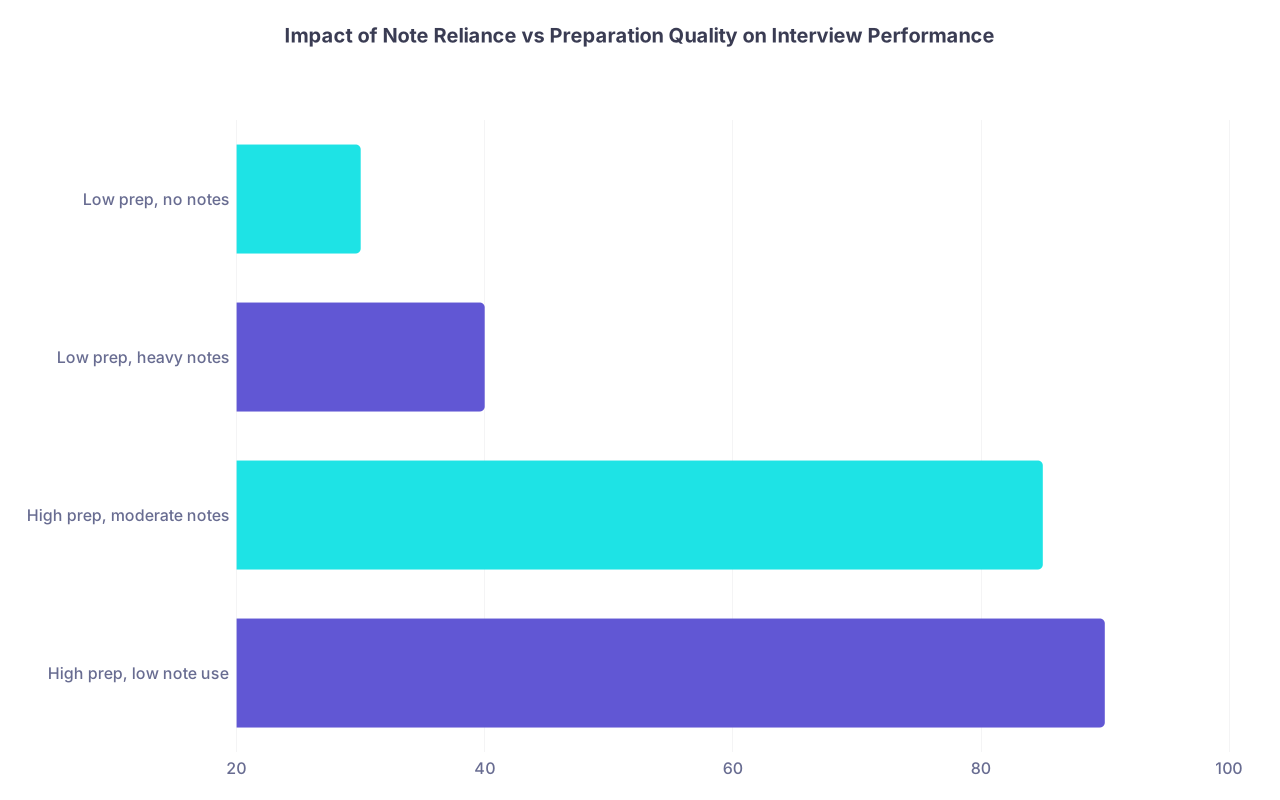
| Category | Value |
|---|---|
| High prep, low note use | 90 |
| High prep, moderate notes | 85 |
| Low prep, heavy notes | 40 |
| Low prep, no notes | 30 |
Translation: if your solution to not preparing is “I’ll just read my notes,” you’re done. Notes don’t replace knowledge of your own experiences, specialty, or the program.
How PDs and Faculty Actually Perceive This
I’ve sat in post-interview discussions where faculty said:
- “She was clearly reading something the whole time. Felt like talking to a transcript.”
- “His answers were polished but weirdly generic; I couldn’t get a sense of who he is.”
- “She clearly knew our program—mentioned the resident-led QI track. That stood out.”
Notice what they’re reacting to:
- Degree of reading vs talking
- Specificity about the program
- Sense of authenticity
They are not saying, “I suspect there was an index card under the camera. Automatic red flag.” No one cares at that level.
Another data point: in the many mock interviews I’ve done, the strong performers often admit afterward: “Yeah, I had my one-pager taped behind the laptop.” The faculty couldn’t tell. Or didn’t mind. Because the conversation still felt live.
A Practical Blueprint: How to Use Notes Without Looking Like You Are
If you want a simple, non-woo approach, use this:
Create one single page
- Divide into four quadrants: Stories, Program specifics, Themes, Questions for them.
Rewrite everything into 1–4 word prompts
- If you need more than that to remember the story, you do not know the story.
Place it at eye level directly around the webcam
- Taped behind the laptop, or on a stand just above it.
Do at least two full mock interviews with that exact setup
- Ask the mock interviewer to watch your eyes and tell you when it looks like you’re reading.
Final pass: shrink your notes
- Cross out anything you haven’t looked at in two mocks. You want the minimum effective dose by interview day.
Then stop obsessing. At some point, the marginal gain from adjusting your Post-it location is zero.
The Bottom Line: Is It Bad to Use Notes?
No. Using notes in virtual residency interviews is not inherently bad. What is bad:
- Reading long answers word-for-word
- Letting your eyes constantly flick away from the camera
- Treating notes as a substitute for genuine preparation
- Violating explicit instructions if a program somehow bans them
Used sparingly and intelligently, notes are a performance enhancer, not a liability. They keep your stories sharp, your program knowledge specific, and your anxiety under control.
You’re not being graded on whether you have a piece of paper nearby. You’re being judged on whether, through a screen, you come across as the resident they’d want on their team.
If a few discreet prompts help you do that better, use them—without apology.
Key points:
- Programs care about authenticity, engagement, and clarity, not whether a note card exists off-camera.
- Notes work when they are brief prompts near the camera, not full scripts you read from.
- Smart notes plus real preparation will beat “no notes + winging it” every single interview day.