
The residency interview you worked years for can be quietly sabotaged by your own social media. And most applicants are far too casual about it.
The Silent Committee Member: Your Online Footprint
Let me be blunt: programs do look you up. Not all. Not always. But enough that ignoring your online presence is reckless.
I’ve watched it happen:
- Faculty scrolls an applicant’s public Instagram between interviews.
- Chief resident pulls up a TikTok mid-committee: “Is this the same guy?”
- Coordinator flags an applicant’s Twitter thread for “unprofessional content.”
No one announces, “We’re rejecting you because of your Instagram.” They just say, “Maybe not a good fit,” and move on. You’ll never know you got filtered by a screenshot in a group text.
Do not comfort yourself with, “I use a fake name,” or “my account is private.” People are better sleuths than you think. Classmates tag you. Your username matches your email. Your face is on your profile picture from 2018. It connects.
If you’re entering interview season and you haven’t done a full audit of your online presence, you’re making a basic, avoidable mistake.
Let’s go through the red flags that quietly kill otherwise strong candidates—and how to fix them before your first Zoom or in‑person interview.
1. The “Totally Normal” Posts That Read As Unprofessional
Most problematic accounts don’t look outrageous at first glance. They look “normal.” That’s the problem. You’re seeing them as a friend. Programs see them as risk.
Common categories that burn people:
Alcohol and Party Culture
Is alcohol forbidden? No. Are you an adult? Yes. But residency leadership has a low tolerance for liability and drama.
Red flags:
- Table covered in shots, captioned: “Lost count after 12”
- Drunk selfies, sloppy faces, red eyes
- Posts joking about “blackout,” “hungover in clinic,” “post-call but still going out”
One PD I know literally said in a meeting: “I’m not taking responsibility for someone who brags about blacking out.” That’s it. Applicant off the rank list.
Fix:
- Delete anything that looks like binge drinking, hangovers, intoxication.
- If you insist on keeping some social life visible, make it boring: a glass of wine at dinner, a simple group photo without explicit alcohol focus.
Crude or Sexual Humor
This derails strong apps quickly.
Red flags:
- Sexual jokes, memes, or “thirst trap” style posts on public profiles
- Comments you’ve left on someone else’s suggestive post
- “Onlyfans” jokes, hook-up jokes, explicit references to sex
You’re not being evaluated as someone’s friend. You’re being evaluated as someone who’ll see patients and represent the program on hospital websites.
Fix:
- Delete anything you’d be embarrassed to have a 70-year-old attending or a 15-year-old patient’s parent see.
- If you have a spicy private account, double-check it is truly locked down and disconnected from your real name, school, and email.
Unfiltered Venting About School or Work
Residency assumes you can be frustrated without blowing up online.
Red flags:
- “My attending is an idiot”
- “My clinic patients are so annoying”
- “If you come to the ED for a cold, you deserve to wait 8 hours”
Even if you don’t say “patient,” they read this as a professionalism problem. And HIPAA risk. And maturity issue.
Fix:
- Delete all posts that insult colleagues, staff, faculty, or “patients” as a group.
- Delete subtweets about specific rotations, hospitals, or preceptors—even if unnamed.
2. The Big Three Career Killers: Patient Content, Protected Info, and Hospital Stuff
This one isn’t just about your image. It’s about your license someday.
Patient-Related Posts (Even “De-Identified” Ones)
Everyone thinks they’re safe because they didn’t post a name. That’s not how it works.
Red flags:
- “Wild case today—guy came in with [very specific scenario]”
- Photos in patient care areas (ER, clinic rooms) with even a hint of patient or chart visible
- “Things my patients say” style posts or TikToks
- “Code blue today… adrenaline rush”
I’ve seen residents have to explain old “funny patient story” tweets to their PD after a complaint. It’s awkward. It can cost you.
Fix:
- Remove every post that references clinical cases, no matter how vague.
- Delete any photo taken in a patient care area, unless it’s clearly sanctioned (like a group white coat ceremony photo) and no identifying info is remotely visible.
Hospital, Badge, and Chart Photos
Programs are twitchy about security, privacy, and optics.
Red flags:
- Photos of your ID badge up close
- Snapshots of computer screens, even blurry ones
- Selfies in the OR with monitors, X-rays, or names visible in the background
- TikToks filmed in hallways, workrooms, or patient rooms
Guess how this sounds to a PD: “This person uses work areas as Instagram content.”
Fix:
- Delete anything with badges, charts, whiteboards, or screens.
- Scrap all OR selfies unless you have explicit permission and absolutely no identifiers exist.
“Education” Posts That Walk Too Close to the Line
Some applicants run teaching accounts. That can be great. It can also go bad.
Red flags:
- “Case of the day” that’s obviously from your hospital last week
- Sharing stories with timing or specifics that staff could recognize
- Photos of specimens, pathology, wounds, or procedures that look sensational
If you’re not 100% confident it’s compliant and professional from a hospital compliance officer’s standpoint, don’t post it. Definitely not under your real name while applying.
Fix:
- Remove recent case-based posts that could be traced to your institution.
- If you want to keep an “education” account, make sure it’s generic, timeless, and not your main identity during interview season.
3. Trash-Talking and Toxicity: You Look Hard to Work With
Programs care a lot about whether you’re going to be miserable to supervise. Social media can scream “problem resident” very quickly.
Attacking Schools, Programs, or Institutions
Red flags:
- “My med school is trash”
- Rants about “toxic” departments with enough detail to identify them
- Public fights with faculty, administrators, or other students
Behind closed doors, almost everyone complains. In public, the people who do it loudly look like future HR headaches.
Fix:
- Take down rants about any institution by name (or that can be recognized by context).
- If a program Googles themselves and sees your negative post, you’re done there.
Constant Negativity and Sarcasm
Some feeds ooze bitterness.
Red flags:
- Repeated posts about “I hate people,” “I hate medicine,” “everyone is stupid”
- Long threads of sarcastic, cruel quote-tweets
- Cyber-bullying or dogpiling on strangers
Programs don’t want to integrate chronic cynicism into an already stressed team.
Fix:
- Archive or delete old angry threads.
- If your whole “brand” is bitter sarcasm, at least make it private and non-identifiable during applications.
Fighting in Comment Sections or DMs
People do check reply histories.
Red flags:
- Arguments about politics that descend into personal attacks
- Calling people names
- Screenshots floating around of you flaming someone
You might think, “It’s my personal opinion.” They see, “Short fuse, poor judgment, bad team fit.”
Fix:
- Delete, untag, and unlike heated arguments.
- Going forward, if you can’t say it in a team meeting without getting written up, don’t type it with your real name.
4. Political, Religious, and Controversial Content: Where It Actually Hurts You
No, you don’t have to scrub your identity, beliefs, or values. But you’d be naïve to pretend content never affects decisions.
Programs aren’t supposed to discriminate based on political or religious beliefs. But people are human. If your profile is essentially one long political battleground, someone on that committee may decide “this is not the energy I want in my resident room at 3 a.m.”
Extreme, Aggressive, or Dehumanizing Posts
Red flags:
- Calling entire groups “idiots,” “evil,” “subhuman,” etc.
- Posts celebrating violence or wishing harm on groups
- “If you vote X, unfollow me, you’re trash”
Now imagine how this looks in a diverse patient population—or diverse residency class.
Fix:
- Delete anything that dehumanizes or encourages hostility.
- You can keep strong beliefs without sounding like a walking lawsuit.
Conspiracy and Misinformation Content
This one is obvious and still widespread.
Red flags:
- Anti-vaccine content
- Anti-science conspiracy theories
- Posts denying widely accepted medical facts
Medicine is still based in science. Programs are not amused by someone loudly contradicting that in public.
Fix:
- Remove posts that could reasonably be labeled “medical misinformation.”
- If you’ve changed your mind since posting, quietly clean it up.
5. The “Branding” Trap: Over-Curated, Influencer-Style Accounts
There’s another, subtler problem: being too calculated online.
Programs don’t necessarily love:
- The hyper-influencer med student brand with sponsorships everywhere
- The “future neurosurgeon, CEO, content creator, thought leader” aesthetic
- The account that feels like it’s always filming instead of working
I’ve heard variations of: “Do they want to be a doctor, or do they want to be famous?”
Red flags:
- Constant “get ready with me for rounds” videos from the hospital
- Ads and sponsorships overshadowing any real medicine or learning
- Emphasis on glamour and prestige over patients and teamwork
Fix:
- During application season, dial down the “look at my perfect doctor life” content.
- If your account is big, strongly consider: add a low-key, boring LinkedIn-style profile under your real name, and let that be what’s easily searchable.
6. “Private” Isn’t Private: Bad OPSEC Mistakes
The sloppiest mistake is assuming your stuff can’t be found.
Here’s how you actually get exposed:
- Your full name is attached to your Instagram handle via a link in your email signature or website.
- Your med school’s student affairs follows your account.
- You appear in tagged photos from classmates, even if your own profile is private.
- Someone screenshotted your tweet and sent it to a group chat… three years ago.
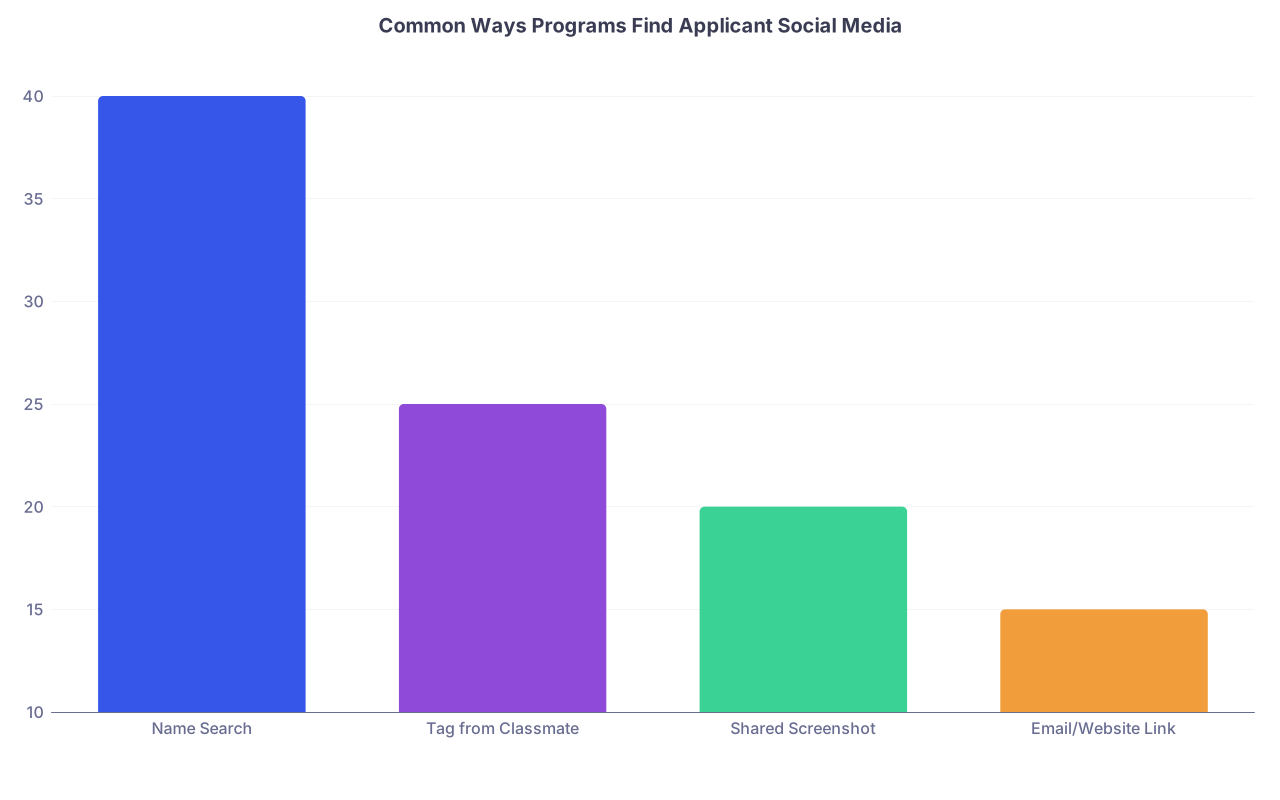
| Category | Value |
|---|---|
| Name Search | 40 |
| Tag from Classmate | 25 |
| Shared Screenshot | 20 |
| Email/Website Link | 15 |
Audit Checklist (Do Not Skip This)
Do this before your first interview invite:
- Google your full name (with and without middle initial, plus “MD” or “medical student”)
- Try your school email handle as a username on major platforms
- Check image search results for old pictures
- Look at “Photos of You” or tagged sections on Instagram and Facebook
- Search Twitter/X for your name and for any old handles you’ve used
Then:
- Lock down accounts you want to keep: set to private, remove identifying info, unlink from professional email.
- Clean public accounts: assume any post can be shown on a projector in front of a selection committee.
If you’re thinking “This is overkill,” you’re not understanding how small residency communities are.
7. How to Clean Up Fast Without Looking Fake
You don’t need to become a ghost. But you do need to stop self-sabotaging.
Step 1: Decide Which Online Identities Survive
Use a simple split:
| Account Type | Status |
|---|---|
| Professional LinkedIn | Public, polished |
| Old Facebook | Private, locked down |
| Personal Instagram | Private or heavily cleaned |
| TikTok/Reels account | Private or paused |
| Twitter/X | Clean and cautious, or locked |
If an account doesn’t add obvious value to your professional reputation and might contain landmines, either:
- Make it private and non-identifiable, or
- Delete it, at least temporarily.
Step 2: Use the “Would I Say This In Conference?” Test
Go post by post and ask:
“Would I be okay with this projected behind me while the PD and residents watch?”
If the answer is “no” or even “I’d be a bit uncomfortable,” delete or archive it. Do not overthink. You don’t get extra points for “bravery” here.
Step 3: Align Your Online and Interview Persona
Another subtle red flag: a mismatch between who you present as and who you seem to be online.
Example:
- In interviews: “I really value humility, teamwork, and patient advocacy.”
- Online: endless posts about how “other med students are dumb” and “patients are annoying.”
Programs notice. Humans are good at sniffing out inconsistency.
Clean up so that:
- Your socials reflect your real values—caring about patients, learning, working hard, being respectful.
- At minimum, they don’t contradict what you say in your personal statement or interviews.
8. Acceptable, Safe, Even Positive Uses of Social Media
This isn’t all doom. Social media can actually help you—if you don’t get cute.
Reasonably safe content:
- Neutral hobbies: running, cooking, photography, travel (without wild partying)
- Family, pets, non-controversial life updates
- Professional achievements: posters, match announcements, graduation
- Genuine, respectful reflections on training and growth
- Simple, non-case-specific educational posts (“Basics of hypertension,” “How vaccines work,” etc.)
Some programs even like seeing:
- Evidence of teaching and mentorship
- Thoughtful advocacy work presented professionally
- Reasonable engagement in the med community (sharing articles, attending conferences)
The key: nothing should scream “lawsuit,” “PR disaster,” or “this person will be high-maintenance.”
9. A Simple Pre-Interview Social Media Protocol
Use this as a last check.

| Step | Description |
|---|---|
| Step 1 | Start |
| Step 2 | Google yourself |
| Step 3 | Delete/clean content |
| Step 4 | Review main accounts |
| Step 5 | Lock down or sanitize |
| Step 6 | Verify LinkedIn/pro profile |
| Step 7 | Stop posting risky content |
| Step 8 | Ready for interviews |
| Step 9 | Any problematic hits? |
| Step 10 | Any public personal accounts? |
If you’ve got an interview coming up:
- Do the full audit 2–4 weeks before peak interview season.
- Then stop posting anything remotely borderline until after Match.
- If a program follows you or likes a post, take that as a warning: they’re probably looking.
FAQ (Exactly 5 Questions)
1. Do residency programs really look at social media, or is this just fear-mongering?
Some do it systematically. Some do it casually. Some don’t have time. The problem is you won’t know which is which. All it takes is one resident or coordinator Googling you out of curiosity and stumbling on something bad. I’ve personally seen applicants discussed in ranking meetings because of their online content. You don’t want to be “that slide.”
2. Is it better to delete my accounts completely or just make them private?
If your accounts are messy, private is the bare minimum. Deleting can help if you’re worried things will surface or be screenshotted out of context. However, most people are fine with: professional LinkedIn/public profile + private, low-risk personal accounts. Just don’t leave a half-cleaned, half-public mess tied to your real name.
3. Can I talk about burnout, mental health, or frustration with medicine online without hurting my chances?
You can, but you need to be thoughtful. Honest reflections about burnout, with a focus on solutions and professionalism, are usually fine—even respected. What hurts you is content that looks unstable, hostile, or contemptuous of patients/colleagues. Saying “medicine is hard and we need better systems” is very different from “I hate my patients and this career is a joke.”
4. What if a red flag post is really old—like from before med school? Do they still care?
Age helps, but content still matters. A racist tweet from six years ago doesn’t get a free pass just because it’s old. If there’s anything you’d have trouble defending with a straight face in front of a PD who printed it out, delete it. If asked (rare, but possible), you can say you removed old content that no longer reflects who you are.
5. Should I ever bring up my social media in the interview as a “strength”?
Only if it’s clearly professional and adds real value: a well-run education page, advocacy work, or research communication that’s obviously high quality and compliant. Do not oversell a marginal account. And definitely don’t volunteer a handle that contains borderline jokes, case stories, or anything you’d just spent an evening scrubbing.
Keep this simple:
- Assume someone from a program will see your online presence.
- Delete anything you wouldn’t be comfortable projecting behind you on interview day.
- Let your social media be boring, safe, and unremarkable during interview season—so the only thing they remember is how strong you were in the actual interview.