
It’s 7:10 p.m. You’re at the pre‑interview social for a program you’d actually be happy to match at. You’re holding a sweaty cup of club soda, standing with three residents who look like they haven’t slept since PGY-1 orientation.
One cracks a joke about the call room coffee. Another drops an f‑bomb about a rough trauma case. They’re in scrubs. You’re in business casual. It feels relaxed. Safe.
And then you make the mistake.
You laugh a little too hard and say, “Yeah, I mean, I basically coasted through third year. Just did what I had to for honors.”
Or: “Honestly, I’m ranking anywhere that isn’t malignant. I don’t have time for toxic programs.”
Or: “I’m definitely not one of those gunners—I’m all about lifestyle.”
You see it. The tiny shift in their faces. The half-second pause. The polite nod. That’s the “we’re done here” moment.
This is the too casual trap. And it burns more applicants than low Step scores.
Let me walk you through the landmines so you don’t nuke yourself over free appetizers and lukewarm iced tea.
Mistake #1: Forgetting These Chats Are Part of the Interview
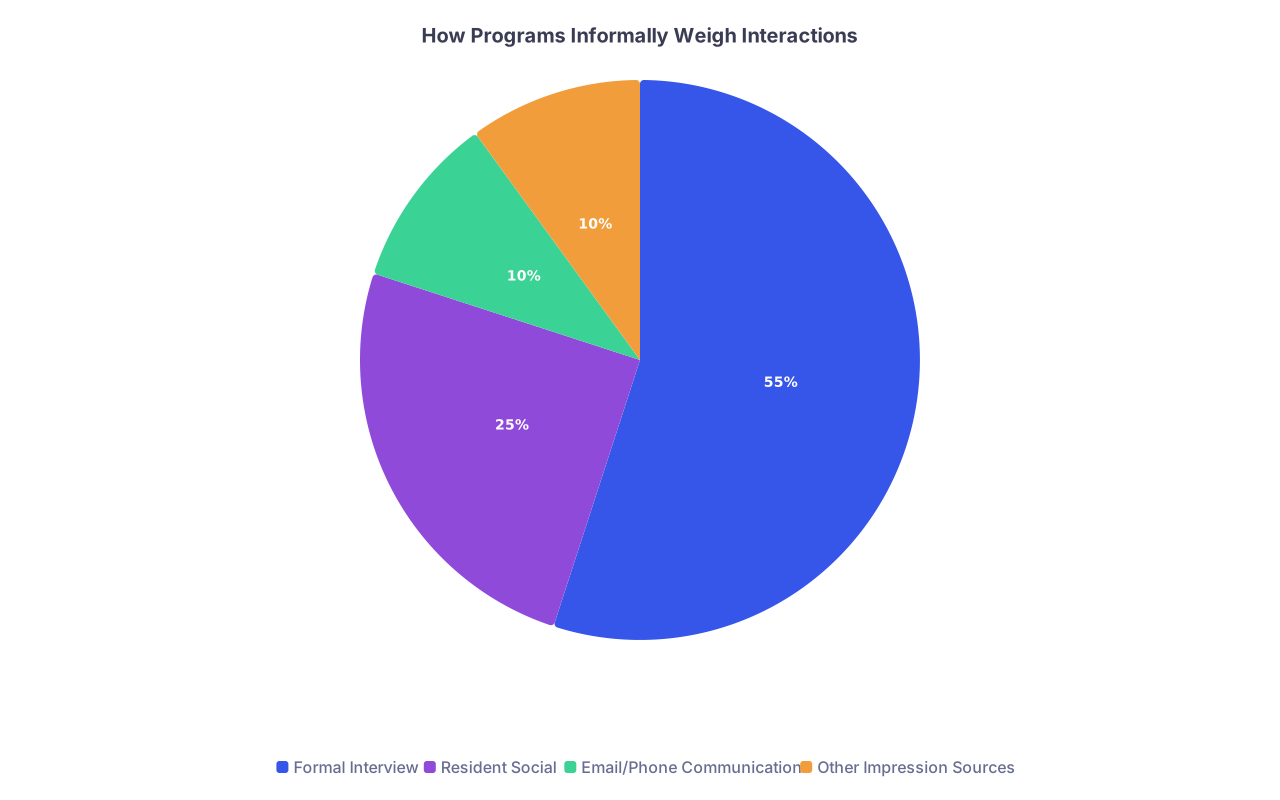
| Category | Value |
|---|---|
| Formal Interview | 55 |
| Resident Social | 25 |
| Email/Phone Communication | 10 |
| Other Impression Sources | 10 |
People love to tell you, “The social is just for you to get a feel for the program. It’s not evaluated.”
That’s… technically untrue. Or at least dangerously incomplete.
Do programs give you a score for “pre‑interview small talk”? Usually not.
Do they ask residents, “So, how were the applicants?” Absolutely yes.
The trap:
You believe “off the record” means “doesn’t matter.”
What actually happens:
- The PD turns to the chief the next day: “Anyone we should be excited about—or worried about?”
- A resident casually says, “That one applicant was kind of dismissive about working hard” or “She made a weird joke about not liking certain patient populations.”
- That comment doesn’t get you automatically rejected. But if you’re borderline? It pushes you down. And that’s enough.
Red flags you’re slipping into the “it doesn’t count” mindset:
- You drink like you’re at a wedding, not at a work event.
- You’re gossiping with residents about other programs or your classmates.
- You’re oversharing personal drama because “they’re close to my age; they get it.”
Safer mindset:
Every interaction from the first email to the last “thank you for interviewing me” is part of the interview. The setting changes. The stakes don’t.
If you wouldn’t say it sitting across from the PD in a suit, don’t say it over nachos in a bar either.
Mistake #2: Matching the Residents’ Level of Casual… Instead of Staying One Level Up

This one gets people. Because it feels intuitive to copy the vibe you’re given.
Residents:
- Swear
- Complain about consults
- Make dark humor references about night float
- Roll their eyes about administration
You think: “Okay, this is safe space. I can relax.”
Wrong. They can relax. You are still being evaluated, whether anyone says that out loud or not.
I’ve watched this play out in real time:
- Residents joking: “Yeah, we definitely ignore consults from that one service for a bit if we’re slammed.”
- Applicant laughs and says: “Haha, yeah, totally, I used to just ignore pages from this one attending on surgery. He was the worst.”
Guess what stuck with the residents? Not the harmless joke. The part where the applicant openly admitted ignoring pages. That shows judgment. Reliability. Professionalism. All in question.
Your rule:
Stay one notch more professional than the most casual resident in the group.
That means:
- If residents are swearing, you don’t need to scold them—but don’t start dropping f‑bombs yourself.
- If they’re venting about work hours, you can empathize, but don’t go off on your own rant about “abusive” systems.
- If they’re making dark jokes, you just don’t join in. A small smile, nod, and redirect.
Example – bad vs better:
Resident: “Our ED can be a disaster on weekends.”
- Bad: “Oh man, I hate the ED at my med school. The nurses are so dramatic and the attendings are lazy.”
- Better: “Yeah, weekends can be rough. I’ve seen how chaotic it gets. What kind of support do you get overnight when it’s really bad?”
You’re still real. You’re just not trashing anyone.
Mistake #3: Oversharing Personal Life Like You’re at Brunch, Not at Work
| Topic Type | Usually Safe to Share | Usually Risky to Share |
|---|---|---|
| Hobbies | Hiking, running, music, travel | Partying, clubbing, heavy drinking |
| Family | Siblings, partner, kids | Ongoing family drama, custody battles |
| Stress relievers | Exercise, cooking, reading | “I just shut down/avoid people” |
| Relationships | “My partner is supportive” | Messy breakups, cheating, poly drama |
| Health | “I like to stay healthy” | Detailed psych admissions, substance use |
The social is not therapy. It’s not a group chat. It’s not your roommate’s couch.
You do not need to prove how “honest” and “authentic” you are by dumping your entire psychological profile on a stranger in a branded fleece.
Where people blow it:
- Talking at length about their anxiety, depression, burnout, or med school breakdowns in graphic detail.
- Sharing stories of heavy drinking, blackouts, or recreational drug use.
- Revealing messy relationship issues (“My ex keeps showing up to my rotations, it’s wild.”).
- Confessing they almost failed or got written up for unprofessional behavior—then joking about it.
You’re allowed to:
- Be human.
- Have struggles.
- Need therapy or meds.
- Have had a rough time in training.
You’re not obligated to disclose it casually at a work function.
Better rule:
If it belongs on an occupational health form, in a therapist’s office, or in academic probation paperwork, it does not belong in small talk at a residency event.
Version of oversharing I’ve heard:
“I had to take some time off MS3 year because I just completely shut down. I stopped showing up, I just couldn’t deal. But I’m better now.”
Even if that’s true and admirable? Wrong setting. Wrong audience. Wrong level of detail.
If they ask about a gap or leave of absence in a formal interview, answer honestly and concisely. The pre‑interview social is not the place to pre‑emptively unpack it all.
Mistake #4: Trashing Other Programs, Schools, or Colleagues

| Step | Description |
|---|---|
| Step 1 | Resident mentions long hours |
| Step 2 | You agree politely |
| Step 3 | You trash talk school/program |
| Step 4 | You ask neutral follow-up |
| Step 5 | Residents see you as unprofessional |
| Step 6 | Conversation stays safe |
| Step 7 | Do you vent about others? |
This one is poison. And people drink it constantly.
Typical versions:
- “Yeah, I interviewed at [X program] and it was super malignant. The residents looked miserable.”
- “My med school is so disorganized. Admin is incompetent.”
- “Honestly, the students at my school are so cutthroat. I can’t stand most of them.”
- “I rotated at [Hospital Y] and would never go back. Their residents are idiots.”
Here’s what you’re accidentally broadcasting:
- You’re comfortable speaking badly about colleagues behind their backs.
- You don’t understand discretion.
- You lack perspective—because you definitely have no real insight into how any program actually is from a one-day visit.
What residents hear is not “this person is honest.” They hear “this person will absolutely talk about us like this later.”
Safer alternatives:
Instead of:
“X program was terrible, the residents looked dead inside.”
Try:
“I didn’t feel like the culture was the best fit for me. I tend to do better in places where residents seemed more relaxed and supported.”
Instead of:
“My school’s admin is a joke.”
Try:
“We had some challenges with scheduling and communication, but I learned to be pretty proactive and flexible because of it.”
You can share your impressions and preferences. Just don’t go scorched earth.
Mistake #5: Getting Too Honest About Work Ethic and Lifestyle
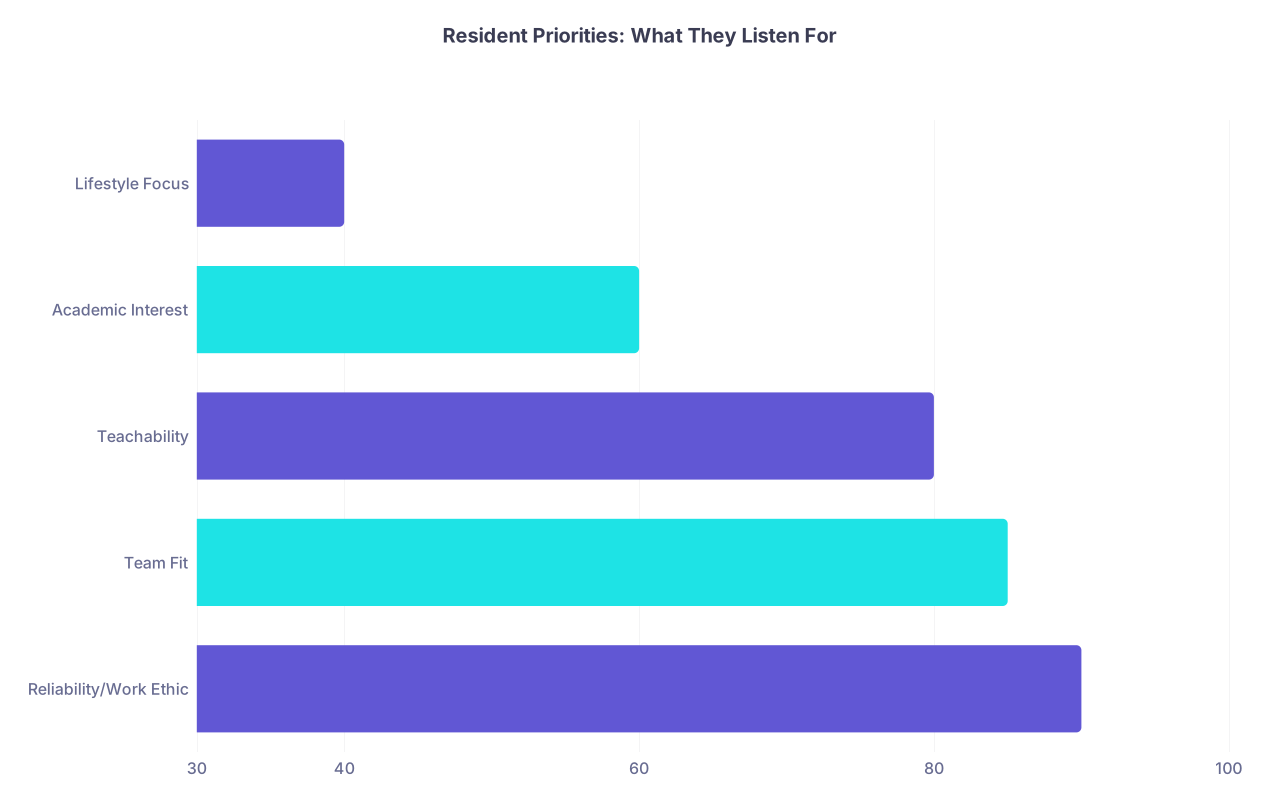
| Category | Value |
|---|---|
| Reliability/Work Ethic | 90 |
| Team Fit | 85 |
| Teachability | 80 |
| Academic Interest | 60 |
| Lifestyle Focus | 40 |
Residents care deeply about their future co-residents. Translation: they’re scanning you for “Will I suffer working with this person for 3–7 years?”
What does not reassure them?
Lines like:
- “I’m not trying to kill myself in residency. Lifestyle is really important to me.”
- “I did the minimum I needed for honors—no need to overdo it.”
- “I’m not super into research or academics; I just want a chill job.”
- “I’m not about that ‘above and beyond’ life. Pay me for my time.”
You think you’re just being honest. What they hear:
- “I won’t pick up slack.”
- “I’m already planning to do the bare minimum.”
- “I don’t understand that residency is hard work, no matter what.”
You can talk about wellness. You should. But do it intelligently.
Good way to frame it:
- “I work hard and I care a lot, but I’ve learned that having some structure around rest is what lets me show up well for patients.”
- “I’m drawn to programs that take resident wellness seriously because I’ve seen how burnout affects patient care.”
You’re signaling:
- You take the work seriously.
- You want to be functional, not fragile.
- You get that “lifestyle” isn’t a free pass; it’s about sustainability.
What you absolutely should not do is position yourself as someone who expects residency to be easy, breezy, and 9‑to‑5. Even at the “chill” programs, residents know that’s fantasy.
Mistake #6: Alcohol as a Personality Enhancer

If alcohol is present, it’s a professionalism test. Every single time.
Programs love to say, “Get a drink, relax!” Some even buy rounds. They want you to feel comfortable. That does not mean you should act like you’re at a med school bar night.
Common disasters:
- Getting visibly tipsy—louder, looser, more animated than anyone else.
- Saying things you’d never say sober because “it’s just us.”
- Sloppy body language: leaning too close, touching people, oversharing.
- Arguing, being contrarian, “joking” in ways that land badly.
Unfair reality: One slightly drunk comment will be remembered more vividly than 30 minutes of you being charming and thoughtful.
Safe rules:
- 0–1 drink max. If you’re small, tired, or have an empty stomach, stick to 0.
- Nurse it. You’re not there to finish a drink, you’re there to have a prop in your hand.
- If you know you get looser even with one drink, skip it entirely.
No one is ranking you higher because you downed an IPA and “fit in with the bros.”
But they might rank you lower if you became That Applicant.
Mistake #7: Using Dark Humor or Edgy “Jokes” to Bond
This one burns people who desperately want to be seen as “one of them.”
You’ve heard residents and attendings use dark humor to cope with trauma. You’ve laughed along when people make brutally honest, borderline offensive jokes. You think: “If I can riff like that, they’ll see I’m not naïve.”
Here’s the problem: they’ve earned that space with each other. You haven’t.
Risky attempts that backfire:
- Jokes about specific patient populations (obesity, substance use, psych patients, frequent flyers).
- Comments about how “annoying” certain kinds of patients are.
- Sarcastic remarks about “noncompliant” patients or “drug seekers.”
- Political or religious jabs disguised as humor.
Residents might not call you out in the moment. But they absolutely will debrief later with, “Yeah… that one applicant said some weird stuff about patients.”
More subtle version:
Resident: “We get a lot of really complex psych cases in the ED.”
You: “Ugh, psych patients are the hardest. I just hate those never-ending encounters.”
Better version:
You: “Those can be really challenging. I’ve seen how draining it can be for both patients and staff. How does your ED support residents on those days?”
You can acknowledge difficulty without dehumanizing anyone.
Mistake #8: Acting Like You’re Already a Resident There

| Step | Description |
|---|---|
| Step 1 | You feel comfortable |
| Step 2 | Do you overshare/opine? |
| Step 3 | You act like insider |
| Step 4 | You stay as guest |
| Step 5 | Residents feel boundary issues |
| Step 6 | Residents see you as respectful |
There’s a particular kind of applicant residents dislike: the one who starts acting like they’re already part of the inside circle on day one.
You’ll recognize it in phrases like:
- “When I’m here next year, we should totally do X.”
- “You guys should really change your Y system. At my school we did Z which is way better.”
- “Honestly if you just pushed back on your PD more, things would improve.”
- “They need to give you guys more autonomy—that’s ridiculous.”
You’ve known these people for an hour. You’ve seen a tiny sliver of their world. Acting like you understand their system better than they do is arrogant, even if you think you’re being “helpful” or “advocating.”
You are a guest. In their house. In a system they’ve lived in for 1–4 years.
Better stance:
- Ask why things are the way they are.
- Ask how they feel about those realities.
- Ask what they wish could be different.
But don’t immediately start prescribing solutions or talking like their future savior. You haven’t earned that yet.
Mistake #9: Being Weirdly Negative, Cynical, or Jaded

Residency is hard. Medicine is broken in a thousand ways. Everyone knows this. But if your entire conversational vibe is “burned out disgruntled doctor before you even start PGY‑1,” that stands out. In a bad way.
Things that give off that energy:
- Constant complaints about med school: admin, classmates, curriculum.
- Heavy sighing, eye-rolling, sarcastic responses to almost everything.
- Talking more about what you hate in medicine than what you like.
- Dismissing people who are still enthusiastic as “naïve” or “gunners.”
Residents are tired. Many are jaded. But they still want colleagues who have at least a pilot light of motivation and hope. Someone they won’t have to emotionally drag through every shift.
You don’t have to be fake-cheerful. Just don’t turn the conversation into a 45‑minute doom spiral.
Tiny shift that helps:
- Instead of: “Medicine is so broken, I’m already burned out.”
- Try: “I’ve seen how tough the system can be, and I’m trying to find ways to stay grounded and focus on where I can still make a difference.”
Same reality. Very different impression.
How to Stay Safe: A Simple Mental Checklist
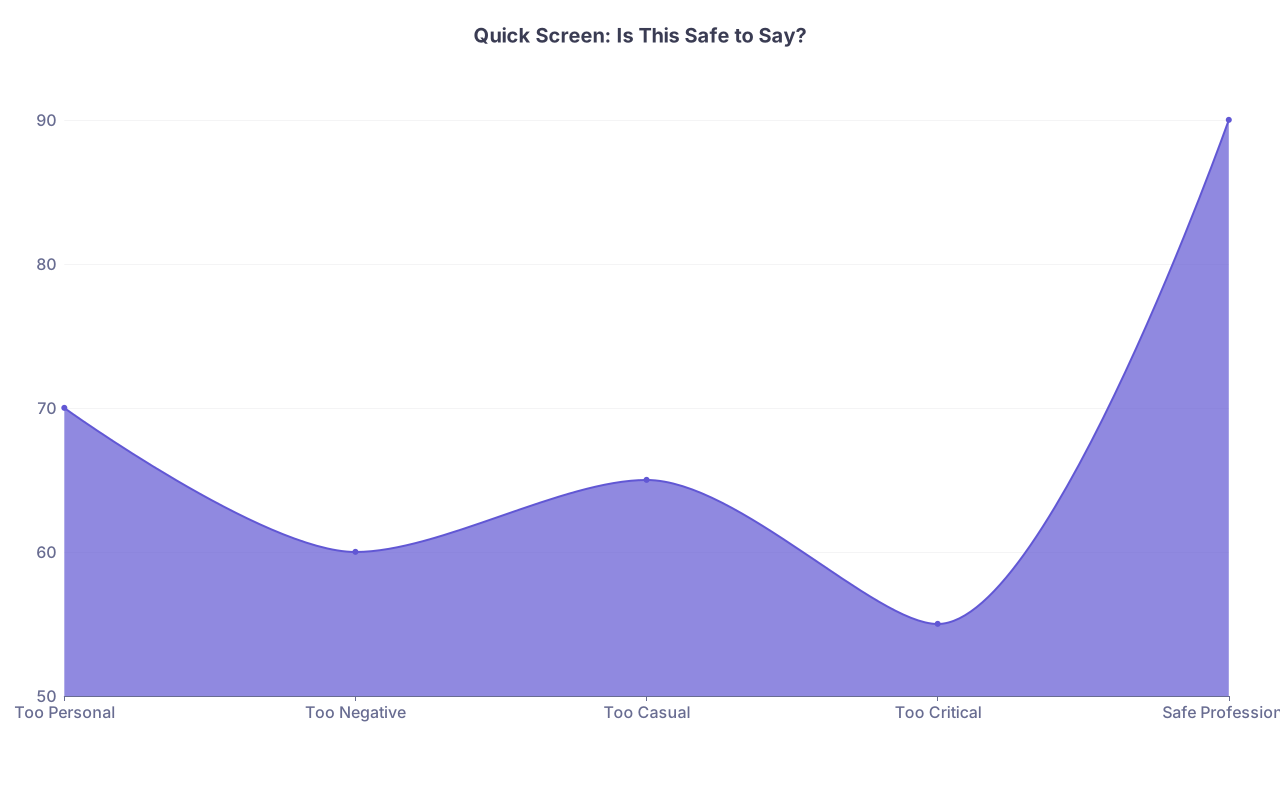
| Category | Value |
|---|---|
| Too Personal | 70 |
| Too Negative | 60 |
| Too Casual | 65 |
| Too Critical | 55 |
| Safe Professional | 90 |
Before you say something at a residency social, run it through a quick filter:
Ask yourself:
Would I be okay with the PD hearing this, quoted word for word?
If not, don’t say it.Does this make me sound lazy, unreliable, or hard to work with?
Even as a “joke”? Skip it.Am I talking badly about specific people, places, or groups?
If yes, reframe or shut up.Am I trying to impress them by being edgy, cynical, or “real”?
That impulse almost always backfires.Is alcohol amplifying what I’m saying?
If you feel looser than you’d be at 10 a.m. in clinic, rein it in.
If you’re not sure, err on the side of being slightly boring but clearly professional. No resident ever said, “We shouldn’t rank them; they were too appropriate at dinner.”
Last Thing: What Residents Actually Want to See

Despite how harsh all this sounds, residents are not out to get you. Most of them genuinely want to like you. They want to help you figure out if their program is a good fit.
You make that easy when you:
- Ask sincere questions about their experience without interrogating them.
- Listen more than you talk, especially at the beginning of the night.
- Share enough about yourself to seem real, but not so much that they feel like your therapist.
- Show that you understand residency is hard work and you’re ready to show up.
- Treat everyone—co-applicants, staff, servers, residents—with the same respect.
If you remember nothing else, keep this in your head walking into every “casual” chat:
- This is still part of the interview. Dress your words accordingly.
- Don’t try to “match the vibe.” Stay one step more professional.
- Honesty is good. Unfiltered, unbounded honesty at a work event is not.
You don’t need to be perfect. You just need to avoid the obvious cliffs.