
What If I Have No Questions to Ask at the End of the Interview?
What actually happens in that awful moment when the interviewer says, “So… what questions do you have for us?” and your brain just… blanks?
Because that’s the nightmare, right? You’ve survived the behavioral questions, the “tell me about yourself,” the red-flag rotation, the whole “so why this specialty?” monologue—and then you get to what should be the easy part… and you have literally nothing.
Let me say this really clearly:
You are not the first applicant to sit there with no questions.
And no, it does not automatically tank your chances.
But. It can look bad if you handle it the wrong way.
Let’s walk through this like someone who is catastrophizing every scenario (so… us), but also wants to be prepared enough that it doesn’t actually become a disaster.
Is It Actually Bad to Have No Questions?
Short version: It can be a small negative signal, but it’s not a fatal wound unless you make it awkward or obvious that you didn’t prepare.
Here’s what interviewers think when you have no questions:
Best-case interpretation:
“They probably got most of their questions answered during the day. They seem pretty content and well-informed.”Neutral interpretation:
“They’re a little nervous / tired / overwhelmed. Whatever.”Worst-case interpretation:
“They’re not that interested in our program or they didn’t do much prep.”
Guess which interpretation they default to?
Depends on how you respond and how the rest of your interview went.
If you’ve been engaged, asking organic follow-up questions earlier in the conversation, and clearly know the basics of the program, having no big questions left is fine. Happens all the time.
Where it looks bad is when:
- You’ve barely spoken the whole time
- You’ve asked zero questions anywhere during the interview day
- And then at the end you shrug and say, “Nope, I’m good.”
That can read as disinterest. Or like you’re just trying to get out of there.
So the goal isn’t: “I MUST have brand-new, never-before-asked questions at the end.”
The goal is: “I need at least something thoughtful to say so I don’t look like I rolled in here unprepared or uninterested.”
Why Do I Suddenly Have No Questions?
Let’s be honest about what’s really going through your head in that moment.
It’s not that you genuinely have zero curiosity about a program where you might spend 3–7 years of your life. It’s usually one (or more) of these:
They already answered your prepared questions during the day.
You wrote down “How is feedback delivered?” and they just spent 20 minutes talking about their feedback system. So now your list feels useless.You’re mentally fried.
After your third 30-minute Zoom interview of the day, your brain is mush. You’re just trying not to say something unhinged.You’re afraid of asking a “bad” question.
Like you’ll accidentally ask something that makes you sound lazy, entitled, or like you didn’t read the website.You feel like you should ask something profound.
Something that proves you’re unique and insightful and “a good fit.” But nothing feels smart enough, so you freeze.
All of this is normal. Interview fatigue is real. I’ve seen strong applicants completely blank on their 7th interview day and feel like they ruined everything because they said, “I think you’ve covered most of my questions.”
They didn’t. They still matched. But they stressed about it for months.
The Safe-Response Script When You Truly Have No Questions
Let’s say the worst happens. You’re sitting there, they say, “What questions do you have for me?” and your brain is screaming, “NONE, I HAVE NONE, I JUST WANT TO LIE DOWN.”
You still have options.
If you have nothing specific, use a structured, safe response that:
- Shows you were paying attention
- Signals you prepared in advance
- Expresses genuine interest in the program
- Doesn’t sound like, “Nope, I’m good, bye”
Here are a few plug-and-play responses you can memorize.
Option 1: “You already answered most of my questions”
This is the safest, easiest default.
“I actually had a list of questions prepared, but you’ve answered almost all of them throughout the interview day, which I really appreciate.
I guess one thing I’d still be curious about is: [insert broad, reflective question—see next section].”
So you’re not saying, “I have no questions.”
You’re saying, “I took this seriously, did my homework, and you were thorough.”
Option 2: Ask about their experience
When your brain is empty, shift focus to them.
“I’d really like to hear your perspective: what do you think residents here appreciate most about this program?”
or
“What keeps you excited about working with residents at this program?”
Interviewers love talking about themselves and their program. This is low-risk, doesn’t require insane creativity, and still makes you look engaged.
Option 3: Future-oriented + genuine enthusiasm
If you really, truly feel like everything concrete got covered:
“Most of my nuts-and-bolts questions were answered during the day. I’m honestly just excited about what I’ve heard so far.
If you had to describe the kind of resident who really thrives here, what qualities or habits do they usually have?”
This secretly does two things:
You still ask a question.
And you also get a cheat code for what the program values.
Pre-Built “Backup” Questions You Can Always Use
You should have a short “emergency list” of questions you save for the end, no matter what.
Not your whole list—just 2–4 questions simple enough that you can ask them, even with brain fog, without sounding repetitive.
Here are some that are almost always safe, even if you feel like others have touched similar topics:
- “How would you describe the culture between residents on your service?”
- “What changes or improvements has the program made in the last 1–2 years?”
- “How does the program support residents who are struggling—academically, clinically, or personally?”
- “If I matched here, what could I do before starting to set myself up for success as an intern?”
- “How do graduates from this program typically feel about their preparation for fellowship or independent practice?”
These are broad, program-focused, and don’t make you look like you missed basic info on the website.
Questions That Actually Hurt You (Even if You’re Desperate)
The fear isn’t just “I have no questions.” It’s also: “What if I ask a dumb one?”
There are questions that can hurt you. Especially at the end.
Here are the ones I’d avoid as your closing note:
Anything that’s clearly on the website
“How many residents are there per year?”
“Do you have a night float system?”
This makes it look like you did zero homework.“So… how do you think I did today?”
Feels insecure and puts them in an awkward position. Also, they’re not allowed to really answer.“Where would you rank this program among others?” (yes, people have asked variations of this)
Comes across as arrogant + clueless about the match rules.Hyper-specific scheduling questions as your final impression
“How many weekends off will I get?”
“Can I switch vacation blocks with co-residents?”
Those can be valid questions, but as your very last impression? It can sound like you’re very schedule-focused and not much else.“What are my chances of matching here?”
They can’t answer this, and it makes everything awkward.
You can ask about call, schedule, or vacation sometime during the day, especially if residents bring it up. Just don’t let your last question sound like you only care about time off.
How to Prepare So You’re Never Fully Blank
You can’t stop your brain from occasionally short-circuiting. You can make it way less likely that you end the interview with, “Uhhhh, I think I’m okay.”
Here’s a simple structure.
1. Create a 3-layer question list for each program
Not 47 questions. You’ll never use them.
Think:
- 2–3 “must ask the residents” questions
- 2–3 “ask attendings/faculty” questions
- 2 “end-of-interview backups” you intentionally don’t use earlier
You can keep the end-of-interview ones the same for most programs, and tweak 1 line to make them more specific.
2. Write them down physically
Not just in your head.
On Zoom: keep a small notebook next to your laptop. In-person: a padfolio with your questions written inside.
Then if you freeze, you can literally say:
“Let me just glance at my notes—I had a couple of things I was saving for the end.”
They like that. It shows you prepared.
3. Expect your questions to get “stolen” during the day
Assume 50–70% of your list will get answered during the intro session, resident Q&A, or earlier interviews.
That’s good. That’s the point.
But your backup questions? Guard those like a dragon hoarding gold. Don’t burn them early unless the conversation naturally leads there and it would be weird not to ask.
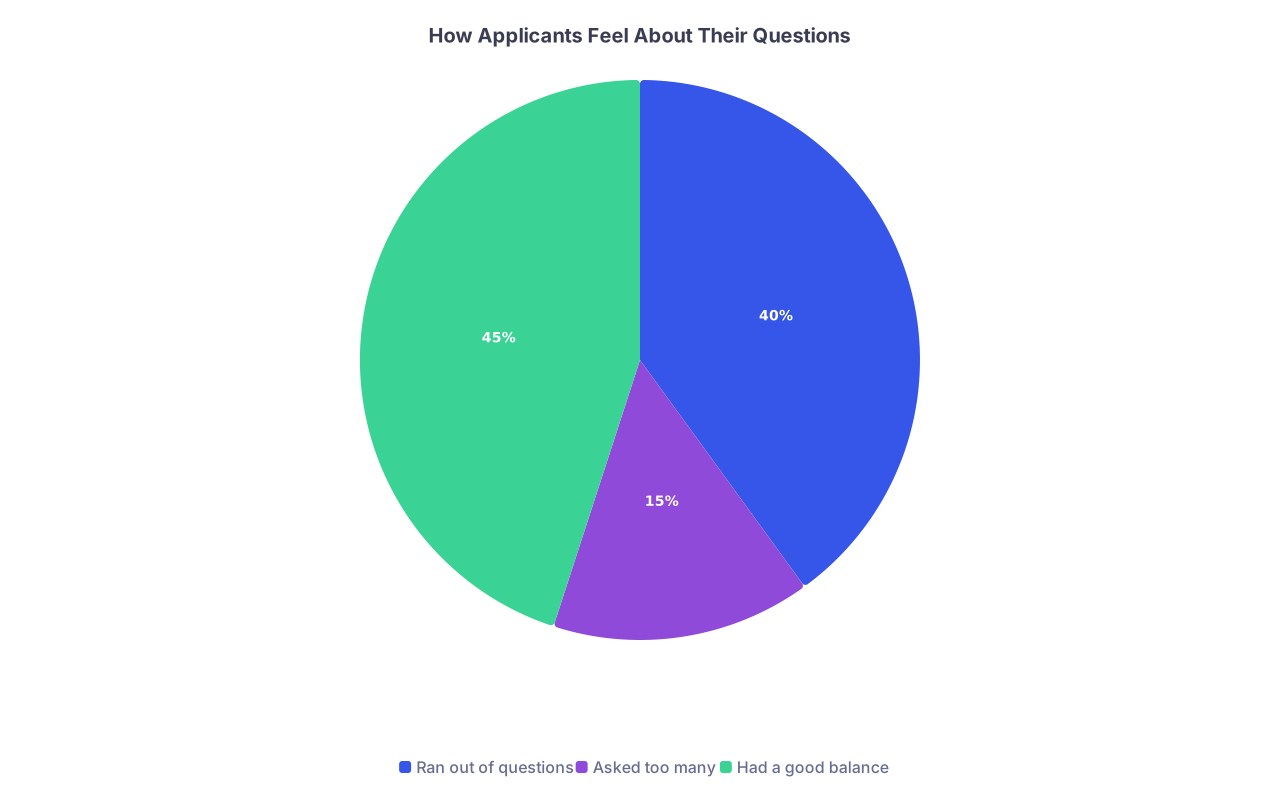
| Category | Value |
|---|---|
| Ran out of questions | 40 |
| Asked too many | 15 |
| Had a good balance | 45 |
What If I Already Had an Interview Where I Asked No Questions?
Okay, let’s address the retroactive panic.
You had an interview. They said, “What questions do you have for us?”
You said something like, “No, I think you answered everything.”
Now you’re spiraling, convinced you’re automatically ranked to the bottom.
Here’s the actual likely outcome:
If the rest of your interview was strong:
This is a tiny, probably insignificant blip. They might not even remember.If the rest of your interview was okay/average:
This might push you slightly toward “generic but fine” instead of “memorable,” but it’s not a catastrophic negative.If the rest of your interview was already shaky:
Then yeah, this didn’t help. But honestly, the bigger problem wasn’t the lack of questions—it was the earlier parts.
If it’s really haunting you, you can slightly compensate in your post-interview thank-you email.
Don’t write a whole apology essay. Just something like:
“I realized after our conversation that I forgot to ask about how residents get feedback on their performance. From what I’ve seen on the website and heard from other residents, it sounds like you have a strong culture of mentorship, which is something I really value.”
See what I did there?
You:
- Show continued interest
- Add a thoughtful detail
- Ask a “question” without making them formally answer in email
But you don’t have to do this. Most of the time, you’re more bothered by it than they ever were.

| Step | Description |
|---|---|
| Step 1 | Interviewer asks for questions |
| Step 2 | Ask it normally |
| Step 3 | Use safe script |
| Step 4 | Say they answered most questions |
| Step 5 | Ask broad reflective question |
| Step 6 | End with thank you |
| Step 7 | Do you have a specific question? |
Quick Reality Check Before You Spiral
Let me be blunt.
No one is matching or not matching solely because of what they said when asked, “Do you have any questions for me?”
It’s one data point. A small one.
What programs actually care about more:
- Did you seem professional?
- Did you seem like someone residents could stand being on call with at 3 a.m.?
- Did you show a basic level of interest and preparation?
- Did you answer questions with some depth and self-awareness?
Having no questions at the end might nudge you slightly down if the vibe is “checked-out and uninterested.” If the vibe is “engaged but satisfied, questions covered,” you’re fine.
You don’t have to be brilliant. You just can’t be obviously apathetic.

FAQ – Exactly What You’re Afraid to Ask
1. Will saying “I don’t have any questions” ruin my chances?
No, not by itself. If you were engaged, responsive, and clearly interested the whole time, this is a tiny thing. It becomes a red flag only when it lines up with other signs that you didn’t care—no eye contact, short answers, zero curiosity all day. Fix your overall engagement, not just this one moment.
2. Is it fake to ask a question I already sort of know the answer to?
No. It’s normal. You can frame it honestly: “I saw on your website that you have X. Could you tell me what that looks like day-to-day for residents?” You’re not quizzing them—you’re asking for nuance. That’s actually what they expect.
3. How many questions should I have ready for each interview?
Have 6–8 total:
2–3 for residents, 2–3 for faculty, and 2 backups saved for the end. You will not ask them all. You just need enough that if half get answered organically, you’re not empty-handed. Quality over quantity. Ten shallow questions are worse than three good ones.
4. What if my question sounds stupid once I start saying it?
Happens all the time. If you feel it derailing, you can recover mid-sentence:
“Let me rephrase that—what I’m really trying to understand is…” Interviewers don’t expect perfection. They’ve watched hundreds of applicants stumble over questions. They care way more about your attitude and clarity than sentence-level polish.
5. Can I reuse the same questions for every program?
Yes, with minor tweaks. Programs know you’re interviewing at multiple places. You’re not required to reinvent the wheel for each one. Just don’t ask something wildly generic like, “So, tell me about the program?” at program #12 when you could tailor it slightly: “I noticed you have strong X; how does that shape the resident experience here?”
6. Is it better to ask some question, even if it’s mediocre, than none at all?
Usually, yes. A mildly generic but earnest question is better than a flat “No, I’m fine.” Just avoid questions that expose you didn’t read the website. If your only idea is “How many residents are there?” and it’s on page one of their site, skip it and use one of the safer, resident-experience or culture-based questions we went over.
Key takeaways:
- Having no questions at the end isn’t fatal—but sounding uninterested is.
- Always keep 2–3 “backup” questions you intentionally save for the final few minutes.
- If you blank, use the safe script: say they answered most of your questions, then ask a broad, reflective one about resident experience, program culture, or what makes someone thrive there.