
It’s July. Your co-fellows just signed with big systems, some are already onboarding, and you… are sitting with a non-linear CV, a gap year (or three), and an idea that will not die: “I’m going to open my own clinic.”
You’re not starting from the clean, straight-line path all the webinars assume. Maybe your fellowship finished in 2022, then:
- You took a research year that never really turned into a faculty spot
- Your partner’s job move forced a pause
- You burned out and stepped away
- You did locums, telemedicine, or per-diem work that doesn’t look “cohesive”
Now you’re staring at a calendar, a bank account, a CV with holes, and wondering two things:
- Can I still open a clinic and make this work?
- How do I rebuild professional momentum fast enough that I don’t drown in self-doubt or cash flow?
This is where you are. Let’s deal with that reality, not the fantasy world where you graduated last month into a ready-made patient panel.
Step 1: Get Honest About Your Starting Point
Before leases, logos, or EMRs, you need a brutally accurate snapshot of where you stand. No fluff. No wishful thinking.
A. Clarify your “gap”
Write this out in one place:
- Dates of residency completion
- Dates of fellowship completion
- Exact gap / delay periods (month-year to month-year)
- What you were actually doing during each gap (even if it feels unimpressive)
Then answer, in plain English:
- Why did the delay/gap happen?
- What did you gain during that time (skills, perspective, location stability, niche expertise, parenting, language skills, etc.)?
- What did you lose (clinical volume, current references, institutional backing, procedural currency)?
You’re not doing this for Instagram. You’re doing it because:
- Lenders will ask.
- Referring docs will ask.
- Patients will Google you and notice weird gaps.
You need a clean, non-apologetic narrative that you can repeat consistently.
Example:
“I completed my cardiology fellowship in 2021. My spouse’s job moved us twice in two years, so I worked in telecardiology and locums while we settled in this region. That time gave me flexibility for my young kids and confirmed I wanted to build a long-term clinic here rather than chase another hospital-employed role.”
That’s sane. Adult. Professional. You’re allowed to have a life.
B. Reality-check your skills and confidence
Ask yourself, specifically:
- How many months since you last did full-time, in-person clinical work?
- Are there procedures you’ve not done in 12–24 months?
- Are there guidelines, drugs, or devices that changed since training?
If your gap is > 18–24 months or procedure-heavy:
You probably need a short clinical ramp-up before you hang your own shingle, or in parallel, through:
- Per-diem hospital shifts
- Locums in your specialty
- Joining a group 1–2 days a week for procedures while you build your clinic
This is not weakness. It’s insurance against unsafe care and impostor syndrome eating you alive.
Step 2: Pick a Clinic Model That Matches This Season of Your Life
You’re not obligated to build a 6-provider multi-site empire on day one. Given your delay/gap, you actually shouldn’t.
Here are four practical models, and how they fit a delayed/gap trajectory:
| Model | Best If You… | Startup Intensity |
|---|---|---|
| Micro-clinic (1–2 rooms) | Have limited capital, want lean | Low |
| Shared space / sublease | Need speed, testing market | Very Low |
| Hybrid employment + clinic | Want stable income buffer | Medium |
| Full standalone clinic | Have savings/loan + clear demand | High |
Micro-clinic / Lean launch
This is where I’d steer most people with a gap: one or two exam rooms, low overhead, conservative hours at first. Example: 2–3 clinic days per week, 2–3 days of employed or locums work.
Why it works especially well after a delay:
- You rebuild clinic rhythm without betting the house.
- If referrals are slower because your network is cold, you won’t drown.
- You can pivot the scope (e.g., add cash-pay procedures, telehealth blocks) without renegotiating a massive lease.
Shared space / sublease
Perfect if your momentum is shot and you’re fighting analysis paralysis.
- Sublease 1–2 days/week from an established clinic (primary care, OB/GYN, pain, derm—whatever aligns with your specialty and target patients).
- Use their front desk and basic staff; pay a flat fee or percentage of collections.
This lets you:
- Start seeing your own patients next month, not next year.
- Test your patient mix, location, and pricing before committing.
- Rebuild your name in the local community quickly.
Hybrid employment + your clinic
This is often the sweet spot for someone with a gap, especially if you’re anxious about money:
- 0.4–0.6 FTE employed (hospital or group) for salary/benefits
- 0.4–0.6 FTE in your own clinic
You take home less in the first year than pure private practice, but you:
- Sleep at night.
- Can say “I’m on staff at [Hospital X]” when trust is thin due to your patchy timeline.
- Keep procedural skills sharp if your clinic is initially light on volume.
Full standalone clinic
Only sensible if you can check all three:
- You have at least 6–9 months of living expenses saved or guaranteed (spouse income, etc.)
- You have access to capital (loans, savings) for buildout, equipment, and staff
- There is clear unmet demand locally (waitlists, patients driving far, referring docs groaning about access)
Your gap does not disqualify you from this. But you need to overcompensate with planning and early referral-building.
Step 3: Turn Your “Gap” Into a Tight Professional Story
You’re not erasing the delay; you’re reframing it so it doesn’t smell like failure.
You need three versions of your story:
- One sentence (for quick intros)
- Three sentences (for consults, networking, and websites)
- A short paragraph (for credentialing, lenders, more detailed scrutiny)
One sentence version
“After finishing my [specialty] fellowship in 2021, I spent two years doing [X] while relocating and planning this practice.”
That’s it. Calm and factual.
Three sentence version
“I completed my rheumatology fellowship at [Institution] in 2022. Over the following two years, I worked in telemedicine and locums while my family relocated to this area and I developed a focused interest in early inflammatory arthritis. That experience confirmed I wanted to build a long-term, patient-centered practice here, which led to starting [Clinic Name].”
You’re telling them: not lost, just choosing.
Paragraph version (for people digging harder)
Use this on your website “About” page and in lender conversations. Address:
- Timeline
- Work done during gap
- Why that season made you better as a clinician and business owner
What you do not do: ramble, overshare, or apologize like a guilty teenager. You’re a physician, not on a parole hearing.
Step 4: Rebuild Professional Momentum: 90-Day Plan
You don’t need a 300-page business plan. You need 90 days of aggressive, targeted action. Think sprint, not dissertation.
Here’s what that looks like.
Days 1–7: Decide model and non-negotiables
- Pick your launch model (sublease, micro-clinic, hybrid, full). Stop waffling.
- Define minimum viable schedule (e.g., 2 days/wk clinic, 2–3 days/wk employed/locums).
- Decide your core services: what do you actually do in this clinic? Not a laundry list. A spine.
Days 8–21: Lock in space and corporate structure
- Form your entity (PC/PLLC/LLC depending on your state).
- Get EIN, open business bank account.
- If subleasing, sign a simple, time-limited agreement with a 6–12 month horizon.
- If micro-clinic, identify a small suite, negotiate aggressively on TI or free rent period.
Days 22–45: Systems, payers, and minimal setup
- Malpractice coverage specific to private practice. Do not assume your old policy covers this.
- Choose EMR (lean: Charm, Elation, Jane; heavier: Athena, eClinicalWorks if you want more bells, but beware bloat).
- Set up phone, basic website (even 1–2 clean pages with your story, services, and online booking is enough), secure email.
- Start payer enrollment immediately if you’re taking insurance; this often takes 60–120 days. You can launch with cash-pay and out-of-network, then add in-network as approvals roll in.
Days 46–90: Relentless relationship-building
This is where most people with gaps fail. They build four walls and a logo and then wait. Wrong order.
You need:
- Referring physicians
- Patients who trust you quickly despite not seeing “Dr. So-and-so, Chief of X at Big Hospital” under your name
Start doing the unglamorous work:
- Visit every primary care clinic within a 10–15 mile radius that sees the kind of patients you want. In-person. With a one-page referral guide and your cell on it.
- Have a clear “Why send to me?” script that does not sound desperate:
“I can see new [condition] patients within 1–2 weeks; I focus on [niche]; I’ll send you a short note back the same day.” - Join the medical staff at at least one local hospital, even if you’re not employed by them. That badge still matters.
- Use your gap angle only when it helps:
“I’ve spent the last two years deeply focused on [tele-derm / second opinions / complex cases], and I’m excited to bring that here locally.”
Step 5: Address the Money Problem Without Fantasy
Many physicians in your situation blow up their momentum by pretending numbers don’t apply to them. They do.
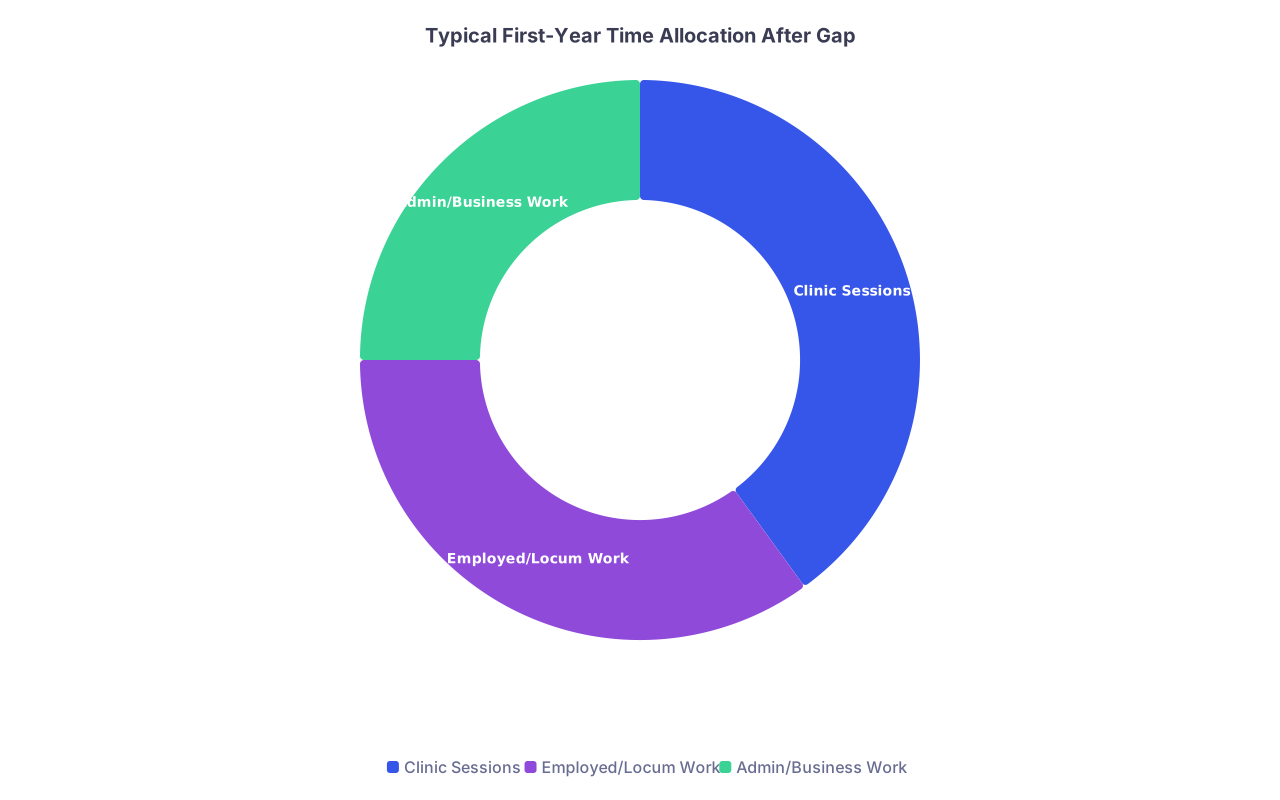
Here’s a rough, honest frame for year 1 after a gap:
| Category | Value |
|---|---|
| Clinic Sessions | 40 |
| Employed/Locum Work | 35 |
| Admin/Business Work | 25 |
You’re not doing 100% clinic out of the gate unless you have deep savings or spouse income.
Hard questions you need answers to:
- How many patients per week do you actually need by Month 6 to break even?
- What’s realistic patient growth per month, given your gap and lack of built-in panel?
- How long can you live on reduced income without panicking and making dumb decisions (selling to private equity in 8 months, signing a bad employment contract out of fear)?
If your honest answer is “I can’t float more than 3–4 months without full income,” then you should:
- Seriously prioritize a hybrid model (employed + clinic)
- Keep your clinic overhead ruthlessly low (sublease, minimal staff, no $150k equipment impulse buys)
You can absolutely ramp up faster later. But you won’t get there if you sink in Month 5.
Step 6: Optimize Around the Fact That You’re a “New Face” in Town
The combination of “just opened” + “gap” means trust is your main currency.
You do a few things differently than a brand-new grad with no gap:
Over-communicate competence
In your materials (website, one-pager, referring MD letter), lean on:
- Your training pedigree
- Any subspecialty focus
- Former titles or roles (chief resident, QI lead, etc.)
- Concrete practice features: same-week access, tight communication, streamlined referrals
Do not hide your graduation year. People can look it up anyway. Own it confidently so it doesn’t look like you’re dodging.
Provide “early adopter” advantages
To get past “Who is this person?” you give referring docs and patients a real reason to try you:
- Guaranteed consult slots held weekly for same- or next-week new referrals
- Direct secure text or email channel for referring physicians
- Very short notes back to the PCP same day (not 12-page novels—think 5–8 lines, clear plan)
Trust builds faster with action than with branding.
Step 7: Protect Your Clinical Edge After a Delay
One legitimate fear with gaps: “Am I rusty?”
The answer is: maybe. The solution is not denial; it’s design.
Do this in your first 6–12 months:
- Set explicit scope boundaries: what you will and will not do initially. It’s fine to say “I don’t do X procedure yet” until you’re comfortable.
- Maintain one environment where you see decent volume (hospital shifts, group practice) to keep reps up.
- Schedule specific CME tied to your practice scope, not random conferences for the free pens.
- Find a senior colleague (local or virtual) you can text about tough cases. Not to dump care on them, but to sanity-check yourself.
The fastest way to kill momentum is a major clinical misstep early on. The second fastest way is paralyzing insecurity. You thread the needle by being smart about scope and seeking help early when needed.
Step 8: Manage the Psychology: Shame, Comparison, and Impostor Noise
No one talks about this, but I’ve watched it derail people more than cash flow.
You might catch yourself thinking:
- “I’m behind my co-residents.”
- “Everyone’s already partner / medical director / associate professor.”
- “I’m the only one starting from scratch this late.”
None of that helps you sign a lease or see a patient tomorrow.
Concrete ways to keep your head on straight:
- Do not stalk your co-fellows’ LinkedIn/Instagram for the first 6 months of your build. That’s not information, it’s self-harm.
- Set process goals, not ego goals.
- “Visit 5 referring clinics this week”
- “Finish payer applications by Friday”
- “See 10 new patients this month”
- Keep a simple win log: each week write down 3 real things that moved you forward. First referral from a PCP. First online review. First positive patient email.
Momentum is emotional as much as financial. You rebuild confidence through small consistent wins, not one giant “success moment.”
Step 9: Timeline: What “Rebuilding Momentum” Actually Looks Like
You’re not failing if you’re not fully booked in 3 months. That’s startup fantasy.
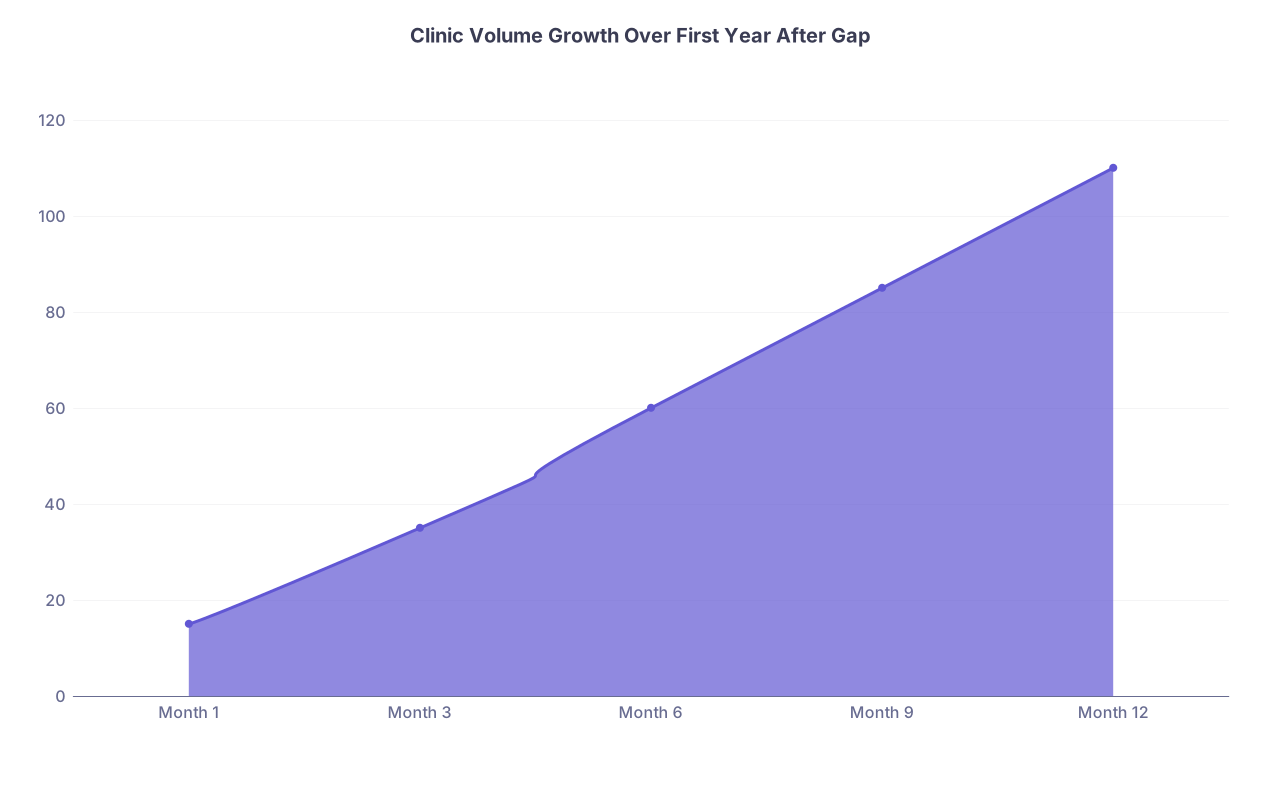
Realistic, for someone with a gap and no pre-built panel:
| Category | Value |
|---|---|
| Month 1 | 15 |
| Month 3 | 35 |
| Month 6 | 60 |
| Month 9 | 85 |
| Month 12 | 110 |
- Month 1: You’re happy to see 10–20 patients total. You’re mostly building systems and relationships.
- Month 3: A few referring docs are testing you. Patients are trickling from word-of-mouth.
- Month 6: You’re seeing a steady weekly volume; hybrid income starts to feel more optional.
- Month 9–12: If you’ve done relational work right, you start to see “I was sent here by X and Y” and “I saw your name in our local FB group” type patients.
By Month 12–18, you can make a very rational decision:
- Double down and grow (more staff, more space), or
- Keep a lean, lifestyle-friendly practice that balances with other professional/personal priorities
Your gap year stops mattering at this point. Output matters more than the weird patch in your CV.
FAQs
1. Will lenders or landlords care about my gap year or delay?
Yes, some will. Especially banks that look for continuous employment and W-2 income history. That does not mean you’re dead in the water.
You handle it by:
- Bringing strong, clean documentation of your work during the gap (locums contracts, 1099s, telemedicine work).
- Showing a clear, written business plan and projections, even if simple.
- Offering a larger personal guarantee or security deposit when necessary.
- Considering SBA loans or physician-specific lenders familiar with non-linear careers.
If your financial picture is truly thin, start with a very low-commitment space (sublease, shared suite) that doesn’t require a bank loan.
2. Should I hide the gap on my website or public profile?
No. Hiding looks shady. You do not need to highlight it with neon lights, but you also should not erase years of your life.
Use your “paragraph version” story on your About page. Mention the types of clinical work you did (telemedicine, locums, research, parenting plus part-time clinical), and pivot quickly to what you offer now. Most patients care more about how you treat them and solve their problem than the exact month you finished fellowship.
3. Is it smarter to work for a group first, then open a clinic later?
Sometimes. If:
- Your clinical skills are rusty and you’re honestly anxious about independent practice
- You have zero local network in your current city
- Your personal finances are extremely tight
Then 1–2 years in an employed role to rebuild confidence and contacts is reasonable. But here’s the catch I’ve seen: many people never leave. Comfort plus golden handcuffs kills the original plan.
If your end goal is your own clinic, you need a clear time horizon (“I’ll reevaluate in 18 months and either commit to my practice or consciously stay employed”) and you must use that time to actively build future referral relationships, not just show up and punch a clock.
4. How do I explain the gap to referring physicians without sounding weak?
You keep it brief, direct, and framed in terms of benefit to them and their patients. For example:
“I finished fellowship in 2020, then spent a couple of years in locums and telemedicine while my family relocated here. That time gave me a wider range of cases than I expected, and now I’m focusing my practice on [niche] with fast access for your patients.”
Then immediately pivot to what you can do for them:
- “I can see your new consults in under two weeks.”
- “I’ll send you a concise same-day note with the plan.”
- “I’m happy to text about borderline cases before you refer.”
You’re not asking for sympathy. You’re offering a solution.
5. How long should I keep hybrid work (employed/locums + clinic) before going all-in?
Ignore arbitrary timelines. Make the decision based on numbers and stability:
- You’re consistently meeting or exceeding your minimum patient volume for at least 3–6 months.
- Your clinic can cover its own overhead and most of your personal expenses without the extra job.
- Referral patterns look durable (not dependent on one person who might leave).
- You’re more constrained by time than by lack of patients.
For many physicians with a gap, that’s usually somewhere between 9–24 months after opening, depending on specialty and how aggressively you built relationships. When you hit that point, drop the hybrid work in stages if needed (e.g., from 0.6 FTE to 0.3 before fully leaving), so you’re not lighting your safety net on fire overnight.
You started from a messier place than the brochure version of “post-fellowship practice launch.” Fine. That just means you have less margin for vague plans and more incentive to be deliberate.
You’ve clarified your story, picked a clinic model that fits your current reality, and mapped out the first 90 days of real momentum-building work. From here, the game shifts from “Can I do this after a gap?” to “How big and how focused do I want this clinic to be?”
Once that foundation is laid, we can talk about phase two: hiring your first MA, negotiating better payer contracts, and deciding whether you want to stay lean or grow a group. But that’s a fight for the next chapter, after you get those first hundred patients through the door.