
The obsession with “top Step 2 CK or bust” is lazy thinking—and it is costing good applicants real matches.
You do not need a 260 to build a strong, smart residency application. You need alignment. You need strategy. You need to stop pretending programs are all the same and start using your mid‑range Step 2 CK as a filter rather than a flaw.
Let me show you exactly how to do that.
1. Get Real About What “Mid-Range” Means (And What It Doesn’t)
First, stop catastrophizing the number.
For most specialties, “mid‑range” Step 2 CK means something like:
- Around the national mean ± 0.5 SD
- Roughly 235–250 in recent years (yes, this wiggles a little by year)
For competitive specialties (derm, ortho, plastics, ENT, neurosurg), mid‑range usually means you are below their typical match averages but still absolutely competitive for many other fields and many programs.
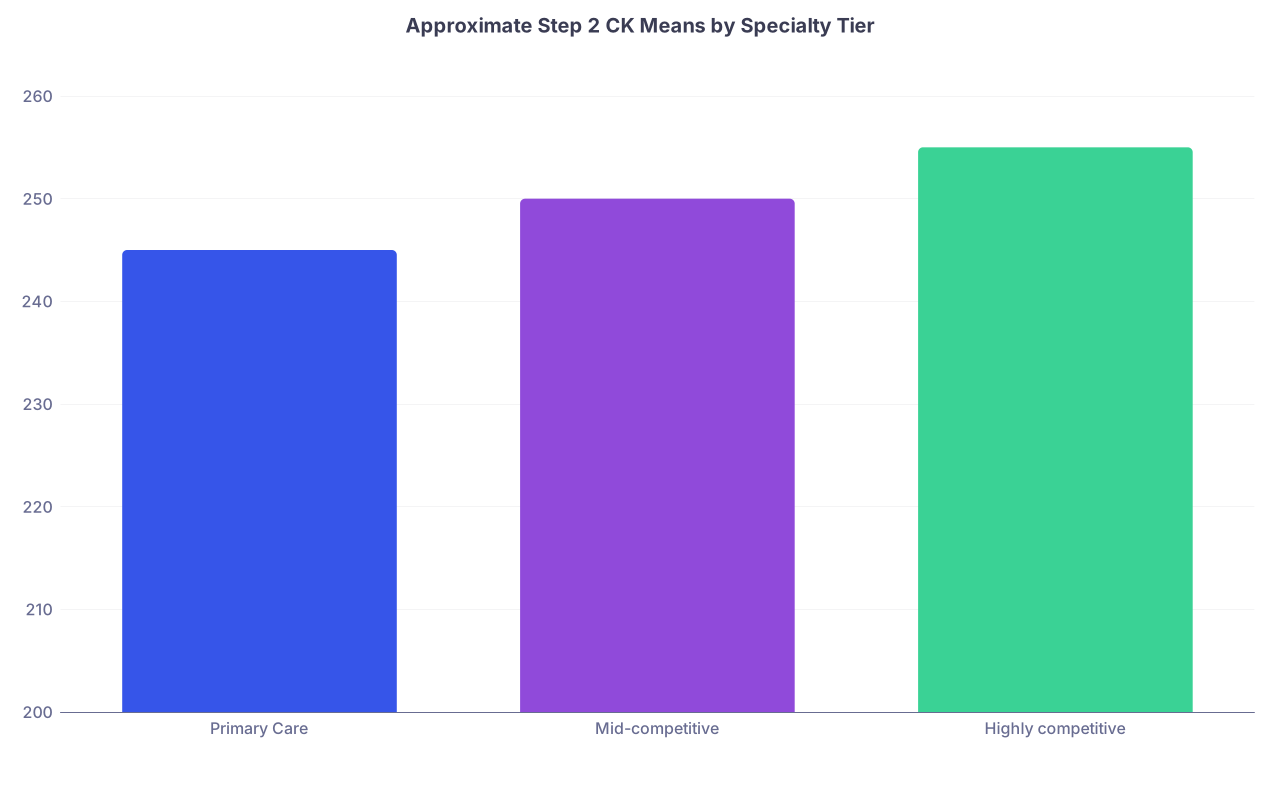
| Category | Value |
|---|---|
| Primary Care | 245 |
| Mid-competitive | 250 |
| Highly competitive | 255 |
Forget Reddit threads screaming that 260 is “average.” That is survivorship bias from a tiny slice of applicants.
Here is what your mid‑range Step 2 CK actually means:
- You passed a hard exam on the first try.
- You have enough medical knowledge to function clinically.
- You are now in the huge middle where other factors matter more: clinical grades, letters, fit, story, and targeting.
Stop asking “Is my score good enough?” and start asking “Good enough for which programs and which strategy?”
2. Diagnose Your True Position: Not Just Your Score
You cannot turn a mid‑range Step 2 CK into an asset if you do not know your full profile. The score is one variable. Programs look at a pattern.
Here is the 15‑minute diagnostic I use with students:
Step 1: Basic Academic Snapshot
Write this down, no sugarcoating:
- Step 1: Pass / Fail (and if failed once, note it)
- Step 2 CK: exact score
- Any attempts or failures on any USMLE exam
- Clinical GPA / class rank if available
- Honors in required clerkships (IM, surgery, peds, OB, psych, neuro, FM)
Pattern to look for:
- Score slightly lower, strong clerkship grades → Programs think: “Good clinician, maybe not a test-taking monster. Fine.”
- Score mid‑range, mostly Pass without honors, no failures → True middle. You must win on fit, story, and targeting.
- Score mid‑range but Step 1 fail or course remediations → You must show upward trend and reliability.
Step 2: Strengths Inventory (Beyond Numbers)
List your top 3 strengths with evidence, not vibes:
- Research: number of pubs/posters, any first-author, any in the target specialty
- Leadership: named positions with real responsibility (chief of something, project lead, founder)
- Service: longitudinal, consistent involvement (free clinic for 3 years beats 12 random volunteer events)
- “Spike” factors: prior career (RN, engineer, teacher), language skills, military service, serious athletics, etc.
I have seen plenty of residents with 240s who matched at excellent mid‑tier academic programs because they had:
- 3 first‑author papers in their specialty
- Strong letters from people the program director knew
- A coherent story that made sense for that program’s mission
Your mid‑range score is not the problem if the rest of your application screams “this person fits what we do.”
3. Understand How Different Programs Actually Use Step 2 CK
You cannot “target” programs intelligently if you lump them into one bucket. They do not operate the same.
There are three broad categories in how programs treat Step 2 CK:
| Program Type | Typical Use of Step 2 CK |
|---|---|
| Ultra-competitive academic | Hard filters and high averages |
| Solid mid-tier academic | Filters, then holistic review |
| Community / hybrid | Basic competence, focus on fit |
1. Ultra-Competitive Academic Programs
Think top‑10 or “brand name” institutions in each specialty.
Behavior pattern:
- Use Step scores as aggressive screeners
- Often publish or quietly use cutoffs (e.g., “we rarely interview below 245–250”)
- Heavily weight research, especially home / regional applicants
If your Step 2 is mid‑range, these programs are not “impossible,” but they are a poor ROI unless:
- You are a home student or did an away there and
- You have extremely strong research and letters linked to that program
Otherwise, do not waste 30 applications on places that will bin your ERAS in 0.5 seconds.
2. Solid Mid-Tier Academic Programs
These are your bread‑and‑butter targets with a mid‑range Step 2 CK.
Behavior pattern:
- Use Step 2 CK to confirm competence, not perfection
- Care a lot about clinical performance and letters
- Many explicitly like “well‑rounded” residents who will teach, do QI, and not burn out
- More open to applicants with a non‑linear story if you explain it well
Your strategy: identify 25–40 of these where your score is within ±5 points of their reported or perceived average, and where your other strengths are aligned (research, urban vs rural focus, underserved care, etc.).
3. Community and Hybrid Programs
These are often under‑researched and massively underutilized by anxious applicants.
Behavior pattern:
- Step 2 CK used as a basic safety metric (e.g., above 220–230 and one attempt)
- Much heavier emphasis on:
- Consistency and reliability
- Ability to work hard and function in a team
- Personal connections (rotations, emails, phone calls from faculty)
This is where a mid‑range Step 2 CK can literally become a plus:
- “Not a diva research superstar; probably will stay all three years.”
- “Reasonable test‑taker, not high-risk for board failures.”
You need to stop thinking of community and hybrid programs as “fallbacks.” Many have excellent fellowship match lists and great training.
4. Build a Targeted Program List That Uses Your Score Strategically
This is where people blow it.
They apply to 70+ programs in a shotgun pattern, then act surprised when the interview distribution is random and thin.
You are going to build a tiered, strategic list that makes your Step 2 CK make sense.
Step A: Decide Your Risk Tolerance
You pick a mix. Something like:
- 10–15 reach programs
- 25–40 realistic targets
- 15–25 safety / solid community
If your score is:
- 250 with solid application in IM → more reaches is okay.
- 238 with average application in EM → fewer reaches, more community.
- 230 with a Step 1 failure → heavy tilt to safety programs that explicitly consider such applicants.
Step B: Use Data Instead of Vibes
Use tools and data:
- FREIDA: Filter by program type, size, location, visa status.
- Program websites: Some list average Step 2 CK of incoming interns.
- NRMP Charting Outcomes: Look at matched vs unmatched Step 2 by specialty.
If a program’s average matched Step 2 CK is 252 and you have 238 with no home or regional ties, that is probably a reach at best.
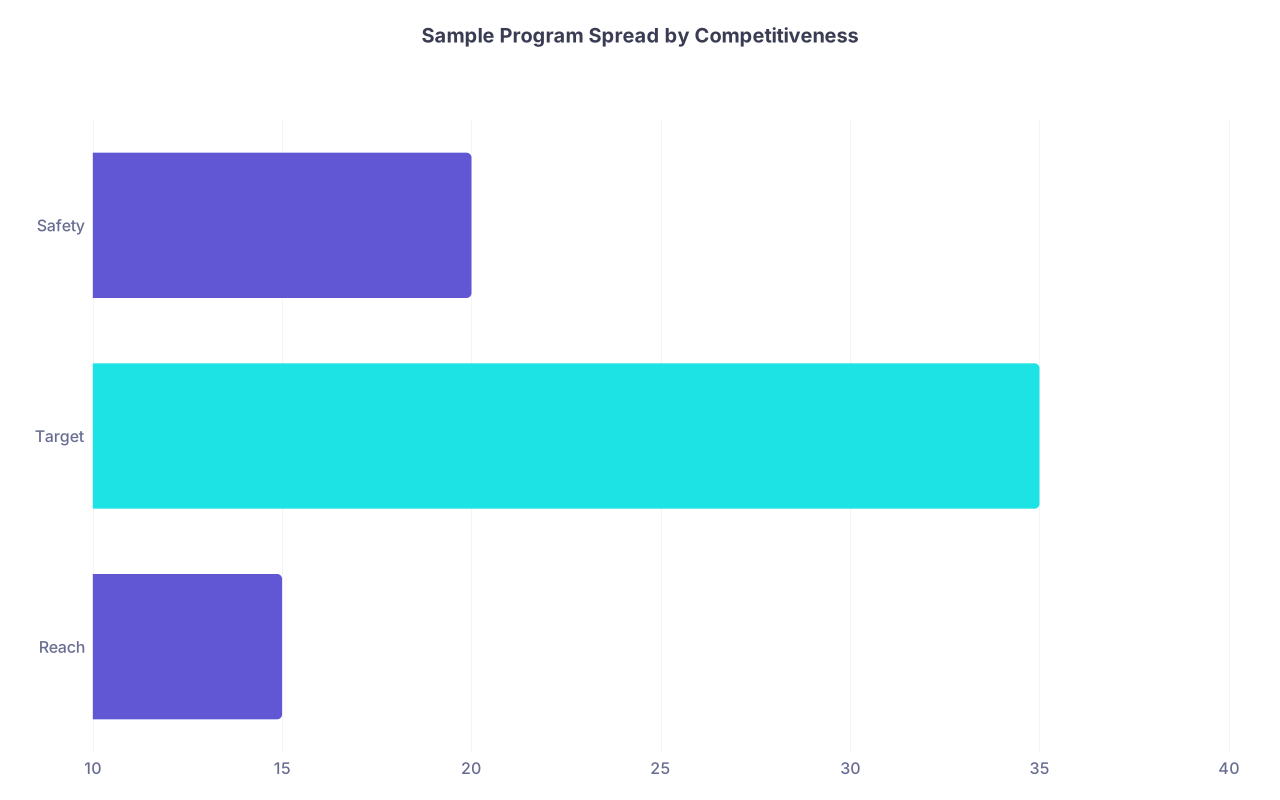
| Category | Value |
|---|---|
| Reach | 15 |
| Target | 35 |
| Safety | 20 |
Step C: Weigh Geography and Fit, Not Just Numbers
You are not a floating Step score. You are a person with:
- Regional ties (where you grew up, went to school, family)
- Language skills (Spanish, Mandarin, Arabic, etc.) useful to certain areas
- Personal background that matches certain program missions (rural health, underserved, immigrant communities)
Programs in:
- Less “popular” regions
- Smaller cities
- Colder or very hot climates
are more likely to consider applicants with mid‑range scores if the fit is right and you show genuine interest.
5. Turn Your Mid-Range Step 2 CK into a Narrative Asset
Your score is a fact. How you position it is a choice.
You can either apologize for it silently, or you can frame it as one part of a bigger, coherent story.
A. Use the Personal Statement Correctly
Do not write:
- “Although my Step 2 CK is not as high as I hoped…”
- “My score does not fully reflect my abilities…”
This sounds defensive and draws attention to a non‑issue.
You use your statement to highlight:
- Clinical strengths: “On my internal medicine rotation, I was often the one asked to present new admissions because my notes were detailed and organized.”
- Reliability: “Over three years at our student‑run clinic, I became the person other students called for difficult social situations and complex discharges.”
- Growth: If there is an upward trend, frame it as learning how to study clinically, not “I am bad at test taking.”
You are communicating: “I am a solid, dependable clinician who will not cause you headaches.”
B. Let Your Letters Carry the Score
Program directors have told me the same thing for years:
- A mid‑range score with glowing, specific letters beats a high score with generic letters almost every time.
You want phrases in letters that neutralize any Step anxiety:
- “Top 10% of students I have worked with in the past five years.”
- “I would trust this student to care for my family.”
- “Handled high-stress call nights with maturity beyond their level of training.”
Your job is to:
- Choose letter writers who know you well, not just the most famous name.
- Provide them with a 1‑page summary of your work together and your goals.
- Politely ask if they can write you a strong letter. If they hesitate, move on.
6. Rotate and Network with Intention
If your Step 2 CK is mid‑range and you are not at a top‑tier med school, you cannot rely on blind ERAS submissions alone. You need exposure.
A. Away Rotations (Sub‑Is) – But Smartly
Wrong approach: one away at the biggest name you can find where you will be anonymous.
Better approach:
- 1 home sub‑I in your chosen specialty
- 1–2 aways at realistic mid‑tier or strong community programs where:
- They historically take outside students
- They have residents with similar scores and backgrounds as you
- You can actually shine
On these rotations:
- Show up early and stay late, but do not be performatively exhausted.
- Volunteer for notes, discharges, family updates.
- Be relentlessly reliable. If you say you will do something, it is done.
Programs remember the student who quietly made the team’s life easier, not the one who quoted every UpToDate article.

B. Quiet Networking That Actually Matters
You do not need to “schmooze.” You need connectors.
- Ask your home attendings: “Are there programs in [region/specialty] where you know the PD or faculty personally? Would you be comfortable emailing them about me?”
- Email PDs or APDs at realistic programs only when you have something to say (e.g., after a strong away rotation, or with a very specific regional tie).
Keep emails short:
- One paragraph max
- Who you are, your med school, your genuine interest in their program, and one specific reason (ties, mission, prior visit, mentor connection)
- Attach CV if appropriate, but do not demand anything
You are putting your name in their head before your ERAS shows up in their pile.
7. Fix Common Application Mistakes Mid-Score Applicants Make
I see the same self-sabotage again and again from people with mid‑range Step 2 scores.
Stop doing these:
Mistake 1: Applying Like You Have a 260
- 60+ applications all to top academic programs in coastal cities
- Almost no community programs
- Zero geographic diversity
Solution: deliberately build a list with:
- Multiple regions
- Programs at different competitiveness tiers
- A conscious bias toward places where your profile matches their typical resident
Mistake 2: Ignoring Program Signals
Some specialties now use interview “signals” or preference lists.
If your specialty has them:
- Do not waste them on extreme reaches.
- Signal programs where you are realistically competitive and genuinely interested.
- Use 1 at most on a dream reach if you must, and spend the rest where you could actually match.
Mistake 3: Sloppy, Generic Applications
Mid‑range score applicants cannot afford:
- Typos in personal statements
- One generic statement sent to every program regardless of mission
- Ignoring program‑specific questions on ERAS supplements
Pick 5–10 “high priority” programs and customize:
- One or two sentences in your statement or secondary to reflect their specific strengths (rural track, community focus, diverse patient population, etc.).
- How your background connects to their mission.
This is the difference between “mass application #372” and “this person might actually stay here and thrive.”
8. Use Data from Practice Exams and Trends to Your Advantage
If you are preparing for Step 2 CK and worried about landing mid‑range, or you already scored mid‑range but want to show improvement:
- Take NBME practice exams and document the upward trend.
- If you later take an in‑training exam (during prelim year, for example) and do well, that also redeems any anxiety about standardized tests.
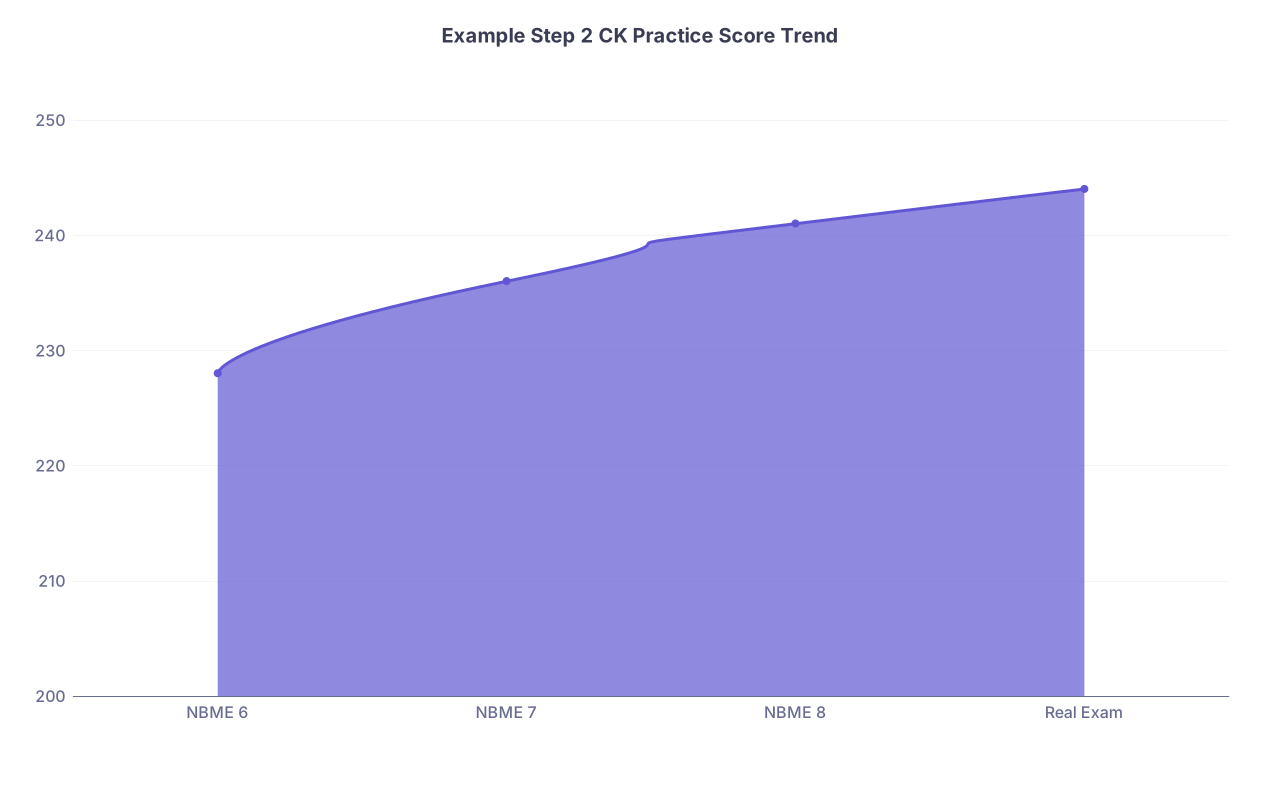
| Category | Value |
|---|---|
| NBME 6 | 228 |
| NBME 7 | 236 |
| NBME 8 | 241 |
| Real Exam | 244 |
If asked about your score:
- “I started around the low 230s on NBME practice, adjusted my approach to focus on weaknesses in renal and endocrine, and steadily improved to the mid‑240s by test day. That experience taught me how to self-assess and adjust quickly, which I now apply on the wards.”
This is how you turn a mid‑range number into evidence of growth and learning, instead of embarrassment.
9. Interview Season: How to Talk About Your Score (Without Sounding Defensive)
You may get the direct question: “Are you satisfied with your Step 2 CK performance?”
Do not flinch. Do not overexplain.
Try something like:
- “I am satisfied that it reflects a solid knowledge base and improvement from earlier practice tests. What I am most proud of, though, is how that knowledge shows up in my clinical work—translating guidelines into care plans and communicating clearly with patients.”
If pressed about lower Step 1 or any academic issues:
- Acknowledge briefly
- Show what changed
- Pivot back to current strength
Example:
- “I had to remediate one pre‑clinical course early in med school because I underestimated the volume and did not have great study systems. After that, I overhauled my approach, and since then I have passed everything on first attempt and performed steadily in my clerkships and on Step 2 CK. I feel confident in my ability to keep up with residency learning.”
They are screening for insight and stability, not perfection.
10. Concrete 4-Week Action Plan if You Just Got a Mid-Range Step 2 CK
You are probably reading this because your score just posted. You feel sick. Fine. Take one evening. Then do this:

| Step | Description |
|---|---|
| Step 1 | Day 0 - Get Score |
| Step 2 | Week 1 - Full Profile Audit |
| Step 3 | Week 2 - Build Target List |
| Step 4 | Week 3 - Letters and Statement |
| Step 5 | Week 4 - Outreach and Rotations |
Week 1: Full Profile Audit
- Write down all academic data, clerkship grades, red flags.
- List every strength with concrete evidence.
- Decide on your realistic specialty choice (or two, if dual applying).
Week 2: Build and Refine Program List
- Use FREIDA and program websites to collect 60–80 potential programs.
- Rank them by competitiveness and your interest.
- Trim and balance to a list that reflects your risk tolerance and reality.
Week 3: Letters and Narrative
- Confirm 3–4 strong letter writers; give them your CV and summary.
- Draft your personal statement with a focus on clinical strengths and mission fit.
- Get at least one honest review from someone who reads residency applications (advisor, chief, PD, not just a classmate).
Week 4: Strategic Outreach and Rotation Planning
- Identify 1–2 programs where an away rotation or sub‑I is realistic this year.
- Ask mentors who they can contact for you.
- Send 3–5 targeted emails to PDs or coordinators where you have genuine ties or interest, not mass spam.
By the end of those four weeks, your mid‑range Step 2 CK will no longer feel like the central feature of your application. It will feel like what it actually is: one data point in a well‑planned strategy.